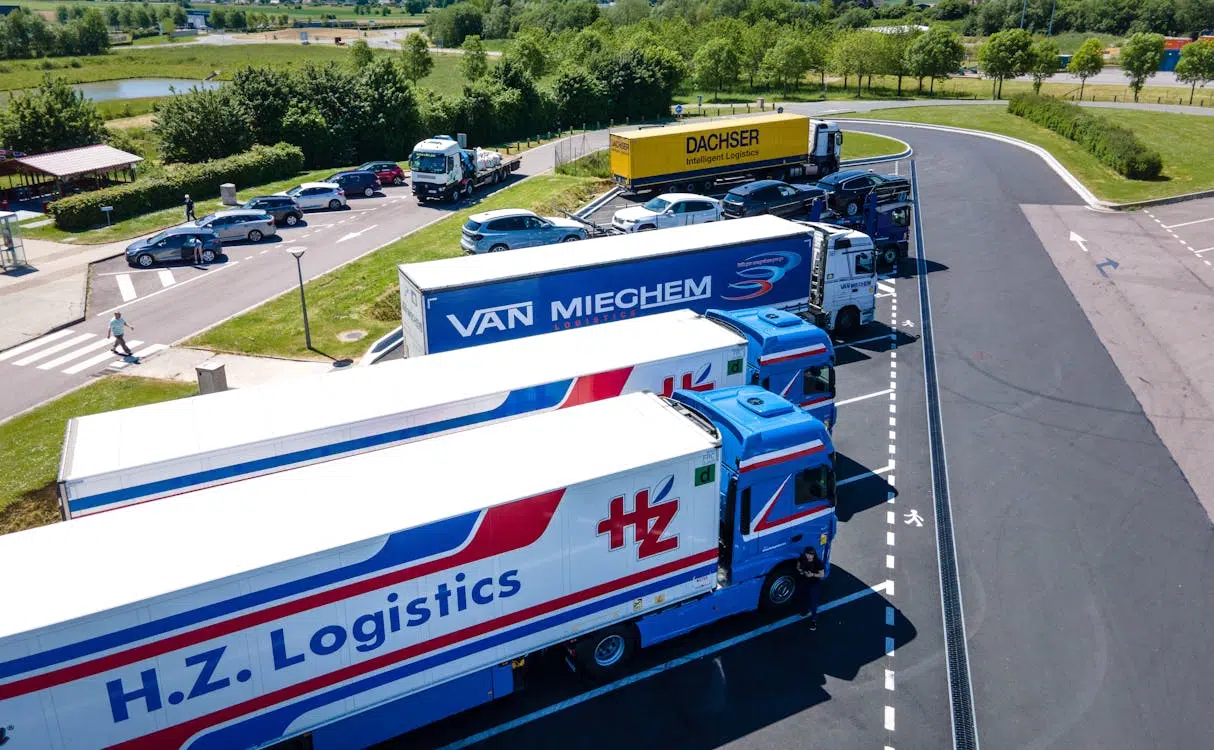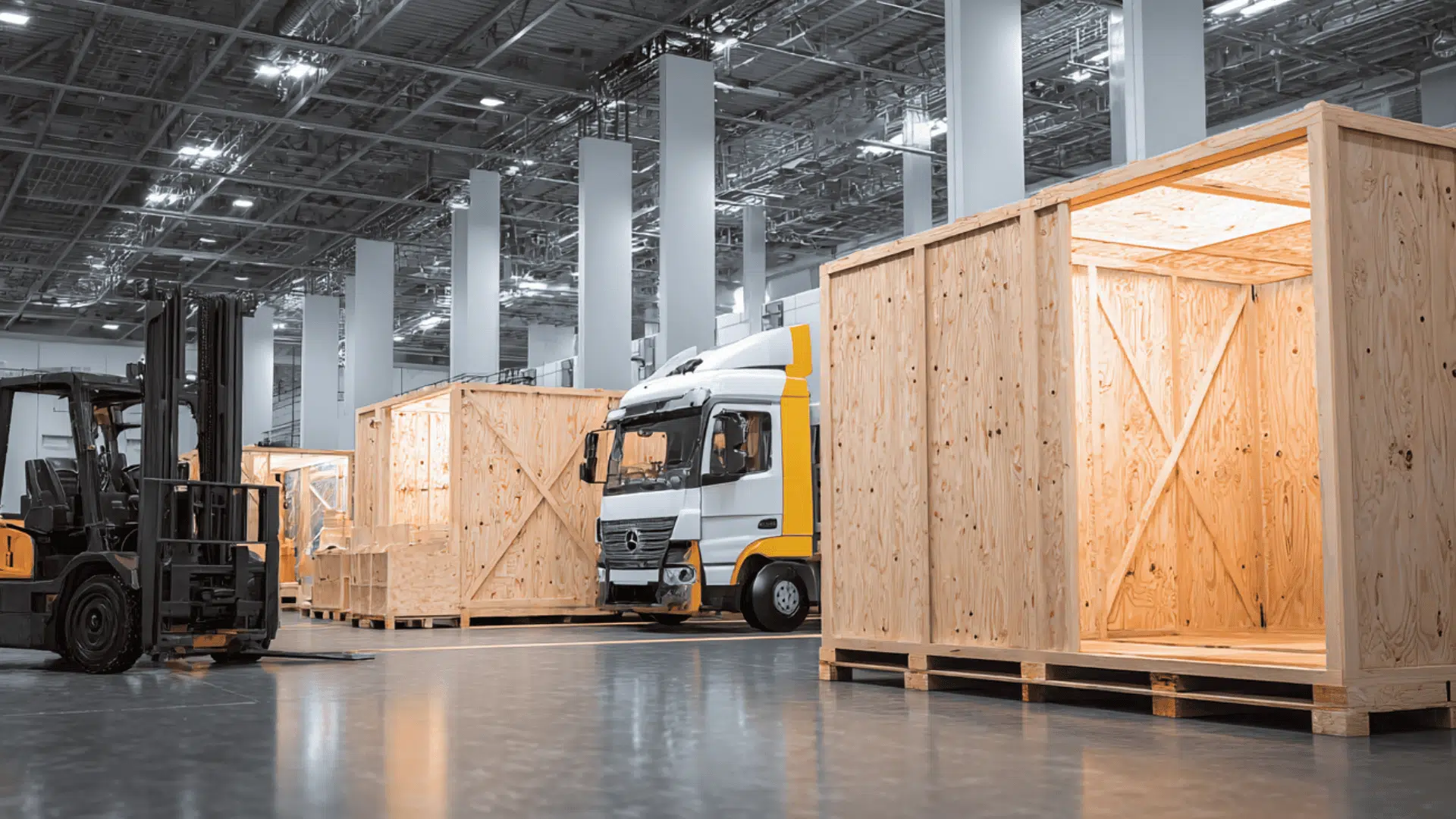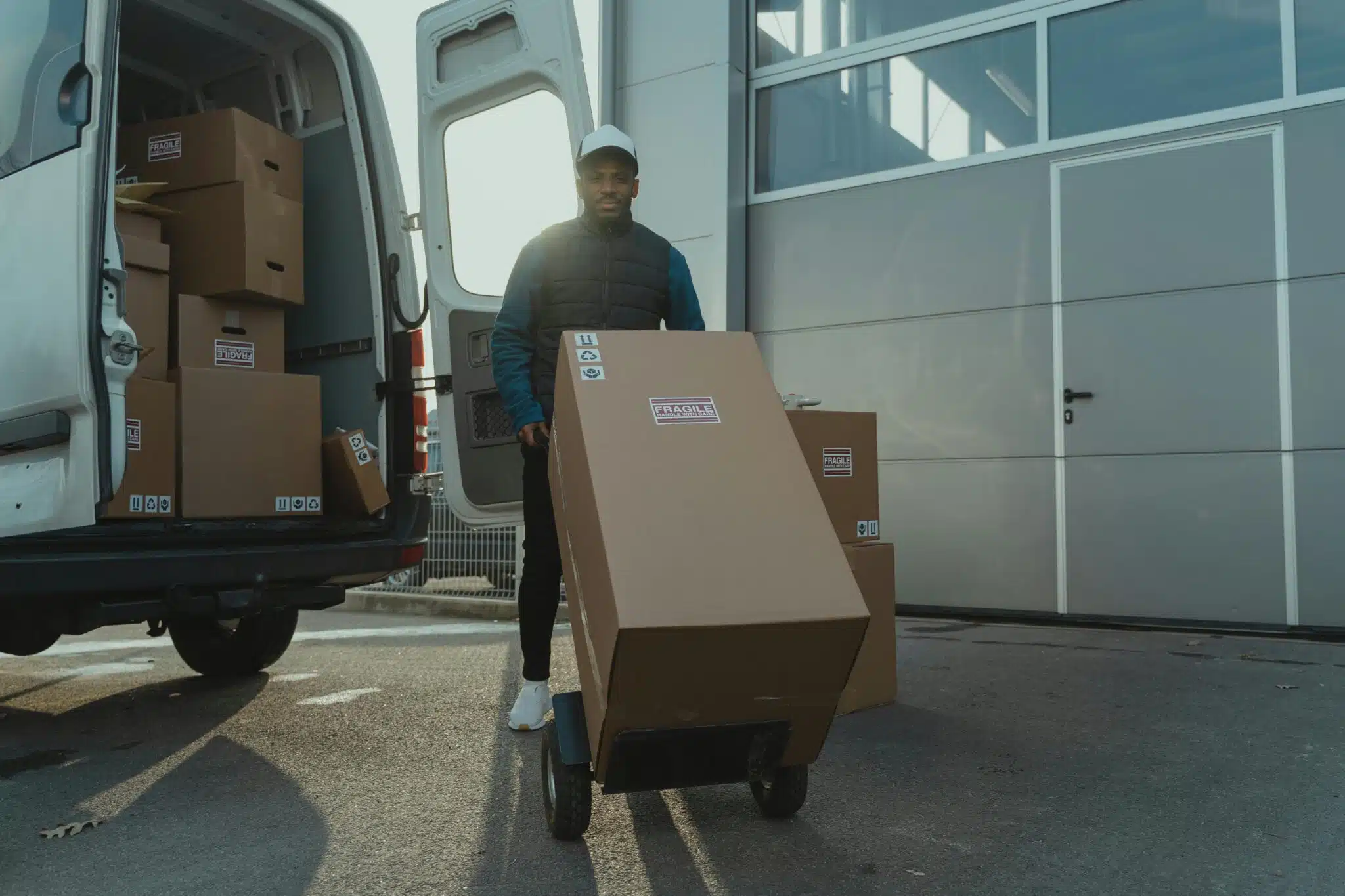
When a package arrives at your door or a pallet reaches a warehouse on schedule, it’s easy to assume the process was straightforward. A truck picked it up. A driver delivered it. Done. But behind every shipment that arrives intact and on time is a web of regulatory compliance, vehicle maintenance, route planning, and real-time logistics coordination that most people never see.
Commercial trucking moves over 72% of all freight tonnage in the United States. That’s everything from the groceries on your kitchen shelf to the building materials at a construction site to the prefab home panels traveling across state lines on a flatbed. The reliability of this system depends not just on drivers and trucks, but on a massive infrastructure of rules, technology, and preventive care that keeps the wheels turning.
If you’ve ever wondered what actually goes into getting freight from point A to point B, here’s what happens behind the scenes.
A Patchwork of Rules That Changes at Every State Line
One of the biggest challenges in commercial trucking is that the rules aren’t uniform. Federal regulations set baseline requirements for weight limits, hours of service, and safety standards, but individual states add their own layers. A truck that’s perfectly legal in Michigan—where gross vehicle weights can reach 164,000 pounds with the right axle configuration—becomes a violation the moment it crosses into Ohio under the standard 80,000-pound federal limit.
This complexity scales fast. California enforces emissions standards stricter than federal requirements through its Air Resources Board, effectively controlling what equipment can even enter the state. Several mountain states have chain laws that vary by corridor and elevation. Insurance minimums differ—New Jersey now requires $1.5 million in commercial truck liability coverage, far above the federal floor. A comprehensive breakdown of regional trucking regulations by state reveals just how varied these requirements are—and why fleet managers and owner-operators invest significant time and technology into route-by-route compliance planning.
For anyone shipping freight, this matters because it directly affects transit times, carrier pricing, and route availability. A shipment requiring oversized transport permits may need days of advance planning just for the regulatory paperwork, not the actual driving.
Preventive Maintenance Keeps the Supply Chain from Breaking Down
A Class 8 semi-truck is a complex machine. The engine alone contains thousands of components working in concert under extreme stress—hauling 80,000 pounds of gross weight across thousands of miles of highway in varying weather and terrain. When one of those components fails unexpectedly, the consequences cascade far beyond the truck itself. The shipment stops. Delivery windows are missed. Perishable goods may be lost. Contracts may be penalized.
This is why the commercial trucking industry has moved aggressively toward structured heavy duty truck preventive maintenance programs that go far beyond simple oil changes. Modern PM schedules use a combination of mileage intervals, engine hour tracking, and calendar-based triggers to ensure every system—brakes, tires, cooling, electrical, exhaust aftertreatment—receives attention before problems develop. Federal DOT regulations under 49 CFR Part 396 require carriers to maintain systematic inspection and maintenance programs, but the best fleets exceed minimum requirements significantly.
The numbers make the case clearly. A properly maintained diesel engine can exceed one million miles of service life. A neglected one may need a complete rebuild at 400,000 to 600,000 miles—a repair that can cost $20,000 to $35,000 and take a truck off the road for weeks. When you consider that a single day of unplanned downtime costs a carrier $1,000 to $1,500 in lost revenue, the investment in prevention pays for itself many times over.
Technology That Connects Every Link in the Chain
If you’ve ever tracked a package in real time, you’ve seen the consumer-facing side of a much larger technology ecosystem. On the carrier side, telematics platforms now combine GPS tracking, engine diagnostics, electronic logging devices, fuel analytics, and driver safety monitoring into unified dashboards. Fleet managers can see the location, speed, engine health, and hours-of-service status of every truck in their operation from a single screen.
AI-powered systems have added another layer. Computer vision cameras detect distracted driving in real time. Machine learning algorithms analyze sensor data to predict component failures weeks before they happen. Route optimization software factors in traffic, weather, fuel prices, and state-specific regulations to find the most efficient and compliant path for every load.
These tools have made freight more reliable than ever. But they also reveal how much complexity is managed behind the scenes every time a truck rolls out of a terminal loaded with freight.
Why This Matters Whether You’re Shipping a Pallet or Moving a House
Understanding the operational backbone of trucking helps anyone who relies on freight—whether you’re a business shipping inventory, a homeowner coordinating a long-distance move, or a logistics coordinator managing a supply chain. When a carrier quotes a higher rate for a route through California, it’s often because emissions compliance requirements limit which trucks can operate there. When an oversized load takes an extra week to schedule, the delay is frequently tied to multi-state permit coordination rather than a lack of available trucks.
The trucking industry isn’t just moving freight. It’s navigating a regulatory maze, maintaining enormously complex equipment, and deploying sophisticated technology to do it all reliably. The next time a delivery arrives on schedule, it’s worth appreciating just how much had to go right to make that happen.