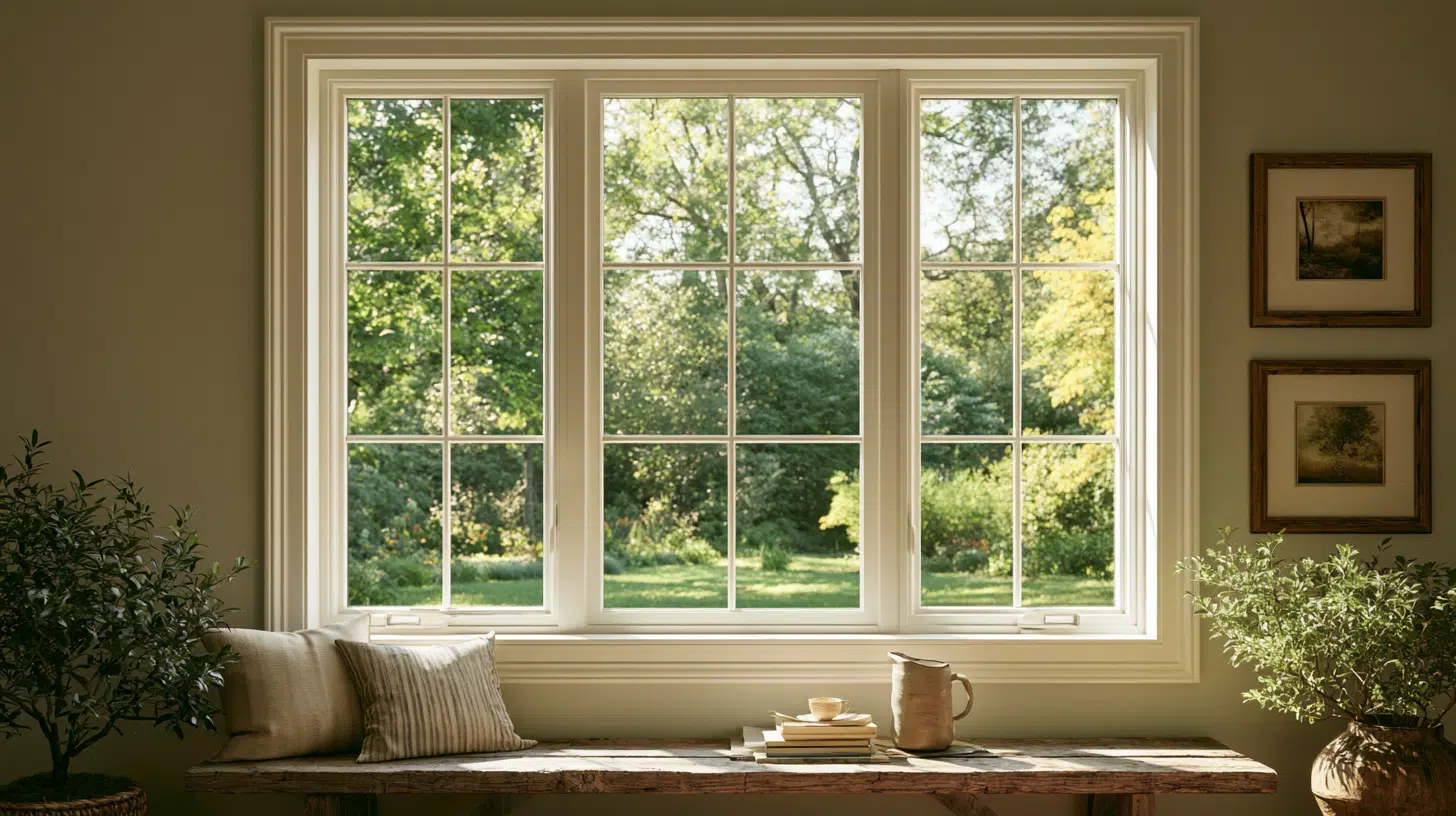
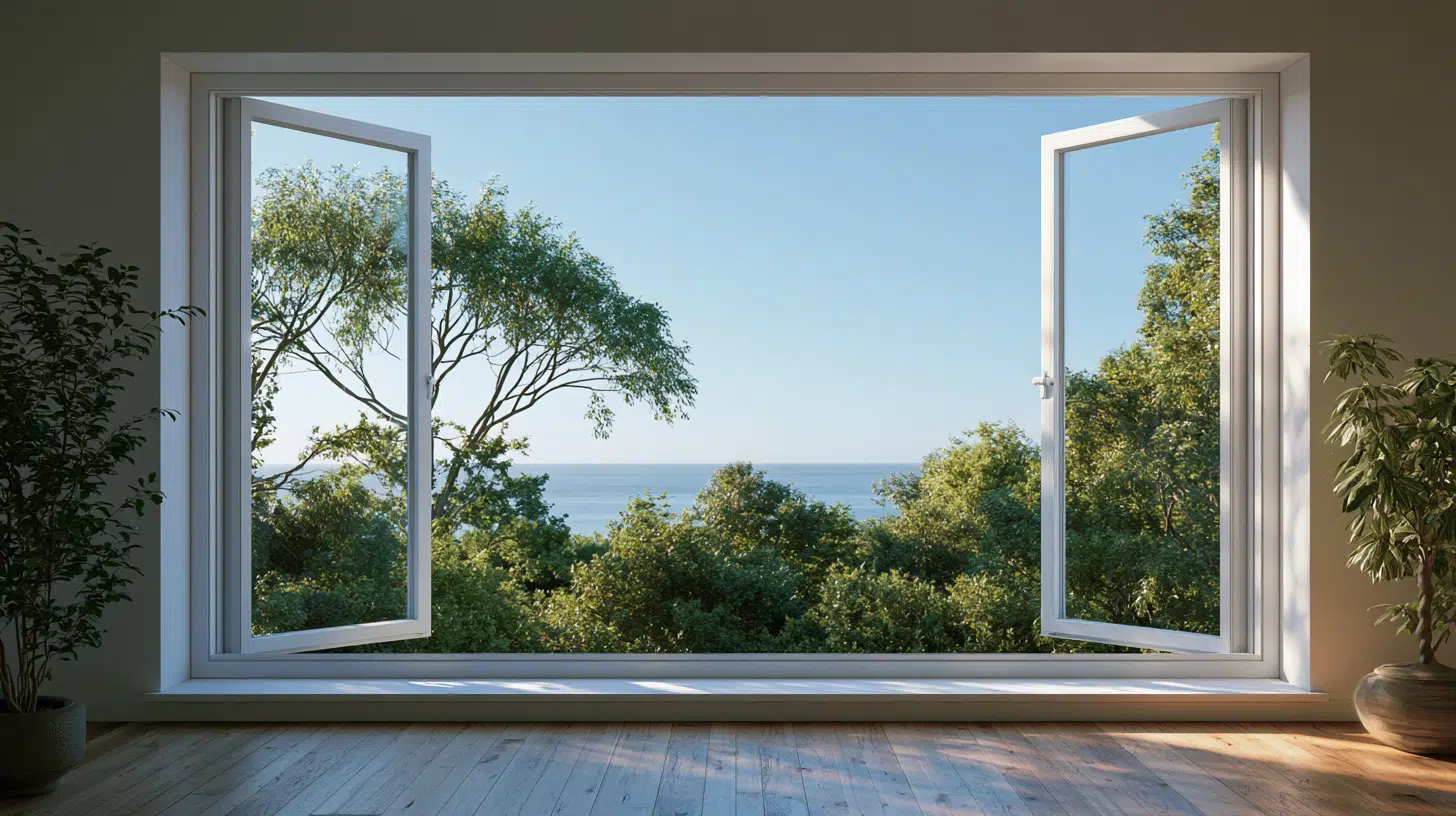
So what is a casement window? A casement window is a window with a sash hinged on one vertical side that swings outward like a door, usually operated by a crank handle. Because the whole sash clears the window frame when the window opens, ventilation is the main selling point of casements. Needing room to swing outside is the main limitation. If you are deciding whether casement windows suit one particular opening, it helps to separate three things: window style (how the sash moves), product performance (the rated glass and window frame you order), and installed performance (flashing and the wall opening around the window).
How Do Casement Windows Open and Work?
Turn the crank and an operator arm pushes the sash out along its hinge arms, pivoting on one side, so the window opens outward instead of sliding inside the frame. Turn the lock handle and the sash is drawn back against the weatherstripping, compressing it into a tight seal. That compression is what makes casement windows resistant to air leakage, and why many use a multi point locking system that engages at several points around the sash for added security. The low crank on casements also tends to be easier to operate than lifting a heavy sash, which matters for anyone with limited grip or reach.
Because casement windows swing open outward, the sash occupies exterior space the moment the window opens. That single fact drives most of the design decisions below.
What Are the Key Features and Parts of a Casement Window?
- Window frame: the fixed assembly anchored to the wall opening
- Sash: the movable section holding the glass
- Hinges or hinge arms: one or more hinges connect the sash to the window frame
- Crank operator and arm: push the sash out and pull it back
- Operator track: guides the arm on applicable casements
- Locking handle or multi point lock: seats the sash against the frame
- Weatherstripping: creates the compression seal
- Interior insect screen: standard on casement windows, since the sash swings outward
Crank Handle vs. Lock: Two Different Jobs
The crank moves the sash. The lock seals it. Once the window is shut, extra cranking does nothing useful and puts load on the gearbox and arm, which is one of the more common causes of operator damage on casements.
What Types of Casement Windows Are There? One Window Style, Several Configurations
“Casement” describes how the sash is hinged, not a fixed shape or size. Casements can be installed individually in a single opening or ganged together into a wider composition. Common configurations include:
- Single casement: one operable sash, hinged left or right, usually installed individually in a narrow opening
- Paired or double casement windows: two operable casement windows side by side in one frame
- French casements: two side-hinged panels that meet with no center mullion, so the window opens completely clear for maximum ventilation
- Casement picture window combination: operable casements flanking a fixed casement picture window, which maximizes glass area while keeping real ventilation
- Mulled assemblies: several casement windows joined into one wide or angled composition, including the operable flankers used in bay windows and bow assemblies
Casements show up in both modern and traditional architecture, so this window style rarely limits the look or conflicts with your design preferences. Bay windows in particular pair well with casements, because the angled flankers scoop air the fixed center pane cannot.
Pros and Cons of Casement Windows: Ventilation vs. Exterior Clearance
| Advantages of casements | Trade-offs |
| Whole sash swings clear for excellent ventilation | Needs unobstructed exterior clearance when the window opens |
| No horizontal meeting rail, so views stay unobstructed | Exterior glass can be hard to reach on upper floors |
| Compression seal when locked, which supports energy efficiency | No fit for a standard sash-mounted window AC |
| Low crank is easy to reach and turn | Operator, hinges and locks are more hardware to maintain |
| Works in narrow, tall openings | A wide, heavy sash can drag on its operator |
Casement Window Pros: Airflow and Views
The strong airflow is structural, not marketing. On double hung windows, half the opening is always occupied by a sash. On casements, most of the sash leaves the opening entirely, so you get more fresh air from the same rough opening, maximum airflow when it counts, and a better chance to catch breezes that run along the wall. A crank also gives you more control over how far the sash opens than a sliding sash does.
Downsides of Casement Windows
For all their many benefits, casements ask for compromises. Screens mount on the interior, which changes the look from inside and sits between you and the crank. An open sash caught by strong wind puts real stress on the arm and hinges, so casement windows in exposed locations need attention. On very wide openings, a single oversized sash gets heavy enough that paired casements usually make more sense.
Casement Windows vs. Double Hung Windows, Slider Windows, Awning Windows and Picture Windows
| Window type | How the window opens | Main advantage | Main limitation |
| Casement windows | Hinged on one vertical side, swings outward | Excellent ventilation and a compression seal | Needs swing clearance |
| Double hung windows | Two sashes slide vertically | Flexible top and bottom airflow | Meeting rail and sliding seals |
| Slider windows | Sash moves horizontally | Simple in wide openings | Only part of the opening ventilates |
| Awning windows | Hinged at the top | Can stay open in light rain | Projects outward at the bottom |
| Picture window | A fixed window that does not open | Airtight, uninterrupted view | No ventilation or egress |
The U.S. Department of Energy notes that windows hinged on one edge generally have lower air-leakage rates than sliding windows, because the sash presses against the frame instead of gliding past a seal. That is a tendency, not a guarantee. No window style is universally best, and product quality plus installation decide more about real energy performance than the operating type does. Well-built double hung windows, single hung windows and other windows that slide can outperform mediocre casements.
What Is the Difference Between Casement and Awning Windows?
A casement is hinged on the side and swings outward from a vertical edge. Awning windows are hinged at the top, so the glass tilts out like a small canopy and can shed light rain while the window opens. Hinged at the bottom, the same idea becomes a hopper window.
Where Do Casement Windows Work Best? From the Kitchen Sink to Cross-Ventilation Walls
Good Spots for Casement Windows
- Above a kitchen sink or counter, where reaching a low crank beats leaning over the kitchen sink to lift a sash
- Living rooms and dining rooms where unobstructed views and natural light matter
- Narrow, tall openings that slider windows would waste
- Facing walls where you want cross-ventilation, with casements on both sides
- Flanking a casement picture window as the operable sections
Where Casement Windows May Not Fit
- Directly beside a deck, patio or walkway the sash would swing into
- Behind dense shrubs or trellises
- Rooms that depend on a window air conditioner
- Upper stories with no safe way to clean the outside glass
- Very wide openings that would need an oversized operable sash
- A room layout with heavy drapes or blinds that would block the crank
Which Way Should a Casement Window Open?
Handing is a design decision, not a default. Hinge the sash so the glass can direct breezes into the room when the window opens rather than deflecting them away. Hinge it away from foot traffic, hose bibs, downspouts and landscaping, since the sash opens outward into all of them. Then check that the crank still lands on the side you can actually reach from inside. Manufacturers describe handing differently, some as viewed from the interior and some from the exterior, so confirm the convention in writing before the order goes in.
Are Casement Windows Energy Efficient?
Casements can deliver excellent energy efficiency, and the compression seal genuinely helps reduce air leakage. But window style alone does not decide the outcome. The glass package and the window frame determine most of the performance, frames come in different materials with different thermal behavior, and an energy efficient unit installed badly will still leak air and water. A warm-edge, gas-filled insulating glass unit provides better insulation than the frame alone ever could. Energy efficiency ratings describe the complete window, casements and double hung windows alike.
How to Read the NFRC Label
- U-factor: heat transfer through the whole window. Lower is better.
- SHGC: how much solar heat gets through. Lower blocks more heat.
- Visible transmittance: how much daylight passes through.
- Air leakage: air passing through the tested product.
ENERGY STAR Version 7.0 criteria took effect October 23, 2023 and vary by climate zone, from a maximum U-factor of 0.22 in the Northern zone to 0.32 in the Southern zone, with air leakage capped at 0.3 cfm/ft². Equivalent-performance alternatives exist in the Northern zone, so the prescriptive numbers are not the only path. ENERGY STAR estimates that swapping old single-pane units for certified new windows can lower household energy bills by up to about 13% on average nationwide. That saving comes from the complete window, not from choosing casements.
Can a Casement Window Be Used as an Egress Window?
Often yes, but not automatically. Under the 2021 International Residential Code benchmark, an emergency escape and rescue opening needs:
- At least 5.7 sq ft net clear opening (5.0 sq ft grade-floor exception)
- At least 24 in. clear opening height
- At least 20 in. clear opening width
- Bottom of the clear opening no more than 44 in. above the floor
- The opening achieved by normal operation, no tools
Note the math: 20 by 24 inches is only about 3.33 sq ft, so hitting both minimums does not satisfy the area rule. Net clear opening is also smaller than the nominal size, since the window frame and sash eat into it. These are model-code figures subject to local adoption, so verify with your building department. In California, the 2022 residential code also addresses fall protection where an operable opening sits less than 24 in. above the interior floor and more than 72 in. above the exterior surface below.
Installation, Flashing and the Wall Around the Window Frame
ASTM E2112-23, the standard practice for window installation, notes that improper installation contributes to air and water leakage, condensation and deterioration of surrounding wall materials. The window frame has to connect to the wall’s water-resistive barrier and drainage plane, with sill, jamb and head flashing lapped in the right order so water that gets behind the cladding drains back out.
Insert vs. Full-Frame Replacement Windows
Insert or pocket replacement windows keep the existing frame, which means less disruption and less exterior work, but they shrink the glass area and leave any hidden flashing or sill problem untouched. Full-frame replacement removes the old window frame so the rough opening, insulation, flashing, trim and cladding can be inspected and corrected. Caulking an insert over a rotted sill hides the problem instead of solving it. When a full-frame job exposes damaged trim, siding or missing flashing, a contractor that works on both windows and exterior cladding, such as Modern Construction Group in Northern California, may be better positioned to address the whole wall opening rather than treating the window as an isolated component. In most pre-1978 housing, paid window replacement that disturbs paint also falls under the EPA’s federal lead-safe Renovation, Repair and Painting requirements.
Choosing the Right Windows for Your Home: What to Confirm Before You Order
- Rough-opening measurements, checked against nominal unit size
- Left or right handing, in the manufacturer’s own terminology
- Exterior swing clearance, measured out from the wall, since the sash opens outward
- Net clear egress opening if the room is a bedroom
- NFRC ratings matched to your climate zone, your ventilation needs and the window’s orientation
- Clearance for the interior screen, handle and any blinds or drapes
- A safe way to clean the exterior glass
- Whether the existing window frame is sound enough for an insert
- The installer’s flashing method, and who pays for trim or siding damage found during removal
Because handing, net clear opening and swing clearance should all be settled before buying casement windows, Northern California homeowners can compare regional installation resources, including https://elevatebld.com/, and ask each for a free quote alongside other qualified local bids.
How Do You Maintain Casement Windows?
- Clear grit and debris from hinge tracks and the operator
- Tighten exposed screws when they loosen
- Inspect weatherstripping for gaps, tears or flattening
- Keep weep holes and drainage paths open
- Stop cranking once the window is shut
- Use only the lubricant your manufacturer specifies, since brand guidance differs
A sash that rubs, will not lock or needs heavy crank force is telling you something about alignment or operator wear. Investigate it instead of muscling through. An operator or hinge arm is usually a part swap. A failed window frame or water damage in the surrounding wall is a replacement conversation.
Casement Windows at a Glance: Best For, Not Best For
Casements are best for:
- Kitchens over the sink
- View-driven living spaces
- Cross-ventilation walls
- Narrow, tall openings
- Casement picture window combinations and bay windows
Not best for:
- Walkways, decks and patios
- Dense landscaping
- Rooms needing a window AC
- Upper stories with no cleaning access
- Very wide single openings
Frequently Asked Questions
What are the downsides of casement windows?
They need clear space outside because the window opens outward, they will not take a standard window air conditioner, and they use interior-mounted screens. There is also more hardware to maintain, exterior cleaning is harder on upper floors, and an open sash in high wind stresses the operator.
What Is the Main Difference Between Casement Windows and Regular Windows?
“Regular” usually means double hung windows or slider windows, where sashes slide within the frame and only part of the opening ever clears. Casement windows are hinged on one side and swing out like a door, so the full opening ventilates and no meeting rail crosses the view.
What Is Another Name for a Casement Window?
Casements are often called crank windows or crank-out windows, and sometimes side-hinged windows. The two-panel version with no center mullion is a French casement. Hinged at the top it is an awning, hinged at the bottom it is a hopper.
Can You Put a Window Air Conditioner in a Casement Window?
Standard sash-mounted units generally will not fit, since there is no horizontal sash to rest on or close down against. The usual workarounds are a casement-specific vertical AC unit, a portable unit with a vent kit, or a ductless mini-split.