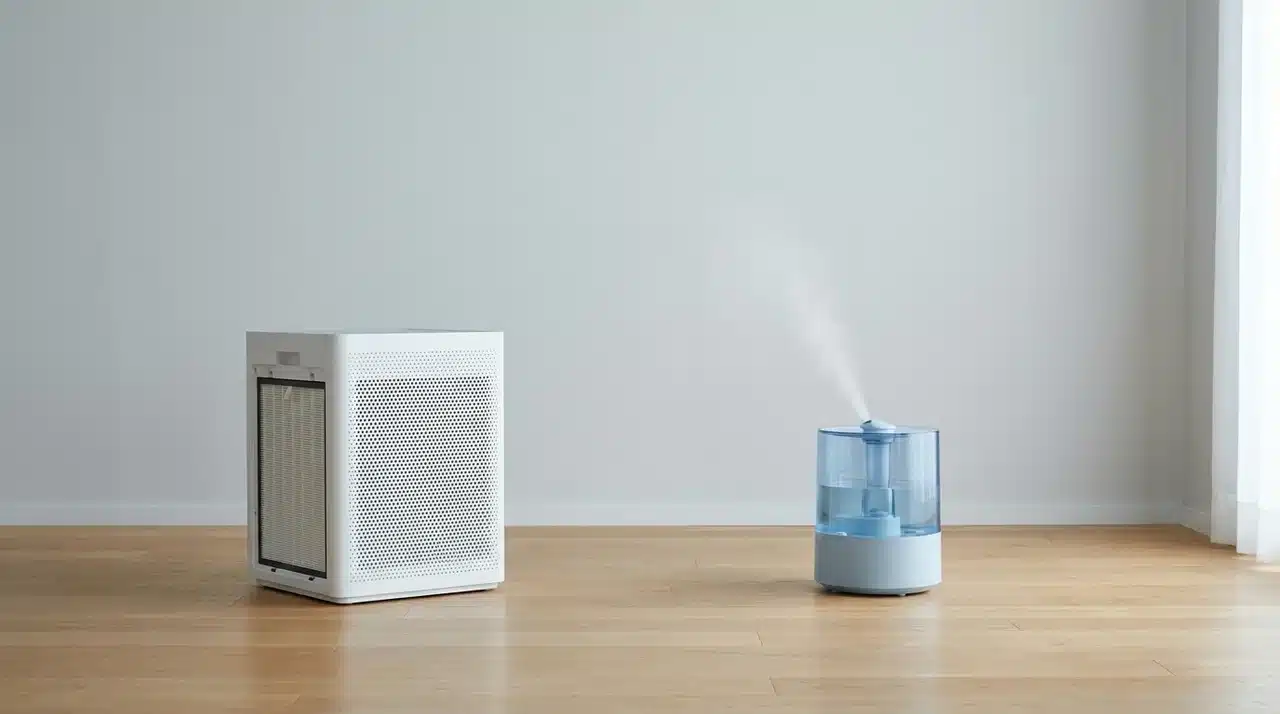
Choosing the wrong air device can leave you with the same problem and one more appliance to maintain. If you are comparing air purifier vs humidifier options, the real question is simple: do you need cleaner air, more moisture, or both?
I know the features can sound similar at first, especially when allergies, dust, dry throat, sleep, or stuffy air are involved, all of which tie back to your overall indoor air quality. You need a clear way to match the device to the cause, not just the symptom.
Here, you can compare how each one works, where each fits best, when both can be used together, and what to check before making your choice.
A common question is: Is an air purifier the same as a humidifier? The answer is no because each device handles a different indoor air problem. An air purifier uses filters to capture particles such as dust, pollen, pet dander, and smoke. A humidifier adds moisture to dry air but does not remove airborne particles.
What Does an Air Purifier Do?
An air purifier pulls room air through internal filters and then sends the filtered air back into the space. As the air moves through the unit, the filter captures some of the particles floating indoors.
Many models use HEPA filters designed to trap small particles such as dust, pollen, and pet dander. Some also include activated carbon filters that can help with certain odors from cooking, pets, or smoke.
How well a purifier performs depends on its filter, airflow, and the size of the room. A model made for a small bedroom may not perform as well in a large living area.
An air purifier also has clear limits. It does not add moisture, so it cannot correct low humidity or dry indoor air.
What Does a Humidifier Do?
A humidifier increases the amount of moisture in indoor air. It releases water vapor or mist into a room, which can make very dry conditions feel more comfortable.
Several common types work in different ways. Cool-mist humidifiers release room-temperature moisture. Warm-mist units heat water before releasing vapor, while ultrasonic models use vibrations to produce a fine mist. Evaporative humidifiers generally use a fan and a wet wick to add moisture.
If you are wondering, does a humidifier clean the air? The answer is no. A humidifier changes moisture levels, but it does not filter dust, pollen, smoke, pet dander, or other airborne particles.
Humidifiers are often useful during dry winter weather, especially when indoor heating lowers moisture levels. Added humidity may also make dry skin, a dry throat, or irritated nasal passages feel less uncomfortable.
However, a humidifier does not filter dust, pollen, smoke, or pet dander. Its main job is moisture control, not particle removal.
Air Purifier vs Humidifier: Key Differences
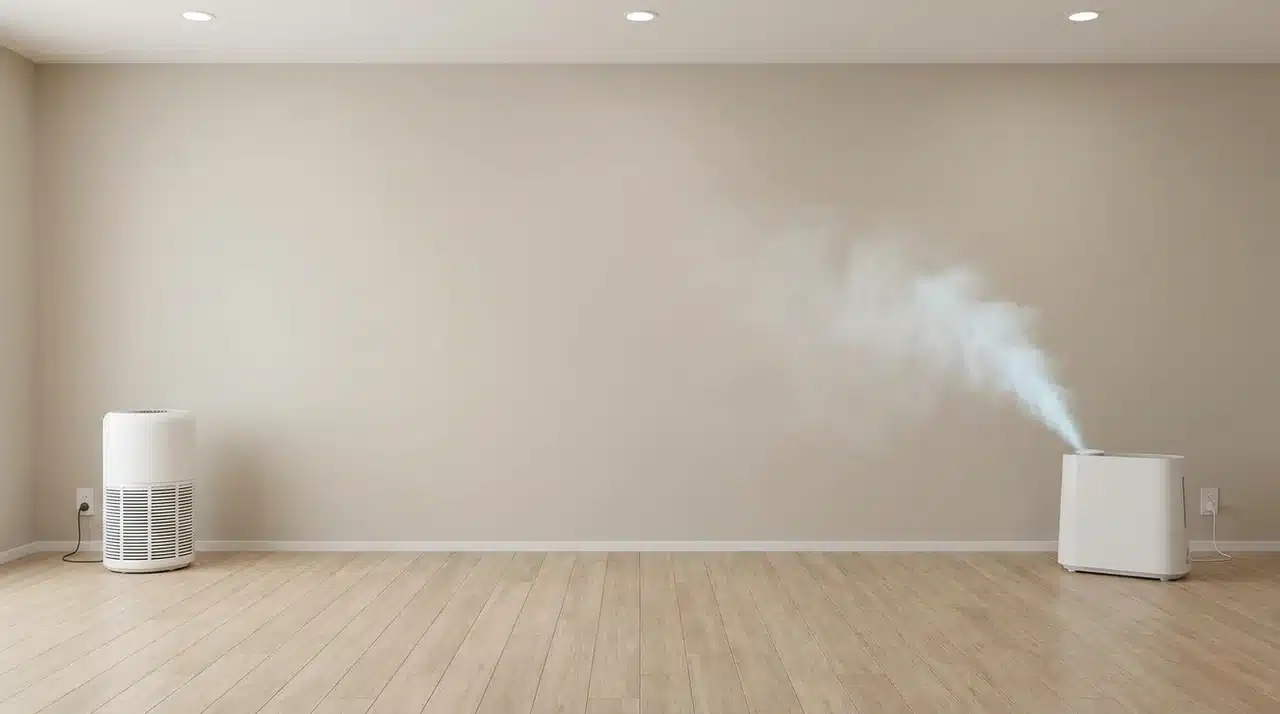
Looking beyond their basic purpose also shows important differences in air cleaning, moisture control, maintenance, operating costs, and everyday use.
1. Air Cleaning
An air purifier is designed to capture certain particles moving through indoor air. Depending on its filter, it may reduce airborne dust, pollen, pet dander, and smoke particles.
A humidifier does not do this. Adding moisture may change how a room feels, but it does not remove those particles from the air.
If airborne material is the main concern, a purifier is the more relevant device.
2. Humidity Control
A humidifier directly raises indoor moisture levels by releasing water vapor or mist.
An air purifier does not meaningfully raise or lower humidity. Air simply passes through its filters before returning to the room.
Checking indoor humidity can help before running a humidifier for long periods. More moisture is not always better, especially when the room already feels humid.
3. Maintenance
Air purifier maintenance usually centers on the filters. They need regular checks, cleaning where permitted, and replacement based on the manufacturer’s instructions.
Humidifiers require regular water changes and tank cleaning. Mineral deposits and residue can build up inside the unit, especially it frequent use.
I would consider maintenance before buying either device because poor upkeep can reduce the appliance’s usefulness.
4. Cost of Use
Air purifier costs usually include electricity and replacement filters. Filter costs depend on the model and how often they need changing.
A humidifier may involve electricity, cleaning supplies, replacement wicks on some models, and water. Certain units may also benefit from low-mineral or distilled water when tap water leaves mineral deposits.
Looking at ongoing expenses gives a more realistic idea of the total cost than comparing purchase prices alone.
When They Are Commonly Used
Air purifiers can be useful throughout the year when dust, pollen, pet dander, smoke, or other airborne particles remain a regular concern.
Humidifier use tends to depend more on indoor moisture levels. They are commonly used during dry winters or in naturally dry climates.
That means a purifier may run regularly throughout the year, while a humidifier may only be needed during certain months.
Air Purifier or Humidifier: Which Is Better for Common Problems?
The better option depends on what is causing the discomfort. Use this comparison to see which device fits common concerns linked to particles or dry air.
| Problem | Air Purifier | Humidifier | Better Choice |
|---|---|---|---|
| Allergies | Filters airborne pollen, dust, and pet dander | Does not remove allergens from the air | Air purifier |
| Dust | Captures some airborne dust before it settles | Does not filter dust | Air purifier |
| Dry Throat | May help when smoke or airborne irritants are involved | Adds moisture when low humidity causes dryness | Humidifier for dry air |
| Cough | May help when dust, pollen, smoke, or pet dander causes irritation | May make very dry air more comfortable | Depends on the cause |
| Sinus Problems | Reduces some airborne allergens | Adds moisture when nasal passages feel dry | Depends on the trigger |
| Stuffy Nose | May help when airborne irritants are involved | May help when very dry air causes discomfort | Depends on the cause |
| Sleep | Filters particles in the bedroom | Adds moisture when nighttime air feels dry | Either, based on room conditions |
| Baby’s Room | Reduces some airborne particles | Adds moisture when the room becomes too dry | Either, based on room needs |
Neither appliance solves every problem. Check indoor conditions first, then choose the device that addresses the likely cause while keeping placement, cleaning, and room size in mind.
Can You Use an Air Purifier and Humidifier Together?
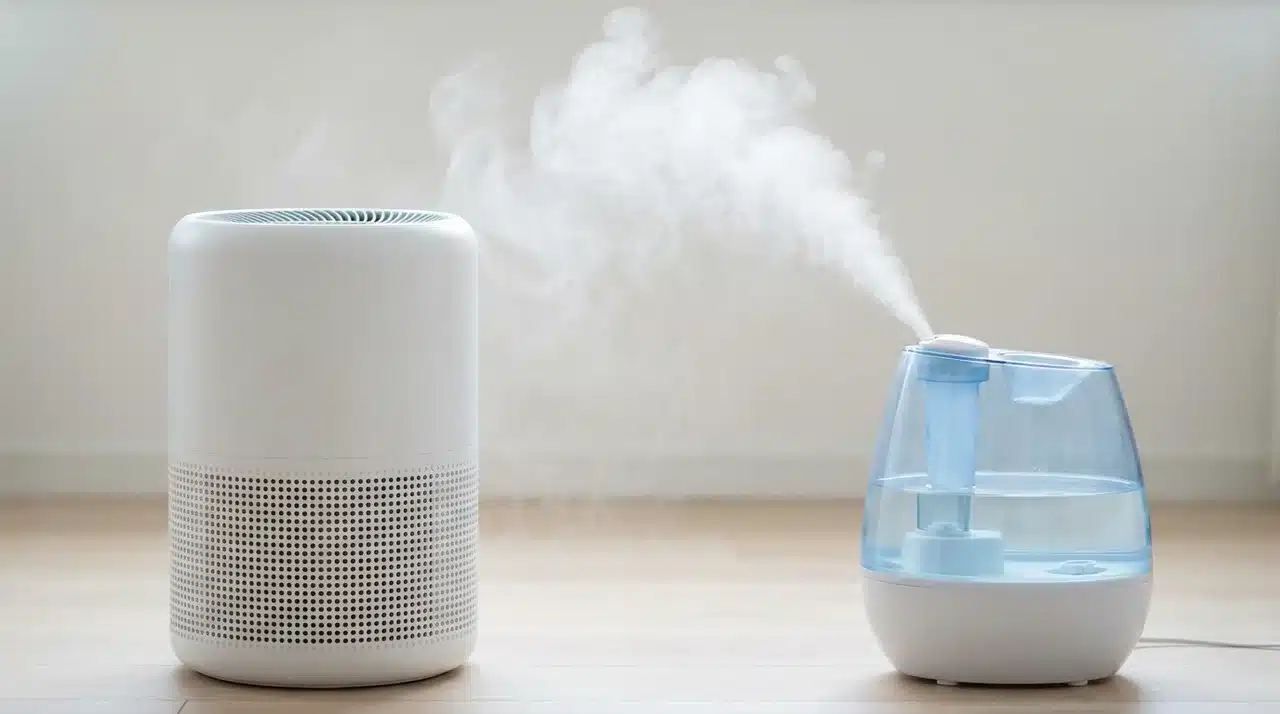
Yes. An air purifier and humidifier can operate in the same room because each handles a different indoor-air problem.
The purifier filters certain airborne particles, while the humidifier adds moisture. Using both can make sense when a room has dry air as well as dust, pollen, pet dander, smoke particles, or similar concerns.
Keep enough space between the two devices. Humidifier mist should not blow directly toward the purifier, its filter, or its sensors. Extra moisture around the purifier can interfere with normal operation.
Monitor indoor humidity instead of running the humidifier constantly. A range around 30% to 50% relative humidity is commonly recommended for many homes.
Regular maintenance matters too. Clean the humidifier tank often and replace purifier filters as directed.
Where Should You Put an Air Purifier and Humidifier?
Placement affects airflow, moisture distribution, and how safely each appliance can operate inside the room.
- Air Purifier Placement: Keep its intake and outlet clear so air can circulate through the unit without furniture or walls blocking airflow.
- Humidifier Placement: Put it on a stable surface where mist cannot soak walls, furniture, bedding, curtains, or nearby electronics.
- Keep Them Apart: Do not aim humidifier mist toward the purifier, its filter, or built-in particle sensors.
- Bedroom Setup: Position each appliance where air or mist does not blow directly toward someone throughout the night.
- Room Size: Choose a unit rated appropriately for the space instead of relying only on the physical size of the appliance.
Good placement helps each device perform its job without creating avoidable moisture or airflow problems.
How to Decide Between an Air Purifier and Humidifier
Start with what is happening inside the room rather than comparing appliances based only on their features.
- Choose an air purifier when airborne dust, pollen, pet dander, or smoke particles are the main concern.
- Choose a humidifier when indoor air is dry and low moisture is causing noticeable discomfort.
- Consider both when a room has airborne particle concerns and consistently dry air.
- Check indoor humidity before adding more moisture.
- Compare room-size ratings before buying either device.
- Consider filter costs, water use, and cleaning requirements.
- Think about noise when choosing a model for a bedroom.
- Check how often filters, tanks, or wicks need attention.
The appliance should match the actual problem. A purifier is not a substitute for humidity control, and a humidifier cannot take the place of air filtration.
Final Choice
Choosing the right device gets easier once you focus on what your room actually needs. An air purifier targets airborne particles such as dust, pollen, pet dander, and smoke, while a humidifier adds moisture when indoor air feels too dry.
For me, the air purifier vs humidifier choice comes down to the cause behind the problem. You may need one device, or both, depending on air quality, humidity, room size, maintenance, and comfort.
That matters because the right match can save you money and help the appliance do a useful job. Check your room conditions, compare your needs, and then read related indoor-air posts for more practical home tips today.
Frequently Asked Questions
Which is better to have, a humidifier or an air purifier?
Neither is better in every home. An air purifier is meant for certain airborne particles, while a humidifier is made for dry indoor air. The right option depends on whether particles or low humidity are causing the problem.
What are the disadvantages of an air purifier?
Air purifiers require electricity and regular filter replacement. Some models can also be noisy at higher fan settings. Their coverage is limited by room size, and they cannot fix low humidity or remove dust already settled on surfaces.
Is it good to sleep with an air purifier and humidifier?
Both can run in a bedroom when there is a clear reason to use them. Keep humidifier mist away from the purifier, maintain both units properly, and avoid adding moisture when indoor humidity is already high.
Will an air purifier help with a dry throat?
An air purifier does not add moisture, so it cannot directly correct dry indoor air. It may be useful when airborne irritants are involved. When low humidity is the main issue, a humidifier is more relevant.
Do humidifiers clean the air?
No. A humidifier adds moisture but does not filter dust, pollen, smoke, pet dander, or other airborne particles. An air purifier is designed for particle filtration.
Does an air purifier reduce humidity?
A standard air purifier does not meaningfully lower humidity. It passes air through filters to capture certain particles. A dehumidifier is designed specifically to remove excess moisture.
Do I need a humidifier if I already have an air purifier?
Possibly. An air purifier does not raise indoor humidity, so it cannot fix dry-air conditions. If the room has low moisture levels, a separate humidifier may still be useful.