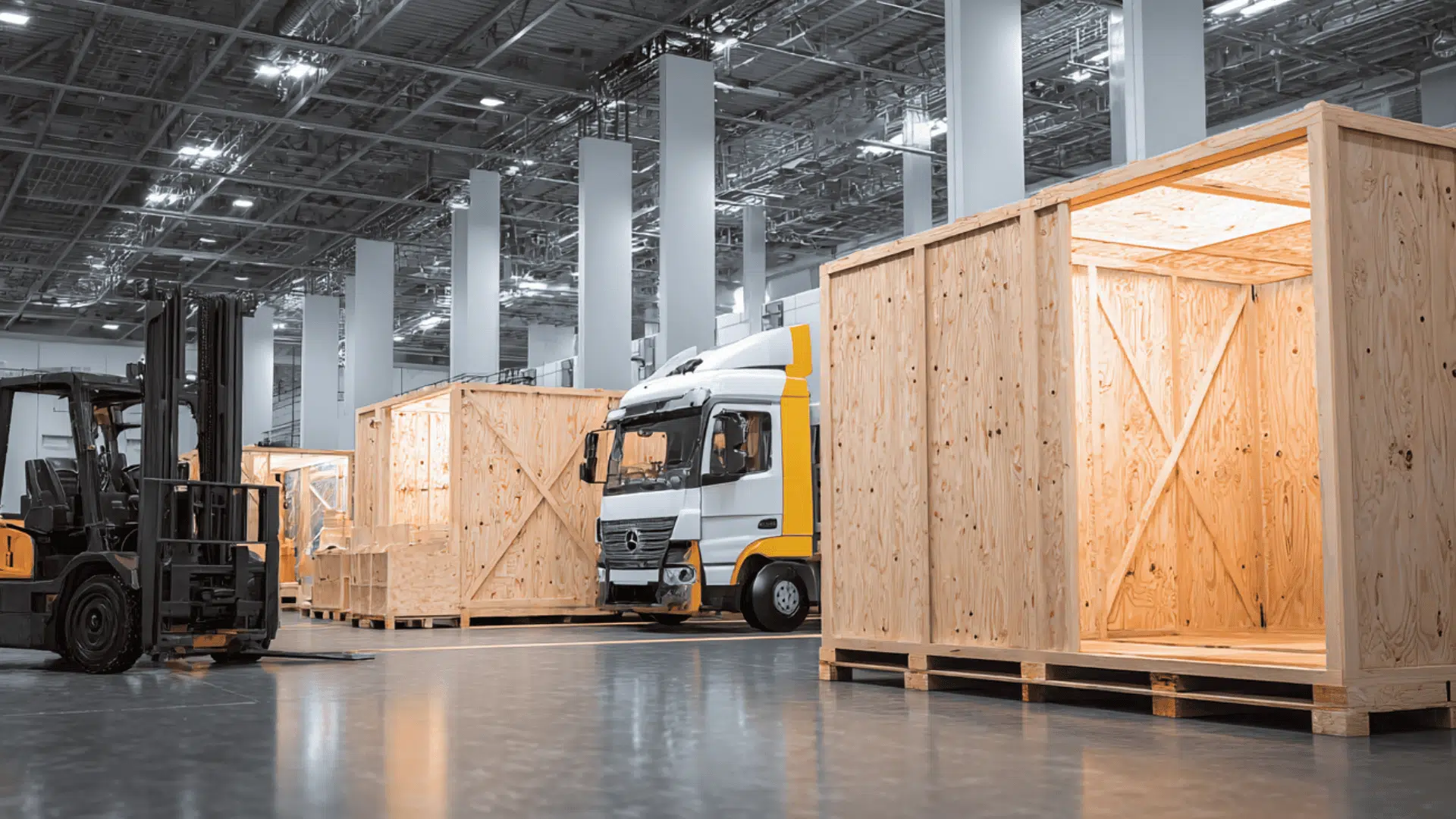
International moves hit differently because there’s so much happening behind the curtain.
You’re not just shipping boxes; you’re moving your whole life across borders with rules, timing, and logistics that don’t always play nice.
The tricky part is knowing what really matters before you even start comparing international moving companies. Some parts of the process feel obvious, but others only show up once you’re already deep into planning.
In this guide, I’ll walk you through the practical stuff people wish they knew earlier: how movers actually operate, what costs look like, ways to save money, and what the timeline really involves.
Let’s start with what they do.
What International Moving Companies Actually Do
Here’s the part a lot of people gloss over. But it’s the stuff you actually deal with once you hire someone. The behind-the-scenes work that makes the whole thing function. And yeah, there’s more going on than most people expect.
- Packing and loading: Movers wrap and box everything, label items, and load your belongings tightly and securely so nothing shifts around during long-distance transit.
- Sea freight vs air freight: Sea is slower but cheaper for large shipments, while air is faster and pricier, usually reserved for essentials you need right when you arrive.
- Customs paperwork and clearance: They prepare item lists, file required documents, and coordinate with customs officials to keep your shipment from getting stuck or delayed at the destination.
- Door-to-door delivery and unpacking: A destination crew brings everything to your new home, handles basic unpacking if included, and removes packaging so you’re not left drowning in boxes.
- Insurance options: Companies offer coverage that protects your belongings during shipping, giving you a fallback if something gets damaged or lost along the way.
Best International Moving Companies
This is the shortlist people usually land on after comparing quotes, reading reviews, and asking around.
Each mover has its own style and strengths, so these fields make it easier to see what you’re actually getting without digging through endless pages.
1. International Van Lines (IVL)

- Strengths: Handles packing, shipping, logistics, and coordination internally. Less guesswork for you.
- Service Quality: Organized and steady. Communication stays clear even when things get hectic.
- Routes They Specialize In: USA to Europe, Australia, and Asia. Strong sea freight setup.
- Pricing Notes: Mid-range. Reasonable for full-service moves.
- Speed / Timeline Reliability: Predictable for sea freight with realistic expectations.
- Not Ideal For: Small, box-only shipments.
- Standout Feature: Fewer third-party handoffs from start to finish.
- Quick Take: Good pick if you want a clean, guided move without chasing people down.
2. JK Moving Services

- Strengths: Excellent handling for fragile and high-value items. Packing quality is noticeably better.
- Service Quality: Feels careful and deliberate. Support teams stay responsive throughout.
- Routes They Specialize In: Europe, the Middle East, and global routes with strong partners.
- Pricing Notes: Higher-end. You’re paying for premium care.
- Speed / Timeline Reliability: Stable and well-communicated.
- Not Ideal For: Budget-focused moves.
- Standout Feature: Some of the best specialty packing crews you’ll find.
- Quick Take: If breakage worries you, this is the one people trust most.
3. United Van Lines

- Strengths: Huge global network with reliable structure and systems.
- Service Quality: Consistent. Move managers guide you step by step.
- Routes They Specialize In: 150+ countries with strong corporate relocation channels.
- Pricing Notes: Mid-to-high, depending on services.
- Speed / Timeline Reliability: Above average thanks to strong partnerships.
- Not Ideal For: People chasing the lowest price.
- Standout Feature: One of the best planning and coordination setups in the industry.
- Quick Take: Good match if you want clarity, stability, and a well-organized path from start to finish.
4. Allied Van Lines

- Strengths: Big global footprint with fewer middlemen touching your shipment.
- Service Quality: Smooth and predictable. Crews tend to be well-trained.
- Routes They Specialize In: Europe, Australia, Canada, and major expat destinations.
- Pricing Notes: Competitive for full-home moves.
- Speed / Timeline Reliability: Steady, thanks to established overseas partners.
- Not Ideal For: Small or minimal moves.
- Standout Feature: Worldwide storage options that make complex moves easier.
- Quick Take: Great for large and multi-stage moves where you want everything lined up.
5. North American Van Lines
- Strengths: Solid logistics, experienced teams, and clean communication.
- Service Quality: Straightforward. Easy tracking and consistent handling.
- Routes They Specialize In: Global routes with strength in Canada, Europe, and Asia.
- Pricing Notes: Mid-range and balanced.
- Speed / Timeline Reliability: Above average and less variable than competitors.
- Not Ideal For: Fragile-heavy or highly specialized moves.
- Standout Feature: Simple, transparent tracking that keeps things understandable.
- Quick Take: A reliable, steady mover if you want predictable results.
6. Schumacher Cargo Logistics
- Strengths: Excellent pricing for sea freight and vehicle shipping.
- Service Quality: More freight-focused, but dependable for large shipments.
- Routes They Specialize In: USA to Europe, Australia, and common port-to-port paths.
- Pricing Notes: Some of the best container rates available.
- Speed / Timeline Reliability: Usually fine, but depends on port conditions.
- Not Ideal For: Full-service, white-glove moves.
- Standout Feature: Strong at both household goods and vehicle transport.
- Quick Take: Ideal if you want lower costs and don’t mind a more hands-on approach.
7. Seven Seas Worldwide

- Strengths: Perfect for smaller or box-only shipments. Very easy setup.
- Service Quality: Simple and clear. Designed for lighter moves.
- Routes They Specialize In: UK, Australia, New Zealand, and Europe.
- Pricing Notes: Affordable and transparent, especially for small loads.
- Speed / Timeline Reliability: Reasonable, not fast; just steady.
- Not Ideal For: Full-home or furniture-heavy moves.
- Standout Feature: Mini-container and box-based pricing that keeps things flexible.
- Quick Take: Great for students, expats, and anyone moving light.
8. Mayflower

- Strengths: Long-standing brand with consistent, dependable service.
- Service Quality: Smooth and comfortable. Crews tend to feel seasoned.
- Routes They Specialize In: USA to Europe, Asia, and major global destinations.
- Pricing Notes: Mid-range, sometimes a bit higher with extras.
- Speed / Timeline Reliability: Stable and predictable.
- Not Ideal For: Very small shipments or rock-bottom budgets.
- Standout Feature: Decades of proven performance with structured processes.
- Quick Take: A safe, steady option if you want a mover that’s been doing this forever.
Comparison International Movers Side-by-Side
A simple table that shows the things you can’t really “feel out” from a company website. Certifications, years in the game, and how the quote process works say a lot about how organized the company actually is.
| Company | Certifications (FIDI / IAM) | Experience | Quote Process | Insurance Options |
|---|---|---|---|---|
| International Van Lines (IVL) | IAM member | 20+ years | Online form + quick consult. Easy to follow. | Full-value and limited coverage available. |
| JK Moving Services | IAM member | 40+ years | Virtual survey required for accuracy. Very detailed. | Strong premium coverage options with higher protection levels. |
| United Van Lines | IAM member | 90+ years | Move manager guides the quote from start to finish. | Multiple tiers, including full replacement value. |
| Allied Van Lines | IAM member | 90+ years | Local Allied agent handles the quote. Straightforward. | Full-value protection, optional add-ons. |
| North American Van Lines | IAM member | 90+ years | Uses digital inventory tools for clean, transparent quotes. | Full-value, limited liability, and custom options. |
| Schumacher Cargo Logistics | Not typically FIDI/IAM | 40+ years | Freight-style quotes with clear container pricing. | Basic coverage and full-value options depending on shipment. |
| Seven Seas Worldwide | IAM member | 25+ years | Simple online box-based pricing. Beginner-friendly. | Basic coverage included, optional upgrades for boxes. |
| Mayflower | IAM member | 90+ years | Coordinator-led quote process. Polished and familiar. | Full-value protection plus standard liability options. |
How Much Does an International Move Cost?
Prices jump around a lot depending on distance, volume, speed, and the country you’re heading to. Most people don’t realize how wide the range really is until they start getting quotes.
These numbers won’t be exact for every situation, but they give you a solid, real-world baseline so you know what’s normal and what’s not.
1. Cost by Shipping Method (Sea vs. Air)
Sea Freight: Usually the cheapest option for full-home moves. A 20-foot container typically runs $3,000 to $7,000, depending on route and timing. A shared LCL shipment usually falls between $1,200 and $3,000.
Air Freight: Much faster but dramatically more expensive. A small pallet can easily hit $2,000 to $5,000, while larger shipments can go well over $10,000. Most people only ship essentials by air.
2. Cost by Route (USA → Europe, Asia, Australia)
USA → Europe
One of the more affordable international lanes. Full containers usually land between $4,000 and $8,000. Box-only shipments often fall between $500 and $1,500.
USA → Asia
Prices climb here. Full containers typically range $6,000 to $12,000, depending on port congestion and time of year.
USA → Australia
A long route with higher costs. Expect $7,000 to $14,000 for a full container. LCL shipments usually run $1,200 to $3,500.
3. Cost by Home Size (1BR, 2BR, 3BR)
- 1-Bedroom Apartment: Usually fits in a shared container or a smaller LCL load. Common range: $2,000 to $5,000.
- 2-Bedroom Home: Often needs part or all of a 20-foot container. Average range: $4,000 to $9,000.
- 3-Bedroom Home: Typically fills a 40-foot container. Expect $8,000 to $15,000+ depending on distance and packing level.
4. Hidden Fees to Watch Out For
These are the charges people don’t expect. They show up toward the end of the move and catch a lot of first-time movers off guard.
- Port fees: Charged when your container arrives. Usually $200 to $600, but some ports run higher.
- Destination handling charges: Covers unloading, handling, and local delivery at your destination. Can range from $300 to $1,000+, depending on the country.
- Customs charges: Some countries require inspection fees, import duties, or cleaning fees. Expect anywhere from $100 to several hundred dollars, depending on your shipment.
- Storage fees: If your container arrives early or your home isn’t ready, you may pay storage. This typically runs $50 to $300 per week, depending on location and container size.
International Moving Timeline: How Long It Really Takes
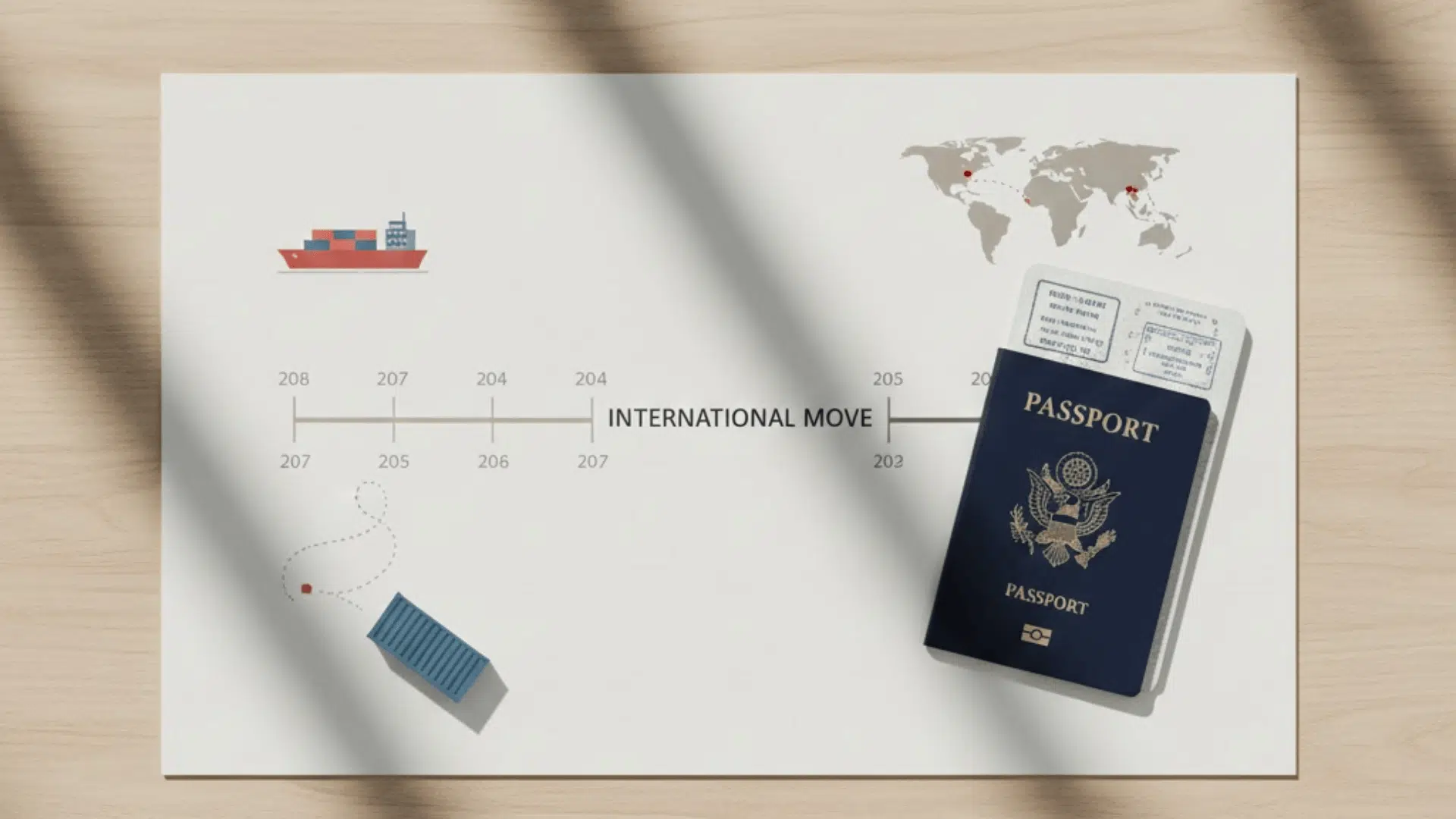
Most people look at international moves and think it’s just “ship it and wait.” It’s a lot more layered than that. Each stage has its own clock, and some parts move fast while others slow down for reasons you can’t control.
| Stage | Typical Time Range | What Actually Happens |
|---|---|---|
| Pickup & Packing | 1–3 days | Crew wraps, boxes, labels, and inventories everything before transport. |
| Container Loading + Port Wait | 3–14 days | Shipment moves to warehouse, gets containerized, then waits for vessel space. |
| Transit: USA → Europe | 12–25 days | One of the faster overseas routes, depending on port traffic. |
| Transit: USA → Asia | 25–40 days | Longer distance plus busier ports on both ends. |
| Transit: USA → Australia | 30–50 days | Very long route with variable ocean schedules. |
| Customs Processing | 3–14 days | Paperwork checks, inspections, and country-specific clearance steps. |
| Final Delivery | 2–5 days | Local crews handle unloading, basic setup, and debris removal. |
Customs Guide for International Moves
Customs is the part of the move most people worry about. It feels complicated, but once you know what you need, the whole process gets a lot smoother. Most delays come from paperwork issues or items that trigger inspections, not from anything dramatic.
1, Required Documents (By Country Tier)
Different countries ask for different things, but they usually fall into three tiers:
Tier 1: Low-Complexity Countries (Canada, UK, EU Nations)
- Passport
- Detailed inventory list
- Bill of lading
- Proof of residence or visa
- Sometimes, a power of attorney form for your mover to represent you
Tier 2: Moderate-Complexity Countries (Australia, New Zealand, Singapore)
- Passport
- Detailed inventory list with item values
- Bill of lading
- Residence permit or long-stay visa
- AQIS/Biosecurity forms (Australia + NZ)
- Potential quarantine inspection paperwork
Tier 3: High-Complexity Countries (India, UAE, South Africa, Brazil)
- Passport
- Work permit, residence visa, or long-term entry document
- Detailed inventory list with serial numbers if applicable
- Bill of lading
- Power of attorney
- Customs declaration forms
- Sometimes a tax ID number specific to the country
2. Restricted & Prohibited Items
Most countries share similar rules. Some things just can’t go in a container, and others require special paperwork.
Commonly Prohibited Items
- Firearms or ammunition
- Flammable or hazardous materials
- Explosives or pressurized containers
- Certain chemicals and cleaning supplies
- Perishable food items
- Opened liquids
Commonly Restricted Items
- Alcohol (limits vary by country)
- Tobacco products
- Plants, seeds, soil
- Animal products
- High-value electronics (sometimes require declaration)
- Medication (often needs prescriptions attached)
If something looks questionable, it’s usually smarter to leave it out.
3. Tips for Smooth Clearance
Label your inventory clearly. Vague descriptions trigger inspections. “Kitchen items” isn’t as helpful as “pots, pans, utensils.”
Keep all documents in one digital folder. Customs officers sometimes request things twice. Having everything accessible prevents delays.
Avoid packing brand-new items in sealed boxes. Many countries tax new goods. Used items typically pass without duty.
Don’t ship food, spices, or any organic material unless the country specifically allows it. These items slow down clearance more than almost anything else.
Respond quickly to your mover if customs asks questions. Most clearance delays come from slow communication, not from issues with the shipment.
Double-check visa or residency documents before shipping. Some countries won’t release your container until your status is confirmed.
Cheap Ways to Move Internationally
International moves get pricey fast, but there are a few approaches that can cut the cost without making things harder on you. These options work best when you’re flexible and not trying to ship your entire house in one go.
- Shared container LCL shipping: You only pay for the space you use inside a larger container. It’s slower than full-container shipping, but it can drop the price by a lot. Works well for one-bedroom moves or anything that doesn’t fill a whole container.
- Pallet shipping (Reddit-recommended): You stack your items on a pallet, wrap it tight, and ship it through a freight carrier. Simple. Cheap. Good for smaller households, tools, or gear you’re comfortable packing yourself. Not a white-glove option, but very practical.
- Downsizing before the move: Most of the cost comes from volume. Selling or donating big items, beds, sofas, and tables cuts the bill more than anything else. Smaller stuff adds up, too. Only ship what you’d pay to replace.
- When air freight actually saves money: Small shipments that don’t justify LCL space can be cheaper by air, especially one-to-two-box moves. You also avoid port fees and long sea freight delays, so the timeline stays tighter.
Wrapping Up
Moving overseas feels big, but once you see how the process breaks down, it becomes a lot more manageable.
The important part is knowing what really matters before you commit: timelines, paperwork expectations, and how each mover handles the details you won’t see.
The right international moving company isn’t just the cheapest or the fastest; it’s the one that keeps the whole move steady from the first box to the final handoff.
If you’re planning an international move and want the smoothest setup possible, start comparing quotes early so you can lock in the company that fits you best.