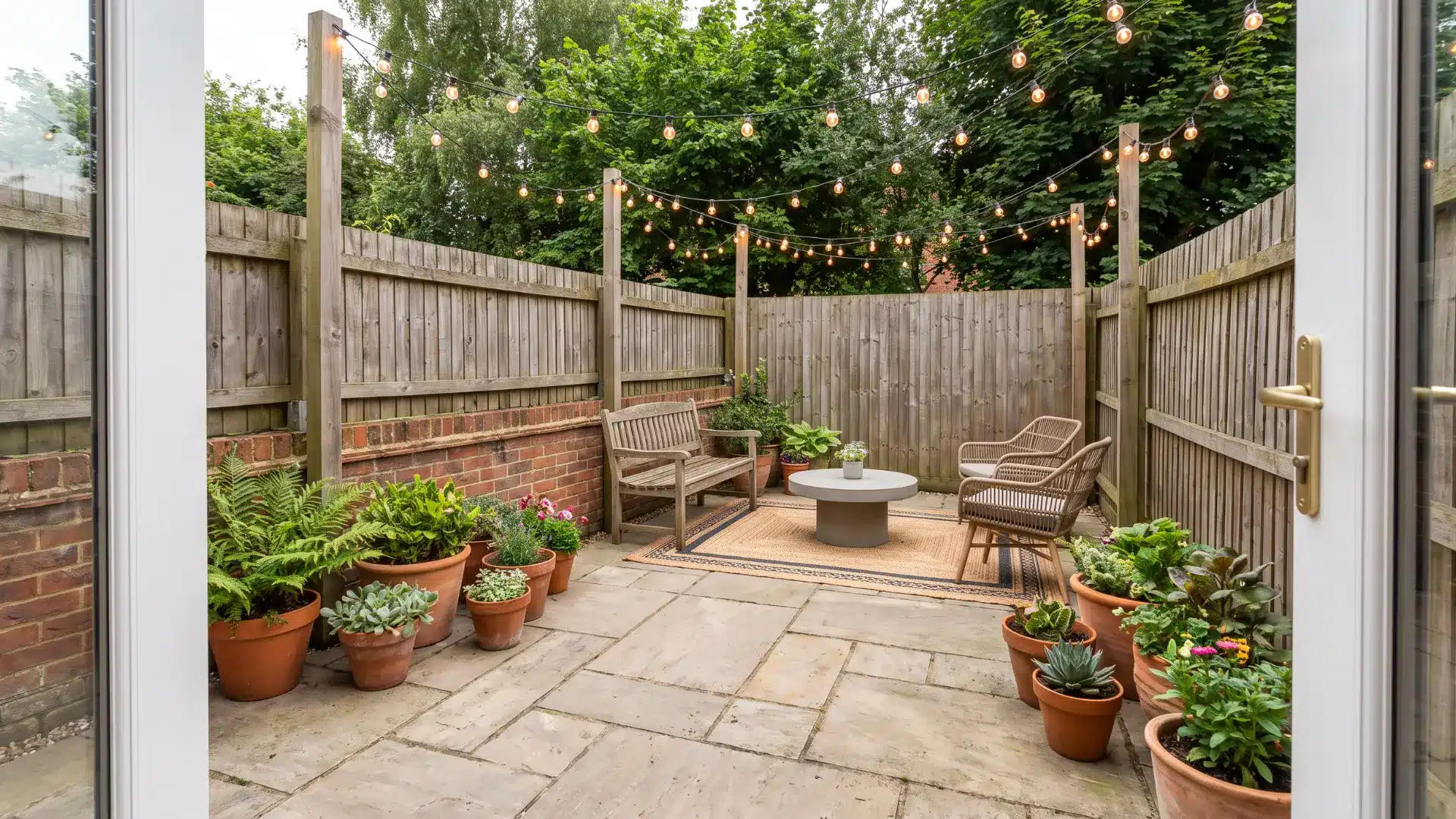
| Patio Size | As small as 6′ x 8′ for a bistro setup; 8′-10′ per side for a functional seating area |
| Budget Range | $0-$50 per idea (paint, rugs, DIY planters) up to $300-$600 for a shade sail or built-in bench |
| Style | Works for modern, cottage, and rental-friendly patios alike |
| Best For | Homeowners and renters with one small slab, deck, or concrete pad and a single main use in mind |
| Avoid If | You’re trying to fit dining, lounging, and a garden bed into the same 100-150 square feet without picking a priority |
A small patio can feel crowded fast when every chair, planter, and decor piece competes for the same few feet.
I find that the best results come from choosing one clear purpose first, then building the layout around it. That is what makes small backyard patio ideas easier to use in real life. You do not need a huge budget or a complete remodel.
You need smart seating, vertical storage, durable outdoor materials, privacy where it matters, and lighting that keeps the space useful after dark.
I’ll help you focus on practical upgrades that fit tight layouts, so you can create a patio that feels comfortable, organized, and easy to maintain.
How to Make a Small Backyard Patio Work
A small backyard patio works best when every inch has a clear purpose. Start with movement and seating first, then use vertical space and simple zones to prevent unnecessary crowding.
- Choose compact seating: Use a two-seat bistro set, slim bench, or small chairs instead of a full dining set that can dominate the available floor space.
- Create simple zones: Define the seating area with an outdoor rug, gravel strip, or different paver pattern rather than adding walls or bulky physical dividers.
- Use vertical space: Install wall-mounted shelves, hooks, racks, or planters to handle storage and greenery while leaving more usable room at ground level.
- Protect walking routes: Keep a clear path between the back door and seating area so people can move comfortably without squeezing around furniture or planters.
- Keep furniture near edges: Position seating close to a wall or the house when possible, leaving the center and outer patio areas open and easier to use.
The goal is not to fill every corner. Keep the layout simple, protect walking space, and add only features that make your patio more comfortable, practical, and enjoyable for daily outdoor use. Many of these same zoning habits apply when arranging furniture in tight indoor rooms, since the goal in both spaces is to keep movement clear while every piece still earns its spot.
Small Backyard Patio Ideas to Maximize Layout & Function
A large yard forgives bad planning. A small patio doesn’t; every square foot either earns its place or makes the space read as smaller than it is. That’s why layout comes before furniture shopping or decor.
1. Create a Two-Seat Bistro Corner
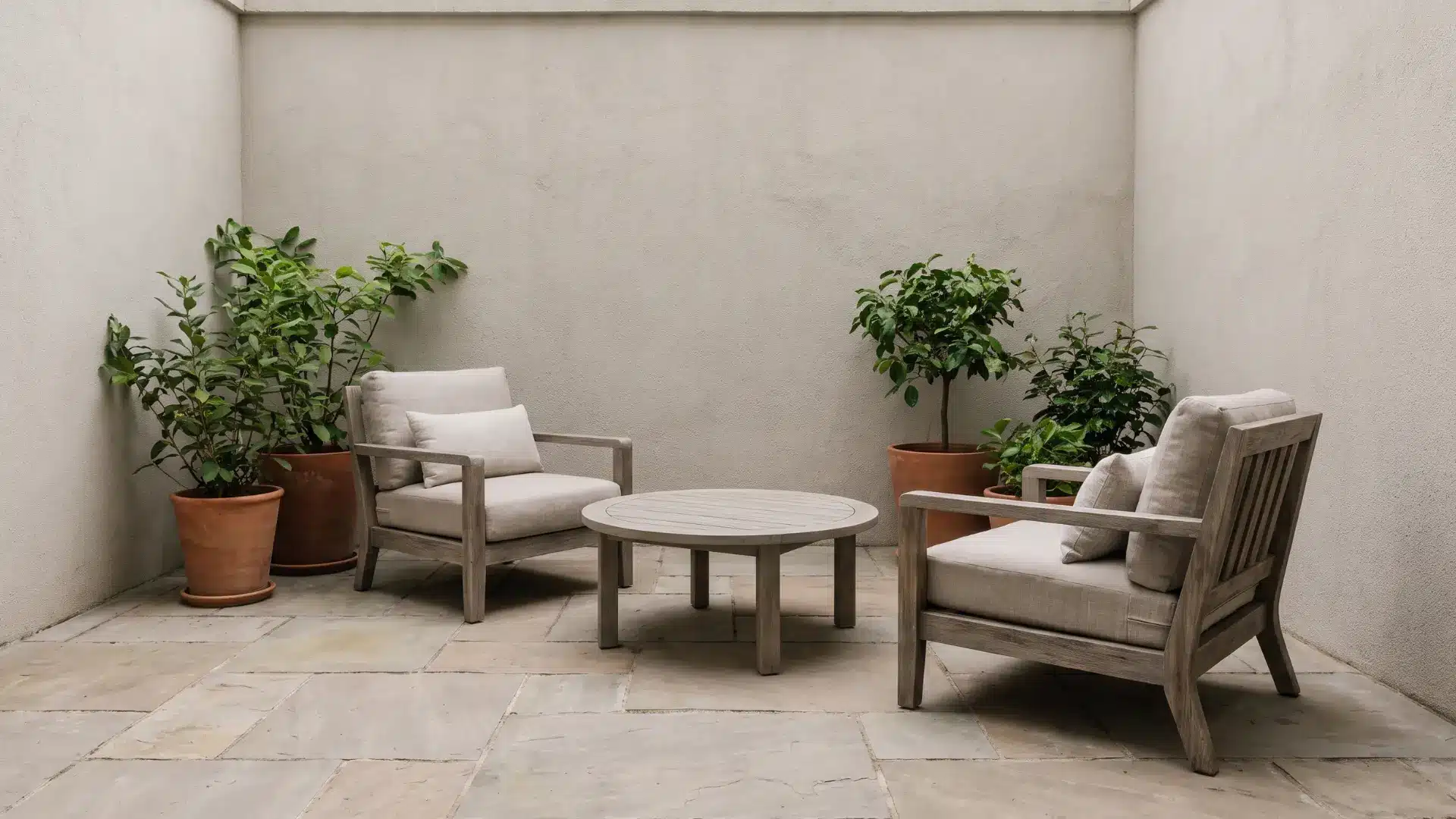
Place a small round table with two compact chairs against one side of the patio, leaving the center open for movement. Choose powder-coated aluminum or resin-wicker frames over untreated steel; bare steel rusts within a season or two once it’s exposed to rain.
Add a narrow wall planter or a few potted plants around the seating area. This gives you a practical spot for coffee or meals without filling the entire patio with furniture.
2. Zone with Rugs or Flooring Changes, Not Walls
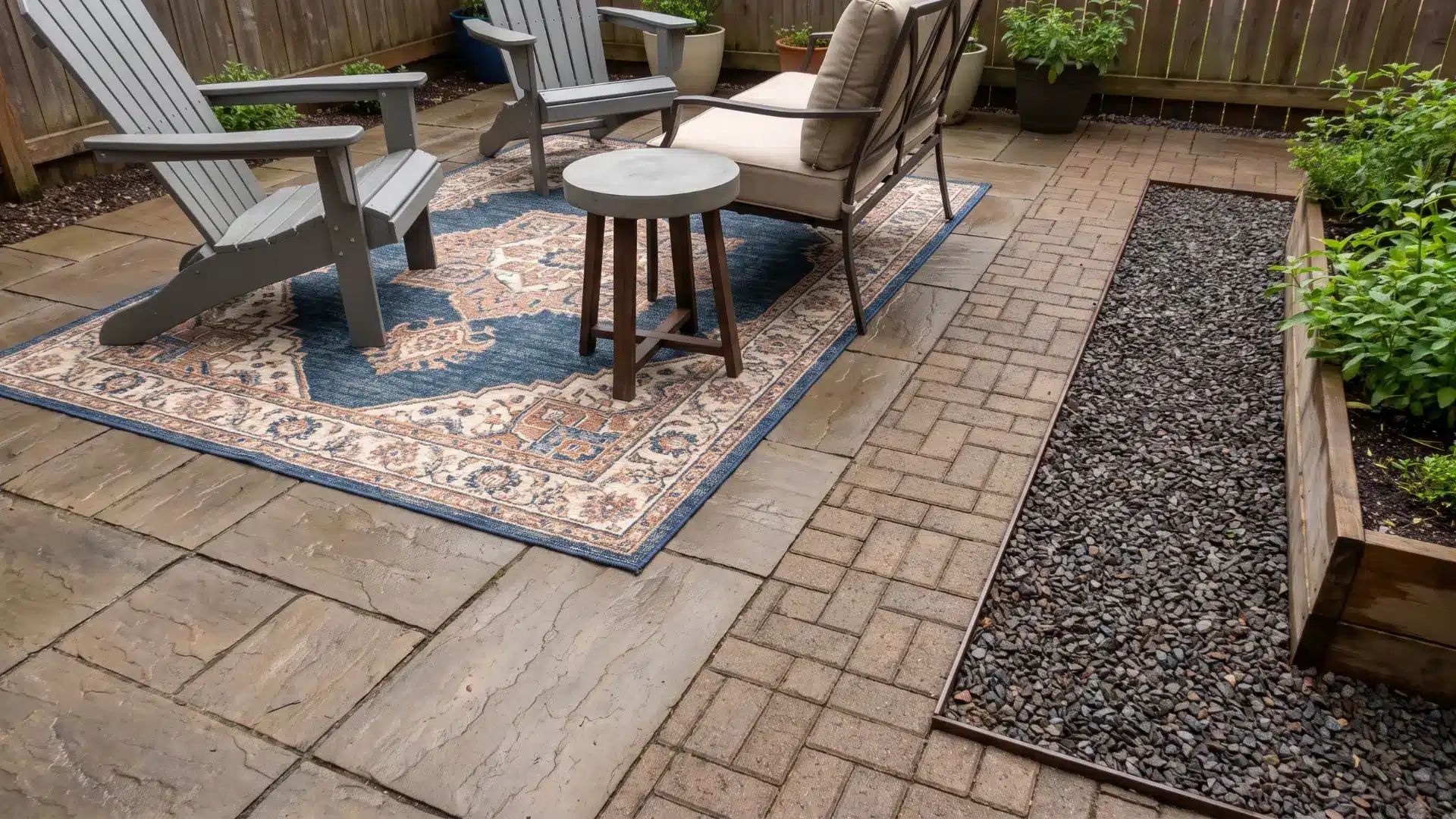
Visual zoning works where physical dividers can’t fit. A rug under the seating area signals “this is one zone” without eating up any floor space; just make sure it’s a polypropylene or solution-dyed acrylic rug rated for outdoor moisture, since indoor rugs mildew fast outside.
You can do the same with a change in paver pattern or a strip of gravel. The eye reads the shift as a boundary.
3. Add Wall-Mounted Patio Storage
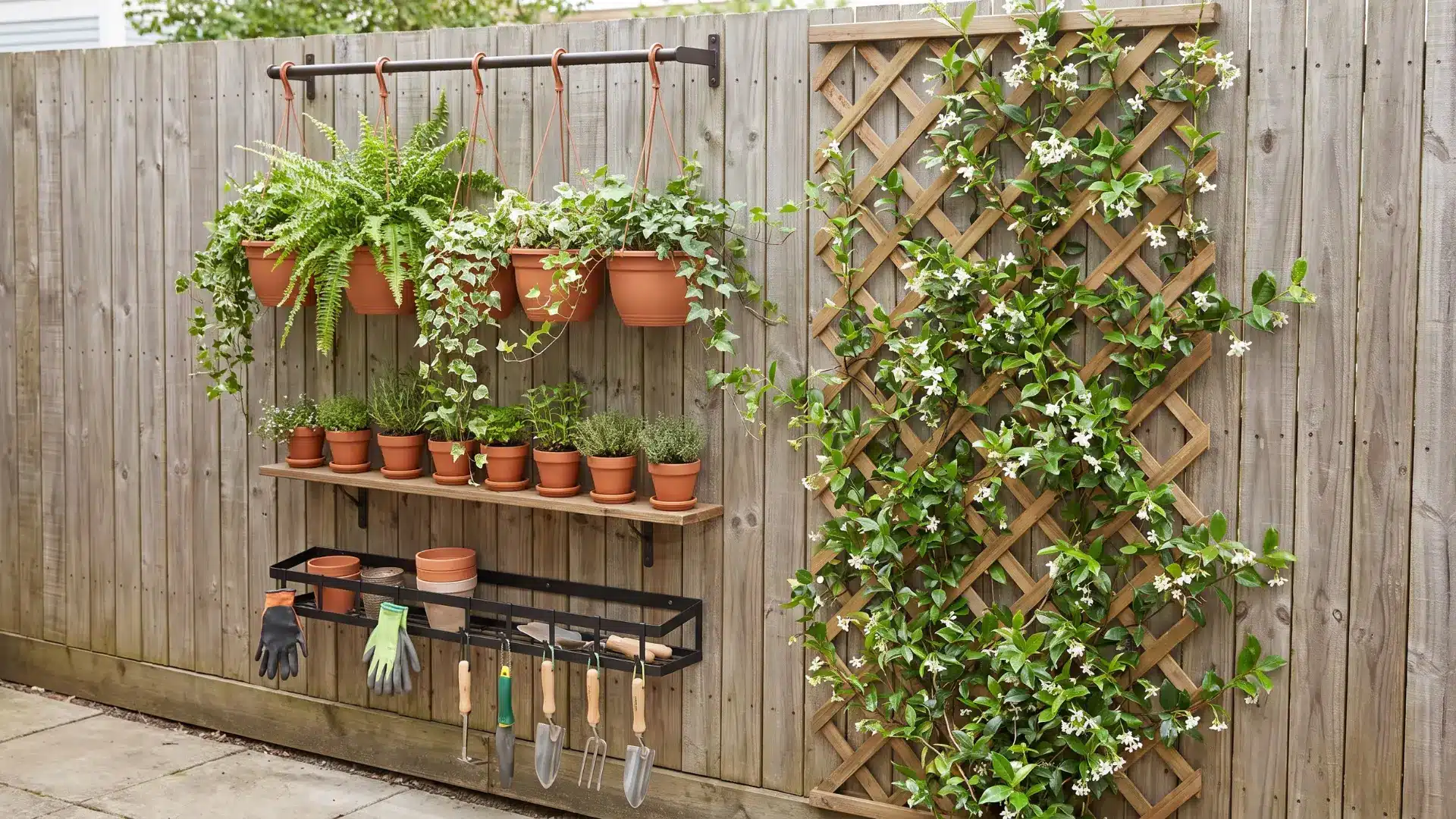
Wall space can handle useful storage without taking up the limited floor area on a small patio. Mount a slim shelf for small pots, hooks for lightweight tools, or a compact wall rack for outdoor essentials, using stainless or galvanized hardware so the fasteners don’t streak the wall with rust.
The same logic behind smart small-space storage indoors, getting items up and off the floor, works just as well out here. Keeping these items off the ground leaves more room for seating and movement.
4. Use a Single Clear Pathway Instead of Open Floor
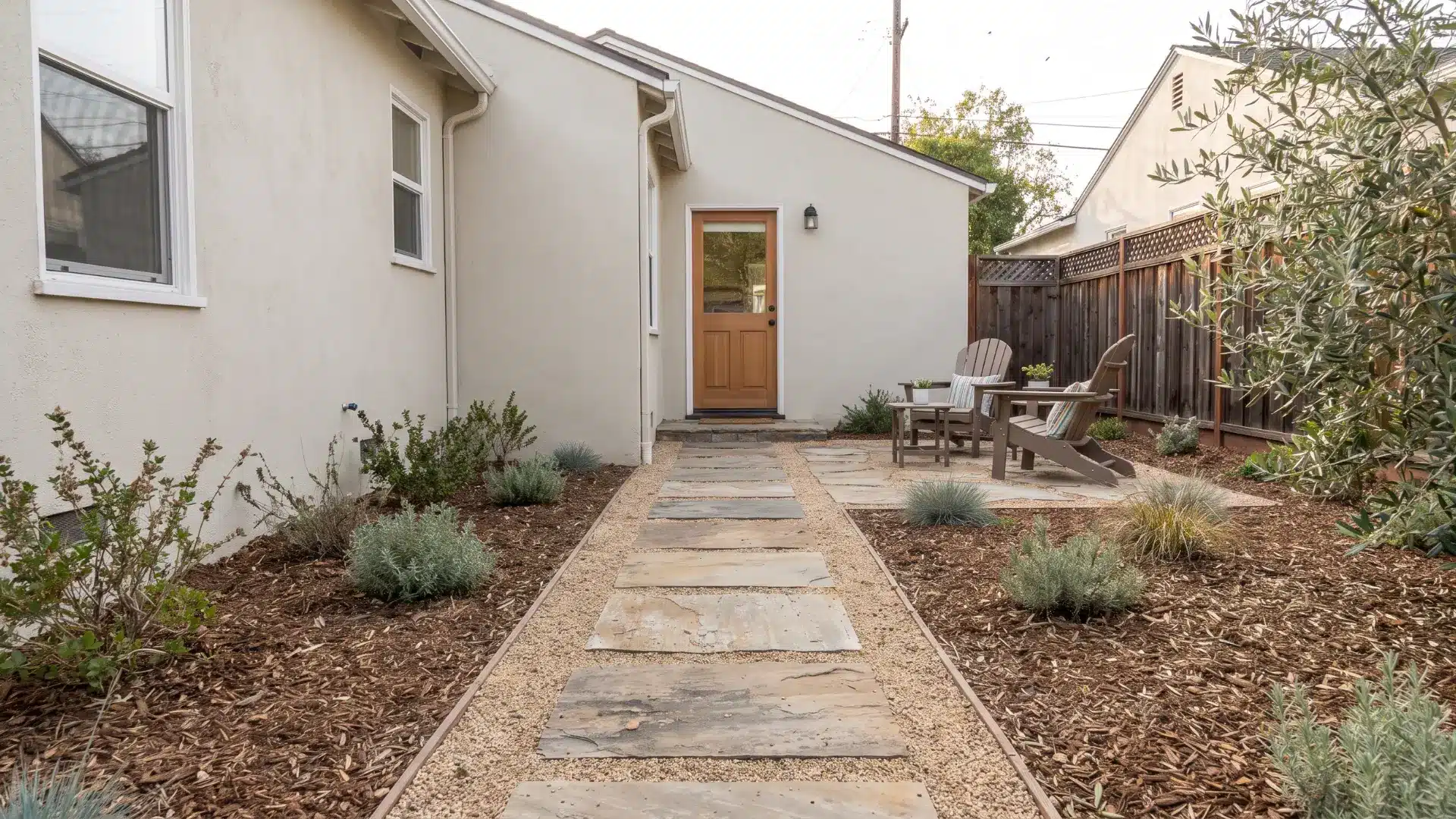
A defined path makes a small space read as intentional, not leftover. Open floor space on a tiny patio tends to look unused rather than spacious.
Lay a narrow strip of pavers or gravel from the door to the seating area. It gives the space a sense of direction and doubles as drainage if you slope it slightly away from the house.
5. Set Up Seating Just Outside the Back Door
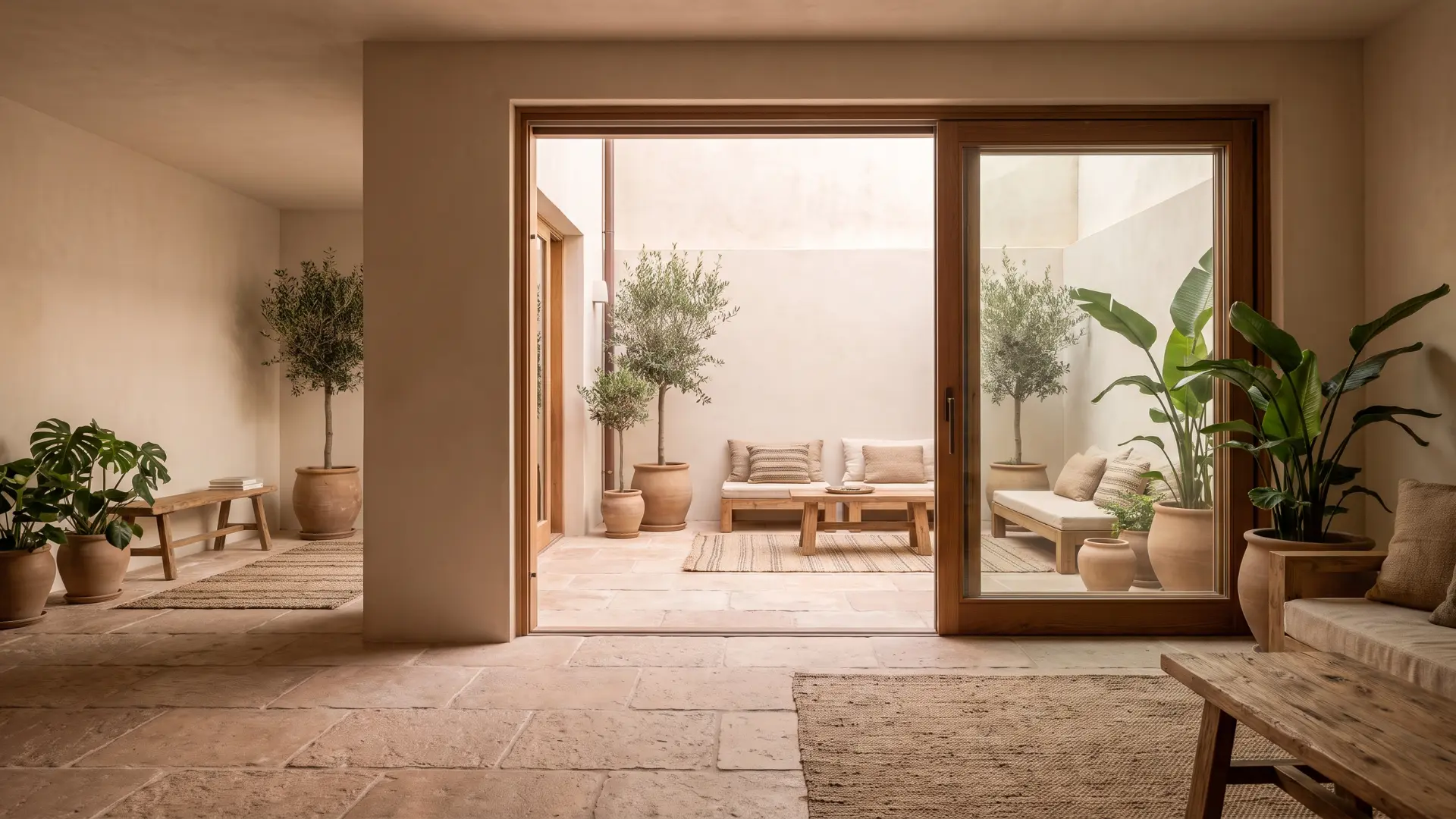
Place a compact bench or two chairs directly outside the patio door to create an easy everyday sitting area. Keep the furniture close to the house and leave the outer edge of the patio open.
This setup works especially well for morning coffee, reading, or short breaks without crowding the space.
| Tip: Before buying anything, measure your patio and mark out a single rug-sized zone with painter’s tape. If you can still walk around it comfortably, that’s your seating footprint; everything else on the list should work around it, not compete with it. |
Once the layout is settled, the next question is usually budget, and a small patio actually makes that easier, since you’re refreshing one slab instead of an entire yard.
Budget-Friendly Upgrades for Small Backyard Patio Ideas
You don’t need a new patio to make an old one feel fresh. Most of the cheapest fixes use what’s already there.
6. Hang a Shade Sail Over the Seating Area
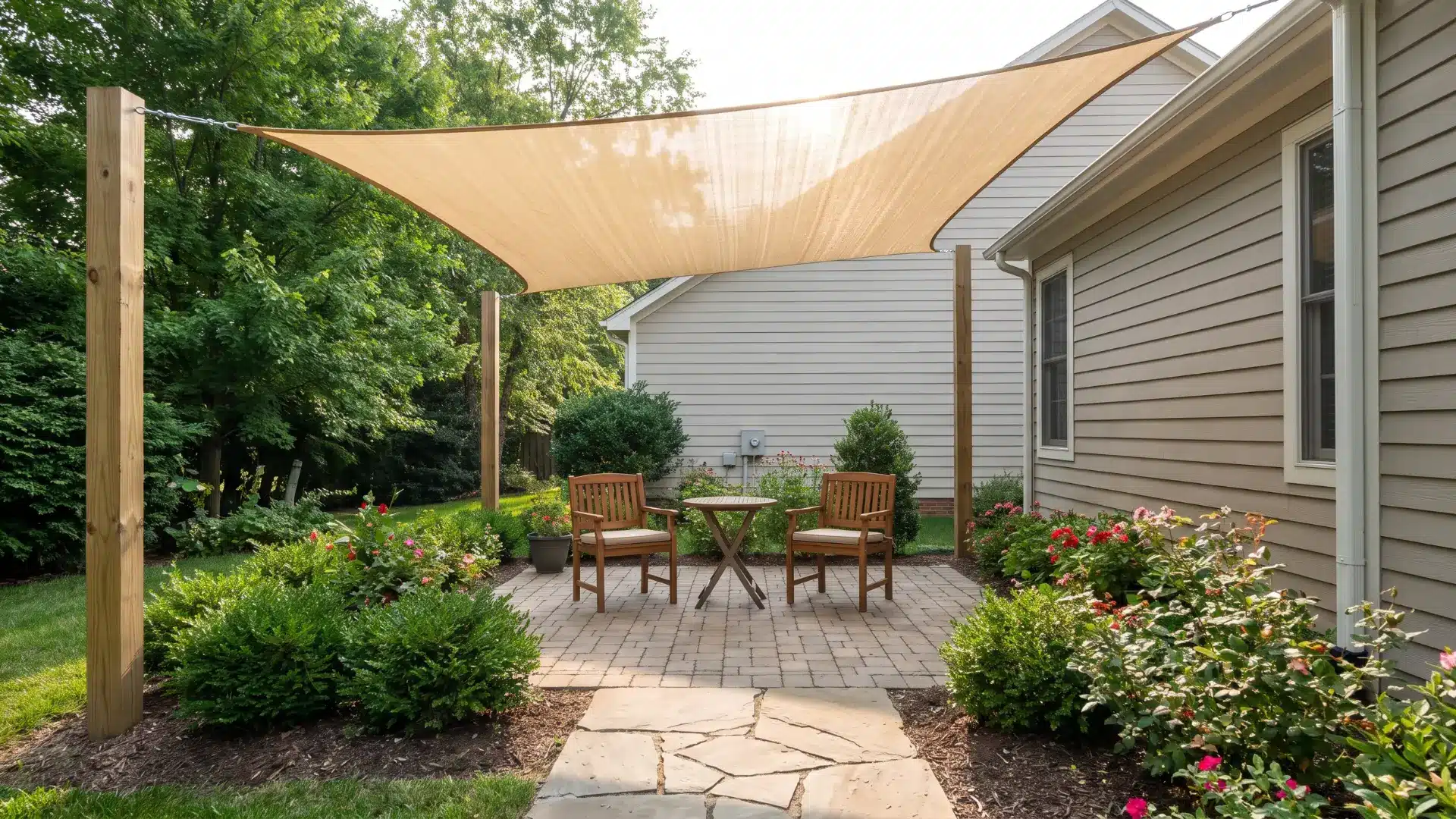
A shade sail adds useful cover without putting another bulky piece on the patio floor. Position it above the main seating area so walkways and patio edges stay open. Look for a UV-stabilized, breathable knit fabric rather than a solid tarp—solid fabric holds wind load and is far more likely to tear or pull its anchors loose in a storm.
A simple triangular sail works especially well over a compact setup. It gives you shade where you actually sit while keeping the rest of the patio clear.
7. Turn an Old Table Into a Patio Plant Stand
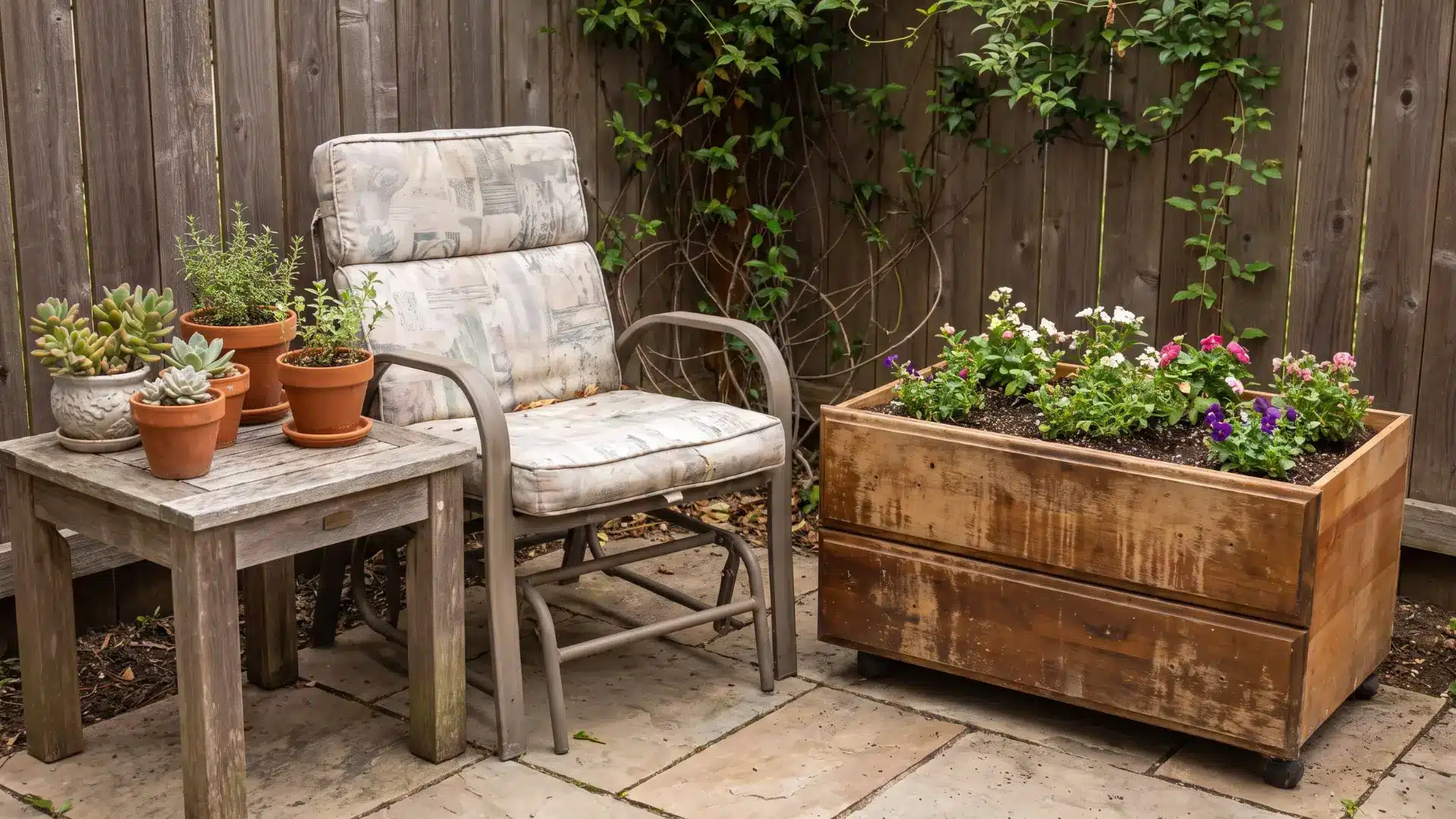
An old side table can become a useful plant stand instead of taking up storage space or going to waste. Seal any bare wood with an exterior-grade sealant first; untreated indoor furniture left outside typically warps or rots within a single wet season.
Place a few small pots on top and use the lower shelf, if it has one, for extra containers or gardening supplies.
8. DIY Planters from Containers You Already Own
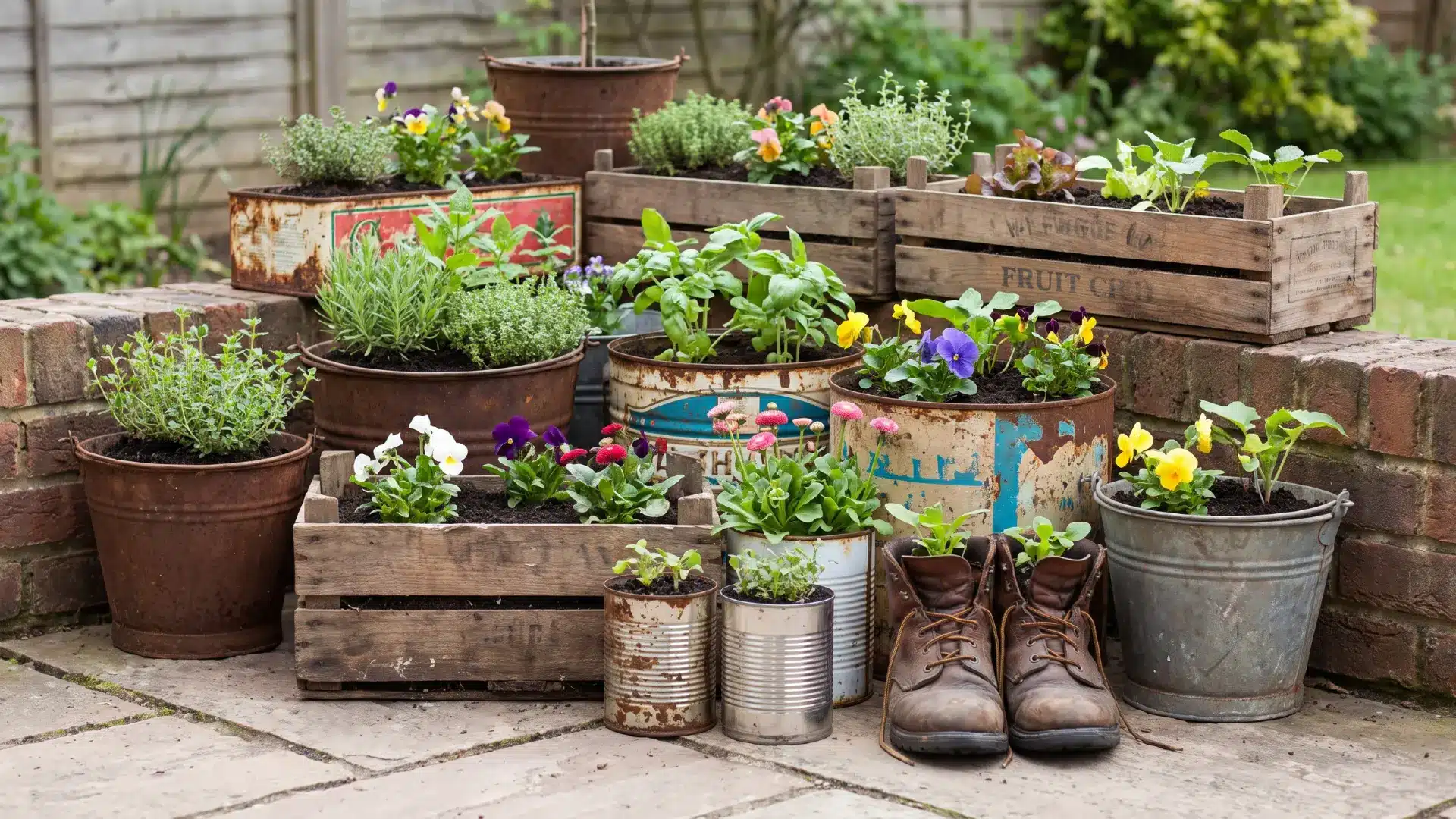
Buckets, crates, tin cans, and old boots all hold soil just fine. You don’t need matching ceramic pots for a nice-looking patio.
Drill a few drainage holes in the bottom of each container. Group mismatched containers together, and they read as a styled collection, not clutter.
9. Add a Patterned Outdoor Rug
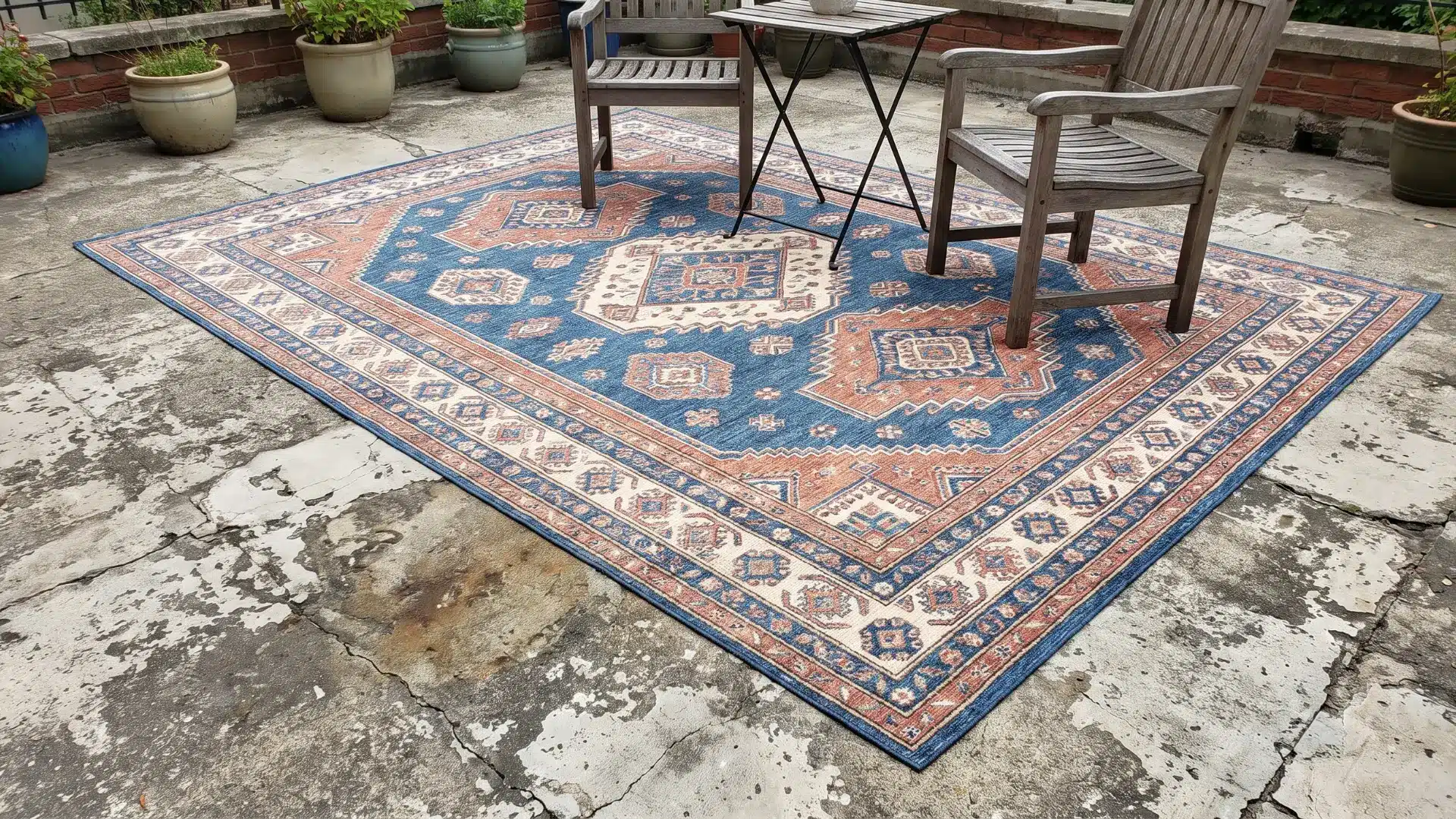
Retiling a patio can run into the hundreds of dollars, while a patterned outdoor rug offers a much cheaper way to refresh the same space.
It can cover worn concrete, hide minor surface marks, and add color without permanent changes—a practical option for a small patio on a tight budget.
10. Use Paint for a Mural or Accent Wall
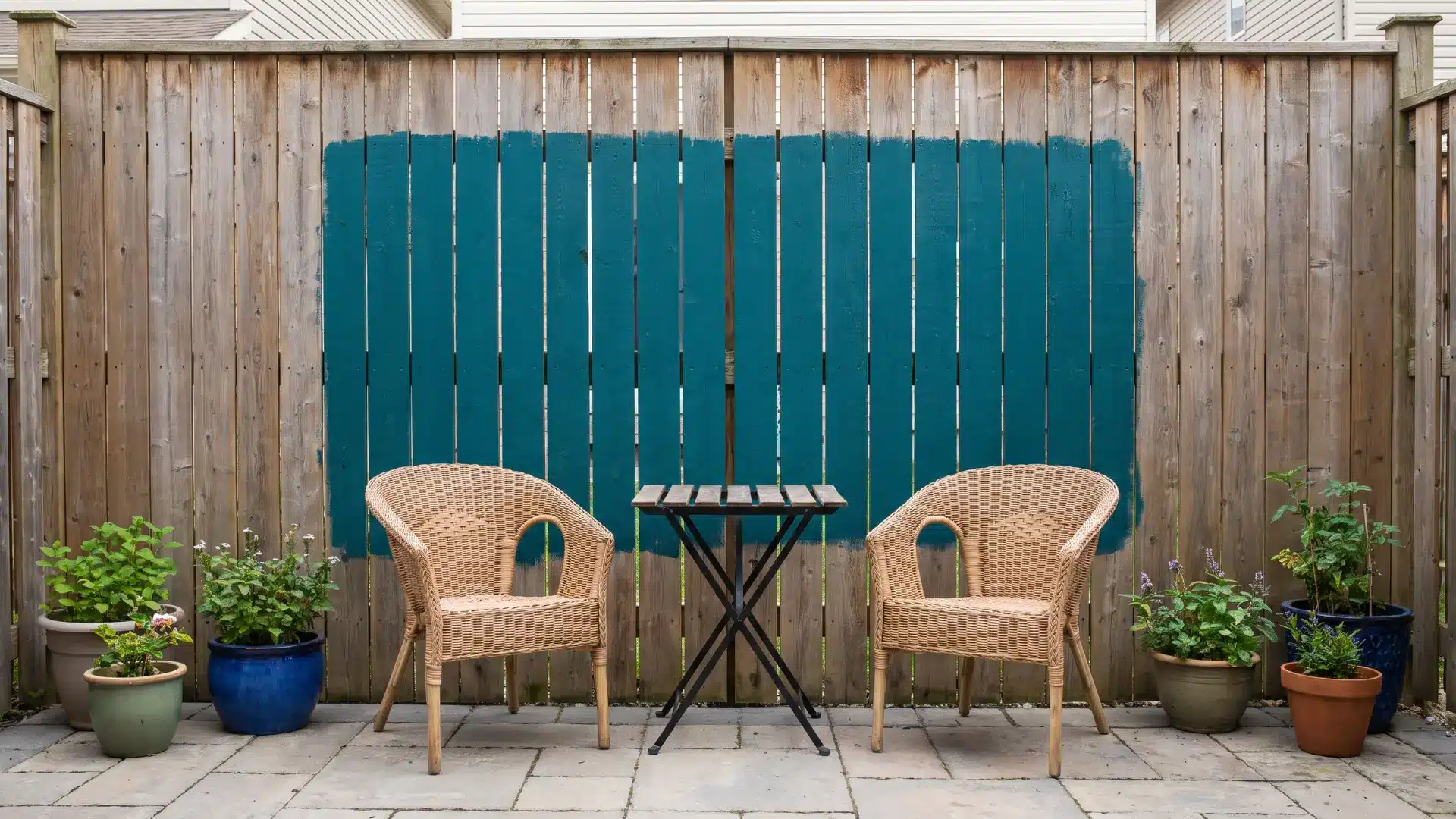
A blank fence or wall is a free canvas. One coat of exterior-rated masonry or fence paint on a single wall changes the whole feel of the patio, interior paint isn’t formulated for UV or moisture exposure and will fade or peel outdoors within a year.
You don’t need to be an artist. Even simple stripes or a block of color make a small space feel designed, not neglected.
| Note: Any product marketed for “outdoor use” should specify UV resistance and water resistance separately—some fabrics and paints only carry one of the two. Check the product label before assuming it will hold up through a full season on an exposed patio. |
With the budget fixes handled, privacy is usually the next thing that determines whether a small patio actually gets used.
Privacy & Greenery on a Small Backyard Patio
When you block sightlines with plants or screens, the patio stops feeling watched and starts registering as a defined room instead of leftover yard space.
11. Install a Freestanding Privacy Screen
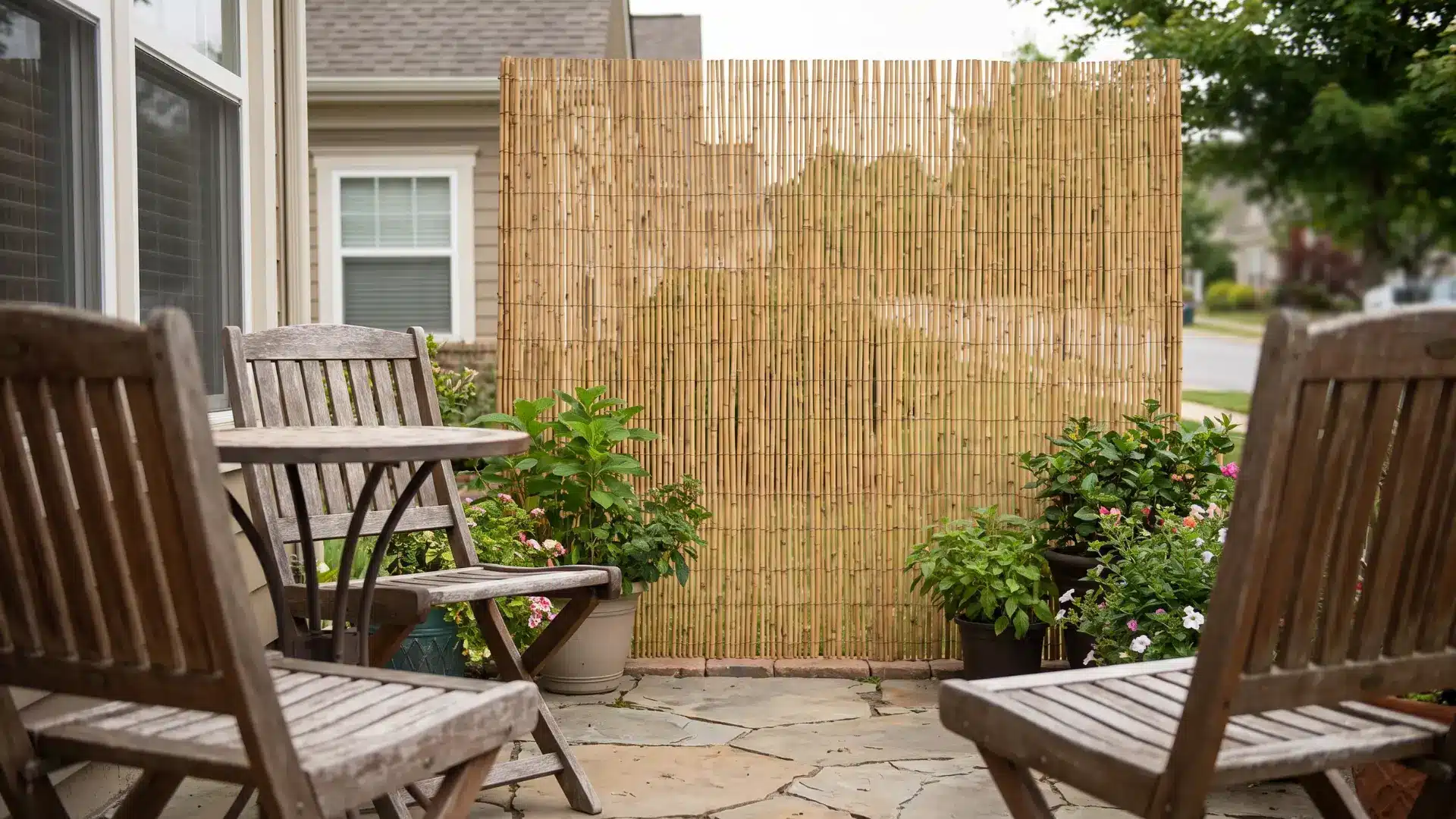
A freestanding screen blocks a specific sightline without committing to a permanent structure; bamboo panels, lattice, or a simple wood frame all work. Choose FSC-certified or pressure-treated lumber for the frame so it resists rot where it meets the ground.
Place it where a neighbor’s window or a busy street sightline hits your seating area. One screen in the right spot does more than four in random places.
12. Build a Vertical Garden or Living Wall
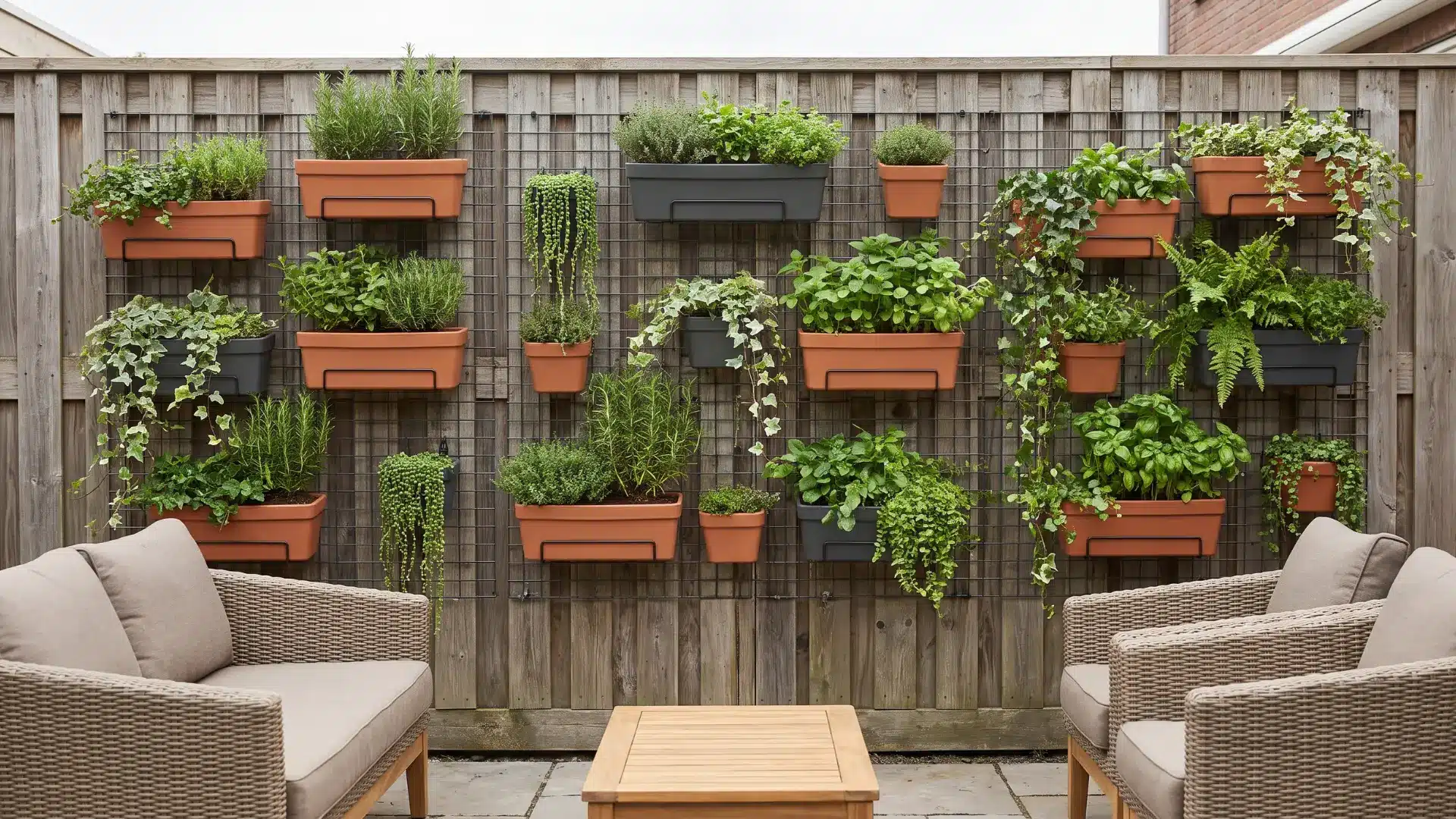
A living wall turns a blank fence into a green backdrop. It blocks views the way a screen does, but it looks intentional rather than defensive.
Use a modular planting system or mount individual pots on a grid. Herbs and trailing plants both work well here, and both need a watering plan since vertical planters dry out faster than ground-level beds.
13. Use Potted Trees as Soft Screening
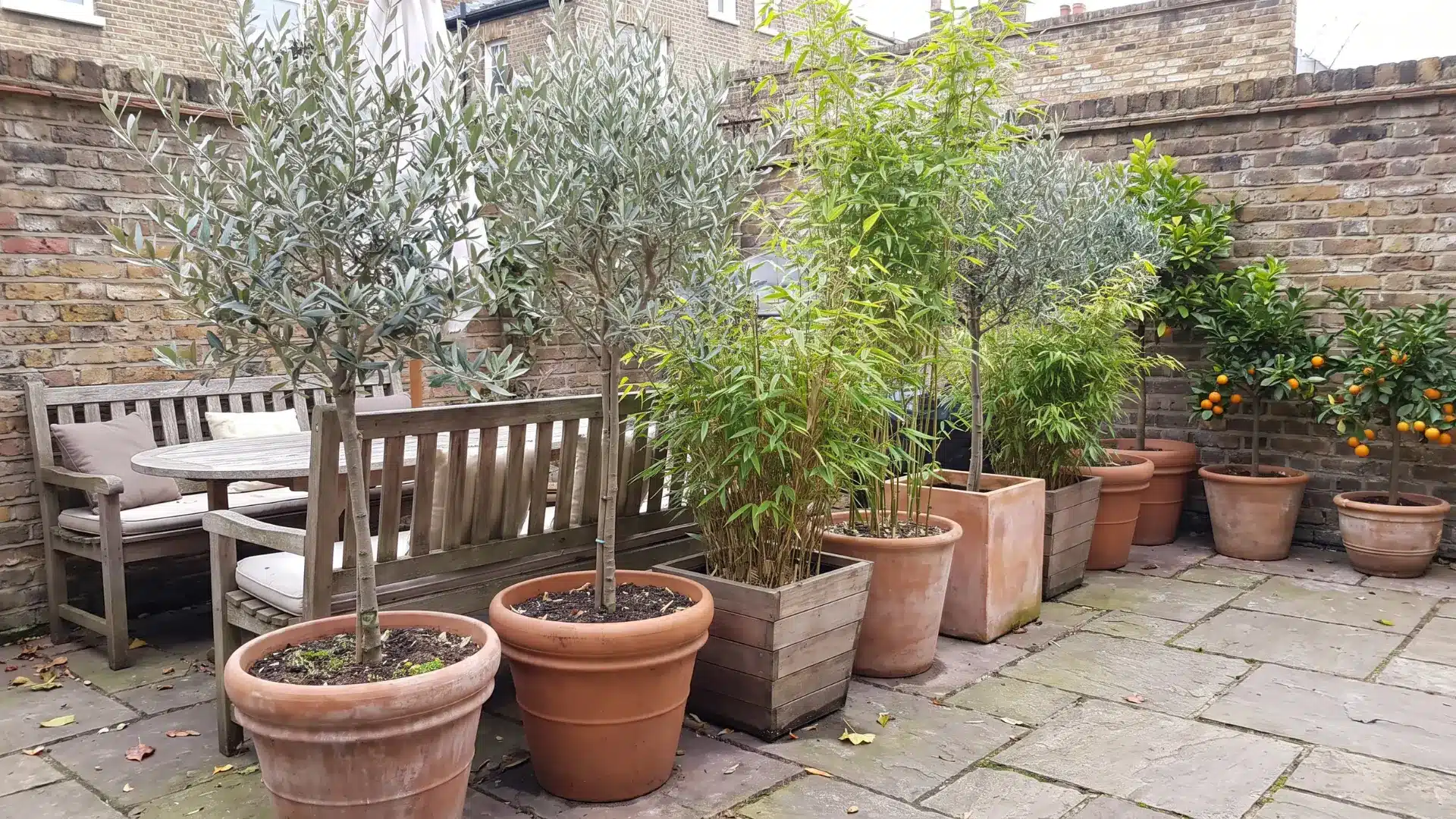
A row of potted trees creates a soft, natural barrier. Unlike a fence, it moves and shifts with the wind, which reads as calmer.
Olive trees, bamboo, and dwarf citrus all do well in containers in most temperate US climates, but check your regional extension office for the specific varieties that survive your winter lows before committing to a row of them.
14. Add a Trellis with Climbing Vines
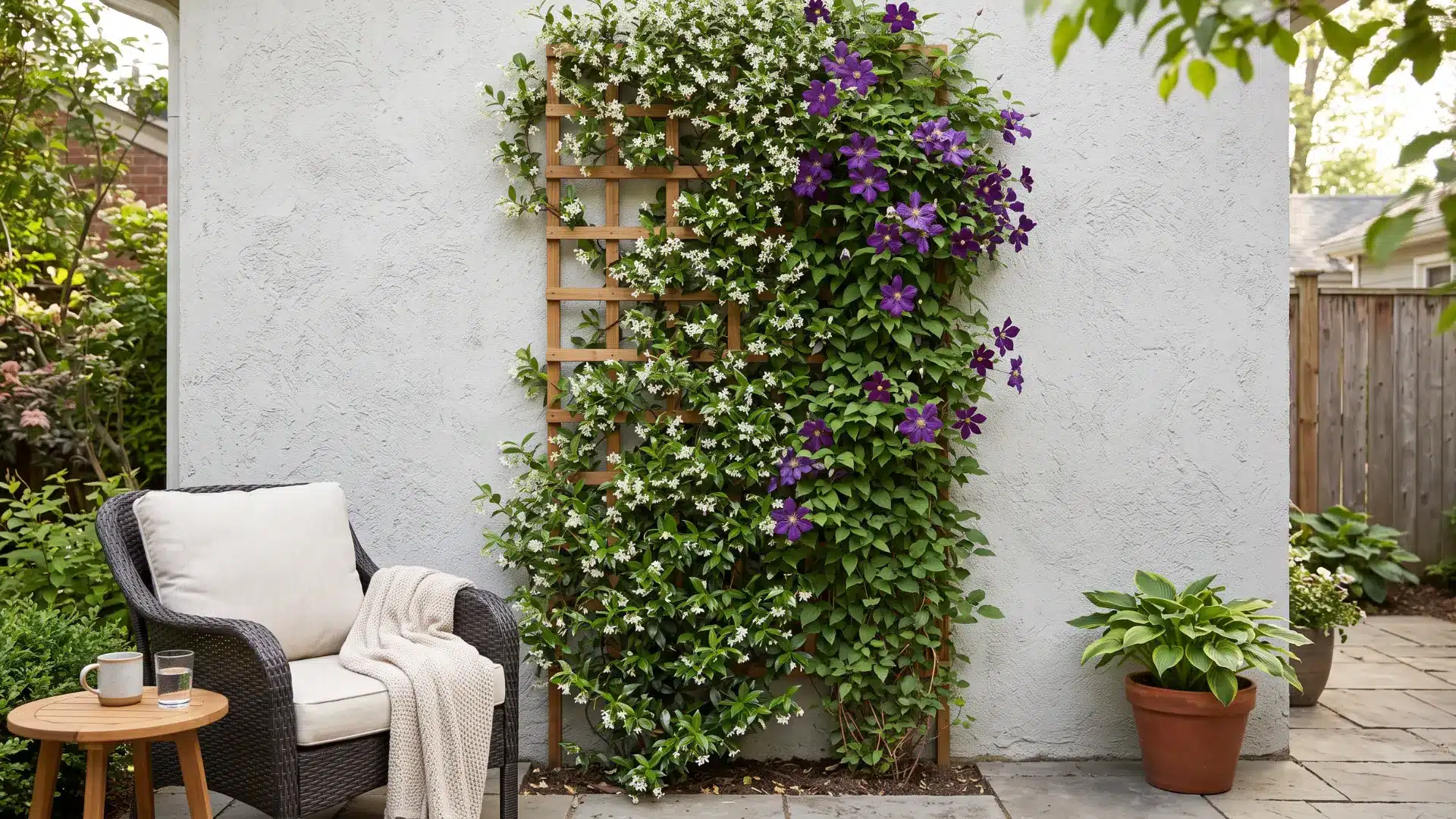
A trellis takes almost no floor space and grows upward instead. Climbing vines like jasmine or clematis fill it in over a season or two.
It works best against a wall or fence you already have. Anchor it a few inches off the wall surface so vines don’t trap moisture against the siding.
15. Plant a Compact Herb Trough
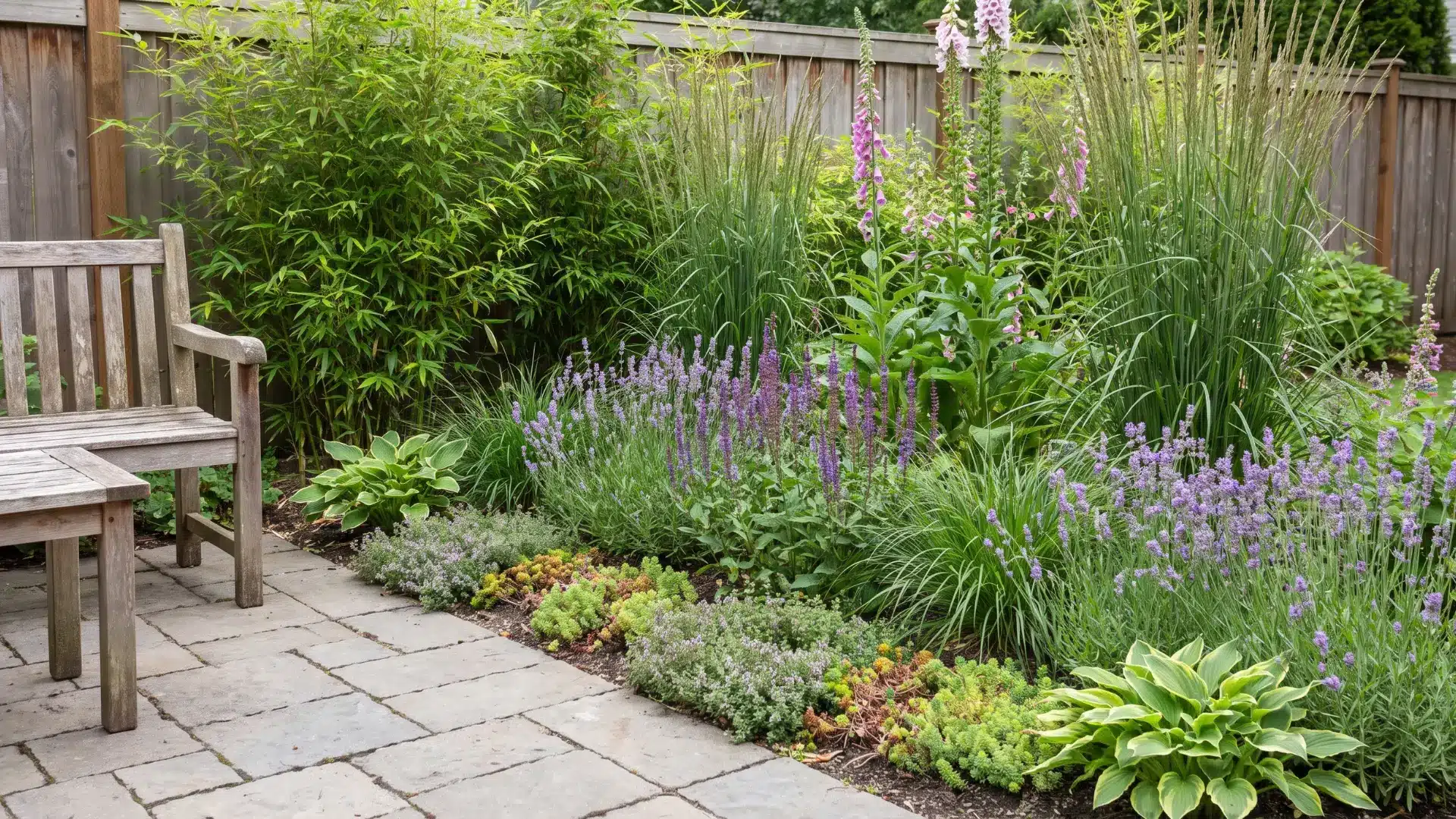
Use one long, narrow container for herbs instead of spreading several pots across the patio. Place it along an edge where it gets at least six hours of direct sun, since basil, parsley, and chives all underperform in shade.
You get useful greenery in one contained spot while keeping most of the patio floor open.
Once privacy and greenery are sorted, furniture is where most small patios either come together or fall apart.
Furniture & Seating for Small Backyard Patio Ideas
The wrong furniture eats a small patio alive. A piece that looks fine in a showroom can swallow half your floor space at home. For a fuller layout once the basics are in place.
16. Choose a Bistro Set Over a Full Dining Table
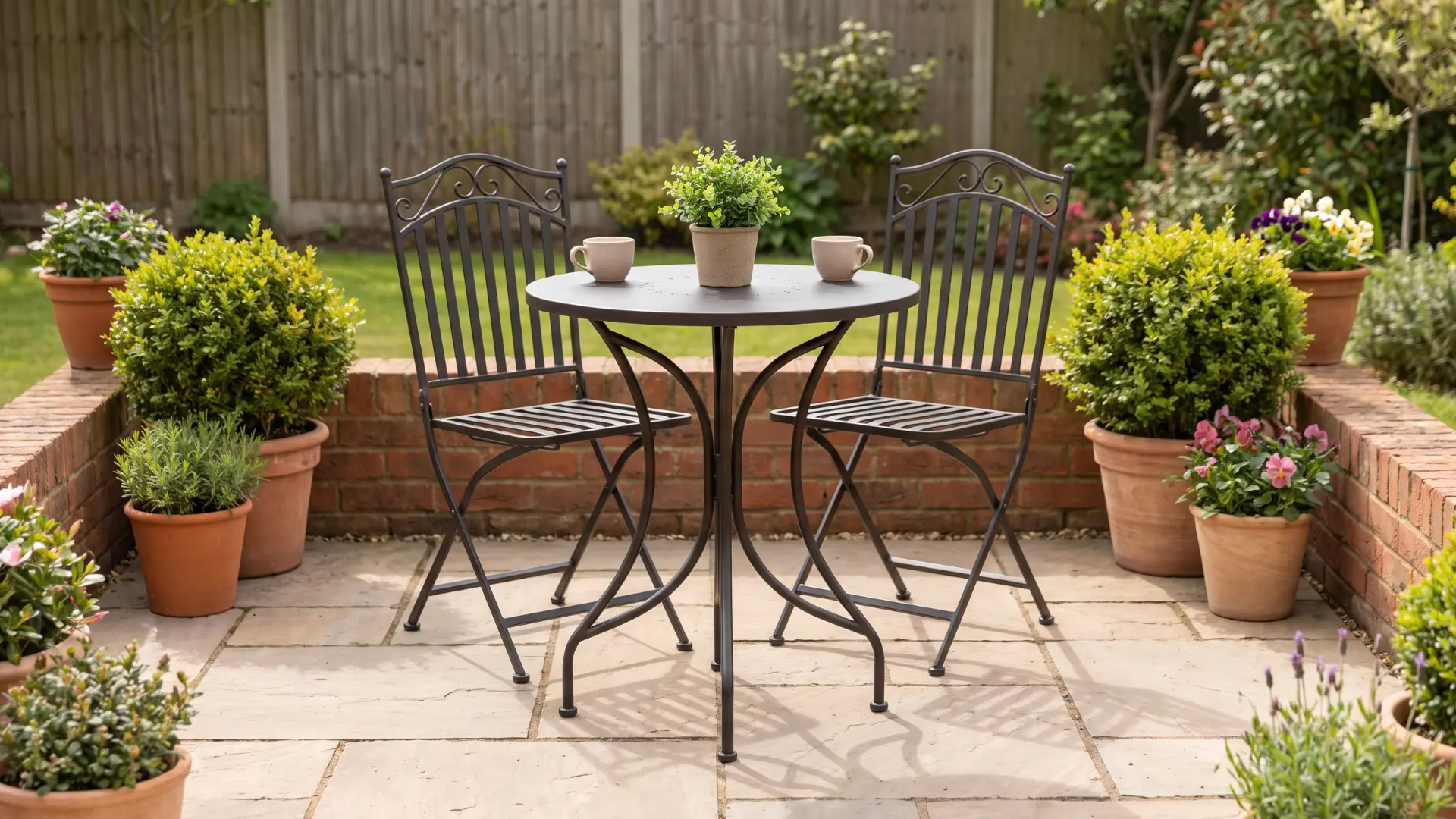
A four-person dining table needs roughly 36 inches of walking clearance on every side. A two-seat bistro set needs a fraction of that.
If you’re mostly eating out there alone or as a couple, the bistro set frees up the rest of the patio for other use.
17. Add Built-In Bench Seating Along a Wall
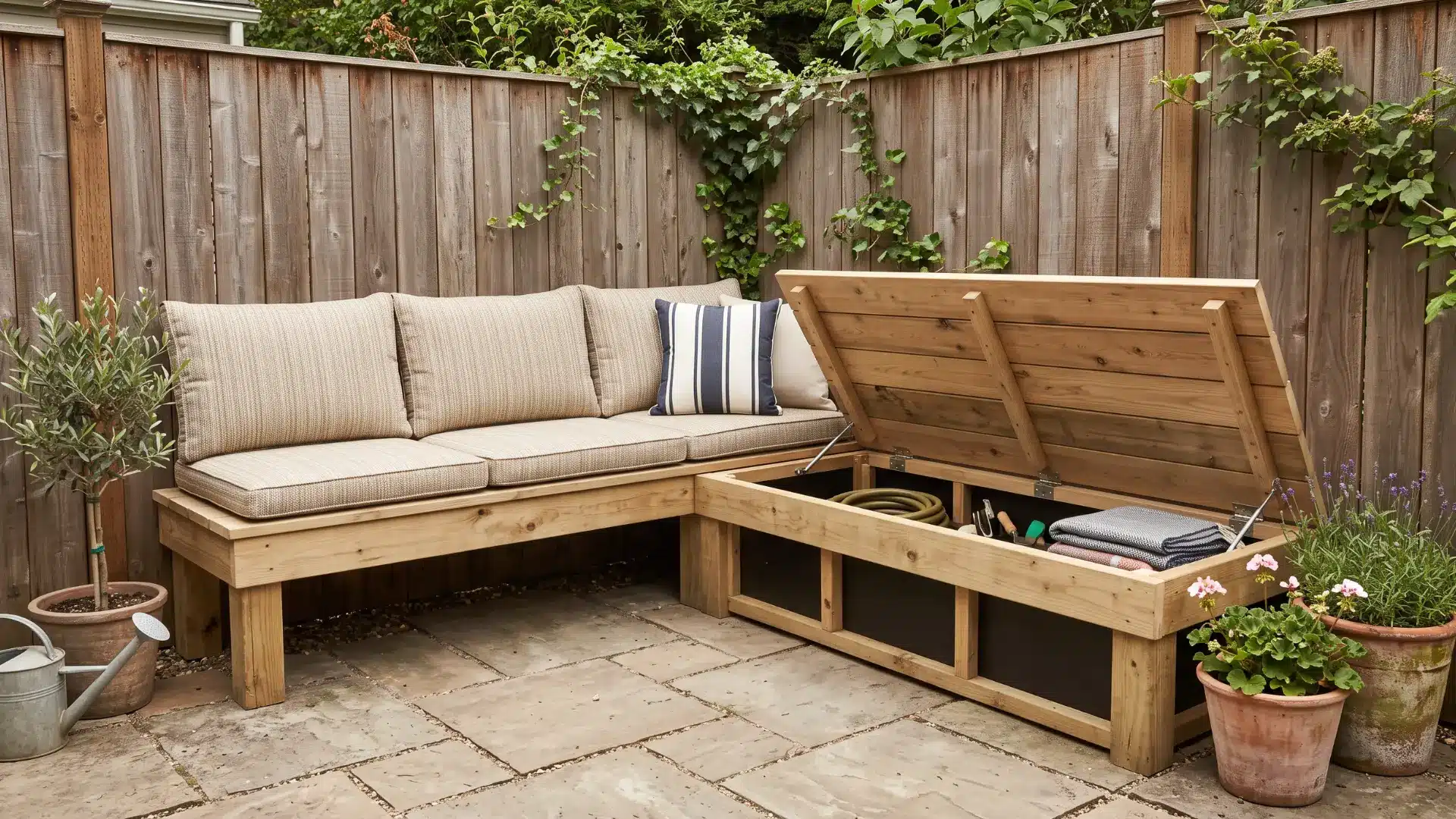
Built-in benches sit neatly against a wall or fence, leaving more open floor space than freestanding chairs. Simple pressure-treated lumber and weather-resistant cushions can keep costs low.
Add a hinged lid, and the bench can provide hidden storage for cushions or gardening supplies while keeping the area less cluttered.
18. Hang a Hammock or Swing Chair
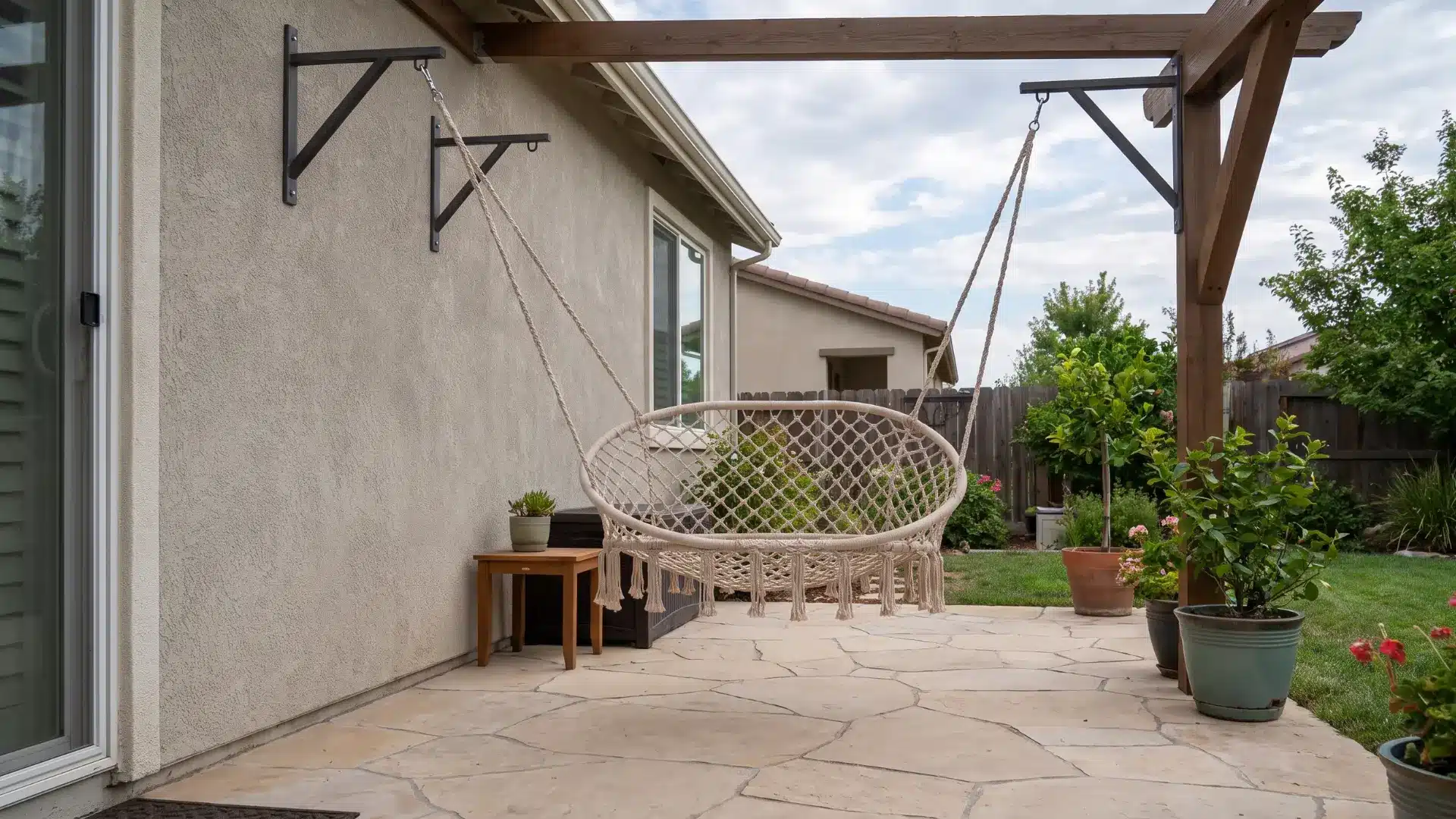
A hammock or hanging chair can add comfortable seating without the footprint of a full lounge chair or outdoor sofa. Wall-mounted or ceiling-mounted options use less floor area, while freestanding frames still need dedicated space.
Confirm any anchor point, bracket, or frame is rated for the combined weight of the chair and occupant before hanging it—ceiling joists and fence posts aren’t automatically rated for that load.
19. Use Poufs or Stools for Flexible Extra Seating
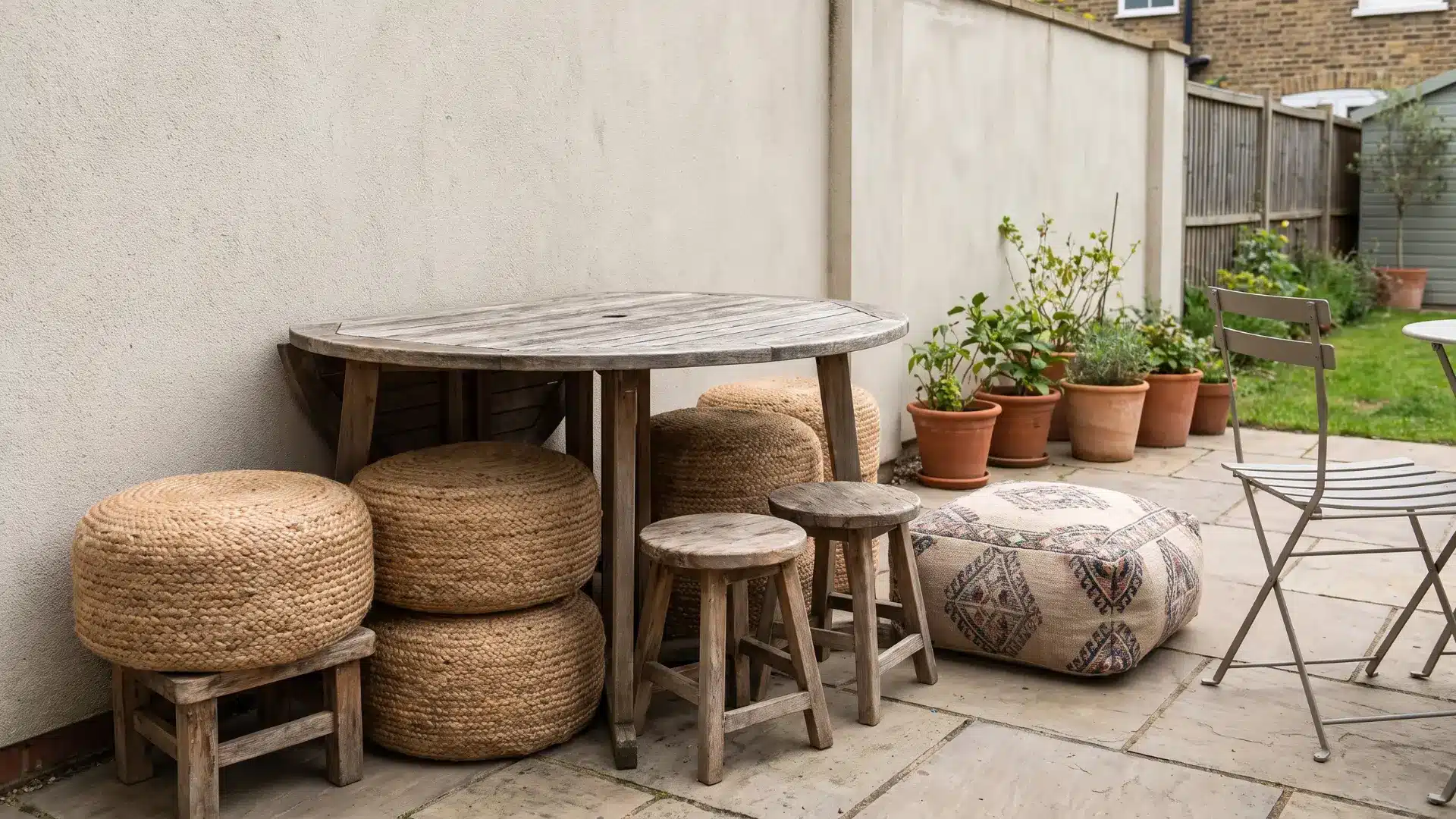
Poufs and small stools tuck under a table or sit against a wall when not needed, keeping valuable patio floor space open.
When guests arrive, pull them out for extra seating without committing to bulky chairs that take up space every day.
20. Pick Modular or Stackable Furniture
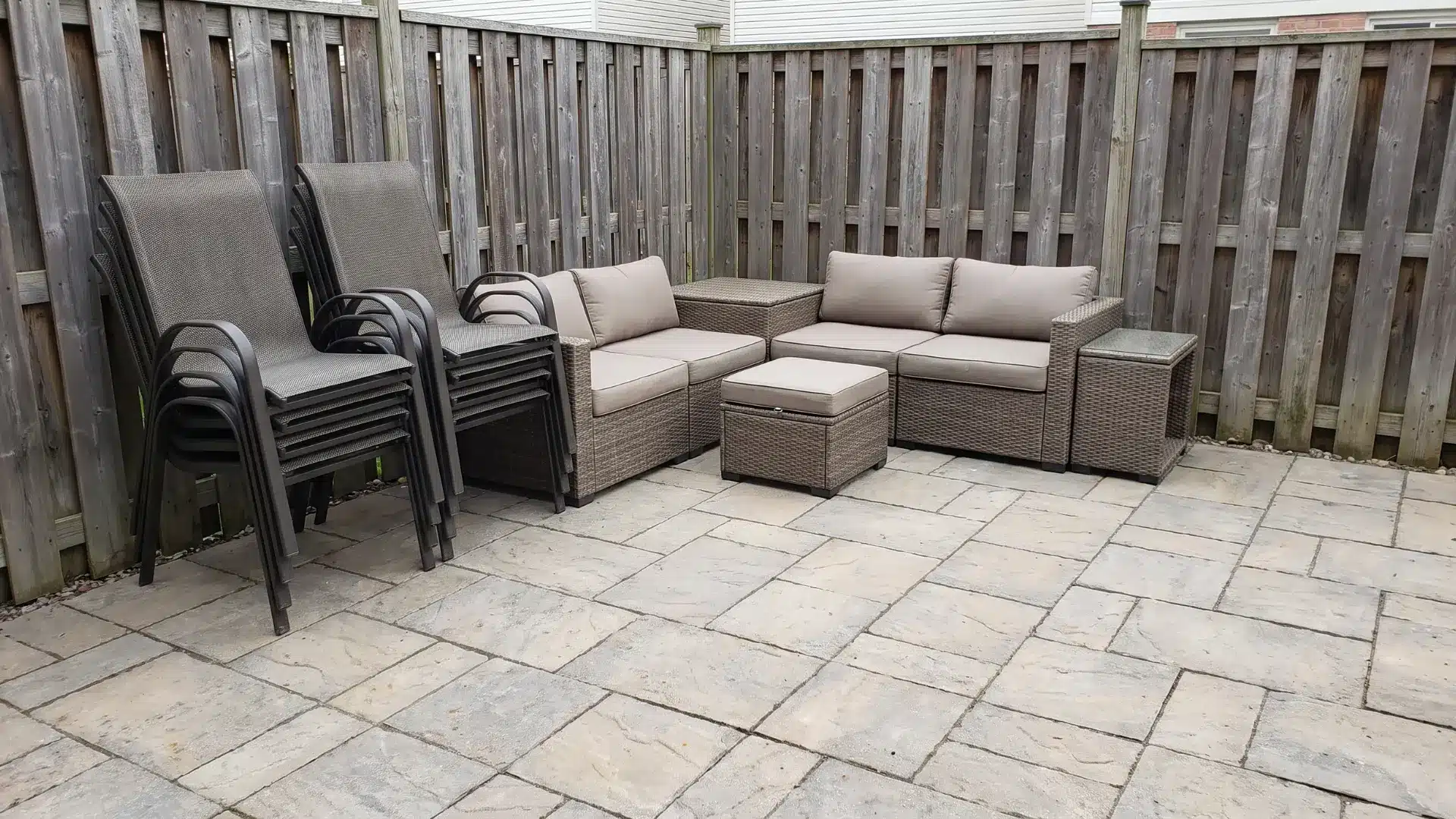
Modular pieces rearrange to fit whatever you’re doing that day. Stackable chairs disappear into a corner when you need open floor space.
Both options solve the same problem: a small patio needs furniture that adapts, not furniture that dictates the layout.
Furniture sets the daytime experience, but a small patio without lighting effectively disappears once the sun goes down.
Lighting & Ambiance
Good lighting brings a small patio back to life after dark, and done right, it also makes the space feel bigger, not just usable.
21. String Lights Overhead
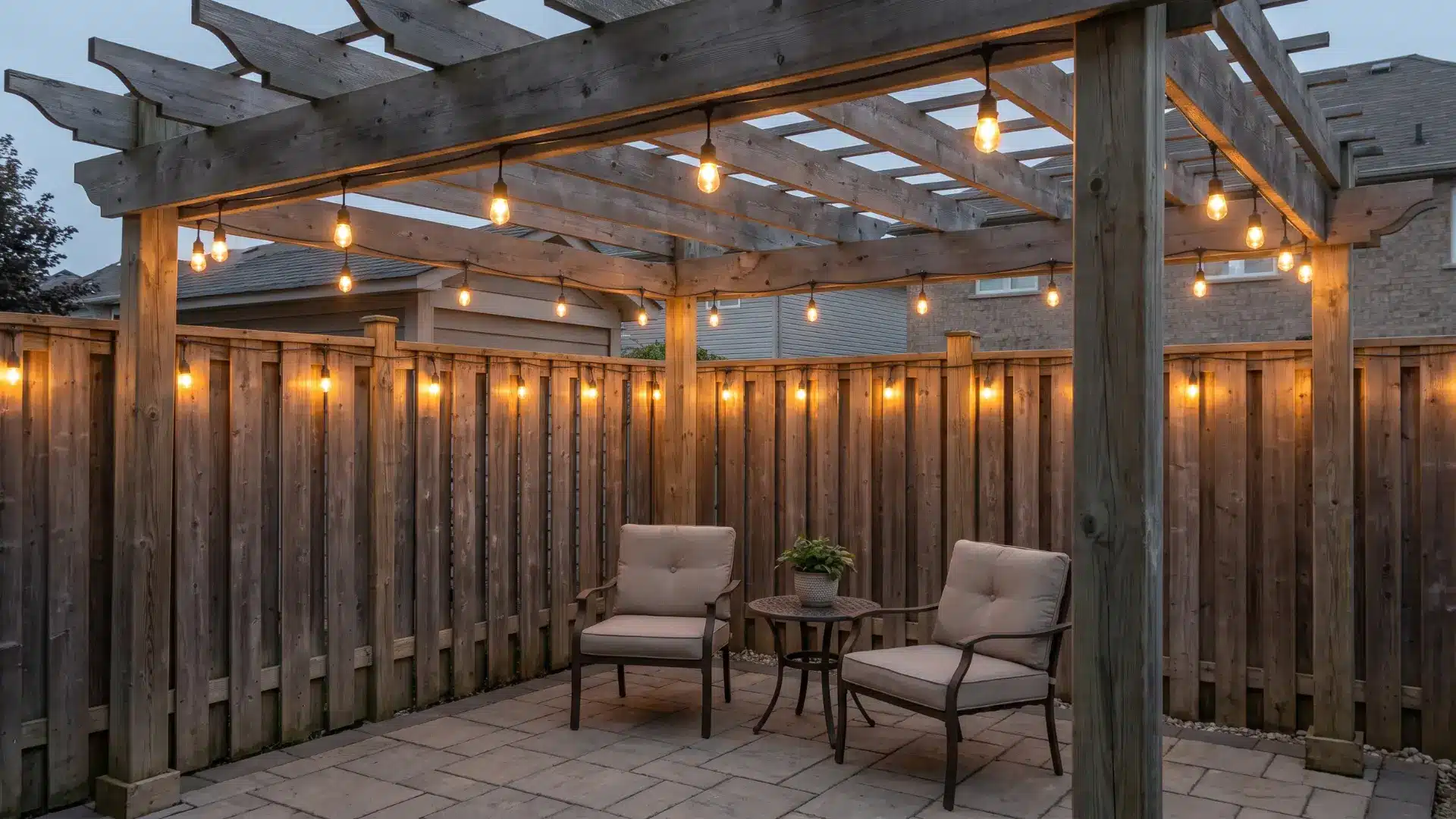
Overhead string lights draw attention upward, helping a small patio feel taller. Run them along a pergola, fence line, or between secure anchor points, using outdoor-rated (not indoor) string sets so the wiring holds up to rain.
They spread light across the area without relying on one harsh fixture, keeping the floor completely clear.
22. Use Lanterns at Varying Heights
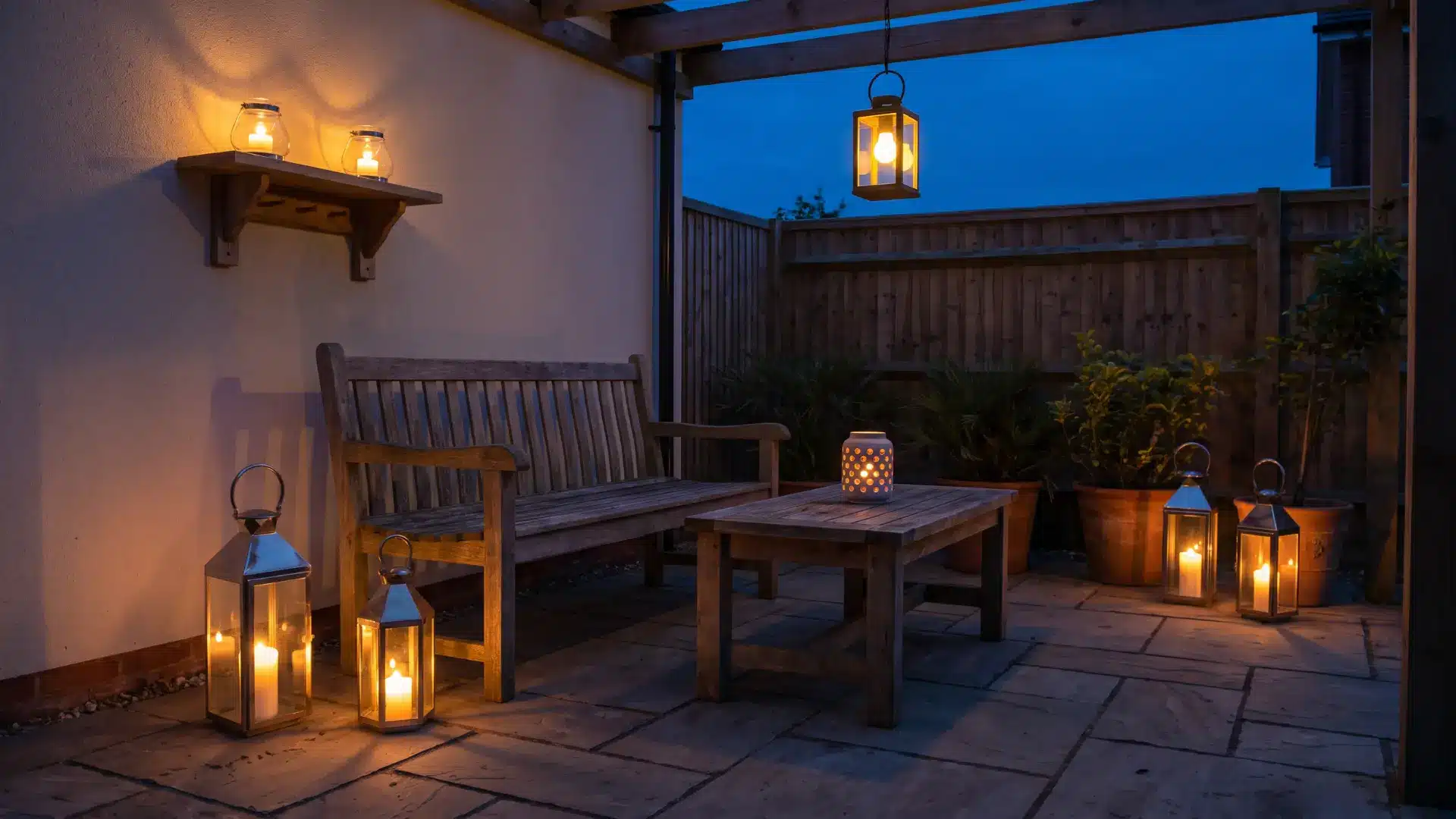
Lanterns placed at different heights create layered lighting instead of one flat glow. Set them on the ground, tables, shelves, or hanging points.
Using several light levels adds depth after dark and helps a small patio feel more considered.
23. Add Solar Path Lights Along Edges
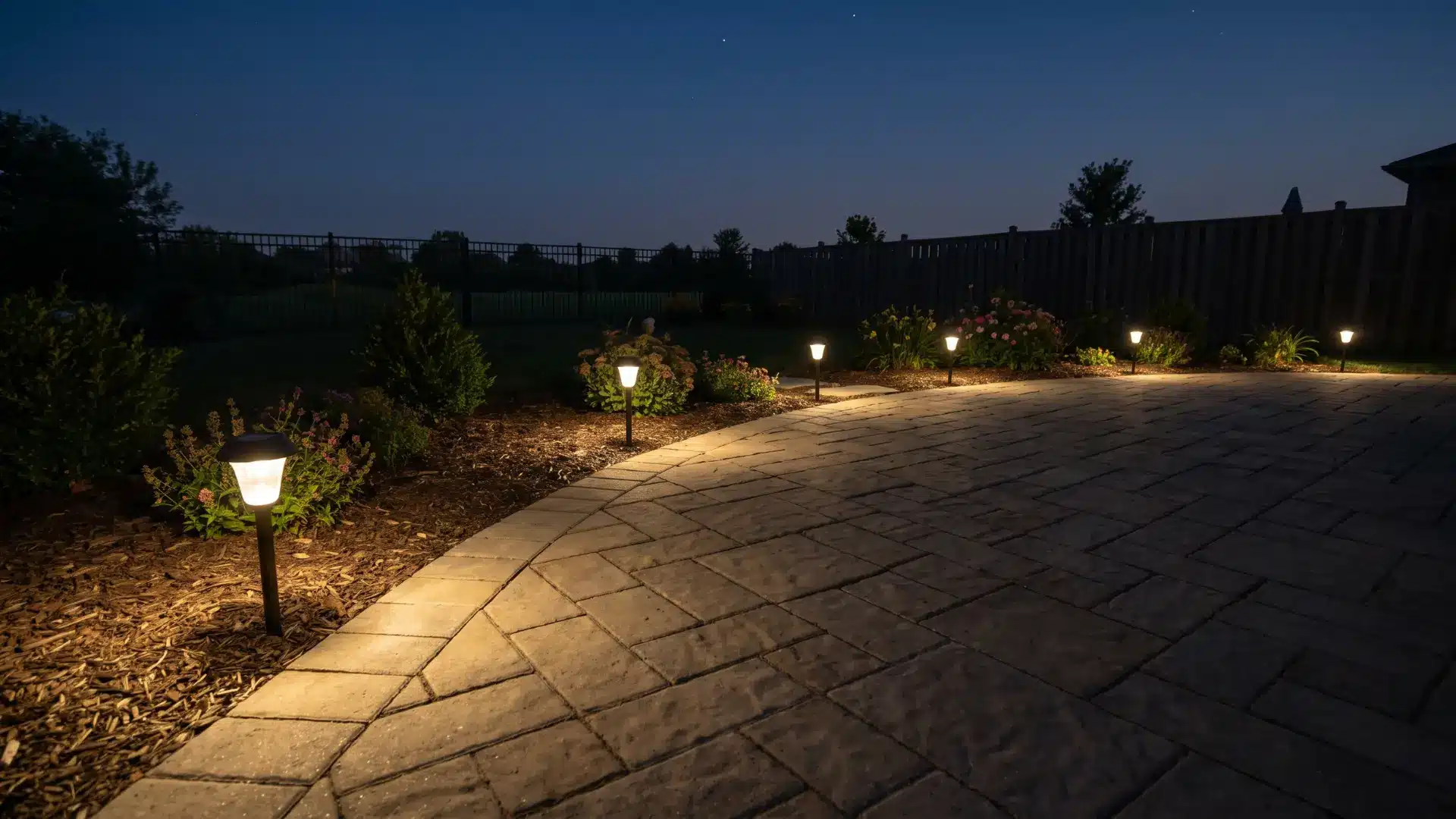
Path lights placed along the edges of a patio define its boundaries without adding a fence, helping the space feel more open after dark.
Solar-powered options need no wiring, making installation simple while still outlining the patio and improving visibility around edges.
24. Group LED Candles for a Soft Glow
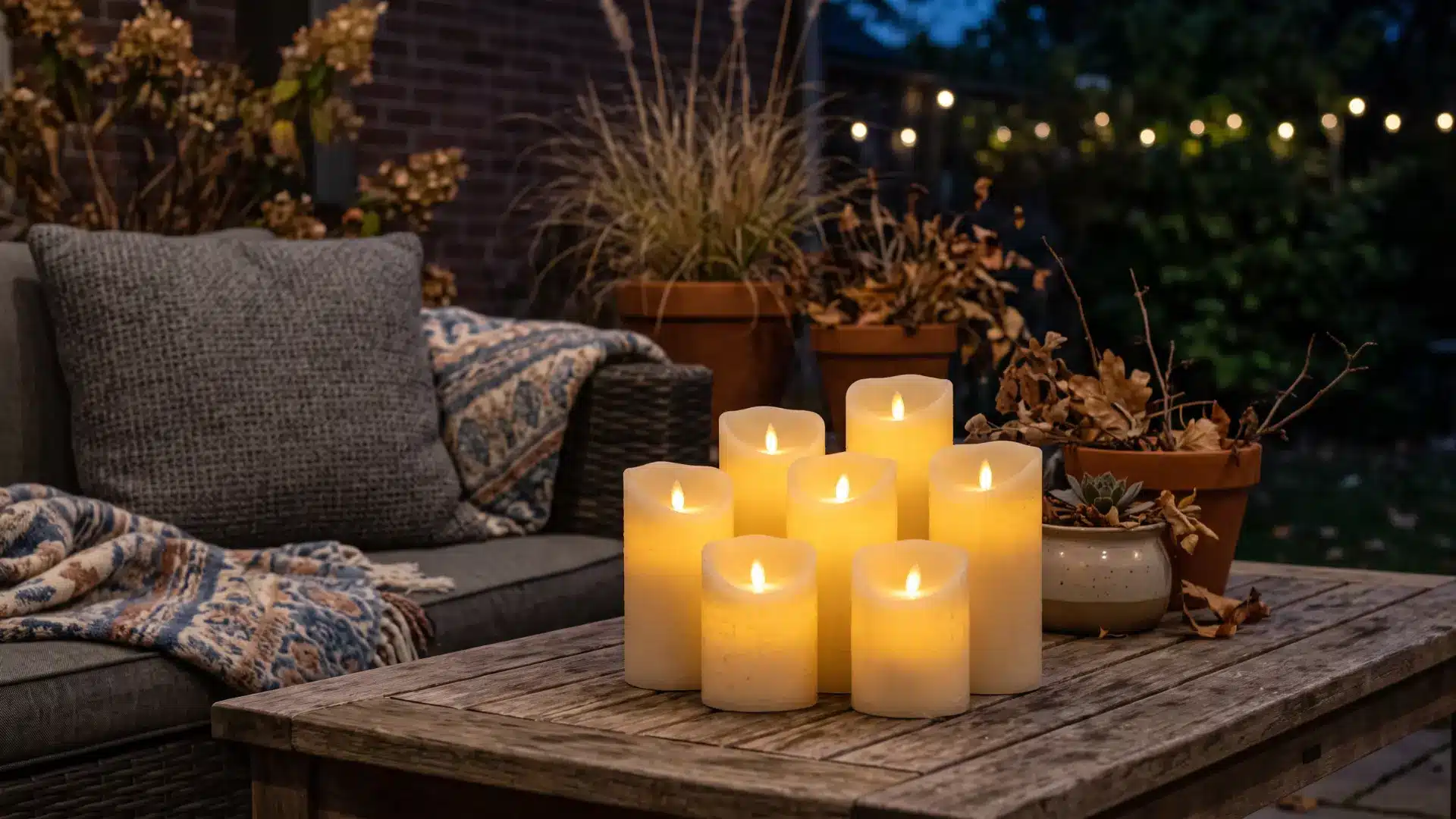
A cluster of LED candles on a table or ledge adds soft ambient light. Grouping several together makes them feel intentional rather than randomly placed.
Because they’re flameless, LED candles work well near cushions, fabrics, or dry plants—gentle light without the fire risk of open flame near textiles.
25. Add a Small Fire Pit or Fire Feature
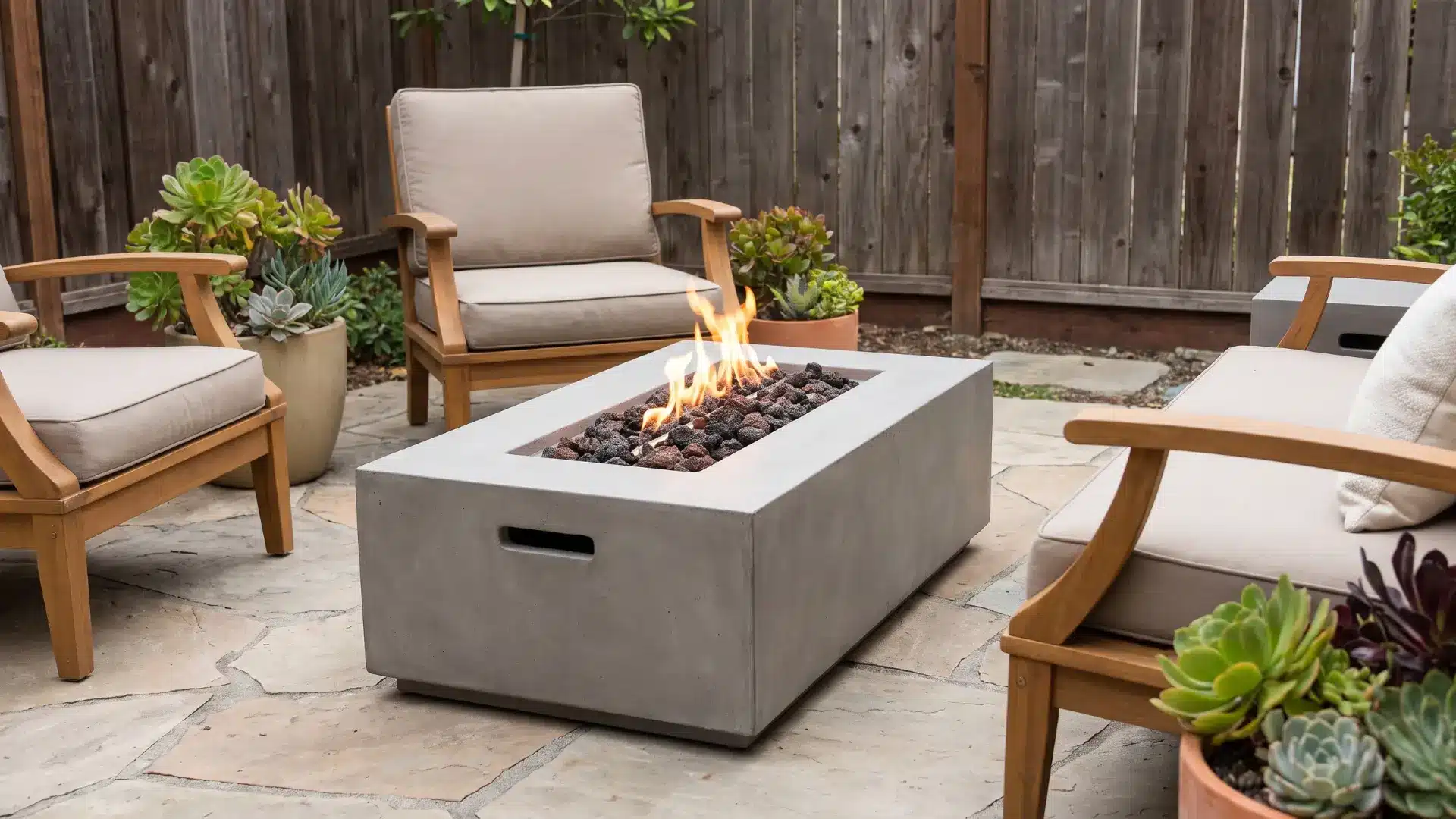
A fire pit does two jobs at once. It lights the space and heats it, stretching your patio season into cooler months. That combination is why it earns its footprint even on a small patio.
Keep it small and contained if your space is tight, a tabletop or portable fire bowl works without needing clearance for a full-size pit.
| Safety Note: Any open-flame fire feature needs clearance from overhead branches, fences, umbrellas, and fabric furniture—check the manufacturer’s minimum clearance distance before placing it. Keep a spray bottle or extinguisher within reach and never leave a lit fire bowl unattended on a covered or enclosed patio. |
Once the space is lit, the last layer is personality—the details that make a small patio feel like yours instead of a showroom display.
Style & Decor Touches
26. Mount an Outdoor Mirror
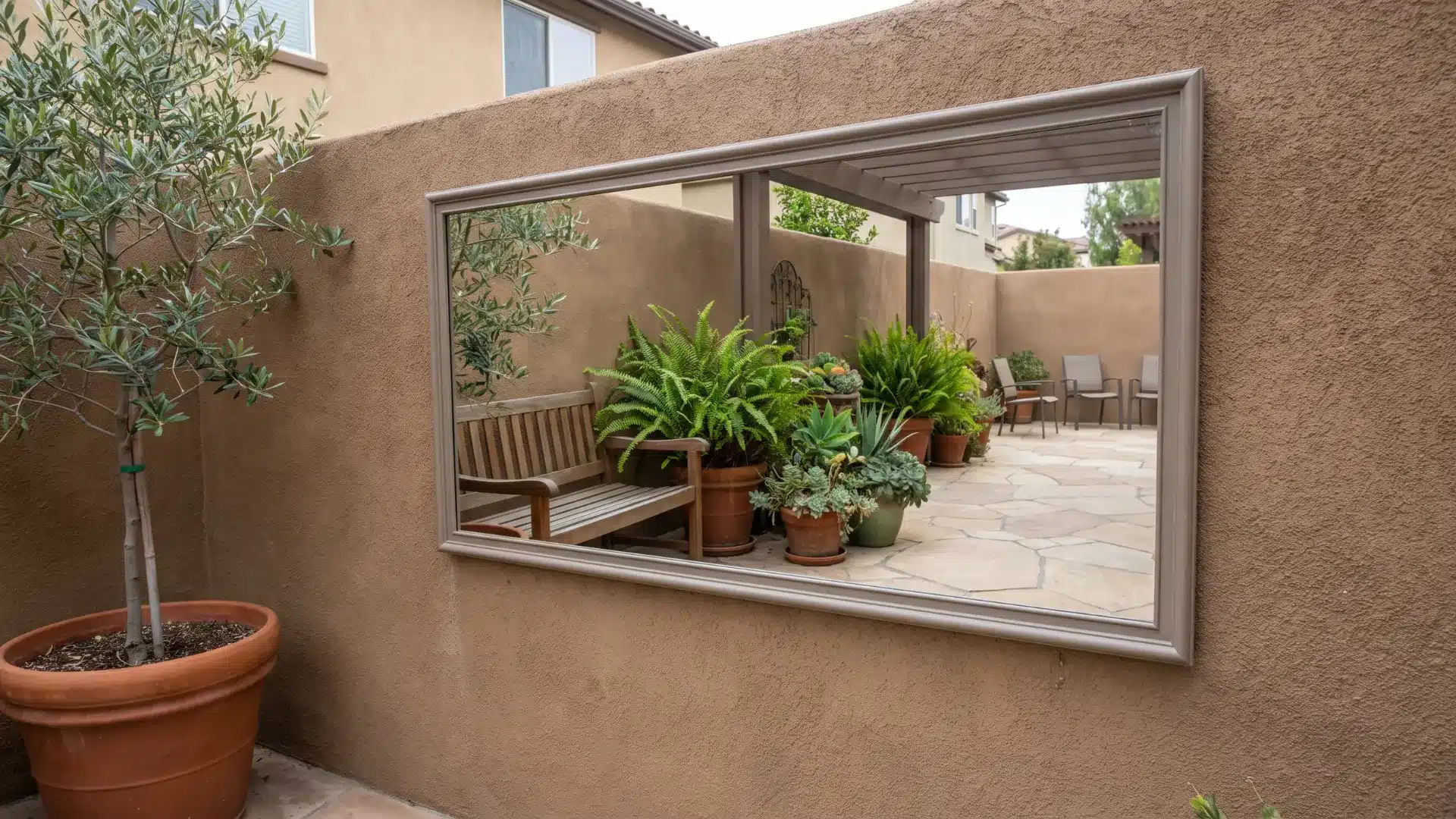
Hang an outdoor-rated mirror on a solid wall or fence to add interest without another floor-standing accessory. Interior mirrors will fog or delaminate outdoors, so look for a mirror specifically rated for exterior use.
Position it where it can reflect nearby plants or an open part of the patio. The reflection adds visual depth, helping a tight outdoor area feel less boxed in.
27. Layer Cushions for Comfort and Color
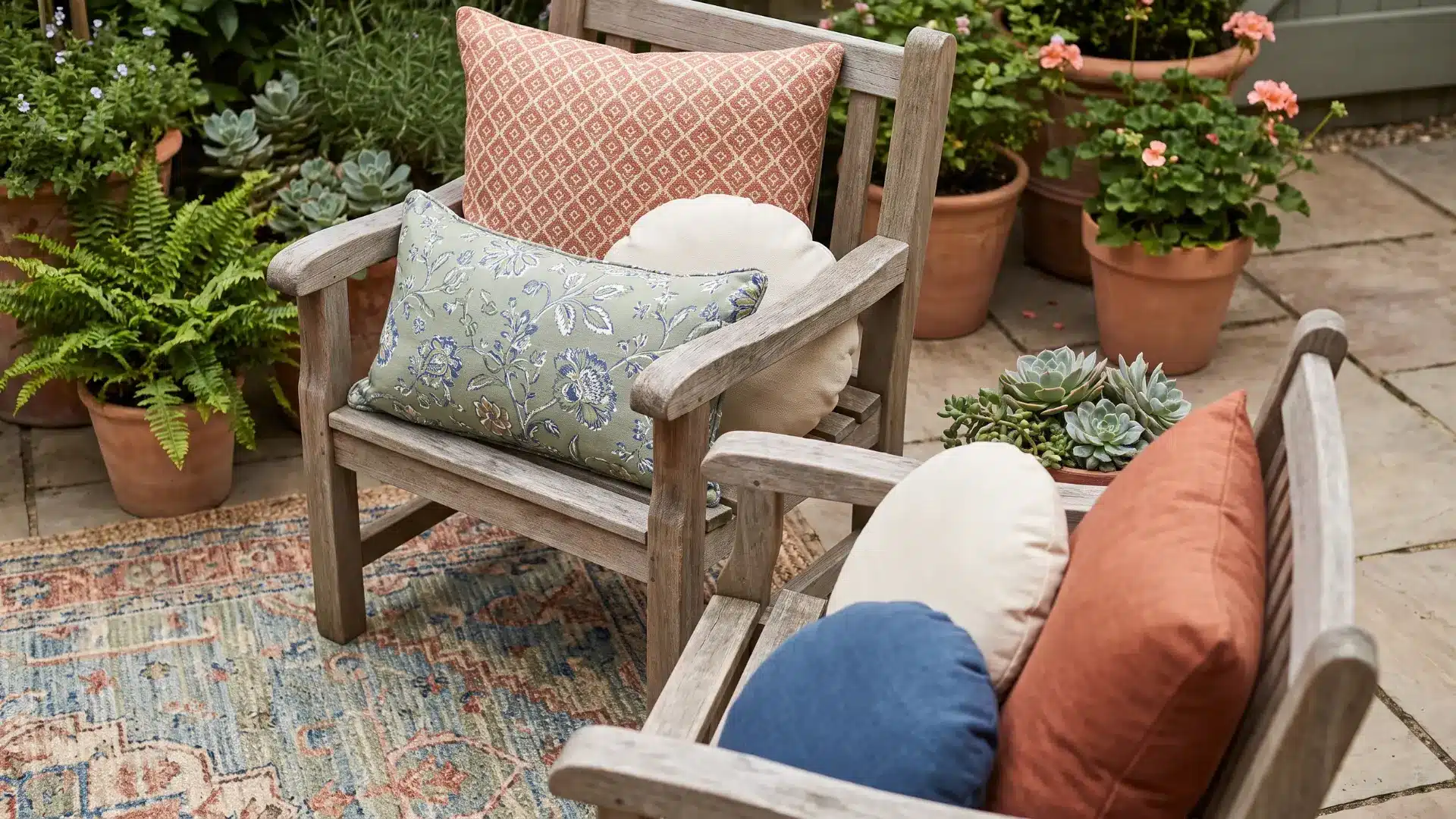
Mixing cushion sizes and patterns makes patio seating feel considered. Pull a few colors from nearby rugs or plants to keep everything connected. Choose solution-dyed acrylic or polyester covers—they resist fading in direct sun far longer than cotton or linen blends.
Add enough cushioning to make chairs pleasant for longer sitting, especially when guests stay for drinks or conversation.
28. Hang a Small Wind Chime
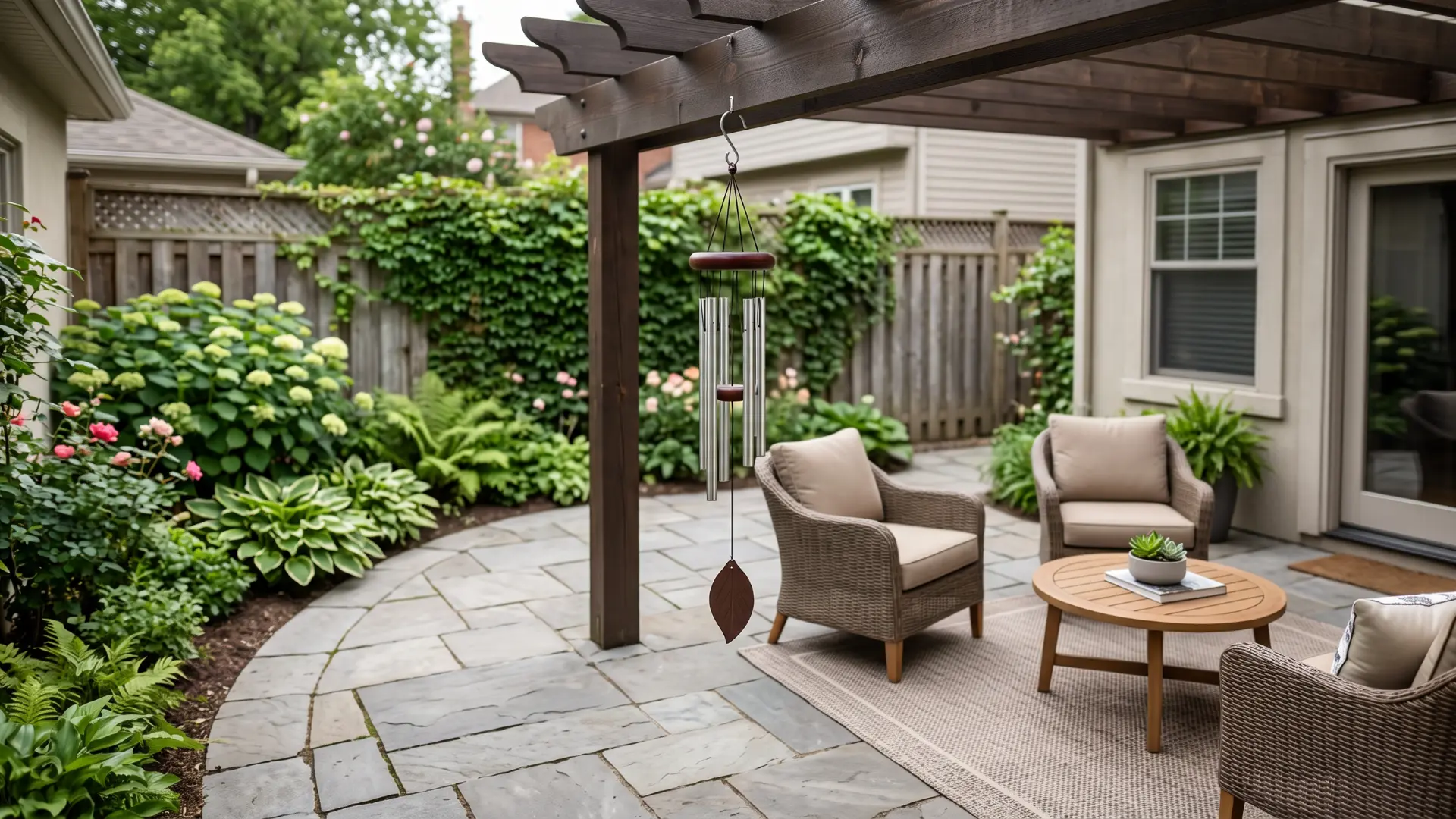
A small wind chime adds sound and movement without taking up table or floor space. Hang it from a pergola beam, roof edge, or secure wall bracket where it has room to move.
Choose a size and tone that suit the patio, especially if neighboring homes are close, and keep it away from the main walkway.
29. Add a Small Water Feature
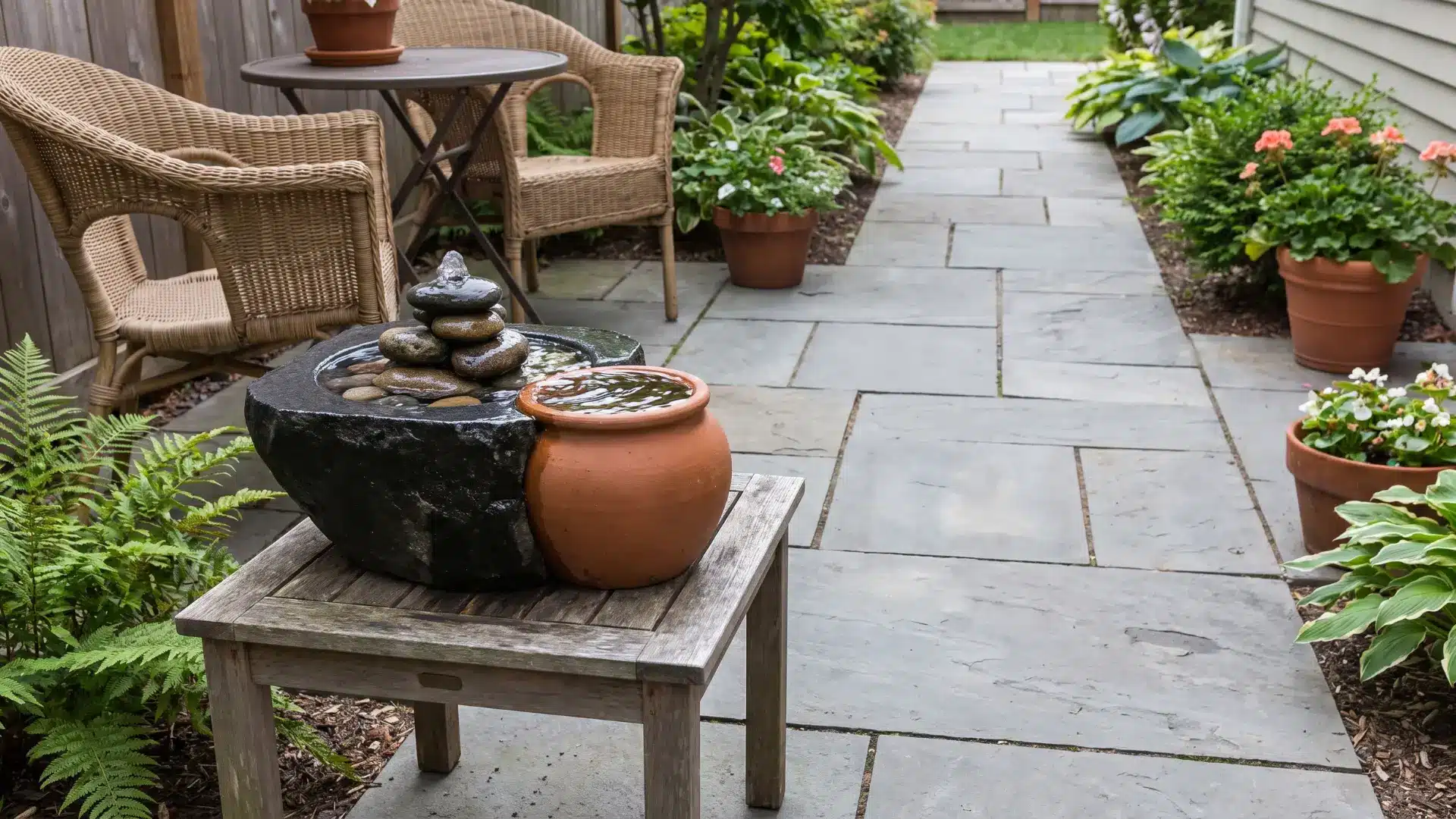
A tabletop fountain or small bubbling urn adds gentle sound without using much floor space. Running water can also soften nearby street or neighborhood noise.
This simple feature can make a small patio feel more private and settled, adding interest without crowding the seating or walking area.
30. Add Patterned Tile Accents
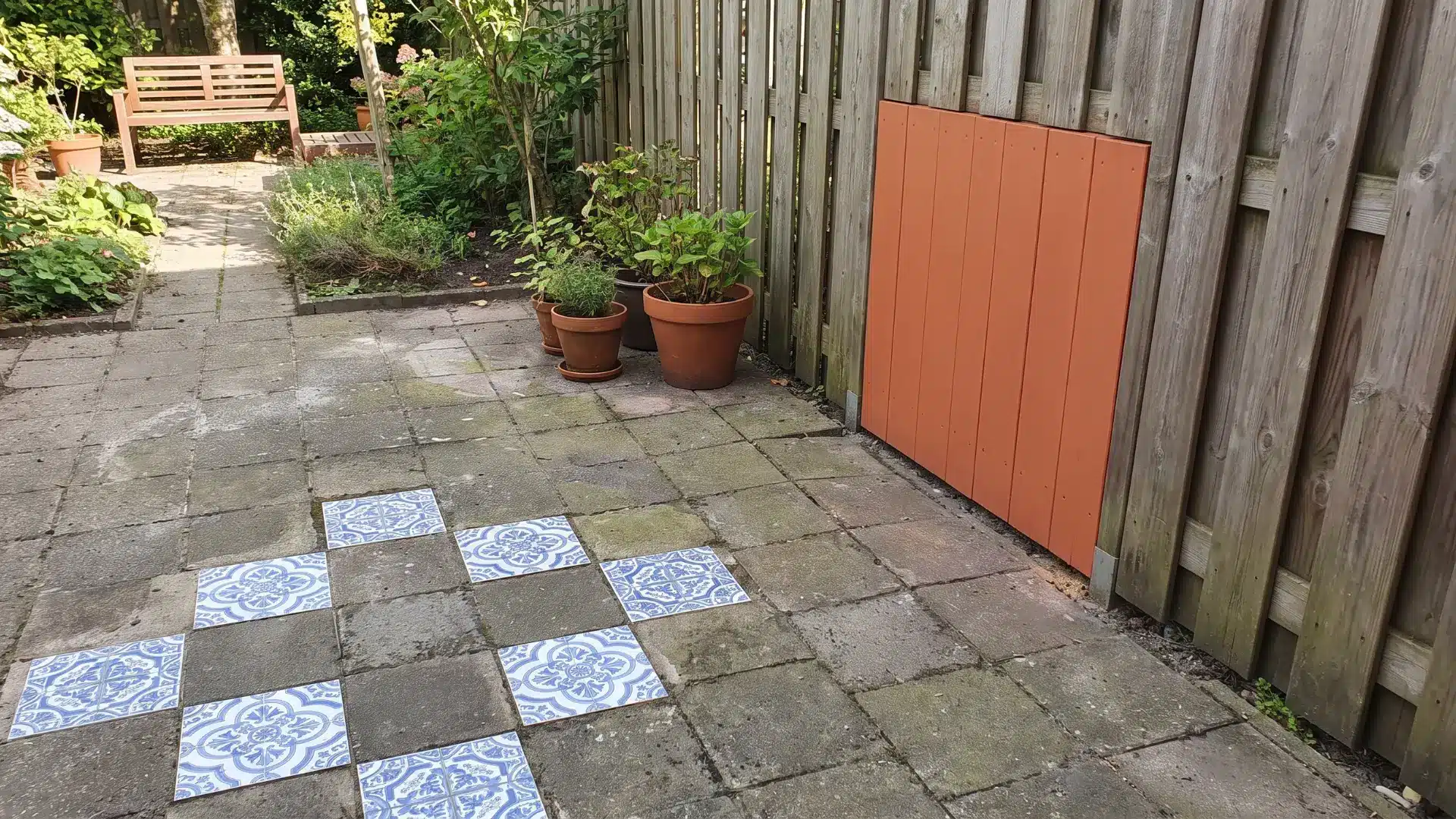
A few patterned tiles can break up plain pavers without a full patio resurfacing project. Use them along an edge, around a small section, or as scattered accents.
Keeping the pattern limited adds character without making a compact patio feel too busy. If you’re starting from bare pavers, our brick patio pattern ideas cover layouts that hold up in high-traffic spots.
31. Add a Wall-Mounted Drop-Leaf Table
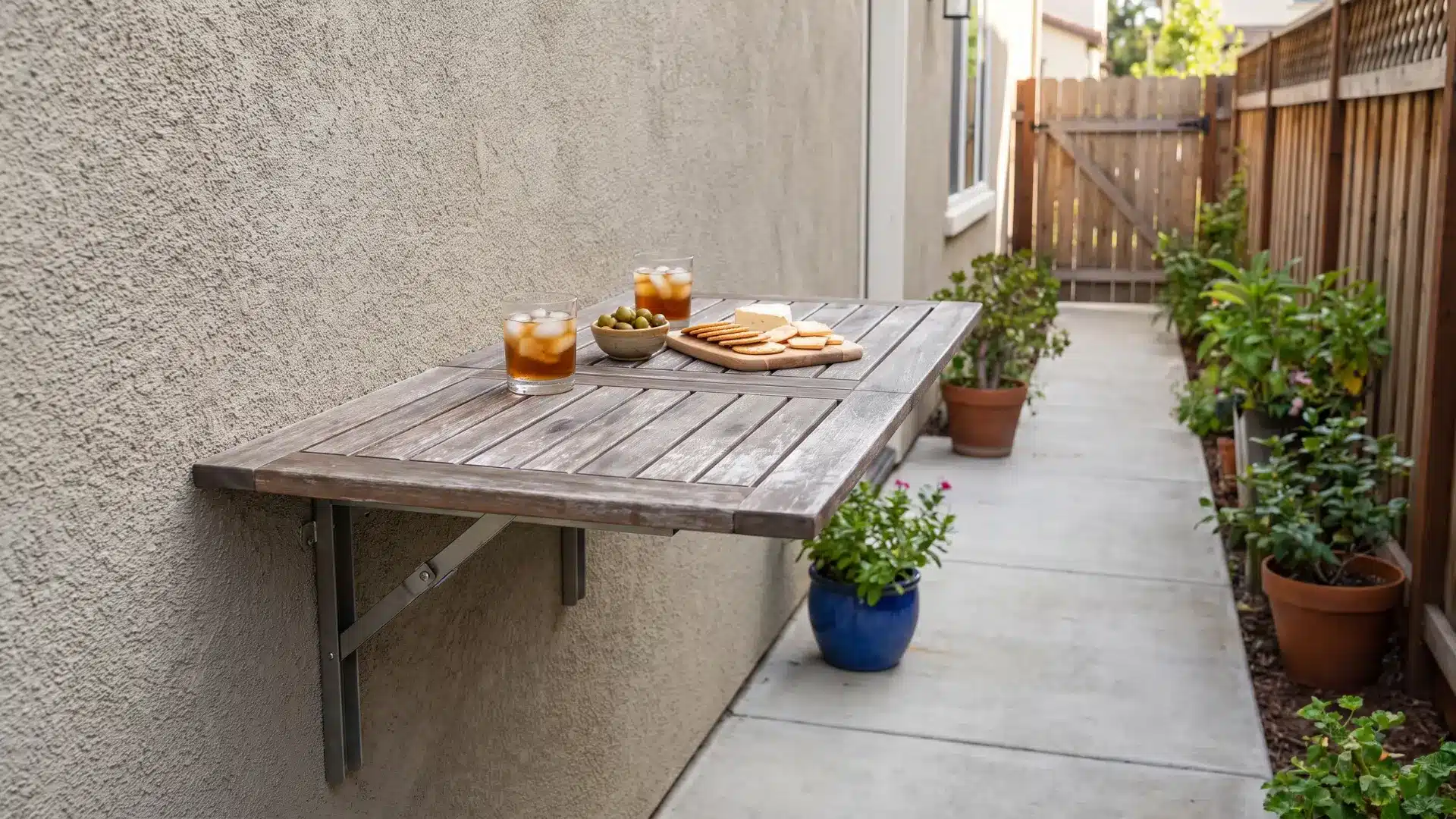
A wall-mounted drop-leaf table gives you a useful surface for drinks, snacks, or small meals without permanently filling the patio. Fold it down when you need the surface, then close it against the wall afterward.
It works especially well on patios where a regular table would make the walkway too tight.
With all 31 ideas on the table, it helps to know which mistakes undo this kind of planning before it even gets a chance to work.
Common Mistakes to Avoid With Small Backyard Patio Ideas
Even a well-planned small patio can feel cramped if a few common mistakes slip in. Here are the ones that cause the most problems and what to do instead.
| Common Mistake | Why It Causes Problems | Better Approach |
|---|---|---|
| Buying furniture before measuring | A piece that looks compact in a store can take up far more room than expected once it’s on the patio. | Measure the patio first, including walking space, then shop using those dimensions. |
| Using walls only for decoration | Bare walls leave useful vertical space unused, which matters when floor space is limited. | Add wall-mounted planters, shelves, or other practical storage where they make sense. |
| Adding too many focal points | A fire pit, mural, and water feature competing for attention can make a tiny patio feel crowded. | Choose one main focal point and keep the surrounding features simpler. |
| Leaving privacy until last | Privacy affects how comfortable and usable the patio feels, especially when neighboring homes are close. | Plan screens, planting, or fencing early so privacy works with the overall layout. |
| Keeping extra furniture “just in case” | Spare chairs take up valuable everyday space even when they’re rarely used. | Use stackable chairs, poufs, or other pieces you can store or move when needed. |
| Choosing indoor materials for outdoor use | Indoor rugs, furniture, and paint break down quickly when exposed to UV and moisture. | Confirm every fabric, finish, and piece of hardware is rated for outdoor exposure before buying. |
The main goal is to protect usable space. Every piece should earn its place by supporting comfort, movement, storage, privacy, or year-round durability.
Once you’ve weighed those mistakes against your own patio, the last step is choosing where to actually start, and if you have more room to work with than a single small slab.
Final Verdict
A small patio works best when every choice has a purpose. You do not need to fill the space with furniture, plants, lighting, and decor all at once. Start with how you want to use it, leave room to move, and choose pieces built for outdoor conditions.
The most practical small backyard patio ideas use compact seating, vertical space, privacy solutions, flexible furniture, and layered lighting without making the area feel crowded.
I would rather add one useful feature at a time than force several ideas into a tight footprint. Measure your patio, choose your priority, and try the idea that solves your biggest space problem first. Then share which upgrade worked best for you.
Frequently Asked Questions
What is the cheapest way to make a small patio?
Repainting or resealing existing pavers with exterior-rated paint is the fastest low-cost reset. A patterned outdoor rug and secondhand furniture add polish without a materials budget, and string lights or DIY planters round it out.
What size patio is appropriate for a small backyard?
A functional small patio needs roughly 8 to 10 feet in each direction for a compact table and a few chairs. A bistro setup can work in as little as 6 feet, depending on the one function you commit to.
What are some DIY small patio design ideas?
Repainting hardscape with exterior paint, building a vertical garden from repurposed shelving, and hanging outdoor-rated string lights are all low-cost projects with no contractor needed.
What are some ideas for a very small backyard?
Prioritize one function, use vertical space for storage and greenery, and choose bistro-sized furniture over a full dining set. A single focal point keeps the space from feeling cluttered.
How much walking space should I leave around patio furniture?
Plan for at least 30 to 36 inches of clearance around any table or seating group. Less than that, and the patio will feel tight even if the furniture itself is small.
Do I need a permit to add a fire pit or shade sail to a small patio?
Portable fire bowls and shade sails typically don’t require a permit, but check local fire codes for minimum clearance from structures and property lines before installing either one.