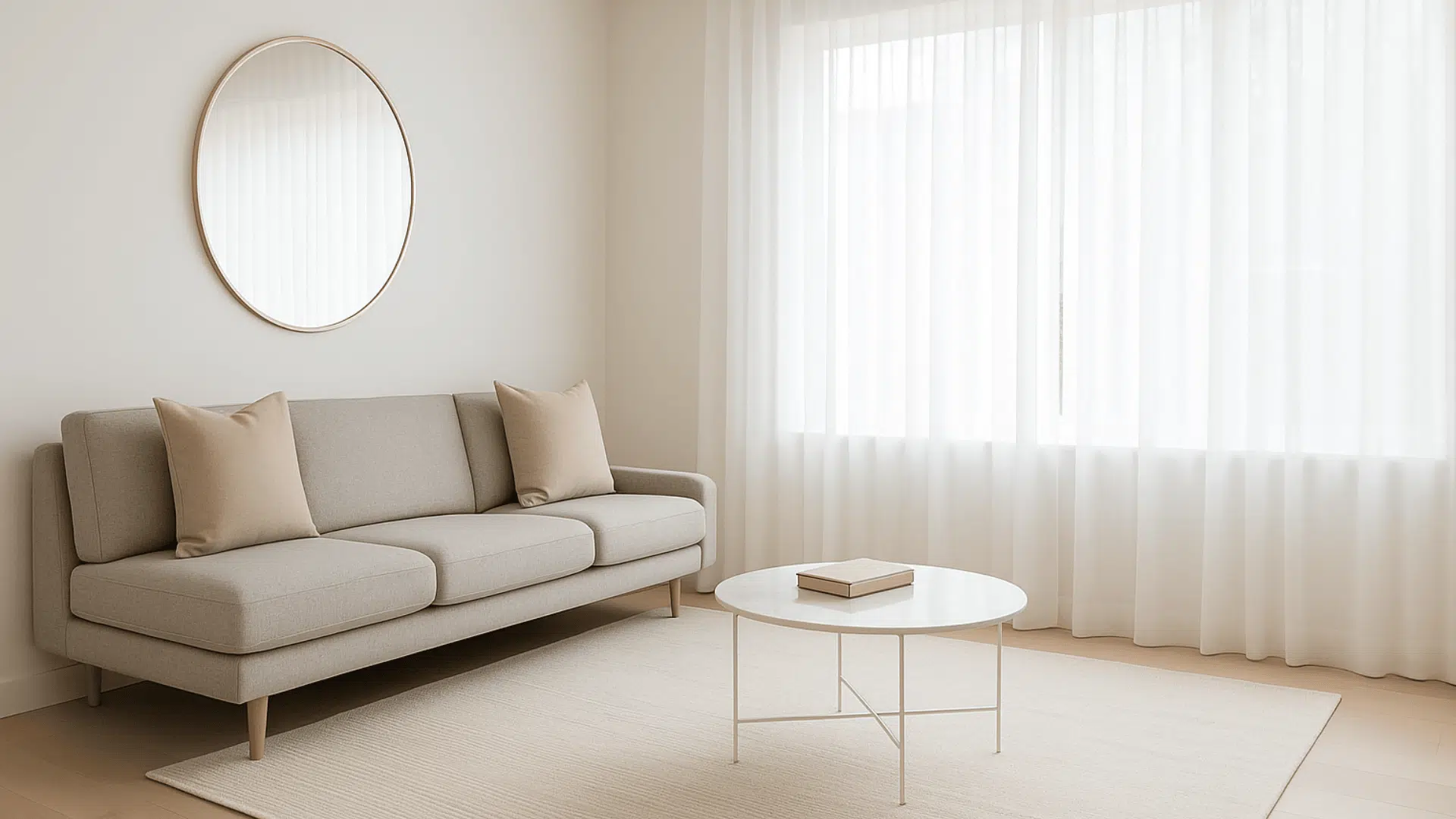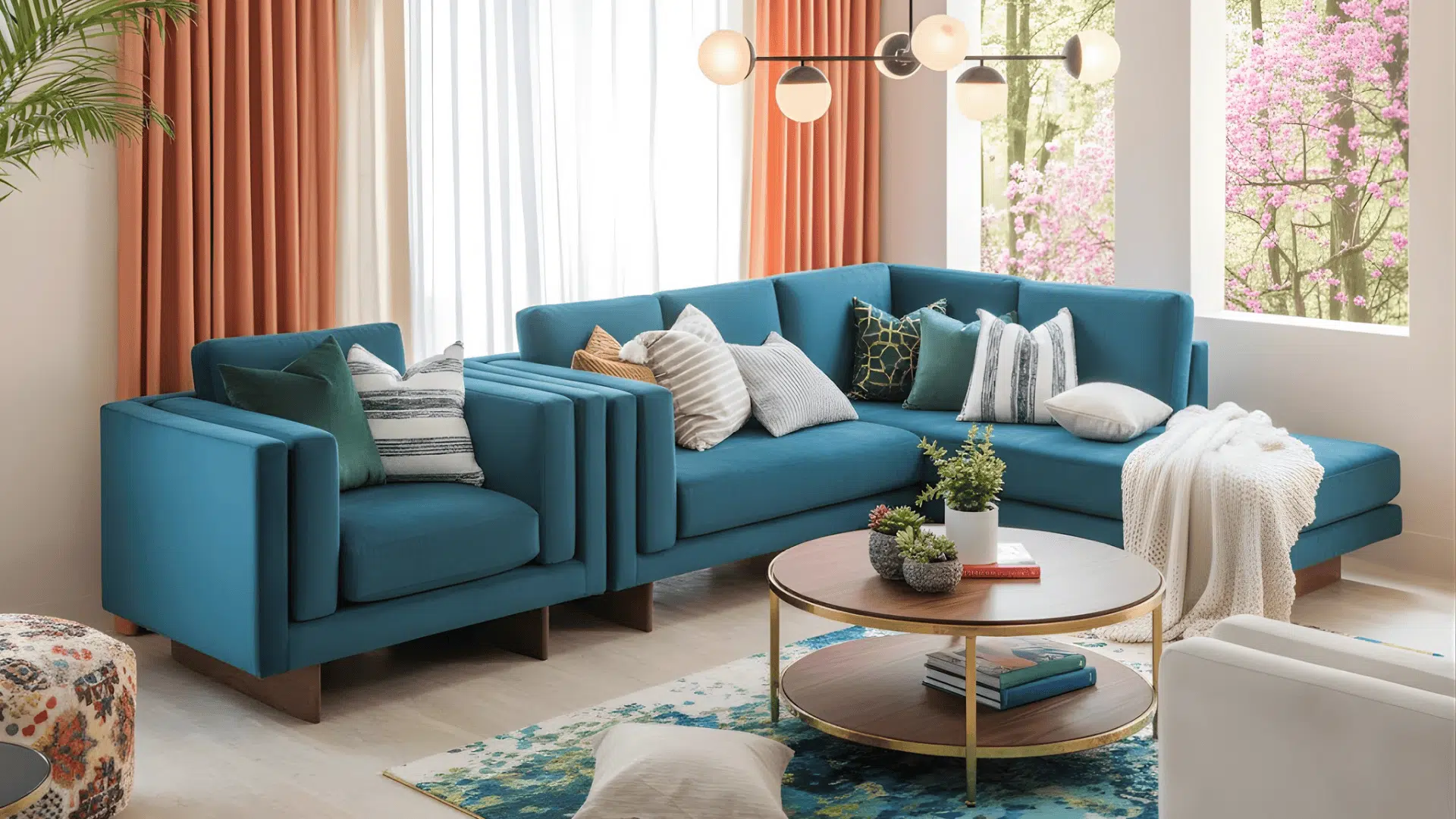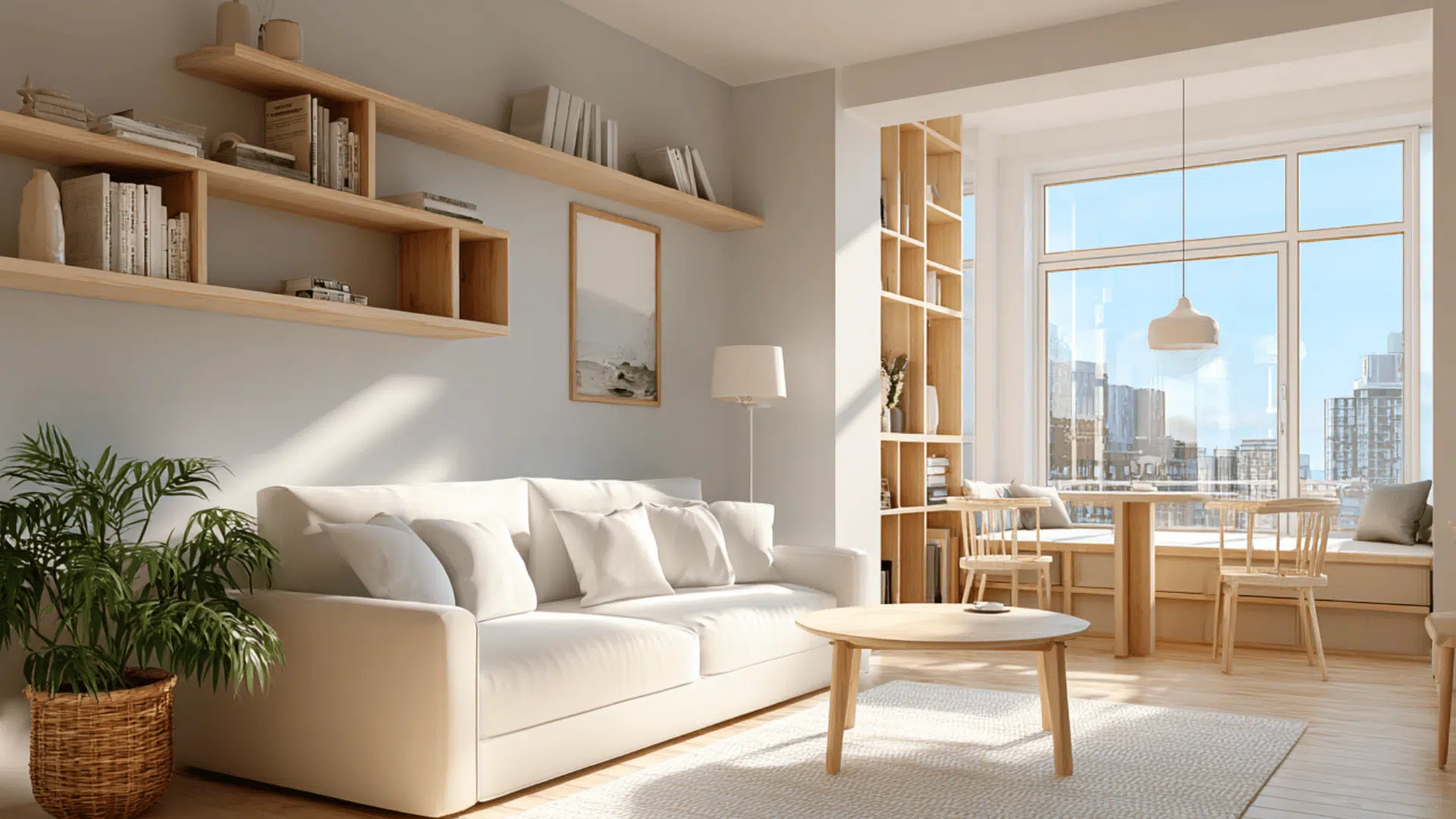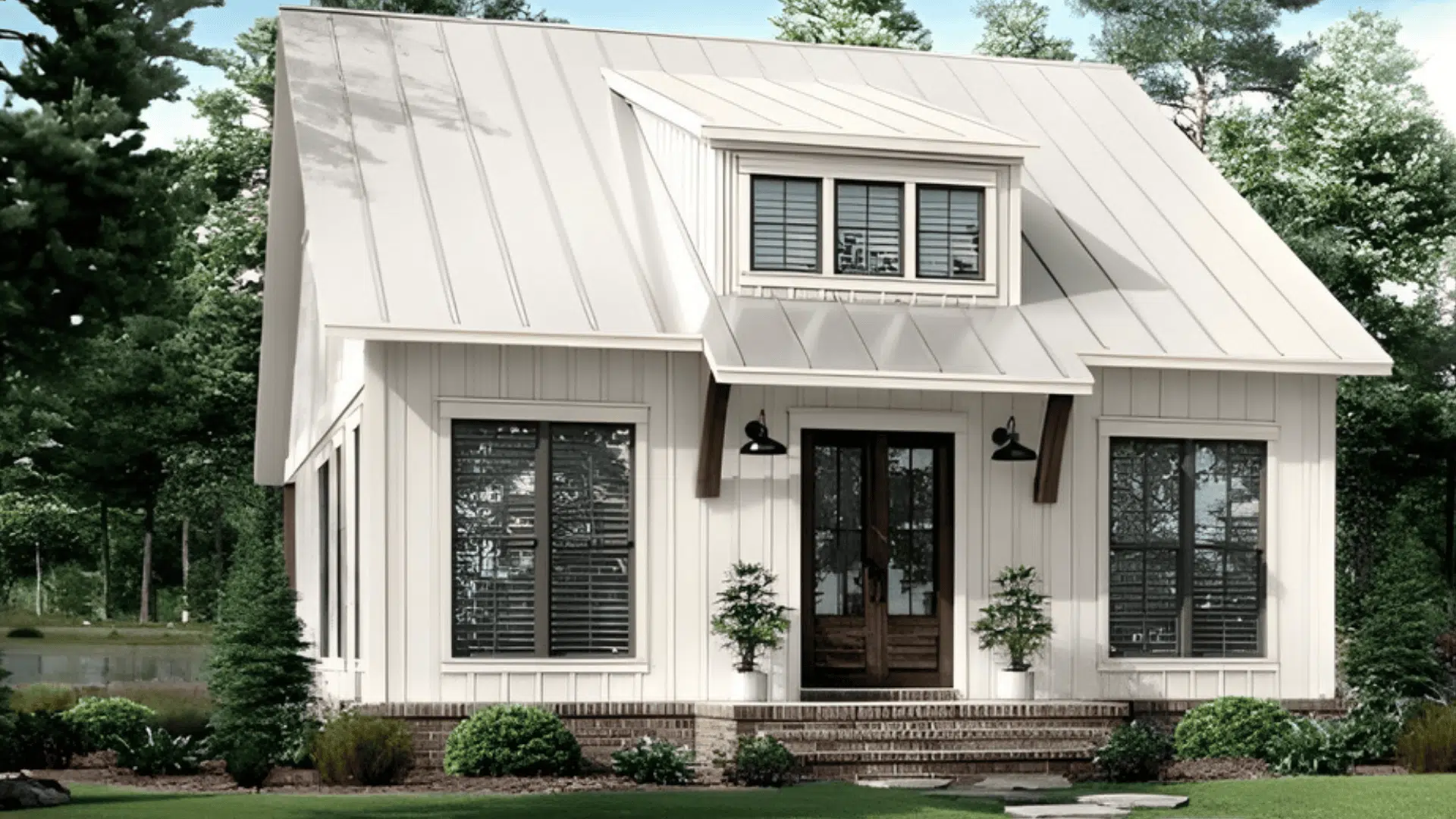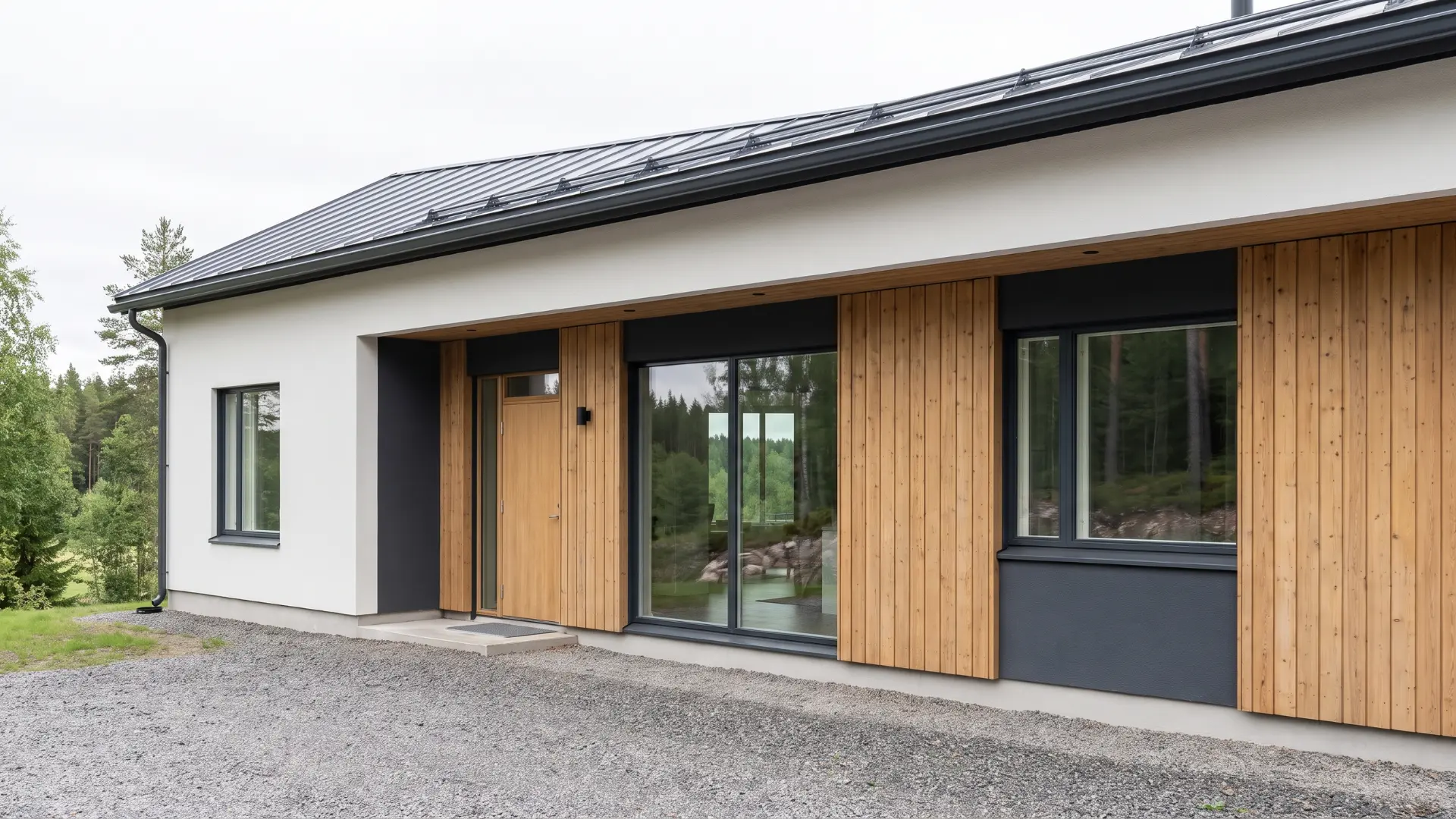
Walk into a home that feels calm the second you step inside, and there’s usually one thing behind it: Scandinavian home design.
It’s easy to assume this style is just white walls and empty rooms. That’s the part everyone copies and gets wrong.
The real version is warmer, more deliberate, and a lot more livable than the stereotype suggests.
Find out here how you’ll get a clear picture of what actually defines the style, where it comes from, and how it holds up against look-alikes like Japandi and minimalism.
Then we’ll get practical, with ideas you can actually use in your own home.
What is Scandinavian Home Design?
Scandinavian home design is a Nordic design philosophy built around natural light, honest materials, and function first, not a fixed color palette.
The movement traces back to Denmark, Sweden, and Norway in the early-to-mid 1900s, with the Scandinavian design movement gaining international recognition through exhibitions held from the 1930s onward.
The core idea is simple. Every room should work hard, let in as much light as possible, and stay clutter-free. The goal is warmth, built through restraint.
That’s why a Scandinavian home shifts with the seasons. Interiors lean into thick wool throws and warm textures come winter. Exteriors stay clean and pared-back all year.
Once you understand that the emptiness isn’t the point, the rest of this style starts making sense.
Scandinavian Design Ideas to Bring Into Your Home
Use these ideas to bring natural light, warmth, simple materials, and functional details into your own Scandinavian home design, room by room.
1. Maximize Natural Light with Oversized Windows
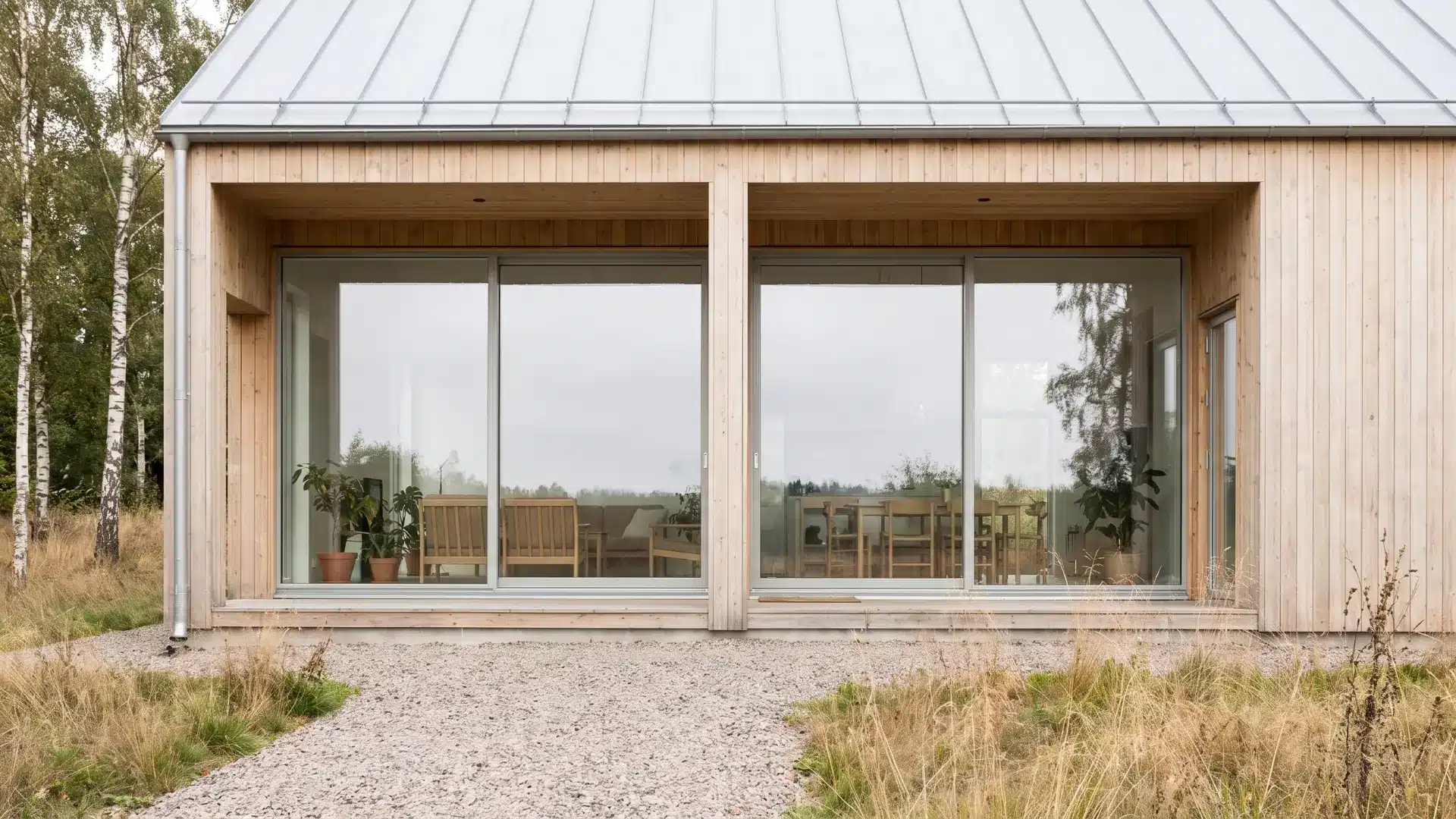
Size alone won’t get you there. Placement matters more than square footage. South-facing windows catch the most consistent light throughout the day.
Position larger windows on that side whenever the lot allows it. A smaller window in the right spot beats a huge one facing the wrong way.
2. Choose a Neutral Exterior Palette (White, Gray, Charcoal)
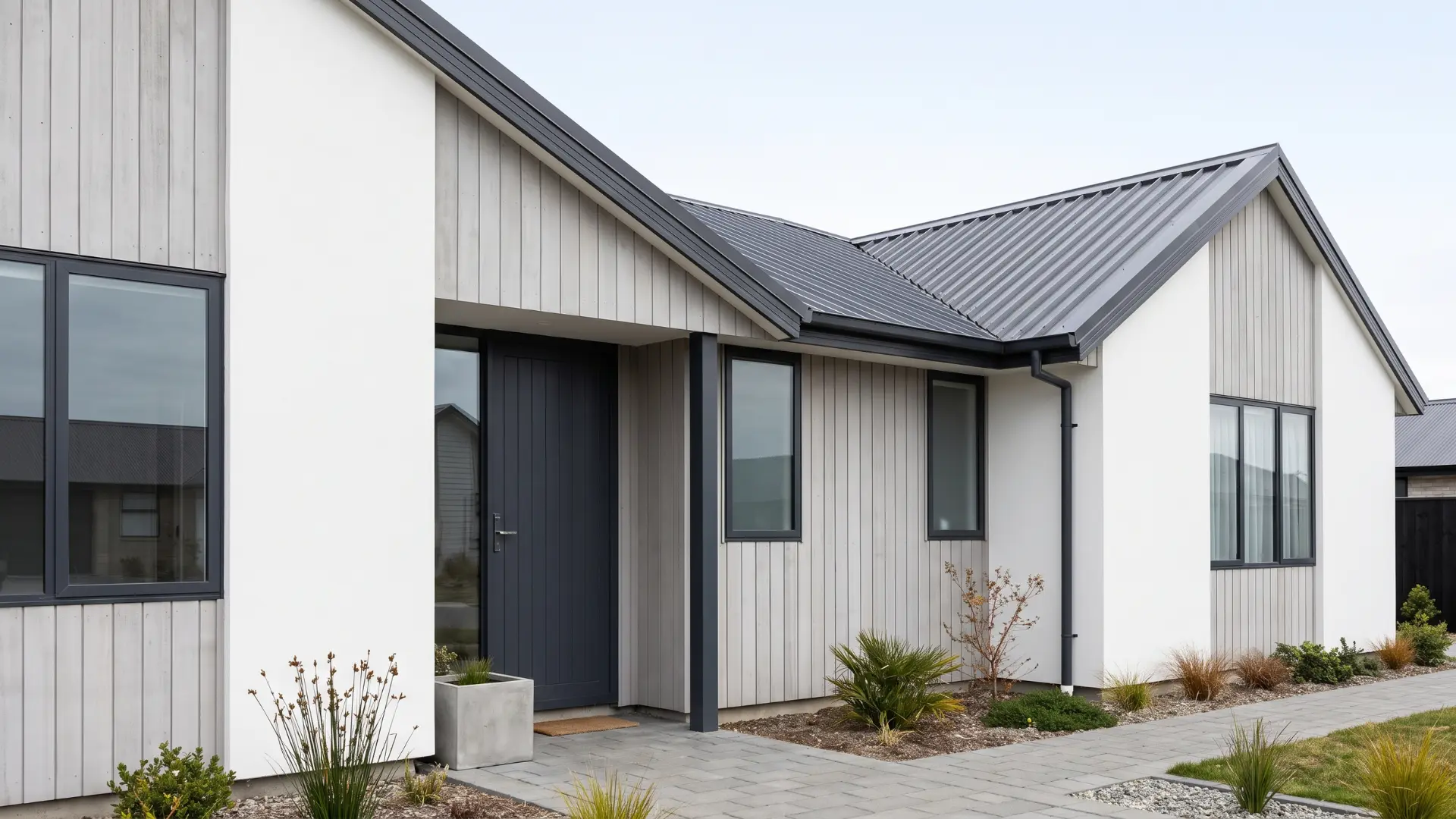
Stick to white, light gray, or charcoal as your base. These tones keep the exterior calm and cohesive.
But an all-neutral facade can read flat. Add one dark accent a black door, dark trim, or charcoal window frames to give the eye somewhere to land.
3. Keep Rooflines Simple: Gabled, Flat, or Shed
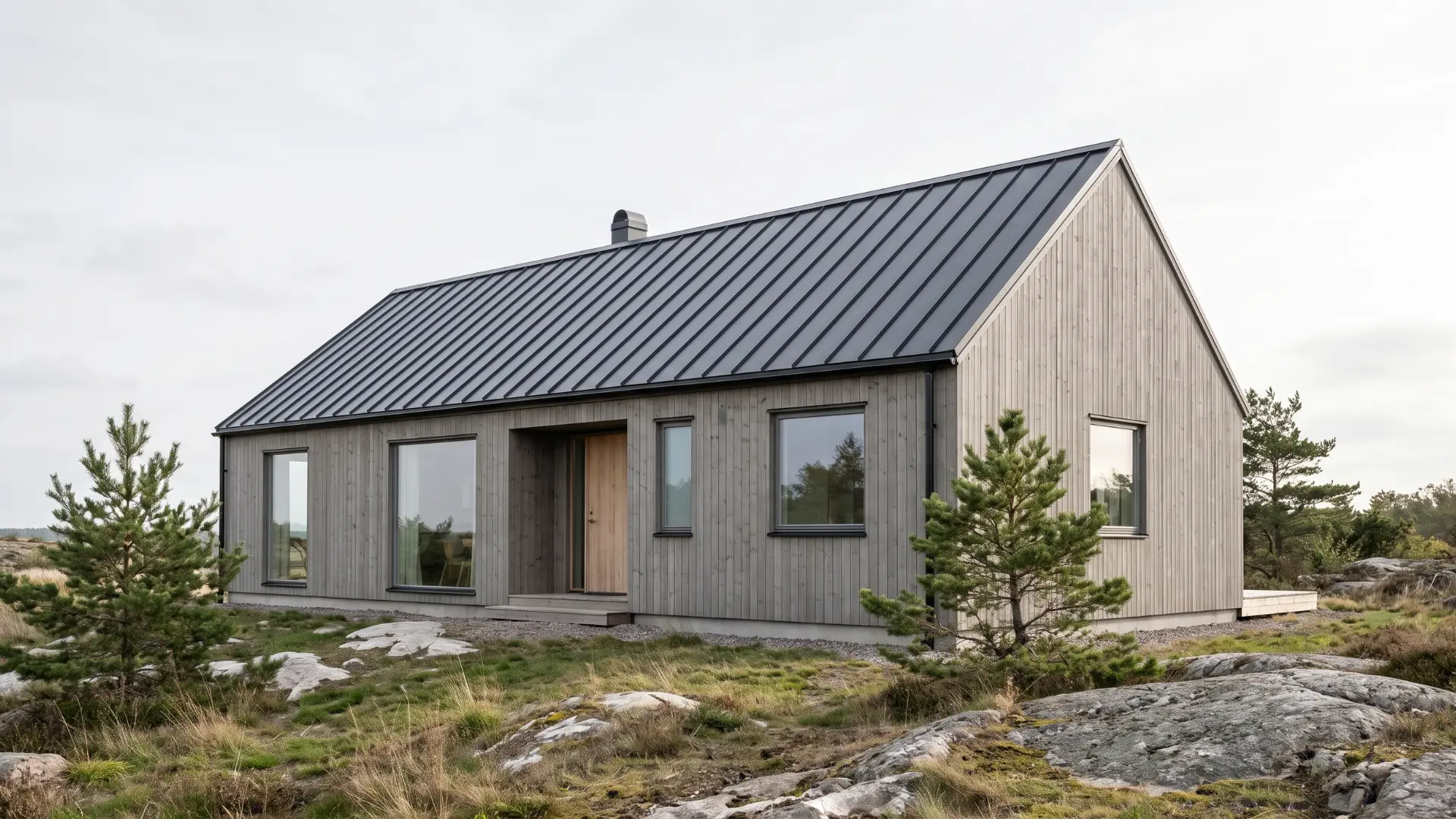
Simple rooflines aren’t just about looks. Gabled roofs shed snow easily, which matters in colder climates.
Flat and shed roofs work better in milder regions with less snow load. Pick the shape based on your climate first, style second.
4. Open Up the Floor Plan
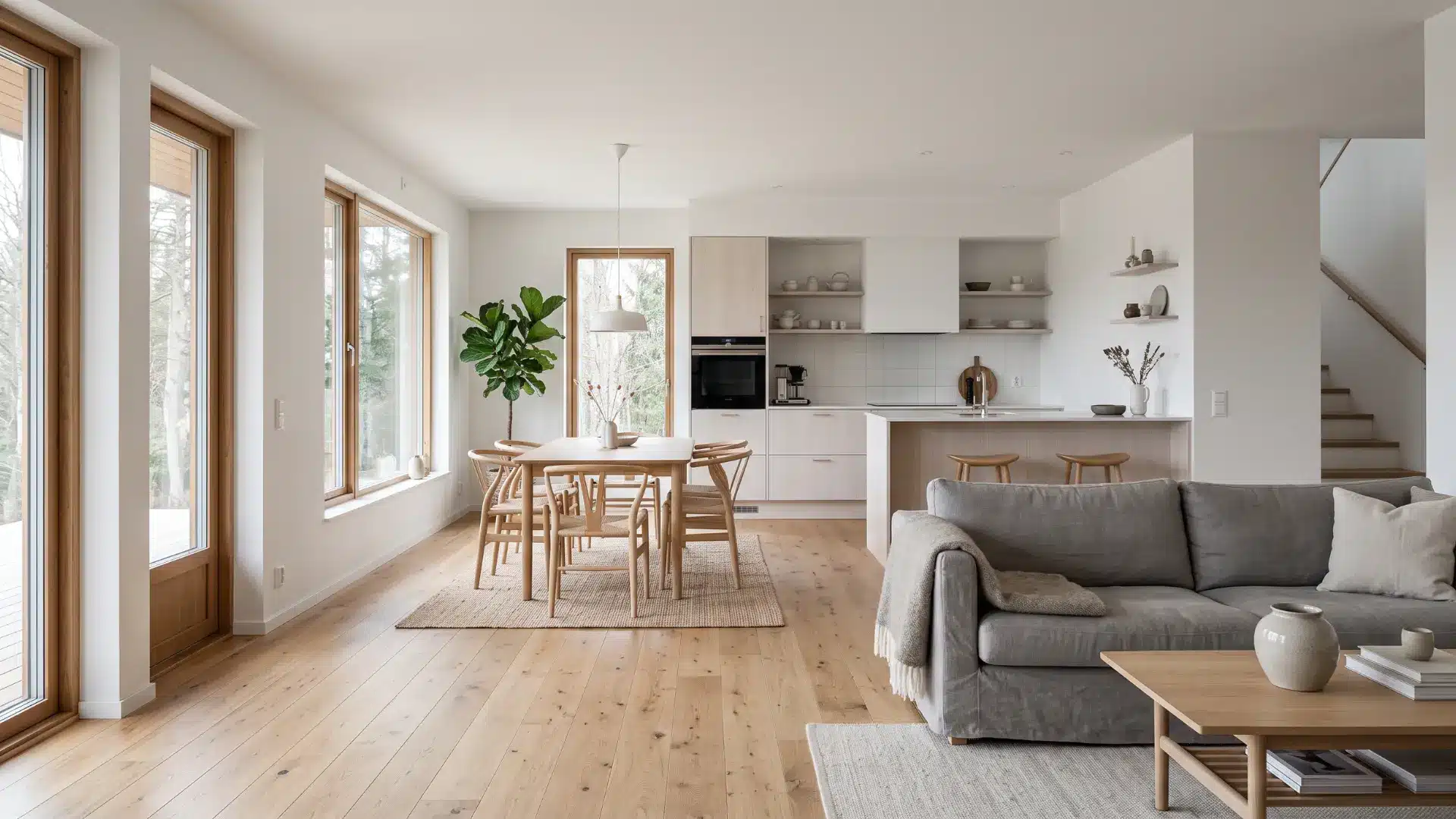
Kitchen, dining, and living areas should flow together as one space. Walls between them break up light and make rooms feel smaller.
An open-concept layout lets natural light travel further. It also keeps the whole home feeling connected, not chopped into boxes.
5. Layer Light Woods Throughout (Pine, Ash, Oak)
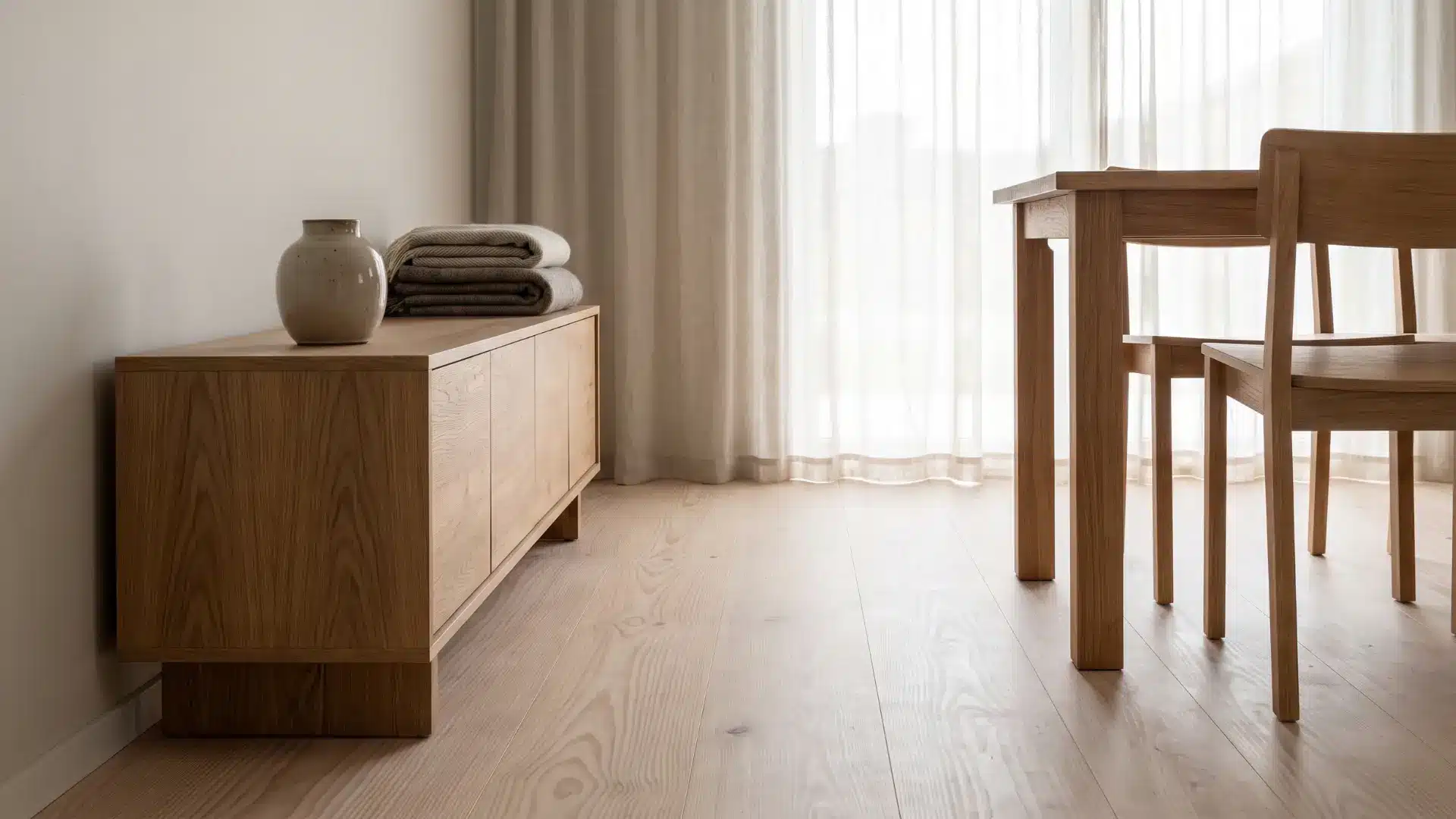
Pine, ash, and oak all work well together. You don’t need to match every wood tone in the room.
Slight variation actually looks more intentional than a perfectly matched set. Mix a lighter floor with a slightly warmer wood table for contrast.
6. Add Warmth with Wool, Sheepskin, and Linen
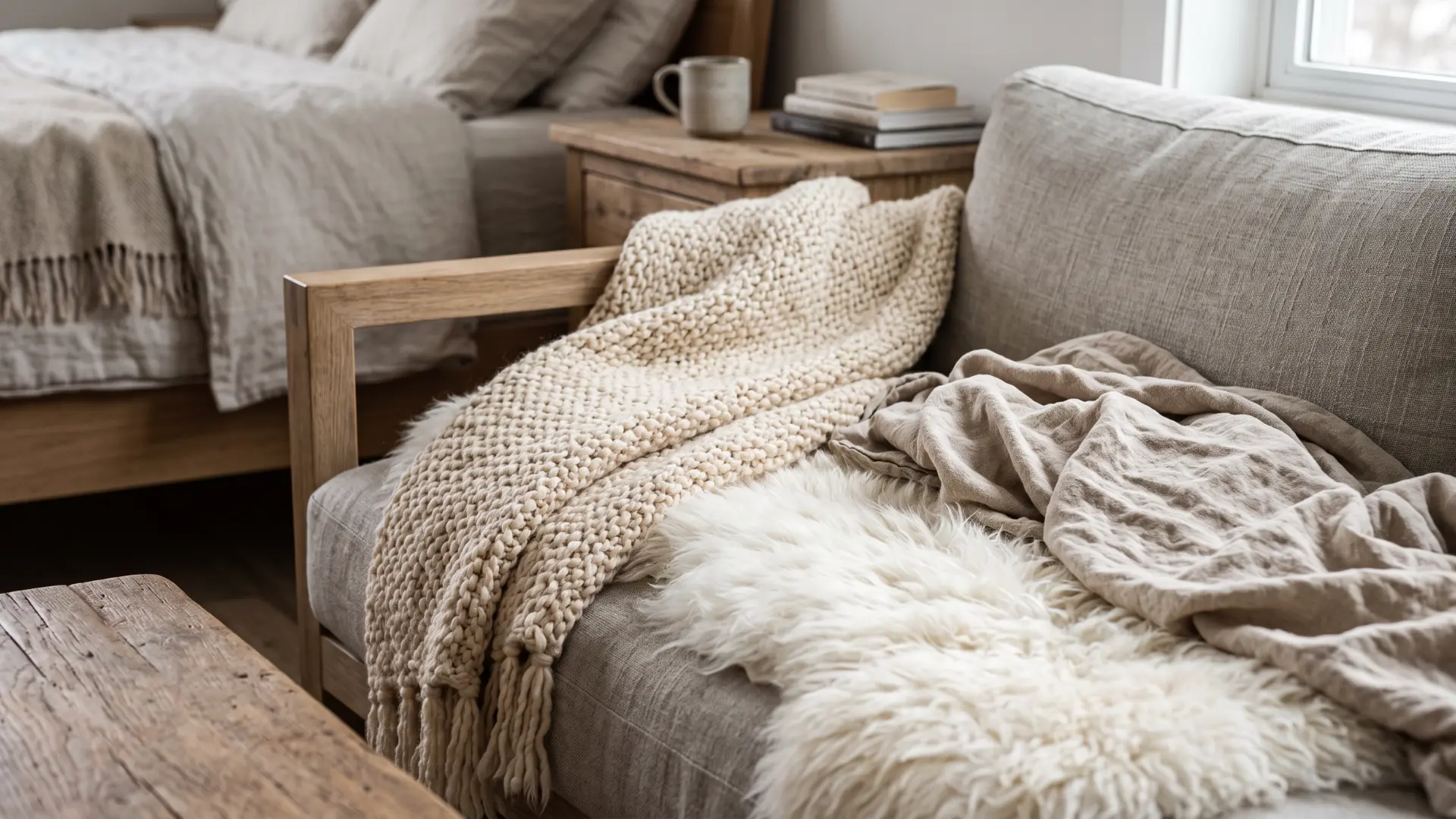
This is where the coziness actually comes from. Clean lines alone will always feel a little cold. Layer a wool throw over the sofa.
Add a sheepskin on a reading chair, linen on the bed. Texture is what turns a stark room into a warm one. Skip this step, and the whole look falls flat.
7. Stick to a Function-First Furniture Rule
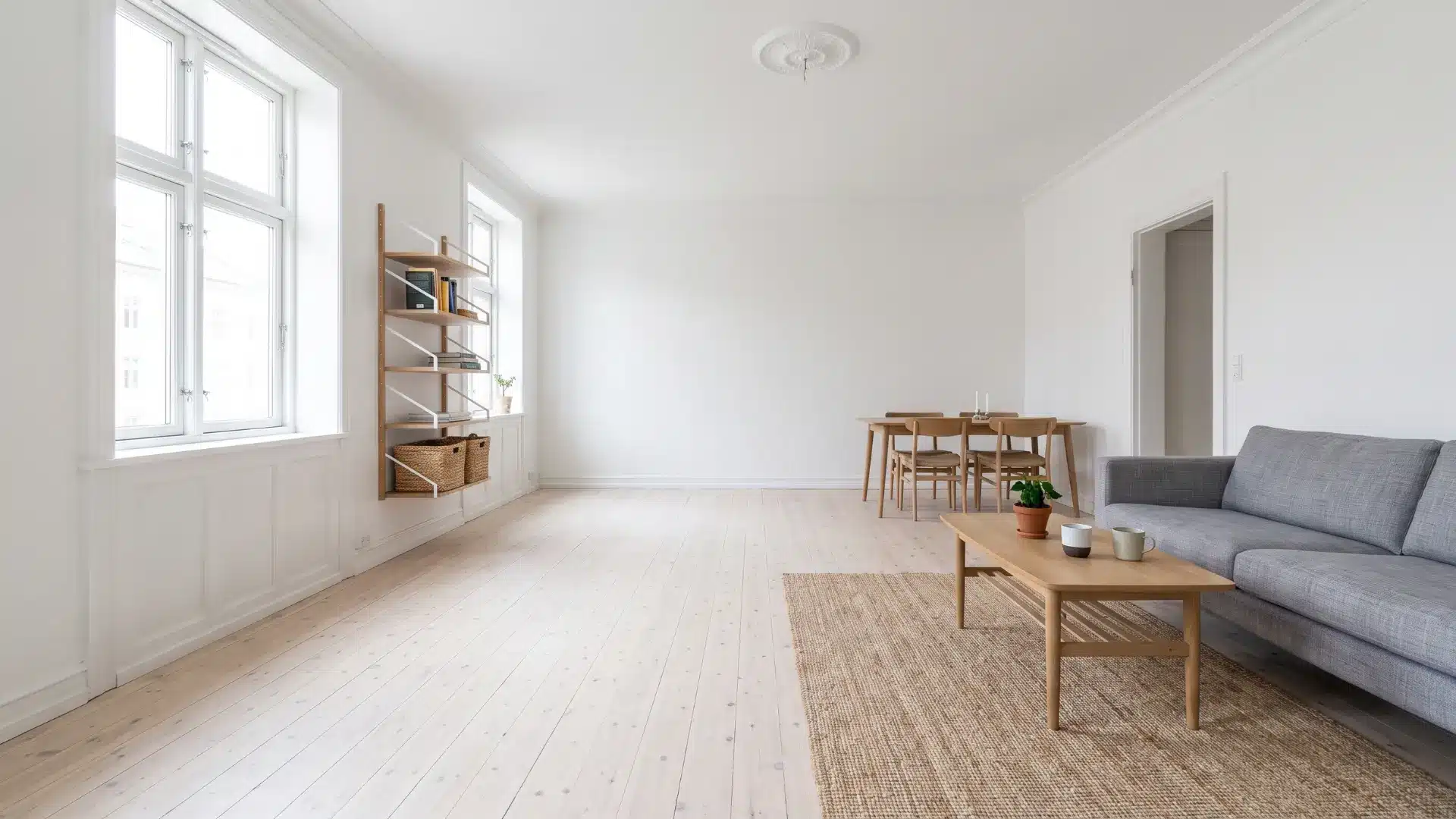
Every piece in the room should earn its place. If it doesn’t serve a clear purpose, it doesn’t belong.
Skip purely decorative furniture that fills space. A Scandinavian room stays uncluttered because nothing sits there for show.
8. Use Black Accents to Ground a Neutral Room
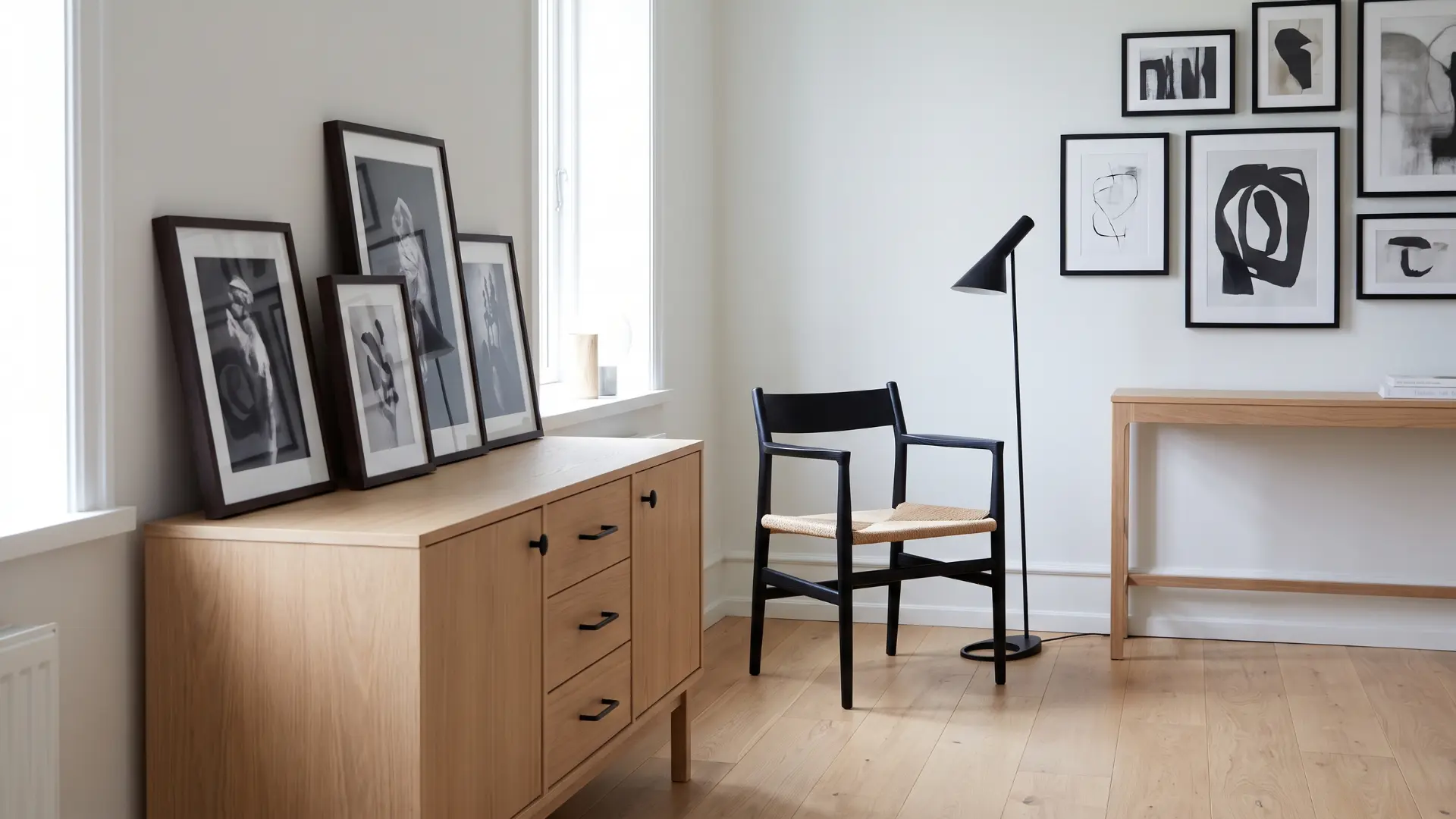
A room full of light wood and white walls needs contrast. Black does that job well.
Try black cabinet hardware, dark picture frames, or one black chair. A single strong accent grounds the whole space without overwhelming it.
9. Bring the Outside In with Natural Stone
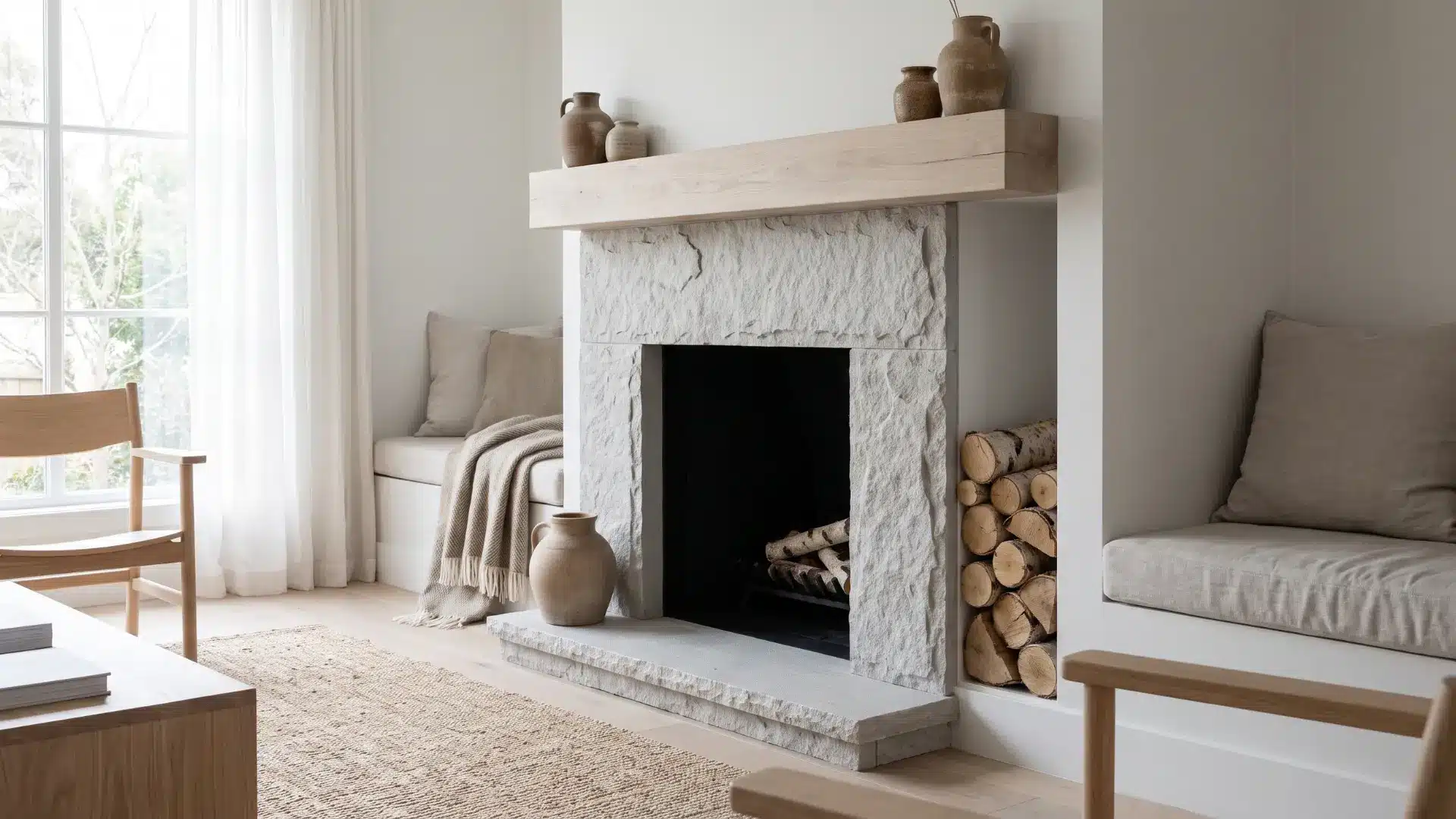
Stone adds texture that wood and wool can’t. Use it on a fireplace surround, kitchen countertop, or flooring accent.
It connects the interior back to the natural landscape outside. Even a small stone detail makes the whole room feel more grounded.
10. Favor Vertical Wood Paneling or Board Siding
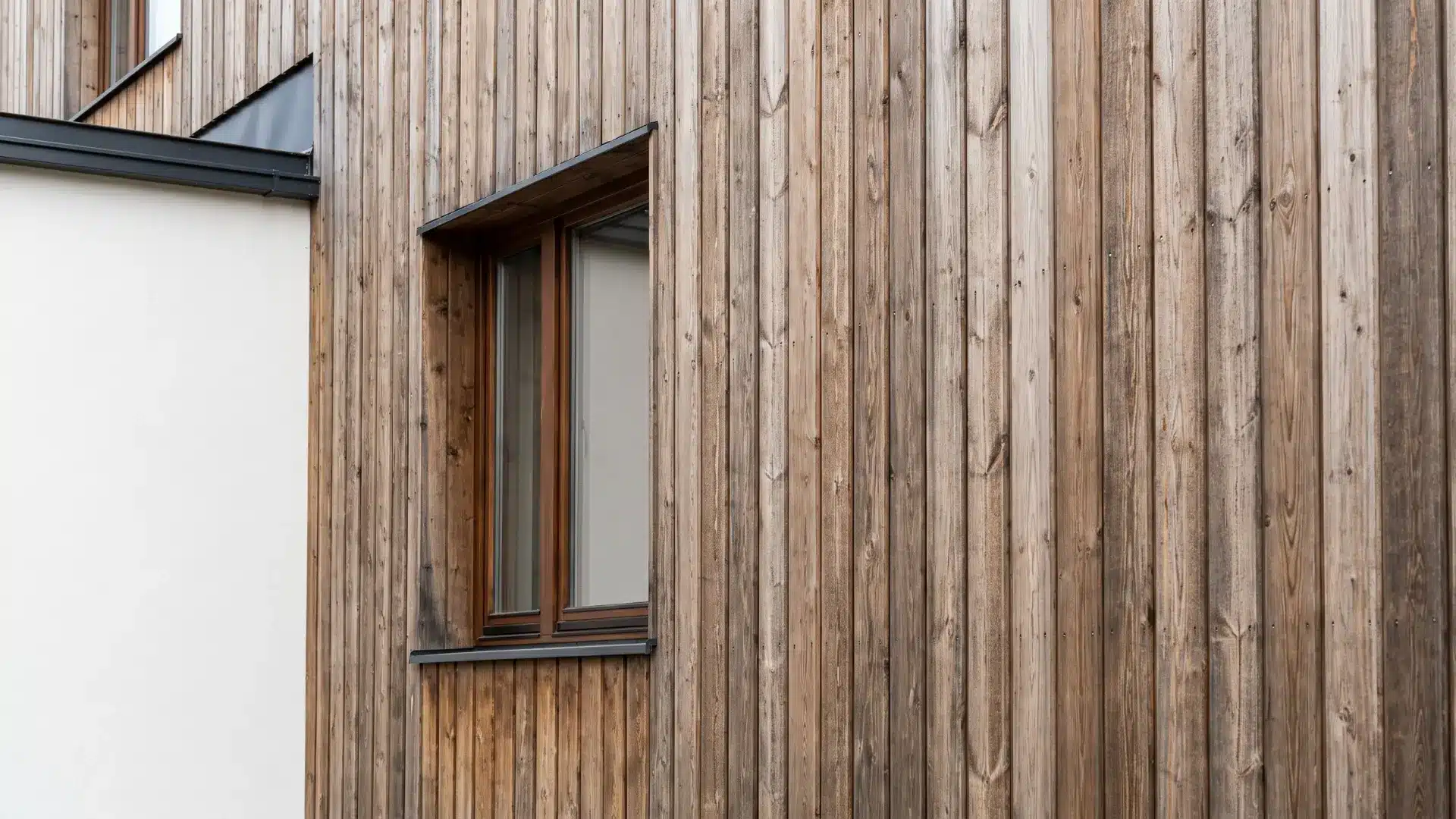
Vertical wood paneling adds exterior texture without breaking clean lines. Board siding does the same job on a larger scale.
Both keep the surface feeling natural rather than flat. Pair either with a simple color palette so the texture stands out, not the pattern.
11. Keep Landscaping Minimal and Wild-Blended
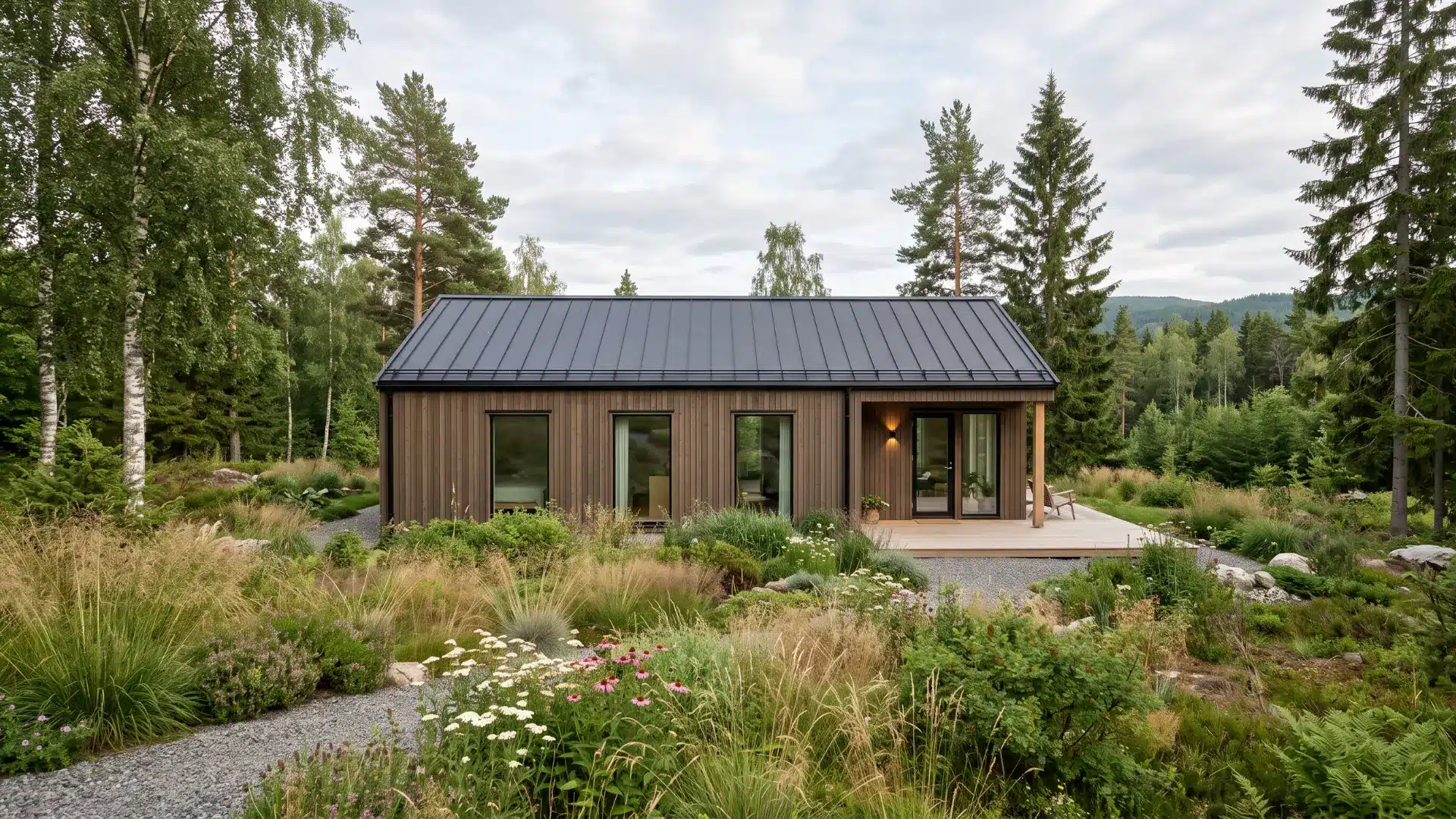
Skip the manicured hedges and tightly trimmed lawns. Scandinavian homes sit close to their natural surroundings, not fighting against them.
Let native grasses and trees grow close to the house. A wilder, low-maintenance yard fits the style better than a groomed one.
12. Add Skylights or Clerestory Windows for Depth
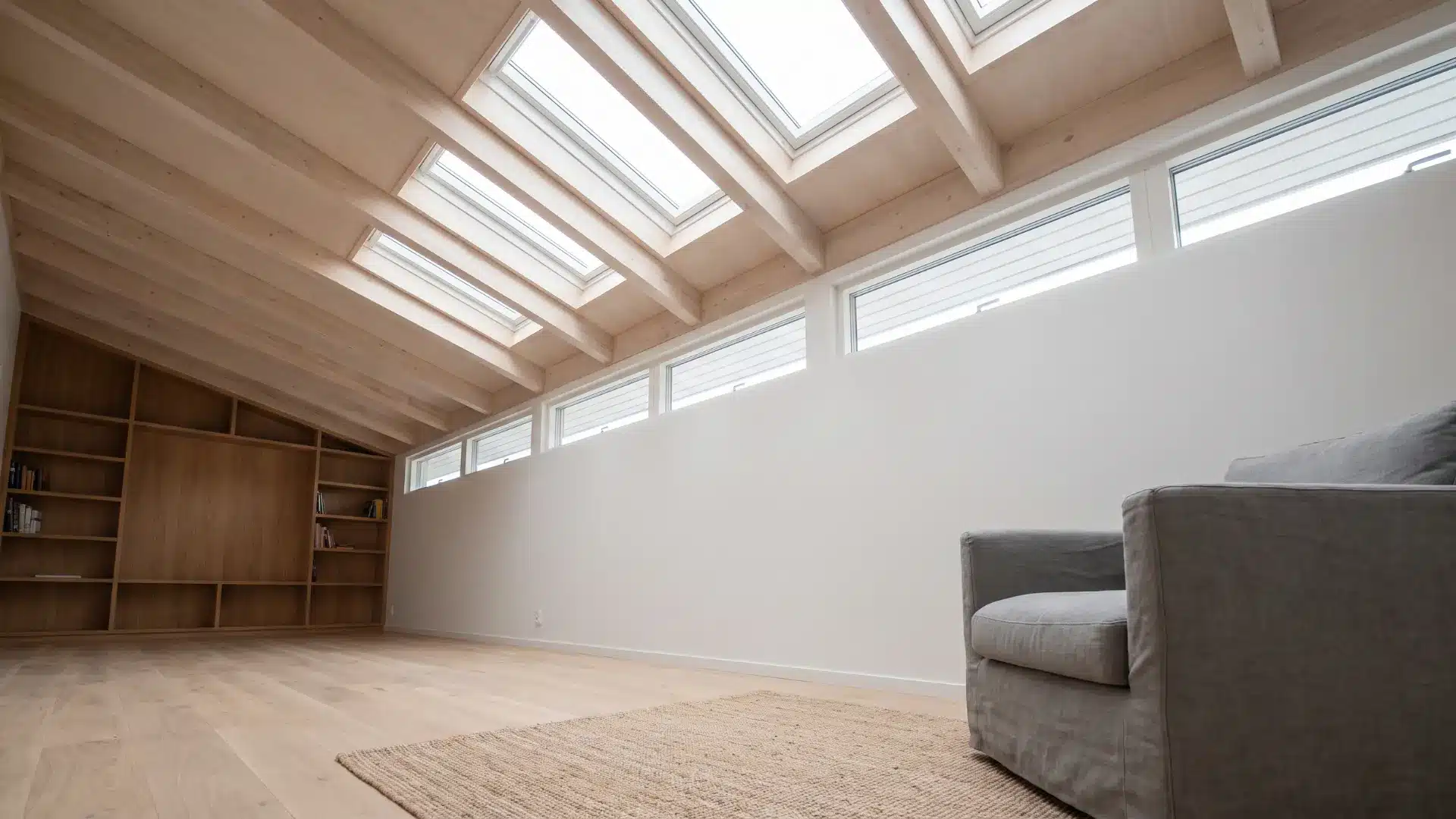
Regular windows can’t reach every room. Skylights and clerestory windows bring light into spaces without an exterior wall.
Use them in hallways, stairwells, or interior rooms. They keep the whole home bright, not just the rooms along the perimeter.
13. Edit Down Before You Decorate
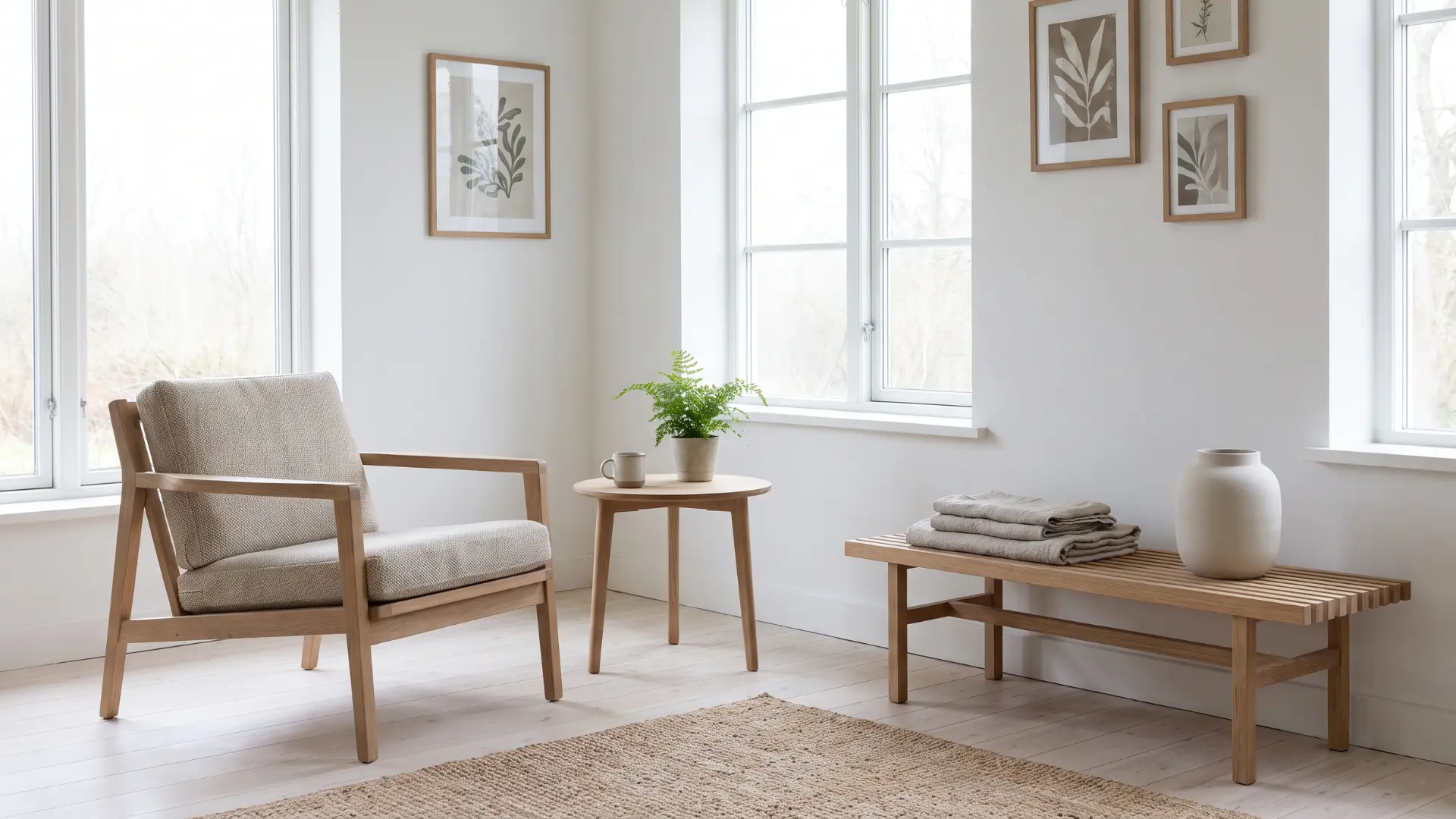
Before adding anything, ask what you can remove. That’s the real starting point of this style. A Scandinavian room isn’t built by adding more.
It’s built by cutting back until only what matters is left. Start with less. Add warmth back in slowly, one piece at a time.
What Does Scandinavian Design Include?
Scandinavian design shows up differently outside a home than it does inside one, but both follow the same rules underneath: light, honest materials, and function drive every choice.
These same principles show up across broader modern living spaces trends, though Scandinavian design applies them with a distinctly Nordic restraint.
Exterior Features
Scandinavian exteriors focus on simplicity, natural materials, and smart design choices that help homes feel bright and connected to their surroundings.
- Simple Color Palette: Crisp white, light gray, and charcoal black are common exterior colors that create a clean and balanced look.
- Natural Siding Materials: Smooth stucco is often combined with natural wood panels or vertical boards to add texture while keeping the design simple.
- Basic Roof Designs: Gabled, flat, and shed-style roofs are common because they keep the structure practical without unnecessary details.
- Purposeful Windows: Large windows are a key feature, but placement matters more than size alone.
- Smart Window Placement: A higher window-to-wall ratio and south-facing windows help capture more low winter sunlight, making interiors feel brighter even during gray weather.
The best Scandinavian exteriors are not just simple in appearance. They are designed around light, climate, and everyday living.
Interior Features
Scandinavian interiors balance clean design with warmth, using natural materials, open layouts, and practical choices that make everyday living easier.
- Open Living Spaces: Kitchens, dining areas, and living rooms often connect into one shared space instead of being divided by closed walls.
- Light Wood Materials: Pine, ash, and oak are commonly used in their natural tones to add warmth while keeping rooms bright.
- Soft Natural Textures: Wool throws, sheepskins, and linen add layers of comfort that prevent simple interiors from feeling cold.
- Hygge-Inspired Comfort: Cozy textures and thoughtful details create comfort you can feel throughout the space, not just see.
- Functional Decor Choices: Furniture and accessories serve a purpose, keeping rooms practical, easy to maintain, and free from unnecessary clutter.
A Scandinavian interior works because it combines simplicity with warmth, creating spaces that feel calm, comfortable, and easy to live in.
How Scandinavian Design Differs From Similar Styles?
Scandinavian design is often confused with Japandi and minimalism, but its focus stays on clean lines, function, natural materials, and warmth rather than intentional imperfection.
Japandi blends Scandinavian simplicity with Japanese wabi-sabi, embracing asymmetry and flaws by choice, while Scandi-boho adds patterns and layers beyond the core rules of Scandinavian style.
Unlike strict minimalism, Scandinavian design avoids cold spaces by adding wood tones, wool textiles, and practical pieces that make rooms comfortable for everyday living needs.
The style has held up for close to a century now for a plain reason: it solves real problems instead of chasing a trend.
Combine simplicity with warmth, and a space stays useful and welcoming for years, not just for one season of photos.
Conclusion
Scandinavian home design isn’t about stripping everything away. It’s about keeping what works and adding warmth back in with intention.
Once you understand that balance, every choice gets easier. The windows, the wood tones, the wool throws they all serve the same goal.
A calm home that still feels lived-in. Whether you’re planning a full build or just rethinking one room, start small.
Ready to bring this style into your own home? Start with your lighting and layout first; everything else builds from there.
Frequently Asked Questions
What is a Scandinavian Style House?
A Scandinavian style house prioritizes simplicity, natural light, and function over ornamentation. Exteriors typically use white, gray, or charcoal palettes with wood accents and simple rooflines. At the same time, interiors favor open layouts, light wood tones, and layered natural textiles that add warmth without clutter.
Is Scandinavian Design the Same as Minimalism?
No. Scandinavian design shares minimalism’s restraint but adds hygge warmth through natural materials, soft textiles, and layered light. Pure minimalism can feel sparse or cold, while Scandinavian design deliberately balances clean lines with cozy, tactile elements so spaces still feel lived-in and comfortable.
How Do Scandinavians Decorate Their Homes?
Scandinavians typically layer light woods, wool throws, sheepskins, and linen over a neutral base, then add black or muted accents for contrast. Decor stays functional and uncluttered, with each piece chosen for daily use rather than display, keeping rooms open and easy to live in.
What are the Scandinavian Design Trends for Today?
Current shifts lean toward warmer neutrals, curved furniture silhouettes, and more visible natural materials like stone and unfinished wood, layered onto the same core principles of light and simplicity. As with any yearly trend, specifics evolve, so treat exact predictions as directional rather than fixed.