You may love the look of Amish furniture until you start thinking about one practical concern: the weight. A solid wood dining table or large bedroom dresser can already feel difficult to move before it even arrives at your home. Once you picture narrow doorways, staircases, and heavy lifting, you may start wondering if solid wood furniture is more trouble than it’s worth.
Compared to mass-produced pieces that often use lighter materials, Amish furniture uses solid hardwood and features thicker construction. You can immediately feel the difference when you lift or reposition a piece. Consequently, that often raises concerns about delivery, setup, room placement, and even future moves.
But does heavier furniture actually make setup and placement harder in everyday homes?
Why Amish Furniture Is Heavier Than Standard Furniture
You’ll usually notice the weight difference right away when comparing Amish furniture with mass-produced furniture. Many factory-made pieces use particleboard, MDF, veneers, or hollow construction to reduce material costs and make shipping easier. Amish furniture, on the other hand, commonly uses solid hardwoods such as oak, maple, and cherry. These hardwoods are naturally denser and heavier than engineered materials.
The way the furniture is built also affects the overall weight of the solid wood furniture. Many Amish furniture pieces feature thicker frames, stronger support structures, and solid wood components rather than thin materials held together with basic hardware. Dining tables often have heavier tops and sturdier bases designed for everyday use over many years.
How Difficult Is Amish Furniture to Move?
Moving Amish furniture is usually not as difficult as many people expect, but some pieces definitely take more effort than others. The biggest challenges usually come from the size of the furniture and the layout of your home, rather than the weight alone.
Large dining tables, hutches, armoires, and bed frames are often the hardest pieces to move. Some are wide, some are tall, and others are difficult to turn through tight spaces. Solid oak furniture can also feel much heavier than maple or cherry furniture of the same size. One-piece furniture creates another problem: it cannot be disassembled for delivery.
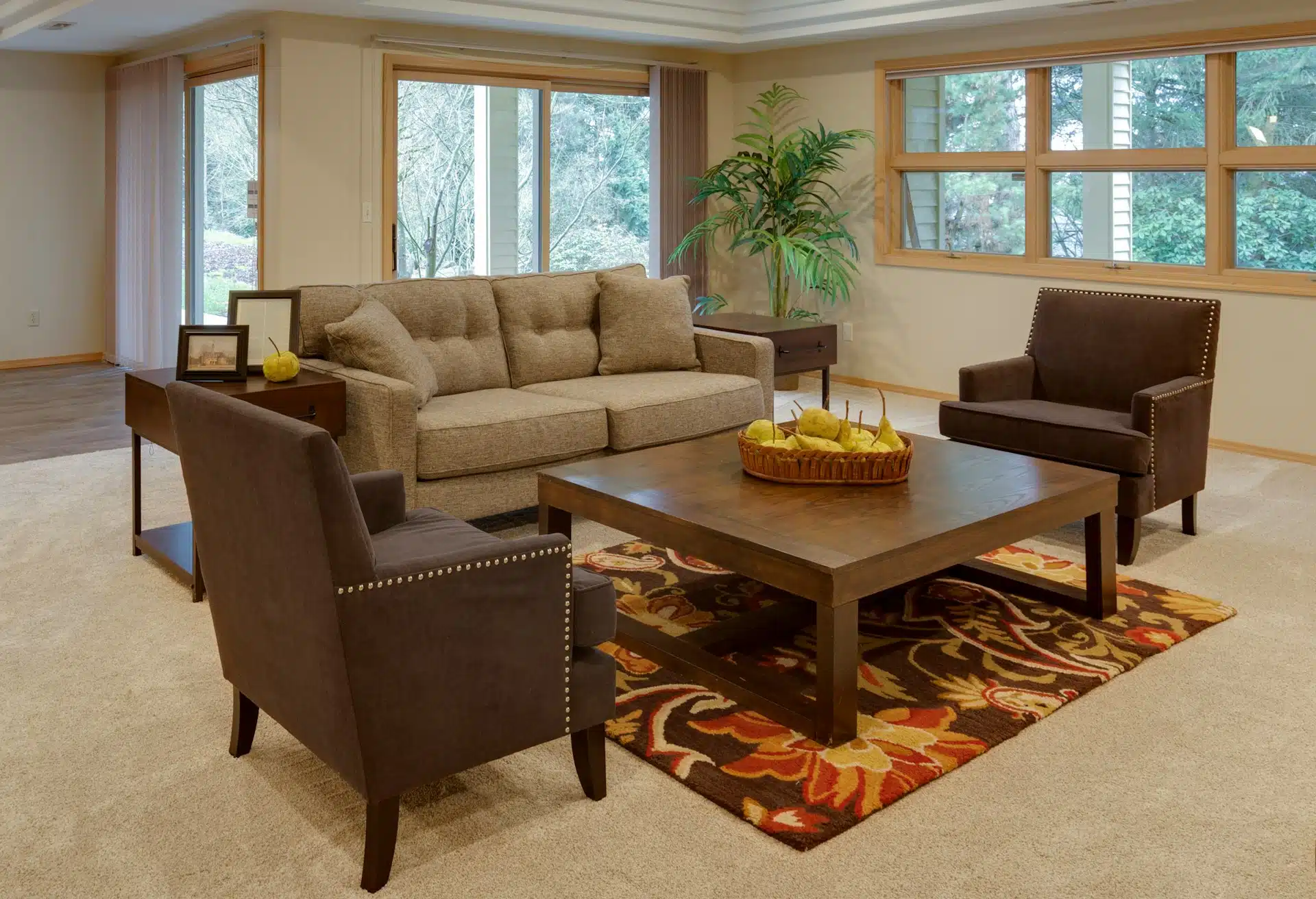
Smaller Amish furniture pieces are usually easier to work with. A wood coffee table and end tables can normally be repositioned without much trouble, especially in open rooms. Some tables also come with removable tops or bases, which helps during transport and setup.
Tips for Moving Amish Furniture Safely

Moving Amish furniture requires careful planning because solid wood pieces are often heavier and more delicate than standard furniture. Taking the right precautions can help prevent damage to your furniture, walls, floors, and doorways during delivery or setup.
Measure Your Space Before Delivery
Before your furniture arrives, measure your doors, hallways, and stair landings. Your new Amish bed frame may fit through the front door, but it may be difficult to turn in your hallway. Also, it’s essential to decide early where the furniture will go so you don’t have to keep rearranging heavy pieces later.
Consider Professional Delivery Services
You may choose a professional delivery service for larger furniture. This is especially recommended for Amish dining room tables, upstairs furniture, and homes with hardwood or tile flooring. Experienced movers of fragile and high-value items, such as white-glove delivery services, already know how to angle large tables through narrow spaces, protect corners during transport, and carry solid wood furniture without forcing it through tight areas.
Remove Heavy or Detachable Parts
If you’re planning to move the furniture yourself, remove anything that adds extra weight first. Drawers, shelves, and table leaves are much safer to carry separately. Some Amish-made dining tables also allow you to detach the base from the top, making the piece easier to maneuver through tighter areas.
Protect Floors and Corners
Dragging solid-wood furniture across the floor can leave permanent scratches. Hard-floor sliders work better for short repositioning, especially on hardwood and tile flooring. You can also place corner protectors or corner guards around sharp corners and door frames before bringing the furniture inside.
Is Amish Furniture Worth the Extra Weight?
Heavy furniture is not always the best choice for every home, but many people appreciate the added stability that comes with solid wood construction. A heavier dining table usually shifts less during daily use, while solid wood cabinets and bed frames often feel firmer once assembled. That extra weight can make the furniture feel more secure, especially in homes where it’s used every day.
Despite the extra effort during delivery, Amish furniture often holds up better over time, especially compared to lightweight furniture that loosens, bends, or becomes unstable after years of use. However, if you move frequently or like changing room layouts often, lighter furniture may feel easier to have.
Final Thoughts: Heavy, But Manageable With Proper Planning
The weight of Amish furniture can feel intimidating at first, especially when you compare it with lighter furniture that’s easier to carry or rearrange. However, many homeowners find that the added weight becomes less important once the furniture is fully set up and used daily. A solid wood table or cabinet often stays firmly in place, feels more substantial in the room, and handles everyday use with fewer to zero issues over time.
That doesn’t mean Amish furniture is the right fit for every home. If you move frequently or prefer changing layouts often, lighter furniture may suit your lifestyle better. But if you want furniture built with long-term use in mind, solid wood pieces can be worth considering. Amish Furniture Factory offers a wide range of handcrafted furniture that balances durability, functionality, and timeless style for everyday living.