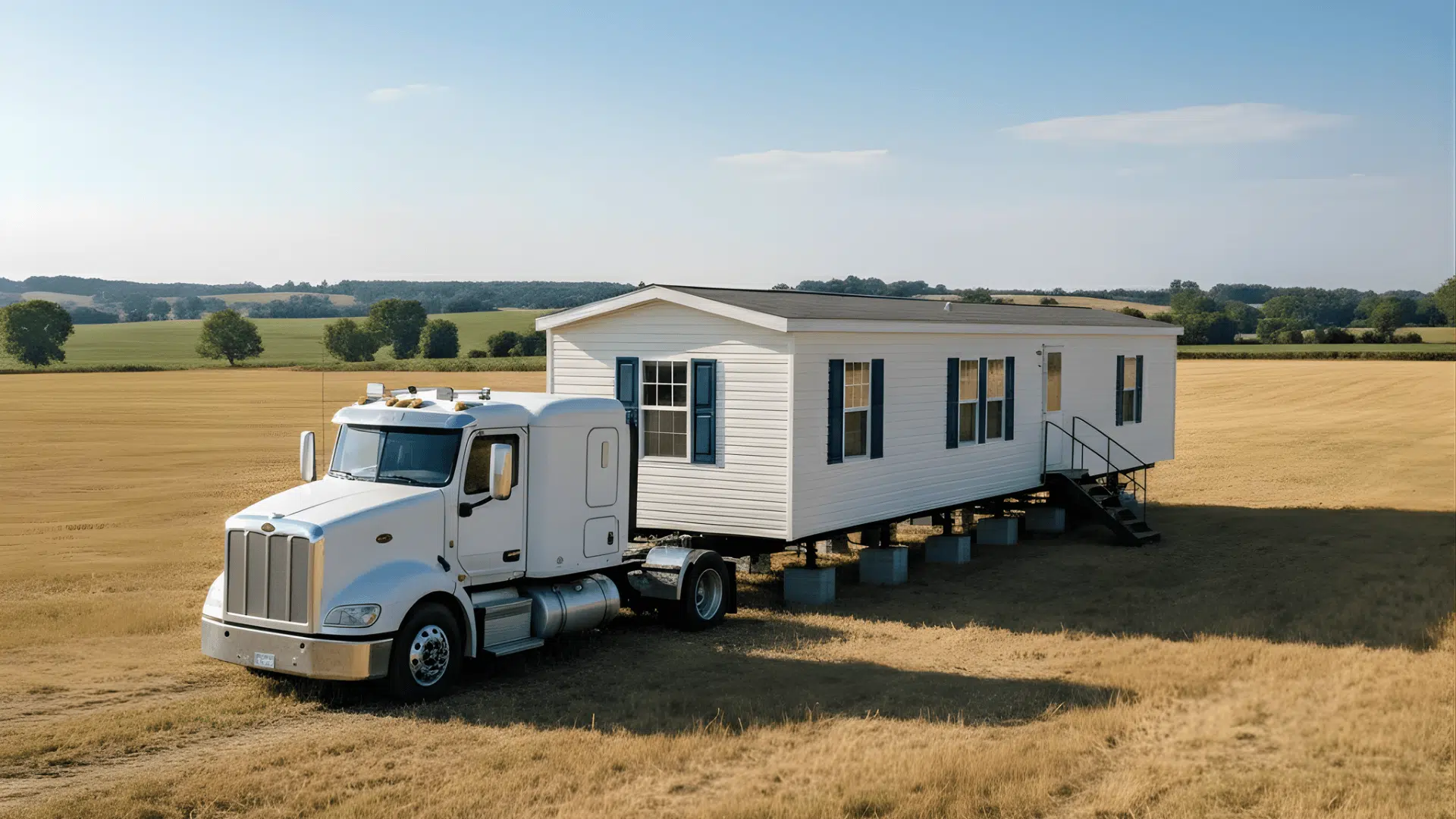
A modular or prefab home has one feature no site-built house has: it spends part of its life on a truck. That single difference creates insurance questions a standard build never raises, and most people planning one do not find out until a lender asks for proof of coverage two weeks before delivery.
Start with the number, because it is smaller than people expect. Course-of-construction coverage on a new residential build runs about 30 cents per $100 of project value. So a $265,000 modular home costs roughly $795 to insure for the year. BuildersRisk.net, an online brokerage with more than 26 years placing this coverage in all 50 states, lists a minimum premium near $700 for a twelve-month policy on projects up to $200,000. Modest money against a six-figure asset sitting on an open lot.
Here is where the gaps show up.
1. The Site Prep Phase Starts Before the House Shows Up
Your foundation, utility trenching, and driveway go in weeks before the modules arrive. That work has value. It also has exposure: a poured slab can crack from a freeze, a trench can wash out in a storm, and materials staged on an empty lot are the easiest theft target in the neighborhood.
People often assume the policy starts when the house lands. Start it when the ground gets broken instead. And do not lean on your homeowners policy to bridge it, because an unimproved lot with no dwelling on it is not what that policy was written for.
2. The Truck Ride Is Its Own Question
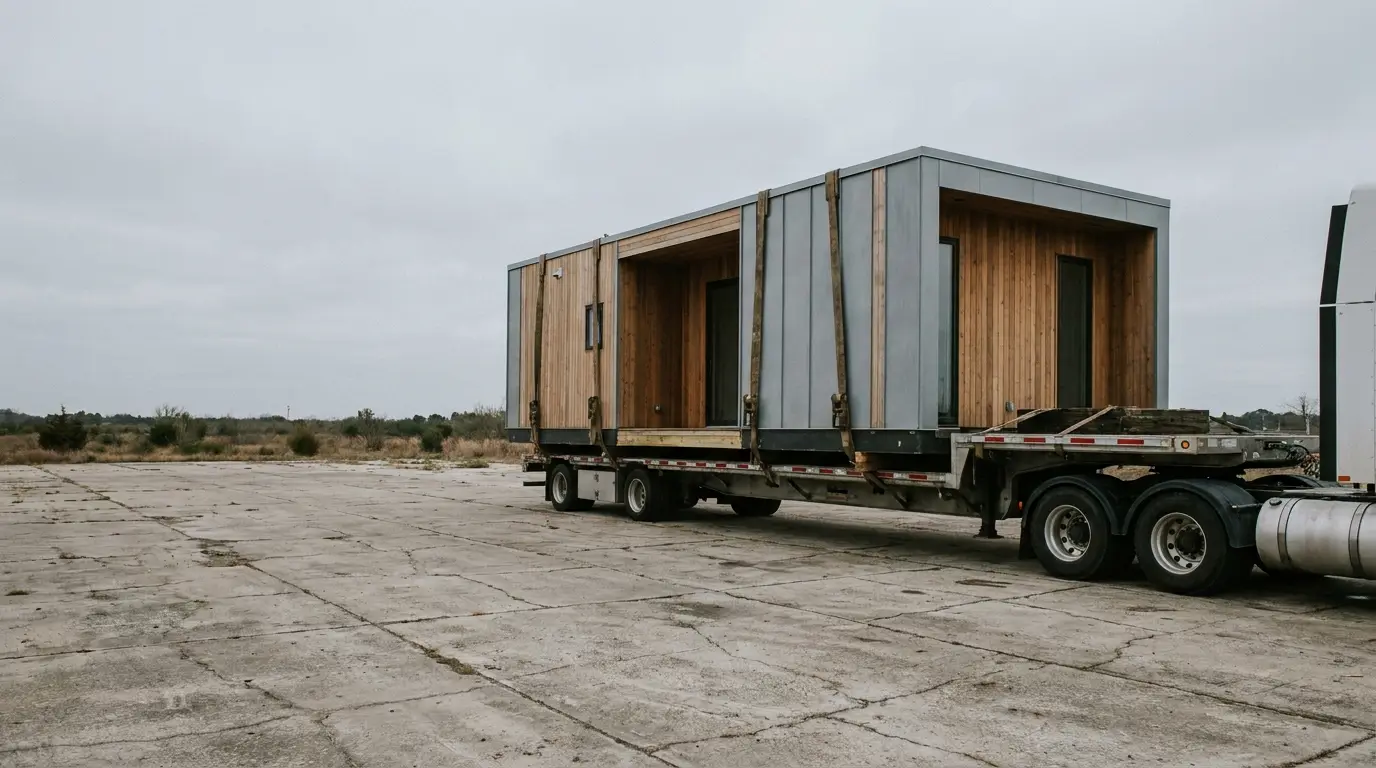
This is the one that separates modular from stick-built. Your house travels down a highway on someone else’s flatbed, and it may sit in a factory yard or staging lot for days before it does.
Coverage for property in transit and in temporary off-site storage is commonly available under a course-of-construction policy, though sometimes it takes an endorsement rather than coming standard. Get that answer in writing before the truck leaves the yard, not after. Ask three specific things: does the policy cover the modules while in transit, does it cover them while staged off site, and what does the manufacturer’s own cargo coverage handle. Two policies may overlap. Or neither may apply during the exact window you assumed was covered.
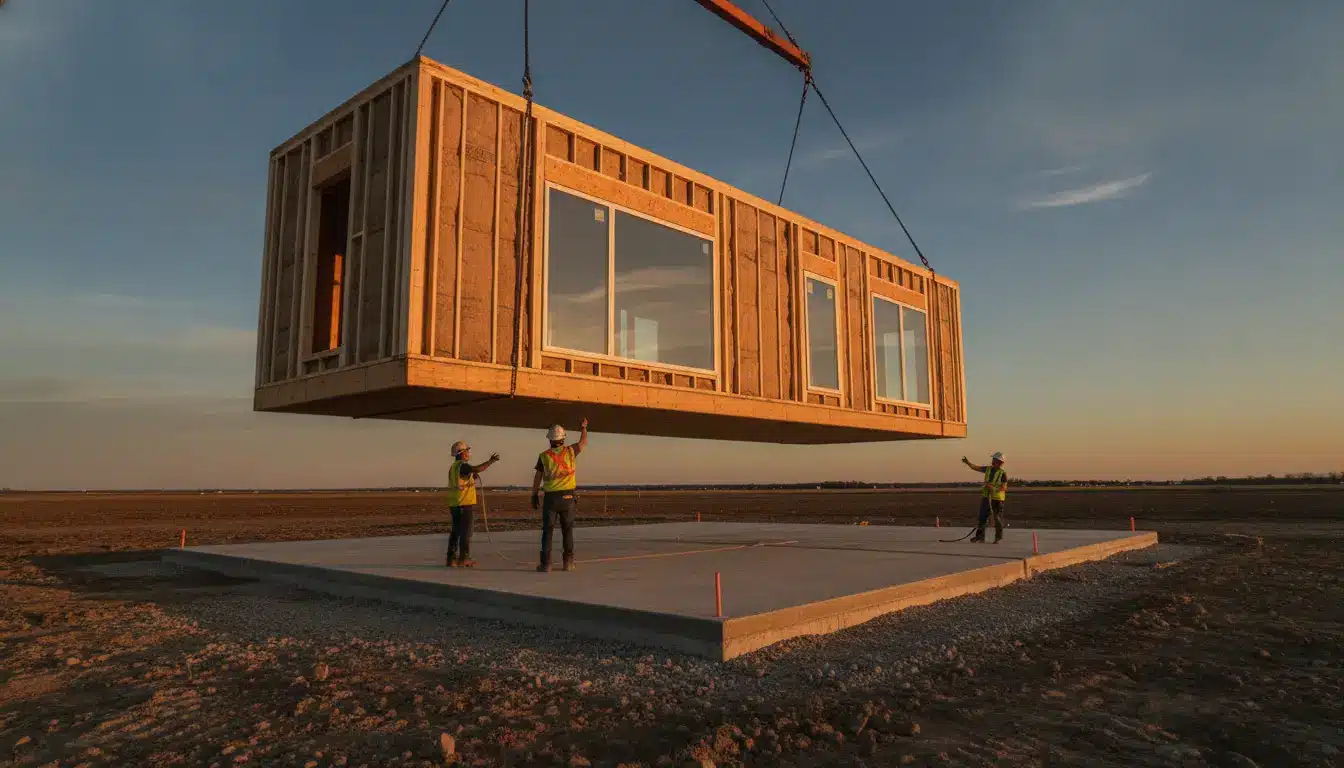
The crane day deserves a mention too. Setting modules on a foundation is the highest-risk hour of the whole project, and it is worth asking who carries coverage for the rigging crew and what happens if a module gets damaged mid-lift.
3. The Policy Expires on a Trigger, Not Just a Date
Two mechanics catch homeowners off guard, and both are worth knowing before you buy.
First, the premium is fully earned at inception. If your build wraps three months early, no refund arrives. Policies are typically written in three, six, nine, or twelve month terms, so buy the term your realistic schedule needs and extend if the project drags. Extensions are routine when you ask before expiration. After expiration is a different and much worse conversation.
Second, coverage ends at expiration, occupancy, or owner acceptance, whichever comes first. Read that again if you plan to move in while the punch list is still open. The day you occupy, the construction policy considers its job done, even if the date on the paperwork says otherwise. Line up the permanent homeowners policy to start the same day, not the following week. A residential Builders Risk insurance policy and a homeowners policy are meant to hand off cleanly, and the handoff is where the uninsured week usually hides.
4. What the Policy Actually Pays for Is Broader Than the Structure
Most people picture the building and stop there. In practice, what a Builders Risk policy covers extends past the walls: materials on site, fixtures waiting to be installed, temporary structures like fencing and scaffolding, even signage. Fire, wind, theft, and vandalism are the usual named perils.
Flood and earthquake are usually not in the base policy. If your lot sits in a flood zone or a seismic area, ask about adding them. Renovation work also prices differently from new construction, closer to 65 cents per $100, because a crew opening up an existing structure finds surprises a factory-built module never had.
One more thing on documentation. Keep your delivery schedule, your manufacturer’s invoice, and dated photos of the site through every phase. If a claim happens, the argument is almost always about when damage occurred and what the property was worth at that moment. Photos with dates settle it fast.
The Short Version, if You Are Mid-Planning Right Now
Bind coverage before site work starts. Confirm transit and off-site storage in writing before the modules ship. Buy a term matching your real schedule, and extend before it lapses. Have the homeowners policy ready to start the day you occupy.
Four conversations, a few hundred dollars, and the phase of your project with the most exposure stops being the phase nobody planned for.