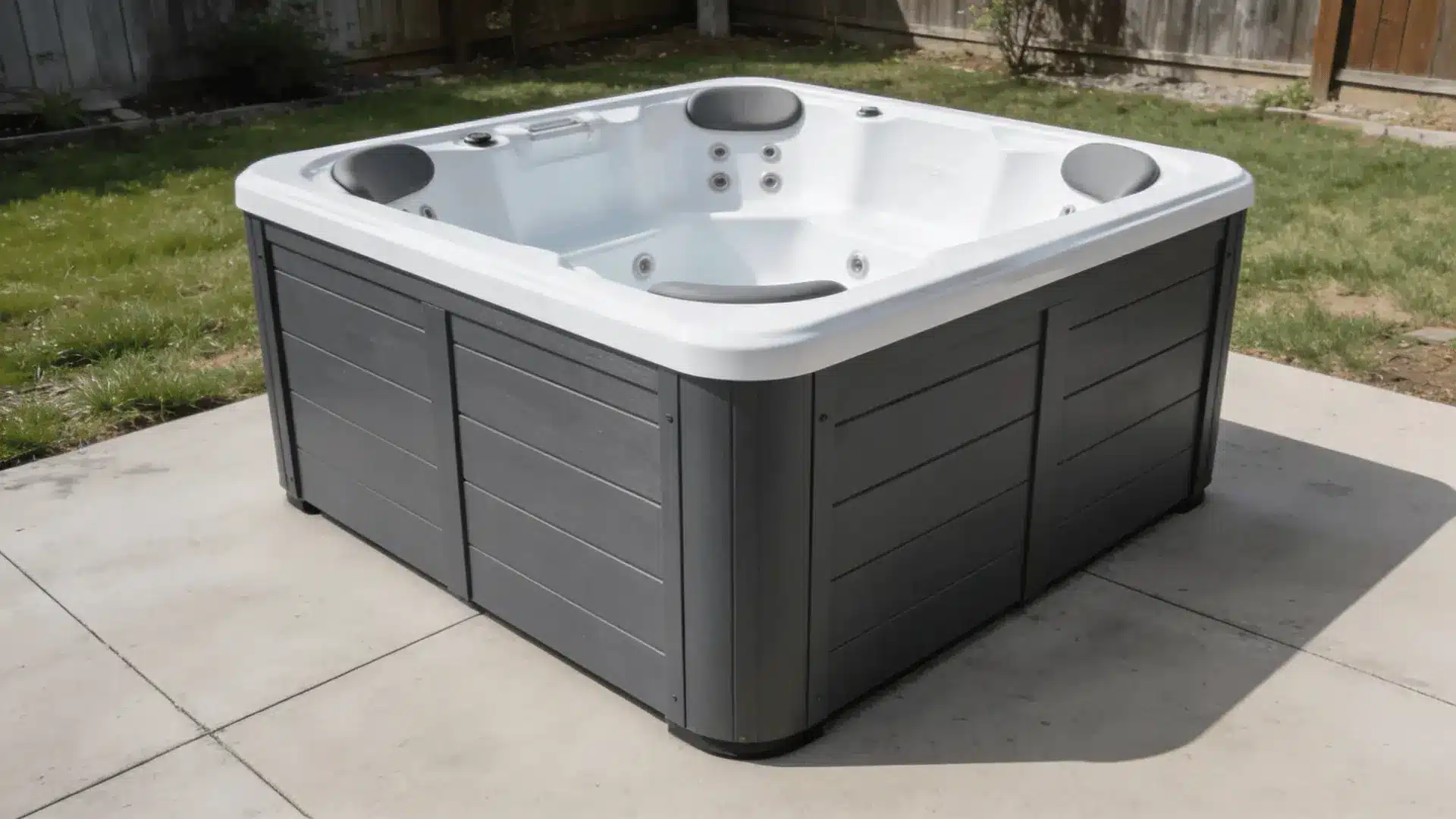
To move a hot tub safely, shut off power and fully drain it, including residual water in plumbing lines. Lift from the structural frame using multiple helpers, tilt onto the equipment side if appropriate, place dollies under the base frame, secure with straps, and move slowly across stable surfaces before loading carefully.
But once you’re standing next to 700 pounds of awkward, shell-covered weight, it feels very different.
Most damage doesn’t happen because someone drops the tub. It usually happens because the weight shifts, the shell twists, or the ground dips just enough to throw everything off balance.
If you’re figuring out how to move a hot tub, a simple checklist won’t cut it. You need to understand why each step matters and what can go wrong if it’s rushed.
I’ll go through it in a clear, practical order so you know what actually keeps both the tub and you safe. Let’s start with the reality most people underestimate.
How to Move a Hot Tub Safely: Quick Facts Before You Start
An empty hot tub usually weighs between 500 and 1,000 pounds, depending on size and build. Smaller two-person models sit on the low end, while large six-person tubs are much heavier.
The real challenge isn’t just total weight. It’s how that weight is spread out.
The shell is wide and hollow, and the frame underneath carries the load. The equipment side holds pumps and motors, which makes that side heavier. When you lift one edge, you’re not just lifting straight up. You’re working against leverage, and the farther the weight sits from your hands, the heavier it feels.
That’s why strength alone doesn’t make this easy. Two strong people can still lose control if the center of gravity shifts at the wrong moment.
In most cases, you’ll need at least three to four adults. Not because no one is strong enough, but because stability requires control on multiple sides at once.
A tub can feel steady one second and unstable the next. That’s normal. The balance changes as soon as you tilt or roll it, so expect that shift and plan for it.
Tools and Equipment You’ll Need
You will need the following equipment:
- Two heavy-duty furniture dollies
- Ratchet straps
- 4×4 boards or strong pry bars
- Plywood sheets (for grass or soil)
- A low trailer or truck with a lift gate
Dollies must support the weight at the ends, not the corners. If you load the corners, the shell can flex inward because the base frame isn’t being supported where it should be.
Ratchet straps prevent sideways movement. Rolling may feel stable, but smooth motion doesn’t mean balanced. A small lateral shift can tip the tub off the dollies.
Plywood spreads weight across soft ground. Without it, the wheels sink. When one side sinks, the tub tilts, and that tilt multiplies quickly.
If you’re loading onto a truck, a lift gate keeps the angle shallow. Steep ramps shift the center of gravity backward, and that’s where tipping risk jumps.
Step 1: Shut Off Power and Fully Drain the Hot Tub
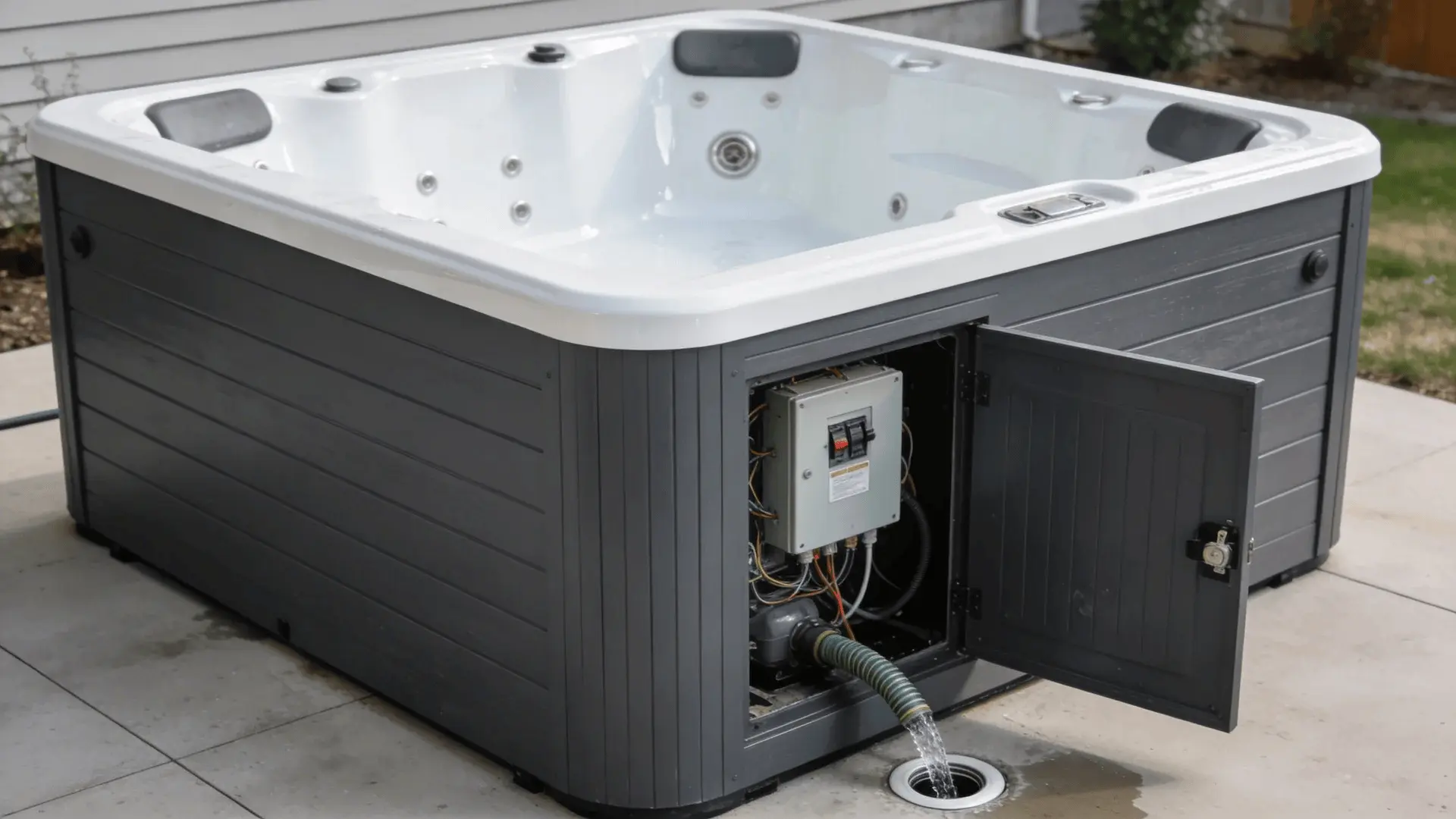
Start with the breaker and turn it off completely.
Even if the tub looks inactive, wiring inside the access panel can still carry power. Water and live wires don’t mix, and that’s not a small risk.
Next, drain the tub using the drain valve or a sump pump.
Here’s what most people miss: draining the shell does not remove all the water.
Water remains inside the plumbing lines. That trapped water adds weight and can shift when you tilt the tub. Even a few gallons moving from one side to the other can change the balance enough to matter.
After draining, use a wet/dry vacuum to clear the remaining water from the lines if you can. At the minimum, let it sit long enough to drain thoroughly.
Partial draining creates two problems: extra hidden weight and sloshing during tilting. Both increase instability.
Remove the cover and any loose accessories so the tub is as clean and balanced as possible before lifting.
Step 2: Lift the Hot Tub Safely From the Structural Frame
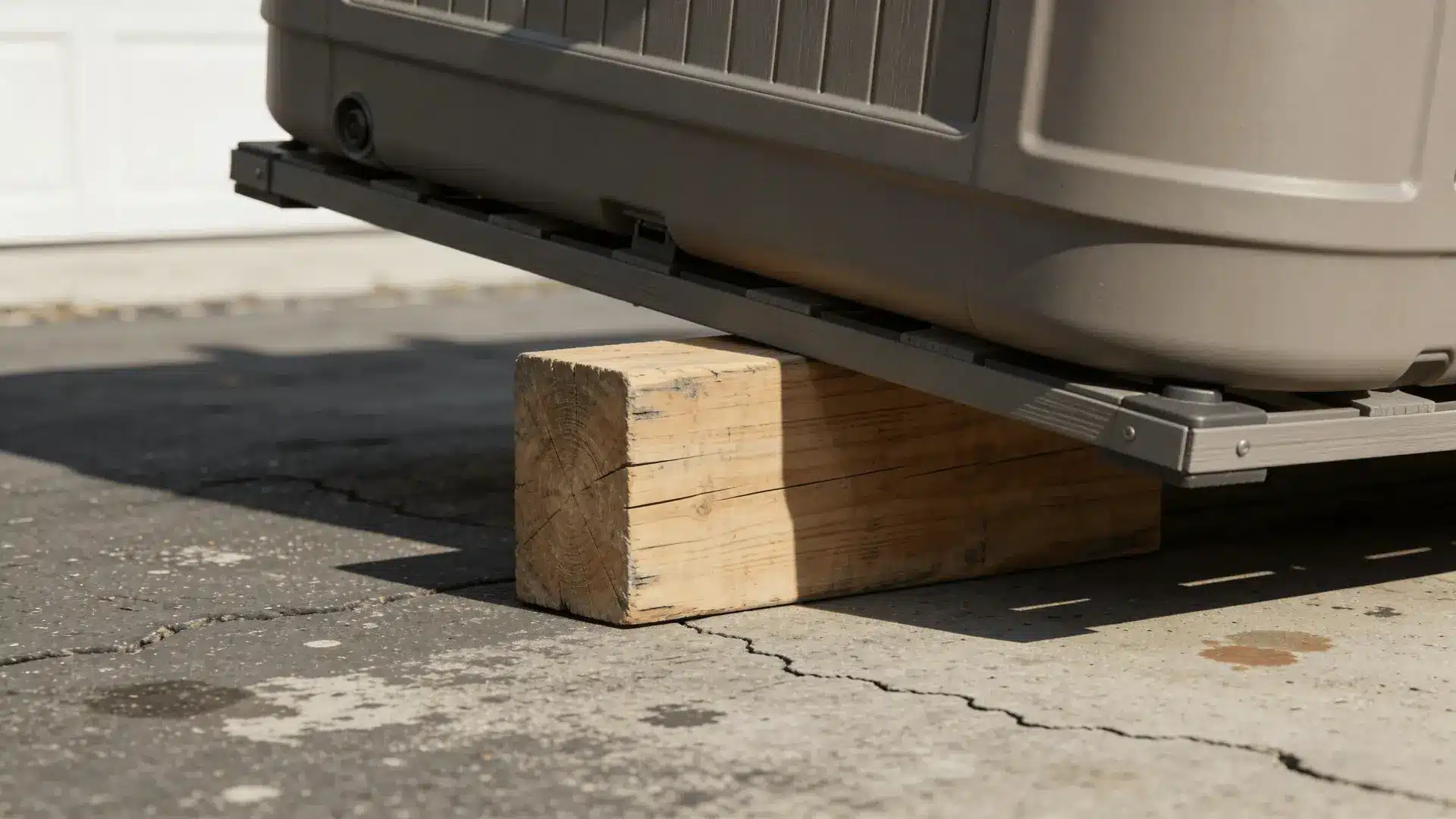
When you begin lifting, lift from the frame, not the cabinet panels. The cabinet is decorative. It isn’t structural.
If you press upward on the panels, the force transfers into the shell. The shell can flex under that pressure, and that flex can lead to stress cracks, especially if the lift is uneven.
Slide a 4×4 board underneath the base frame and use it for leverage. Lift slowly and evenly with your team.
The biggest danger here is torsional stress. If one corner rises faster than another, the base twists. Twisting stresses the shell from below. You may not hear a crack right away, but internal damage can still happen.
Lift together and move together. Clear communication matters more than speed. The goal isn’t to rush. It’s to keep everything aligned.
Step 3: Tilt the Hot Tub Onto Its Side (When Appropriate)
Tilting makes transport easier, but only if it’s done correctly and in the right conditions.
Which Side Should Face Down and Why
Place the tub on the side that houses the equipment.
That side is heavier, so when it rests on the ground, the weight compresses downward instead of pulling across the shell.
If you put the lighter side down, the heavier equipment side hangs higher. That creates rotational pull, and the shell wasn’t designed for that kind of sideways stress.
Tilting shifts the balance point. As the tub rotates upward, the balance point shifts, and that shift can feel sudden. Be ready for it and keep even control.
Move slowly. Stay coordinated.
When Tilting Increases Risk Instead of Reducing It
Tilting is not always the safest move. Avoid tilting if:
- You’re near a deck edge
- The ground is uneven
- Clearance is tight
- The path is narrow
On unstable surfaces, upright sliding may be safer than side loading.
Tilting concentrates weight along one narrow edge. On weak support, that edge can sink or shift. When that happens, tipping accelerates quickly. If the environment feels unstable, pause and rethink the tilt before committing.
Step 4: Place Dollies Correctly and Secure the Load
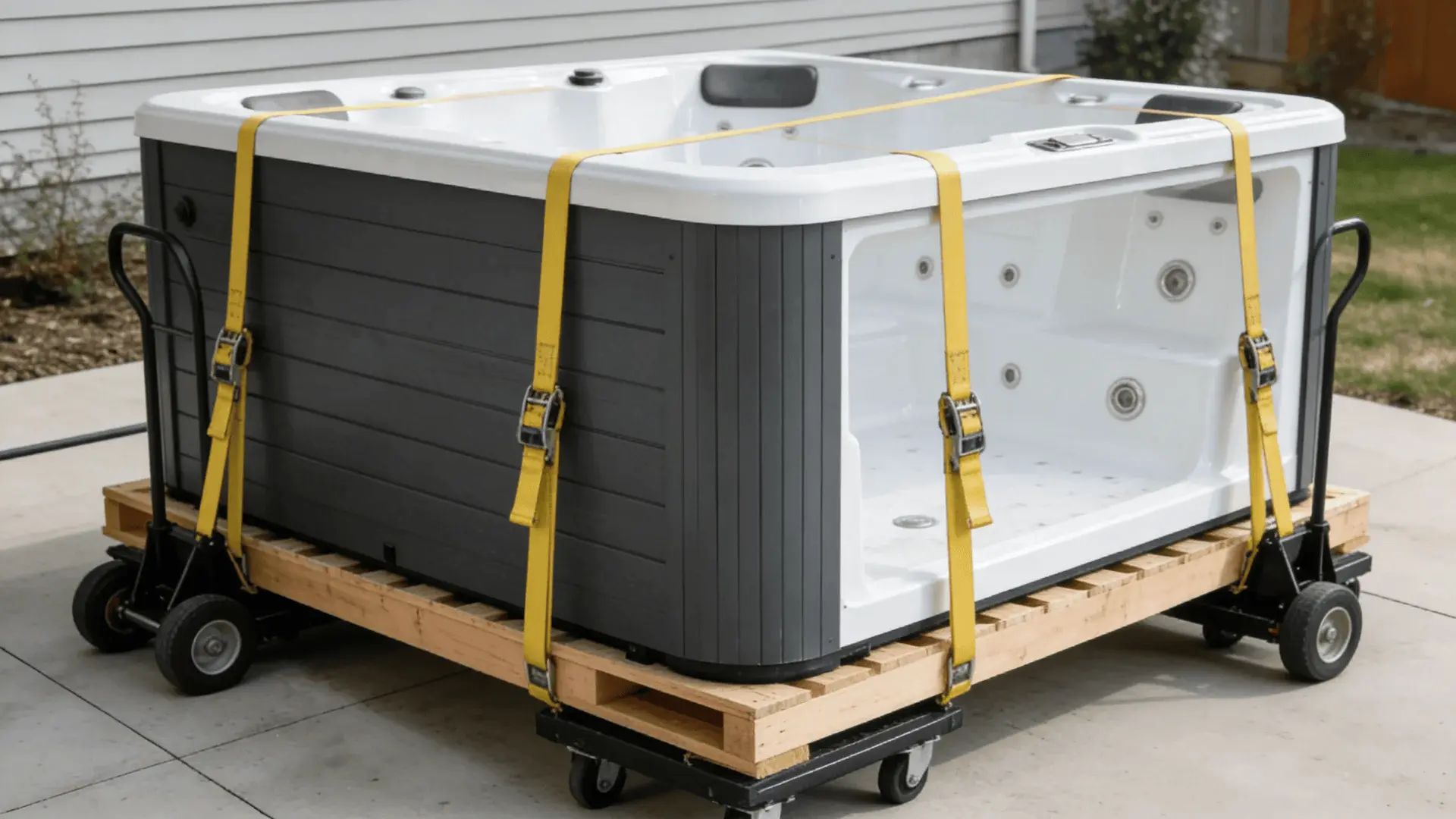
Once tilted, position one dolly at each end under the base frame.
Proper Dolly Placement and Load Alignment
Place dollies so they align with the tub’s center mass, not the corners, and not under the shell lip.
The base frame carries the weight, so that’s where support belongs.
If dollies are off-center, one side bears more load. You might not notice the imbalance on flat concrete, but on uneven ground, the difference becomes obvious fast.
Rolling resistance changes constantly. Tiny surface dips create directional pull, and when weight isn’t centered, that pull multiplies.
Securing with Ratchet Straps to Prevent Rotation
Strap the tub to the dollies tightly.
Rolling feels stable because it moves smoothly, but smooth motion can hide side drift. If the tub rotates slightly while rolling, the center of gravity can move beyond the dolly base. That’s when tipping happens.
Straps lock the tub and dolly into one unit, preventing independent movement and unwanted rotation. Stable rolling is controlled rolling.
Step 5: Move the Hot Tub Across Different Surfaces
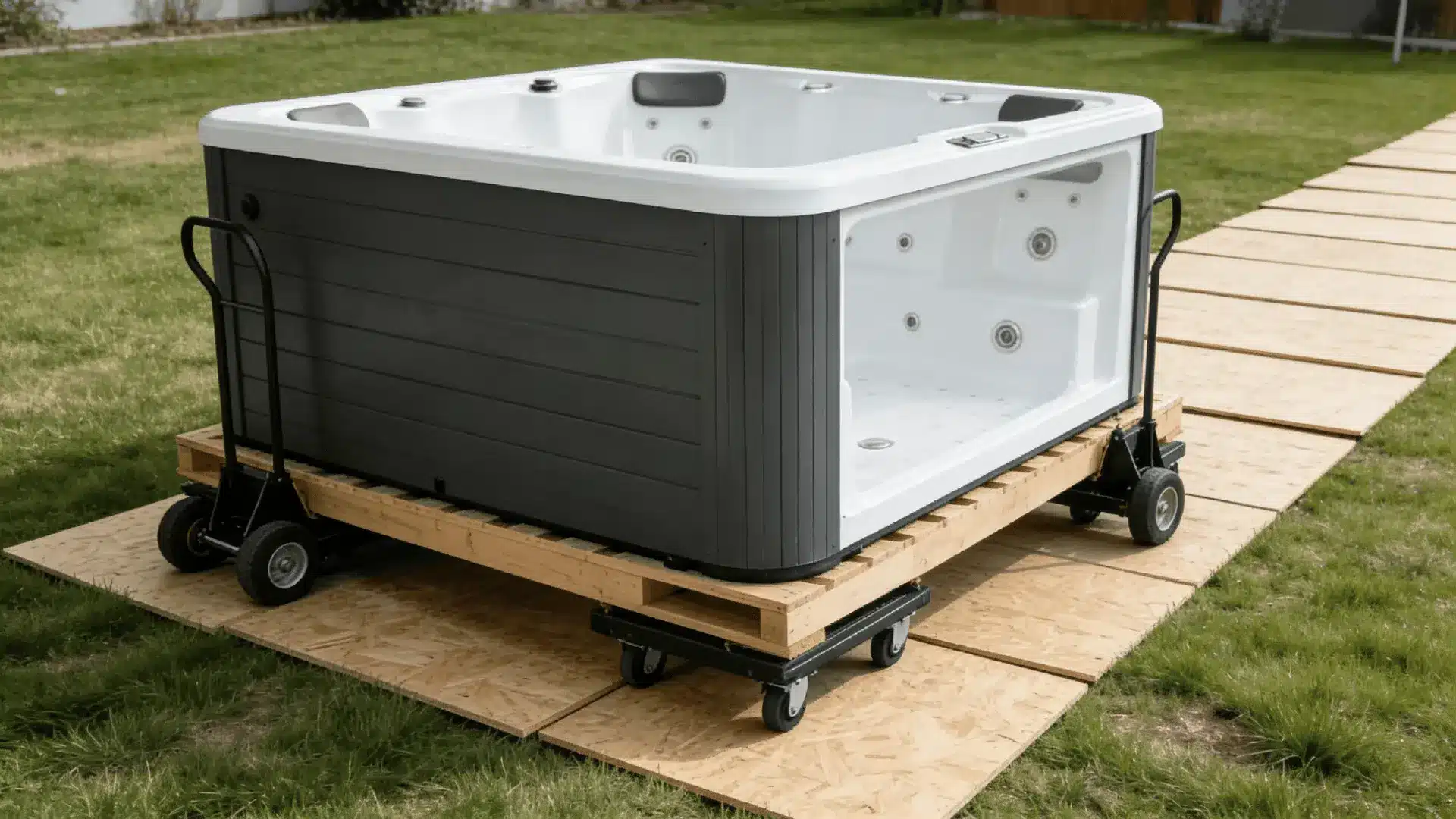
Surface matters more than most people expect.
Concrete or Driveway Movement
Concrete is predictable. Wheels roll evenly, and resistance stays steady.
Even so, small cracks or slight slopes can pull the tub sideways. Keep hands on both ends and guide it rather than pushing from only one side.
Grass, Gravel, or Soil (Using Plywood Correctly)
Soft ground changes everything. Weight compresses soil. The more pressure in one spot, the deeper it sinks. When one wheel sinks, the tub tilts toward it.
Lay plywood sheets down first so the weight spreads across a wider area. Instead of four small pressure points, you create a larger support surface. Move slowly and reposition plywood as needed.
Ground firmness can vary across just a few feet. A dry patch and a damp patch won’t behave the same way.
Moving Off or Onto a Deck
Height transitions add risk. When one end rises or drops, the center of gravity shifts toward the lower side, and that shift feels heavier than flat rolling.
If stepping down from a deck, control the descent and lower gradually. Never let one side drop freely. The smaller the height difference, the safer the move.
Step 6: Load the Hot Tub Onto a Trailer or Truck Safely
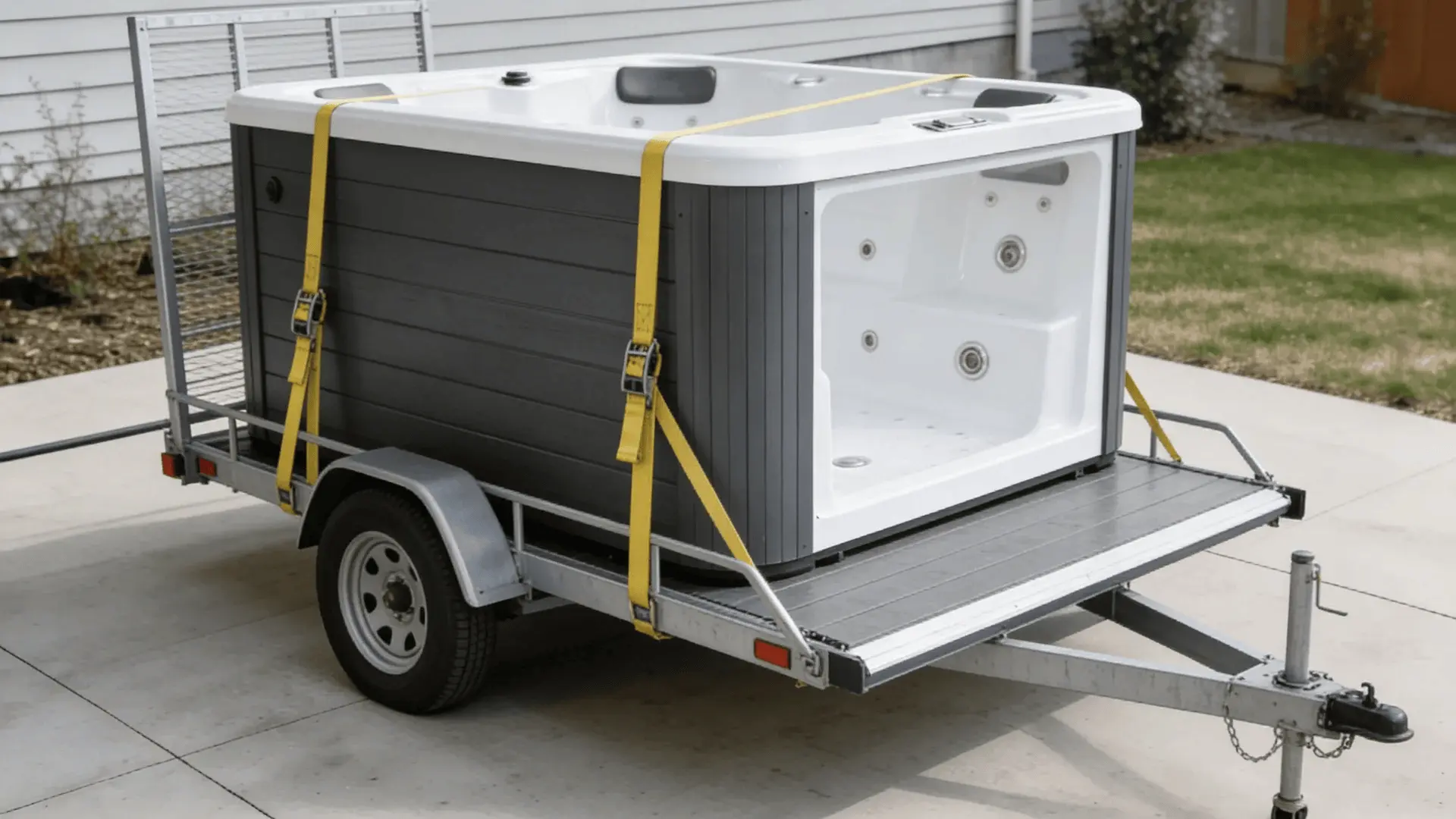
Loading is where many DIY moves fail. A steep ramp shifts the center of gravity backward, increasing downward pull and tip risk as the tub climbs.
A lift gate keeps the platform level, removing incline-based instability. If using a ramp:
- Keep multiple helpers controlling both sides
- Move slowly
- Maintain strap security
Once inside the truck or on the trailer, strap the tub at multiple anchor points.
Transport introduces vibration. Even small road bumps cause movement. If the straps are loose, the tub can rotate slightly during transit. Secure the tub tightly before driving.
When Moving a Hot Tub Becomes Unsafe to DIY
There comes a point where pushing through the move stops being practical and starts increasing the risk.
Consider professional help if:
- The tub exceeds 900–1,000 pounds empty
- You must navigate stairs
- The path is narrow or steep
- You have fewer than three helpers
- There are sharp turns with limited clearance
Stairs introduce constant vertical load changes. Each step shifts the center of gravity up or down. Narrow gates and tight turns force awkward angles, and those angles create twisting stress through the base and shell.
That combination raises the chance of tipping or injury fast. This isn’t about strength or pride. It’s about how much control you can realistically maintain.
If stability feels uncertain at any stage, that’s usually the line where DIY stops being the safer option
Wrapping Up
Moving something this large isn’t about muscle. It’s about balance, control, and understanding how the weight behaves under pressure.
When you understand the mechanics, the process feels more predictable. You know why you’re draining fully, why you’re lifting from the frame, and why straps matter so much.
That clarity changes how you approach it.
If you’re planning how to move a hot tub, take your time. Gather the right tools, get enough help, and move slowly. The goal isn’t speed. It’s control.
And if at any point the move feels unstable, pause and reassess. That decision alone can prevent damage and injury.
Frequently Asked Questions About Moving a Hot Tub
How heavy is a hot tub when empty?
Most empty hot tubs weigh 500–1,000 pounds. Larger models weigh more, and uneven weight distribution increases handling difficulty.
Is a hot tub heavy to move?
Yes. Even empty, the wide shape and shifting center of gravity make it difficult. Stability is the main challenge, not raw strength.
How do you move a hot tub a few feet?
For short moves on flat concrete, lift slightly from the frame and place dollies underneath. Keep it level and secure it before rolling.
How do you lift a heavy hot tub safely?
Lift from the structural frame using 4×4 boards for leverage. Raise evenly with multiple helpers to avoid twisting or shell damage.