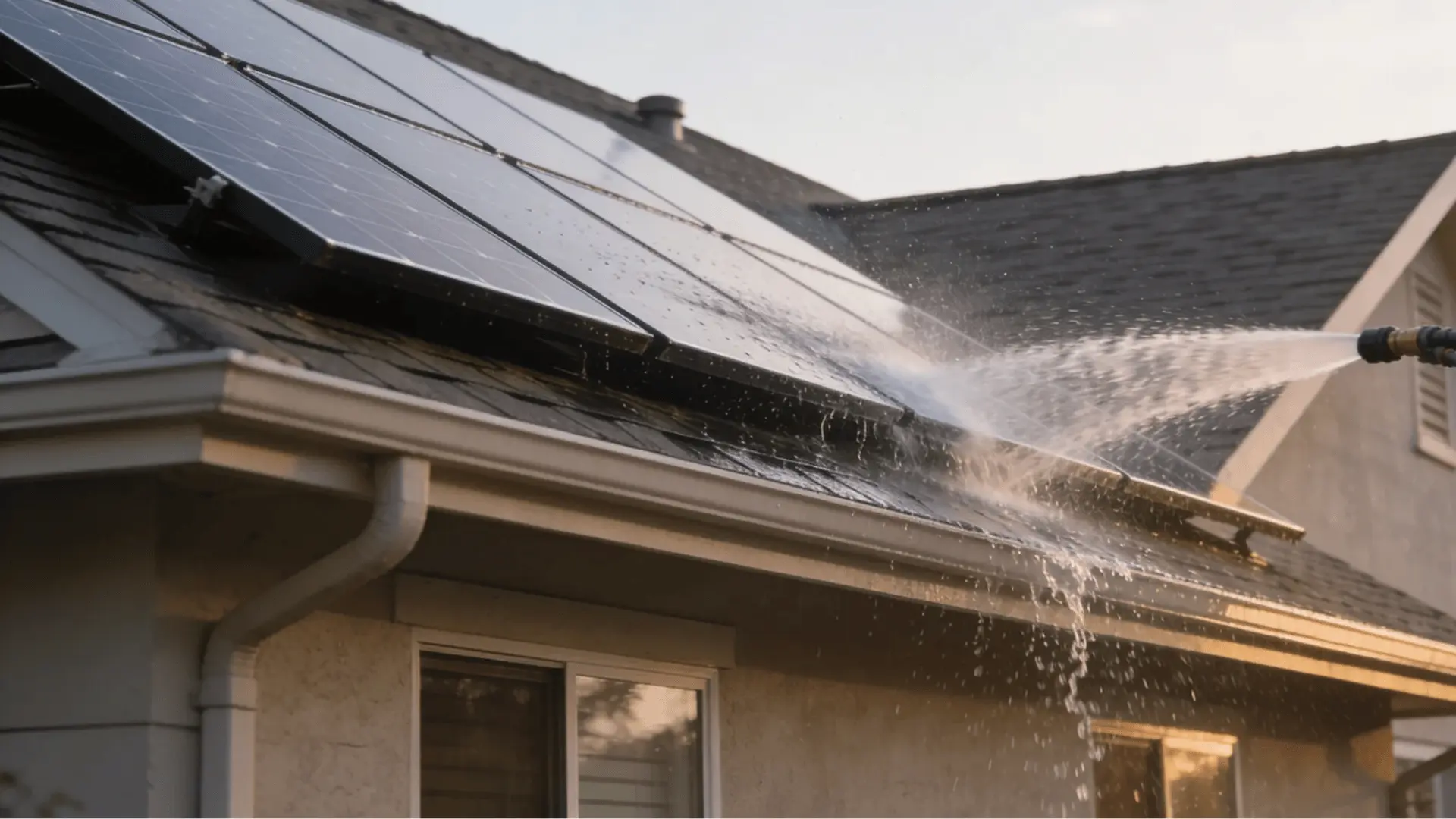
Solar panels look tough. They sit on your roof in wind, rain, and heat, so it’s easy to assume you can clean them like regular glass. I used to think the same way. Hose them off, scrub a little, and you’re done.
That’s usually where things go wrong. People either clean when they don’t need to, or they grab the wrong tools and cause damage that doesn’t show up right away.
I’ve seen panels lose performance months after an aggressive cleaning, and the owner had no idea why. The goal isn’t just making them look clean. It’s protecting the surface, the seals, and the long-term output.
To clean solar panels safely, turn off the system first, rinse loose debris with a gentle hose spray, wash lightly with water and mild soap if needed, rinse thoroughly from top to bottom, and dry with a soft squeegee or let air dry. Avoid pressure washers and harsh chemicals.
Signs Your Solar Panels Actually Need Cleaning
Before you grab a hose, take a close look. Not every dusty panel needs washing, and cleaning too often can be unnecessary.
Solar panels work by letting sunlight pass through a glass surface to reach the cells underneath. A thin layer of light dust usually doesn’t block much light, and normal rain often removes loose dirt on its own.
Here are the clear signs that cleaning is actually needed:
- Bird droppings – Dry, hardened spots that block direct sunlight and won’t rinse off with rain.
- Thick pollen buildup – A sticky layer that clings to the surface and resists light rainfall.
- Sticky pollution film – A dull haze that attracts more dust and reduces clarity over time.
- Dried mud after storms – Opaque patches that harden and physically block light.
- Noticeable production drop without weather changes – A steady decrease in output that can’t be explained by clouds, season, or shade.
The real difference is loose dust versus bonded grime. Light dust shifts easily and often washes away. Bonded grime sticks, dries, and hardens, blocking more sunlight and resisting rain.
A common mistake is thinking, “They look dirty, so I must be losing a lot of power.” That’s not always true. A slight haze is very different from thick patches.
Most homes need cleaning once or twice a year. Some need none at all. Others in dusty or high-pollen areas may need more frequent attention.
If you notice thick buildup or a steady drop in production that weather can’t explain, that’s usually the point where cleaning makes sense.
Prepare Safely Before You Start
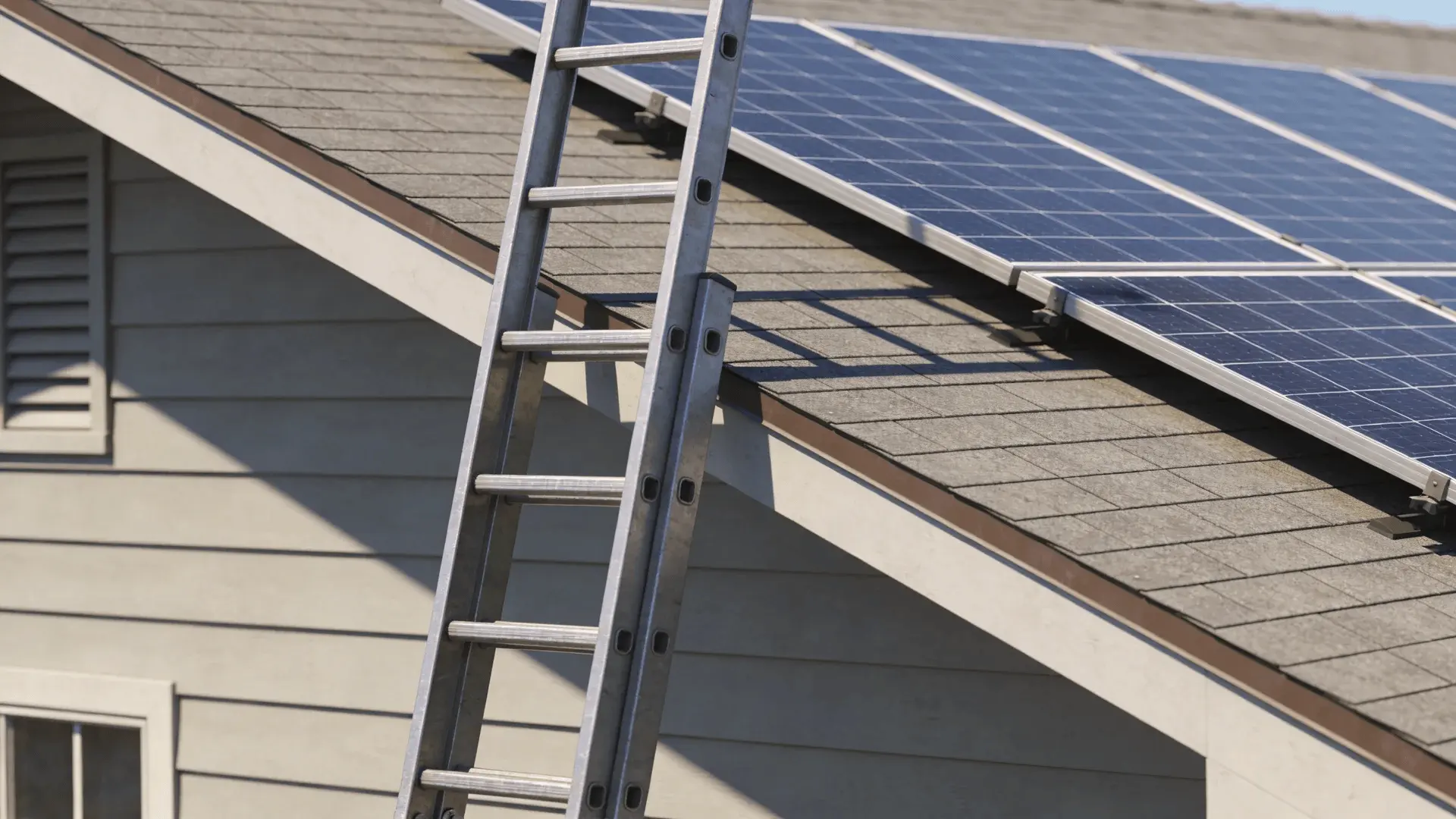
Cleaning itself is simple. The risk comes from the roof and the conditions.
Start by assessing the roof. Is it steep? Slippery? Two stories high? A low single-story roof is very different from a tall, steep one. Make sure your ladder is stable. If it wobbles, fix it before continuing.
Never step directly on the panels. They aren’t built for concentrated body weight. Pressure in the wrong spot can cause microcracks that reduce output over time.
Also, pay attention to the temperature.
Panels heat up in direct sunlight. Spraying cold water on hot glass can cause thermal shock, which stresses the surface and may crack it in extreme cases. Even without cracking, hot panels make water evaporate fast, leaving streaks and mineral spots.
This effect is documented in materials research, including the study “Thermal Shock Effect on Glass Thermal Stress Response” by ScienceDirect, which explains how rapid temperature changes create internal stress in glass.
Clean early morning, late evening, or on a cool, overcast day. Avoid freezing conditions, as frozen water expands and stresses the glass.
DIY cleaning works well when:
- The roof is accessible and stable
- You can work safely from a ladder
- The panels are cool to the touch
- You feel steady and confident
If any of that feels off, you should pause and consider calling the professionals.
Tools and Materials You Should and Should Not Use
Solar panels are durable, but the outer layer includes protective coatings and sealed edges. The wrong tools damage those slowly, and you may not notice it right away.
Safe Tools for DIY Cleaning
- A garden hose with a gentle spray nozzle – Provides enough pressure to remove loose dirt without stressing seals or forcing water into edges.
- A soft sponge or microfiber cloth – Lifts grime without scratching the glass surface.
- A soft-bristle brush with an extension pole – Helps you reach safely while keeping bristles gentle on coatings.
- A bucket of water with a small amount of mild soap (if needed) – Loosens stubborn buildup without leaving harsh chemical residue.
- A squeegee for drying – Reduces water spots without using rough fabric.
- Distilled or filtered water (optional) – Minimizes mineral spotting if you live in a hard water area.
Tools and Products that Can Damage Panels
- Pressure washers – High force can push water into panel seals and weaken edge protection over time.
- Abrasive scrub pads – Rough surfaces create micro-scratches that reduce light transmission.
- Harsh chemical cleaners – May break down protective coatings or leave residue.
- Strong detergents – Often leave films that attract dust and buildup.
- Metal tools or blades – Risk scratching or chipping the glass surface.
How to Clean Solar Panels Safely: Step-by-Step Guide
This is the exact order I’ve used myself, and it keeps the process simple while avoiding mistakes that cause damage.
Step 1: Shut Down the System
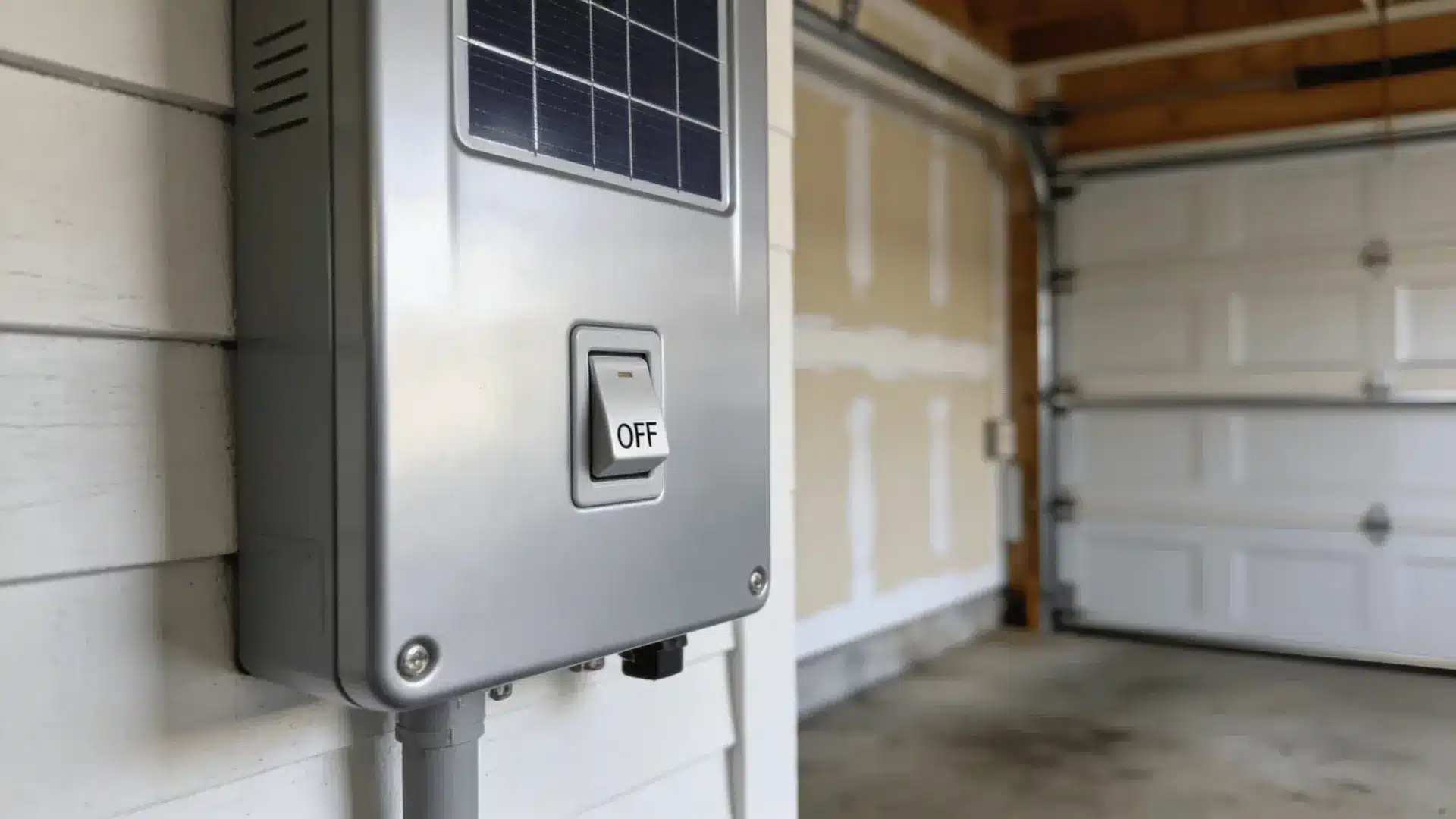
Before touching the panels, turn off the inverter and follow your manufacturer’s shutdown sequence. Most systems have a clearly labeled AC and DC disconnect. Shut the system down fully so you’re not working around active equipment.
Even if the shock risk is low, removing power adds a layer of safety and reduces the chance of electrical issues while cleaning.
Step 2: Remove Loose Debris First
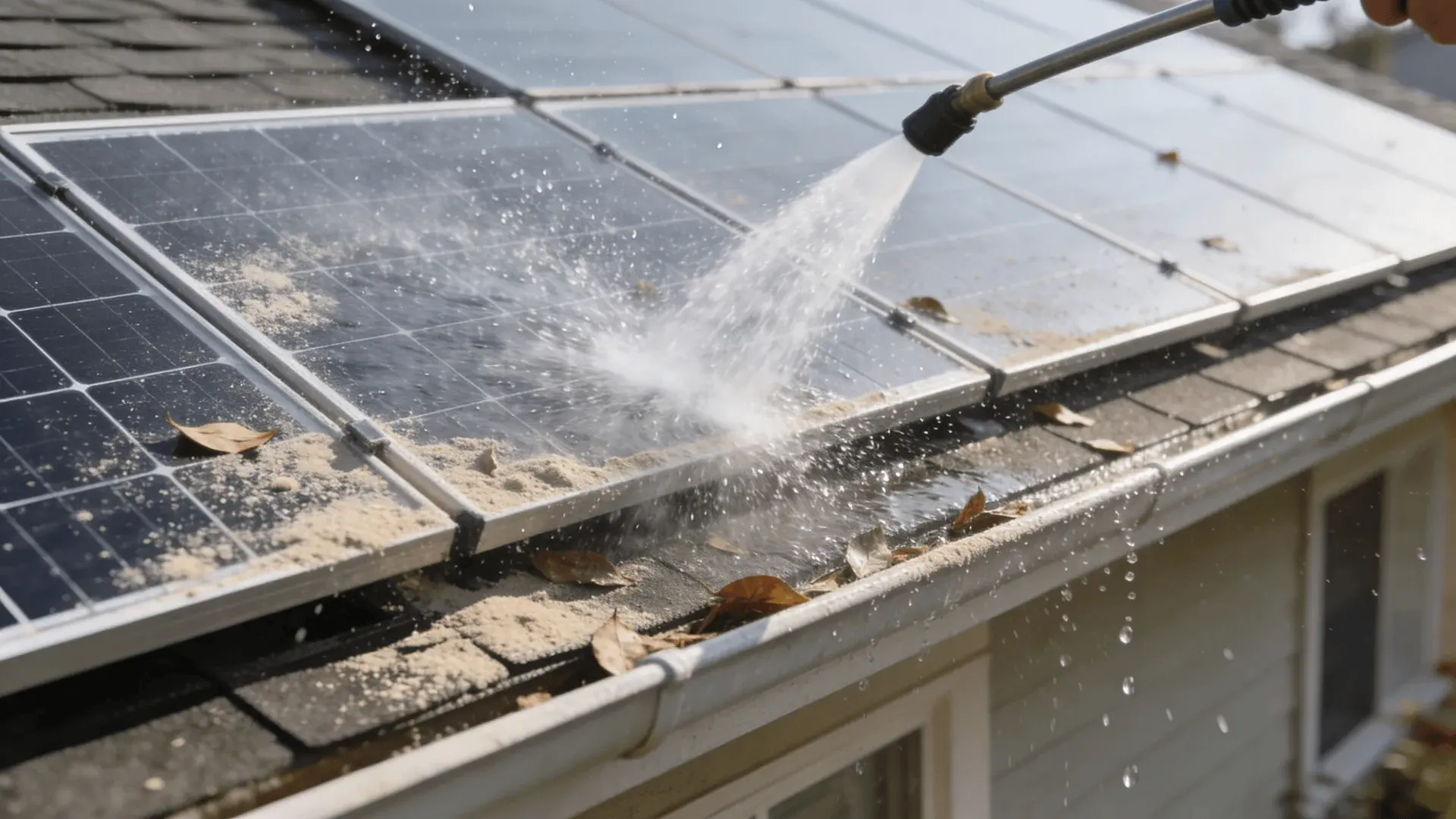
Use a garden hose with a gentle spray setting and rinse the panels from the top down. Focus on knocking off dust, leaves, and loose dirt before you touch the surface.
Do not start wiping yet. Loose grit can drag across the glass and cause micro-scratches. A simple rinse lowers that risk.
If the debris is dry and light, you can use a leaf blower to clear it without making contact.
Step 3: Gently Wash with Water (Add Mild Soap only If Needed)
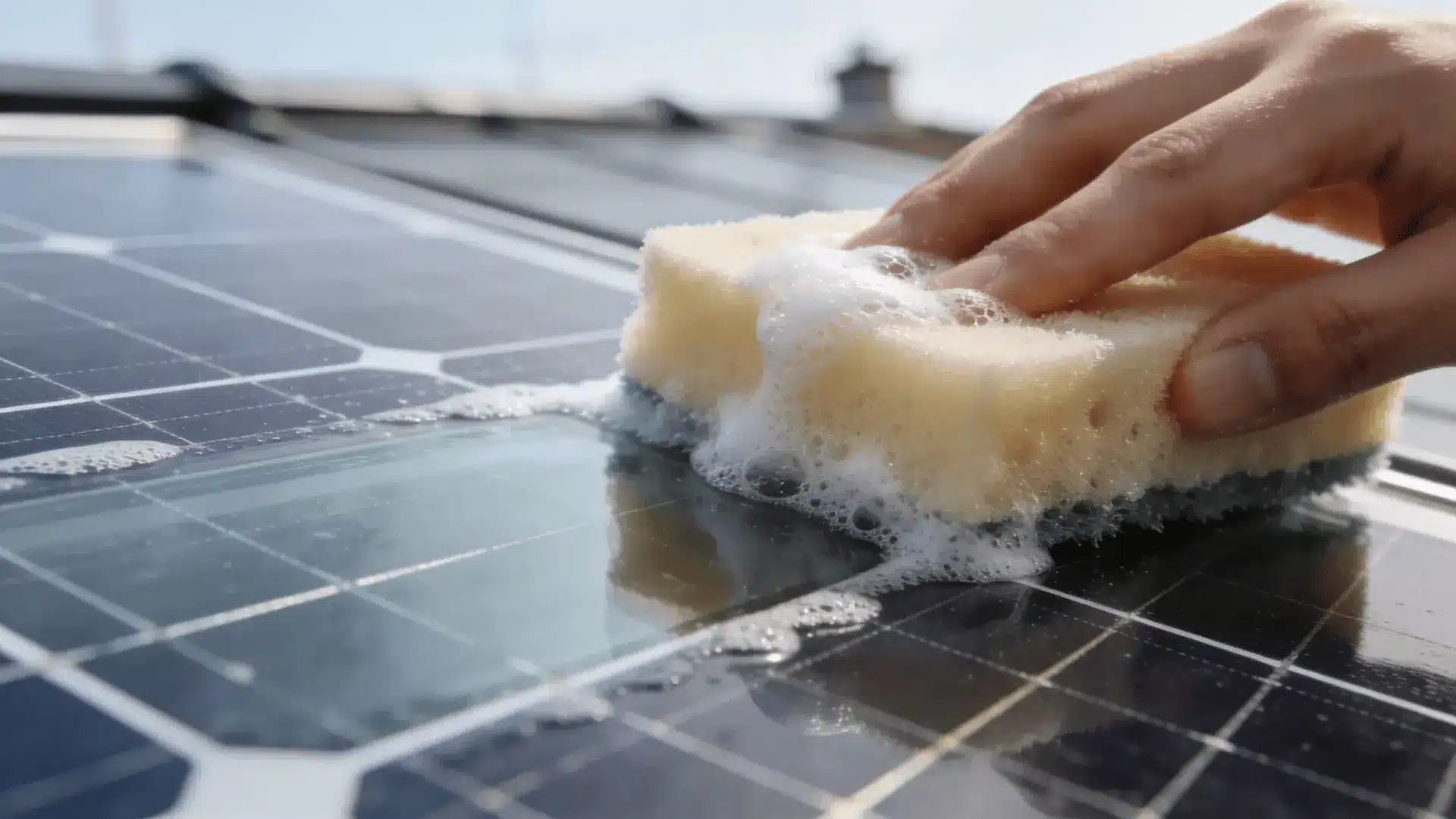
If grime remains after rinsing, fill a bucket with water and add a few drops of mild soap. Dip a soft sponge or microfiber cloth into the solution.
Apply light pressure and clean in small sections. Let stubborn spots, like bird droppings, soak for a minute to loosen before wiping. Avoid scrubbing aggressively. The goal is to lift dirt, not grind it off.
Step 4: Rinse Thoroughly from Top to Bottom
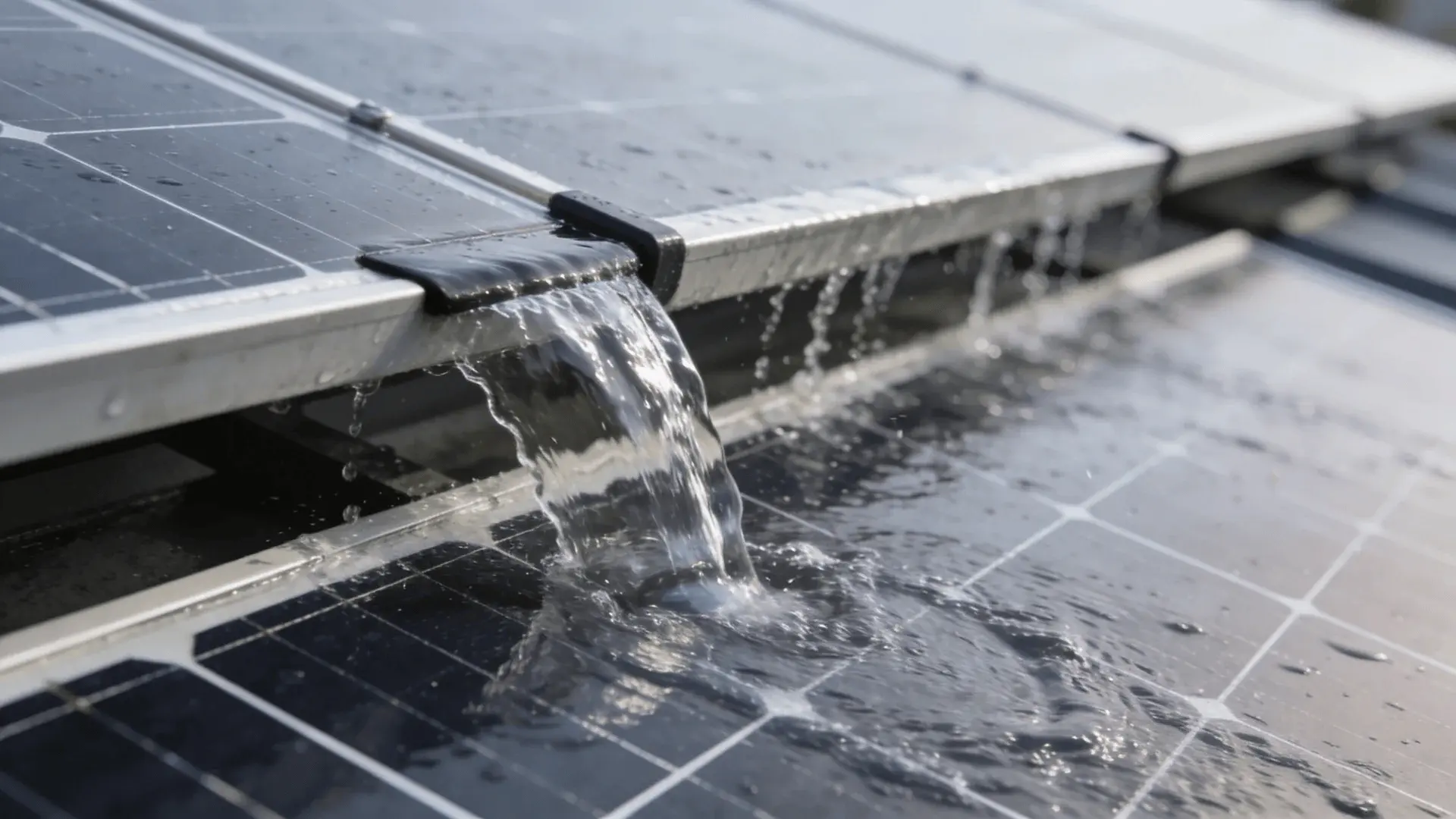
Once you’ve cleaned a section, rinse it immediately from the top down. This allows gravity to carry dirt and soap off the panel.
Make sure no soap residue remains. Check visually for streaks or film. If you see any, rinse again until the water runs clear.
Step 5: Dry with a Squeegee or Let Air Dry
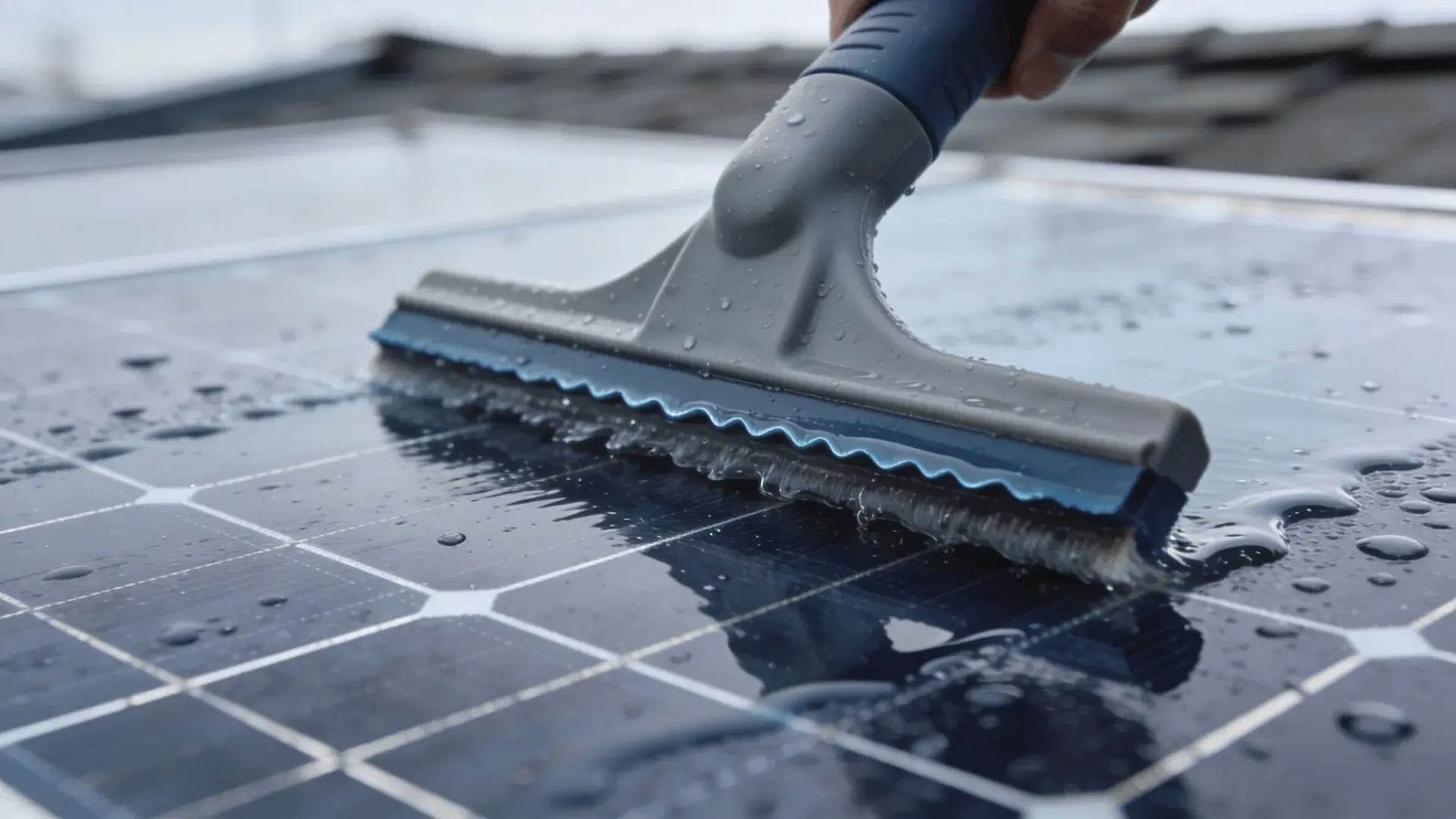
Use a soft squeegee and pull it gently from top to bottom to remove excess water. Wipe the blade with a clean cloth between passes to avoid dragging dirt.
If you’re using low-mineral water and the weather is mild, you can let the panels air dry.
If the surface becomes slippery or you feel unsteady at any point, stop immediately and step down. That’s your safety limit.
What Not to Do when Cleaning Solar Panels: Common Mistakes
Here’s a quick reference table so you can spot risky habits fast and avoid long-term damage.
| Mistake | Effects | How to Mitigate |
|---|---|---|
| Using a pressure washer | High force can weaken or breach panel seals, allowing moisture to enter and cause long-term internal damage. | Use a standard garden hose with a gentle spray setting. Keep water pressure low and controlled. |
| Scrubbing with stiff or abrasive brushes | Creates micro-scratches on the glass surface, reducing light transmission and long-term efficiency. | Use a soft sponge, microfiber cloth, or soft-bristle brush only. Apply light pressure. |
| Cleaning in direct midday sun | Rapid evaporation causes streaks and mineral spots. Sudden cooling can create thermal stress. | Clean early morning, late evening, or on a cool, overcast day when panels are not hot. |
| Using strong chemical cleaners | Leaves residue, breaks down protective coatings, and may attract more dirt over time. | Stick to plain water. Add only a small amount of mild soap if necessary, and rinse thoroughly. |
| Walking directly on panels | Concentrated body weight can create microcracks that reduce output over time. | Never step on panels. Work from a stable ladder or use extension tools. |
Most problems come from force, heat, or harsh products. Stick with gentle methods and you’ll protect both performance and lifespan.
When to Hire a Professional Instead
DIY works well in many cases, but it’s not always the smartest move. Sometimes the setup itself is the real risk, not the cleaning.
Hire a professional if:
- Your roof is steep or very high
- Panels are hard to access safely
- There’s heavy, hardened buildup that won’t loosen easily
- You feel unstable or unsure on a ladder
This isn’t about dirt alone: it’s about access and safety. A low, single-story roof is very different from a steep two-story one. Professionals use stabilizing equipment, proper harness systems, and tools designed for roof work. They can also spot small issues like loose mounts or visible wear while cleaning.
In the U.S., most residential solar panel cleaning services cost between $150 and $500 per visit, or about $10 to $20 per panel, depending on system size and roof difficulty. Larger systems or tricky access will sit at the higher end of that range.
If you’re looking for established options, companies like Solar Scrub and J&L Solar Panel Cleaning Services specialize in residential solar cleaning and operate in many U.S. regions.
If the physical setup feels risky, stepping back is the right call. Saving a couple of hundred dollars isn’t worth a fall or long-term damage to you or your system.
Wrapping Up
Solar panels are built to last decades, so constant cleaning isn’t the goal. Smart cleaning is.
Once you understand what actually blocks sunlight and what actually causes damage, the process becomes straightforward. Use soft tools. Clean only when needed. Work during cooler hours. Stop if conditions feel unsafe.
That’s the mindset behind how to clean solar panels correctly. Calm, careful, and not excessive.
If you’re unsure whether your panels need attention, take a look after a good rain. Sometimes nature has already handled it for you.
Frequently Asked Questions About Cleaning Solar Panels
What is the best thing to clean solar panels with?
Plain water and a soft brush or microfiber cloth work best. Add mild soap only for stubborn grime, and rinse thoroughly to prevent residue buildup.
Can I clean my solar panels myself?
Yes, if your roof is safe to access and you can work steadily. Avoid steep roofs or unstable ladders, since safety limits matter more than convenience.
What should I avoid when cleaning solar panels?
Avoid pressure washers, abrasive scrubbers, harsh chemicals, and cleaning during the hot midday sun. These increase the risk of scratches, seal damage, and residue.
How often should solar panels be cleaned?
Most homes need cleaning once or twice a year. Dusty or high-pollen areas may require more, while light surface dust alone often doesn’t require action.