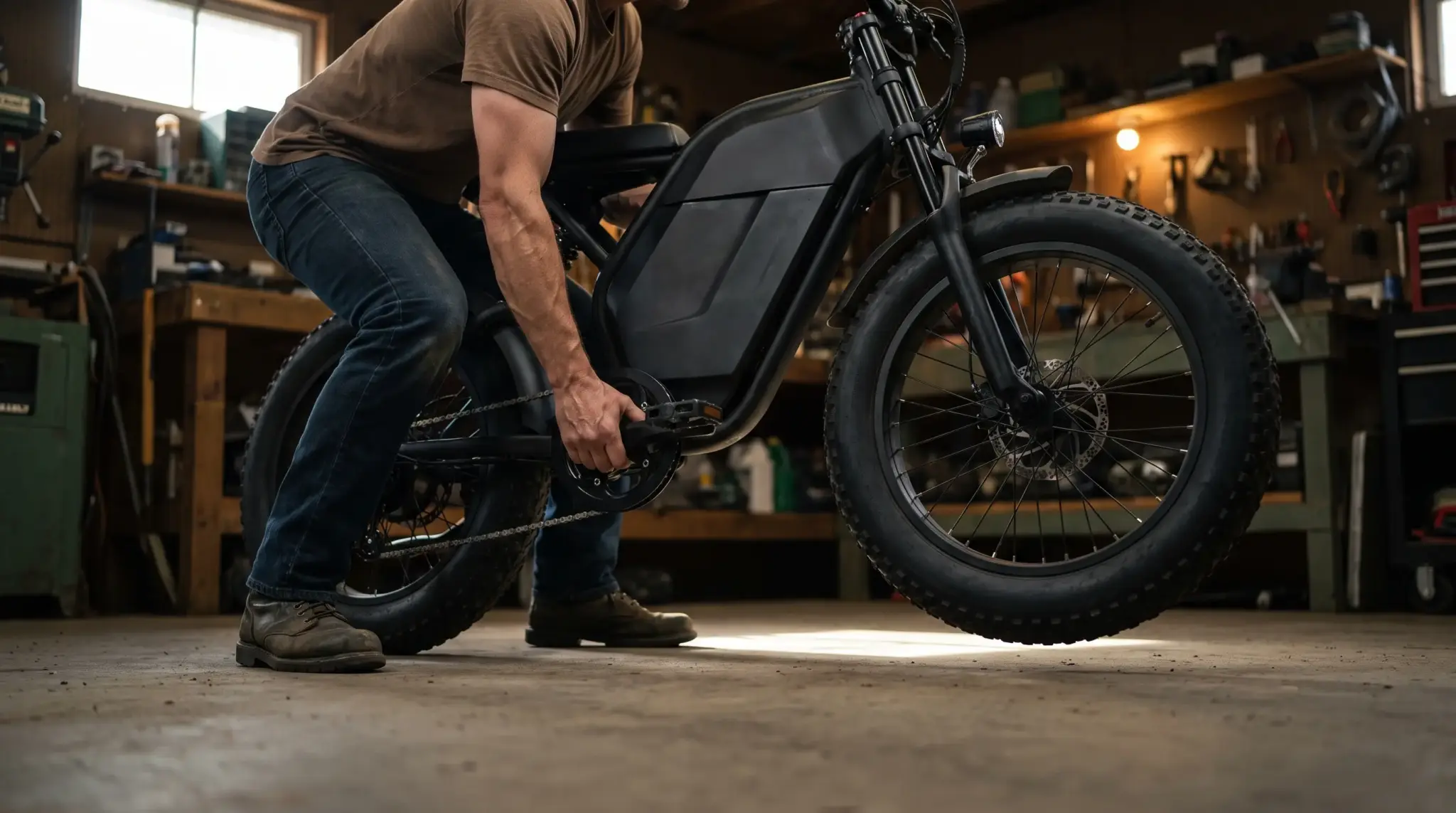
There is no single weight that answers for every ebike. Two concrete examples show why the exact model matters: Macfox lists the X1S at 65 lb and the X7 at 87 lb under Vehicle Weight. These are published specifications for two bikes, not a market average or the endpoints of a universal range.
Before deciding whether a number is manageable, establish what is included in it. A boxed delivery, an assembled bike, and a bike with your lock and bags attached are different loads. The useful question is not simply “How heavy is it?” but “How heavy is the configuration I will actually have to move?”
Bike Weight, Shipping Weight, or Weight Limit?
When reading an electric bicycle specification, keep those three labels separate. Bike weight describes the vehicle under the manufacturer’s stated measurement conditions. Shipping weight may include the carton, protective packing, charger, and loose parts. A weight limit describes a permitted load; it does not tell you what you will pick up.
The wording of a limit matters, too. Rider weight limit and total system weight are not interchangeable. Ask whether a published limit includes only the rider or also the bike and belongings, and follow that definition. A high load limit does not make a heavy bike easier to lift or prove that a particular accessory can carry the same load.
The X1S and X7 figures above are useful starting points, but the weight fields reviewed do not explicitly identify whether the battery is included. Do not silently convert either into a battery-included or battery-removed figure. Ask for the weight of the exact version being delivered, including its selected battery arrangement and fitted equipment.
For a used bike, check more than the original product page. Ask what has changed since purchase and what is still installed. Added equipment can make yesterday’s specification a poor description of today’s bike. If you need a measurement, ask the seller or a shop to weigh the actual setup safely, rather than improvising a lift onto an unsuitable scale.
What Adds Weight to an Ebike?
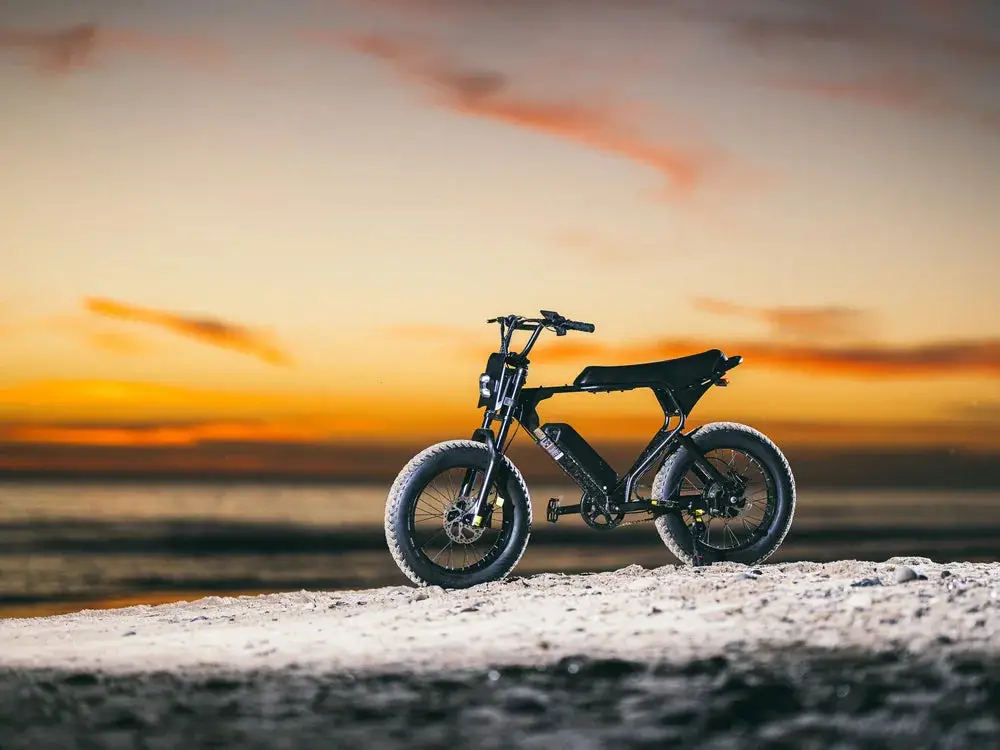
The battery and motor are additions to a bicycle’s basic structure, not replacements for it. The frame, wheels, tires, brakes, and other fitted parts still contribute to the total. The National Park Service highlights battery and motor-system weight as a handling consideration when getting on and off an ebike. That is a reason to assess the complete build, not assign every difference between models to the battery.
A fat tire ebike should be judged as a whole bike rather than by tire width alone. The wheel build, tire construction, frame, and equipment can differ alongside width. Without component measurements, you cannot tell how many pounds the tires explain. Nor can you conclude that two bikes with the same tire dimensions will weigh the same.
Separate equipment you value while riding from items that happen to be attached. A useful component may justify its weight for your trips. A lock left on the frame still counts when you lift the bike, even though it is not part of the headline specification. Judge the version you will use, not a stripped-down arrangement you would never ride.
How Much Lighter Is It Without the Battery?
Removing a battery reduces the load you are moving only when that battery was included in the starting weight. The calculation is straightforward once the inputs are known: verified complete-bike weight, minus the exact battery removed, plus any additional equipment that remains attached. Do not subtract a battery from a number that already excludes it.
Use the actual pack’s weight, not a generic estimate for “an ebike battery.” A capacity figure in watt-hours describes energy, not mass. The housing, cells, and mounting arrangement are also part of the physical pack. For a dual-battery configuration, confirm which batteries are included in the quoted bike weight and which ones you intend to remove.
For the published X1S and X7 weight figures, that missing inclusion detail prevents a reliable battery-removal calculation. Leave the question open until the manufacturer supplies it. This is more useful than producing a precise-looking number from assumptions, particularly when your purchase depends on being able to handle the bike without assistance.
Battery removal also changes how the task is divided, not just the number on a scale. You may be moving the bike and battery separately rather than eliminating weight altogether. Follow the model’s removal instructions and consider where each item will go. The remaining bike still needs suitable handholds and enough room to maneuver.
What Weight Can You Realistically Handle?
Rolling, steadying, and lifting are different tests. On level ground, the wheels support the bike while you guide it. At a stop, you must keep it balanced. Lifting asks you to support the load, often while reaching around a frame. Being able to push a bike does not establish that you can safely lift it to the height your situation requires.
Think through the movement before attempting it. How high must the bike rise? Can you stand close enough to a suitable grip point? Is there room to turn without twisting under the load? There is no useful universal lifting cutoff that answers those questions for every person. A familiar weight in a compact bag can feel very different when spread across a bicycle.
Begin with pushing, backing up, and steadying the bike in a clear, level area. Get help to assess a lifting requirement rather than testing your limit alone. If an everyday task remains awkward, a lighter configuration, assistance, or a different handling arrangement may be more sensible than assuming repeated effort will make it easy.
For someone considering the Macfox X7 ebike for everyday rides, its listed 87 lb vehicle weight and wide-tire configuration belong in the same decision. Try the riding feel, then assess how you will manage the actual bike when the ride ends. Wider tires may be a feature you value, but they do not remove the need for a workable plan to steady and move the X7.
A useful weight specification is one you can connect to a known configuration and a real task. Confirm what the number includes, account for what stays attached, and assess the movement you actually need. The goal is not the smallest figure on a sales page; it is a bike you can use and handle without relying on a guess.