When people say they want to “power their house” with solar, it sounds easy. Add enough panels and the home runs on sunshine. But powering a house isn’t about matching one moment of use.
You want to cover a full year of energy demand, including base loads and seasonal spikes.
Getting the total number of solar panels you need means thinking in terms of annual production, not just roof size or panel wattage.
I’ve been in the field for years, and I’ve seen panel counts miss the mark when yearly usage isn’t the focus. In this guide, I’ll break down what full-home coverage really involves and how the numbers come together.
Let’s start with the typical panel range most full-home systems fall into.
How Many Solar Panels Does It Take to Power a House?
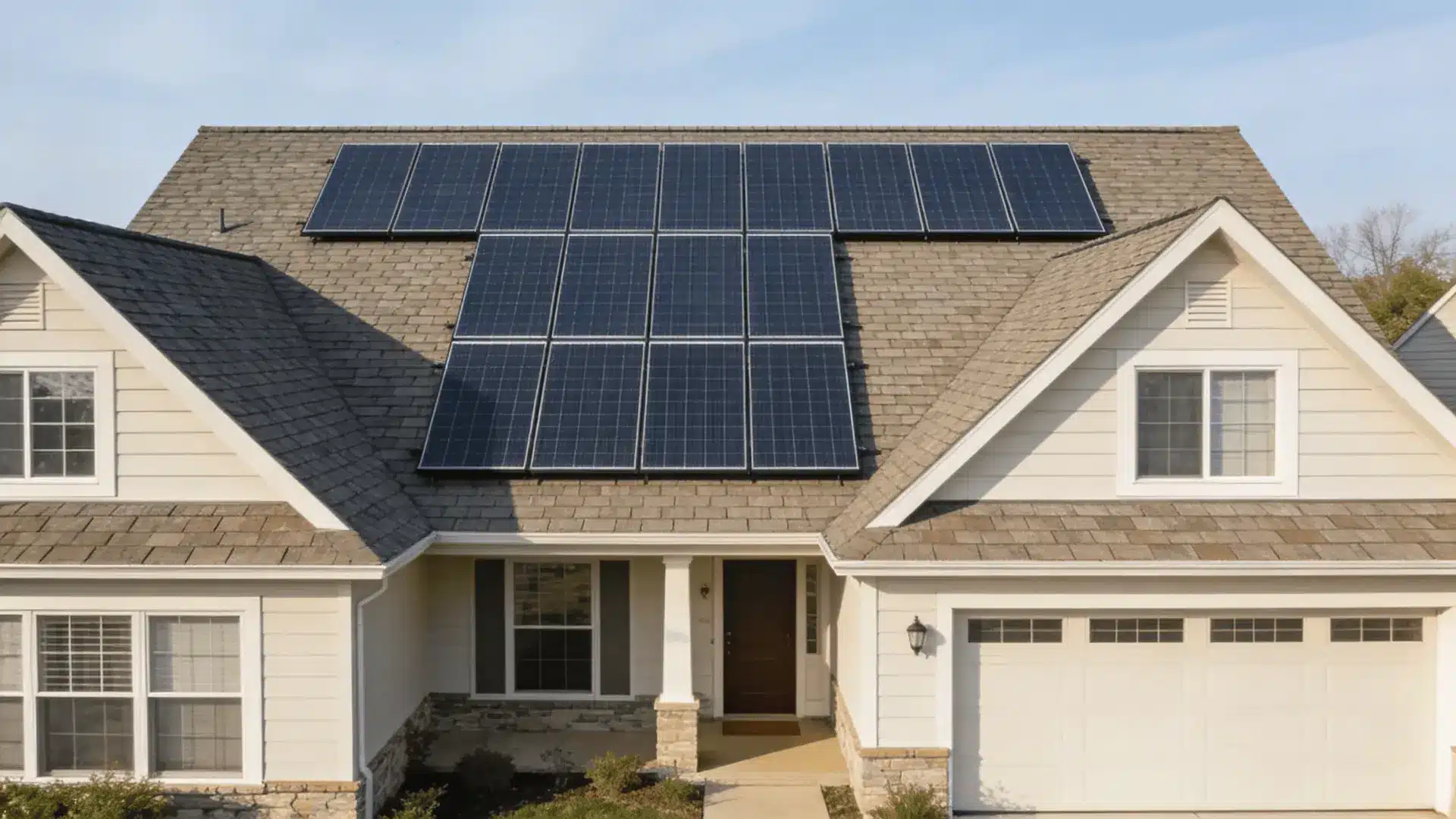
Most U.S. homes need 15 to 25 solar panels to offset 100% of their annual electricity use. That usually equals a 6kW to 10kW solar system.
Panel count = Annual kWh ÷ (Peak Sun Hours × 365 × Efficiency) ÷ Panel Wattage
That range exists for a reason.
The average home uses about 10,000 to 12,000 kWh per year. A 6kW–10kW system can produce that amount depending on sunlight, which translates to roughly 15–25 panels when using 400W modules.
But that number shifts if your situation shifts.
- You use more or less electricity
- You live in a cloudy state versus a sunny one
- You choose 350W or 450W panels instead of 400W
The “average” works as a reference point. It is not your final answer. That comes from your usage and your location.
What You Need Before Calculating (Your 3 Required Inputs)
Before you run any numbers, you need three specific inputs.
1. Your Annual Electricity Usage (kWh)
Pull your last 12 months of electric bills and add up the total kWh used.
Annual usage matters because solar systems are sized to offsetyearly consumption, not a single month. Usage swings with the seasons. Summer air conditioning and winter heating can push numbers up or down in ways that don’t show in one bill.
2. Your Local Peak Sun Hours
Peak sun hours measure how much usable sunlight your area receives on average each day.
- Arizona might average 5.5 to 6 peak sun hours.
- Michigan might average closer to 3.5 to 4.
That gap directly affects how many panels you need.
3. Your Panel Wattage
Panels typically range from 300W to 450W.
Higher wattage means each panel produces more power under the same sunlight. That lowers the number of panels required to reach your total system size.
Efficiency Loss Factor
Real systems lose about 10–20% of their theoretical production because of heat, wiring resistance, inverter losses, and dust. I’ve seen people ignore this and wonder later why their system underperforms.
If you skip this factor, you risk under-sizing your system from the start.
Step 1: Convert Your Annual Electricity Usage Into Required System Size (kW)
This is the core of the process. But first, you need to understand this difference:
- kWh (kilowatt-hour) = energy used over time
- kW (kilowatt) = power capacity
Your electric bill shows kWh. Solar systems are sized in kW.
Here’s the formula: System size (kW) = Annual kWh ÷ (Peak Sun Hours × 365 × Efficiency Factor)
Let’s walk through a realistic example.
If you use 11,000 kWh per year, your area averages 4.5 peak sun hours, and we assume 85% system efficiency (0.85), then the math comes out to be:
11,000 ÷ (4.5 × 365 × 0.85) = 11,000 ÷ 1,396 ≈ 7.9 kW system
When we round up, you’d roughly need an 8kW system.
This explains why many homes land in that 6kW to 10kW band. It reflects typical usage patterns, not guesswork.
Why Peak Sun Hours Change Your Required System Size
Peak sun hours determine how much energy your system can produce over a year.
If you live in a sunnier state, each installed kilowatt generates more electricity across the year. That means you need fewer total kilowatts to offset the same annual usage.
Move that home to a different state with different sunlight levels, and the required system size changes.
That’s why copying someone else’s panel count rarely gives you the right result.
Accounting for Real-World System Losses
Solar panels are rated under ideal lab conditions. Your roof is not a lab.
Heat reduces output. Dust blocks light. Wiring and inverters introduce small losses. If you ignore those realities, the math looks cleaner but the system ends up slightly short year after year.
Accounting for a 10–20% loss builds a buffer and keeps the system aligned with real production, not brochure numbers.
Step 2: Convert System Size (kW) into Number of Solar Panels
Once you know your required system size, convert it into panel count.
The formula is straightforward: Number of panels = System size (kW) × 1,000 ÷ Panel wattage (W)
Using the 8kW example: 8 × 1,000 = 8,000 watts
- If you choose 400W panels: 8,000 ÷ 400 = 20 panels
- If you choose 350W panels: 8,000 ÷ 350 ≈ 23 panels
- If you choose 450W panels: 8,000 ÷ 450 ≈ 18 panels
Here’s the key distinction:
Higher wattage reduces the number of panels you install. It does not reduce the total energy your home requires. You still need 8kW to offset your usage. You’re simply adjusting how many pieces combine to reach that number. That’s an important contrast most people skip.
Step 3: Adjust for Location, Roof Conditions, and Shading
The math above assumes ideal placement and exposure, but real roof conditions vary.
Location Differences
An 8kW system in Arizona will produce more annual energy than the same 8kW system in New York. If your area receives less sunlight, you may need a slightly larger system to compensate.
Production changes because sunlight intensity and duration change.
Roof Orientation
South-facing roofs in the U.S. generally produce the most energy. East- or west-facing roofs produce slightly less but often still work well.
North-facing roofs tend to reduce output significantly.
Shading
Trees, chimneys, nearby buildings, and even seasonal leaf growth can reduce production. Shading doesn’t always eliminate solar as an option. But it lowers effective output, which may mean:
- Installing more panels
- Or optimizing placement
This is why two identical houses on the same street can require different panel counts.
Step 4: Add Major Electrical Loads Before Finalizing Panel Count
One of the most common mistakes when trying to power an entire house is sizing only for today’s usage.
If you plan to add:
- An electric vehicle
- A pool pump
- Electric heat
- An electric water heater
You need to include that expected usage before finalizing your system size, not after.
For context, an EV can use around 3,000–4,000 kWh per year, and a pool pump can add another 1,000–2,500 kWh annually. Those numbers alone can shift your panel count
If you size your system and then add those loads later, the system may no longer offset your full usage.
I’ve seen this happen more than once. A homeowner installs solar, then buys an EV or switches to electric heat, and suddenly the system falls short. That’s the failure point many people don’t anticipate until the numbers stop lining up
Sizing once, with future loads included, usually avoids that mismatch.
Why Square Footage Estimates Often Mislead
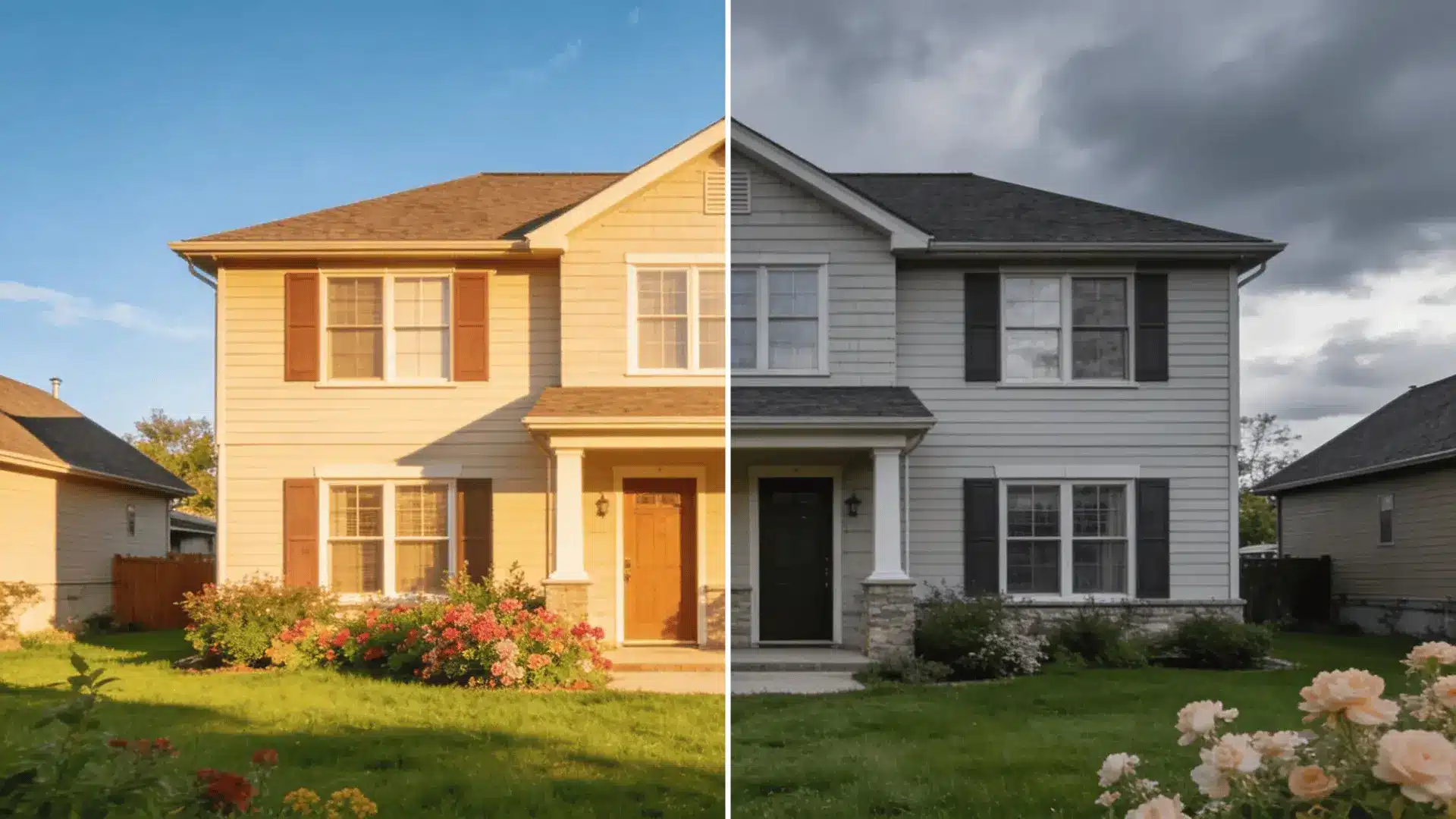
You’ll see panel estimates tied to home size all the time:
- 1,500 sq ft = 14–20 panels
- 2,000 sq ft = 16–24 panels
- 2,500 sq ft = 20–30 panels
At first glance, it makes sense. A bigger house should need more panels. But once you look at real energy use, it rarely works out that neatly.
I’ve seen two homes with the exact same square footage need completely different system sizes. One used gas for heating and had newer, efficient appliances. The other relied on electric heat and ran the AC hard every summer. Same size on paper. Very different energy bills.
Square footage tells you how much space you have. It doesn’t tell you how much electricity you consume.
Your habits, your heating source, and the equipment inside your home drive usage far more than floor area. That’s why your real kWh history gives a clearer answer than square footage ever will.
Can a House Run 100% on Solar Panels?
Yes, a house can offset 100% of its annual electricity usage with solar.
What that really means, though, is that your system produces as much energy over the course of a year as your home consumes. It doesn’t mean your house runs on solar power every single moment.
Solar panels generate electricity during the day. Your home uses electricity around the clock.
Homes also have what’s called a base load, the steady electricity used by refrigerators, routers, and standby devices, plus peak loads from air conditioning, ovens, or EV charging. Powering a house with solar means covering the total annual energy used by both, not matching every spike in real time.
On bright afternoons, you might produce more than you need. At night, production drops to zero, and you pull from the grid unless you have battery storage. Across the full year, those highs and lows can balance out. That’s called annual offset.
Energy independence is a separate goal. Living fully off-grid usually requires batteries and sometimes a slightly larger system to handle seasonal dips.
So matching annual usage creates balance over time, not nonstop self-sufficiency. Keeping that difference in mind helps set realistic expectations.
Quick Reference: Typical Panel Counts by Scenario
These estimates reflect the math we’ve covered.
| Annual Usage | System Size | 400W Panels |
|---|---|---|
| 8,000 kWh | ~6kW | 15 panels |
| 11,000 kWh | ~8kW | 20 panels |
| 14,000 kWh | ~10kW | 25 panels |
| 17,000 kWh | ~12kW | 30 panels |
Switching to lower or higher-wattage panels may increase or decrease the total panel count you’ll need. System size depends on annual usage and sunlight, while panel wattage determines how many panels reach that size.
Wrapping Up
Powering an entire house with solar isn’t about picking a panel number. It’s about matching a full year of energy use with realistic production.
When you understand how annual kWh, peak sun hours, efficiency losses, and panel wattage connect, the panel count stops feeling arbitrary.
If you want help translating those numbers into the right system size for your home, read the guide on choosing the correct solar system size.
Start with your electric bill and your location. Run the numbers using your data. Once you do, the estimate stops being generic and starts being yours.
Frequently Asked Questions
How many solar panels do I need for a 2,000 sq ft house?
It depends on annual energy usage, not square footage. Most 2,000 sq ft homes need 16–24 panels, but kWh consumption and local sunlight determine the final number.
How much electricity does one 400W solar panel produce?
In a 4.5 peak sun hour area, a 400W panel produces about 600–700 kWh per year after losses. Production varies by sunlight conditions.
How many panels does it take to make a 6kW system?
With 400W panels, a 6kW system typically requires about 15 panels. Lower wattage panels require more to reach the same total capacity.
Does living in a cloudy state mean solar won’t work?
No. It usually means you may need a slightly larger system to generate the same annual energy output.