Flat rate shipping looks simple at first, but there’s a lot happening underneath the surface that most people never see.
When you start paying attention to how carriers move packages, you notice patterns that explain why some boxes arrive fast while others drift a little.
That’s where understanding how long flat rate shipping takes can actually save you time, money, and a few headaches.
Today, I’ll walk you through the real timing, what shapes it, how the major carriers compare, and when a flat rate is the smart move or the wrong one.
By the end, you’ll know exactly how to pick the right service for your package. Let’s start with the quick answer.
Flat Rate Shipping Takes 1 to 5 Business Days
Here is a quick look at the timing for each flat rate service. This gives you a clear idea of what to expect before you ship.
| Carrier and Service | Estimated Time | Guaranteed |
|---|---|---|
| USPS Priority Mail Flat Rate | 1 to 3 business days | No |
| USPS Priority Mail Express Flat Rate | 1 to 2 business days | Yes |
| UPS Simple Rate | 1 to 5 business days | Some options are guaranteed |
| FedEx One Rate | Overnight or 2 day | Yes |
Most people see these timelines hold up, but delays do happen. Holiday weeks, weather, and late drop-offs can slow things down. If you need a sure date, the services marked as guaranteed are the safest pick.
What “Flat Rate Shipping” Actually Means
The idea behind flat rate shipping is pretty simple. You pay one set price based on the size of the box. That’s it. Weight doesn’t matter as long as it fits and stays under the carrier’s limit. It makes things easier when you don’t feel like guessing what a package might cost.
You see this with USPS, UPS, and FedEx. All three offer their own version with different names and different boxes. But the core concept remains the same.
Tracking is always included. That’s standard now. You drop the box off, and you can follow it the whole way without extra fees. And in most cases, it moves faster than normal ground. Not by a huge margin, but enough that you notice it, especially on longer trips.
It’s one of the reasons people keep going back to a flat rate when they want something simple and predictable.
Flat Rate Shipping Times by Carrier
Each carrier handles flat rate a little differently. The timing looks simple on paper, but the real story shows up once you look at how each network behaves. These quick labels help you skim what matters before you ship.
1. USPS Flat Rate Delivery Times
Speed: Priority Mail Flat Rate usually lands in 1 to 3 business days.
Express Option: Priority Mail Express Flat Rate delivers in 1 to 2 days and comes with a money-back guarantee.
Reliability: USPS is steady most of the year, but it can slow down fast during holidays and storms. A package meant for 2 days might end up closer to 4 or 5 when the system gets crowded.
Tracking: Tracking is included. It works, but scans can lag. “In transit” might sit longer than you expect, even when the package is moving.
2. UPS Simple Rate Delivery Times
Speed Options: Next day, two day, three day, and five day. You pick the speed. The price stays tied to the box size.
Guarantees: The faster tiers are guaranteed, which means you can request a refund if they miss the window.
Reliability: UPS is stable year-round. Fewer holiday swings. If you want predictable timing, the Simple Rate is usually solid.
3. FedEx One Rate Delivery Times
Overnight Tiers: First Overnight hits the earliest. Priority Overnight lands mid-day. Standard Overnight comes later. All are flat rate when you use FedEx packaging.
Two-Day Options: FedEx 2Day gives you a morning or afternoon delivery choice. Same flat rate system.
Reliability: FedEx runs on a strong express network. Delays happen, but not often. If timing matters the most, One Rate is one of the safer picks.
What Can Affect Flat Rate Delivery Speed
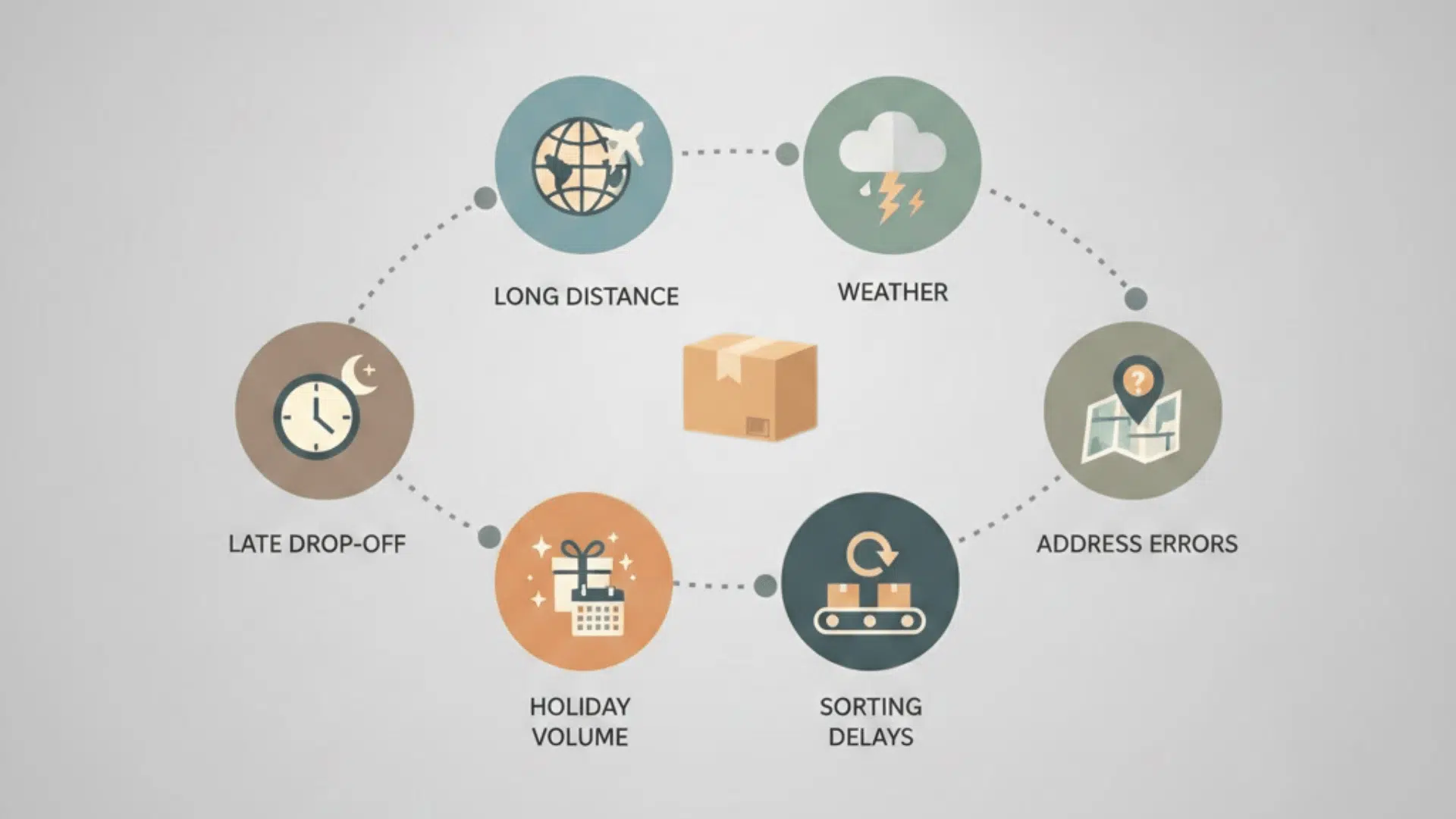
Flat rate shipping is pretty reliable, but a few hidden factors can change how fast your package moves. Most of these happen behind the scenes, and you only notice when timing slips.
- Drop off time: Dropping a package off late in the day usually pushes it into the next sorting cycle, which means it sits overnight before moving. Morning drop-offs almost always travel sooner.
- Distance: Even with flat rate services, longer routes take more time. Cross-country shipments pass through more hubs and scans, so they face more chances for minor slowdowns compared to shorter regional trips.
- Weather: Severe weather slows the network across all carriers. Flights get grounded, trucks reroute, and sorting facilities back up. Even small storms can add a day or two, depending on the region.
- Holiday volume: Peak seasons load the system with far more packages than usual. Carriers keep moving, but timing becomes less predictable as hubs overflow, scans fall behind, and trucks reach capacity faster.
- Sorting delays: Packages sometimes sit at busy distribution centers when the volume spikes. These pauses don’t mean a package is lost. It just waits for the next available scan or transport truck.
- Incorrect address: Any small mistake in the address can slow things down. The package gets pulled for manual review, and that extra handling adds time before it returns to the main delivery path.
These delays don’t happen every time, but knowing them helps you plan around the rough spots and set better expectations when timing really matters.
Which Shipping Method is Fastest: Flat Rate, Priority, or Ground?
A lot of people mix these up, mostly because the names sound similar.
Flat rate isn’t a speed category. It’s just a pricing setup. You pay one set price based on the box size, and the carrier routes it through whatever service that flat rate option is tied to.
USPS sends all flat-rate boxes through Priority Mail, which is why you see the 1 to 3-day estimate.
UPS and FedEx take a different route. Their flat rate systems plug into their express networks, so the timing can be much faster depending on the tier you choose.
Here’s how the three stack up when you compare them directly:
| Service Type | How It Works | Typical Speed | Notes |
|---|---|---|---|
| Flat Rate (USPS) | Price based on box size, not weight | 1 to 3 days | Uses Priority Mail by default |
| Flat Rate (UPS Simple Rate) | Price based on size, tied to chosen speed | 1 to 5 days | Runs on UPS express and expedited tiers |
| Flat Rate (FedEx One Rate) | Price locked to FedEx packaging | Overnight or 2 day | Uses FedEx express network |
| Priority Mail (USPS) | Weight and zone based | 1 to 3 days | Similar speed to USPS flat rate |
| Ground Shipping | Weight and distance based | 2 to 8 days | Slowest but often cheapest option |
Flat rate is fastest when you’re using UPS or FedEx because of their express networks. For USPS, it’s basically Priority Mail with a predictable price tag. Ground sits at the bottom for speed, but it still works fine when timing isn’t a big deal.
Real-World Delivery Expectations for Flat Rate Shipping
Flat rate shipping looks simple on paper, but the real experience can feel a little different once the box is moving.
Most people see their packages show up on time, or close to it, but there are patterns you notice when you watch enough shipments or read through what people post online.
What most customers actually experience:
Most flat rate packages land pretty close to the estimate. USPS Priority Mail Flat Rate often hits the 1 to 3 day window, but it can drift toward 4 days when the network gets busy.
UPS and FedEx are usually steadier. Their express networks hold up even when the volume spikes. For everyday shipments, you’ll see a lot of “arrived early” or “arrived on time,” especially outside peak seasons.
Why delays occur:
A lot of the delays you see online come down to bottlenecks at certain hubs.
Reddit threads are full of screenshots showing tracking stuck on “in transit” for two or three days. It’s usually because a package sat in a crowded facility waiting for the next truck or plane.
Quora is the same. People talk about storms slowing everything down, holiday overload, or late drop-offs, missing the day’s final sort. None of it means a package is lost. It just means the network is backed up.
When to worry if your package is late:
If a USPS flat rate package goes more than three days past the estimate with no new scans, that’s the point where it’s worth checking in.
UPS and FedEx are tighter with timing, so anything that slips more than a day or two past the expected delivery deserves a quick look. Most carriers can track it down fast once you ask.
The key is not to panic too early. Gaps happen, and the package usually shows up on its own.
When Flat Rate Shipping Makes Sense and When It Doesn’t
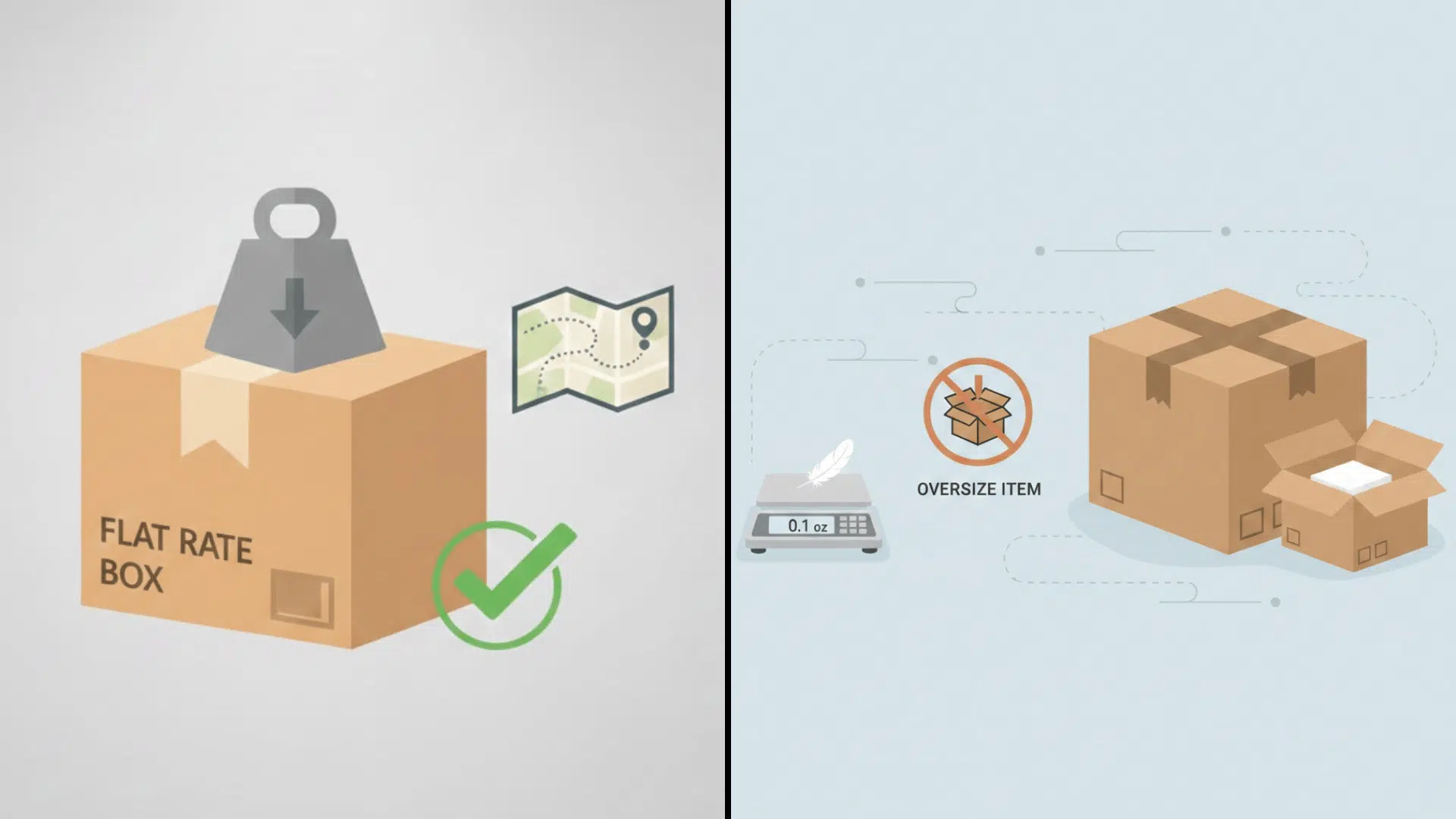
Flat rate works great in some situations and falls short in others. Breaking them into two groups makes it easier to figure out which side your package lands on.
When Flat Rate Shipping is the Best Choice
- Heavy items save money because the price stays the same even when the box is close to the weight limit.
- Cubic-size items ship cheaper when they fit the flat rate box and avoid dimensional weight charges.
- Long-distance shipping benefits from flat pricing since cross-country trips cost the same as local ones.
- Predictable pricing helps when you want a simple rate without guessing or calculating weight and zones.
When Flat Rate Shipping isn’t a Good Fit
- Light items often cost less with First Class or ground services instead of paying the flat rate amount.
- Short-distance deliveries are usually cheaper with zone-based pricing than a flat rate box.
- Oversized items can’t use flat rate at all when they don’t fit the required packaging.
- Overnight needs aren’t covered by USPS flat rate, and the overnight flat rate options from UPS or FedEx cost more.
Flat rate isn’t a one-size solution. It can save you a lot when the item fits the right profile, but other services pull ahead when weight, size, or timing shifts the balance.
Final Tips to Choose the Best Flat Rate Option
| What You Need | Best Pick | Why It Works |
|---|---|---|
| Cheapest option | USPS Priority Mail Flat Rate | Stays low in cost, especially for heavier boxes that would price higher with weight-based services. |
| Fastest option | FedEx One Rate or UPS Simple Rate (Overnight or 2 Day) | These tie directly into express networks that move faster than standard Priority Mail. |
| Most reliable option | UPS Simple Rate or FedEx One Rate | Their express systems hold steady even when volume spikes during holidays or severe weather. |
| Best for heavy items | USPS Flat Rate | The price stays the same even as the weight climbs, making it ideal for dense, heavy shipments. |
Note: Flat rate works best when you match the service to your package’s weight, distance, and timing. Once you know what matters most, picking the right option becomes straightforward.
Wrapping Up
Figuring out how long flat rate shipping takes gets easier once you understand what each carrier does behind the scenes. The real win is knowing when the service actually helps you.
Flat rate works best when the item is dense, traveling far, or needs a simple price that never changes.
You also get steadier results when you choose UPS or FedEx for tighter timing. USPS still offers solid value when cost matters more than speed.
In the end, the right pick depends on what you’re sending and how fast you need it.
If you want more shipping tips and breakdowns like this, check out other blogs on the website. They’ll help you ship smarter, faster, and with way less guesswork.
Frequently Asked Questions
Does flat rate shipping include insurance?
Most flat rate services include a small amount of insurance by default. USPS adds basic coverage, while UPS and FedEx include more depending on the express tier you choose.
Can flat rate boxes be shipped internationally?
USPS offers international flat rate options, but delivery times and prices vary by country. UPS and FedEx also ship flat rate worldwide when you use their approved packaging.
Can you use your own box for flat rate shipping?
You can’t use your own box for flat rate. All carriers require their branded flat rate packaging to lock in the fixed price.
Do flat rate packages get delivered on weekends?
USPS delivers Priority Mail on Saturdays at no extra cost. UPS and FedEx may deliver on weekends depending on the service, location, and any added fees.