A slow drain does not usually fail all at once. It starts with water hanging around for a few extra seconds, then one day you are brushing your teeth over a sink that barely moves at all.
I have stood there watching the same cloudy water circle the drain and wondered if it was finally time to call someone. Usually, I try the simple stuff first. A homemade drain cleaner can help with light buildup before you reach for harsher products.
Here is what I would try first, and what I would skip.
Figure Out What Is Clogging the Drain First
Not every clog behaves the same way, so it helps to spot the signs before choosing a fix. Matching the right method to the actual problem saves time, protects your pipes, and prevents you from repeating a fix that was never going to work in the first place
What You Notice | Likely Cause | Best First Approach |
|---|---|---|
Kitchen sink slow after greasy dishes | Grease buildup | Dish soap + hot water |
Shower or tub drains slowly | Hair and soap buildup | Remove hair first |
Bathroom sink has light residue or odor | Soap or organic film | Baking soda treatment |
Drain smells but still works | Dry trap or residue | Clean and flush drain |
Water does not drain at all | Deep blockage | Plunger or drain snake |
Multiple drains slow together | Deeper drain-line issue | Stop DIY, investigate further |
Once you know what you are dealing with, the rest becomes a lot easier. Different types of clogged pipes do not always respond to the same treatment, and using the wrong method usually just delays the real fix.
If several drains are slowing down at once, that is your cue to pause the DIY fixes and look deeper into the plumbing.
What to Do Before Using a Homemade Drain Cleaner
A few quick checks before you start can save you time and stop you from working against yourself.
- Standing Water: Remove as much standing water as possible so the mixture can reach the actual clog.
- Stopper Removal: Take off the stopper or drain screen when accessible.
- Visible Debris: Pull out any hair, food, or other debris you can see first.
- Recent Chemicals: Check whether you recently used a chemical drain cleaner or bleach.
- Pipe Material: Identify the drain and pipe material when possible.
- Basic Protection: Keep gloves nearby to protect your hands from splashes.
Skipping these steps is one of the biggest reasons homemade drain cleaners fail. Most of the time, the mixture isn’t weak; it just never reaches the actual blockage.
Homemade Drain Cleaner Methods for Different Clogs
Not every homemade drain cleaner works the same way, and that is the point. Grease, hair, soap residue, and odor all respond differently, so the five methods below are built for different situations rather than ranked by strength.
1. Dish Soap and Hot Water for Greasy Kitchen Drains
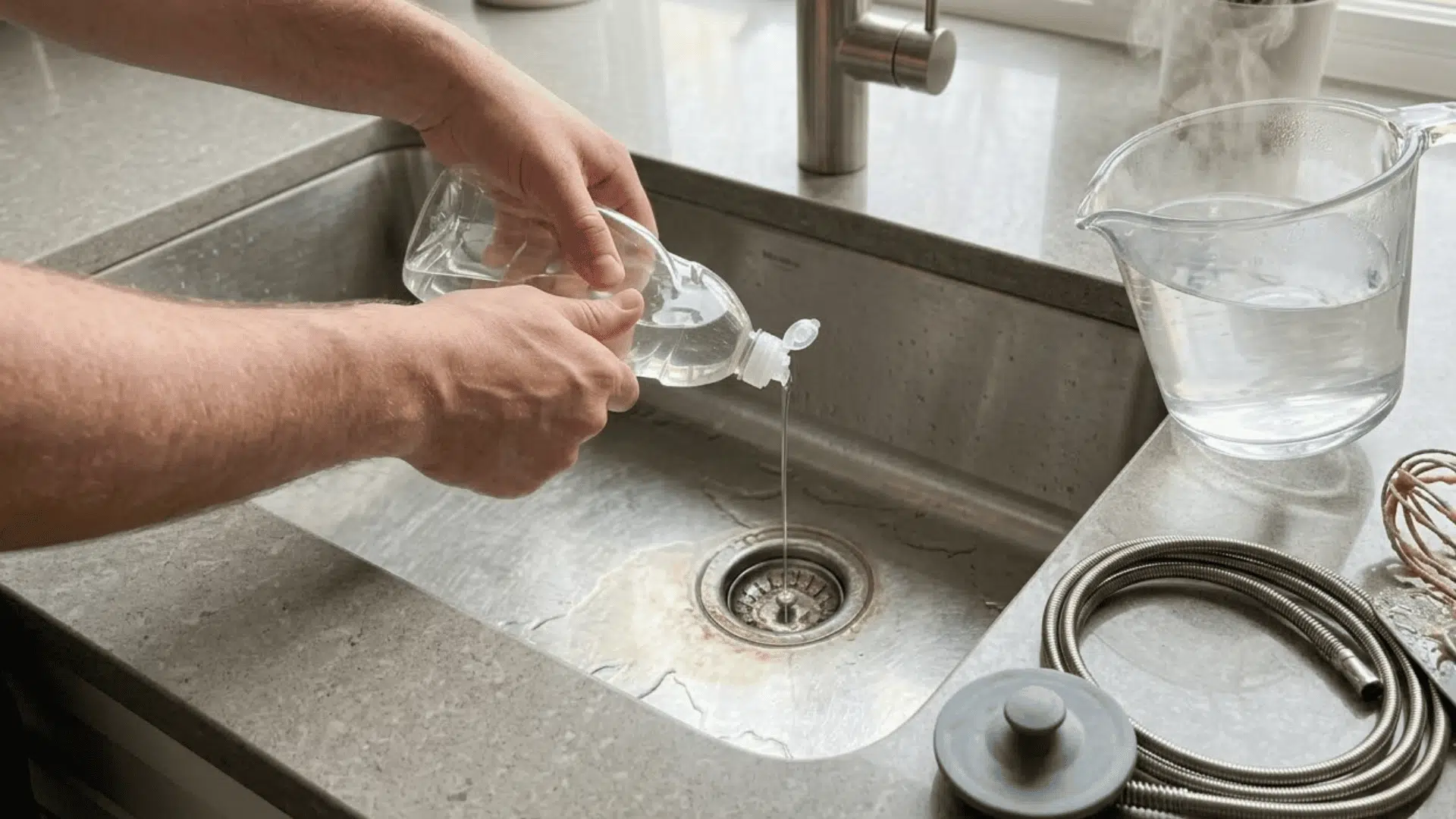
Kitchen sinks usually slow down for one reason: grease clinging to the inside of the pipe. This method skips the fizz and goes straight for the grease itself, making it the most reliable first move for a sluggish kitchen drain.
Ingredients: Dish Soap, Hot water
Steps:
- Squeeze a generous amount of dish soap directly into the drain.
- Slowly pour hot water down the drain in a steady stream.
- Let it sit for two to three minutes.
- Run the tap to check if water flows freely again.
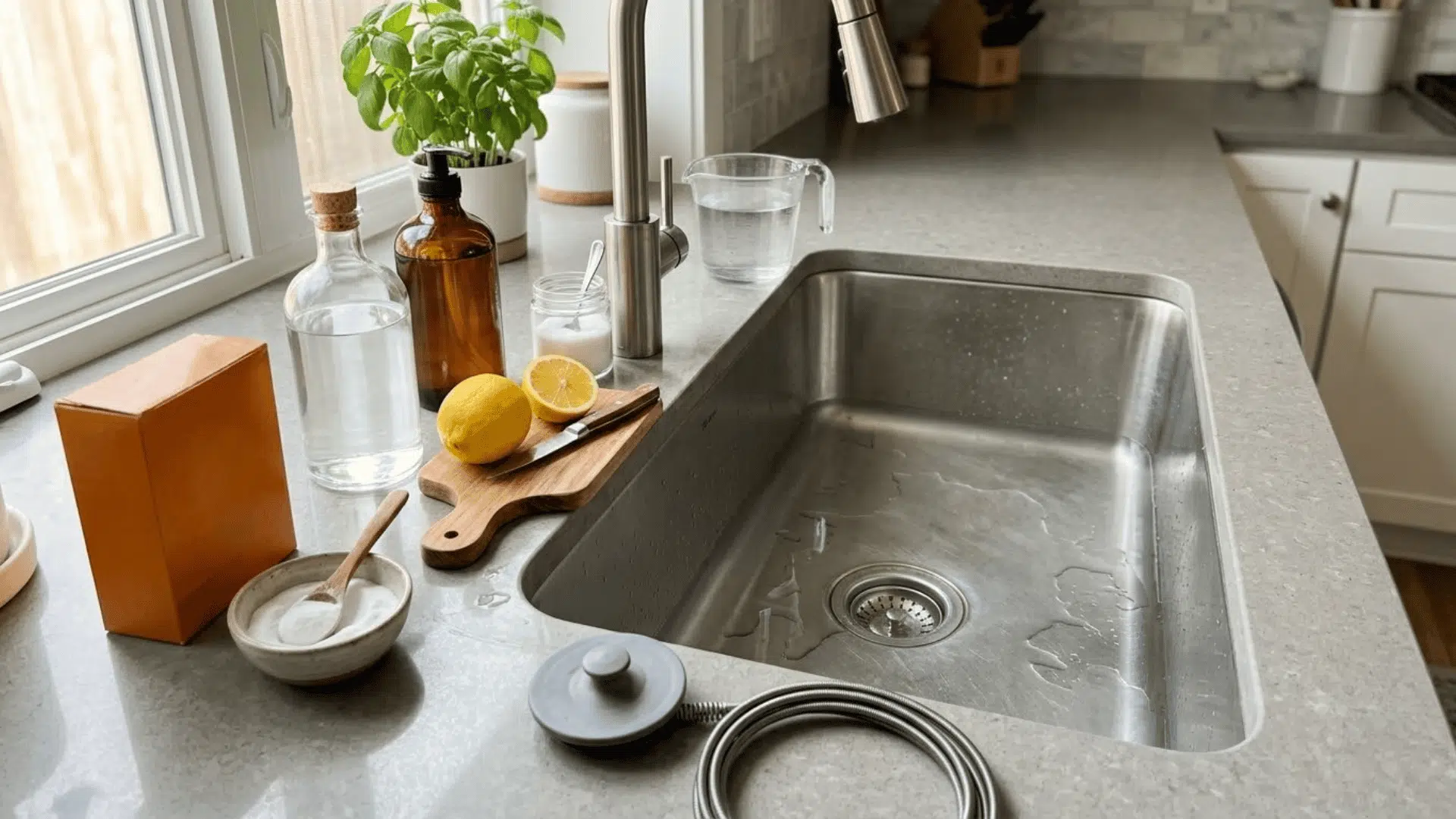
2. Baking Soda and Vinegar for Light Buildup
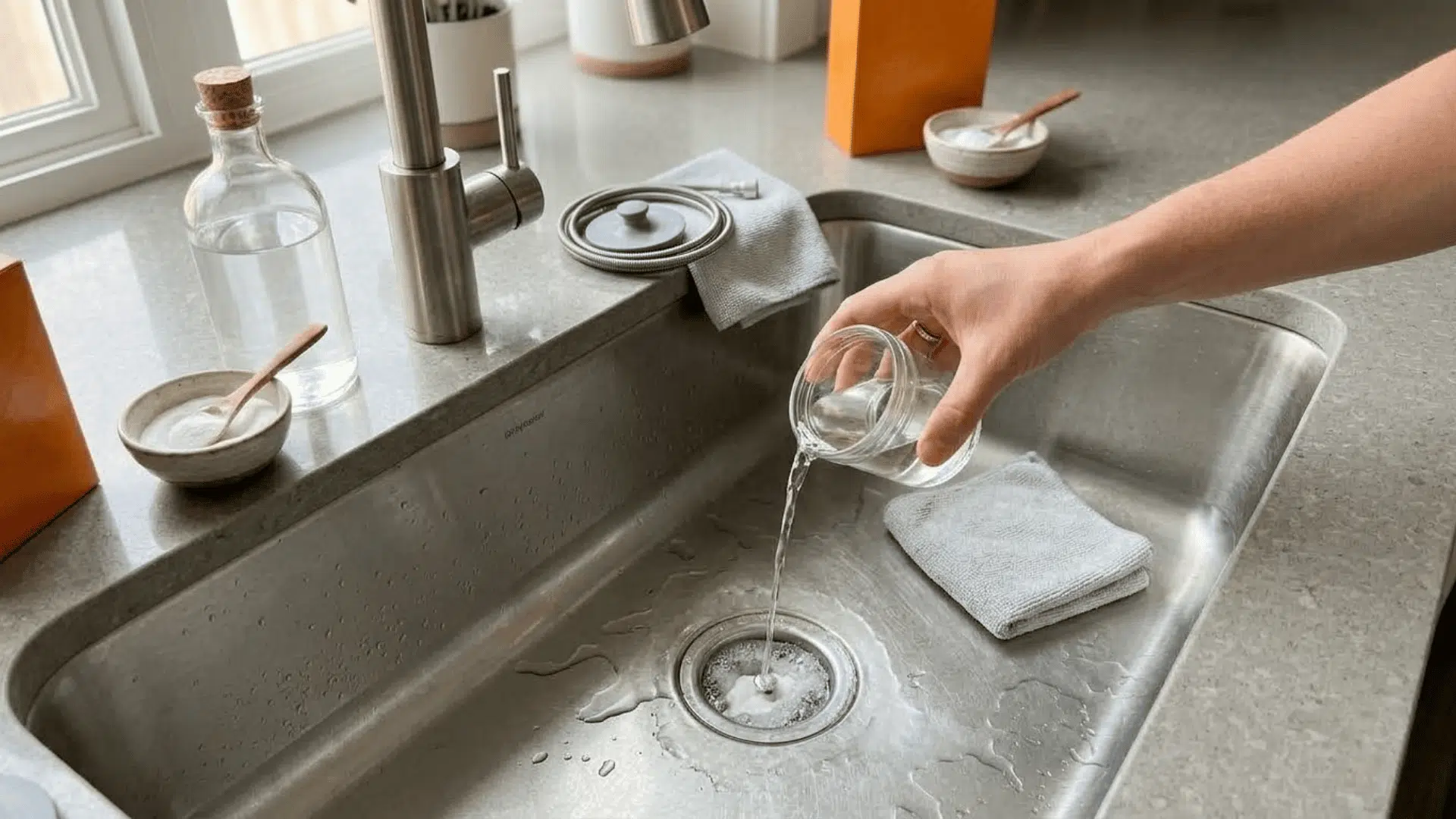
This is the method most people already know, and it works best when the goal is to clean the pipe walls rather than break apart a solid clog. It is a good routine step for a drain that is sluggish but not fully blocked.
Ingredients: 1/2 cup baking soda, 1/2 to 1 cup white vinegar, hot water, drain plug or cloth
Steps:
- Pour the baking soda directly into the drain.
- Follow with the vinegar and cover the drain right away.
- Let the mixture sit for ten to fifteen minutes.
- Flush with hot water.
3. Baking Soda and Salt for a Slow Drain
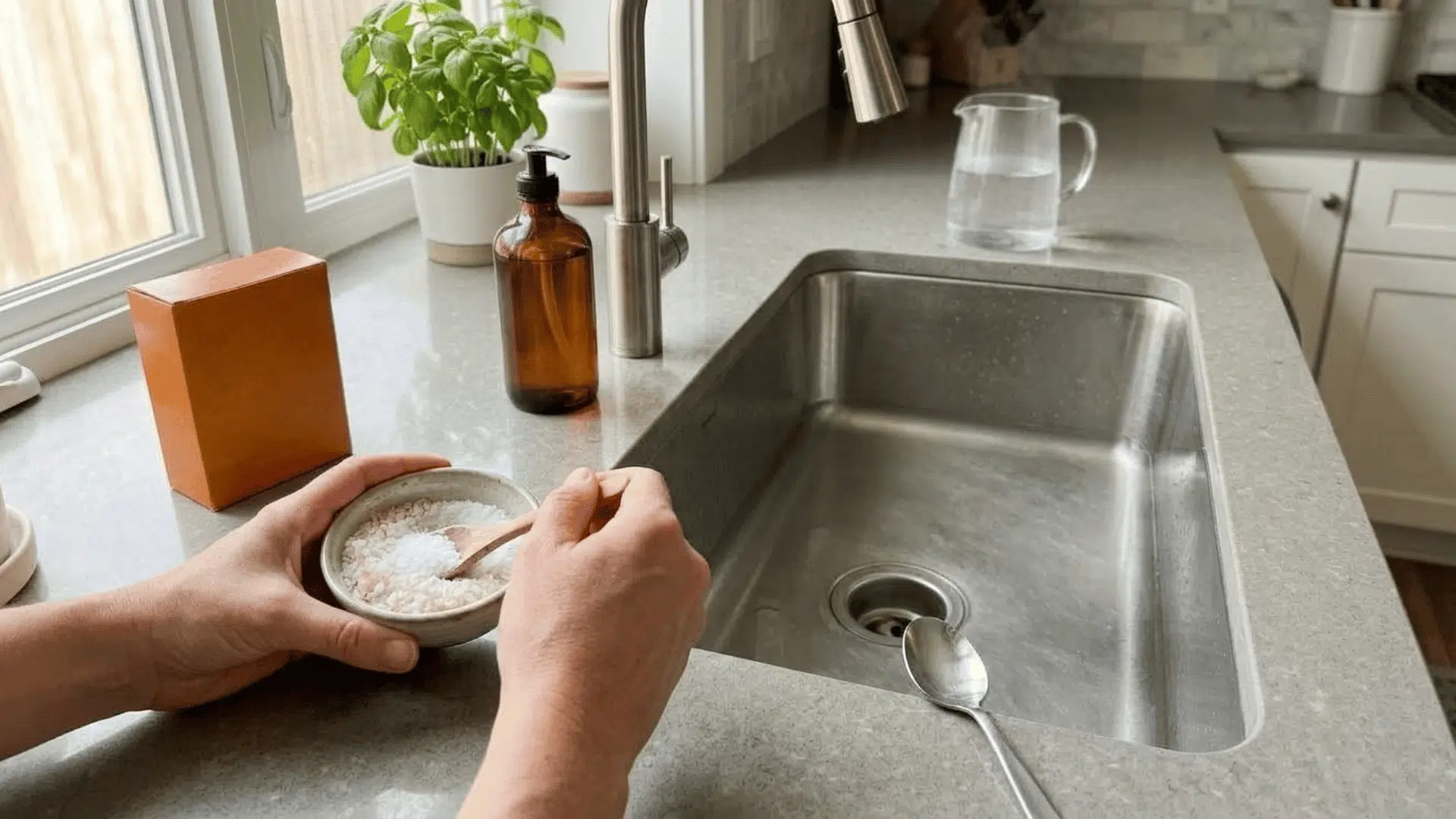
The pairing is less about power and more about upkeep. It works well when water is still moving through the drain but a bit slower than usual, and it helps keep buildup from worsening.
Ingredients: 1/2 cup baking soda, 1/2 cup salt, hot water
Steps:
- Mix the baking soda and salt together.
- Pour the mixture into the drain.
- Let it sit for several hours or overnight.
- Flush thoroughly with hot water.
4. Baking Soda and Lemon Juice for a Smelly Drain
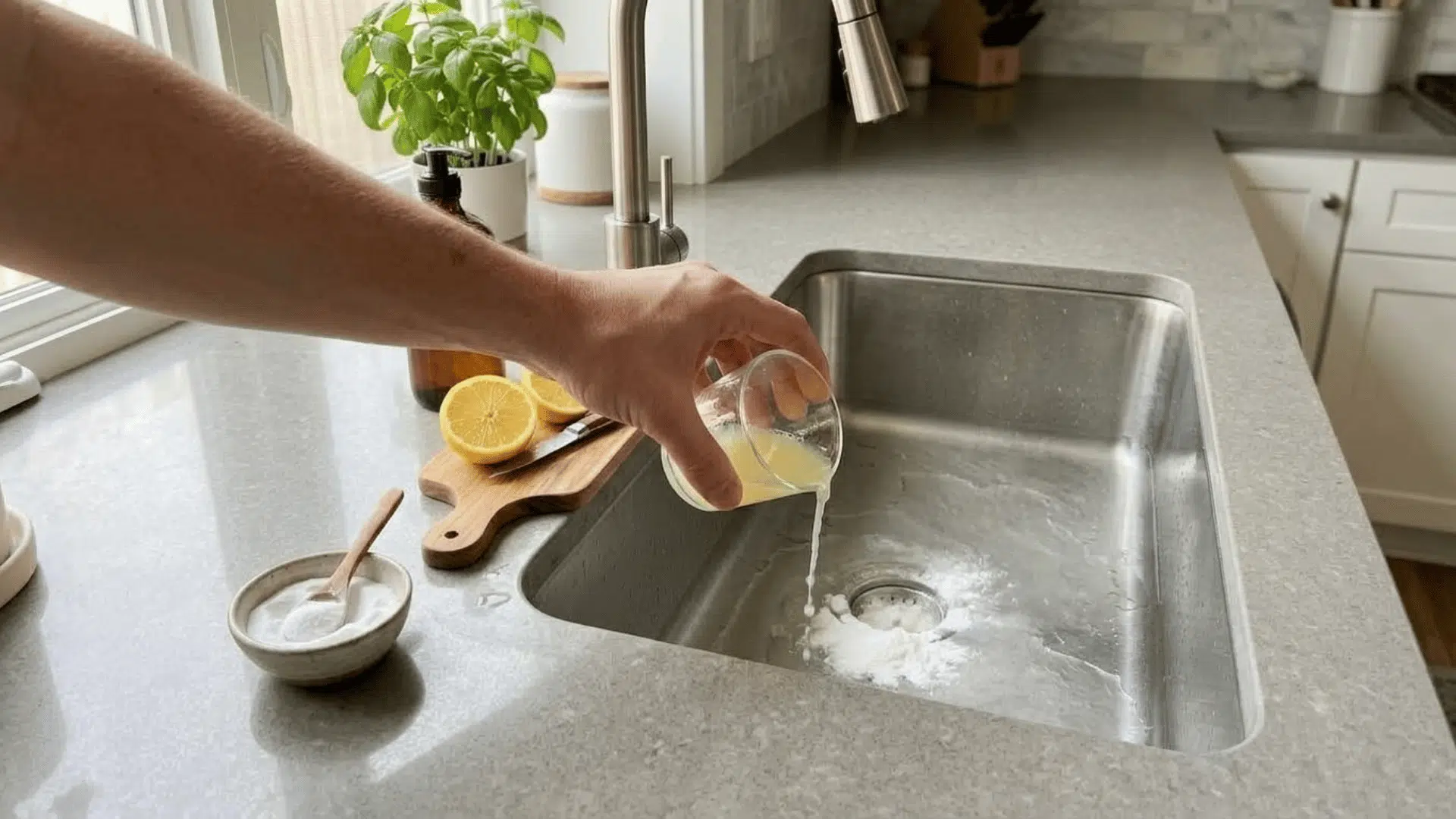
Sometimes a drain works perfectly fine but still smells unpleasant. This method is built for that exact situation, targeting odor and light film rather than an actual blockage.
Ingredients: 1/2 cup baking soda, 1/4 cup lemon juice, hot water
Steps:
- Pour the baking soda into the drain.
- Add the lemon juice and let it fizz.
- Wait five to ten minutes.
- Rinse with hot water.
5. Washing Soda and Boiling Water for Hair Clogs
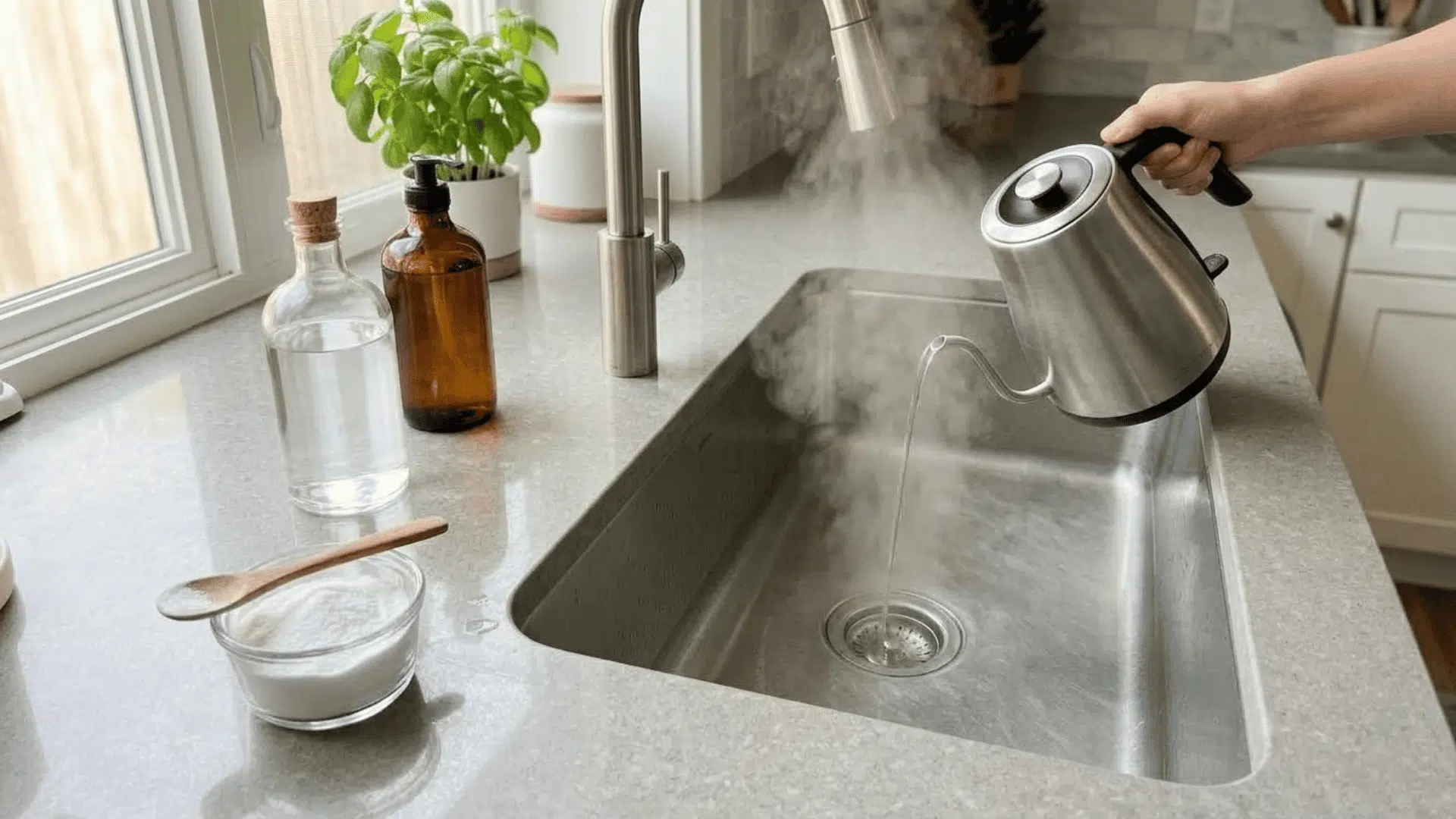
Hair clogs are different from grease clogs because hair tangles and traps debris rather than coating the pipe. Washing soda (sodium carbonate) is stronger than baking soda and helps break down the organic matter, making it a better match for hair than a soap-based rinse.
Ingredients: 1/2 cup washing soda, boiling water
Steps:
- Pour the washing soda directly into the drain.
- Slowly pour boiling water over it in a steady stream.
- Let it sit for ten to fifteen minutes.
- Flush with hot tap water and check the flow.
Homemade Drain Cleaner Safety Rules you Should Know
A homemade drain cleaner is generally safe, but a few simple rules keep the process risk-free.
Some pairings that seem harmless on their own can react badly when mixed, and a few habits people repeat for convenience can actually work against them.
- Never Mix Products: Combining different household cleaners can create dangerous fumes.
- Avoid Vinegar and Bleach: Mixing these two can release harmful chlorine gas.
- Skip Vinegar After Commercial Cleaner: Leftover chemical residue may react unpredictably with vinegar.
- Watch Hot Water Use: Pipe and sink materials respond differently to high heat.
- Choose Hot Over Boiling: If you are unsure about your plumbing material, hot water is the safer option.
- Limit Repeated Attempts: Stop DIY treatments if the drain shows no improvement after a few tries.
- Store Ingredients Safely: Keep all cleaning ingredients away from children and pets.
These precautions matter because even natural ingredients can behave unpredictably when combined the wrong way.
When a Homemade Drain Cleaner Does Not Work, Try This Next
Sometimes a homemade drain cleaner just is not enough, and that is normal for tougher clogs. Follow a clear order before calling a plumber.
Start by removing visible debris near the drain opening, since surface buildup can block a mixture from reaching the real clog. Next, use the correct plunger for your fixture, as sink and toilet plungers work differently.
If that fails, try a plastic drain tool to pull out hair and buildup. A hand drain snake is the next step for anyone comfortable using one.
Cleaning an accessible P-trap can help when the clog sits just below the fixture. If nothing works, the blockage likely sits deeper in the plumbing, and it is time to call a professional.
How to Keep Drains from Clogging Again
The best homemade drain cleaner is the one you never actually need to use. Most clogs build up slowly over weeks or months, so a few small habits can prevent the problem before it starts. Prevention also matters for septic systems, since chemical drain openers and excess grease can disrupt them over time.
Habit | Why It Matters | How Often |
|---|---|---|
Drain screens | Catches hair and debris | Install once, check monthly |
Remove trapped hair | Stops buildup at opening | Weekly |
Scrape food into trash | Keeps solids out of pipe | Every wash |
Skip grease and oil | Grease hardens pipes over time | Every time you cook |
Clean sink stoppers | Residue collects and slows flow | Every few weeks |
Address slow drains early | Easier to fix than full blockage | As soon as noticed |
Follow disposal instructions | Prevents strain on drain | Ongoing |
None of these habits take more than a minute or two, but together they make a real difference. A drain that gets this kind of routine care rarely needs an aggressive fix later on.
Tip: I started using a simple mesh screen in my shower after getting tired of monthly hair clogs, and it easily cut my drain problems in half.
Can you Use Homemade Drain Cleaner with a Septic System?
A homemade drain cleaner is generally a safer choice for septic systems than harsh chemical alternatives.
Septic systems rely on a careful balance of bacteria to break down waste, and strong acids or alkalis can disrupt that process over time. The EPA advises avoiding chemical drain openers for this exact reason, since certain additives can affect septic performance or components.
Simple pantry-based mixtures are far less likely to cause harm, but for an actual clog, physical removal is often the smarter first step.
If you rely on a septic system, treating prevention and gentle cleaning as your default approach will protect it far better than reaching for anything stronger.
Conclusion
A clogged drain doesn’t need to become a bigger problem than it already is. Most of the time, you already have what you need sitting in your kitchen.
Trying a homemade drain cleaner first can save you money, time, and an unnecessary call to a plumber. It also helps you understand what your drain is actually dealing with before you reach for anything stronger. Learning to unclog drains naturally puts you back in control instead of guessing at a fix.
I want you to feel confident the next time a sink or shower starts slowing down. Trust the small steps, stay patient with the process, and give your drain a chance to clear on its own.
Try it the next time water starts sitting a little too long.
Frequently Asked Questions
Does Hard Water Make Drains Clog Faster?
Hard water leaves mineral deposits that narrow pipes, making it easier for soap, grease, and debris to build into clogs faster over time.
Can You Use Homemade Drain Cleaner In a Washing Machine?
Yes, baking soda and vinegar poured into the standpipe occasionally helps reduce lint, detergent residue, and mild odor buildup.
Is Baking Soda Alone Enough to Freshen a Drain?
Baking soda alone absorbs mild odors, but pairing it with vinegar, lemon juice, or hot water gives noticeably better results.
Can You Use Homemade Drain Cleaner Outdoors?
Outdoor drains can handle baking soda and hot water, but heavier debris usually needs manual removal first.