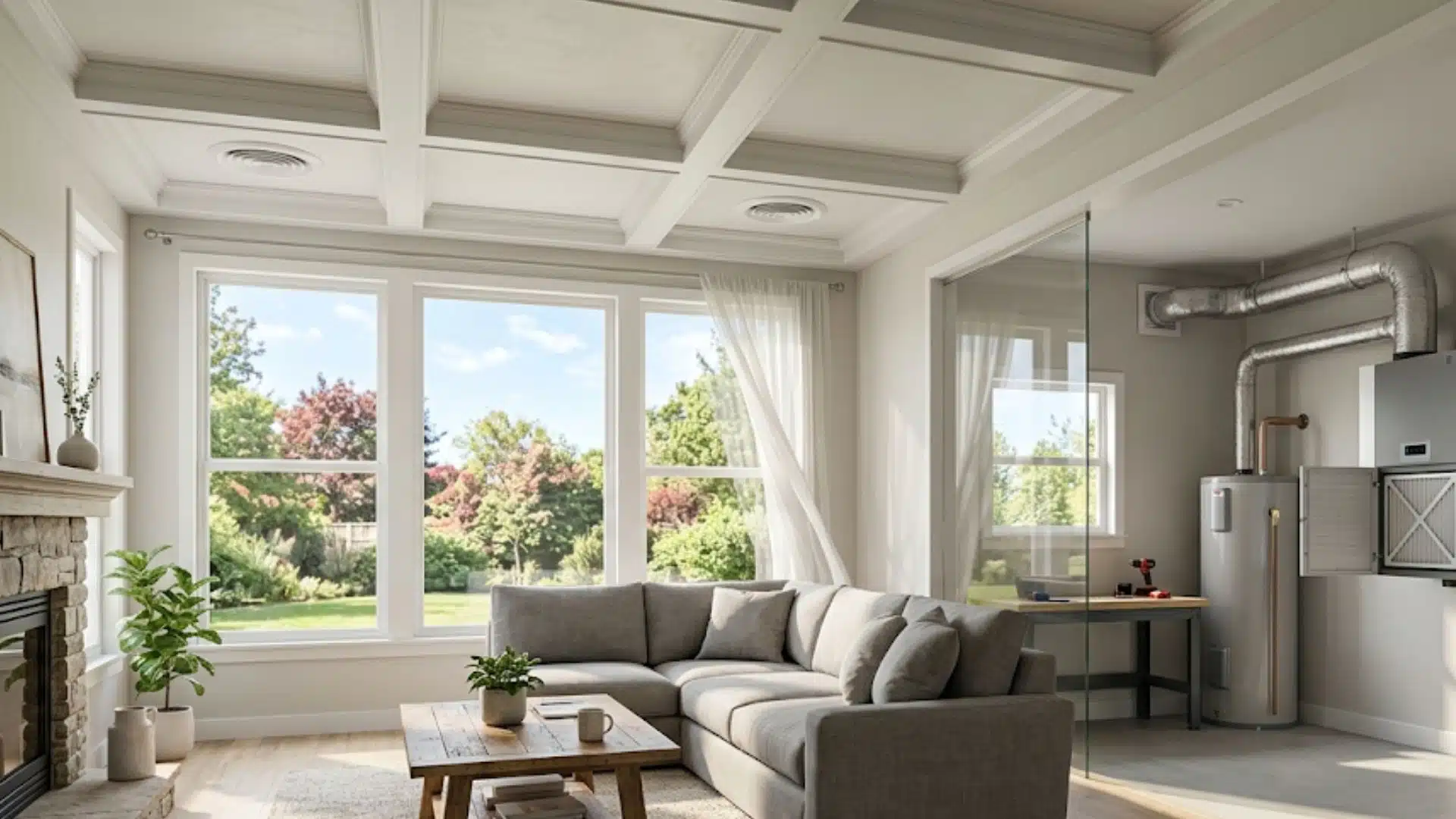
A home can feel stale even when the HVAC is running exactly as it should. If you keep noticing stuffy rooms, lingering odors, or excess moisture, the problem may be poor air exchange rather than heating or cooling.
That is where home ventilation systems matter. They bring in fresh outdoor air and remove stale indoor air in a more controlled way. I find it helpful to compare the main types by how they move air, manage moisture, and affect energy use.
You’ll also see when whole-house fans, natural ventilation, or air purification make sense, plus the signs that can help you choose the right setup for your home.
What Is a Home Ventilation System?
A home ventilation system creates controlled air exchange between indoors and outdoors.
Instead of relying entirely on open windows or gaps in the building, mechanical ventilation uses fans and ducts to remove stale air, supply outdoor air, or manage both at the same time.
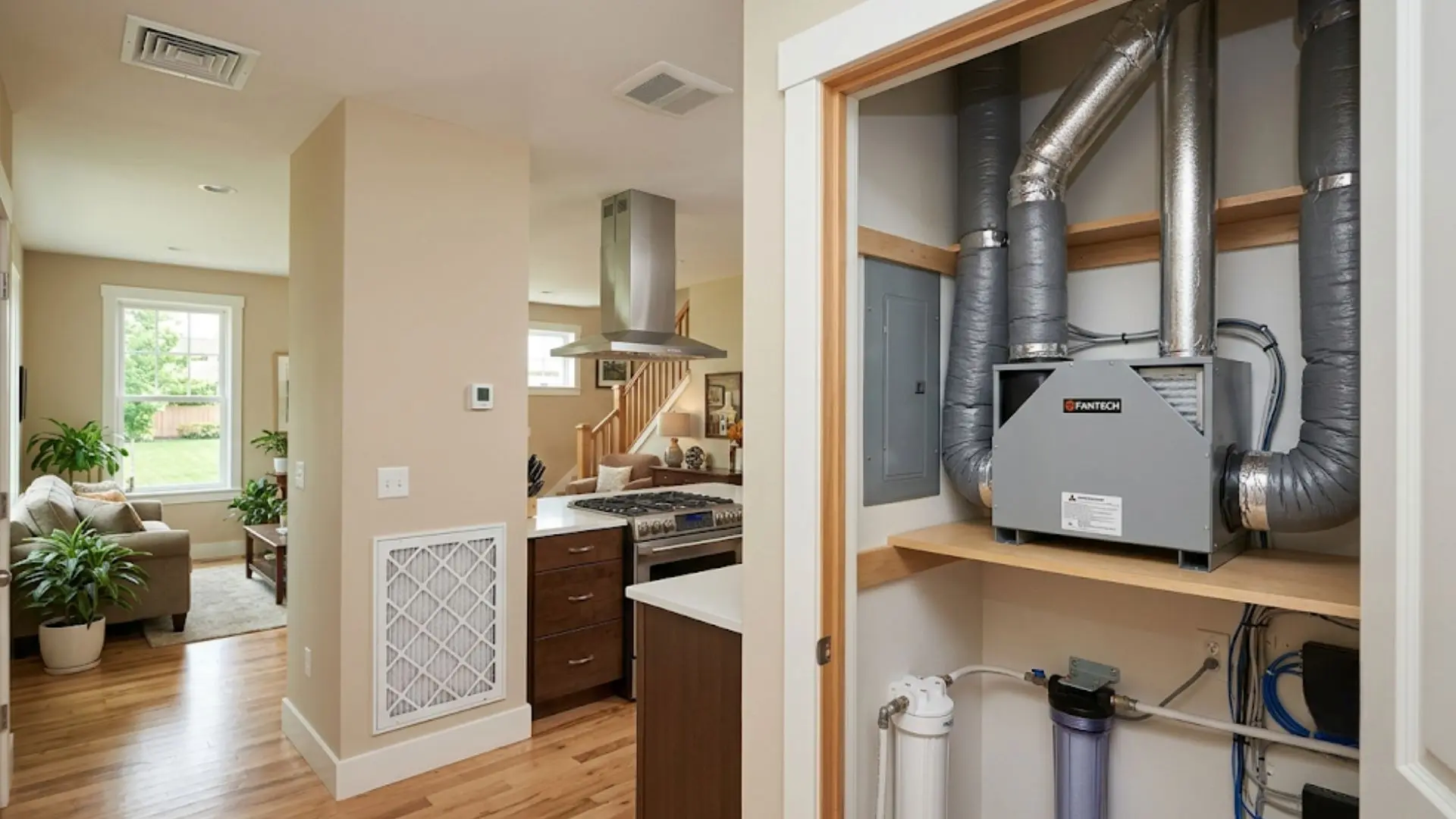
For many tightly sealed homes, a balanced HRV or ERV is one of the most effective whole-house options because it provides controlled airflow while recovering some energy from the outgoing air.
However, no single system is best for every house. A simpler exhaust or supply system may be enough depending on climate, construction, moisture conditions, and how much ventilation the home actually needs.
Types of Home Ventilation Systems
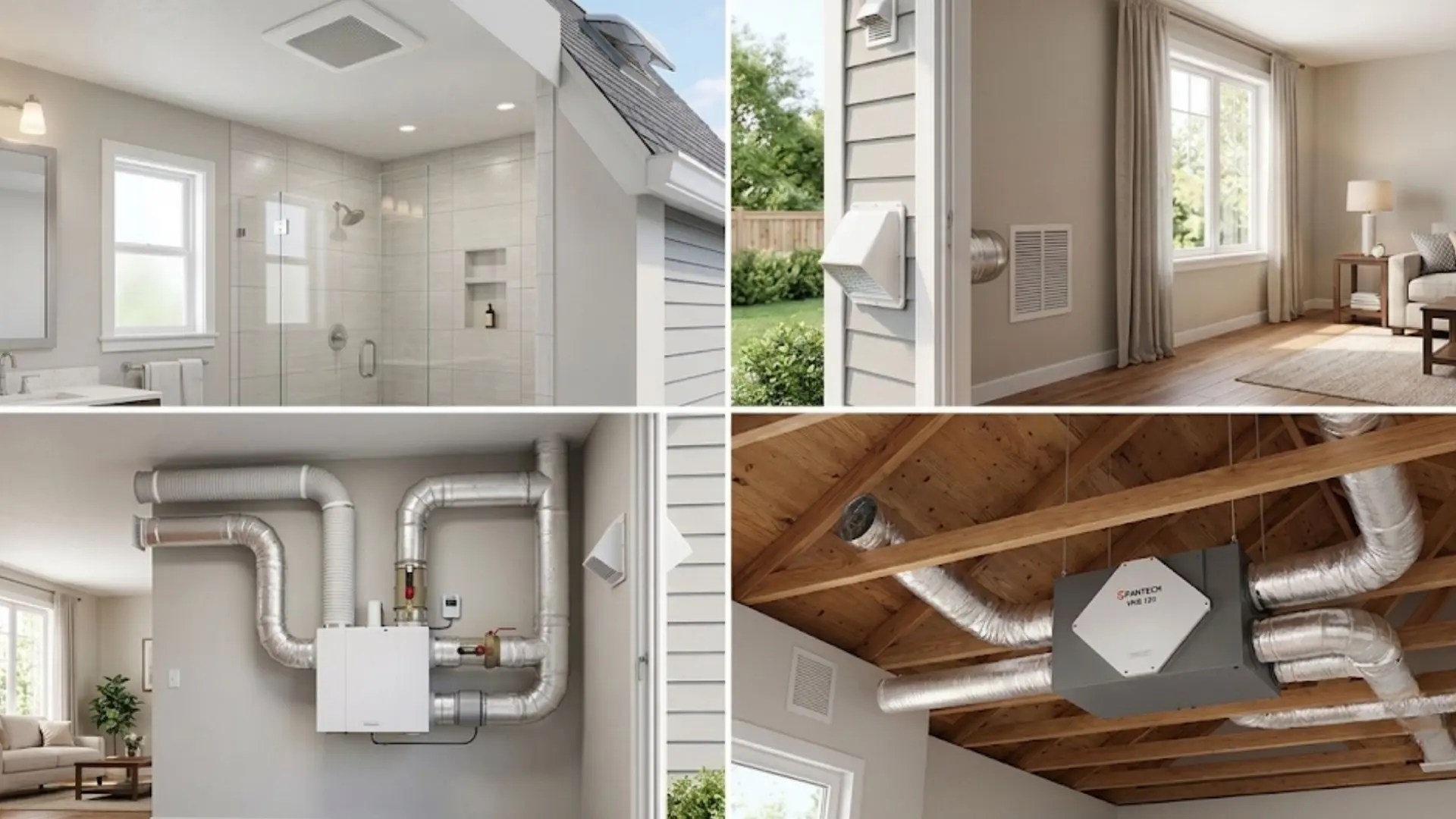
Home ventilation systems differ in how they move air, control pressure, manage moisture, and reduce energy loss during fresh-air exchange.
1. Exhaust Ventilation Systems
Exhaust ventilation systems use fans to remove stale indoor air from bathrooms, kitchens, or the entire home. Fresh outdoor air then enters through vents or small gaps in the building envelope.
These systems are simple and affordable, but they offer less control over where replacement air comes from and may create negative indoor pressure in tightly sealed houses year-round.
2. Supply Ventilation Systems
Supply ventilation systems use a fan to bring fresh outdoor air into the home, often through a filter. The added air creates slight positive pressure, pushing stale indoor air outward through vents and natural leakage points.
They offer better control over incoming air quality, but outdoor heat, cold, or humidity can significantly increase heating and cooling demands throughout the year.
3. Balanced Ventilation Systems
Balanced ventilation systems use separate fans to bring fresh air inside and remove stale air at nearly equal rates. This keeps indoor pressure more stable while providing controlled airflow throughout the house.
Fresh air usually enters bedrooms and living spaces, while stale air leaves from bathrooms, laundry rooms, and other areas where moisture and odors commonly build up.
4. HRV and ERV Systems
HRV and ERV systems are balanced ventilation systems that also recover energy from outgoing air. An HRV transfers heat between incoming and exhaust air, while an ERV transfers heat plus some moisture.
Both can reduce the energy lost during ventilation, helping to lower long-term energy costs in tighter homes where fresh air, humidity control, and efficiency are important throughout changing seasonal conditions overall.
Whole-House Fans Work Differently
A whole-house fan should not be confused with continuous whole-house ventilation.
These fans move a large volume of air through the home by drawing cooler outdoor air through open windows and exhausting warmer air through the attic.
They are mainly useful for cooling and rapid air flushing when outdoor conditions are comfortable.
An HRV, ERV, or another mechanical ventilation system is designed for controlled everyday air exchange instead.
A whole-house fan also becomes less practical when outdoor air is hot, humid, smoky, polluted, or loaded with pollen.
Signs Your Home Needs Better Ventilation
The need for better ventilation often shows up as moisture, odors, or persistently stale indoor air.
Watch for:
- Window condensation: Frequent moisture on indoor glass can indicate excessive indoor humidity.
- Lingering odors: Cooking, pet, or household smells remain longer than expected.
- Bathroom moisture: Walls and mirrors stay wet long after showers.
- Mold or mildew: Repeated growth may point to an unresolved moisture problem.
- Stuffy bedrooms: Rooms feel stale after being occupied overnight.
- Very airtight construction: Newer and heavily air-sealed homes may receive little fresh air through natural leakage.
These signs do not always mean a whole-house system is required. Correct local moisture or exhaust problems first.
How to Choose the Right System
Start by identifying what you are trying to fix.
If excess moisture is limited to bathrooms or cooking areas, improving local exhaust may be enough. If stale air affects the entire home, whole-house ventilation becomes more relevant.
Then consider these factors:
- Climate: Outdoor temperature and humidity affect which ventilation strategy works efficiently.
- Home airtightness: Tightly sealed homes generally need more deliberate fresh-air exchange.
- Humidity: Moisture conditions can influence the choice between an HRV and ERV.
- Occupancy: More people usually means more moisture, carbon dioxide, odors, and indoor pollutants.
- Existing ductwork: Some systems can integrate with HVAC ducts, while others need separate ducts.
- Filtration: Homes affected by pollen or outdoor particles may benefit from filtered incoming air.
- Noise: Fan and duct design can affect how noticeable the system is.
- Maintenance access: Filters and internal components should be easy to reach and service.
Proper sizing is important. An oversized or poorly balanced unit is not automatically better, so airflow should be selected according to the home and applicable residential ventilation requirements.
Ventilation vs. Air Purification
Ventilation and air purification support indoor air quality in different ways. One brings in fresh outdoor air, while the other removes particles from indoor air.
| Feature | Ventilation System | Air Purifier |
|---|---|---|
| Main purpose | Replaces stale indoor air with fresh outdoor air | Cleans and filters air already inside the home |
| Helps reduce | Moisture, odors, carbon dioxide, and indoor pollutants | Dust, pollen, pet dander, smoke, and airborne particles |
| Air movement | Exchanges indoor and outdoor air | Recirculates indoor air through filters |
| Typical examples | Exhaust fans, supply ventilation, HRVs, and ERVs | Portable HEPA purifiers and whole-house filtration systems |
| Best use | Controlling stale air and improving fresh-air exchange | Reducing airborne particles and allergens indoors |
Furnaces and air conditioners mainly recirculate indoor air, so many homes benefit from combining proper ventilation with effective filtration instead of relying on only one system.
Natural Ventilation Can Still Help
Mechanical ventilation does not mean you should never open windows.
Natural ventilation can work well when outdoor temperature, humidity, and air quality are comfortable. Opening windows on opposite sides of the house can create cross-ventilation and quickly refresh indoor air.
Its weakness is consistency.
Natural airflow depends on wind, temperature differences, and occupant behavior. It can also introduce unwanted humidity, pollen, smoke, or outdoor pollution.
That makes natural ventilation useful as a supplement, but less dependable as the only fresh-air strategy in tightly sealed homes.
Home Ventilation System Maintenance
Ventilation equipment needs regular maintenance to keep airflow and efficiency high.
Clean or replace filters according to the manufacturer’s schedule. Keep outdoor intake and exhaust openings clear of dirt, leaves, insects, and snow.
HRV and ERV systems may require periodic cleaning of the heat-exchange core and condensate components.
Also check for:
- Reduced airflow
- Unusual fan noise
- Dirty exterior grilles
- Persistent condensation
- Blocked or damaged ducts
- Imbalanced supply and exhaust airflow
Kitchen and bathroom exhaust ducts should terminate outdoors rather than releasing moisture into an attic or wall cavity.
Final Thoughts
Good ventilation is about getting the right amount of fresh air into your home without creating new comfort or efficiency problems. Exhaust, supply, balanced, HRV, and ERV systems each handle airflow differently, so the best choice depends on your climate, humidity, home airtightness, and existing HVAC setup.
I’d start with the problem you are trying to solve, then compare the system types that fit it. Home ventilation systems can improve air exchange, moisture control, and everyday comfort when they are sized and maintained properly.
If you are planning an upgrade, use these points to narrow your options carefully, then check related home air quality guides before choosing equipment.
Frequently Asked Questions
Can You Add a Ventilation System to an Older Home?
Yes. Older homes can be retrofitted with mechanical ventilation, although installation depends on available ceiling, attic, basement, or wall space. Homes without existing ductwork may use dedicated ducts or smaller room-based ventilation units instead of a central whole-house setup.
Should a Home Ventilation System Run All Day?
Many whole-house ventilation systems are designed to operate continuously at a low airflow rate rather than turning on only when rooms feel stuffy. Controls may also increase ventilation temporarily during cooking, showering, gatherings, or other periods when indoor pollutants rise.
Does Home Ventilation Increase Heating and Cooling Costs?
It can, because outdoor air must eventually be heated or cooled to indoor conditions. However, HRVs and ERVs recover part of the energy from outgoing air, which can reduce the additional HVAC load compared with bringing untreated outdoor air directly inside.
Can Home Ventilation Reduce Indoor Carbon Dioxide?
Yes. Carbon dioxide can build up in occupied rooms, especially bedrooms with closed doors and windows. Bringing outdoor air into the home helps dilute indoor CO2 concentrations, although ventilation requirements should still be based on proper airflow design rather than CO2 levels alone.
Can a Ventilation System Be Controlled Automatically?
Yes. Some systems can use timers, occupancy settings, humidity sensors, or smart controls to adjust airflow automatically. More advanced setups may increase ventilation when indoor conditions change and return to a lower continuous setting once additional airflow is no longer needed.
Do Bedrooms Need Separate Ventilation Vents?
Not always, but whole-house designs commonly deliver fresh air to bedrooms and living spaces because people spend long periods there. The exact number and location of supply vents depend on the home’s layout, airflow requirements, duct design, and overall ventilation strategy.