Start by measuring both your furniture and your new rooms, then sort each piece into keep, adapt, or let go. Some items will slot right into the new plan, others can move to a different room, and a few won’t work at all. For those, sell, donate, or store them. A clear system saves you money, space, and the frustration of forcing pieces that were never going to fit.
Introduction
You spent months planning a custom home down to the last detail, and now your old sectional swallows the whole living room. It happens more than you’d think. A layout built around how you actually live often has different proportions than the house you left behind, and furniture that once fit perfectly can suddenly feel oversized, awkward, or just plain wrong.
That mismatch is normal when you move into a space designed from scratch, not a sign you planned badly. Builders like Cook Custom Homes design rooms around flow and function, which means the dimensions rarely match a standard floor plan. The good news is that every piece you own falls into one of a few simple categories, and once you know which is which, the decisions get easier.
So before you haul everything through the front door, it helps to have a plan for what stays, what shifts, and what goes.
Sorting What Stays and What Goes
Before a single couch crosses the threshold, give every piece a quick assessment. The goal is to match what you own against the rooms you now have, room by room. This stops you from cramming furniture into spaces it was never meant for and helps you spot the pieces worth keeping early.
Measure First, Move Later
Guess at this and you’ll pay for it with sore backs and returned pieces. Take a tape measure to both your furniture and your new rooms, and write the numbers down somewhere you can check them fast.
Here’s how to measure furniture before moving without missing anything:
- Record the height, width, and depth of each large item, plus the diagonal for anything bulky.
- Measure doorways, hallways, and stairwells the piece has to pass through.
- Note ceiling heights for tall items like armoires or shelving units.
- Check window and outlet placement so nothing blocks them.
Once you have the figures, tape out the footprint of big pieces on the floor with painter’s tape. Seeing the actual space a sofa eats up tells you more than any measurement on paper.
Keep, Adapt, or Rehome
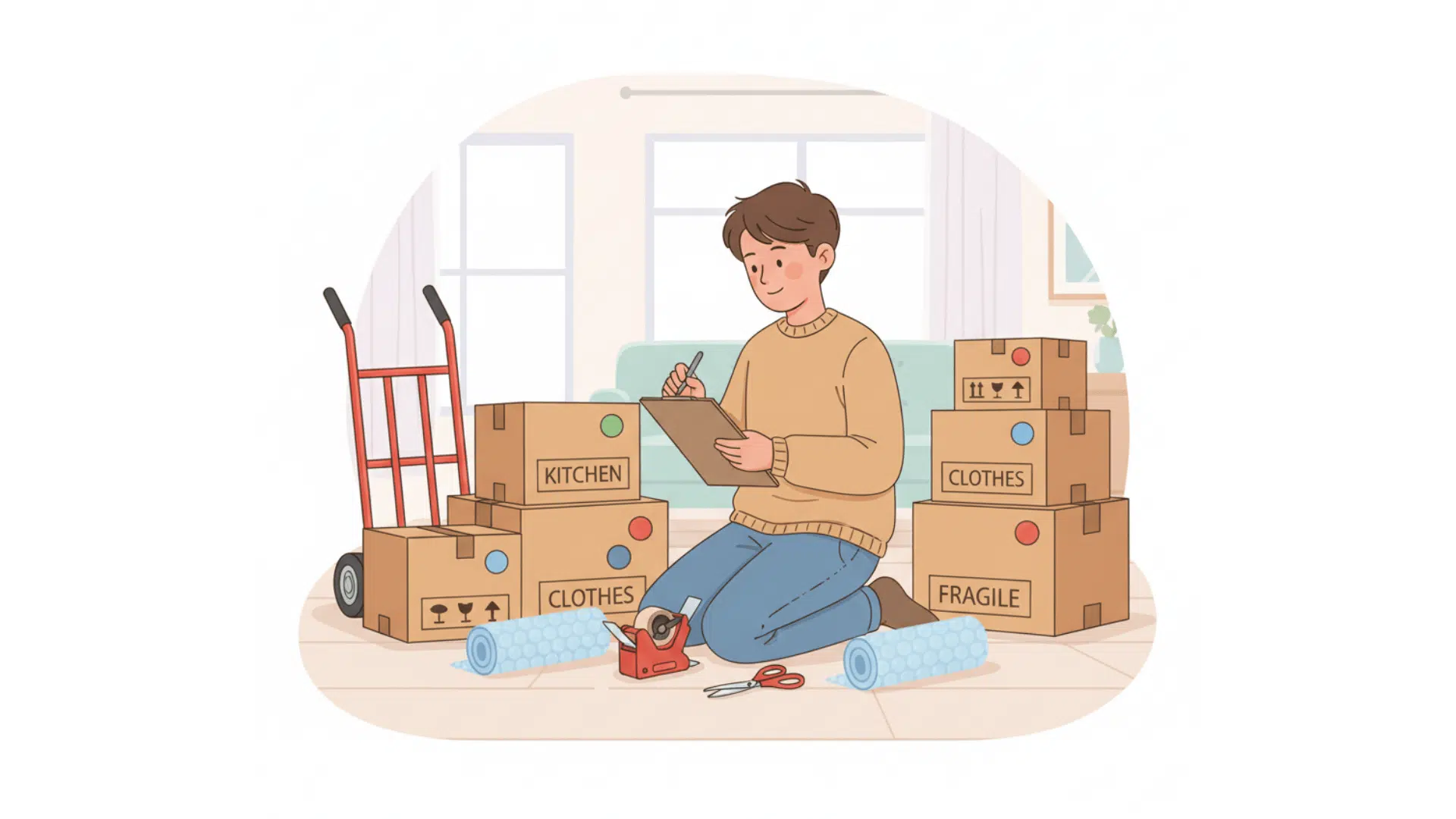
With measurements in hand, sort each piece into one of three buckets. This framework keeps things moving and stops you second-guessing every chair.
| Category | What It Means | Example |
|---|---|---|
| Keep | Fits the room and suits the style as-is | A dining table sized for the new eating area |
| Adapt | Works in a different room or with small changes | A guest dresser that becomes bathroom storage |
| Rehome | Doesn’t fit anywhere and won’t going forward | An oversized wall unit in an open-concept space |
Anything in the “adapt” pile is where creativity pays off. A bookshelf can hold linens in a hallway, a bench can move to an entryway, and a side table can become a nightstand.
When Downsizing Changes the Math
Moving to a smaller house furniture-wise means fewer rooms and tighter proportions, so the “rehome” pile usually grows. That’s expected. Rather than fighting it, start with the pieces you love and use daily, and be honest about the rest.
A few questions make the cut easier:
- Have you used it in the past year?
- Does it suit the style of the new home?
- Would you buy it again today?
If the answer is no across the board, it belongs in the rehome group.
Turning Extra Pieces Into Cash or Goodwill

Once you know what’s leaving, the question becomes how to move it out without letting it pile up in the garage for a year. You have three practical routes: sell it, give it away, or tuck it into storage until you’re sure. Each suits a different kind of piece and timeline.
Selling furniture before a move works best for items in good shape with some resale value. Solid wood pieces, name-brand sofas, and barely-used tables tend to find buyers quickly. To get a fair price:
- Photograph each piece in good light against a clean background.
- List measurements and any flaws honestly to avoid no-shows.
- Post on local marketplaces and community groups a few weeks ahead.
- Price to move, since a lower number today beats hauling it twice.
Donation is the faster path for pieces that won’t fetch much. Many Canadian charities collect gently used furniture, and some offer free pickup for large items, which saves you the trip. Habitat for Humanity ReStores, local shelters, and community thrift shops are all reliable options, and you often get a tax receipt for your trouble.
Then there’s the middle ground. Furniture storage during a move gives you breathing room when you’re not ready to commit. Maybe a piece doesn’t fit now but might suit a future basement or spare room. A short-term storage unit buys you time to decide once you’re settled, without cluttering the home you just designed.
| Option | Best For | Timeline |
|---|---|---|
| Sell | Valuable, in-demand items | 2–4 weeks ahead |
| Donate | Usable but low resale value | Days before move |
| Store | Sentimental or future-use pieces | Ongoing |
Whatever route you choose, handling it before move day keeps the chaos down and your new space clear from the start.
Settling Into a Home That Fits
A custom home is built around the way you live, so not every old piece will earn a spot, and that’s fine. Treat it as a chance to be intentional about what surrounds you. When you measure carefully, sort each item with a clear head, and rehome what no longer works, you end up with rooms that feel considered rather than crowded.
Give yourself permission to let go of the pieces that had their run. The dresser that served three homes doesn’t owe you a fourth. What matters now is a space that works for the life you planned, with room to add the right pieces over time. Handle the what to do with furniture you don’t need question early, and you’ll spend your first months enjoying the home instead of rearranging it.