Choosing the right fifth wheel hitch doesn’t mean picking the most expensive and heaviest one in the store. It’s not that simple. Every truck has its own unique specifications and purpose. The fifth wheel hitch used for a weekend caravan trip is not the same as the one used for a truck that hauls tons of weight on long journeys. To make the right choice, you need to look at the whole picture. In this guide, we’ll try to explain how to make the right choice for a fifth wheel hitch.
1. First and Foremost, Know Your Truck’s Limits
Before committing to a specific brand, model, or weight class for your newly selected towing equipment, you must initiate the process by conducting a meticulous audit of your specific tow vehicle. Developing a precise understanding of your truck’s unique towing capabilities is the single most critical baseline for highway safety. Every truck leaves the assembly line with non-negotiable engineering thresholds established by the manufacturer. Among these, the Gross Vehicle Weight Rating (GVWR) dictates the absolute maximum weight the truck can weigh entirely on its own wheels, including passengers, fuel, cargo, and tongue downforce. Concurrently, the Gross Combined Weight Rating (GCWR) stipulates the maximum allowable weight of the entire integrated combination, including the fully loaded truck and the fully loaded trailer combined. Selecting a high-capacity hitch that physically or theoretically exceeds these vehicle-specific limits will not grant you additional pulling power; instead, overloading the frame introduces severe chassis instability, accelerated transmission wear, braking deficiencies, and a complete compromise of road safety.
Beyond weight ratings, the physical geometry of your truck bed is a massive deciding factor in determining the correct equipment configuration. Short-bed trucks, typically defined as those with beds measuring under eight feet in length, possess a highly restricted clearance zone between the rear of the truck cab and the front nose cap of the trailer. To circumvent this geometric limitation, owners of short-bed trucks must utilize specialized sliding fifth wheel hitches. These sliding mechanisms allow the entire hitch assembly to glide rearward toward the tailgate during low-speed maneuvers, effectively preventing the trailer from impacting the truck cab during sharp turns or backing procedures. Conversely, long-bed trucks with full eight-foot beds provide a naturally expansive clearance area, allowing operators to utilize fixed or rigid hitches without the added mechanical complexity and weight of a sliding apparatus.
Finally, the underlying mounting compatibility dictated by a truck’s frame design is essential. Modern heavy-duty trucks utilize different structural interfaces to anchor towing equipment to the chassis. Many premium trucks arrive from the factory equipped with original equipment manufacturer (OEM) under-bed puck systems, which allow for a drop-in installation that leaves the bed flat when removed. If a vehicle lacks this factory prep package, an evaluation is needed to determine whether the truck frame is best suited for industry-standard above-bed rails, which bolt through the bed floor into heavy-duty subframe brackets, or under-bed mounting kits that hide the mounting infrastructure beneath the truck bed.
2. Choose the Right Link for Your Trailer Type
Another vital consideration is calculating the exact pin weight of the trailer. The pin weight, also referred to as tongue weight or vertical downforce, represents the portion of the trailer’s weight that rests directly on the hitch head and is transferred into the truck’s rear axle and suspension. In standard configurations, the pin weight typically accounts for 15% to 25% of the trailer’s total gross weight. A chosen fifth wheel hitch must be structurally rated to support this vertical load without exceeding the truck’s load-carrying capacity, which could otherwise compromise steering control.
The overall physical length of the trailer, combined with the truck’s wheelbase, further refines the type of link required. Long trailers paired with short-bed trucks create a turning dynamic that may require a sliding link to maintain clearance in tight spaces. Conversely, short trailers paired with long-bed trucks can typically utilize a standard fixed link. Furthermore, those engaged in demanding commercial operations or heavy freight transport should consider how road vibrations impact the cargo. Hauling heavy loads over long distances can be taxing, making articulated hitch heads a valuable investment. These heads tilt dynamically to absorb shocks and reduce structural stress on the trailer frame.
Ultimately, the selected 5th wheel hitch should be tailored to align with specific on-road behavior and the type of terrain intended for travel.
3. Choose the Right Weight Class and Construction
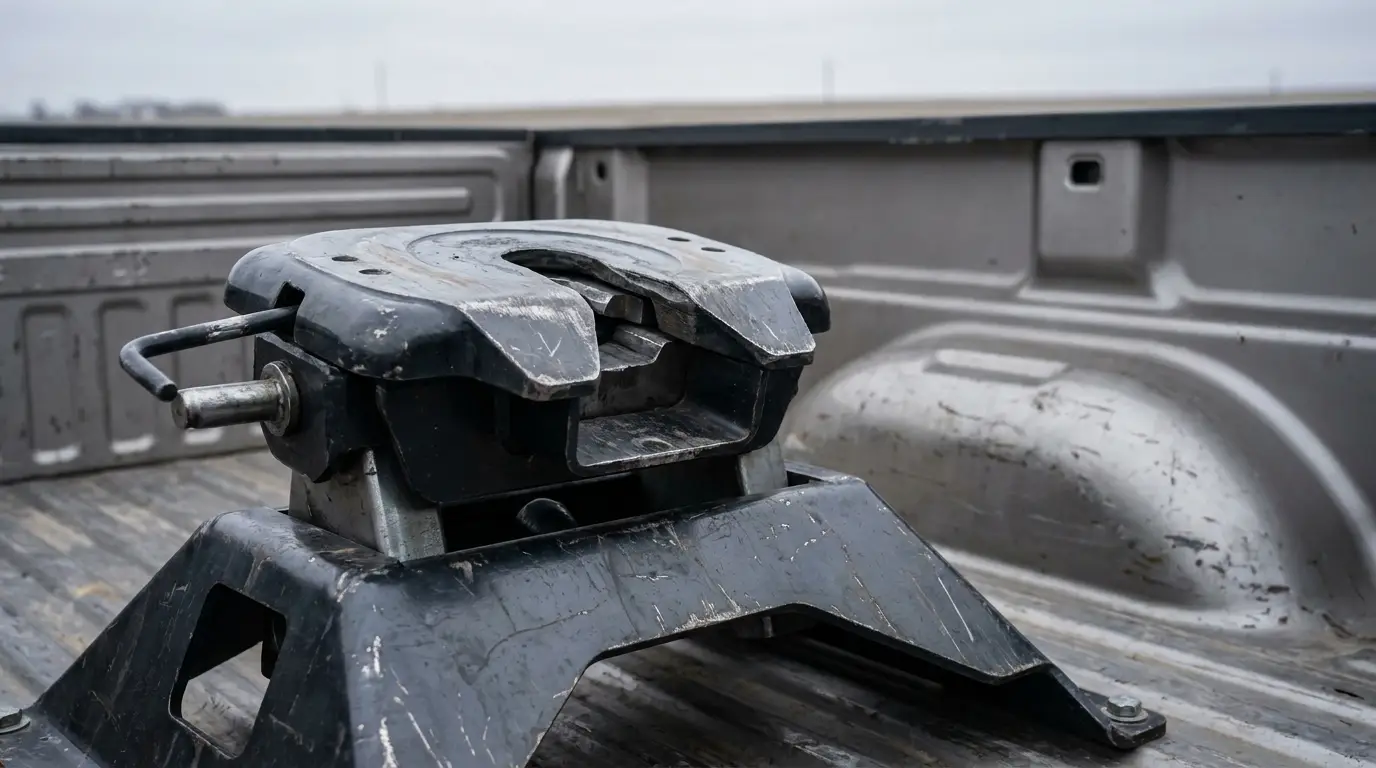
Selecting the correct weight class for a coupling system requires long-term foresight. The market divides these products into light-duty, medium-duty, and heavy-duty classes. Choosing a hitch based solely on the exact weight of a current trailer can be risky if there are plans to upgrade to a heavier trailer in the future. Operating a hitch constantly at its absolute maximum capacity can shorten its operational lifespan through accelerated wear.
Furthermore, the structural construction and material quality are paramount to safety. Hitches engineered from high-strength forged steel or premium heavy-duty steel offer greater structural integrity than lower-cost cast alternatives. Attention should also be paid to the internal jaw design. Standard sliding bar styles lock across one side of the kingpin, which can lead to mechanical play. Premium double-jaw systems utilize dual interlocking jaws that wrap entirely around the kingpin, creating a more secure connection.
4. Installation and Future Flexibility
When finalizing a selection, it is important to understand how it will impact daily vehicle utilization. Many trucks serve a dual purpose: hauling a trailer and operating as a standard utility vehicle. This means the process of attaching and detaching the hitch assembly is a frequent task. Some hitches feature modular or lightweight designs that are easily removable to reclaim bed space. Others are engineered to integrate with underbody frames for a clean look and easier installation.
Regarding the physical installation of the mounting infrastructure, obtaining professional help is highly recommended to ensure correct alignment, precise torque adjustments, and secure chassis mounting. While those with extensive mechanical experience may perform a do-it-yourself installation, an incorrectly mounted base poses significant risks on public highways.
Future flexibility remains a priority. Choosing a high-capacity hitch now can eliminate the need for a replacement if a heavier trailer is acquired later. An adaptable system meets current needs while accommodating future growth.
5. Budget vs. Long-Term Value
While price is an initial filter, it should not be the primary deciding factor. Engineering elements-including weight class, material quality, and intended use-must serve as the primary criteria. Choosing an entry-level option that does not suit the demands of the truck or trailer could lead to the need for a second purchase later.
Beyond the initial price, the total cost of ownership across the product’s lifecycle should be evaluated. This includes the projected service life, warranty coverage, after-sales support, and resale value. Investing in a high-quality system ensures that the equipment remains reliable and compliant with safety standards for years to come.