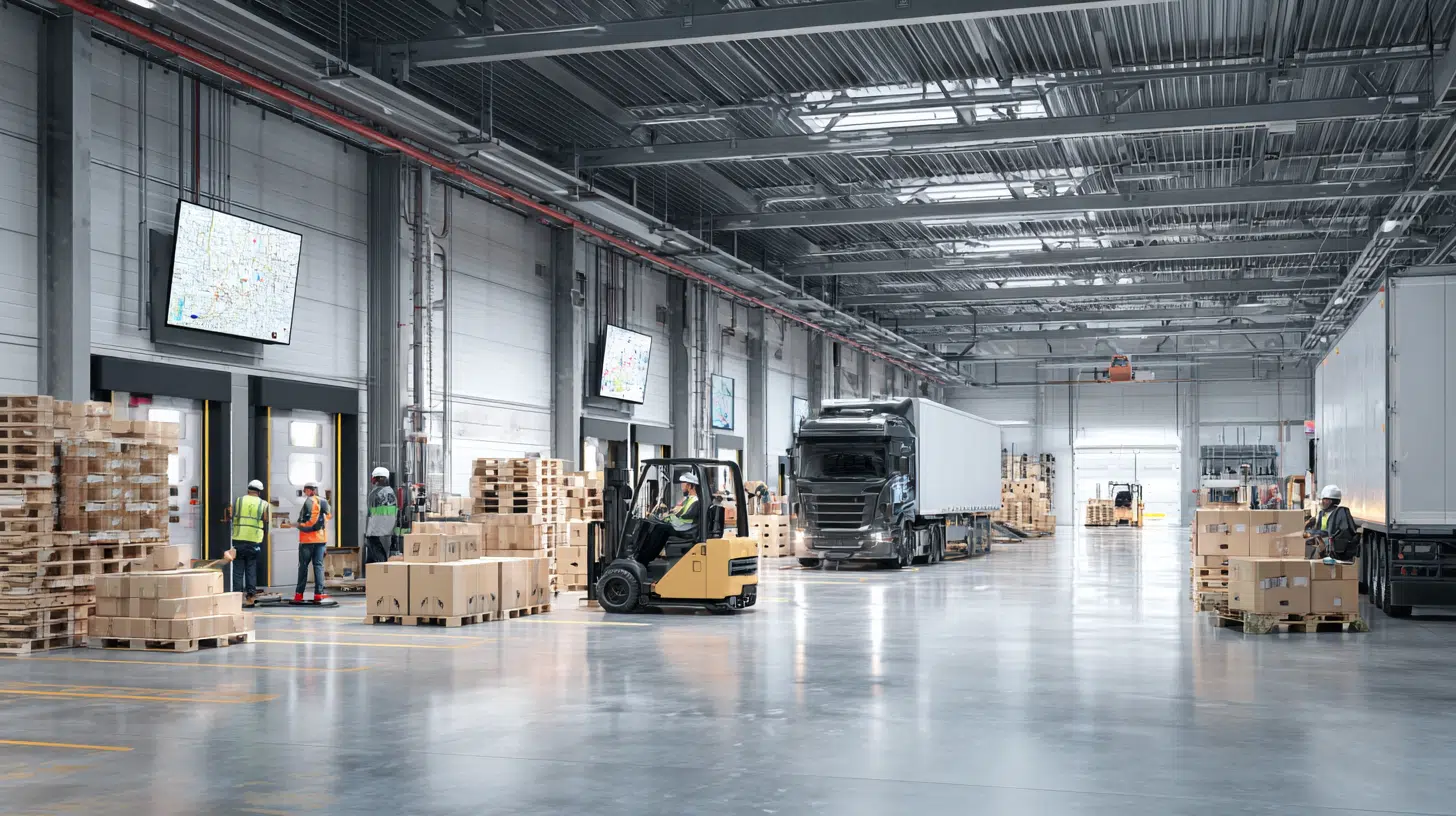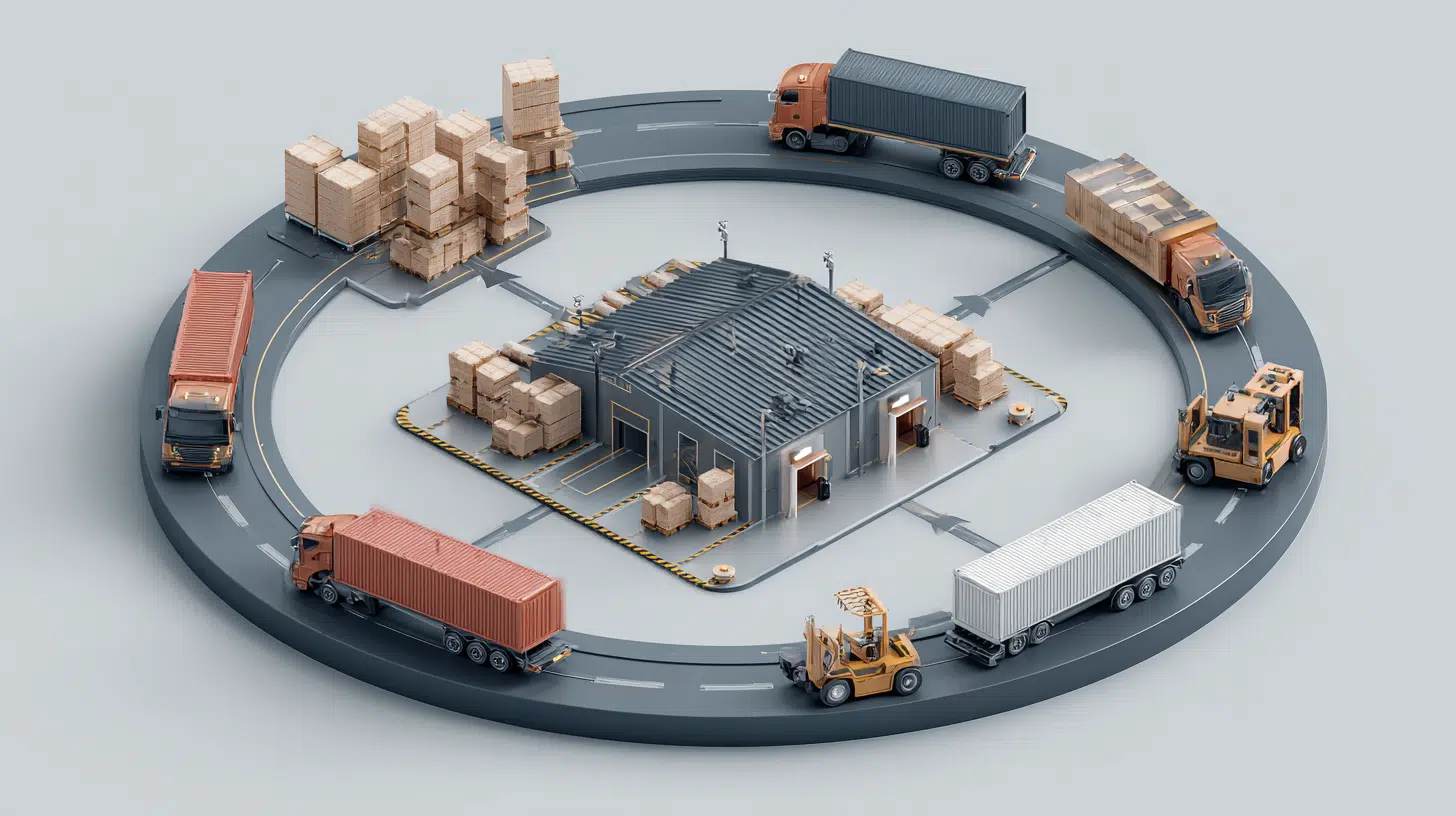
In today’s retail world, where online and in-store sales work together, managing the supply chain has become more important than ever.
I see many retailers struggle because they focus on sales but ignore how products actually flow behind the scenes.
This guide breaks down retail supply chain management in a clear, practical way so you can understand how it works and how to improve it step by step.
Retail Supply Chain Management and Its Importance
Retail supply chain management is the system that helps products move from suppliers to store shelves and customer doorsteps. It covers planning, sourcing, storage, delivery, and even returns.
It connects suppliers, warehouses, stores, and shoppers, making sure the right products are available at the right time.
Why It Matters:
- Keeps shelves stocked and orders on time
- Reduces costs and waste
- Improves customer satisfaction
- Supports online and in-store sales
Core Principles of Retail Supply Chains
Retail supply chains work best when a few key principles guide every decision. I see these principles as the foundation that keeps products moving smoothly while meeting customer needs.
1. End-to-End Visibility
Retailers need a clear view of where products are at every stage. This includes stock levels, orders, and shipments across suppliers, warehouses, and stores.
When visibility is strong, teams can spot issues early and avoid stockouts or delays. It also helps different teams work with the same, accurate data.
2. Demand-Driven Planning
Planning should start with customer demand, not guesswork. Retailers use sales history, seasons, and promotions to predict what shoppers will buy.
Better planning reduces overstock and keeps popular items available. It also helps businesses react faster when demand changes.
3. Supplier Collaboration
Strong supply chains depend on good supplier relationships. Sharing forecasts and sales data helps suppliers plan better and deliver on time.
Clear communication also reduces surprises like late shipments or shortages. This teamwork builds trust and improves reliability.
4. Agility and Resilience
Retail supply chains must adapt quickly when things change. Delays, demand spikes, or disruptions can happen at any time.
Agile supply chains have backup plans, flexible routes, and alternate suppliers. This reduces risk and keeps products flowing during tough situations.
5. Customer-Centric Fulfillment
Every supply chain decision should support the customer experience. This means offering reliable delivery times, easy pickup options, and smooth returns.
When fulfillment is built around customer needs, satisfaction increases. Happy customers are more likely to return and buy again.
Key Components of Retail Supply Chain Management
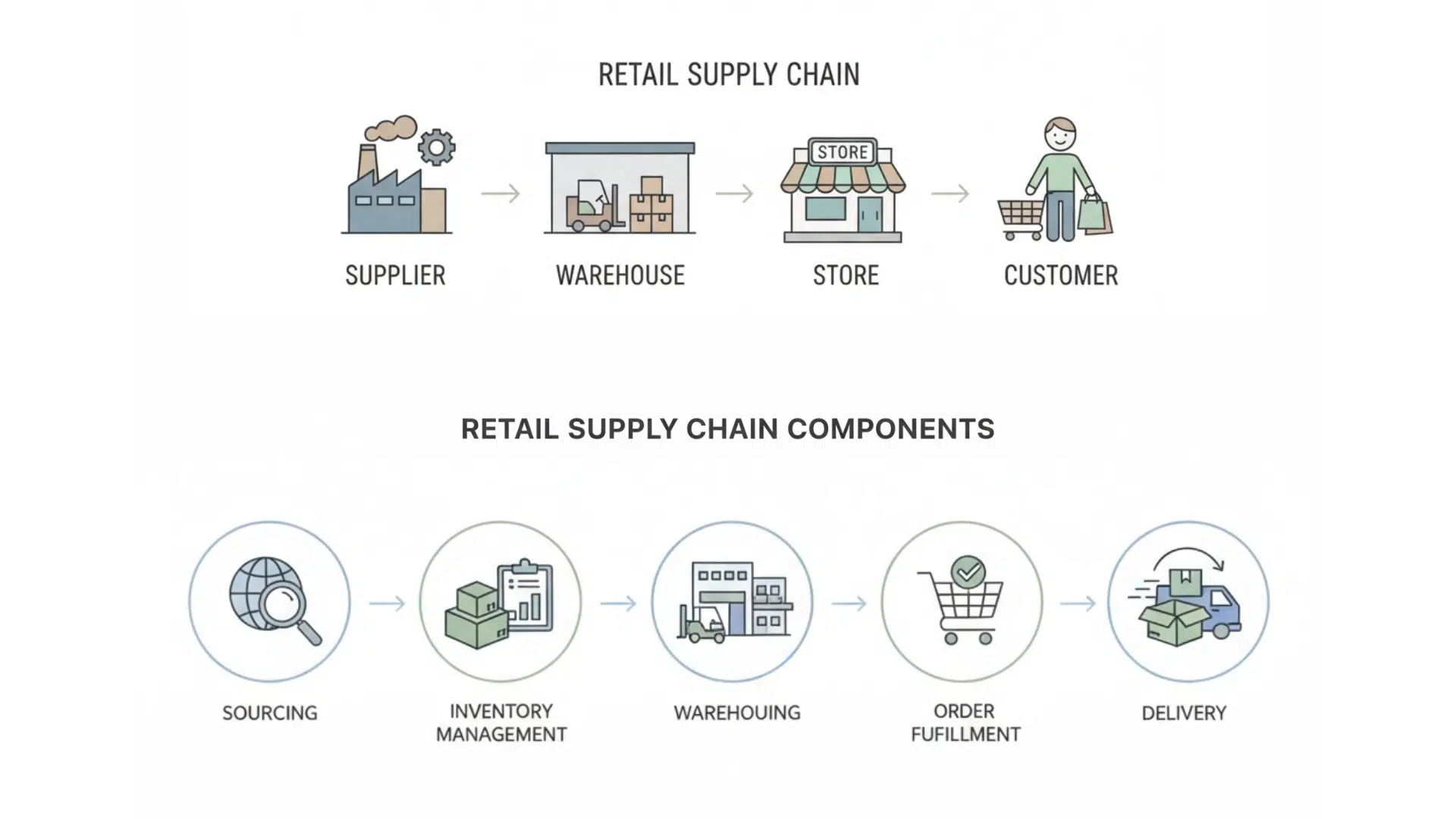
Retail supply chain management is made up of several moving parts that must work together.
1. Demand Forecasting and Planning
This step focuses on predicting what customers will buy and when. Retailers look at past sales, seasons, trends, and promotions to plan ahead.
Accurate forecasts help avoid empty shelves and excess stock. When planning is done well, it also improves purchasing and production decisions. This creates a smoother flow across the entire supply chain.
2. Sourcing and Procurement
Sourcing is about choosing the right suppliers at the right cost. Procurement ensures products are ordered on time and in the right quantities.
Strong supplier relationships help reduce delays and quality issues. Clear contracts and timelines also make expectations clear. This keeps supply steady and predictable.
3. Inventory Management
Inventory management controls how much stock is kept and where it is stored. Retailers must balance having enough products without overstocking.
Good inventory practices reduce waste, shrinkage, and tied-up cash. Accurate tracking helps teams restock faster. This directly affects sales and customer satisfaction.
4. Warehousing and Distribution
Warehouses store products and prepare them for delivery to stores or customers. Efficient layouts and processes speed up picking and packing.
Distribution centers help move goods to the right location quickly. When warehouses run smoothly, orders are fulfilled faster. This reduces delays across the supply chain.
5. Order Fulfillment and Delivery
This component handles how orders reach customers. It includes picking, packing, shipping, and last-mile delivery. Fast and accurate fulfillment builds trust with customers.
Flexible delivery options improve convenience. Strong fulfillment processes help retailers meet delivery promises.
6. Returns and Reverse Logistics
Returns are a normal part of retail and must be managed carefully. Reverse logistics handles returned items, inspections, and restocking or resale.
Simple return processes improve customer confidence. At the same time, smart handling reduces losses. This helps protect profit while keeping customers happy.
Best Practices for Retail Supply Chain Management
These best practices help retailers reduce errors, control costs, and keep customers satisfied across all sales channels.
- Improve Inventory Accuracy: Keep stock data clean and up to date across all systems. Regular counts and clear SKU details help prevent stockouts and overstock. Accurate inventory makes planning and fulfillment easier.
- Plan Demand Using Real Data: Use past sales, seasons, and promotions to guide forecasts. Avoid guessing or relying only on spreadsheets. Better demand planning leads to smarter buying decisions.
- Strengthen Supplier Relationships: Share forecasts and performance goals with suppliers. Clear communication reduces delays and surprise shortages. Reliable suppliers create a more stable supply chain.
- Build an Omnichannel Fulfillment Strategy: Decide how orders flow between warehouses, stores, and customers. Clear rules improve delivery speed and reduce confusion. This supports both online and in-store sales.
- Use Technology to Reduce Manual Work: Automation helps speed up planning, tracking, and order processing. Fewer manual steps mean fewer errors. This allows teams to focus on improvements, not fixes.
Good supply chain practices focus on accuracy, planning, teamwork, and smart tools.
Retail Supply Chain Metrics and KPIs
Retail supply chain metrics and KPIs help retailers track how well products move from suppliers to customers.
Inventory turnover shows how fast stock is sold and replaced. Stockout rate highlights how often items are unavailable.
Order cycle time measures how long it takes to deliver an order. OTIF (On-Time, In-Full) tracks delivery accuracy and reliability.
Fill rate shows how much of an order is shipped on the first attempt. Return rate helps identify issues with product quality or delivery.
By tracking these KPIs regularly, retailers can spot problems early, improve operations, and deliver a smoother experience for customers while controlling costs.
Tools and Technology Used in Retail Supply Chains

Technology helps retailers manage complex supply chain tasks with more speed and accuracy.
| Tool / System | What It Does | Why It Matters |
|---|---|---|
| ERP Systems | Connect planning, finance, and supply chain data | Keeps all teams aligned and data consistent |
| WMS | Manages warehouse receiving, picking, and packing | Improves order accuracy and speed |
| OMS | Routes orders to the best fulfillment location | Supports faster and flexible delivery |
| TMS | Plans and tracks transportation and carriers | Reduces shipping costs and delays |
| Demand Planning Tools | Forecast customer demand using data | Helps prevent stockouts and overstock |
| Automation and AI | Supports forecasting, tracking, and alerts | Improves decisions and reduces errors |
Retailers that invest in the right mix of tools gain better control, faster fulfillment, and a more reliable supply chain overall.
Common Retail Supply Chain Challenges & How to Improve
Retail supply chains face daily challenges that can slow down operations and hurt customer trust. I have noticed that most problems come from gaps in planning, data, and execution across teams.
- Stockouts and Poor Availability: This happens when demand is misread or inventory data is inaccurate. Improve forecasting and use real-time inventory tracking to keep shelves stocked.
- Excess and Slow-Moving Inventory: Overstock ties up cash and leads to markdowns. Better demand planning and product segmentation help balance stock levels.
- High Delivery Costs and Delays: Inefficient routes and carrier choices increase costs. Optimize shipping options and set clear delivery rules to improve speed and control spend.
- Lack of Supply Chain Visibility: Limited data makes problems hard to spot. Use integrated systems to track orders, stock, and shipments in one place.
- Returns Management Issues: Poor return processes hurt margins and customers. Streamline return flows and analyze return reasons to reduce repeat issues.
Conclusion
Retail supply chain management plays a major role in how smoothly a retail business runs.
When planning, inventory, warehousing, delivery, and returns work together, retailers can reduce costs and meet customer expectations more easily.
Strong supply chains help keep products available, orders on time, and operations under control. They also support both online and in-store sales without added confusion.
Over time, small changes can create big results. If you want to improve your retail supply chain, begin by reviewing your current setup and choosing one area to improve today.