
Designing a shower with tile means facing a real choice: not all tiles handle constant water, soap, and steam in the same way. Homeowners often consider Zellige Subway Tile vs ceramic subway tile when searching for a material that can handle daily exposure to moisture.
After months of shower use, soap scum and hard water can threaten the look and structure of your tile walls, making the original material choice a decision with lasting impact. Between the handcrafted beauty of zellige and the predictable performance of standard ceramic, the question becomes: which will truly last longer and require less upkeep in a wet environment?
While both options can be used in showers, their material properties, maintenance needs, and long-term resilience set them apart for high-moisture situations.
Material Composition and Water Absorption Rates in Shower Tiles
One of the most significant differences between these tile types lies in how they are made. Zellige tiles are crafted from Moroccan clay, shaped and glazed by hand, and then fired at relatively low temperatures.
This process creates a unique tile with variations in color and texture, but it also leads to a slightly higher water absorption rate compared to standard ceramic subway tiles. Standard ceramic subway tiles, in contrast, are produced from refined clay and fired at higher temperatures, resulting in a denser, less porous product.
In a shower, water absorption can impact both longevity and resistance to mold. Standard ceramic tiles typically have a published water absorption rate below 3%, making them very resistant to water infiltration.
Zellige’s natural clay body is often more absorbent, which means sealing is recommended for shower use. Understanding the water absorption rate of different tile types makes it easier to anticipate how each will perform in a high-moisture setting.
While both materials can be installed on shower walls, the installation process should account for the specific absorption characteristics. For zellige, installers often use a waterproof membrane behind the tile, while with ceramic, the tile itself provides more of a moisture barrier.
Grout Line Maintenance and Sealing Requirements for Wet Environments
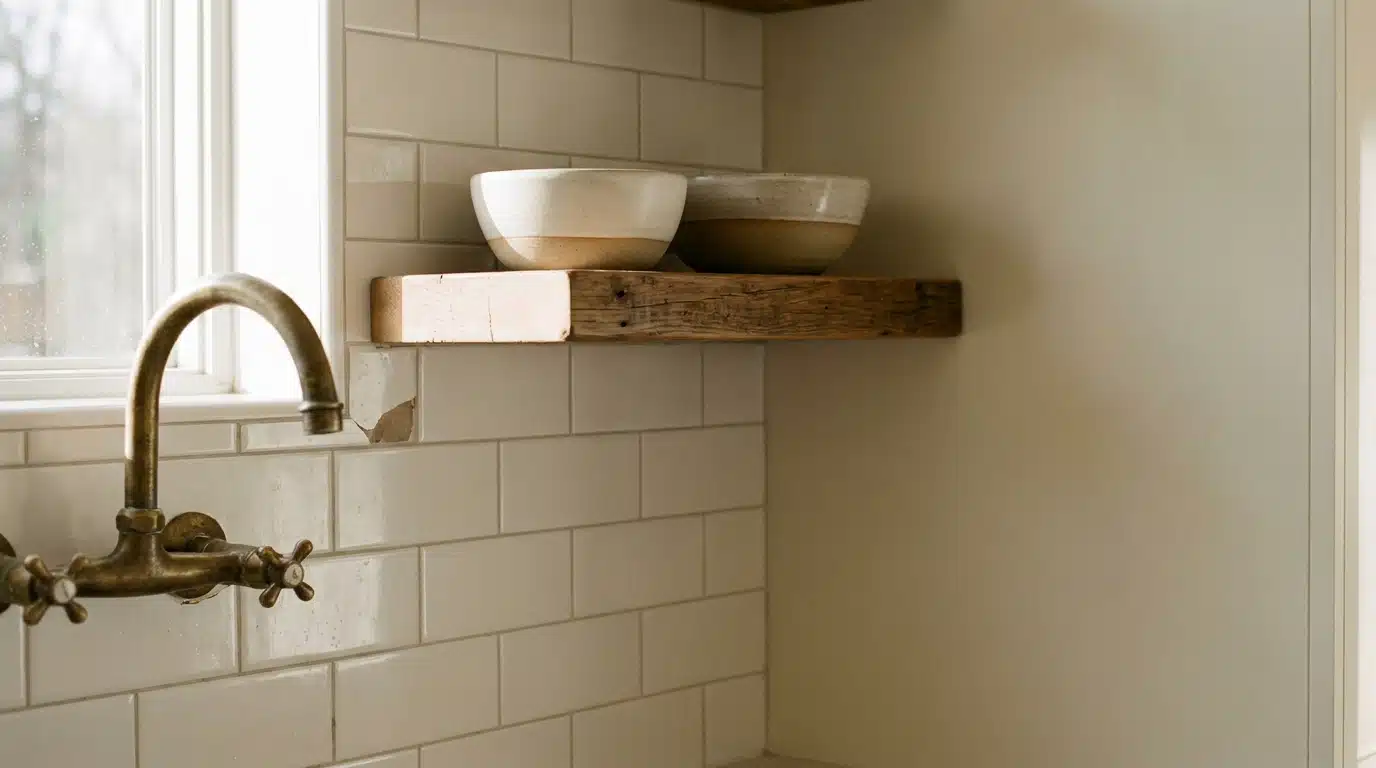
Grout lines present a vulnerable point in any tiled shower, especially in high-moisture areas. The handmade nature of Zellige Subway Tile means that each piece can vary slightly in thickness and size, leading to uneven grout lines that may require extra attention during installation.
This characteristic can result in more pronounced grout lines, which can collect soap and mildew if not treated properly. Sealing both the tile surface and the grout is highly recommended for these installations to prevent water from seeping behind the tile and causing damage.
In comparison, standard ceramic subway tiles are manufactured with precision, producing clean, consistent edges that allow for tight, uniform grout lines. These narrow grout joints are easier to seal and maintain, reducing the risk of water penetration and bacteria buildup. For homeowners prioritizing low-maintenance cleaning routines, the uniformity of ceramic may be preferable.
Careful attention to proper grout sealing in wet areas is essential for both tile types, but it becomes especially important with zellige tiles due to their handmade irregularities and higher permeability.
Surface Imperfections and Cleaning Challenges in High Moisture Zones
The surface of zellige tiles is intentionally uneven, with subtle pits, ripples, and glaze variation. While this creates visual depth and artisanal appeal, it also means more crevices for soap, mineral deposits, and mildew to settle in.
In a shower setting, these surface imperfections may require more frequent and careful cleaning to maintain their original appearance. Non-abrasive cleaners and soft brushes are often necessary to avoid damaging the delicate glaze or accentuating rough spots.
Standard ceramic subway tiles feature a smooth, uniform face that readily sheds water and resists buildup. Their even glaze and flat surface make it easier to wipe away residue from shampoo, soap, and hard water.
For busy households or those seeking minimal upkeep, this can be a decisive factor. Still, regular cleaning is advised for both tile types to prevent staining and buildup, but the process is typically faster and more effective with ceramic’s uniform surface.
Choosing between Zellige Subway Tile vs ceramic subway tile for a shower wall often comes down to whether the visual appeal of a handcrafted, irregular surface outweighs the practical benefits of a smooth, easy-to-clean finish.
Long Term Durability and Cost Comparison for Shower Wall Installations
When evaluating the long-term performance of shower wall tiles, both durability and budget enter the equation. Zellige tiles, while beautiful, are more susceptible to chipping and glaze wear if cleaned with harsh chemicals or subjected to heavy impact. Their handmade nature means each piece is unique, but this variation can make repairs or replacements more challenging if a tile becomes damaged.
Standard ceramic subway tiles are engineered for durability, with a consistent hardness and protective glaze that holds up well to daily wear, scrubbing, and water exposure. They are easier to replace in case of breakage, as matching is straightforward and replacements are widely available.
In terms of cost, zellige tiles are generally more expensive per square foot due to the labor-intensive manufacturing process, as seen with many artisan tile options.
The investment may be justified for those seeking an authentic, textured look, but it’s important to balance aesthetics with longevity when budgeting for a shower wall.
For those prioritizing both design and resilience, reviewing the qualities of Zellige Subway Tile versus standard ceramic subway tiles helps clarify which option aligns best with the project’s goals. This choice affects not only the look but also the long-term maintenance and repair considerations for any wet area installation.
Conclusion
Prioritize your shower wall material by weighing maintenance effort, water resistance, and desired appearance. If easy cleaning and long-term durability are at the top of your list, standard ceramic subway tiles are a strong fit.
For those drawn to handcrafted texture and are willing to invest in sealing and careful cleaning, zellige tiles offer unmatched visual character. Before committing, request samples of both types and test them in a wet environment to see which delivers the right balance for your space.