You get out of a shopping center, stadium, or an airport terminal, and all the rows of parked cars are the same. Within seconds, panic ensues, particularly when in a multistorey car park with no visible landmarks. Minutes turn into a frantic, aimless search, moving from one aisle to the next. The greater the lot, the more difficult it is to believe your own memory.
A 2025 study from Churchill Motor Insurance, conducted by Opinium among 2,000 UK adults, found that 21% of British motorists (around 4.3 million drivers) misplaced their car during the festive shopping period alone — with those aged 18–34 losing track of their vehicle nearly twice as often as those 35–54. On average, it took drivers 13 minutes to relocate their car.
I’ve spent years running a parking marketplace, and this is one complaint that has nothing to do with price or availability — it’s pure spatial memory failing under stress, and it happens to careful drivers as often as distracted ones.
Nevertheless, there is no need to use guesswork to find your car again. Even when you have not done anything to prepare in advance, a few practical steps can reduce the search within a few seconds. From checking your phone to reading landmarks around you, several methods work well once you realize you’re lost.
Here’s exactly what to do the moment your memory draws a blank, starting with the simplest step first.
1. Don’t Panic- Retrace Your Steps First
The initial step involves strolling slowly and then walking in random directions. Imagine the following: you parked in front of a yellow pillar right next to a stairwell; however, after two hours indoors, this fact is indistinct. Rather than just looking up and down all the aisles randomly, follow the path you used when entering. Think about which direction you turned after paying for a ticket or scanning in.
If you don’t have a reserved space to go on, think back through your day instead. Which floor did you park on? Did you walk uphill or downhill toward your destination? The memory is usually faster retrieved by small physical cues like a sloping ramp, or even a certain color of signage, instead of roaming aisle by aisle.
Next time, Parksy’s Find My Parked Car tool can skip this step entirely — it logs your GPS location the moment you tap the button and shows you the distance back when you’re ready to leave.
2. Check Your Phone: Maps, Photos, and Saved Locations
Your phone is more likely to have clues than your memory. Google Maps silently tracks your visited places history, even where you park, when location history is on. Also check your camera roll, as a lot of people take a picture of the entrance or level number without even knowing that it will be important later.
Ride-hailing and food delivery apps can also help, since they tend to keep a precise record of your drop-off location. If you used a navigation app to find the car park in the first place, your recent searches will still show the destination you typed in. These electronic breadcrumbs can tend to be more efficient than memory itself when the pressure starts.
Even a text message or an entry in the calendar can be of assistance. When you give a friend your destination, or book parking with an app, that confirmation email typically has the address or entrance that you used. Going through these bits and pieces is much easier when scrolling back than walking around the car park twice.
3. Use Landmarks, Levels, and Bay Numbers to Narrow It Down
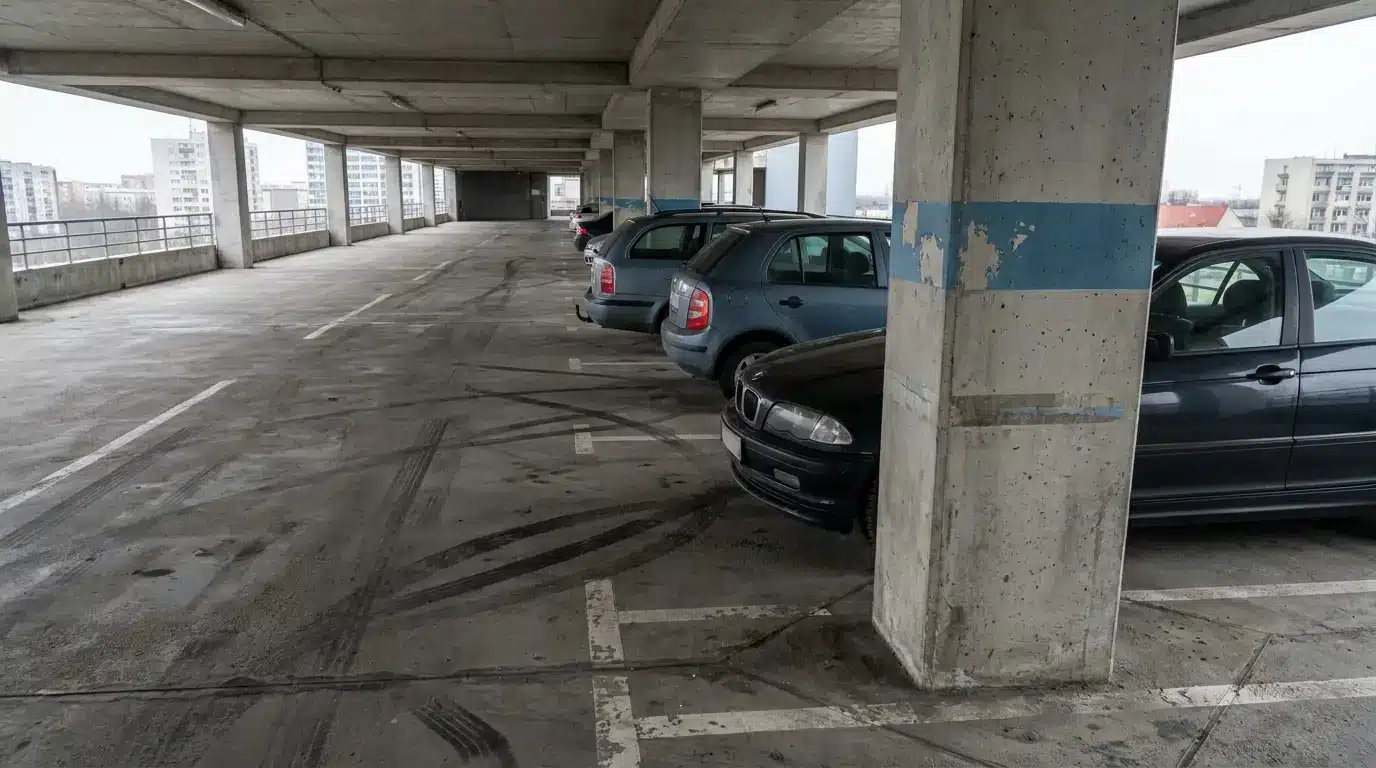
Car parks are full of details that are easy to miss on the way in but useful on the way out. Level numbers, bay numbers, and zone letters are usually printed on pillars, walls, or the ground itself. Look for the nearest lift, staircase, or exit sign, since these are typically numbered or lettered for a reason.
If you can’t spot a marker nearby, walk toward the closest exit and check the signage there instead. Many car parks are divided into color-coded or numbered zones specifically so drivers can relocate their vehicles later. Once you match a zone letter or number to what you remember, the area you need to search shrinks considerably, turning a wide search into a short walk.
Pay attention to fixed features too, such as a specific shop entrance, a ticket machine, or a mural near where you parked. Unlike rows of identical cars, these details rarely change and give you a fixed point to walk toward, rather than a vague direction to guess at.
4. Save Your Spot Manually When GPS Fails Indoors
GPS accuracy drops significantly inside concrete structures. This is especially true in underground or multistorey car parks. Satellite signals struggle to pass through several floors of concrete. Because of this, a saved pin can be off by an entire level. Relying on GPS alone indoors often leads to more confusion, not less.
The more reliable fix is simple. Note something GPS cannot get wrong. Write down or photograph the level, the bay number, and the nearest landmark. Do this before walking away from the car, not after.
Timing matters here. Save this detail the moment you park, not once you’ve already wandered off. It takes only a few seconds. In return, it saves a lot of stress later.
A photo works especially well for this. A picture of the bay sign survives a dead phone battery better than any app. Even without signal or charge, that image stays saved on your device and ready to check.
5. Contact the Council or Impound Lot If Your Car Was Towed
If you’ve checked every level, retraced your steps, and the car still isn’t where you expect, towing becomes a real possibility. Illegally parked vehicles are often removed by local councils, police, or the operator managing the property. Before assuming the worst, confirm you were parked legally and within any posted time limits.
Contact the local council or the non-emergency police line first, since they usually hold records of recent tow-aways. Have your registration number, the location you parked, and an approximate time ready when you call.
Many councils also run an online impound search, which can save you a phone call altogether. Storage fees typically increase the longer a vehicle sits unclaimed, so it’s worth acting the same day rather than waiting until tomorrow.
It also helps to check the area itself for signage you may have missed, such as a temporary no-parking notice or a private property warning. Confirming this detail before you call saves time and tells you exactly what to expect once you reach the impound lot.
Final Thoughts
Losing track of where you parked is unsettling in the moment, but it’s rarely as complicated as it first feels. Retracing your steps, checking your phone, and reading the level and bay markers around you will resolve most cases within minutes.
Indoors, where GPS struggles, a quick note or photo does far more good than relying on satellite signal alone. And if towing turns out to be the cause, acting quickly keeps storage costs from climbing.
Building one small habit, noting your spot the second you park, saves you this entire scramble the next time you’re in an unfamiliar car park.