Some small spaces instantly feel comfortable, even when you cannot explain exactly why. In a studio apartment, a few thoughtful details can shape the mood without making the room feel crowded or overdone.
I think the best studios feel natural, balanced, and personal, with every element fitting into the space without competing for attention.
In this blog, you will find cozy small studio apartment ideas focused on realistic layouts, warm details, and simple inspiration you can adapt to your own home.
Cozy Small Studio Apartment Ideas for Real Spaces
A studio can look polished in photos and still feel awkward to live in. I usually focus on layouts that make daily movement, storage, and basic routines easier. In a studio, decorating a small living area often comes down to choosing furniture that defines the zone without taking over the available floor space.
1. Create a Soft Sleeping Corner With Curtains

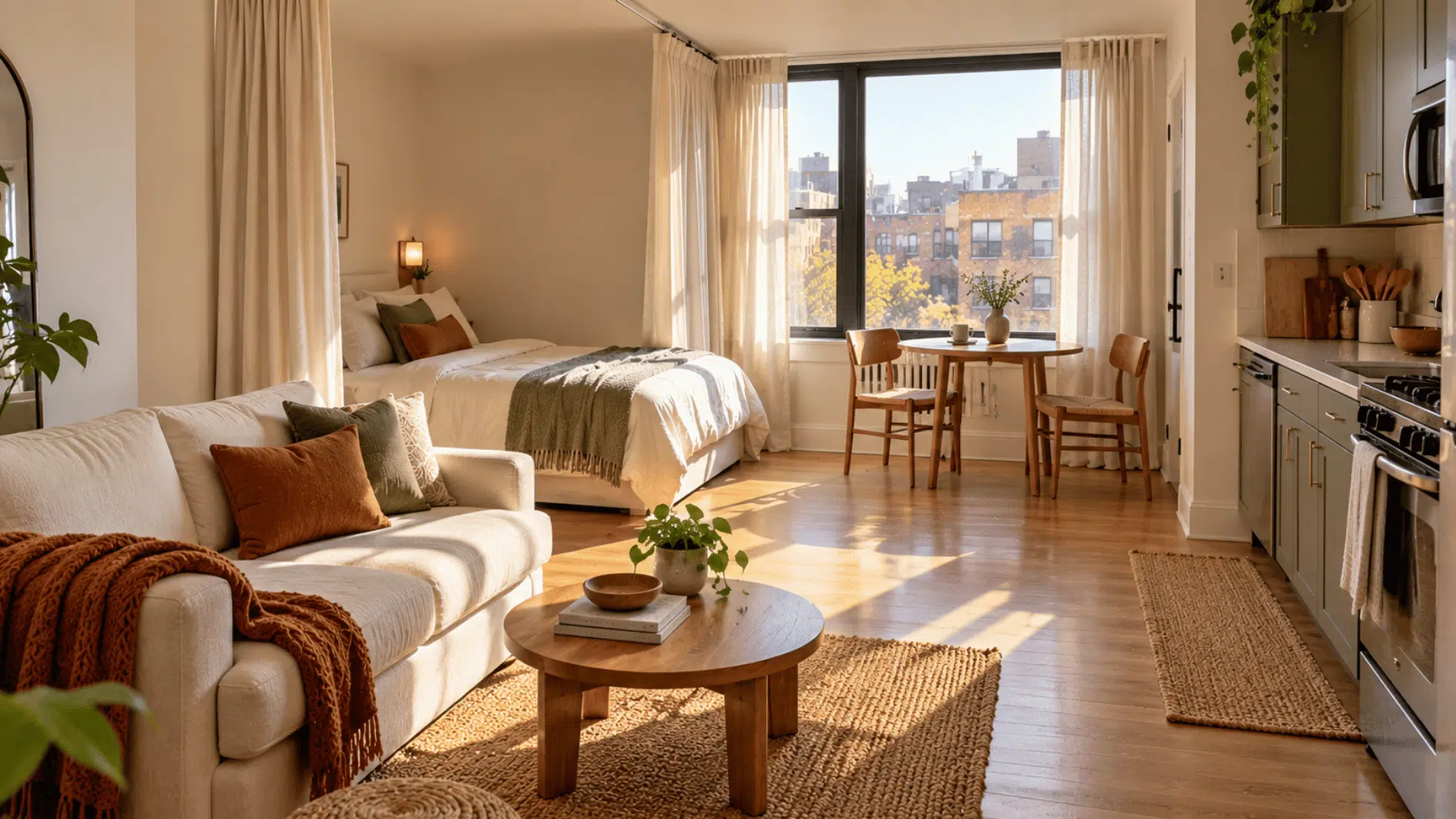
Ceiling-mounted curtains can separate the bed without taking up the floor space required by a folding screen or freestanding divider. They are especially useful when the sleeping area sits along a wall or inside a shallow recess.
I prefer curtains that stop just above the floor because they are easier to clean around than fabric that pools underneath.
- Track Position: Install the track 2 to 4 inches beyond the bed edge so the fabric does not brush against the bedding.
- Opening Side: Keep the curtain opening facing the main walkway for easier access.
- Rental Option: If you are making rental-friendly changes, use removable ceiling-track systems only where the ceiling material can safely support them.
2. Place the Bed Beside a Sunny Window

A bed beside a window can make the sleeping area feel brighter and reduce the need for extra daytime lighting. It works best when the bed does not block the window frame, radiator, or heating vent.
Leave enough space to reach blinds, curtains, and window locks. If direct sunlight hits the bed for several hours, light-filtering shades can reduce glare.
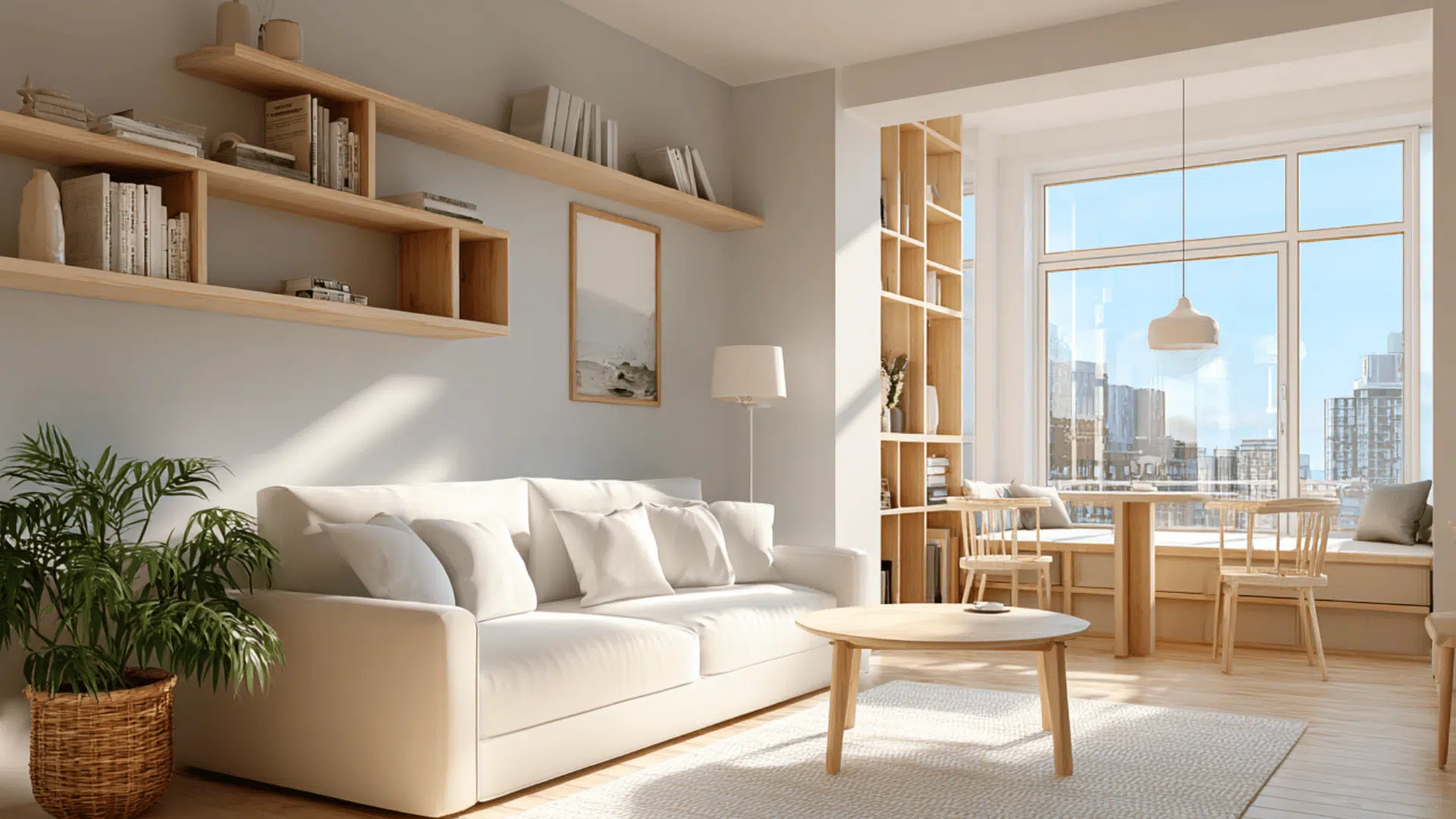
- Headboard Position: Keep the headboard against a solid wall when possible rather than directly below the glass.
- Clearance: Leave several inches between the bed and window trim for cleaning and airflow.
- Night Setup: Use a wall-mounted reading light if there is no room for a full nightstand.
3. Use a Low Bookcase to Separate the Bed and Sofa

A low bookcase can create a clear line between the sleeping and living zones while keeping the upper half of the room open. This is useful in studios where a tall divider would block light or make the room feel narrower.
Choose a unit deep enough to hold books or bins but not so deep that it reduces the walkway. Open-backed shelving works particularly well when both sides of the unit are visible.
- Height: Keep the shelf below eye level when seated so the room still feels connected.
- Weight: Store heavier books and baskets on the lower shelves for better stability.
- Access: Face open storage toward the area where you will actually use the items.
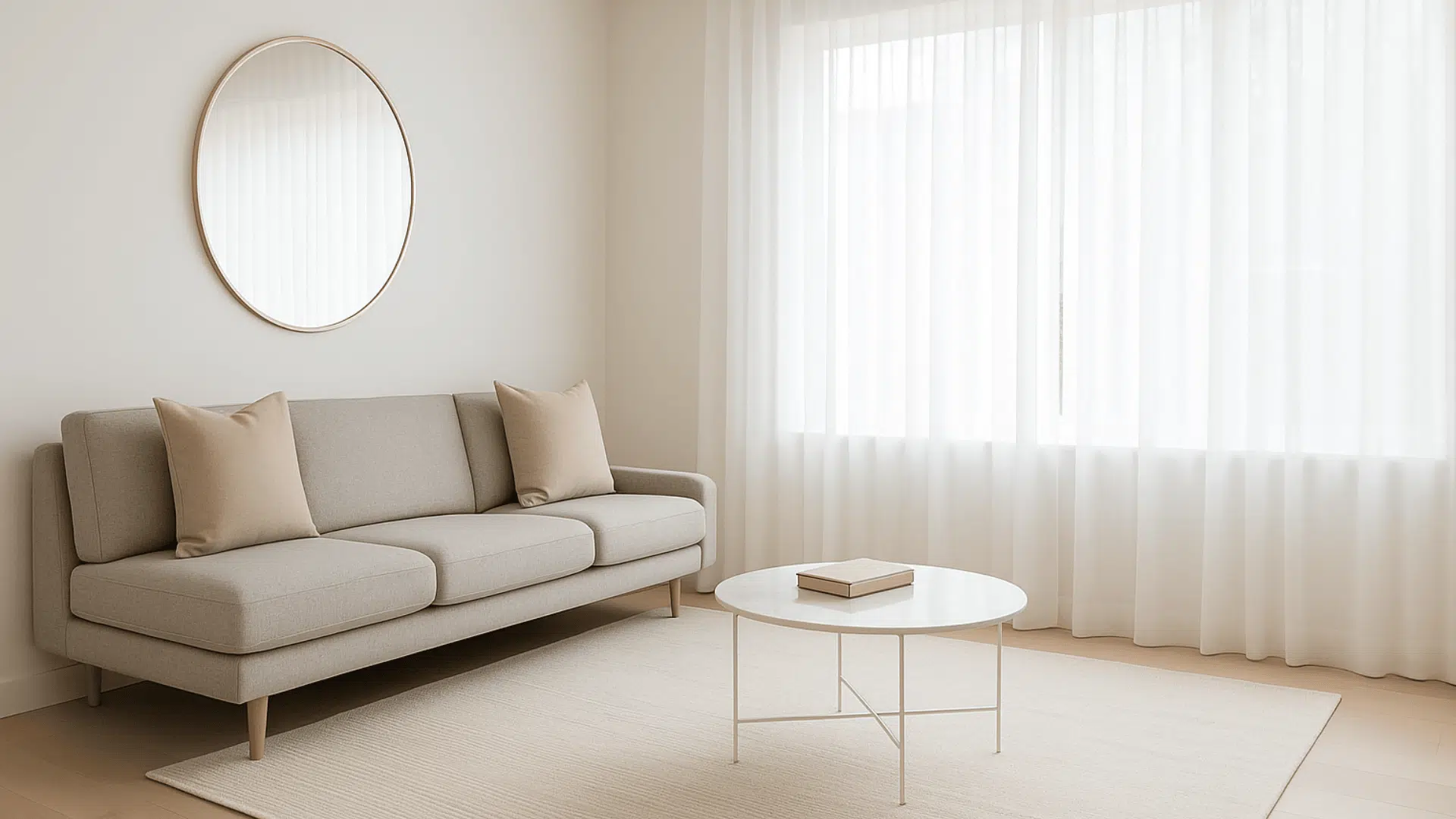
4. Build the Room Around a Small Neutral Sofa

An apartment-size sofa can define the living zone without taking over the center of the studio. Choosing furniture that does not overwhelm a small room starts with checking the actual width and depth rather than relying on labels such as a compact sofa.
A neutral upholstery color gives you more flexibility with rugs, pillows, and bedding. In a small room, I would usually prioritize shallower seat depth over oversized cushions because those extra inches affect circulation.
- Depth: Look for models around 30 to 36 inches deep when floor space is tight.
- Arms: Slim or track arms provide more usable seating than wide rolled arms.
- Clearance: Maintain a comfortable route between the sofa and the nearest large furniture piece.
5. Turn an Empty Corner Into a Reading Spot

A corner that is too small for major furniture can still hold one compact chair and a narrow lamp. This creates a separate activity zone without changing the main layout.
A full-size side table is not always necessary here. I would use a small stool, drink table, or wall shelf unless you know you need more surface space beside the chair.
- Chair Width: Measure both the seat and the full arm width before buying.
- Lighting: Position the lamp so the light falls over your shoulder onto the page.
- Footprint: Keep the chair fully inside the corner rather than letting it project into the main walkway.
6. Add Warm Lamps Around the Room

One central ceiling fixture often lights a studio evenly but harshly. Using several smaller lamps lets you light only the zones you are using and creates more depth after dark.
Place lights at different heights instead of putting every lamp on a table. Space-saving lighting ideas can be especially useful when surfaces are limited. A floor lamp near the sofa, a task light near the desk, and a bedside light can handle different needs.
- Color Temperature: Choose bulbs around 2700K to 3000K for warmer residential light.
- Task Lighting: Use a focused lamp where you read, cook, or work.
- Control: Plug frequently used lamps into accessible switches or smart plugs rather than reaching behind furniture.
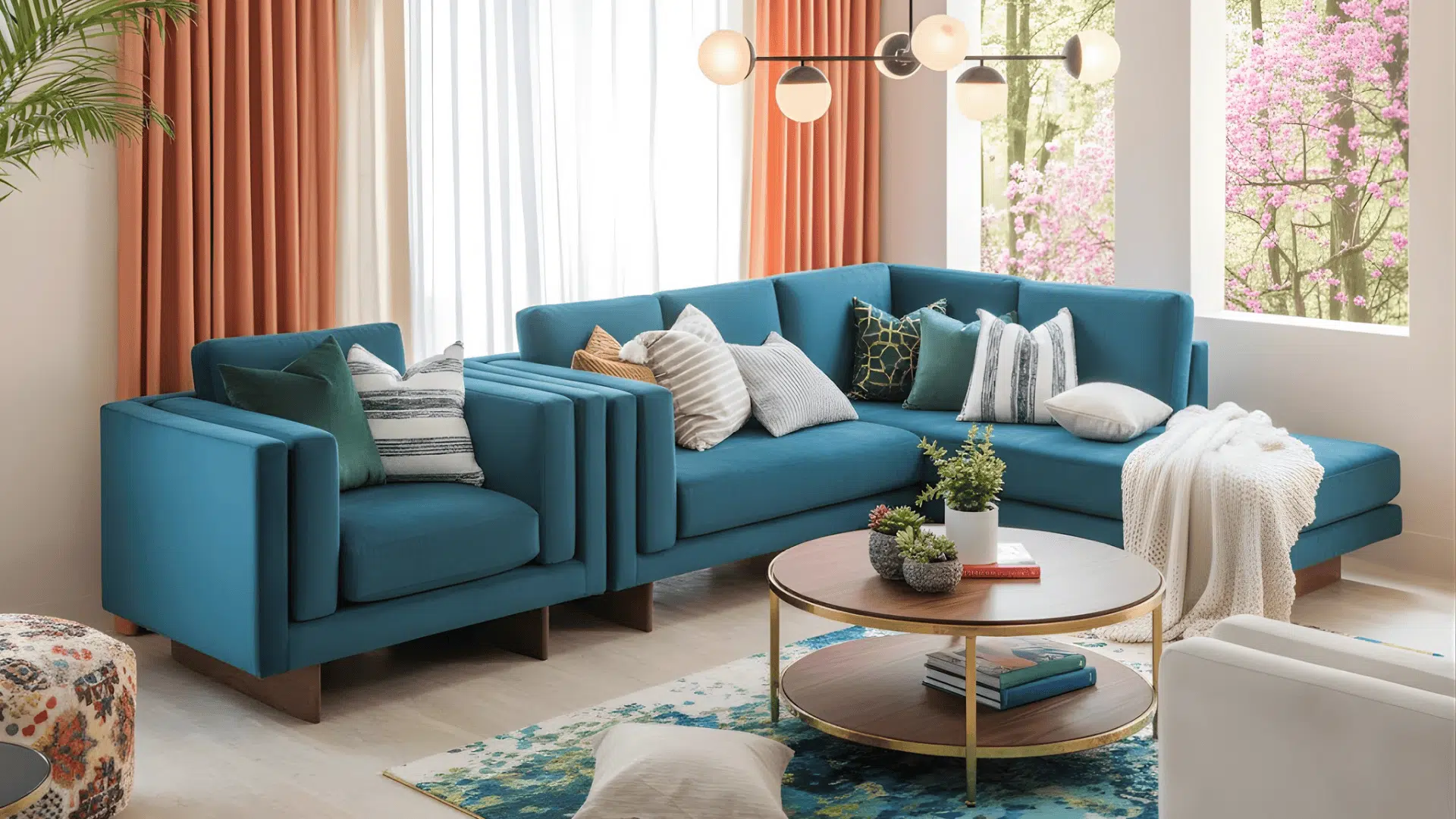
7. Use a Rug to Define the Living Area

A rug can visually mark the seating zone when the living room and bedroom share the same open floor. It works without blocking sightlines or adding another piece of furniture.
I usually size the rug around the furniture grouping rather than the entire studio. When choosing a rug for a smaller room, scale and placement can matter as much as the pattern or material. It helps the sofa and table look connected without covering more floor.
- Placement: Let the front legs of the sofa and chairs rest on the rug.
- Edges: Keep rug corners out of main walking paths to reduce tripping.
- Pile: Low-pile rugs are easier to move chairs across and simpler to clean in compact rooms.
8. Choose a Bed With Storage Underneath

Under-bed storage can replace part of a dresser or linen cabinet when closet space is limited. Beds with built-in drawers usually look cleaner than exposed plastic bins.
Before choosing one, check the direction the drawers open. A storage bed is not useful if a wall, desk, or nightstand prevents the drawers from extending fully.
- Best Items: Store seasonal clothes, spare sheets, towels, and less-used shoes underneath.
- Drawer Side: Match drawer access to the more open side of the bed.
- Bed Height: Check that the added storage height still feels comfortable for getting in and out.
9. Make the Bed Feel Cozy With Layered Bedding

Layered bedding adds softness without using any additional floor space. In a studio, the bed is often visible from almost everywhere, so keeping it neat has a large visual effect.
Use layers that serve a purpose rather than stacking decorative pieces. I usually find that one blanket and one throw create enough depth without turning bed-making into a chore.
- Base: Use fitted sheets and a simple duvet or comforter as the main layer.
- Texture: Add one quilt, knit blanket, or woven cover for contrast.
- Pillows: Keep extras limited so they do not need to be stored elsewhere at night.
10. Fit a Tiny Dining Table Against the Wall

A narrow table placed against a wall can provide a proper eating surface without occupying the center of the room. It also works well as a laptop desk or preparation surface.
Rectangular tables usually fit tight walls better than round ones. If you need seating for two, choose chairs that can slide fully underneath when not in use.
- Depth: A tabletop around 18 to 24 inches deep can be enough for everyday meals or laptop use.
- Chair Type: Armless chairs take up less horizontal space.
- Placement: Avoid positioning the table where pulled-out chairs block a doorway or kitchen path.
11. Turn a Window Area Into a Compact Workstation

A desk near a window can use natural light during the day and keep a work setup out of the sleeping zone. It is especially effective when the wall beneath the window is otherwise unused.
Before choosing one, I also check the sill height and window opening so the desk does not interfere with either.
- Desk Width: Choose only enough width for your actual equipment.
- Storage: Use one wall shelf rather than a wide drawer unit if legroom is limited.
- Glare: Position the screen perpendicular to the window when direct light causes reflections.
12. Try a Warm Wood and White Studio

White walls reflect light well, while warm wood keeps the room from feeling stark. This combination works particularly well in studios with limited windows or dark flooring.
Use one main wood tone across larger furniture pieces instead of mixing several unrelated finishes. Smaller differences are fine, but too many wood colors can make a tight room feel visually busy.
- Wood Choice: Light oak, maple, or medium walnut can all work depending on the existing floor.
- White Tone: Use warm white or cream when cool white makes the room feel clinical.
- Metal Finish: Repeat one metal finish on lamps, handles, or chair legs to connect the room.
13. Add Character With a Small Gallery Wall

A compact gallery wall adds personality without sacrificing floor space. It is most effective when placed over furniture that already anchors the wall, such as a sofa, bed, or desk.
Plan the arrangement on the floor before hanging anything. This helps you control spacing and prevents the display from spreading too far across the wall.
- Width: Keep the arrangement narrower than the furniture below it.
- Spacing: Maintain roughly consistent gaps between frames.
- Content: Mix personal photos with prints or artwork so the display feels specific to the person living there.
14. Use Open Shelves Without Making Them Look Cluttered

Open shelves work best when they store items you use often rather than acting only as decoration. In a studio, they can replace bulky cabinets while keeping frequently needed objects accessible.
Avoid filling every inch of shelf space. Grouping similar items together makes the shelves easier to scan and keeps small objects from looking scattered.
- Containers: Use closed baskets for cables, paperwork, or loose supplies.
- Weight: Keep heavy objects on lower shelves.
- Frequency: Put daily-use items between waist and eye level for easier access.
15. Create a Cozy Studio With Earthy Colors

Earthy colors can add warmth without relying on extra decor. Muted olive, clay, tan, cream, and brown work well because they can be repeated across fabric, furniture, and smaller accessories.
Use darker shades selectively if the room receives little natural light. Larger surfaces should usually remain lighter so the studio does not feel visually compressed.
- Base Color: Use cream, beige, or warm white on the largest areas.
- Secondary Shade: Repeat one darker earthy tone in two or three places.
- Material Match: Pair these colors with wood, linen, cotton, or woven fibers rather than glossy finishes.
16. Bring In Plants Without Taking Over the Floor

Plants can soften a studio, but floor pots quickly use space needed for walking and furniture. Vertical placement gives you greenery without reducing circulation.
I usually keep the floor to one larger plant and move smaller plants onto shelves or windowsills. It preserves walking space while still bringing greenery into different parts of the studio.
- Windowsill: Use smaller plants where they will not interfere with curtains or window locks.
- Wall Height: Place trailing plants on secure shelves rather than directly above the bed.
- Floor Plant: Use one larger plant in a corner that would otherwise remain unused.
17. Use a Sofa Bed for an Extra-Small Studio

A sofa bed can be practical when keeping both a full bed and a sofa would leave very little usable floor area. The important measurement is the sofa’s fully opened depth, not just its daytime size.
Test how the room functions when the bed is extended. If opening it requires moving several heavy pieces every night, the layout may become frustrating quickly.
- Clear Zone: Keep the floor directly in front of the sofa free from fixed furniture.
- Side Tables: Choose lightweight or nesting tables that move easily.
- Bedding: Store sheets and pillows close by so nightly setup stays simple.
18. Place the Bed Behind a Slatted Room Divider

A slatted divider creates more separation than a low shelf while still allowing light and sightlines through.
This is a better fit for apartments where you can make more permanent changes. The divider should follow the existing layout rather than cutting through an important walkway.
- Spacing: Wider gaps between slats preserve more light.
- Direction: Position the slats to screen the bed from the main entrance.
- Depth: Use a slim structure so the divider does not consume valuable floor area.
19. Make the Kitchen Feel Like Part of the Decor

Because most studio kitchens remain fully visible, clutter on the counter affects the appearance of the entire apartment. Keeping daily-use items grouped makes the kitchen feel more connected to the living space.
You do not need to match every finish. Repeating one or two materials or colors is usually enough to create continuity.
- Countertops: Leave only items you use every day within sight.
- Storage: Move duplicate utensils and appliances into cabinets.
- Repeat Finishes: Carry one wood, metal, or textile color into the nearby living zone.
20. Use Mirrors to Brighten a Dim Studio

Mirrors can reflect existing daylight into darker areas, but placement matters more than quantity. A mirror facing a bright window or lamp usually has more effect than several small decorative mirrors.
I would check what the mirror reflects before committing to the location. Reflecting a cluttered kitchen or open closet can make the room feel busier rather than brighter.
- Position: Place the mirror opposite or at an angle to the strongest light source.
- Scale: A tall mirror can reflect more light than several small pieces.
- Safety: Secure leaning mirrors to the wall, especially in narrow circulation areas.
21. Create a Cozy Studio With Vintage Furniture

One or two vintage pieces can give a studio character without making the room feel themed. Older side tables, dressers, or chairs often work well because they add detail in a small footprint.
Measure carefully before buying secondhand furniture because older pieces can be deeper or heavier than modern compact designs.
- Condition: Check drawers, joints, and legs before bringing a piece into a small space.
- Scale: Pair one detailed vintage item with simpler surrounding furniture.
- Function: Prioritize pieces that provide storage or seating rather than decor alone.
22. Try a Soft Minimalist Studio Setup

A minimalist studio works best when fewer items are balanced by comfortable materials and useful storage. Removing excess objects makes the layout easier to move through and reduces visual noise.
The room still needs contrast and texture. Linen curtains, wood furniture, woven rugs, or soft bedding can keep the space from feeling bare.
- Furniture: Keep pieces that serve a clear daily purpose.
- Storage: Use closed cabinets or drawers for items that create visual clutter.
- Decor: Choose a few larger pieces rather than many small accessories.
23. Use a Narrow Console Behind the Sofa

A narrow console can use the strip of space behind a floating sofa without requiring another large cabinet. It can hold a lamp, charging station, books, or small storage baskets.
I would only add a console if the walkway still feels comfortable once it is in place. An extra surface is useful, but not if it turns a normal route through the studio into a tight squeeze.
- Depth: Look for a shallow console that keeps the walkway comfortable.
- Height: Keep the top near or below the sofa back.
- Outlet Access: Position the console near an outlet if you plan to use lamps or chargers there.
24. Make an Awkward Alcove Part of the Layout

An alcove often works better when assigned one clear function instead of being filled with miscellaneous furniture. Depending on its depth, it can hold a bed, desk, dresser, or built-in-style shelving.
Measure the opening at several points because older walls are not always perfectly square. I would always confirm the narrowest measurement before ordering furniture for a tight recess.
- Shallow Alcove: Use it for a desk or low storage.
- Deep Alcove: Consider a bed or compact seating area.
- Dark Recess: Add a wall light or plug-in sconce so the area does not feel disconnected.
25. Create a Lived-In Studio With Personal Details

Personal items make a studio feel specific to the person living there, but they work best when they are concentrated rather than spread across every surface.
I find a few meaningful objects usually make a stronger impression. Keeping some areas clear also gives the books, photos, or collected pieces you do display more presence.
- Display Zone: Keep most personal objects on one shelf, console, or wall.
- Useful Pieces: Let attractive everyday items, such as books or ceramics, double as decor.
- Editing: Store or rotate extras instead of displaying the full collection at once.
Practical Furniture Spacing for a Small Studio
A studio can feel cramped even when the furniture technically fits. The real issue is often clearance around each piece, especially where you walk, sit, open storage, or move between zones.
Area | Suggested Clearance | Purpose |
|---|---|---|
Main walkway | 30–36 inches | Easier movement |
Sofa to coffee table | 14–18 inches | Comfortable reach |
Side of bed | Around 24 inches | Easier bed access |
Dining chair area | Around 30 inches | Room to pull out |
Desk chair zone | 30–36 inches | Easier sitting and standing |
Cabinet or drawer front | 30–36 inches | Full opening space |
Entry door area | Keep swing path clear | Clear access |
It’s a Wrap
Sometimes a room just starts to feel right, even if you cannot point to one exact reason.
You notice it in the way everything seems to sit a little more naturally and the space feels easier to spend time in.
I think that is what makes a cozy small studio apartment work best. It should feel like something you settled into over time, not something you had to force into place.
Keep what feels good, change what does not, and let the rest of the space follow from there.
Frequently Asked Questions
Can You Use a Room Divider in a Studio Apartment?
Yes. Lightweight dividers can add privacy without permanently changing the apartment.
How Do You Make a Studio Apartment Feel More Private?
Create separation around personal areas and position furniture so the bed is not the first thing visible.
Is a Studio Apartment Suitable for Long-Term Living?
Yes. It can work long term if the layout supports your storage, sleeping, cooking, and daily routines.
Can You Have a Dining Area in a Small Studio Apartment?
Yes. A compact table or wall-mounted surface can create a dining spot without using much floor space.