You walk into that tiny extra room, or maybe just a corner of the living room, and toys are already taking over. You know a small playroom doesn’t have to mean a messy one.
Every parent with a small space and an energetic kid faces the same puzzle. This list gives you real, workable ideas to fix that puzzle, room by room, wall by wall.
Picture a toddler zooming between a play kitchen, a pile of blocks, and a stuffed animal collection, all squeezed into 80 square feet. That’s the exact challenge these ideas solve, without knocking down a single wall.
Below, you’ll find storage tricks, furniture picks, wall tricks, budget hacks, and quiet corners. Each one is built for small rooms, so nothing here wastes an inch you don’t have.
What Makes a Small Playroom Work
A small playroom succeeds when it follows three rules: storage comes first, furniture does double duty, and every zone has a clear job.
Instead of cramming in as many toys as possible, the strongest small playrooms limit what’s visible at once and rotate the rest out of sight.
Kids actually focus better with fewer choices in front of them, and a room with clear zones- one for building, one for reading, one for art- feels bigger than a room with everything piled together.
Small Playroom Ideas That Make the Most of Your Space
These small playroom ideas help you add storage, useful furniture, play zones, and cozy corners without making a compact room feel crowded.
Storage Ideas that Reclaim Floor Space
Good storage should keep toys accessible without covering the room’s limited floor area. You can use overlooked spaces and make daily cleanup easier.
1. Clear Stackable Bins
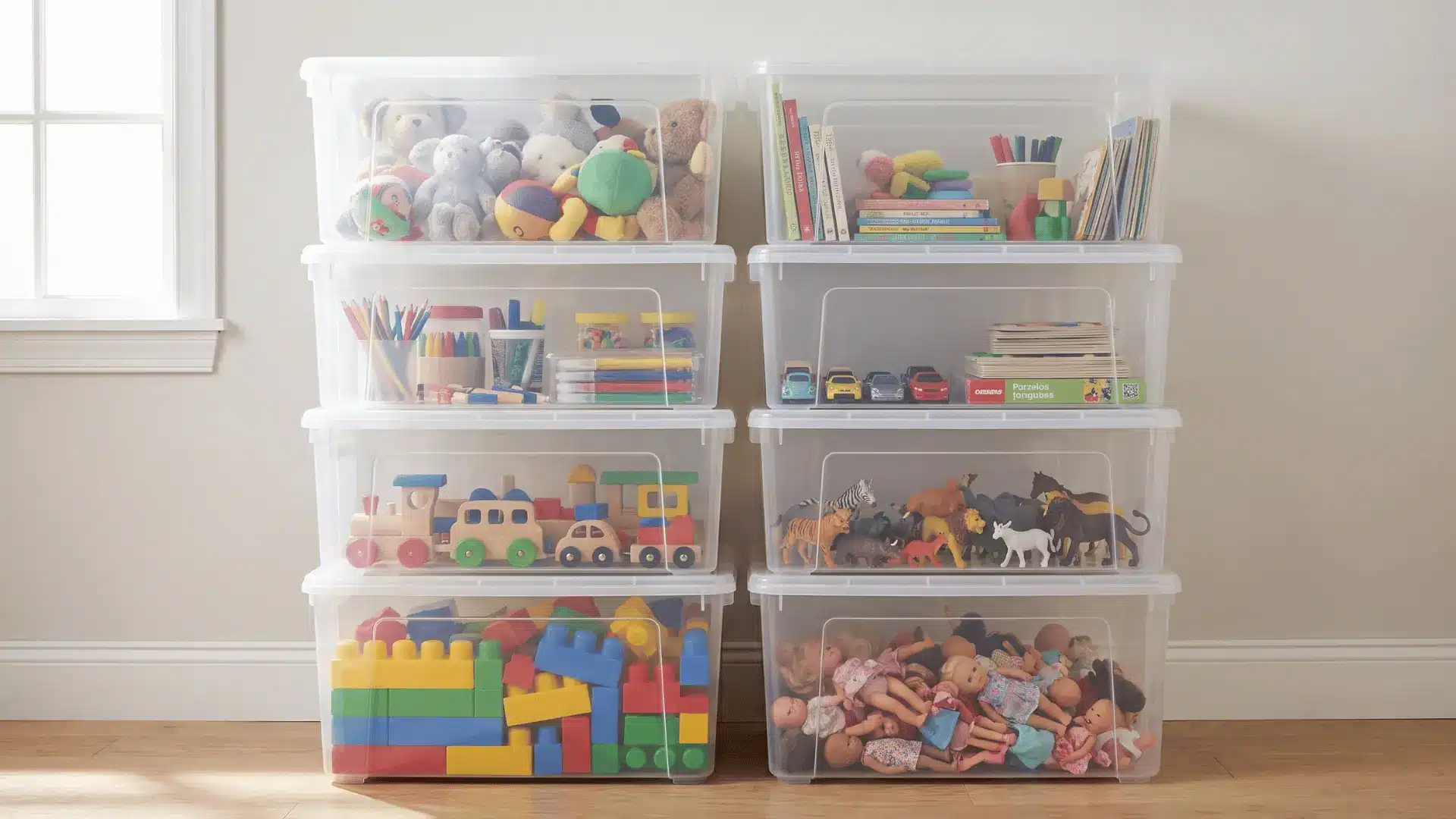
Clear bins let children see their toys without opening every container. This makes choosing an activity quicker and prevents items from getting buried under other playroom supplies for months.
Stack the bins securely against a wall to use vertical space. Place frequently used toys in lower containers so younger children can reach, remove, and return them without adult help.
2. Under-Bed Rolling Carts
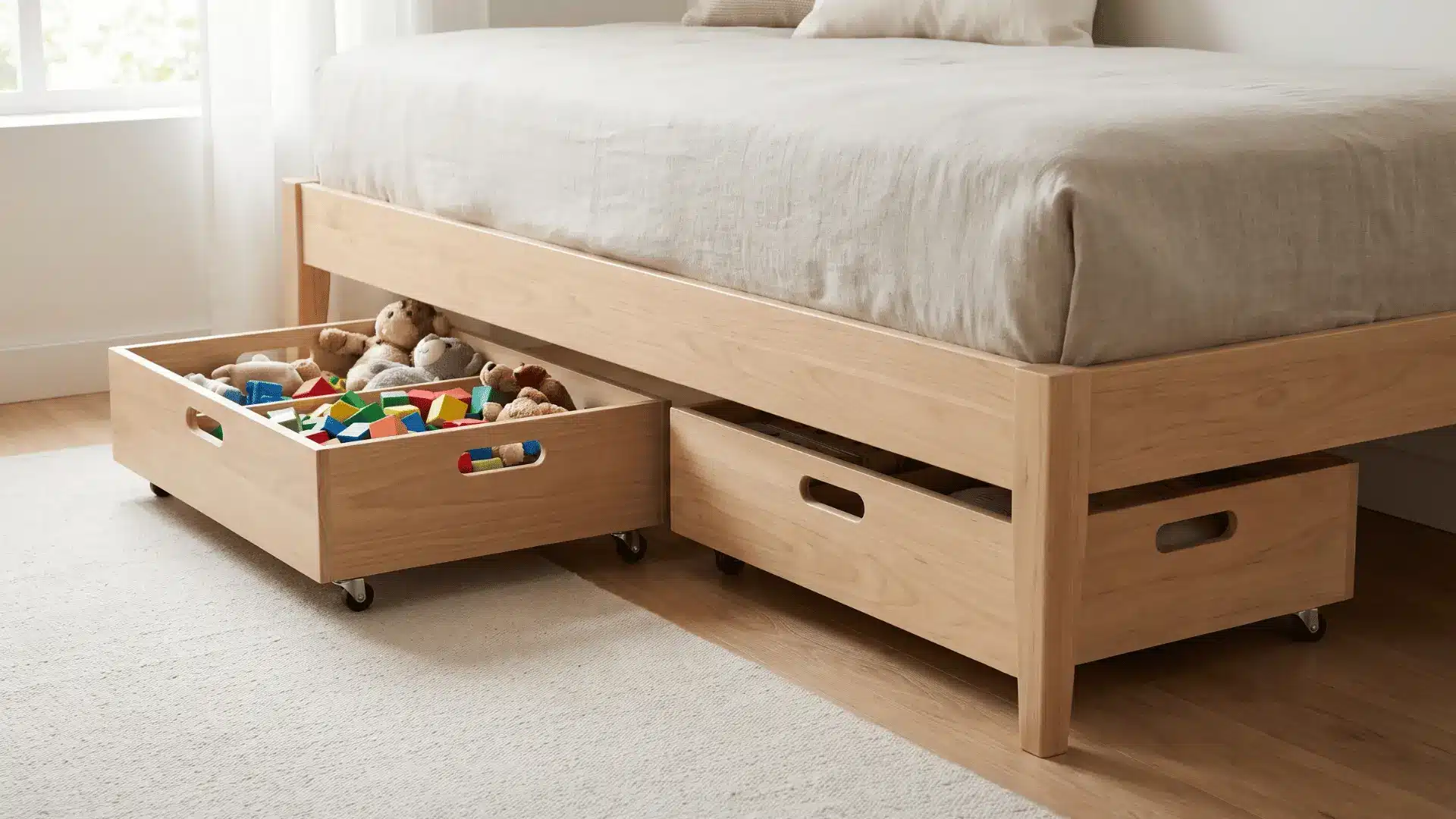
Rolling carts turn empty space beneath a daybed or loft bed into practical storage. They work particularly well for bulky toys, larger building sets, and less-used indoor items.
Choose carts with handles and smooth wheels that move easily across the floor. Children can pull them out during play, then slide everything underneath once cleanup time begins each day.
3. Door-Back Organizers
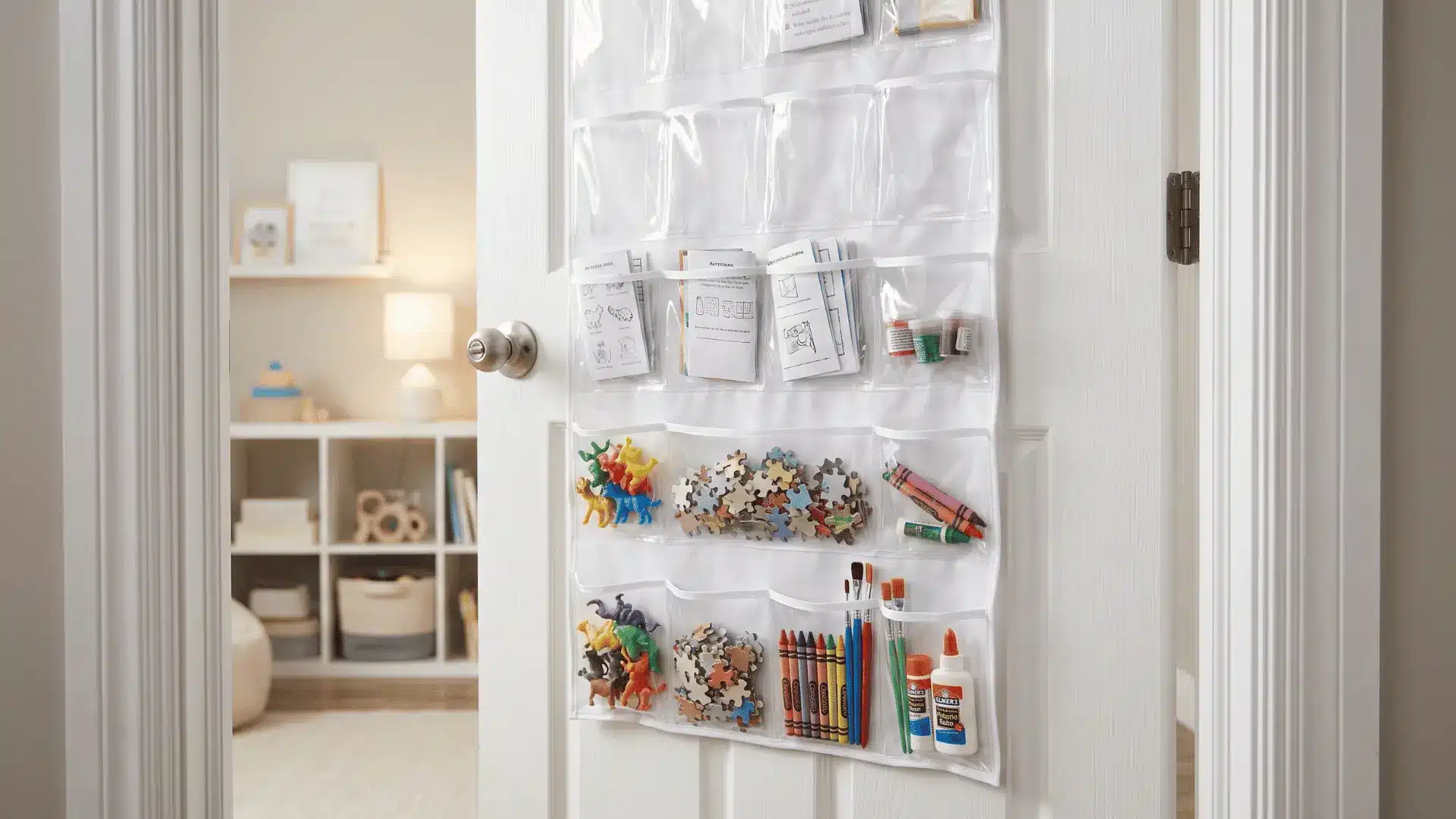
A door-back organizer stores small figures, puzzle pieces, and art supplies without covering tables or floors. Clear pockets also stop tiny items from disappearing inside deep baskets during cleanup.
Keep frequently used toys inside the lowest pockets so children can reach them safely. Reserve higher pockets for supplies that require adult help, supervision, or controlled access during playtime activities.
4. Labeled Toy Baskets by Category
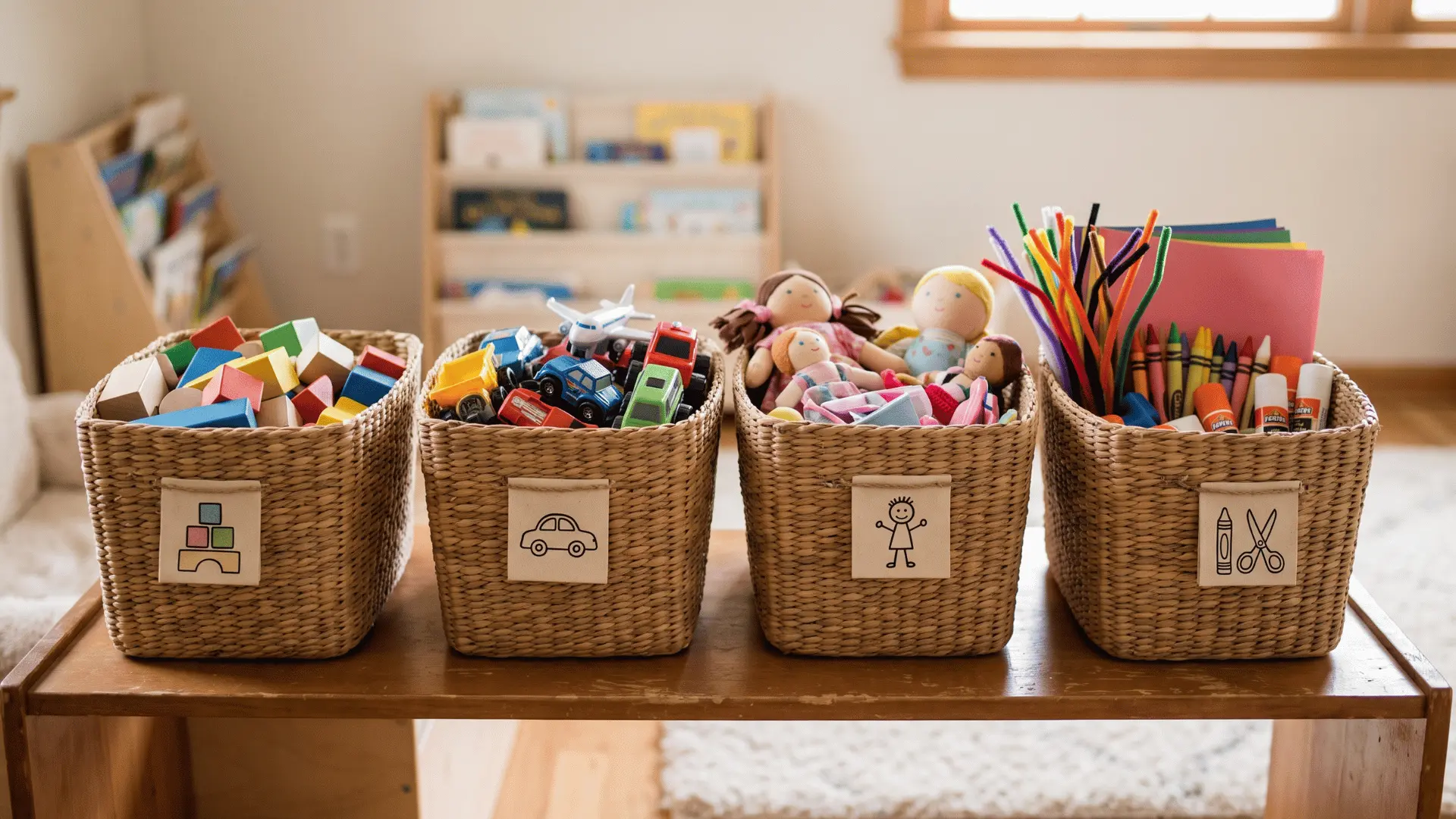
Sort baskets by toy type, such as blocks, vehicles, dolls, and craft supplies. Clear categories are easier for young children to understand than brands, themes, or individual play sets.
Add simple pictures beside written labels to help children who cannot read yet. They can find what they need and return each toy without constant instruction from nearby adults.
5. A Rotating Toy Library
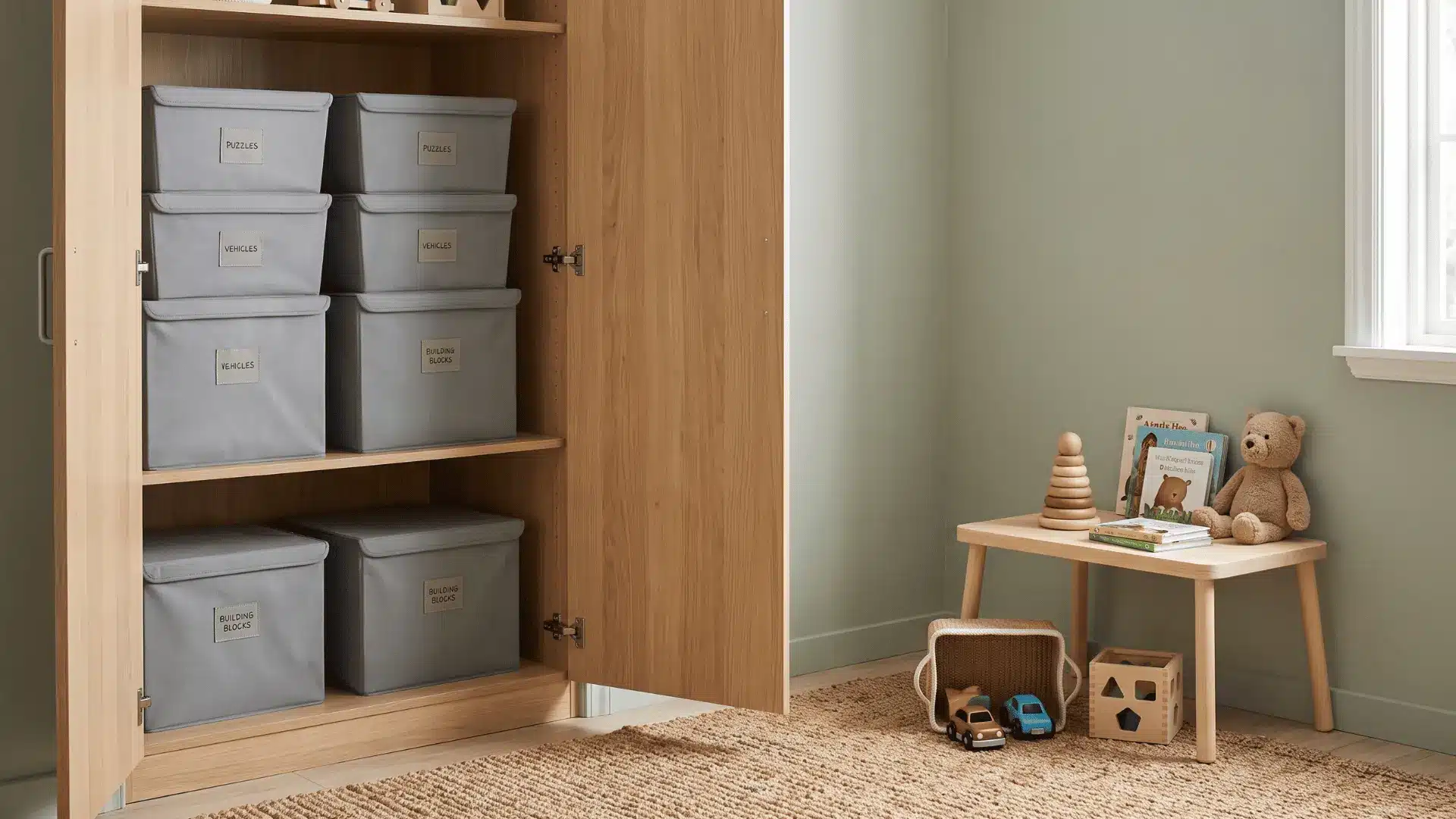
Keep two-thirds of the toy collection inside covered closet bins. Leaving a smaller selection in the playroom reduces visual clutter and gives children fewer items to manage during daily cleanup.
Swap the stored toys every few weeks instead of buying new ones. Familiar items often feel interesting again after a break, while the playroom remains easier to organize and use.
6. Ottoman with Hidden Storage
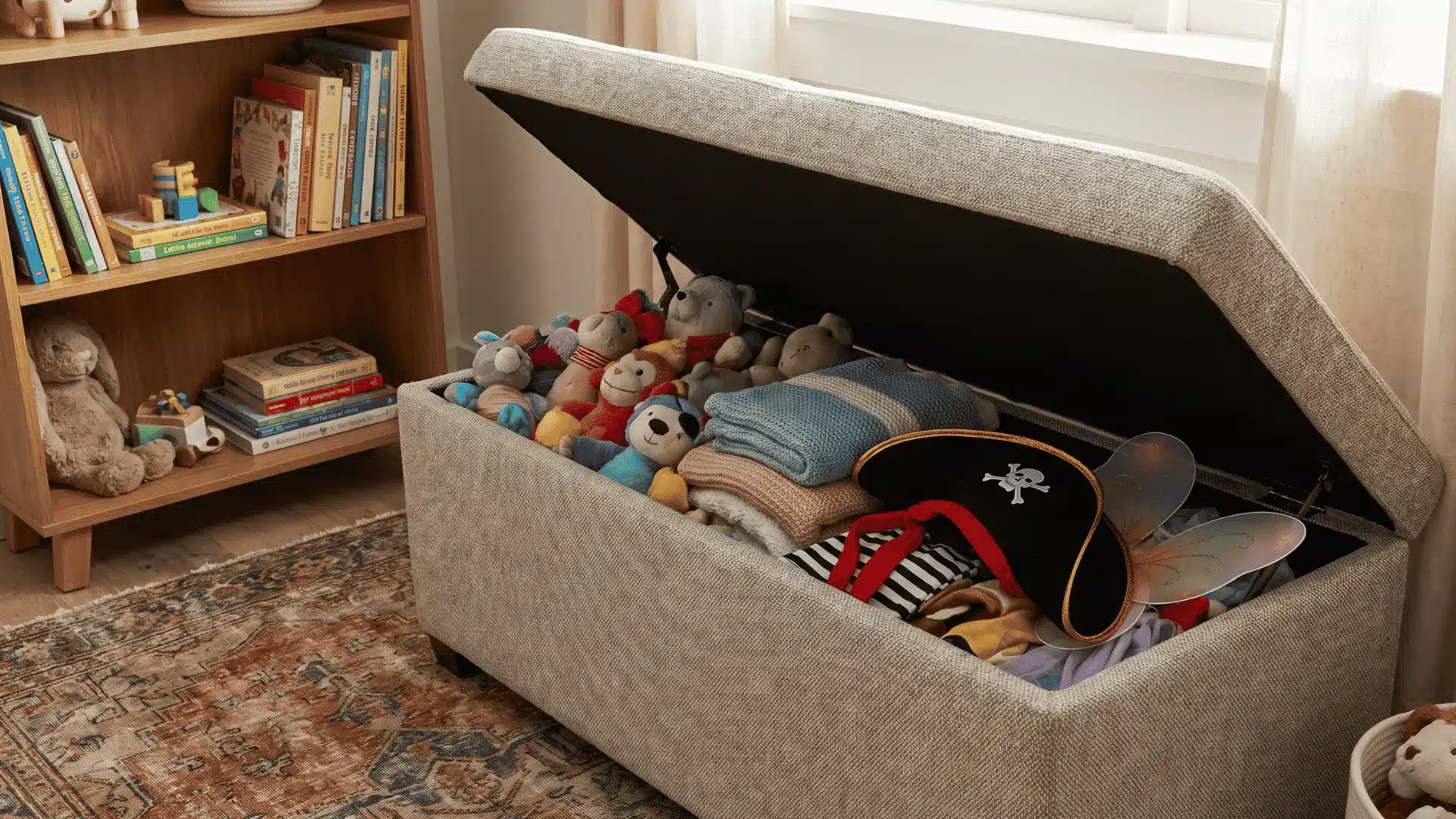
A storage ottoman provides seating and concealed toy storage within one compact footprint. It works well for stuffed animals, blankets, dress-up clothes, and other soft items used throughout the week.
Choose an ottoman with a lightweight or soft-close lid that children can handle safely. Place it near the reading or play area so stored items remain easy to access.
9. A Landing Zone Tray by the Door
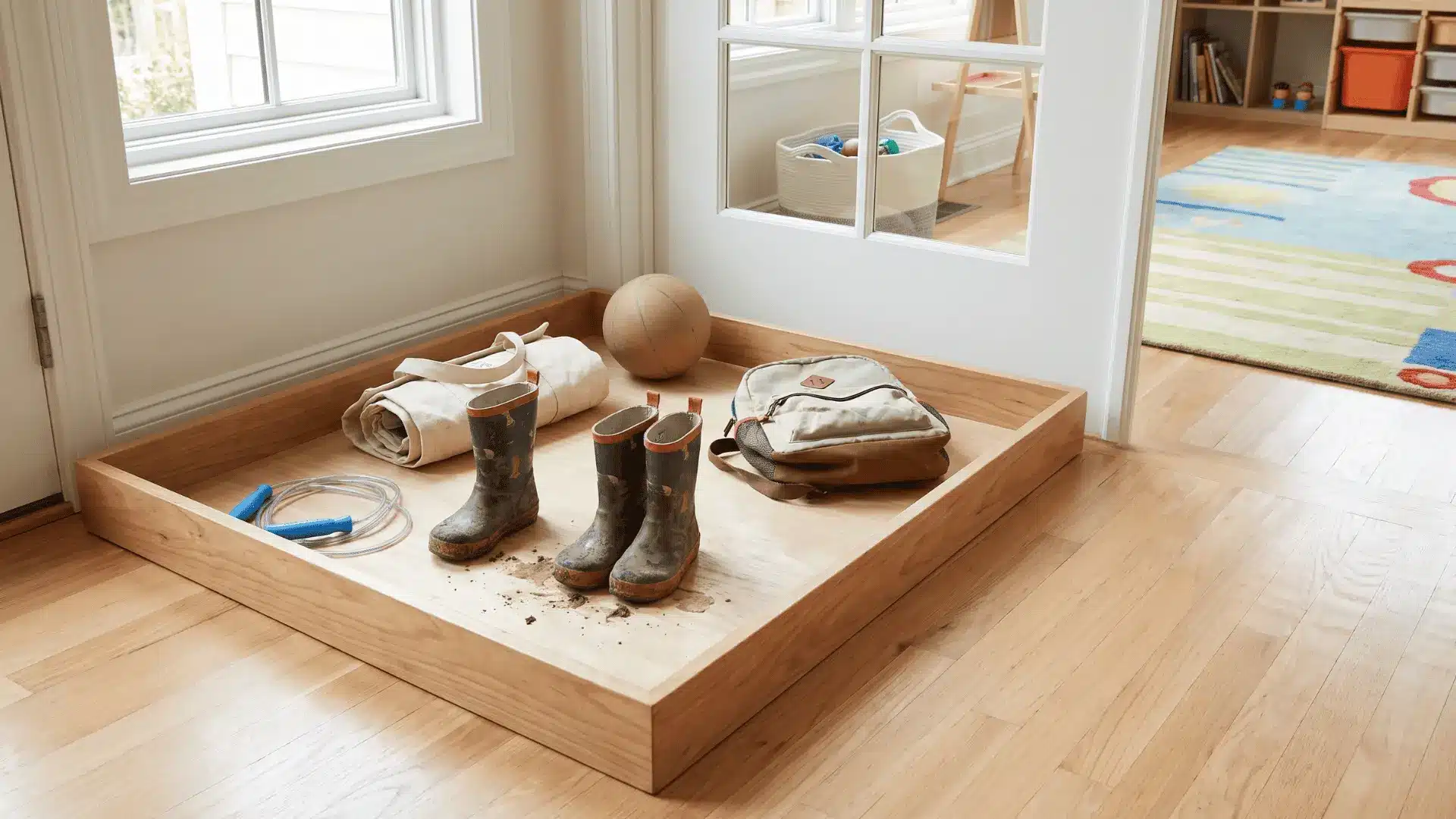
Place a shallow tray beside the playroom entrance for shoes, bags, and outdoor toys. It gives incoming clutter a clear home before it spreads across the main play area.
Choose a washable tray with raised edges that contain dirt and small objects. Children can unload their belongings before entering, making the rest of the room easier to maintain daily.
Start with the areas already available, such as under beds, behind doors, and along walls. Even one change can free valuable play space.
Space-Saving Furniture Worth the Investment
Small playrooms need furniture that serves more than one purpose. The best pieces provide storage, seating, or activity space without crowding the room.
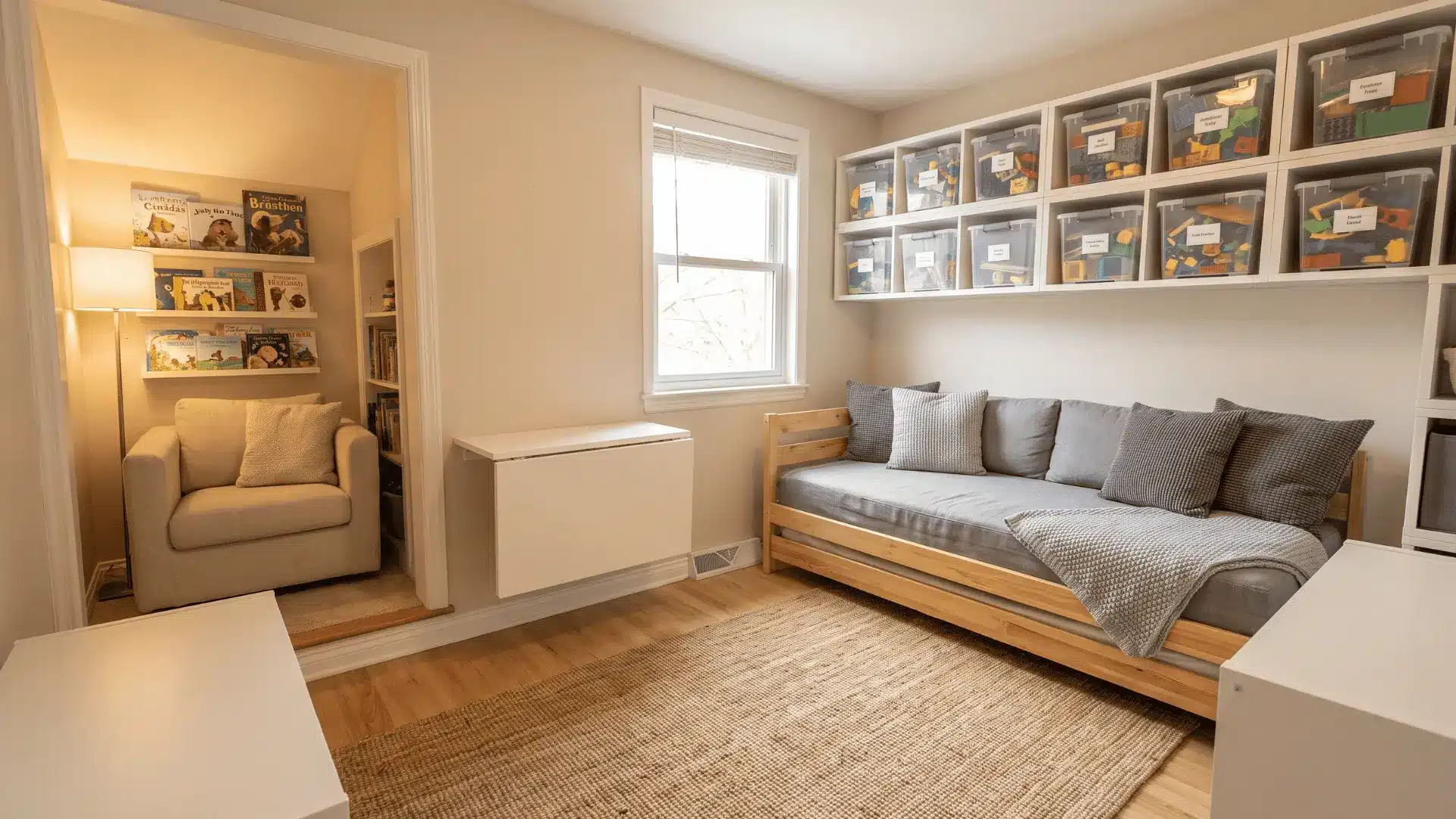
10. Fold-Down Wall Desk
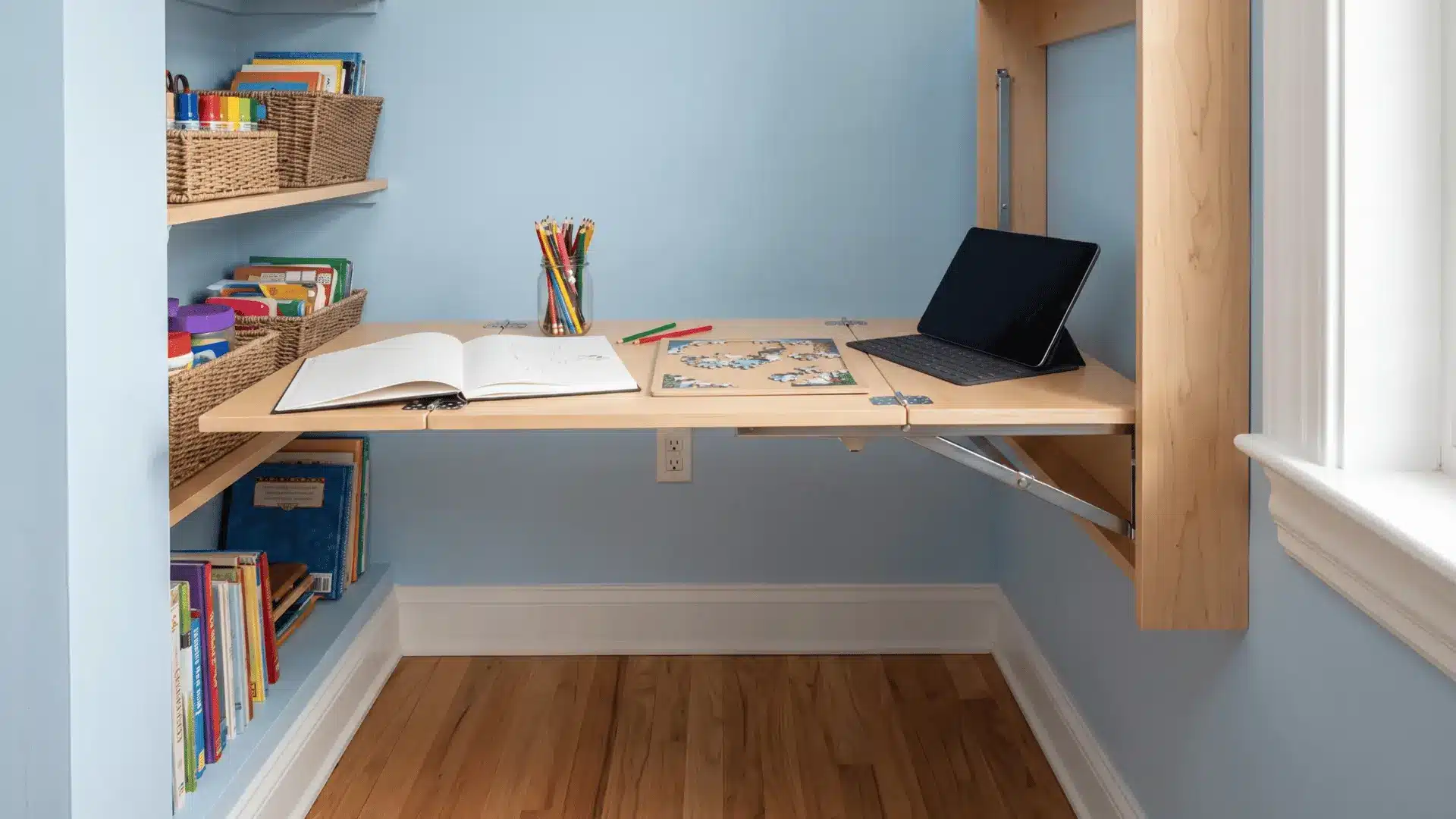
A fold-down wall desk provides a firm surface for art, puzzles, or homework. Close it after each activity to restore the floor space needed for movement and larger play sessions.
Install the desk at a comfortable height for the child using it. Add nearby wall storage for paper and supplies so materials never gather underneath or across the surrounding floor.
11. Stackable Cube Shelving
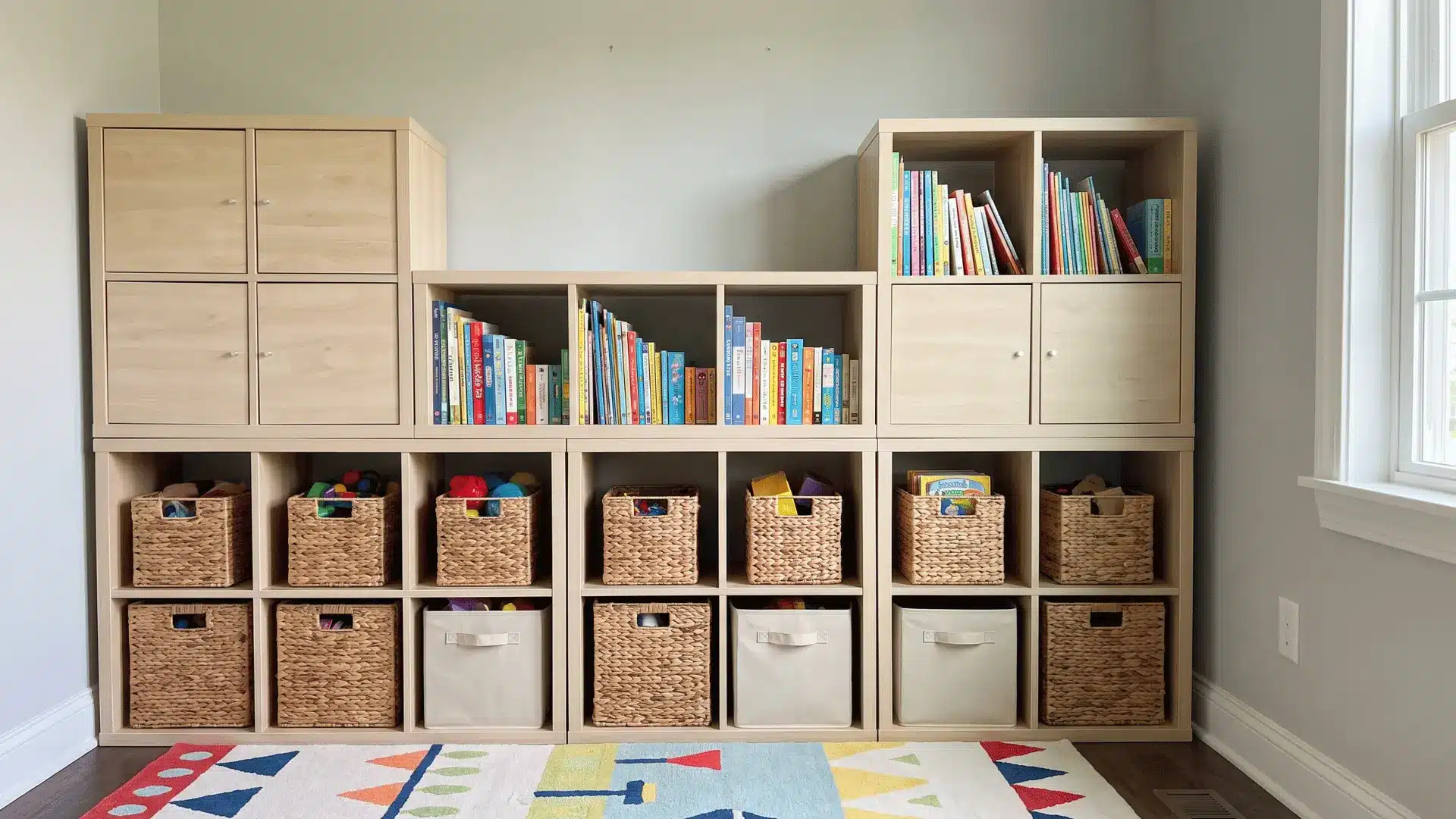
Stackable cube shelves can fit different wall lengths and changing storage needs. Additional units can be added later as the toy collection grows or the room arrangement changes over time.
Place baskets in lower cubes for loose toys and small pieces. Keep books or larger items inside open cubes where children can see, remove, and return them without difficulty.
12. Bean Bags Instead of Chairs
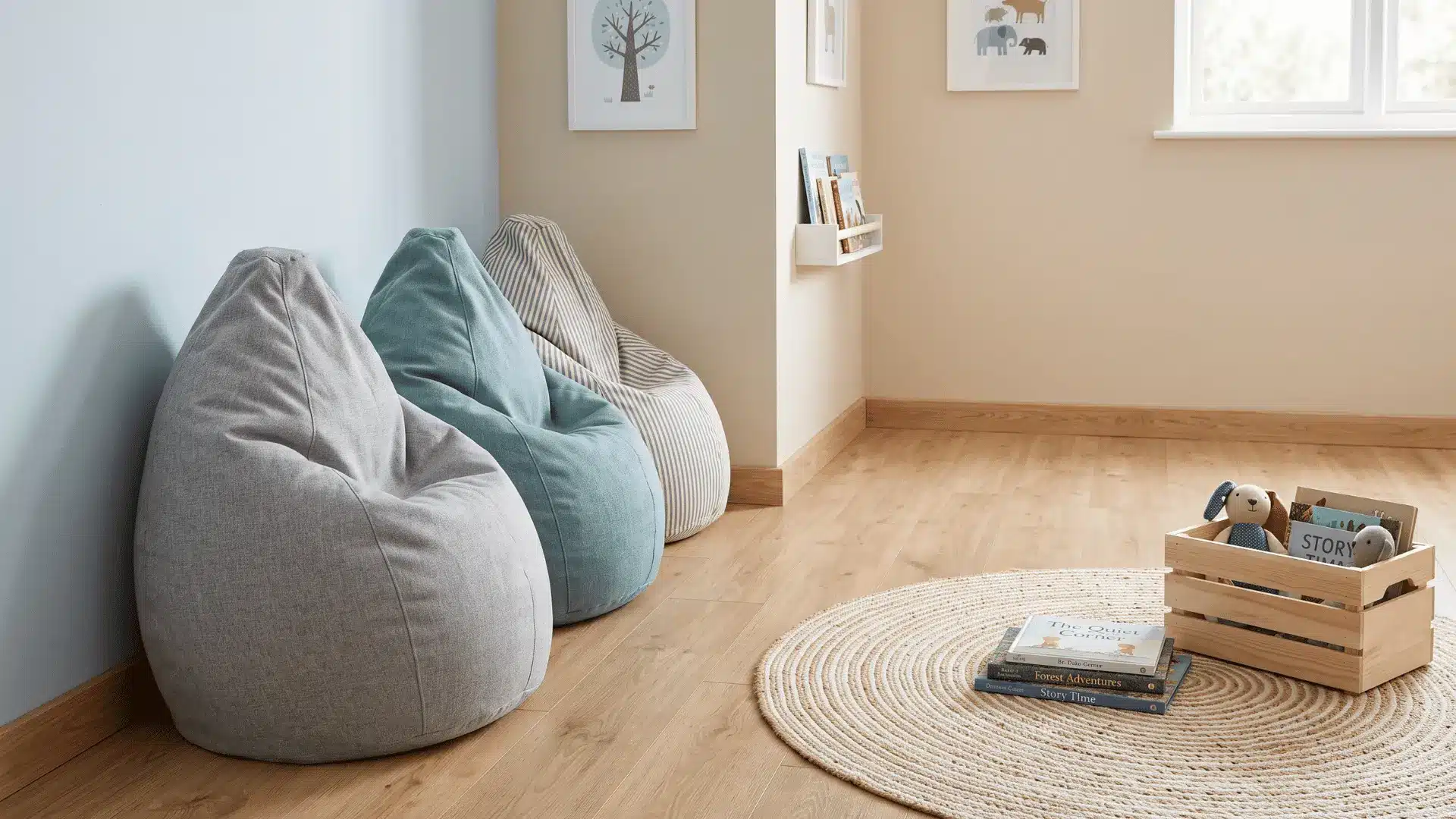
Bean bags weigh less than standard chairs, allowing children to move their seating between reading, quiet play, and screen-free activities. They also require less fixed space than bulky furniture pieces.
Stand the bags upright in a corner whenever children need more floor space. Choose removable, washable covers that can handle regular spills, marks, crumbs, and frequent household use easily.
13. Low Bookshelf with Front-Facing Slots
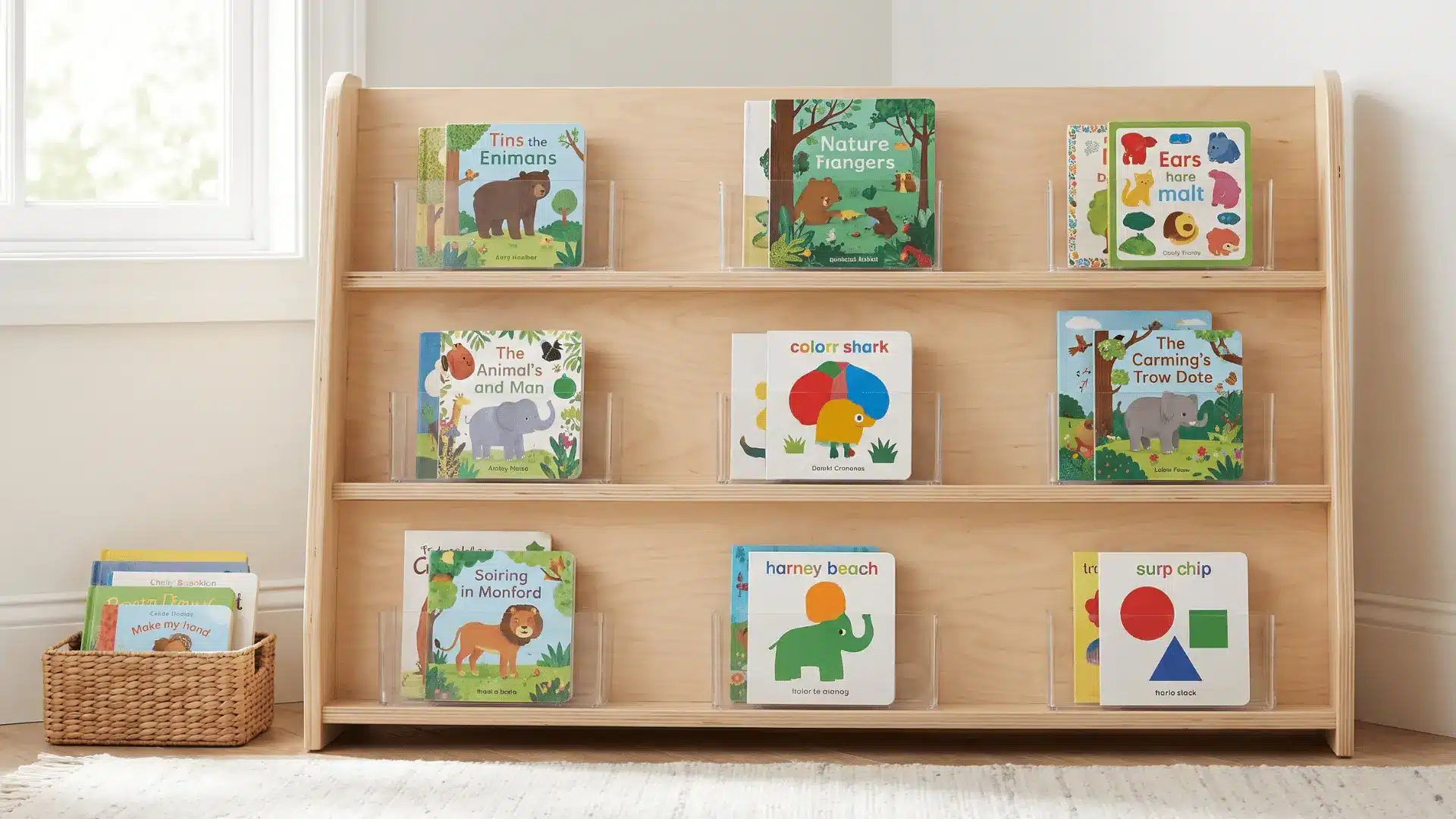
Front-facing shelves display book covers instead of narrow spines. This helps toddlers recognize favorite stories and choose books independently before they can read printed titles or understand alphabetical organization.
Avoid filling every slot completely because crowded books become difficult for small hands to remove. The low shelf also lets children return their choices independently after each reading session ends.
14. Mini Table with Attached Stool Storage
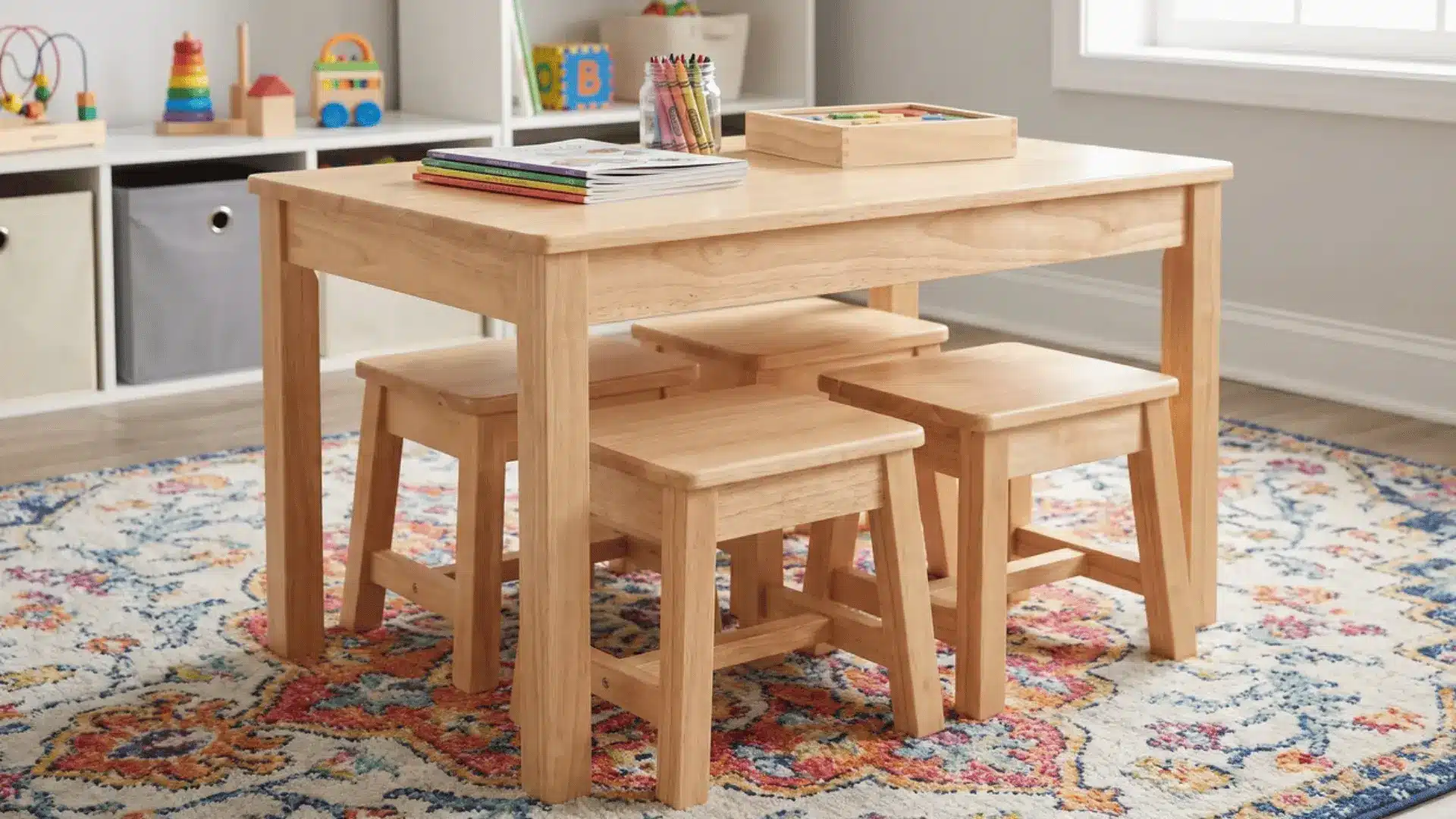
A small activity table with stools that tuck underneath provides a useful workspace without leaving extra seating across narrow walkways. It suits coloring, puzzles, building, and supervised snack times.
Return every stool beneath the table when the activity finishes. This simple habit clears the surrounding floor and reduces obstacles when children switch to movement, construction, or imaginative play.
15. Slim Vertical Bookcase
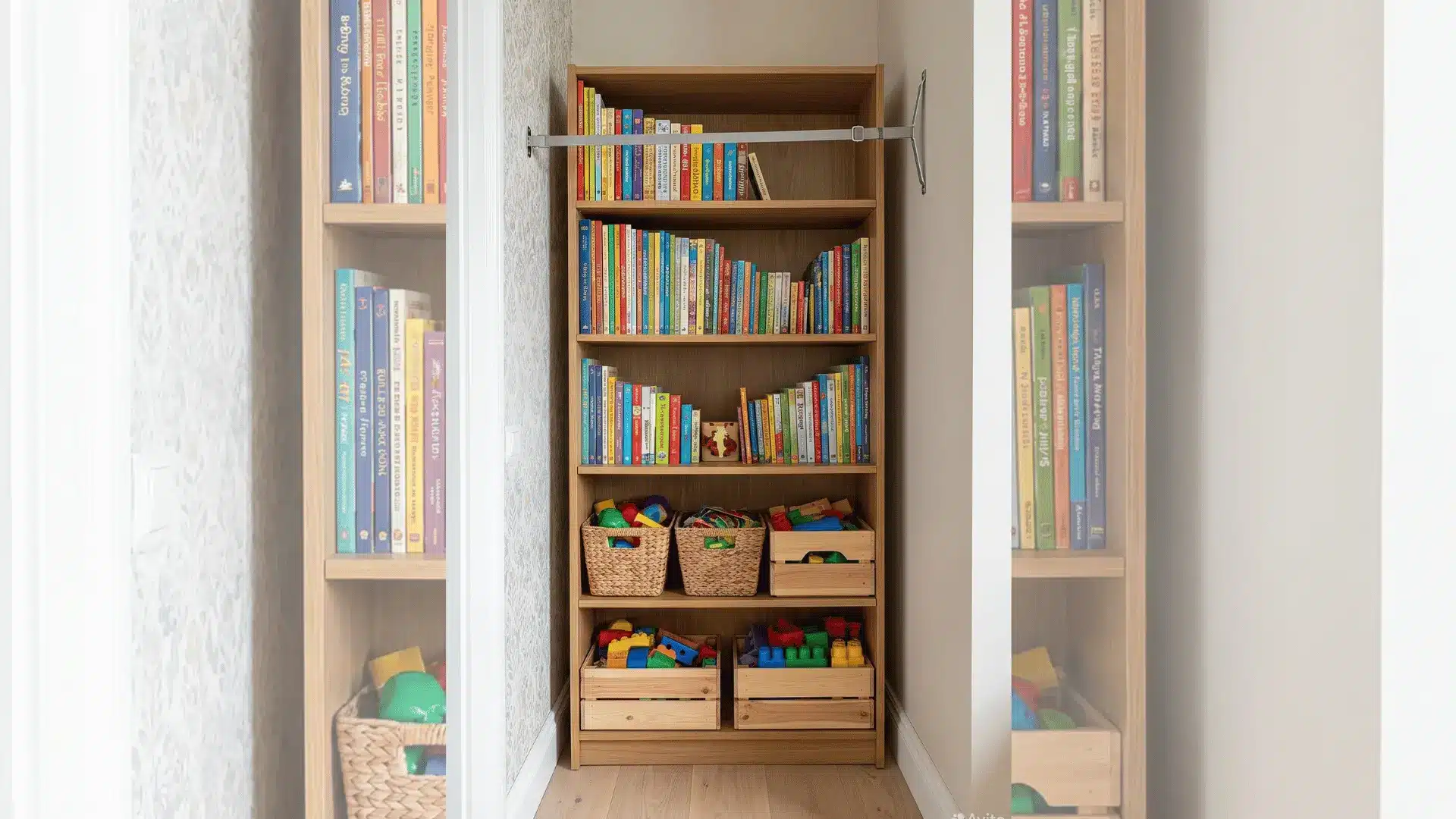
A tall, narrow bookcase uses wall height while occupying less floor space than a wide shelf. It works well in narrow rooms, shared areas, and hallway playroom layouts.
Place heavier items on the lowest shelves to improve stability. Secure the entire bookcase firmly to the wall so climbing, pulling, or accidental bumps cannot cause it to tip.
16. Soft Foam Play Mat with Storage Edges
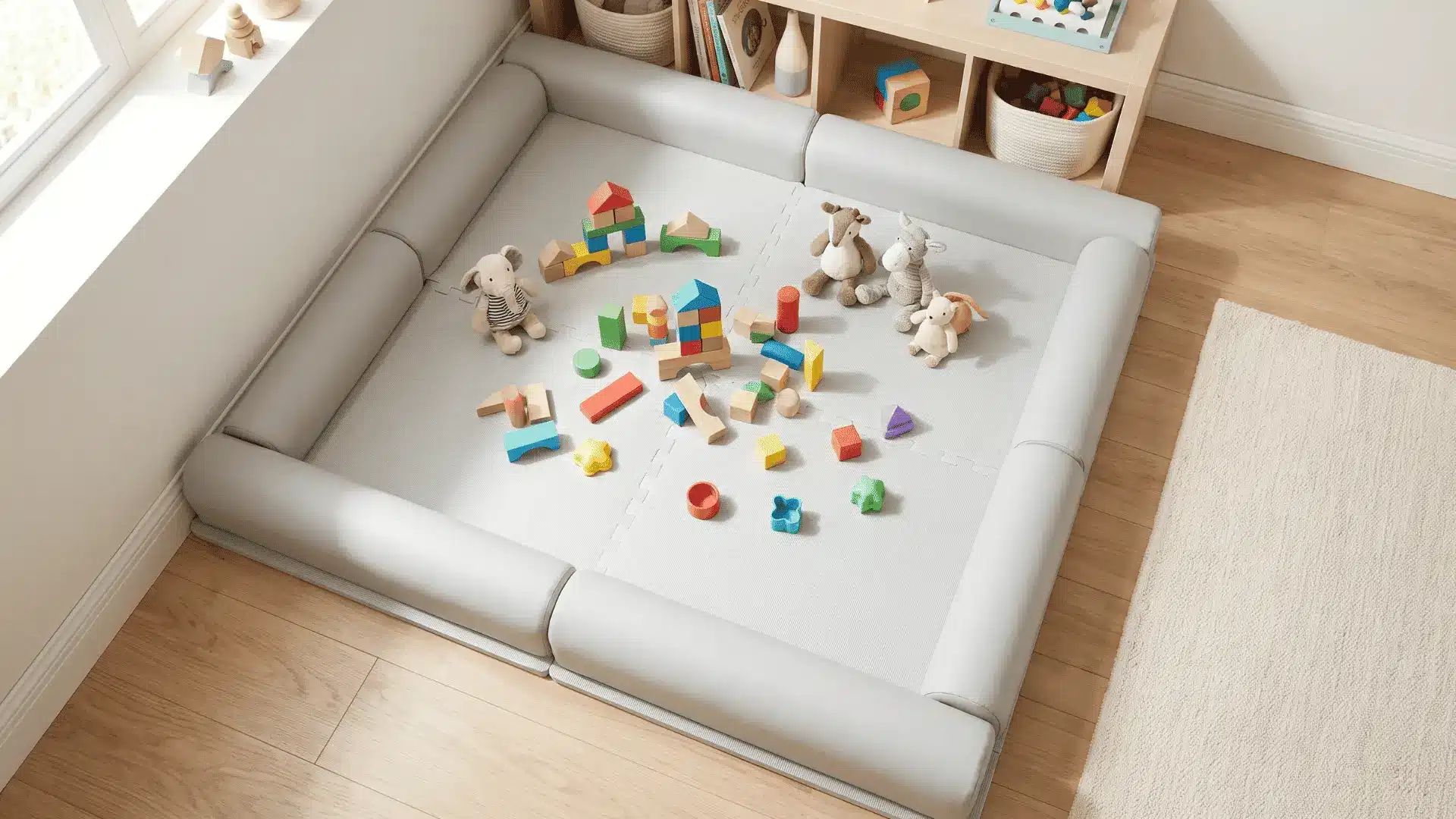
A soft foam mat provides a comfortable surface for babies and crawling toddlers. Raised storage edges also contain blocks, small toys, and loose pieces that might otherwise spread across the floor.
Choose wipe-clean sections that fit the available play area without blocking walkways. Remove damaged pieces immediately if the foam starts peeling, separating, cracking, or becoming unstable during regular use.
Measure the room before buying anything, including the space needed to open drawers or unfold surfaces. This prevents useful furniture from becoming another obstacle.
Use the Walls and Ceiling
Walls and overhead areas offer useful space when the floor is already full. They can hold toys, books, costumes, and active-play equipment.
17. Pegboard Wall Panel
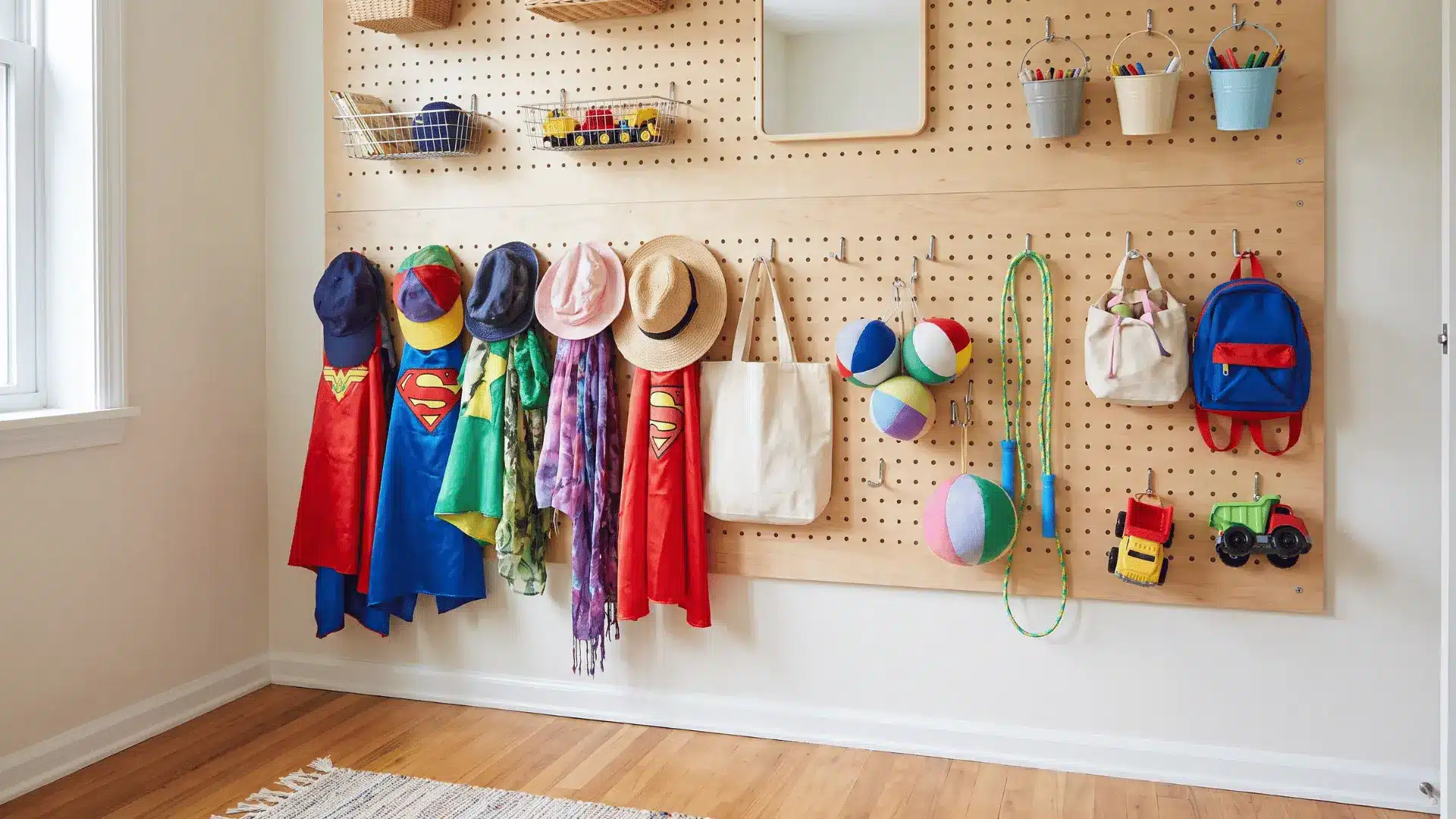
A wall-mounted pegboard stores lightweight toys, bags, and dress-up clothes without occupying floor space. Adjustable hooks can move whenever the child’s interests, toy collection, or storage needs change.
Install the panel securely and keep frequently used items at child height. Avoid hanging heavy objects or sharp accessories that could fall, swing, or cause injury during active play sessions.
18. Low Floating Shelves at Kid Height
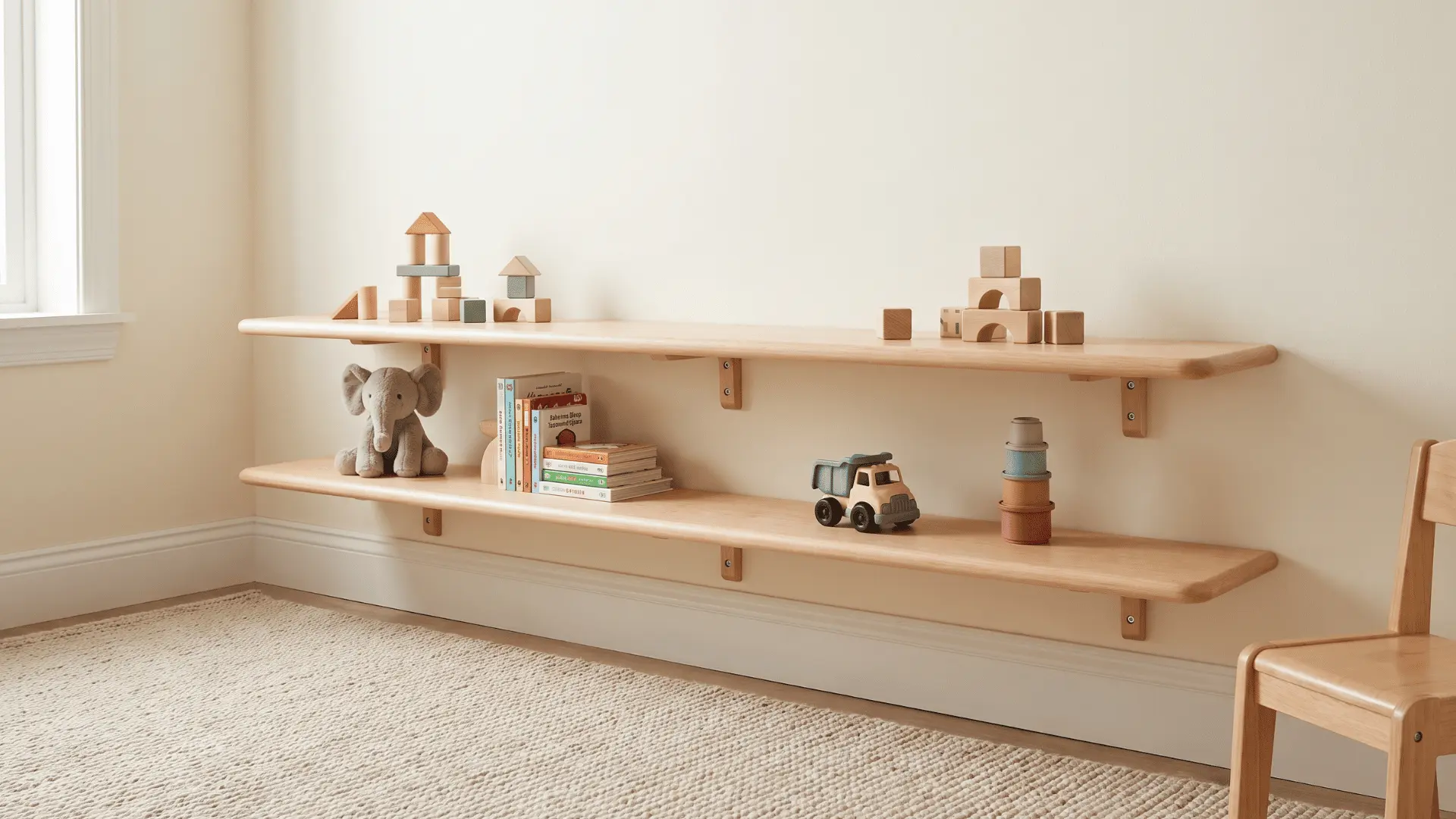
Low floating shelves keep everyday toys visible and within reach. Children can choose and return their belongings independently without asking an adult to retrieve items from higher storage areas.
Use strong wall fixings and shelves with rounded corners. Leave enough open space between toys so small hands can remove each item without knocking everything else onto the floor.
19. A Hanging Net for Stuffed Animals
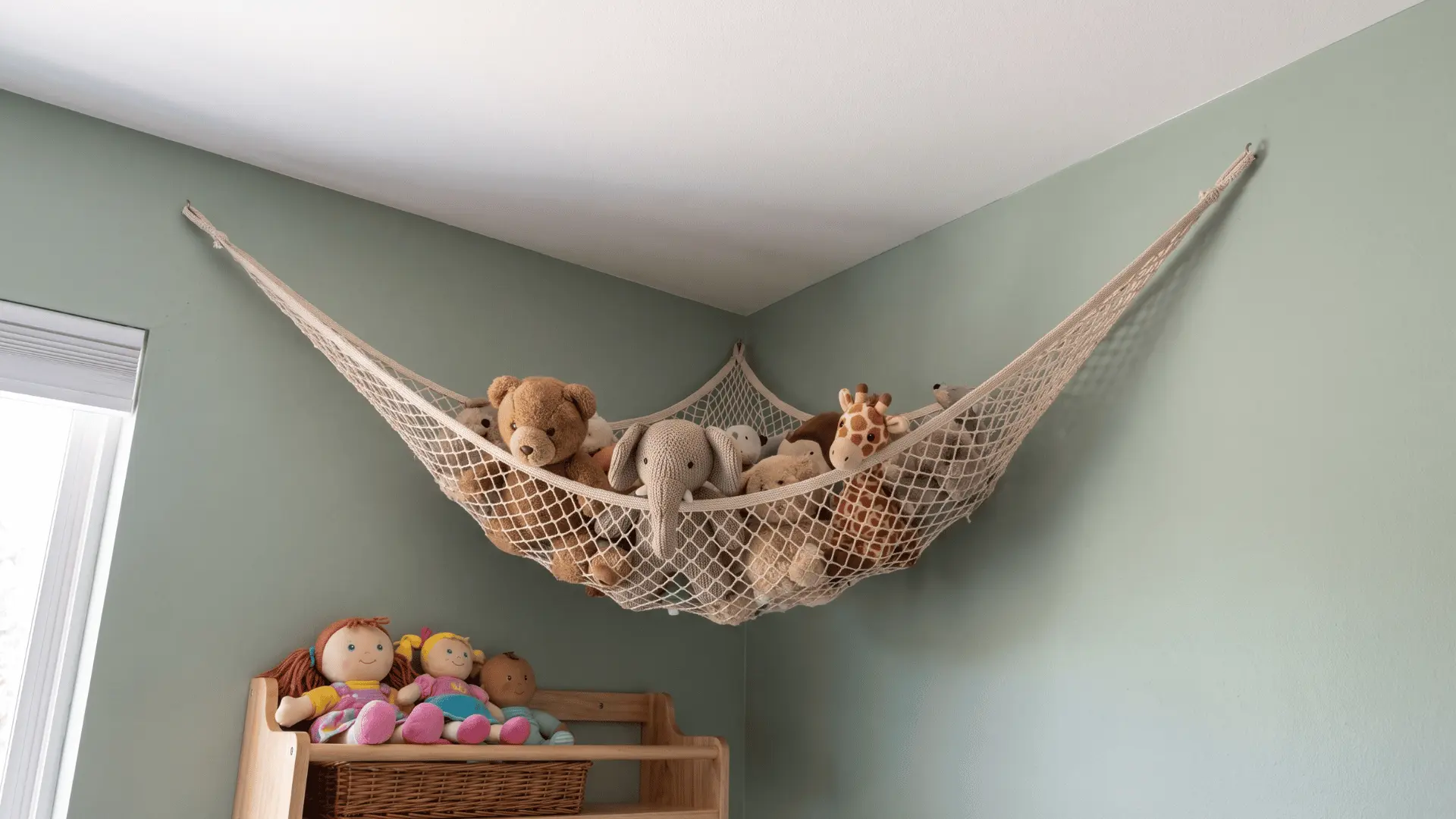
A corner-mounted net stores lightweight stuffed animals near the ceiling. It uses overhead space for soft toys that children rarely choose but the family is not ready to remove.
Keep daily favorites inside a lower basket where children can reach them. Adults should retrieve animals from the net so children are never tempted to climb furniture or nearby shelves.
20. A Ceiling-Mounted Rope Ladder or Soft Climbing Net
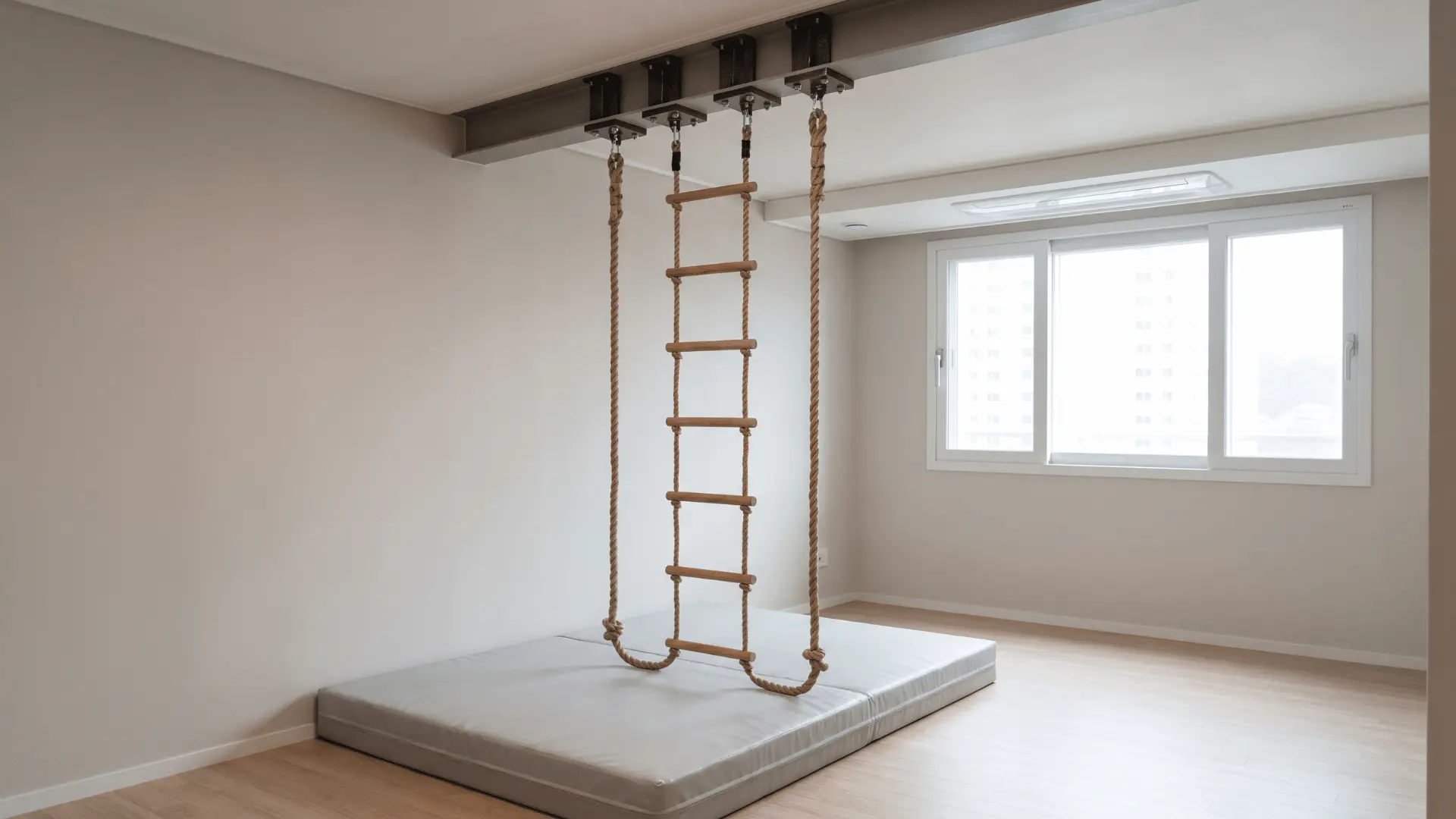
A ceiling-mounted rope ladder or soft climbing net creates an indoor movement area without permanently filling the floor with bulky equipment. It provides active play when outdoor movement is limited.
Professional installation and suitable floor padding are essential. Confirm the ceiling’s strength, equipment weight limit, required clearance, and supervision guidance before allowing children to climb or swing on it.
Keep everyday items within easy reach and place special items higher. Secure every wall or ceiling fixture correctly before children use the room.
Budget-Friendly and DIY Playroom Ideas
A useful playroom does not require expensive furniture or major renovation. Secondhand items and reused materials can solve common storage and decoration problems.
21. Repainted Secondhand Furniture
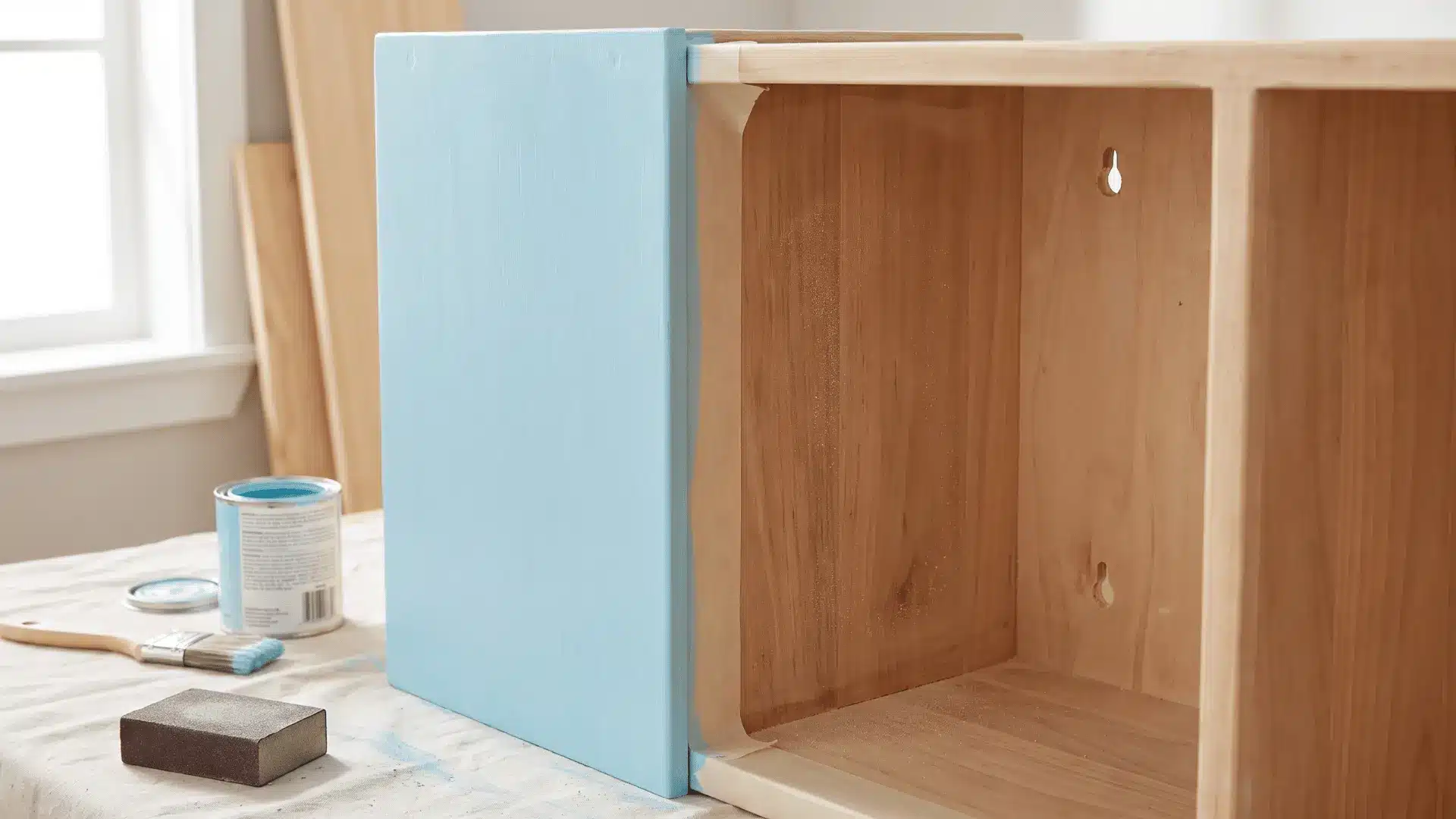
A secondhand shelf or cabinet can provide practical playroom storage for very little money. Inspect the frame, joints, surfaces, drawers, and hardware carefully before deciding that an item is usable.
Clean and sand every surface before applying child-safe paint. Secure tall furniture firmly to the wall after placing it in the room, particularly when children could climb the shelves.
22. Peel-and-Stick Wallpaper Accent Wall
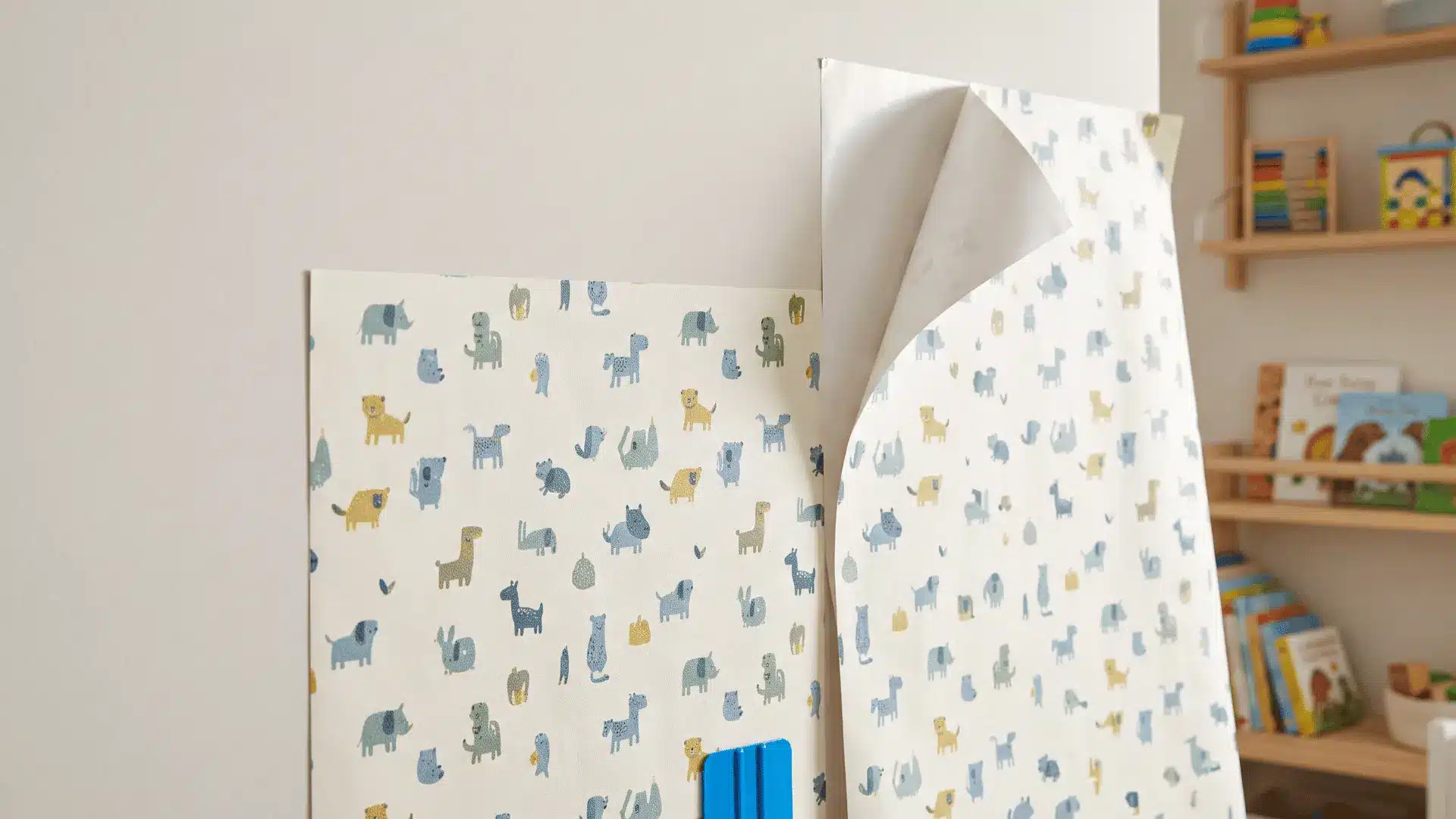
Peel-and-stick wallpaper adds color or pattern without requiring permanent renovation. It can suit rented homes, temporary playrooms, and shared spaces where decorating changes may be needed later.
Apply the wallpaper to a clean, smooth, and completely dry surface. Test one hidden section first to ensure removal will not damage, lift, or discolor the existing wall paint.
23. Fabric Scrap Bunting
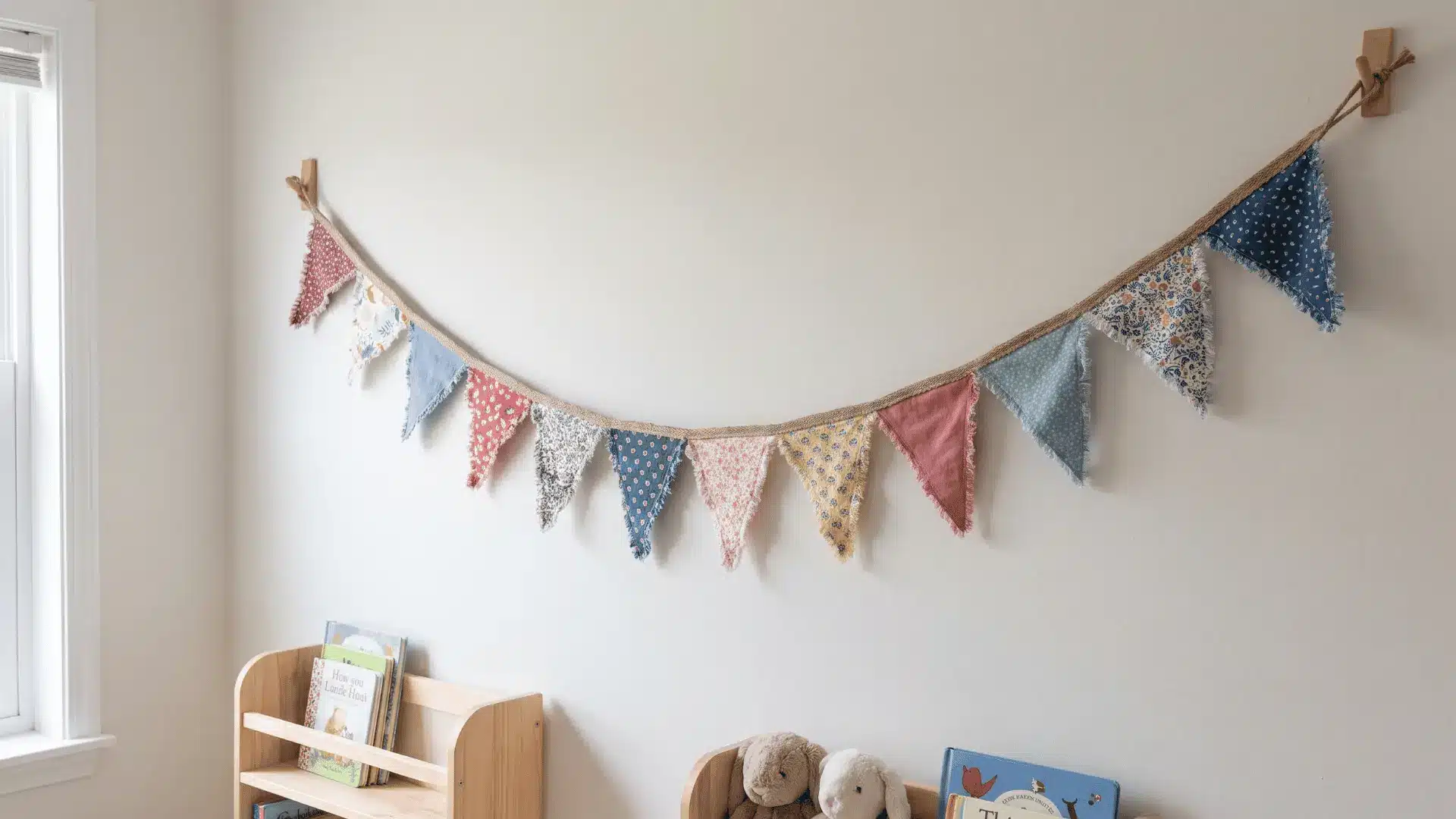
Leftover fabric can become simple playroom bunting without requiring new decorative materials. This inexpensive project gives small scraps another practical use while adding color to an otherwise empty wall.
Cut matching shapes and attach them securely to a strong length of binding. Hang the finished bunting high enough to keep fabric, knots, and loose cords beyond children’s reach.
24. Cardboard Box Playhouse
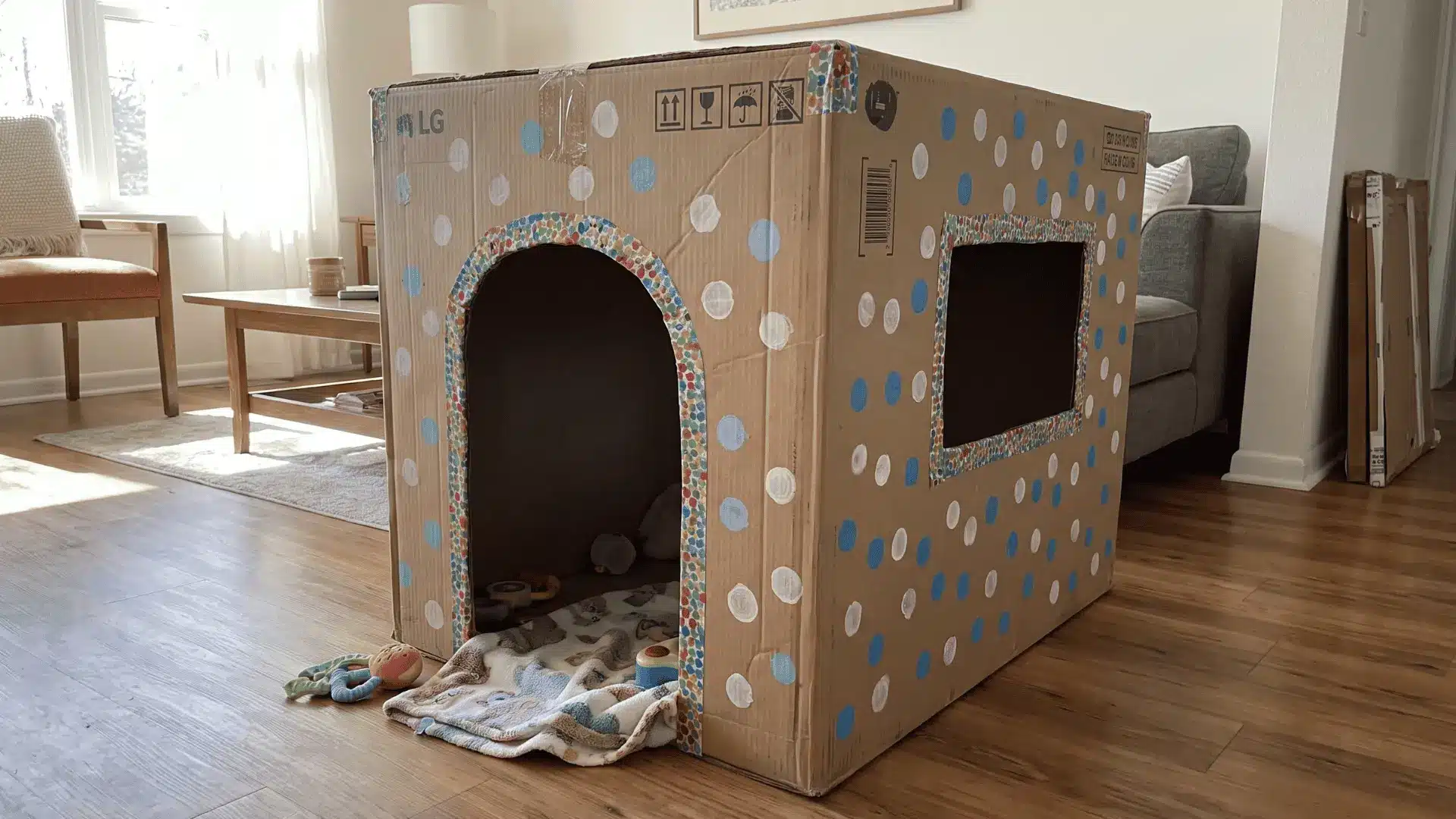
A large appliance box can become a temporary playhouse with carefully cut doors and windows. Children can decorate the outer surface with paint while keeping the structure simple and lightweight.
Remove staples, tape ends, and rough cardboard edges before allowing play. Replace the house once the box becomes torn, damp, crushed, unstable, or difficult to keep safely upright.
25. Mismatched Jars as Art Supply Holders
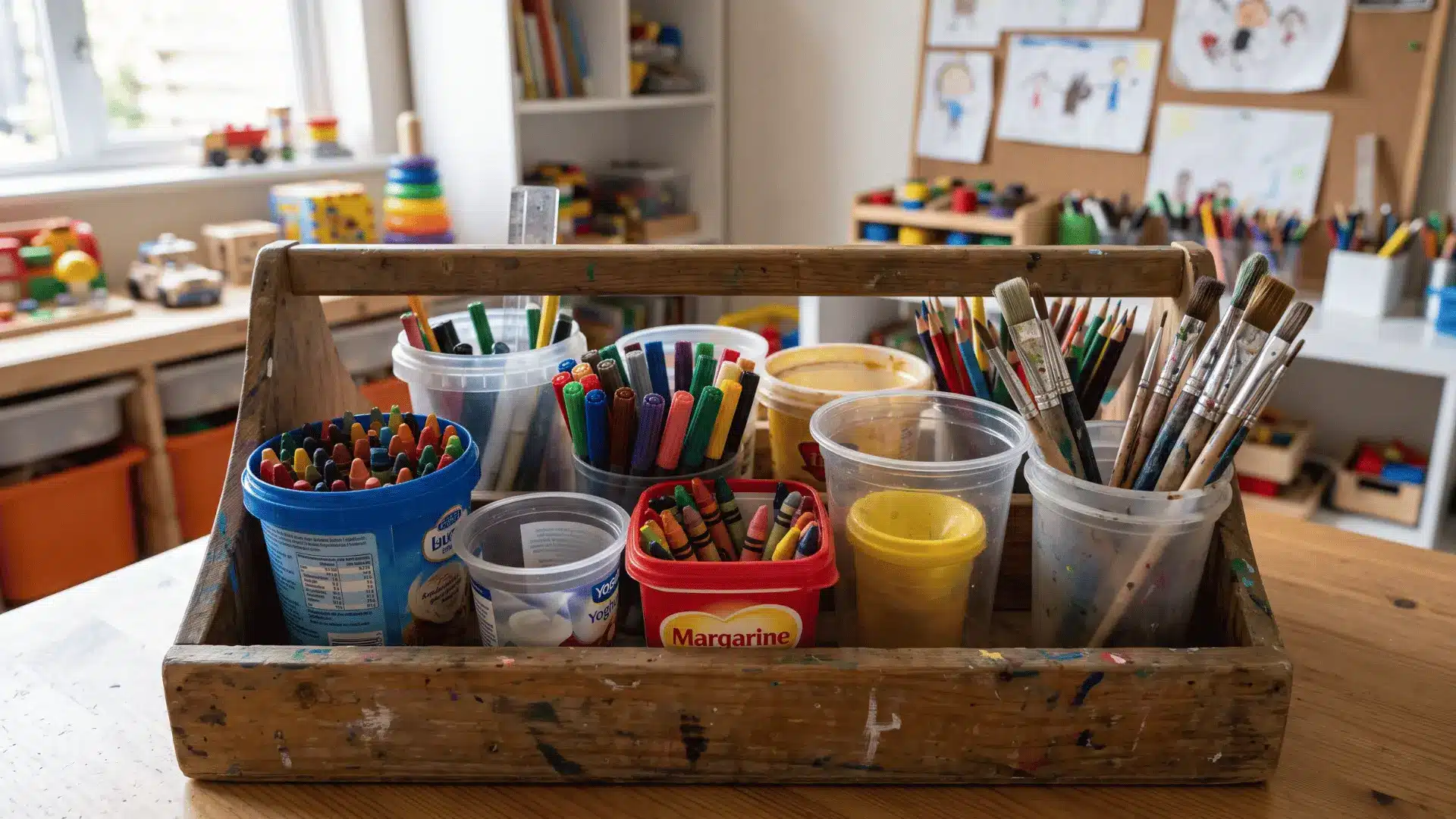
Clean reused containers can separate crayons, markers, brushes, and other small art supplies. Different sizes make sorting easier without requiring a new matching set of holders or additional storage furniture.
Use plastic containers instead of glass when younger children use the playroom. Group every holder inside one portable tray so the complete art set can be moved and stored together.
Quiet Corners and Reading Nooks
Even an active playroom benefits from a calmer area for reading or resting. A defined nook can provide that space without requiring another room.
26. A Curtained Reading Corner
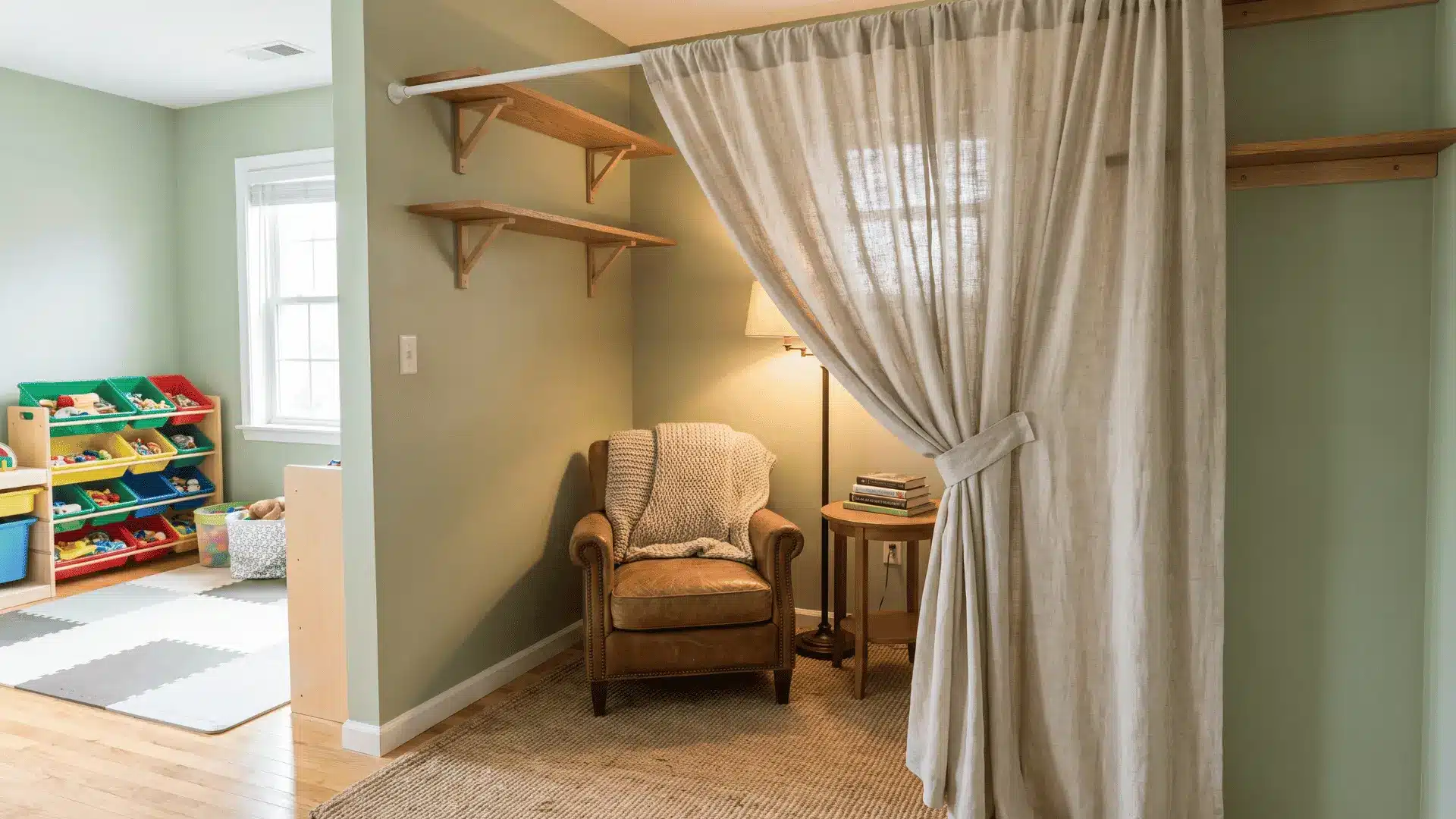
A lightweight curtain separates a reading corner without adding permanent walls or construction. It gives children a quieter, more private area inside a playroom shared with louder daily activities.
Use a firmly secured rod and lightweight, breathable fabric. Keep cords, ties, and loose material away from babies and toddlers who could pull, twist, or become caught in them.
27. A Small Canopy Tent
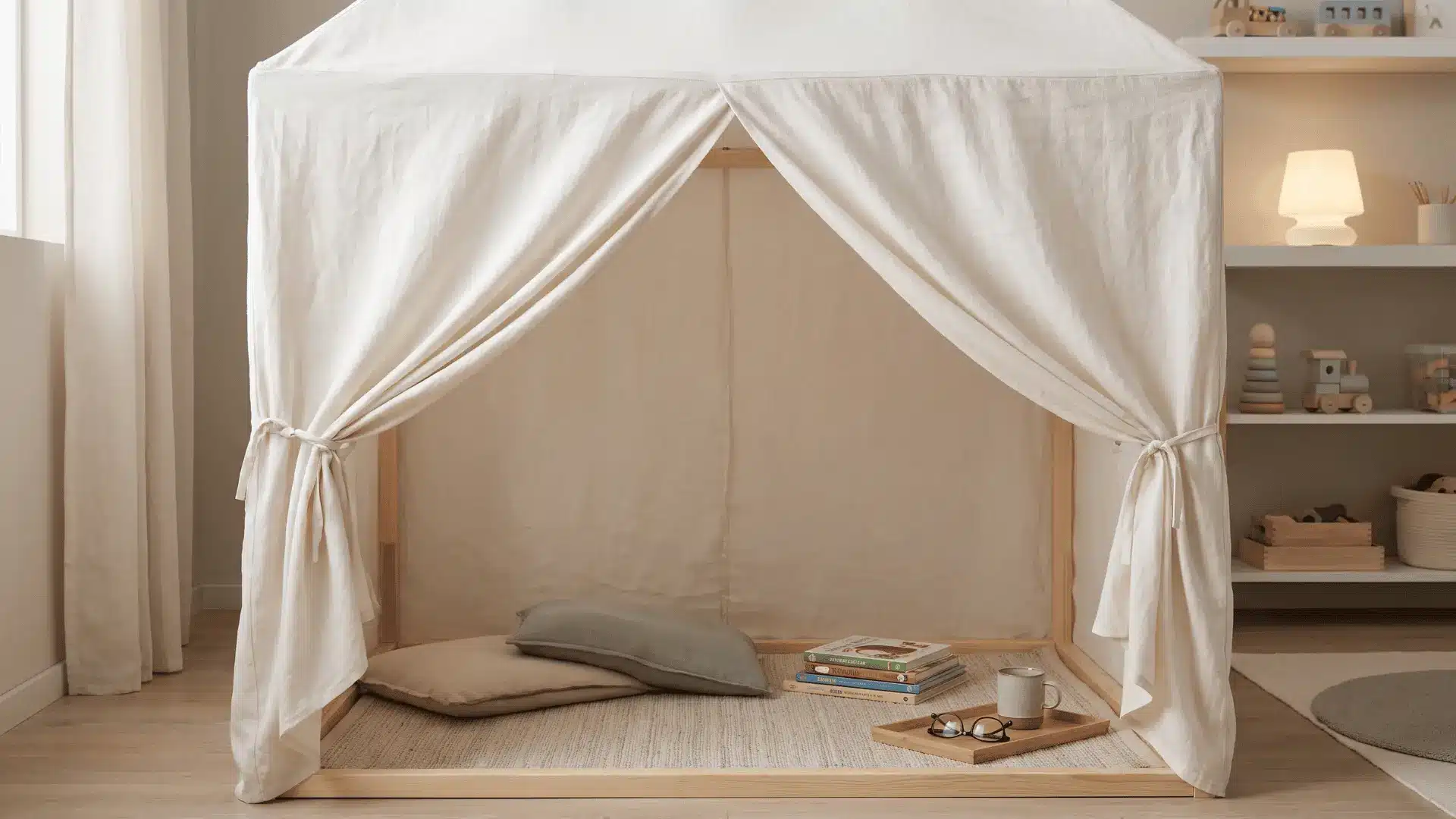
A compact canopy tent provides a quiet place for reading, resting, or solo play. It can be removed when the room needs to support larger activities or accommodate overnight guests.
Choose a breathable design with a wide, visible entrance. Avoid filling the interior with excessive cushions, heavy blankets, large toys, or anything that restricts airflow and clear adult visibility.
28. Soft String Lights Above the Nook
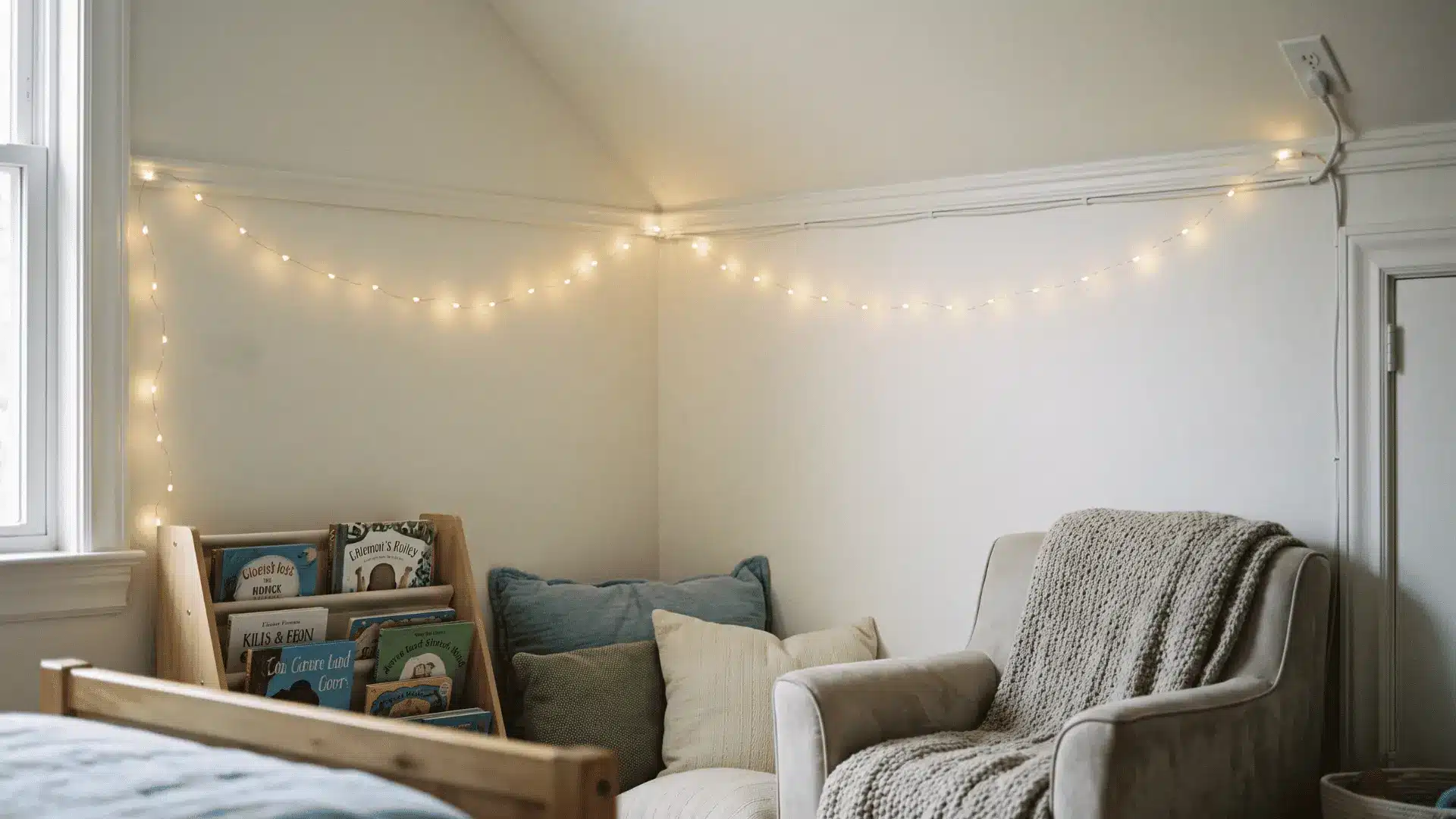
Soft string lights can mark the reading nook and support calmer evening activities. Mounting them overhead avoids adding another lamp that occupies floor, table, or shelf space nearby.
Use child-safe lights that remain cool during extended operation. Secure every cable, plug, and battery pack where children cannot pull, chew, open, unplug, or otherwise handle them.
Keep the nook simple, comfortable, and separate from noisy activities. Avoid filling it with so many items that it becomes another storage area.
Conclusion
You don’t need a bigger room to give your kid a playroom that actually works. What you need is a system: less clutter in sight, furniture that pulls double duty, and a few smart tricks for the walls and ceiling.
Start with just two or three ideas from this list, not all at once. Small changes, like a rotating toy bin or one floating shelf at kid height, tend to make the biggest difference first.
Your child’s playroom will keep changing as they grow, and that’s a good thing. The ideas here are meant to flex with your space, whether it’s a full spare room or one corner of a shared living area.
Pick what fits your space today, try it for a week, and adjust from there. A small playroom done right doesn’t feel small at all; it feels exactly right for how your family actually uses it.
Frequently Asked Questions
How do I create a playroom in a small space?
Start by picking one wall for storage, choose furniture that serves two purposes, and keep only a third of toys visible at once. Rotate the rest in a closet bin to keep the room open and manageable.
What are the best small playroom ideas for toddlers?
Low, open shelving toddlers can reach alone works best, paired with soft floor mats and labeled bins by toy type. Simple layouts with fewer visible choices help toddlers focus and clean up on their own.
What are some budget-friendly small playroom ideas?
Repainted secondhand furniture, peel-and-stick wallpaper, and a cardboard playhouse all cost under $50 combined. A one-in-one-out donation box also keeps the room from outgrowing its budget over time.
What should every small playroom have?
Every small playroom needs defined zones, kid-height storage, a soft seating spot, and one quiet corner separate from active play. These four basics keep a tiny room functional no matter how many toys come and go.