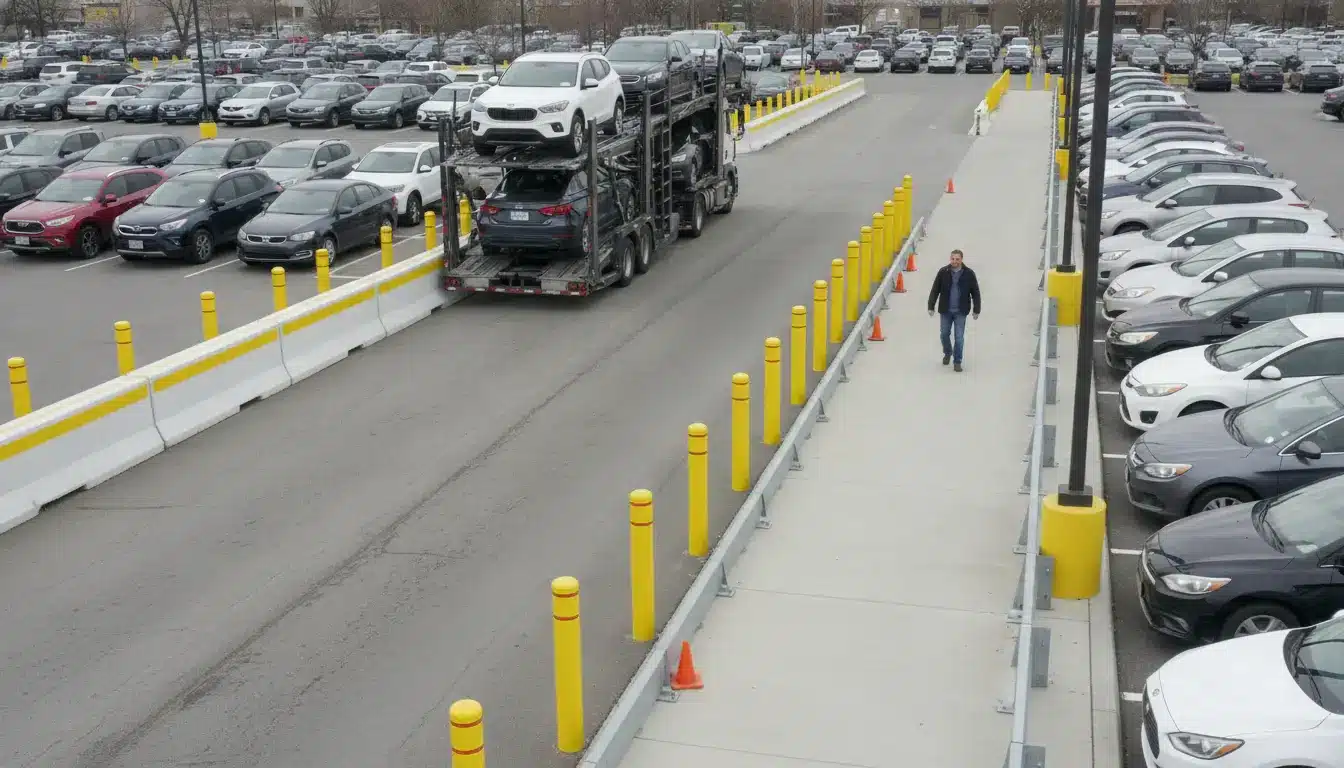
Watch a busy vehicle lot for ten minutes and the weak points start to show. A transporter waits at the gate because its bay is occupied. A driver walks across an active lane to reach the office. Another car reverses around a delivery van.
None of these events looks serious on its own. Together, they leave very little room for error.
Safety improvements should begin with the way the site works today. The original plan may no longer match the routes used during a busy shift.
Understand Vehicle and Delivery Traffic Flow
Stand near the entrance during a shift change or scheduled delivery. Note which vehicles arrive, where they pause, and how they reach their destination.
Pay close attention to large transporters. The front of the vehicle may clear a corner while the rear cuts across the inside. A route that works for a passenger car may be too narrow for a loaded transporter.
The position of a waiting vehicle also matters. A queue inside the gate can block outgoing traffic. A queue outside the gate can affect the public road.
Give each vehicle a clear next step. It should be able to enter, wait, load, park, and leave without unnecessary reversing. Turning areas must stay free from parked cars and stored materials.
Base the route on the largest regular vehicle and the busiest normal period. An empty parking lot can make a poor layout look better than it is.
Separate Loading Areas From Parking Spaces
A loading bay only works when it remains available.
The boundary between loading and parking can slowly disappear. Staff may use the edge of an empty bay. Staged vehicles may fill the approach. Equipment may be left beside a loading ramp.
The loading zone needs space for the vehicle, open doors, ramps, and people working around it. The next transporter also needs a separate waiting position.
Clear markings, signs, and suitable Car Park Safety Equipmentshould make the boundary easy to recognise from the driver’s seat.
A smaller site may need to use one area for several purposes. Assign different times to each activity. Clear the area before the next use begins. Parked cars and unused equipment should already be gone before a transporter enters.
This prevents a short loading delay from blocking movement across the whole site.
Reduce Speeds Near Entrances and Pedestrian Areas
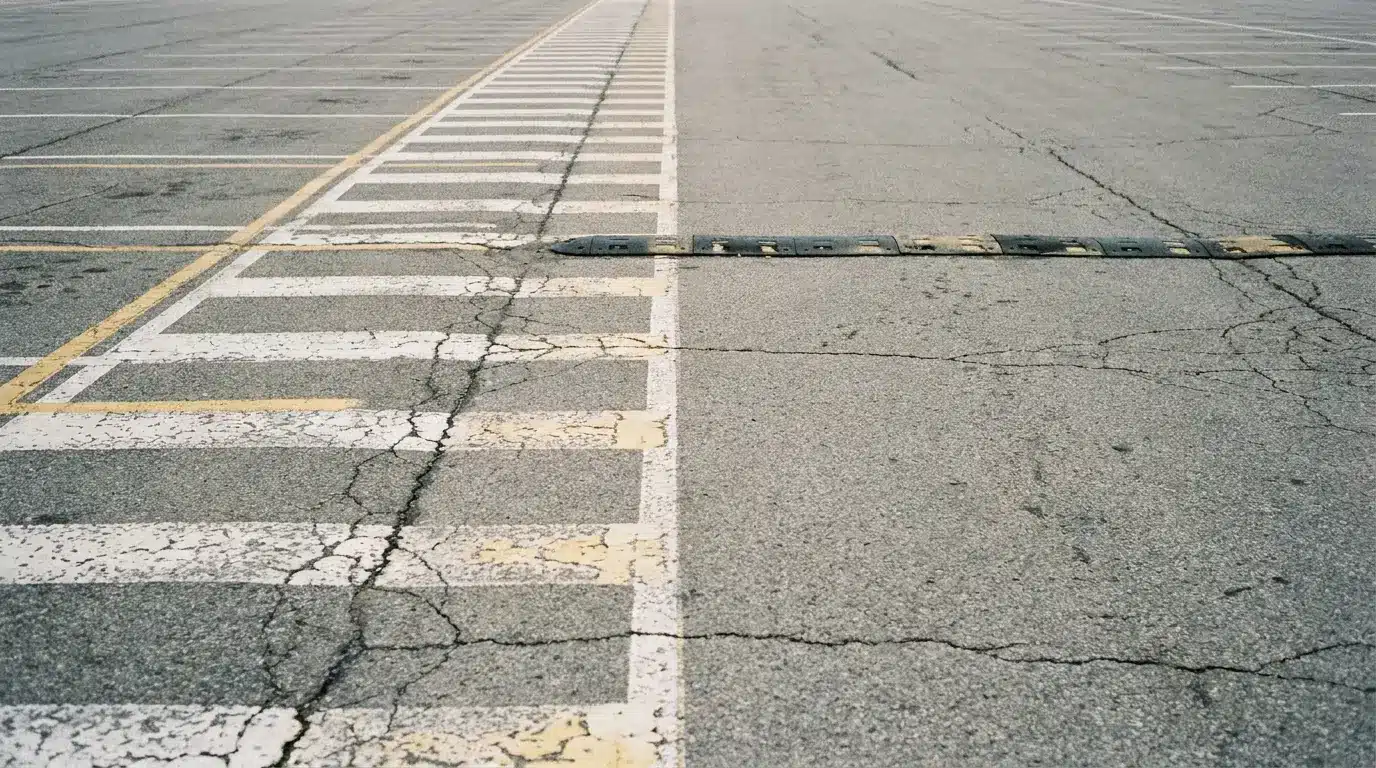
A low speed limit at the end of a long, open lane may have little effect. Drivers need to see the speed message before they enter a high-risk area.
Repeat the limit near offices, pedestrian crossings, and loading zones. Use lighting and clear surface markings to make these areas easy to recognise.
Shorter straight sections can reduce acceleration. A slight change in the route may also slow vehicles before a crossing. Keep parked cars, bins, and tall planting away from the approach. Drivers need to see people before reaching the crossing.
Raised speed-control products require careful selection in a vehicle logistics site. Sports cars, loaded transporters, and vehicles with long overhangs may have very different clearances. Check axle width, ground clearance, and ramp angles before installation.
Observe the area again after making a change. Hard braking, tyre marks, or vehicles driving around a control show that the design needs another look.
Protect Buildings and Equipment From Vehicle Damage
Walk around the edge of the parking lot and look for evidence of earlier contact. Scuffed walls, bent fixings, damaged kerbs, and tyre marks often show where drivers run out of space.
Common risk points include loading doors, office corners, gate motors, charging units, and utility cabinets.
Move the vehicle route farther away wherever possible. Wheel stops can control the final position of passenger cars. Bollards or guard rails can protect fixed equipment. Areas used by heavy vehicles may need stronger protection.
Make each protective feature easy to see. Bright colours and reflective surfaces help during early starts and night operations.
The equipment must also stay outside pedestrian routes and vehicle turning space. A poorly placed post can replace one problem with another.
Inspect every protective feature after a collision. Loose foundations and damaged fixings may not be obvious from a distance.
Review Parking Layouts as Needs Change
Parking lots often drift away from their original design. A temporary cone becomes permanent. A spare bay turns into storage. A new charging point narrows a walking route. Delivery volumes increase, but the waiting area stays the same.
Review the layout as soon as one of these changes becomes part of normal work. Do not wait for the next annual inspection.
Walk the site with someone who moves vehicles and someone who regularly works on foot. They will notice different problems.
Use real evidence during the review. Near-miss reports, repair records, tyre marks, queues, and driver comments can show where the layout is failing.
Check the routes, signs, lighting, markings, crossings, drainage, and protective equipment. Remove old arrows and signs before a new route opens. Conflicting directions leave visiting drivers guessing.
Finish the review with a short list of actions. Give every action an owner and a completion date.
The goal is not a parking lot filled with warnings. It is a site where the next movement is obvious. A transporter can reach its bay. A car can park without blocking the route. A pedestrian can reach the building without relying on a driver’s last-second reaction.
That clarity protects people, vehicles, and the pace of the operation.