When I first started looking into transport chair vs wheelchair options, I assumed they were basically the same thing. Both look similar, but they serve completely different needs and users.
The real difference comes down to who moves the chair. Wheel size, frame weight, and seating support all follow from that one core design decision.
What I found most useful was understanding the logic behind each chair before comparing specs. Stick with me here, and the right choice will become much clearer than you’d expect.
Transport Chair vs. Wheelchair: What’s the Real Difference?
The simplest way I know to explain this: a wheelchair is built around the person sitting in it. A transport chair is built around the person standing behind it.
I’ve seen this difference cause real confusion. Both chairs look similar at first glance, but once you understand the design logic, the distinction becomes obvious.
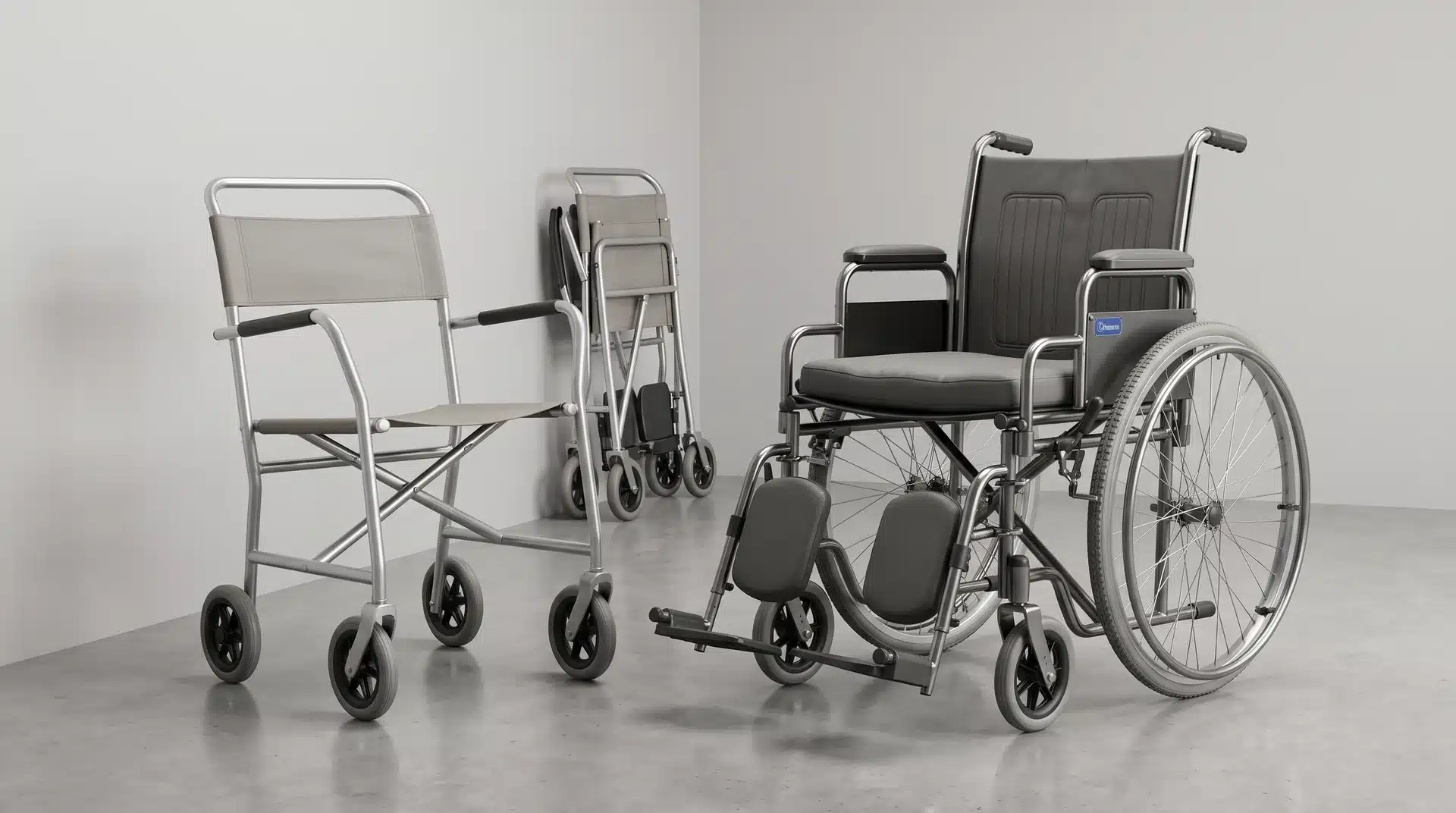
- A standard wheelchair has rear wheels around 24 inches in diameter. That size exists so the seated person can reach the hand rims, grip them, and push themselves forward.
- A transport chair’s rear wheels are only 8 to 12 inches across. At that size, the rims sit well below where your hands can reach from a seated position. There’s simply nothing to grip.
Most people assume a smaller wheel just means a lighter wheelchair. But self-propulsion isn’t harder with a transport chair. It’s geometrically impossible.
The wheel size isn’t a shortcut to save weight. It reflects who the chair was actually designed for: one around the seated person, the other around the person pushing.
How Wheelchairs and Transport Chairs Are Designed Differently
The two differences that matter most are wheel size and frame weight. Both follow directly from how each chair is meant to be used.
| Feature | Wheelchair | Transport Chair |
|---|---|---|
| Frame Weight | Usually 35 to 50 lbs. Built to support users sitting 2 to 12 hours with stronger, more durable frames. | Usually 15 to 25 lbs. Designed for short trips like appointments, airports, and outings. |
| Wheel Configuration | Large rear wheels allow users to move and control the chair independently. | Small rear wheels are designed for caregiver assistance and easier movement in tight spaces. |
| Seating and Support | Built for long-term use with pressure-relief cushions, adjustable armrests, and elevating leg rests. | Uses a basic sling-style seat suited for short periods of sitting. |
| Comfort and Health Support | Better support for daily users by helping manage posture, pressure, and long sitting periods. | Not designed for extended sitting and may create more pressure on the spine and tailbone. |
| Portability and Storage | Folds for storage but is heavier and harder to load regularly into a car. | Folds flat and fits easily into most car trunks. At under 25 lbs, one person can usually lift it. |
| Best Use Case | Daily mobility, independent movement, and users who spend long hours in the chair. | Temporary transport, short outings, and situations where a caregiver pushes the user. |
Specs only tell you so much. What actually helped me was asking why each chair is built the way it is. Once you see that logic, the right choice becomes obvious.
Who Should Use a Transport Chair, and Who Should Use a Wheelchair?
Two questions can narrow this down quickly. Does the user need to move independently? And is a caregiver always available to push? Those two answers do most of the deciding.
| Situation | Wheelchair | Transport Chair |
|---|---|---|
| Needs to move independently | Yes | No |
| Uses a walker at home | No | Yes |
| Sits for long periods daily | Yes | No |
| Caregiver not always available | Yes | No |
| Short trips and outings only | No | Yes |
| May ever be alone and need to move | Yes | No |
That last row is the one I always highlight. If the user might ever be alone and need to move, a transport chair cannot be their only mobility aid. That single scenario rules it out.
Some people use both. A transport chair handles outings while a wheelchair covers daily movement. It is a practical combination and more common than most people expect.
Does Medicare Pay for Transport Chairs?
Medicare can cover transport chairs, but I wouldn’t count on it being automatic. Documented medical necessity and supplier enrollment determine coverage. Your preference for the device does not factor in.
- Part B coverage: From what I’ve seen, Part B covers wheelchairs as Durable Medical Equipment when a physician documents medical necessity and you purchase from an enrolled supplier.
- The home-use threshold: Medicare’s qualifying question is whether the device is needed for mobility inside the home. That same standard applies to transport chairs, which trips a lot of people up.
- The gray area: Medicare may cover a transport chair if a physician prescribes it and determines a standard wheelchair is not medically necessary. That call belongs to the physician, not the buyer.
- Prior authorization: Coverage is not granted at the point of purchase. Authorization must be confirmed before the chair is bought. Sorting it out afterward rarely works in your favor.
Before spending anything, get the prescription documented and confirm your supplier is Medicare-enrolled. DME criteria change, so always verify at medicare.gov.
Wrapping Up
The transport chair vs. wheelchair decision is not one I’d take lightly, and treating them as interchangeable leads to real problems. The right choice depends on independence, daily use, and caregiver availability.
Medicare coverage adds another layer that caught me off guard the first time. Getting the prescription and authorization right before purchasing saves significant time, money, and frustration down the line.
Looking back at everything covered here, the decision really comes down to one honest question: will this person ever need to move on their own? Answer that, and everything else falls into place.
Frequently Asked Questions
Can I use a transport chair as a wheelchair?
Only in limited circumstances. A transport chair cannot be self-propelled under any conditions, the rear wheels are too small to reach or operate from a seated position. It can substitute for a wheelchair only when a caregiver is always present to push and the user does not need to move independently at any point during the outing.
Are transport chairs hard to push?
Generally no. Because transport chairs weigh 15–25 lbs and sit low to the ground, most caregivers find them easier to push than a standard wheelchair. Difficulty increases on uneven terrain or inclines, where the small rear wheels provide less stability and rolling resistance is higher than with large-wheeled chairs.
What are the main benefits of a transport chair?
The primary benefits are portability and ease of storage. Transport chairs fold compactly, weigh significantly less than standard wheelchairs, and fit easily into a car trunk. This makes them practical for travel, medical appointments, and situations where a full wheelchair would be cumbersome to transport or maneuver in tight spaces.
Can a person in a transport chair propel themselves at all?
No. The rear wheels on a transport chair are typically 8–12 inches in diameter and have no hand rims. A seated occupant cannot reach them to generate movement. The device is designed exclusively for caregiver operation and should never be relied upon in any situation where the user may need to move without assistance.