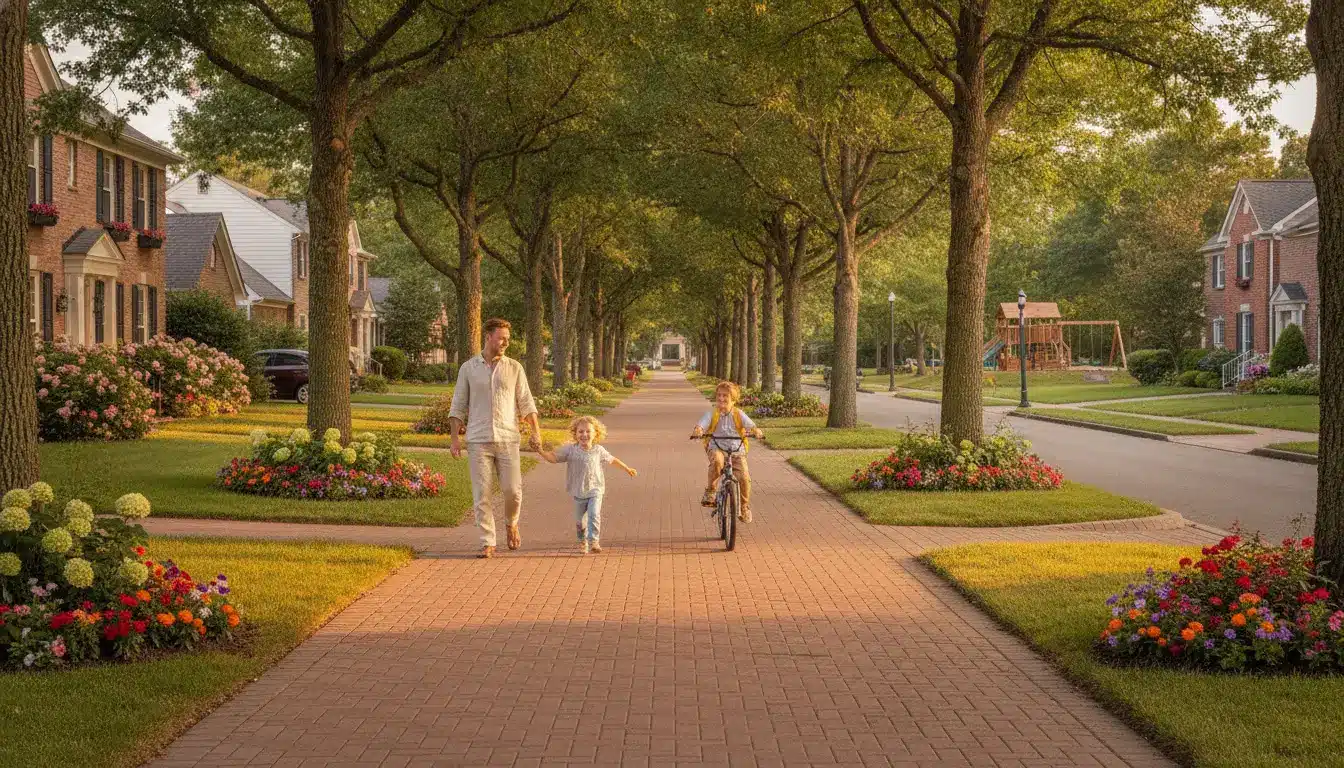
Choosing a neighborhood is not just a real estate decision — it’s a decision about how your family spends its days. A walkable, safe block means kids can ride bikes after school, parents can stroll to the corner store, and everyone ends up outside more. A car-dependent neighborhood with no sidewalks means the opposite: more driving, less spontaneous connection, and a daily routine that feels more like logistics than living.
The good news is that walkability and safety are qualities you can research and verify before you sign anything. Here’s how to evaluate them the right way.
Understand What Walkability Actually Means
A neighborhood’s Walk Score or a quick map search gives you a starting point, but real walkability comes down to specifics. Can your kids walk to school on connected, unbroken sidewalks? Are there crosswalks with signals at busy intersections? Is there a grocery store, library, or park within a 10- to 15-minute walk? These are the trips that shape daily life. A neighborhood that scores well on a map but requires crossing a six-lane arterial road to get anywhere isn’t truly walkable for a family with young children.
Look at the Infrastructure, Not Just the Destination
The streets themselves tell a clear story. On your visits, pay attention to sidewalk continuity, the width of the road, and how fast cars actually move (not just the posted speed limit). Traffic-calmed streets with speed bumps, painted crosswalks, and bike lanes signal that the local government has invested in pedestrian safety. Dead-end streets and cul-de-sacs often feel safer for kids because through-traffic is limited, even without formal infrastructure. Narrow lanes and on-street parking also tend to slow drivers naturally.
Look up whether the city has a Safe Routes to School program. These federally supported initiatives identify and improve the walking and biking paths children use to get to school, and communities that participate tend to take pedestrian safety seriously across the board.
Research Safety With More Than Crime Statistics
Safety has layers. Crime rates are one input, but the picture is wider. In a survey of 1,000 parents and caregivers, discover Rocket Mortgage’s best places to live for families found that 65% of parents ranked safety as their single most important factor when choosing where to raise a family — and that instinct covers more than just crime. It includes traffic safety, lighting at night, and whether children feel comfortable moving through the space independently.
Check local crime data through the city’s police department or platforms like NeighborhoodScout, but also visit at different times of day. A neighborhood at 9 a.m. on a Tuesday and at dusk on a Friday will show you very different things. Notice whether people are out walking, whether kids are playing on sidewalks, and whether the overall feel is engaged or shuttered.
Pay Attention to Green Space and Play Areas

Parks are not a luxury — they are infrastructure for childhood. A neighborhood with multiple parks, trails, or playgrounds spread within walking distance gives kids a genuine range of outdoor options. Before you commit to any area, map the nearest park and time the walk from the front door. If it requires crossing a highway or takes more than 15 minutes on foot, you will end up driving there, which defeats the purpose.
Look for parks with different offerings: a field for older kids, a shaded playground for younger ones, and walking paths for the whole family. Greenways and trails that connect multiple neighborhoods are especially valuable because they give children and adults a safe, car-free route that opens up a larger slice of the city.
Involve Your Kids in the Visit
Children notice things adults overlook. On a neighborhood visit, let your kids walk or ride a short stretch of sidewalk on their own while you follow at a distance. Watch how they interact with the space. Are there other kids out? Do they naturally slow down and explore, or does traffic or a lack of interest make the visit feel short? The experience of the space from a child’s height — literally — is different from the adult view, and worth paying attention to.
Ask them afterward what they liked and what felt uncomfortable. Older children in particular will give you specific feedback about things like crossing a street or whether a park felt inviting. Their read is useful data.
Factor Walkability Into Your Long-Term Budget
Walkable neighborhoods often come with a price premium, but they also tend to deliver long-term value. Homes in highly walkable areas historically hold their value well and attract consistent buyer interest because the appeal is structural, not cosmetic. Beyond resale, consider what you save on transportation. Families in walkable neighborhoods often reduce their car usage significantly, which can offset hundreds of dollars a month in gas, parking, and maintenance. A slightly higher mortgage in a neighborhood where one car does the work of two is frequently the better financial move over a decade.
References
- Walk Score. How Walk Score Works. https://www.walkscore.com/methodology.shtml
- Safe Routes to School National Partnership. About Safe Routes to School. https://www.saferoutespartnership.org/