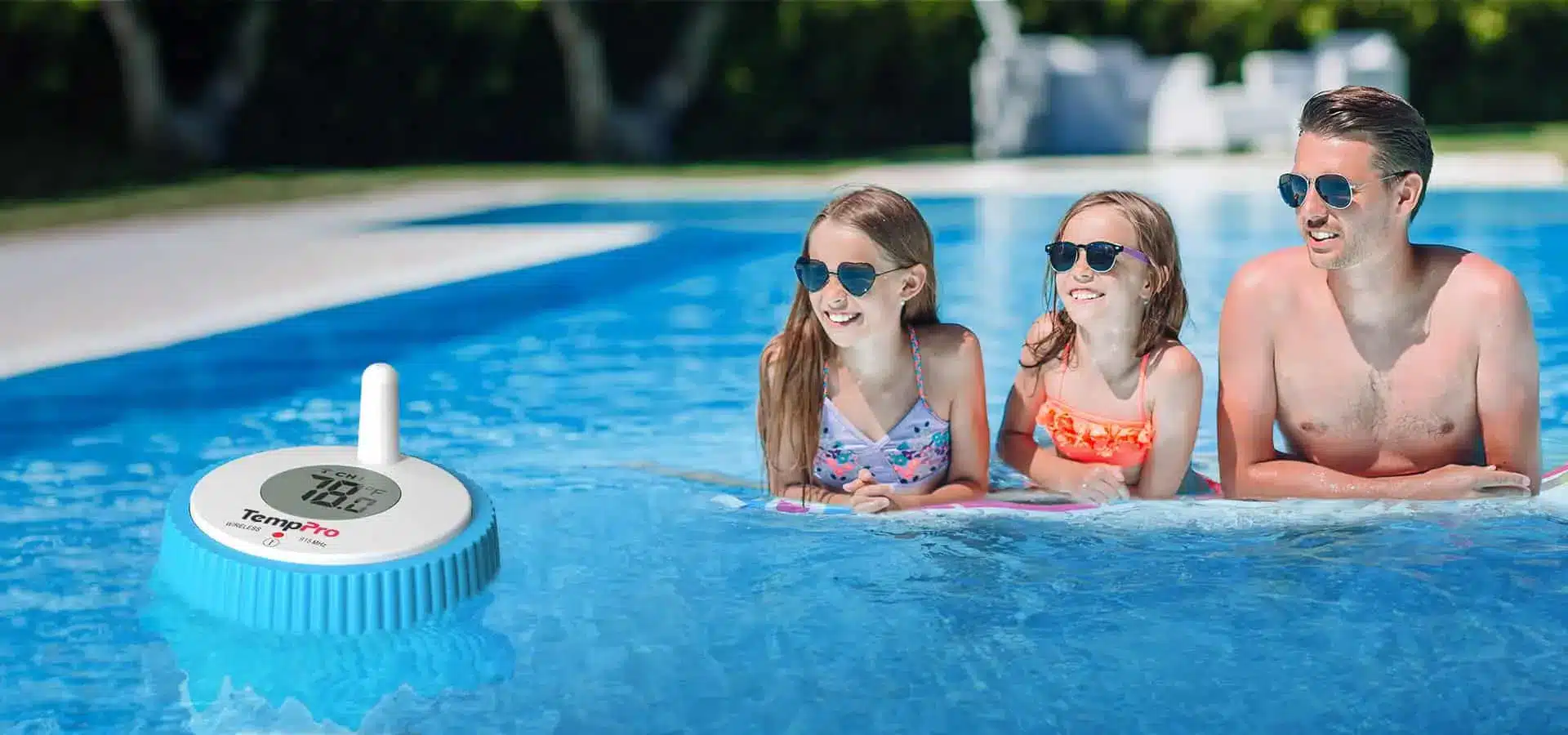
The backyard swimming pool has officially become command central for summer fun. From afternoon cannonball contests to weekend pool parties, swimming is the ultimate way for kids to burn off energy and beat the heat.
As parents, we meticulously slather on waterproof sunscreen, lay out safety floaties, and keep a watchful eye on the water. However, there is one crucial safety factor that even the most diligent parents often overlook: pool water temperature. Is the water actually comfortable for your little ones, or is it secretly too cold or even dangerously hot? In this essential guide, we’ll explore the science behind safe pool temperatures for children, the hidden risks of improper water temps, and how a remote swimming pool thermometer can make your summer completely stress-free.
Why Pool Water Temperature Matters for Children
Children experience water temperature much differently than adults do. Because kids have a higher surface-area-to-body-mass ratio and less subcutaneous fat, their bodies lose heat in cool water and absorb heat in hot water, much faster than grown-ups.
The Dangers of Water That Is Too Cold
Even on a scorching 90°F July day, pool water can remain surprisingly chilly, especially in the morning or after a cool night.
- Cold Shock: Entering water below 77°F can trigger an involuntary gasp reflex, which increases the risk of accidental water inhalation.
- Hypothermia Risk: Children swimming in water under 80°F can develop mild hypothermia in as little as 30 minutes, leading to shivering, muscle fatigue, and cramps that make swimming unsafe.
The Dangers of Water That Is Too Hot
Conversely, mid-summer heat spikes can turn backyard pools into warm bathwater. If water temperatures climb above 90°F:
- Overheating & Dehydration: Kids actively playing in warm water won’t realize they are sweating, leading to rapid dehydration, heat exhaustion, or dizziness.
- Bacterial Growth: Warm water depletes pool chlorine rapidly, turning your crystal-clear pool into an ideal breeding ground for algae and harmful bacteria.
What Is the Ideal Safe Pool Temperature for Kids?
According to guidelines from the Red Cross and USA Swimming, the optimal pool water temperature varies depending on your child’s age and activity level:
Infants & Toddlers (Under 3 Years):
Ideal water temperature: 84°F to 88°F (29°C – 31°C)
Babies cannot regulate their internal body temperature effectively and need warmer water to stay relaxed and safe.
Recreational Kid Swimmers (Ages 3-12):
Ideal water temperature: 82°F to 86°F (28°C – 30°C)
The ultimate “sweet spot.” Warm enough to prevent shivering during play, but cool enough to prevent overheating.
Competitive / Lap Swimming:
Ideal water temperature: 78°F to 82°F (26°C – 28°C)
Lower temperatures keep active athletes cool during intense exercise without triggering cold shock.
How to Measure Pool Temperature Accurately
To ensure your pool is genuinely safe, you need a reliable pool thermometer that transmits real-time data directly to your living space. Managing your pool’s climate shouldn’t feel like a chore. The TempPro TP211B Wireless Pool Thermometer is engineered specifically for families who want total peace of mind without having to step outside every hour.
Key Features That Make the TempPro TP211B Perfect for Families:
Ultra-Long 500-Foot Wireless Range
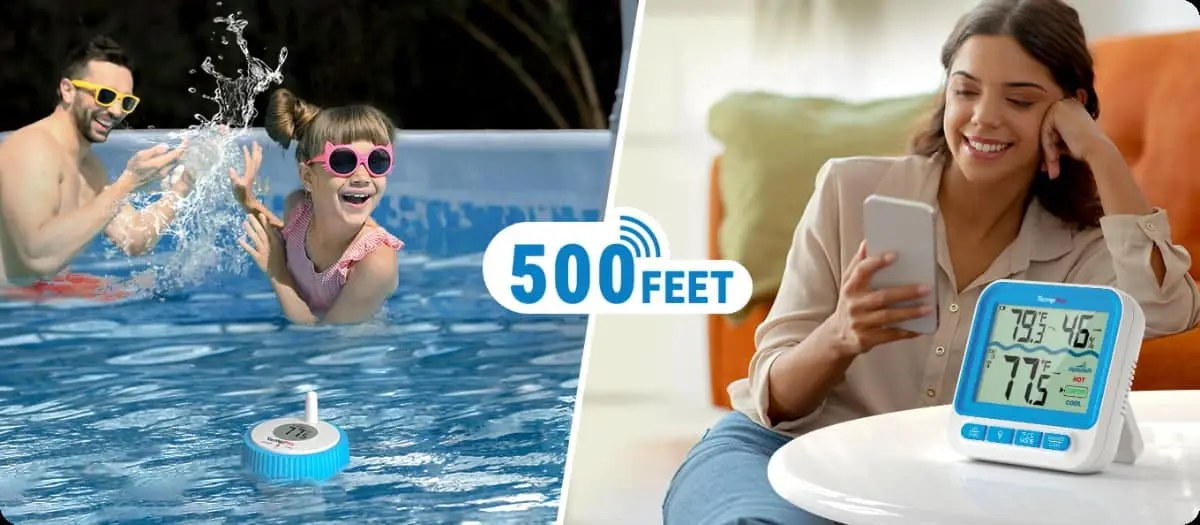
Thanks to RF wireless transmission technology, the floating swimming pool thermometer in your pool sends real-time temperature updates to an indoor base station up to 500 feet away. You can check whether the pool is warm enough for your kids straight from your air-conditioned kitchen while prepping lunch!
Highly Accurate Readings
The TempPro TP211B utilizes advanced temperature sensors to measure the true water temperature within ±0.9℉(±0.5°C) accuracy.
IPX8 Waterproof
Pool chemicals, heavy sunlight, and splashing kids can destroy lower-quality gadgets. The TempPro TP211B probe features a durable IPX8 waterproof design with heavy-duty silicone sealing rings to prevent water ingress and fogging, ensuring season-after-season reliability.
Dual Indoor & Outdoor Monitoring
The sleek indoor receiver doesn’t just track pool water temperature; it also displays your home’s indoor room temperature and humidity. At a single glance, you know both the indoor comfort and the outdoor swimming conditions.
Quick Tips for Maintaining Ideal Water Temperature
Once you have an accurate reading from your TempPro TP211B, here are three quick tricks to keep your water in the safe 82°F-86°F zone:
Use a Solar Blanket Wisely: Put a bubble solar cover on the pool at night to prevent heat loss, but remove it on scorching afternoon days if the water gets too hot.
Run Your Pump at Night: Circulating water during cooler evening hours helps drop water temperatures naturally if a July heatwave makes your pool too warm.
Add Shade Elements: If direct sunlight overheats your pool, install a shade sail or large umbrella over a section of the shallow end where younger children play.
Final Thoughts
Your backyard pool should be a haven for joyful summer memories, not a source of worry. By monitoring your water temperature with precision using the TempPro TP211B Wireless Pool Thermometer, you can ensure every splash is safe, healthy, and comfortable for your children all season long.