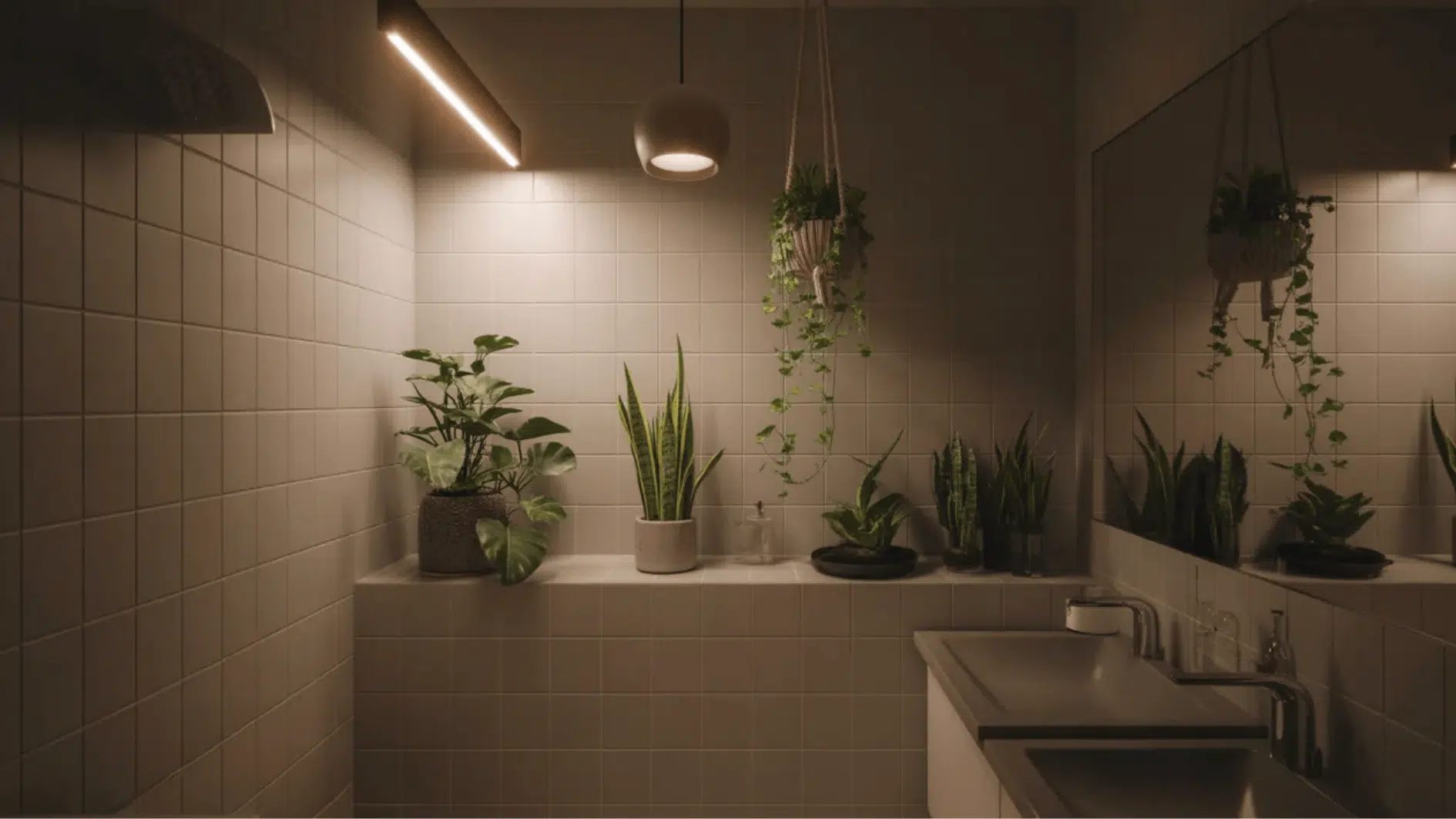
A bathroom with no windows can feel dull and empty. Many people think plants cannot survive in that space because sunlight rarely reaches the room.
The good news is that many indoor plants naturally grow in shaded environments. Bathrooms also provide humidity and stable temperatures, which several plants actually enjoy.
This guide shares some of the best plants for a bathroom with no light. You will also learn where to place them and how to keep them healthy in dim spaces.
Why Some Plants Can Grow in Low-Light Bathrooms
Some plants naturally grow under dense forest canopies where sunlight rarely reaches the ground. Because of this, they have adapted to survive with very little light.
Bathrooms also provide steady warmth and humidity, which many tropical plants prefer. The moisture from showers helps keep leaves from drying out.
Conditions that Help Plants Survive in Dark Bathrooms:
- Humidity from showers
- Occasional artificial lighting
- Proper watering habits
- Good drainage
These conditions help low-light plants stay healthy even when sunlight is minimal.
Classic Low-Light Plants that Work Well in Bathrooms
Certain houseplants are well known for surviving in low-light indoor environments. These plants also tolerate humidity, making them great bathroom companions.
1. Snake Plant (Sansevieria trifasciata)
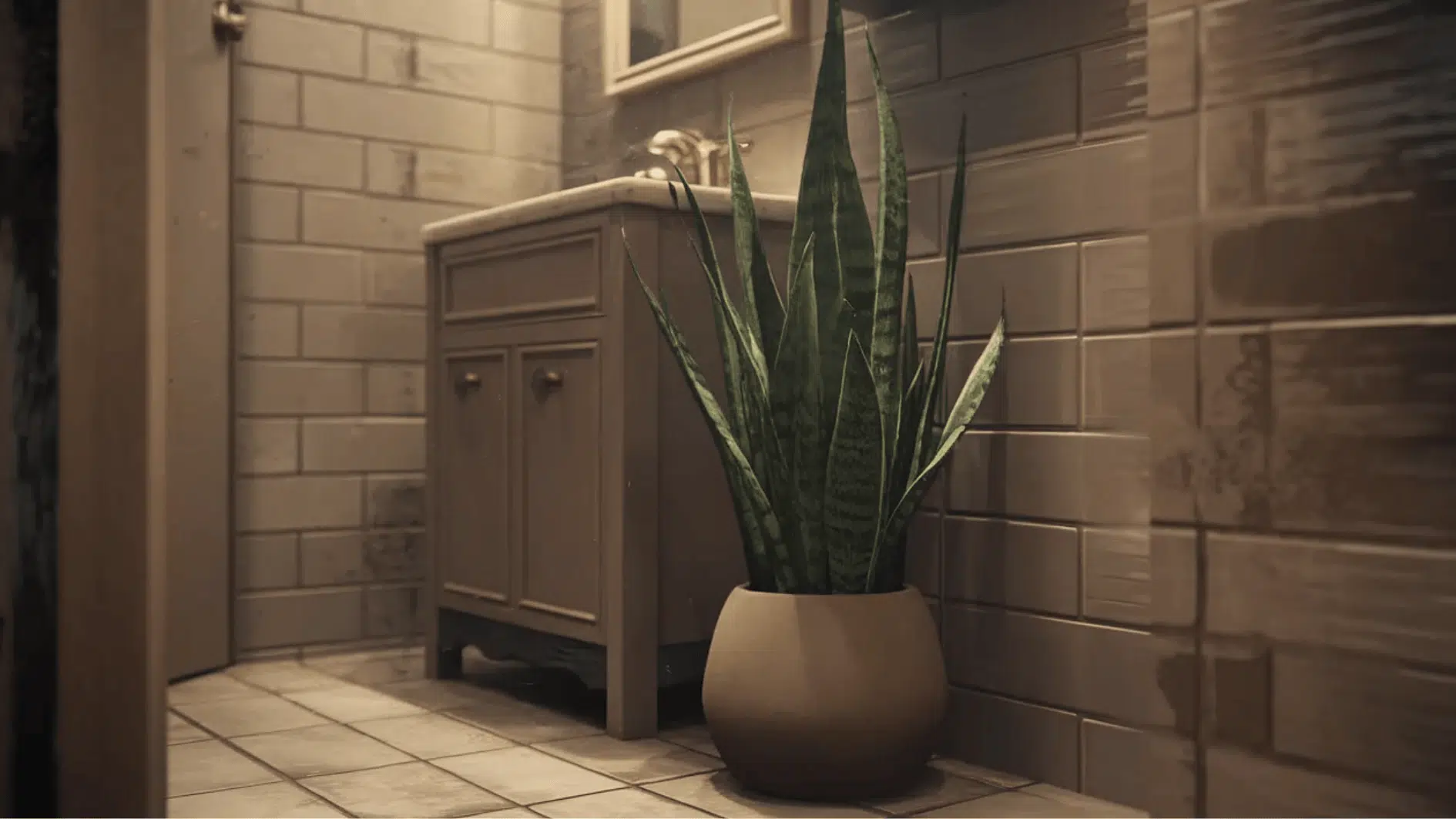
Snake plants are one of the most reliable indoor plants for darker rooms.
Their upright leaves grow slowly and store water, allowing the plant to tolerate long gaps between watering. You can place it on the floor, beside a cabinet, or near the sink where light is limited.
Because of its durability and easy care, it is a popular choice for beginners
2. ZZ Plant (Zamioculcas zamiifolia)
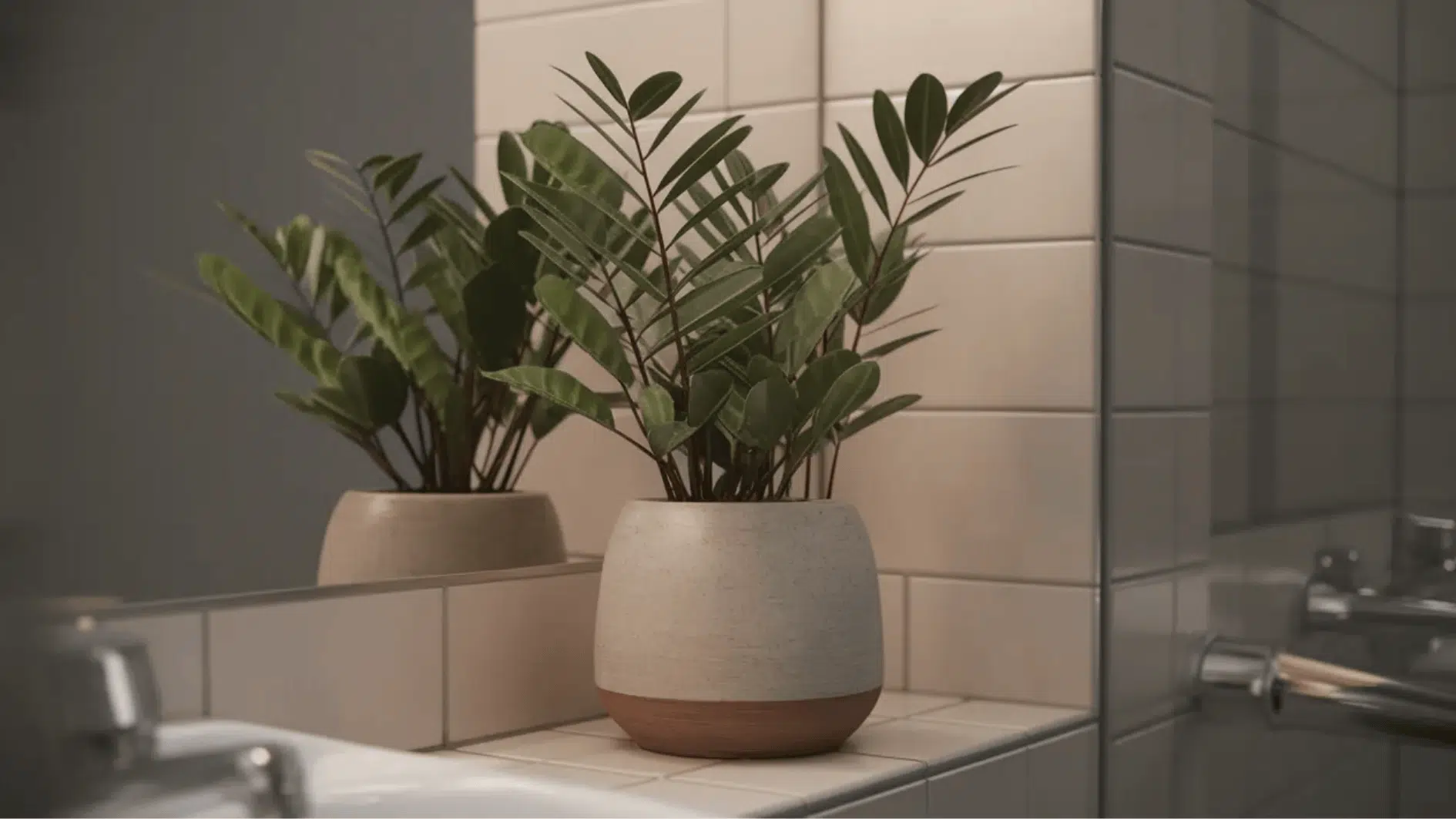
The ZZ plant is famous for its ability to tolerate low light. It produces glossy leaves that grow along sturdy stems, creating a neat indoor display.
Thick rhizomes beneath the soil store water for later use.
This allows the plant to tolerate irregular watering schedules. A bathroom shelf, cabinet corner, or floor pot works well for placement
3. Peace Lily (Spathiphyllum)
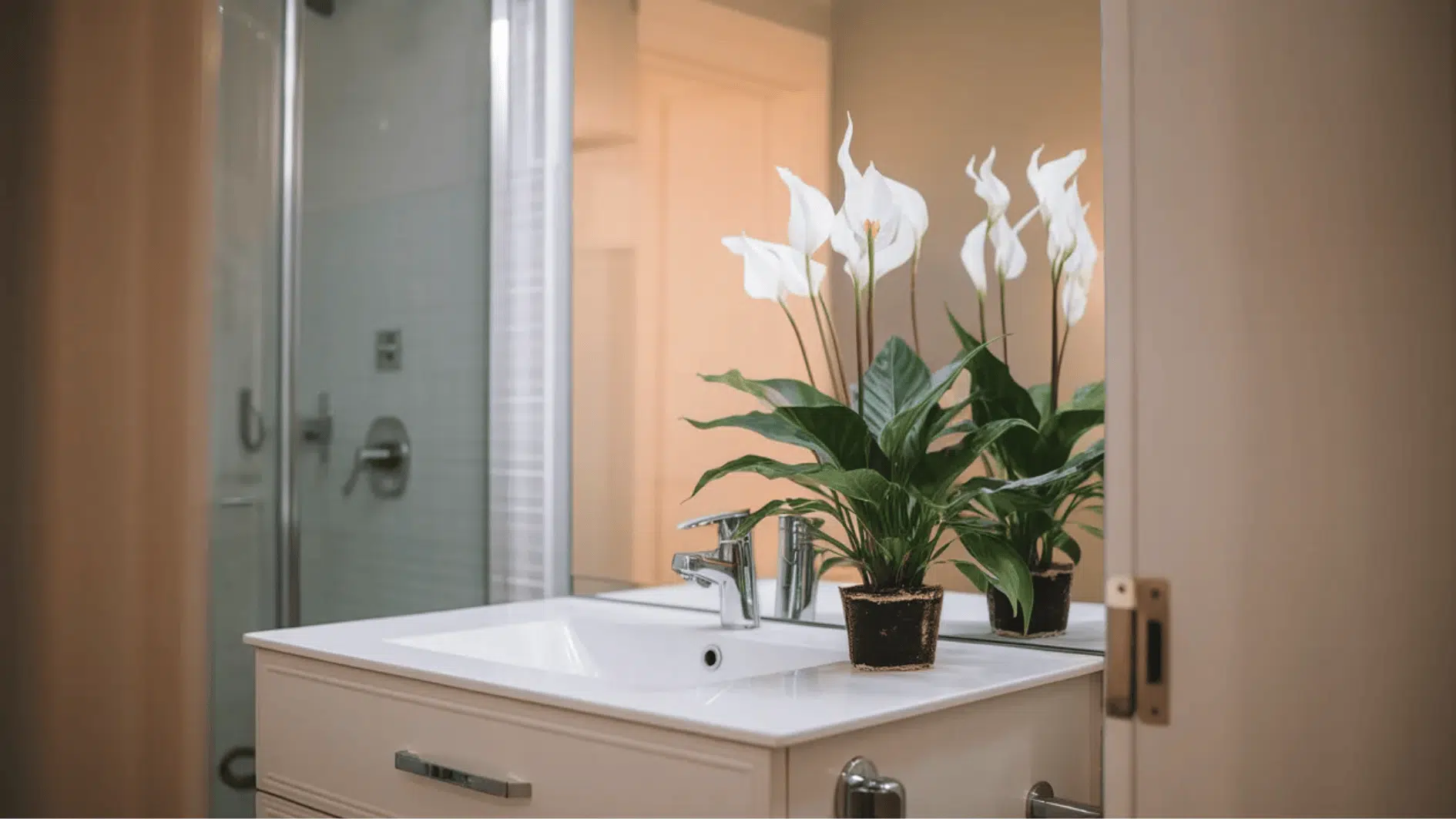
Peace lilies grow deep green leaves that brighten darker spaces.
This plant tolerates shade better than many flowering houseplants. In humid bathrooms, the foliage often looks fuller and healthier.
Occasionally, the plant produces white blooms shaped like small flags. Place it on a vanity shelf or cabinet corner for best results.
4. Chinese Evergreen (Aglaonema)
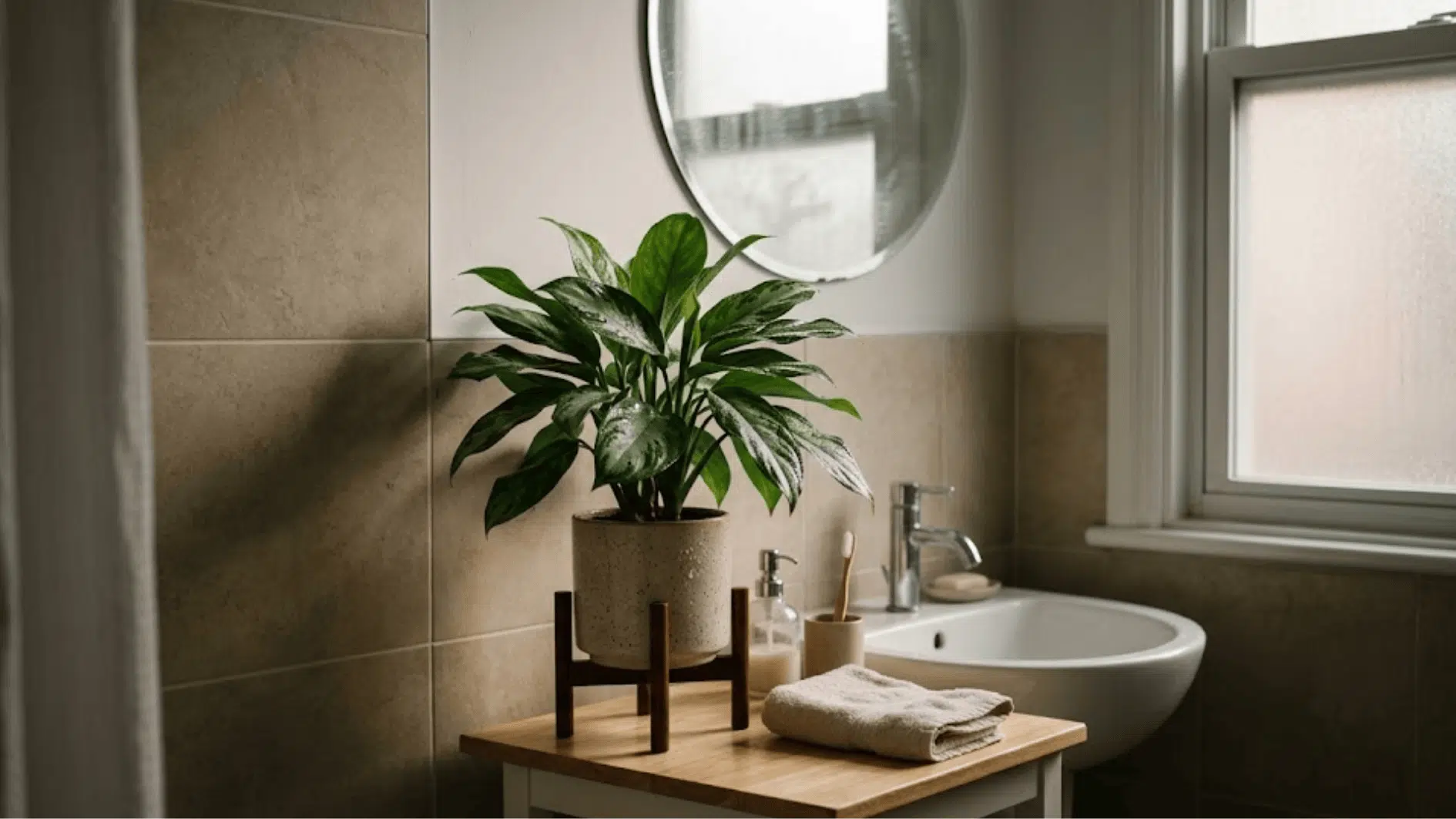
Chinese evergreen plants are valued for their patterned foliage.
Leaves often include shades of green and silver. They adapt well to indoor lighting conditions and shaded rooms.
Bathrooms provide warmth, helping maintain steady growth. A small plant stand or countertop can be a good spot for this plant
5. Cast Iron Plant (Aspidistra elatior)
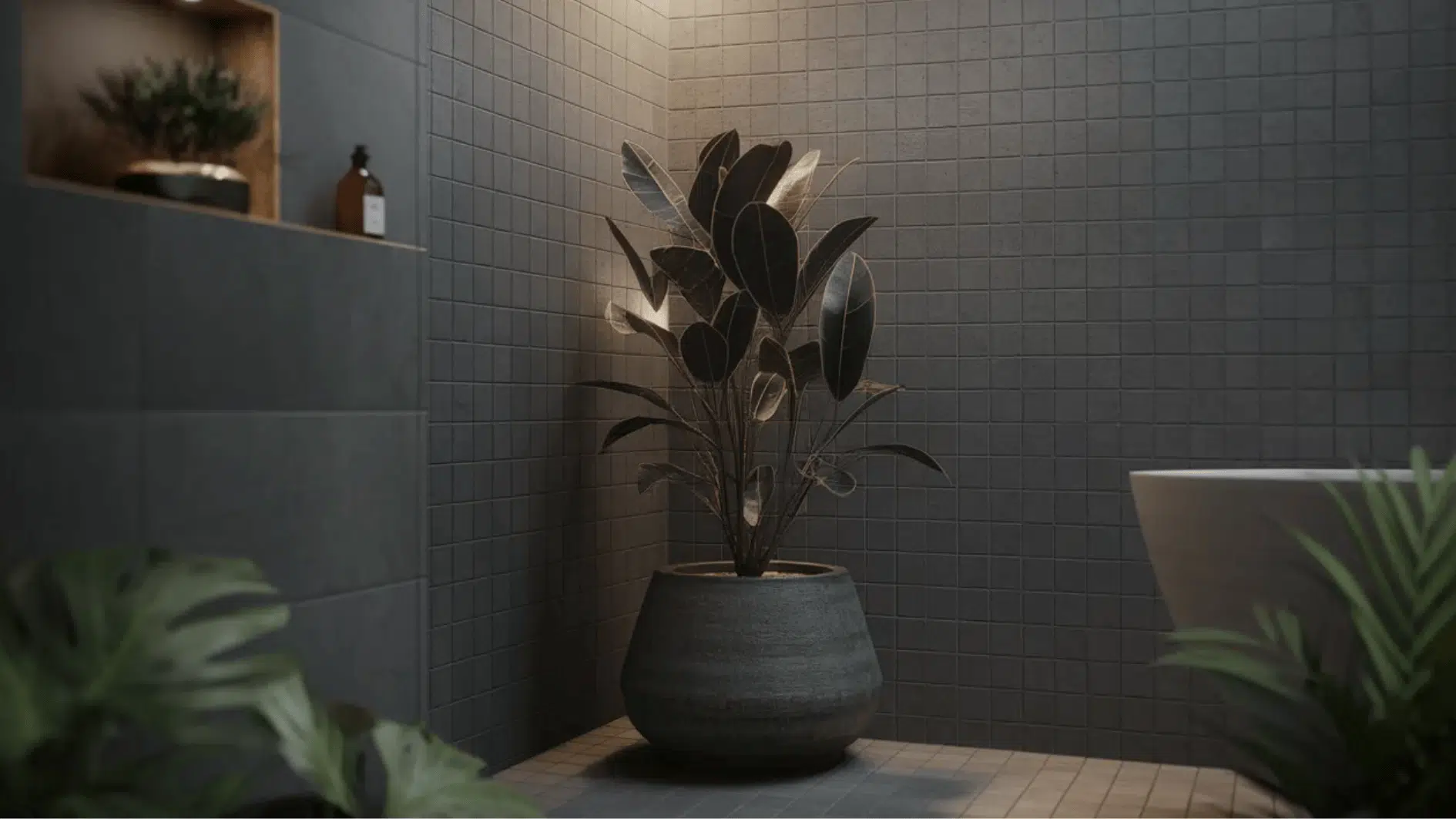
The cast-iron plant earned its name because it survives difficult conditions. It tolerates shade, temperature changes, and occasional missed watering.
Dark green leaves grow slowly but remain sturdy for years. This plant works well in a bathroom corner or near a wall.
Minimal care makes it suitable for beginners
6. Parlor Palm (Chamaedorea elegans)
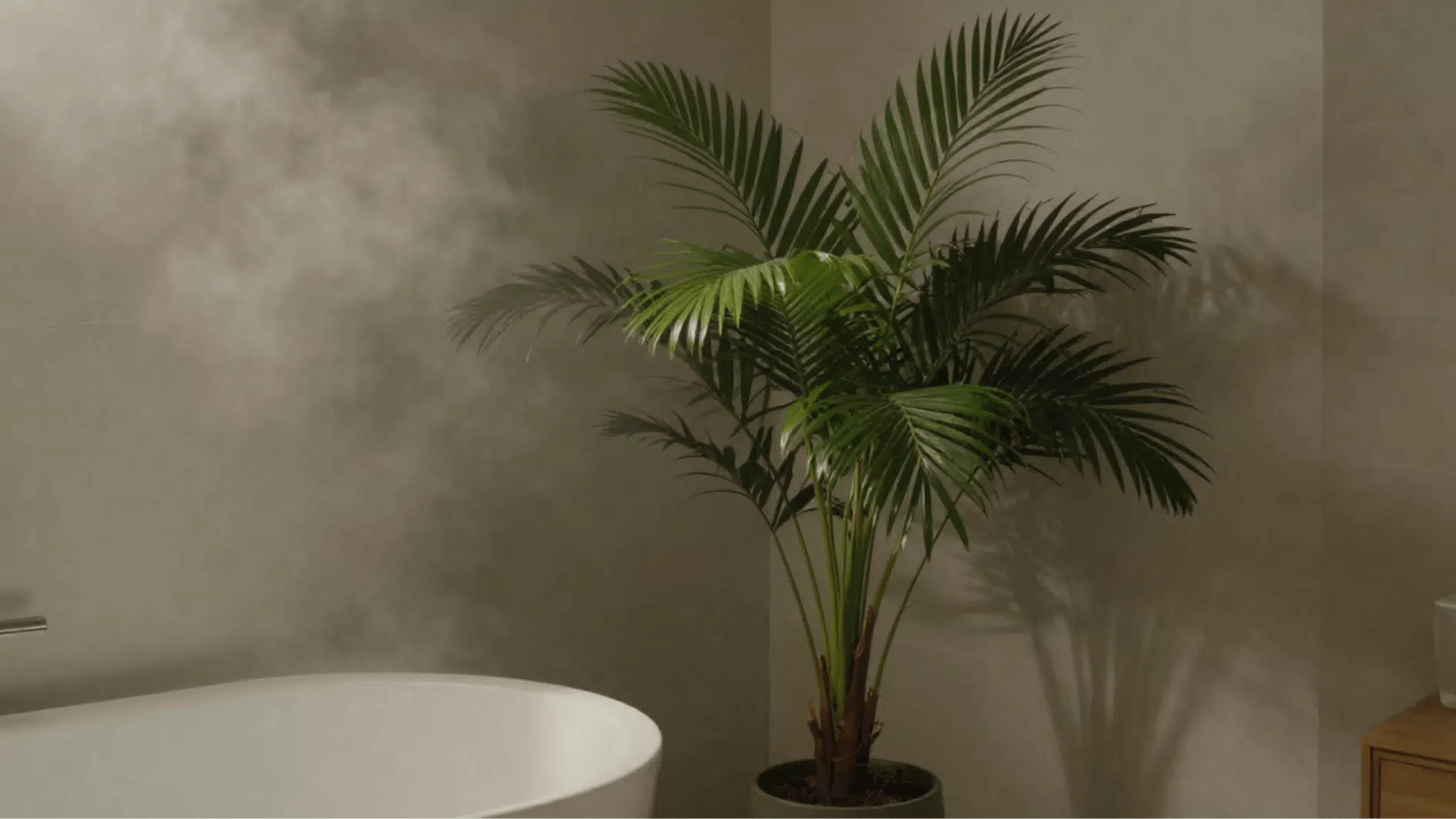
Parlor palms add a gentle tropical look to indoor spaces. Their soft fronds spread outward in an elegant shape. They tolerate lower lighting conditions better than many palms.
Bathrooms often provide the humidity these plants enjoy. Place it on the floor or on a plant stand to give the leaves space.
7. Dracaena Janet Craig
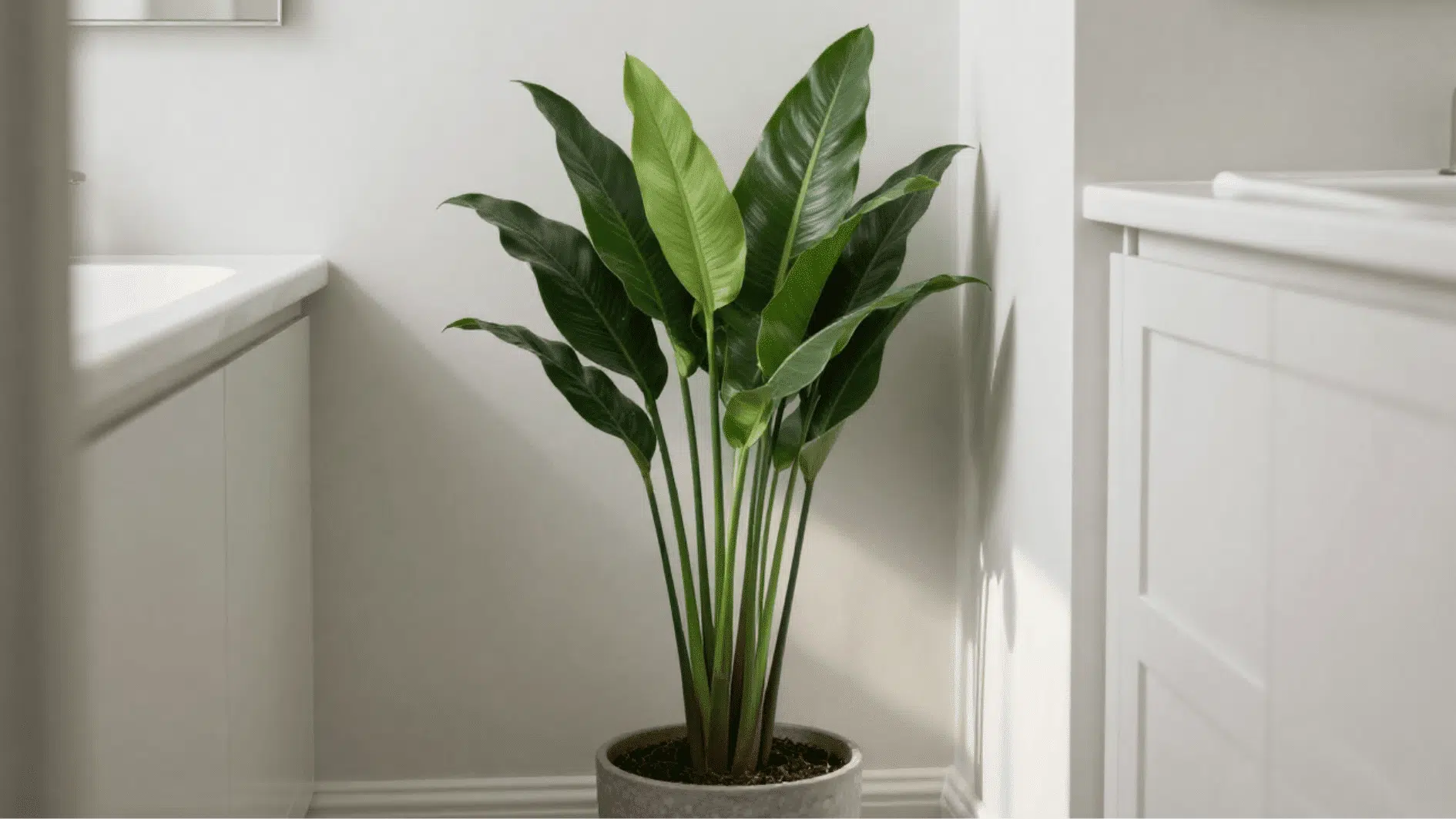
Dracaena Janet Craig produces long, dark green leaves that grow upright along strong stems. It adapts easily to indoor spaces with limited light. The plant fits well in narrow corners or beside bathroom cabinets.
Bathrooms with steady humidity help maintain leaf health. Allow the soil to dry slightly before watering again.
Compact Plants That Fit Small Bathrooms
Small bathrooms often have limited space for larger plants. Compact plants provide greenery without taking up valuable room on the floor.
8. Pothos (Epipremnum aureum)
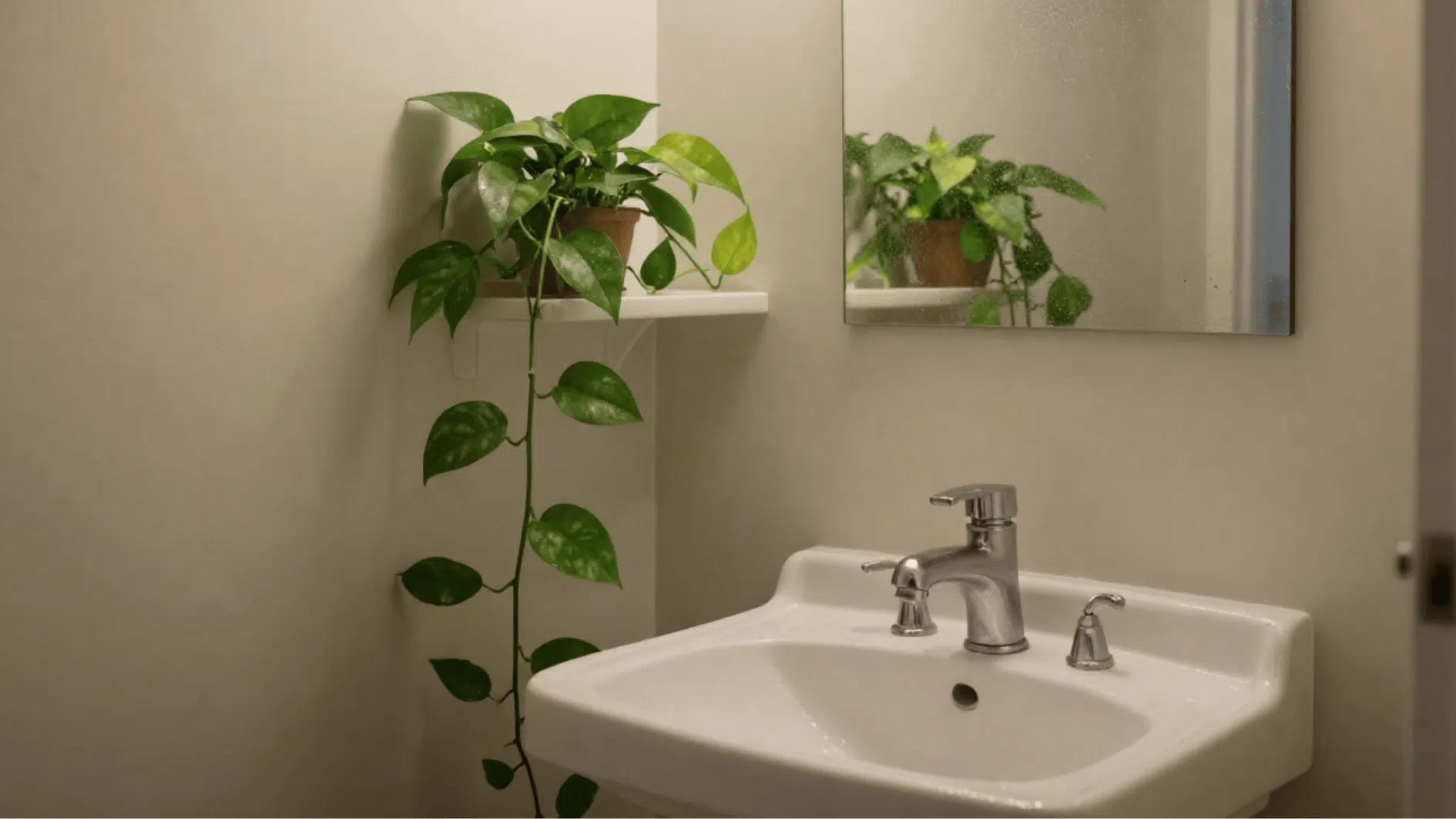
Pothos plants are among the easiest houseplants to grow.
Their vines trail down shelves or hanging planters, adding greenery to small spaces. Leaves usually display green tones with yellow markings.
Low lighting conditions are usually acceptable for this plant. Occasional trimming keeps the plant full and tidy.
9. Spider Plant (Chlorophytum comosum)
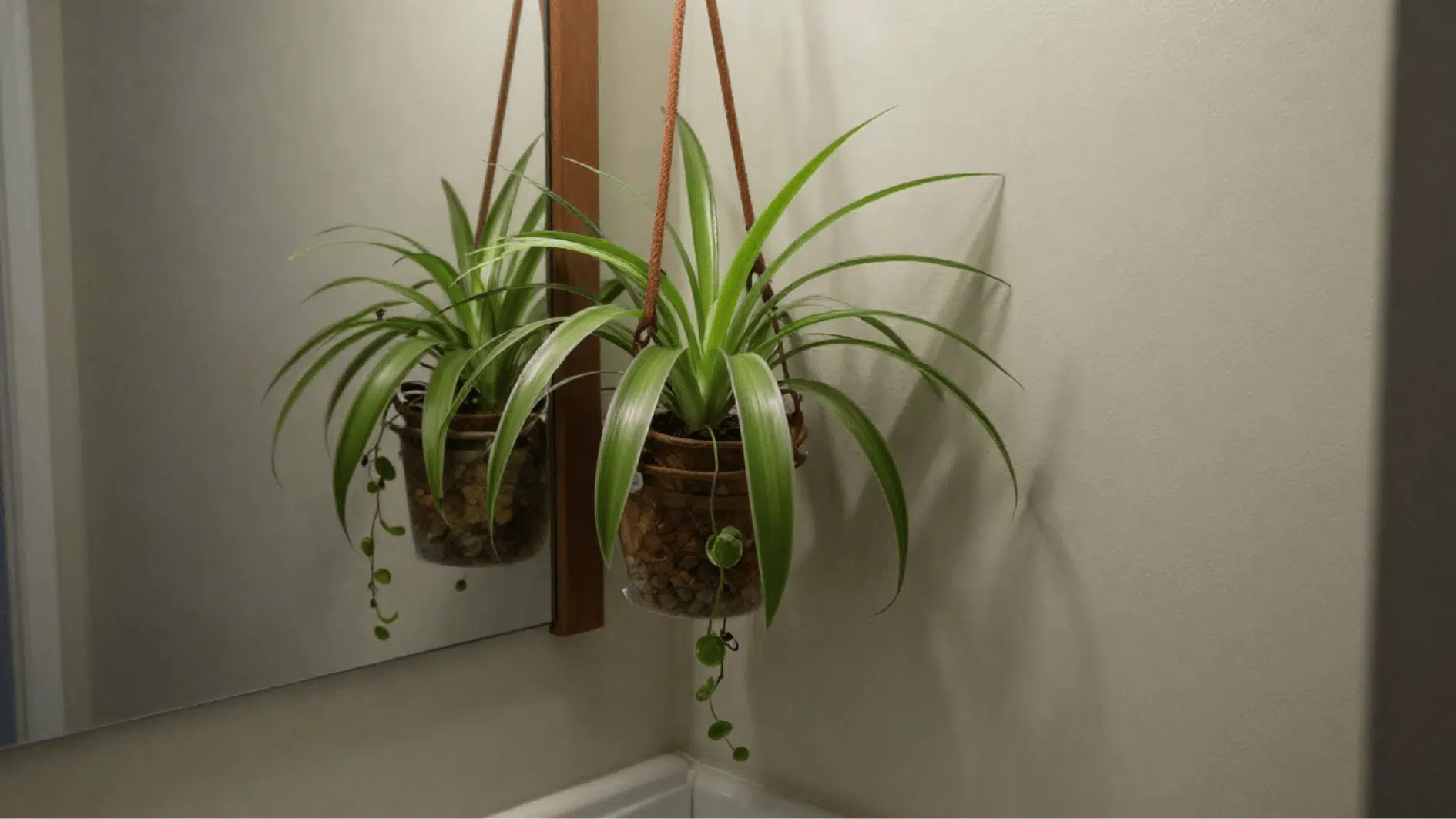
Spider plants produce narrow arching leaves that grow outward from the center. Small plantlets appear on long stems as the plant matures.
They tolerate indoor lighting conditions quite well. Bathrooms provide humidity that helps the leaves remain healthy.
A shelf or hanging planter works well for placement.
10. Heartleaf Philodendron (Philodendron hederaceum)
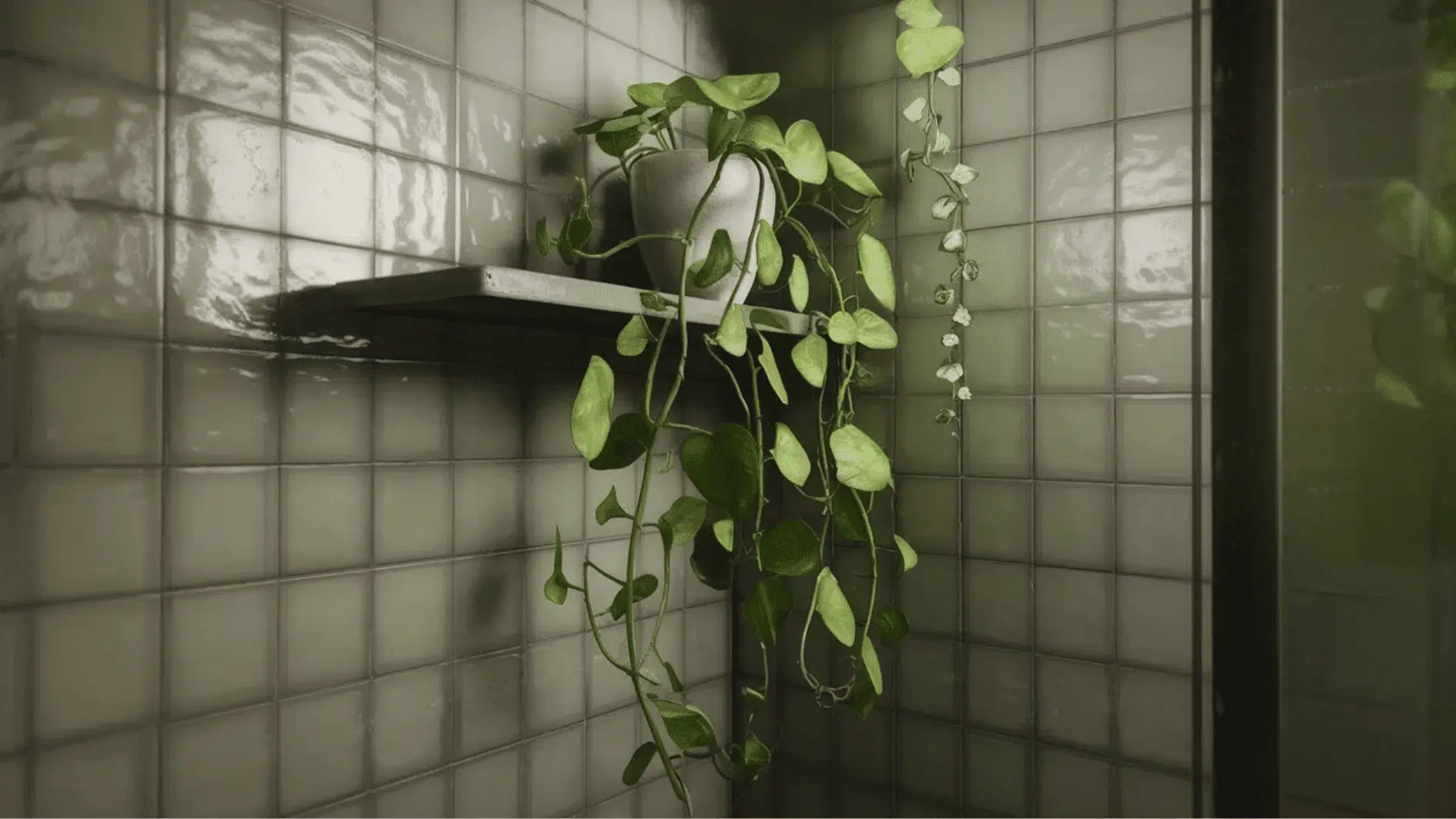
Heartleaf philodendrons produce long trailing vines with soft leaves. The plant adapts well to indoor spaces with limited sunlight.
Its vines can cascade down shelves or hang from planters. Humidity from showers helps support healthy foliage.
Trim occasionally to maintain the shape.
11. Baby Rubber Plant (Peperomia obtusifolia)
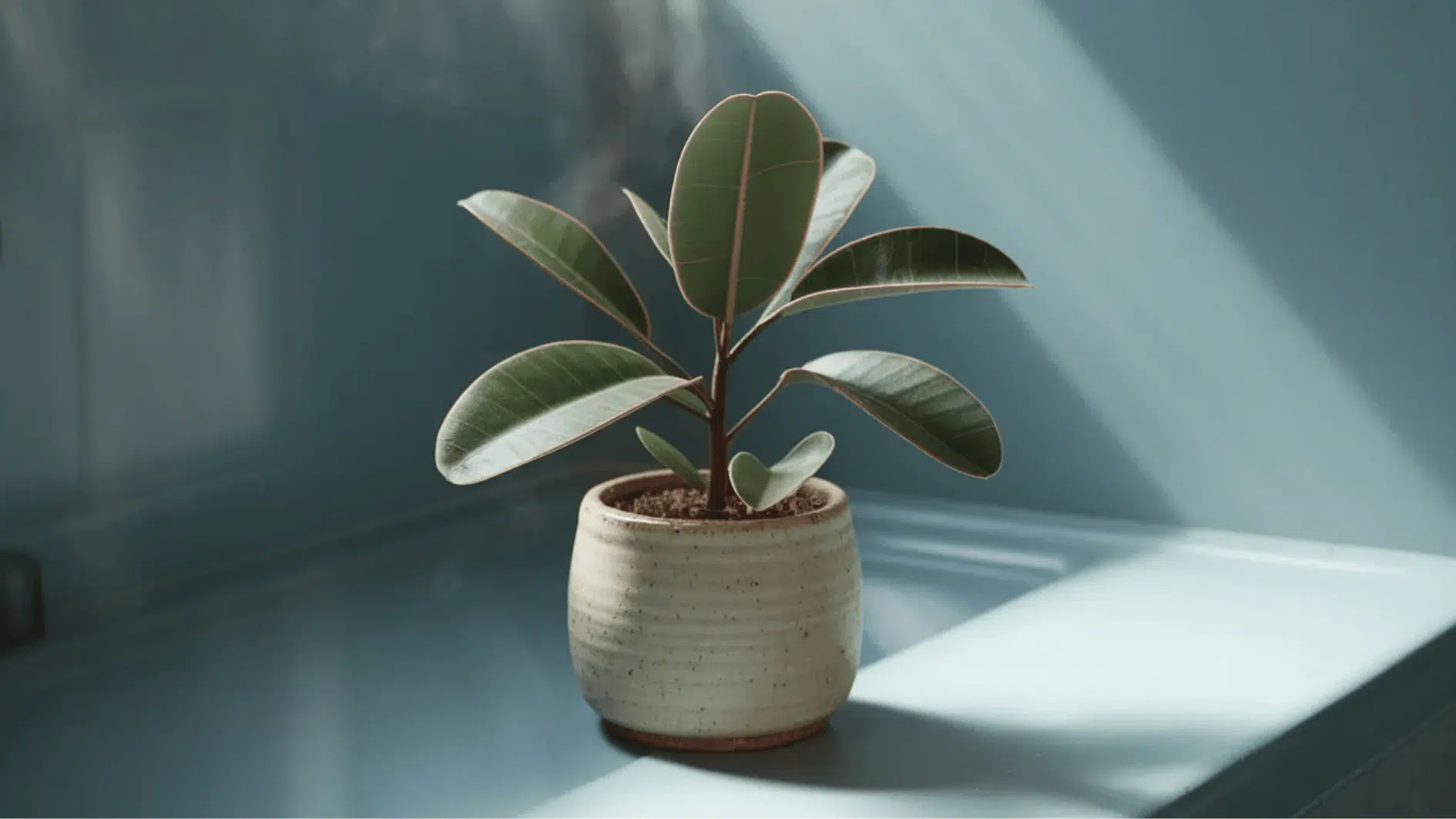
The baby rubber plant has thick oval leaves that store moisture. Because of this feature, it does not require frequent watering.
The plant remains compact and manageable. A bathroom countertop or small shelf works well for placement.
Indirect lighting helps maintain healthy leaf color.
12. Nerve Plant (Fittonia albivenis)
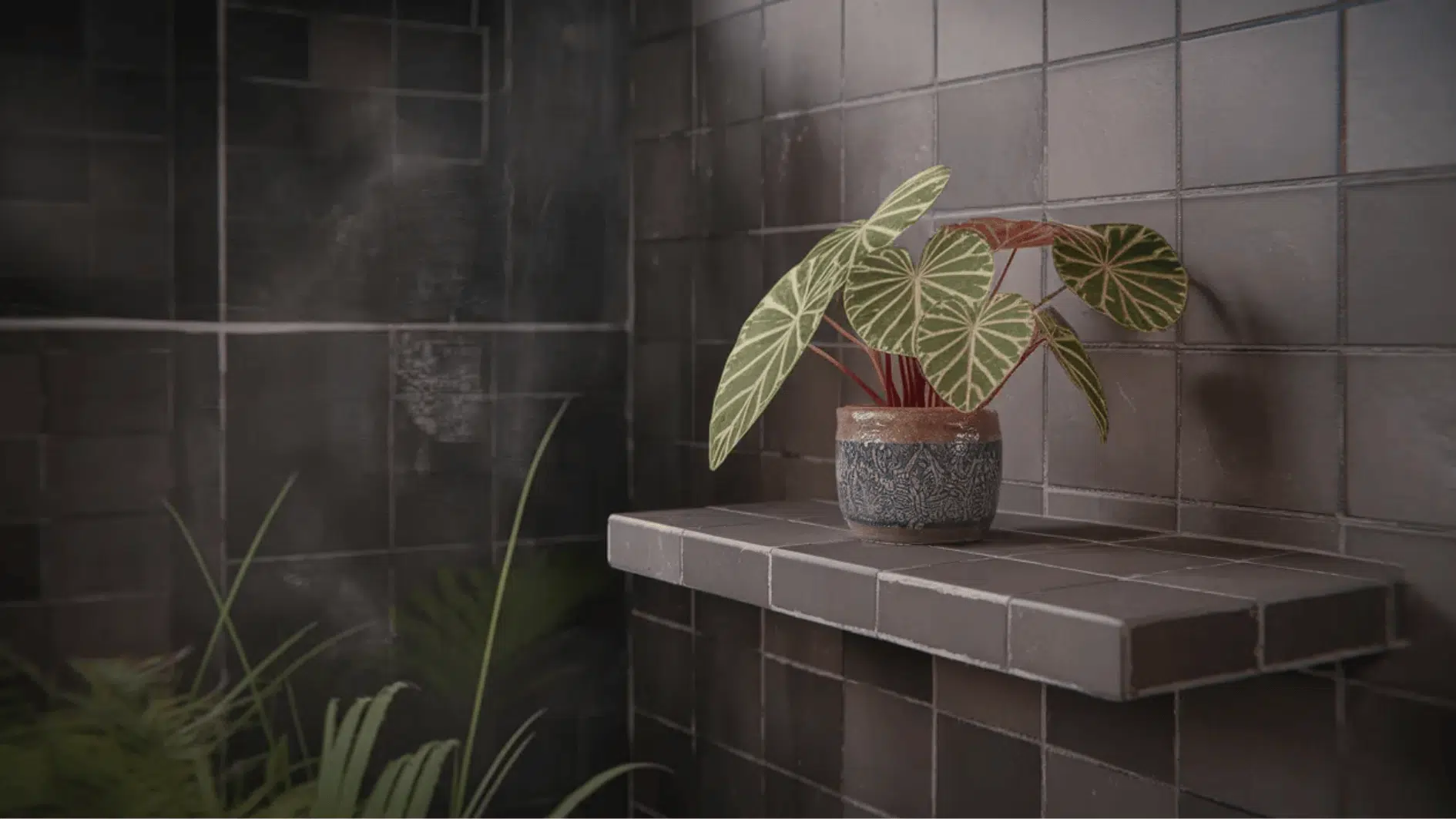
Nerve plants display colorful leaf veins. Patterns may appear white, pink, or red. The plant prefers humid environments with moist soil.
Bathrooms often provide ideal conditions. Place it in a small decorative pot on a shelf. Avoid letting the soil become too dry.
Regular humidity keeps the leaves vibrant. It remains a popular compact houseplant.
13. Aluminum Plant (Pilea cadierei)
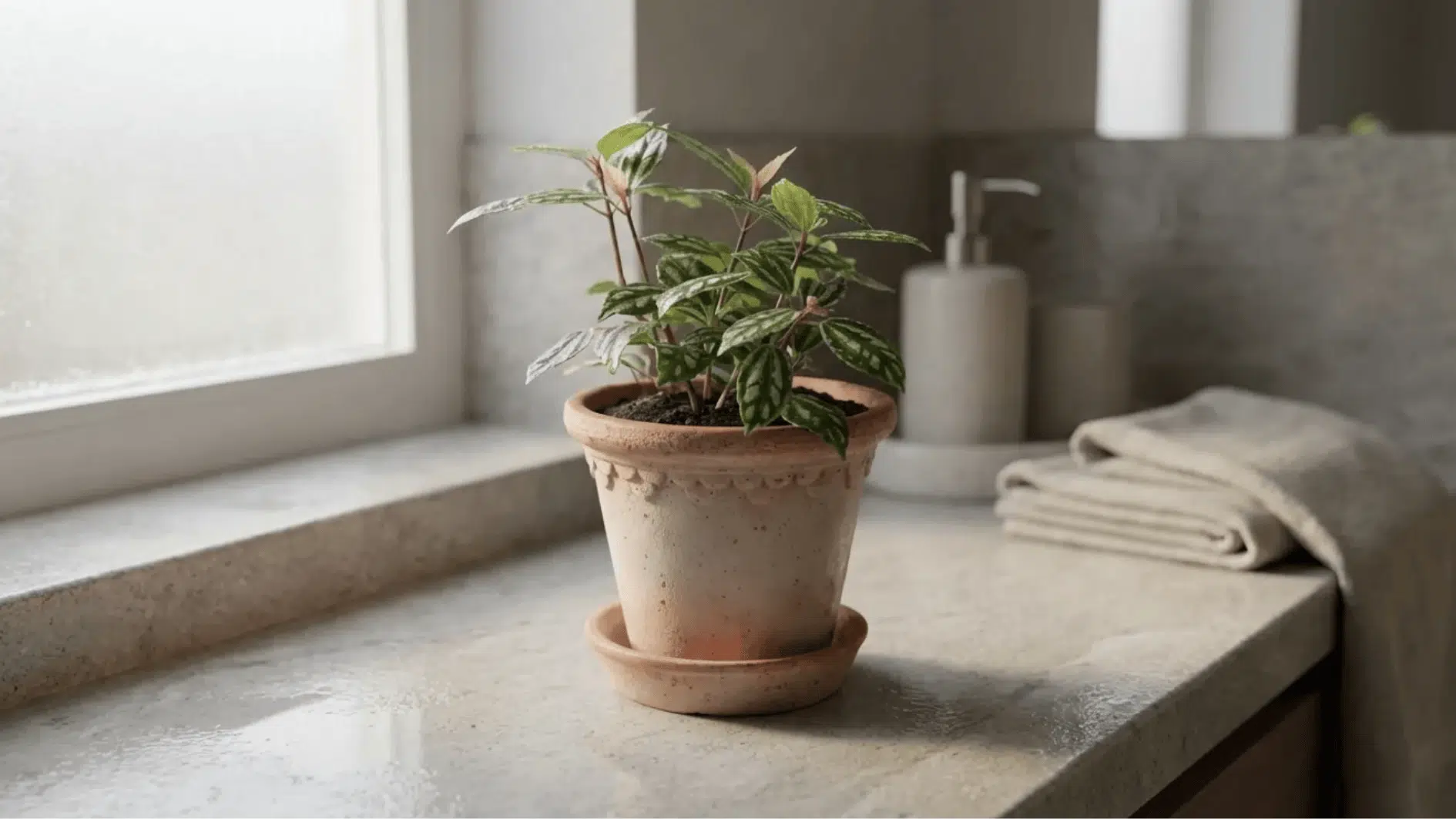
The aluminum plant features green leaves marked with silver patches. It stays relatively compact compared with other houseplants. Humidity helps maintain the plant’s foliage.
You can place it on a vanity shelf or narrow ledge. Regular trimming keeps the plant full.
14. Prayer Plant (Maranta leuconeura)
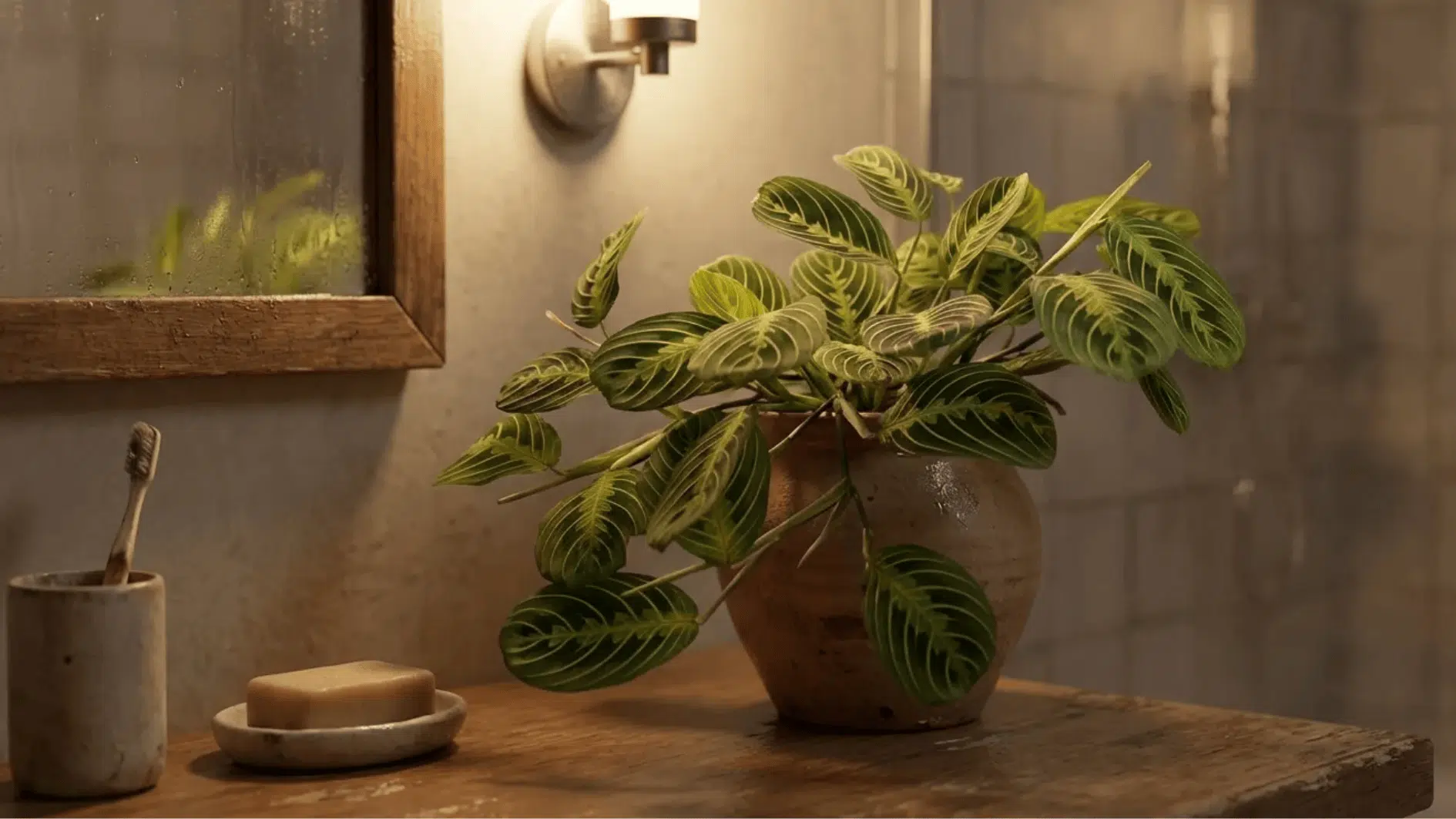
Prayer plants produce strikingly patterned leaves. The foliage often folds upward at night. They grow well in humid environments with moderate watering.
Bathrooms often provide these conditions naturally. Place the plant on a shelf or counter away from drafts. Keep soil slightly moist for healthy growth.
Indirect lighting supports vibrant foliage. The plant remains relatively compact.
Hanging Plants for Bathroom Shelves and Hooks
Hanging plants add greenery without using counter space. Trailing vines can soften the look of shelves and mirrors.
15. Satin Pothos (Scindapsus pictus)
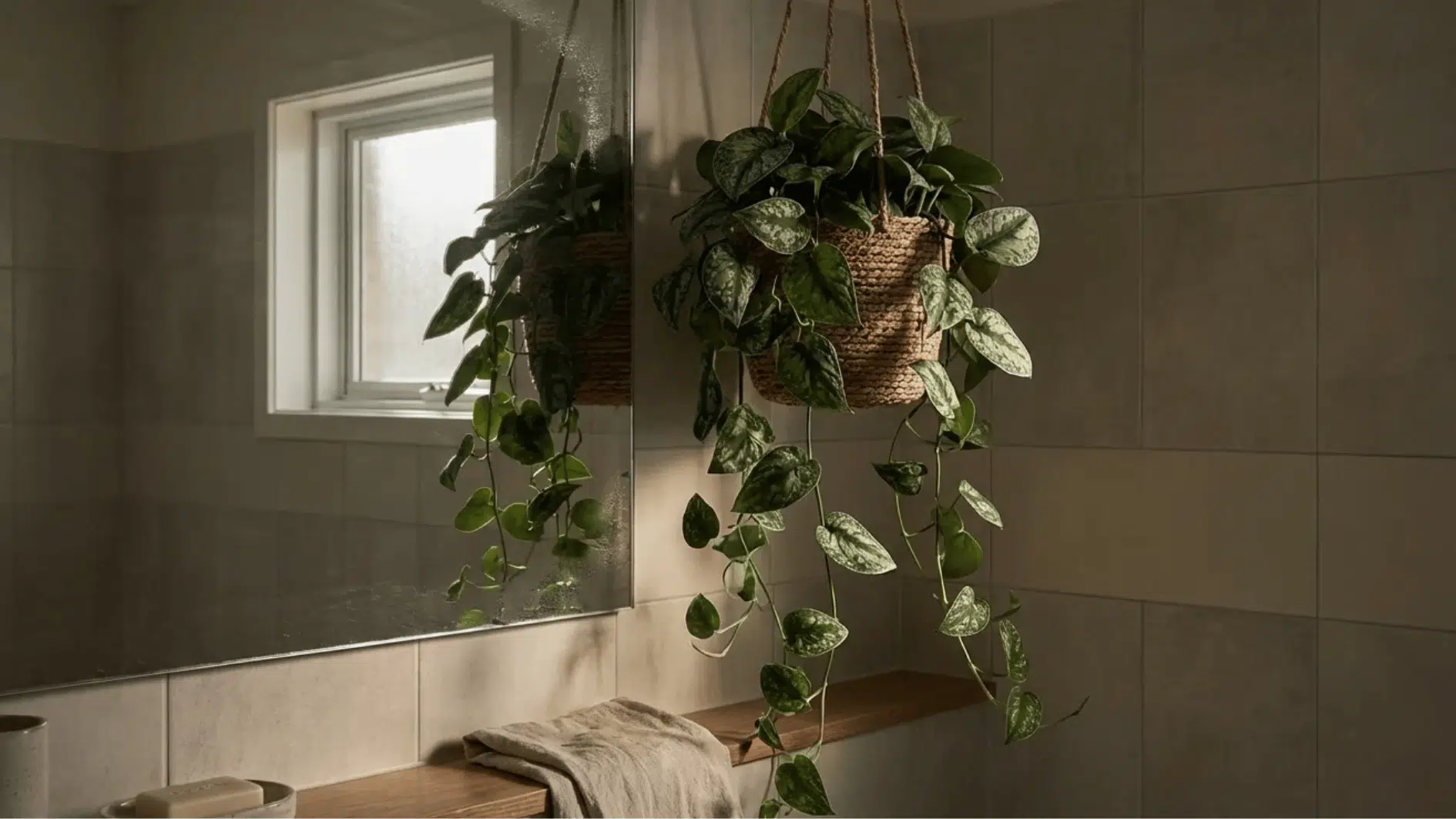
Satin pothos produces soft, green leaves with silver markings. Its vines trail slowly from hanging baskets. Low lighting conditions are usually tolerated well.
Bathrooms provide humidity that helps maintain healthy foliage. Allow the soil to dry slightly before watering again.
16. Philodendron Brasil
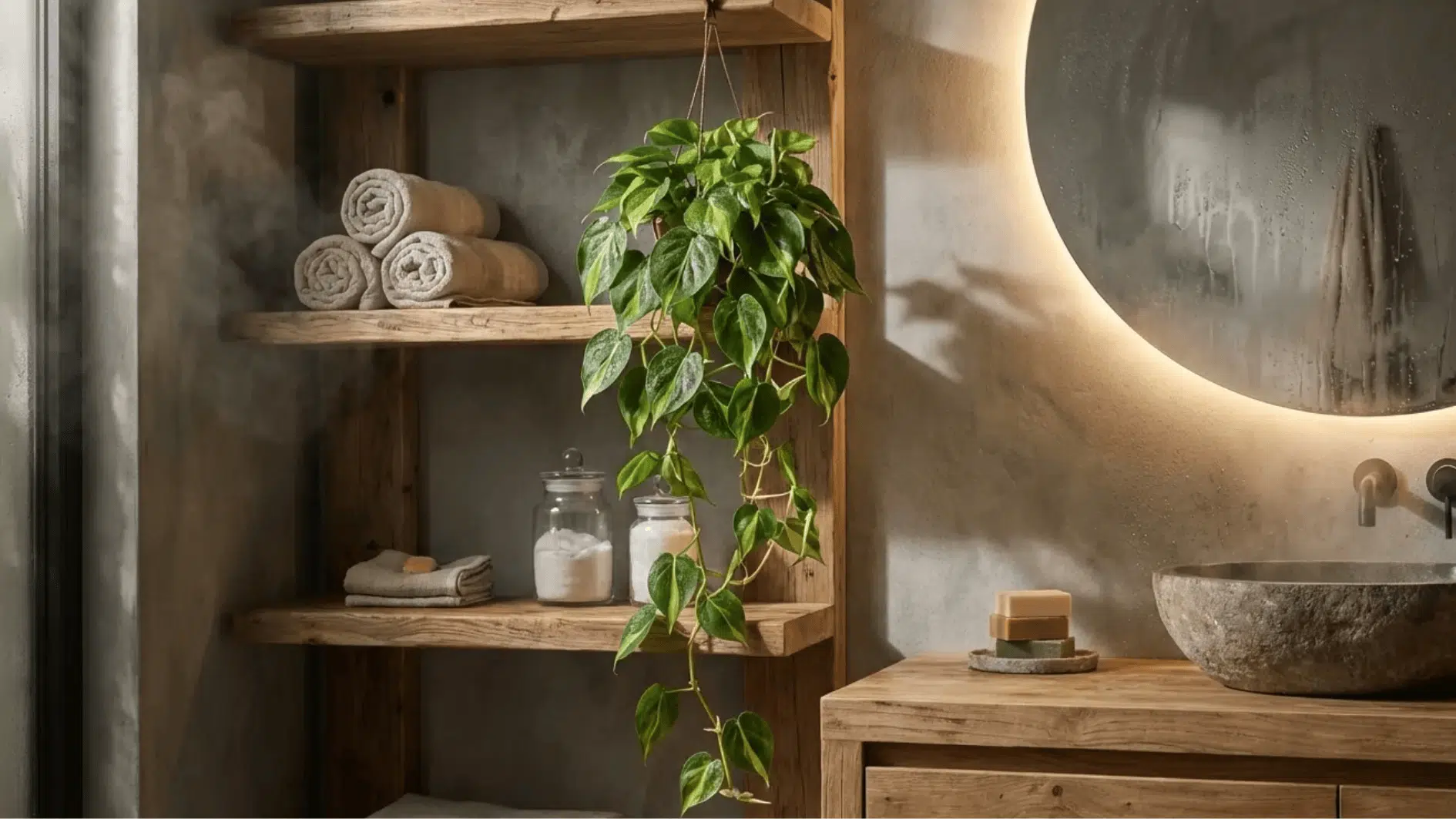
Philodendron Brasil produces leaves with green and yellow patterns. The plant grows trailing vines that can reach several feet.
It adapts well to indoor spaces with limited light. Hanging baskets near shelves or mirrors work well. Trim occasionally to control growth.
17. English Ivy (Hedera helix)
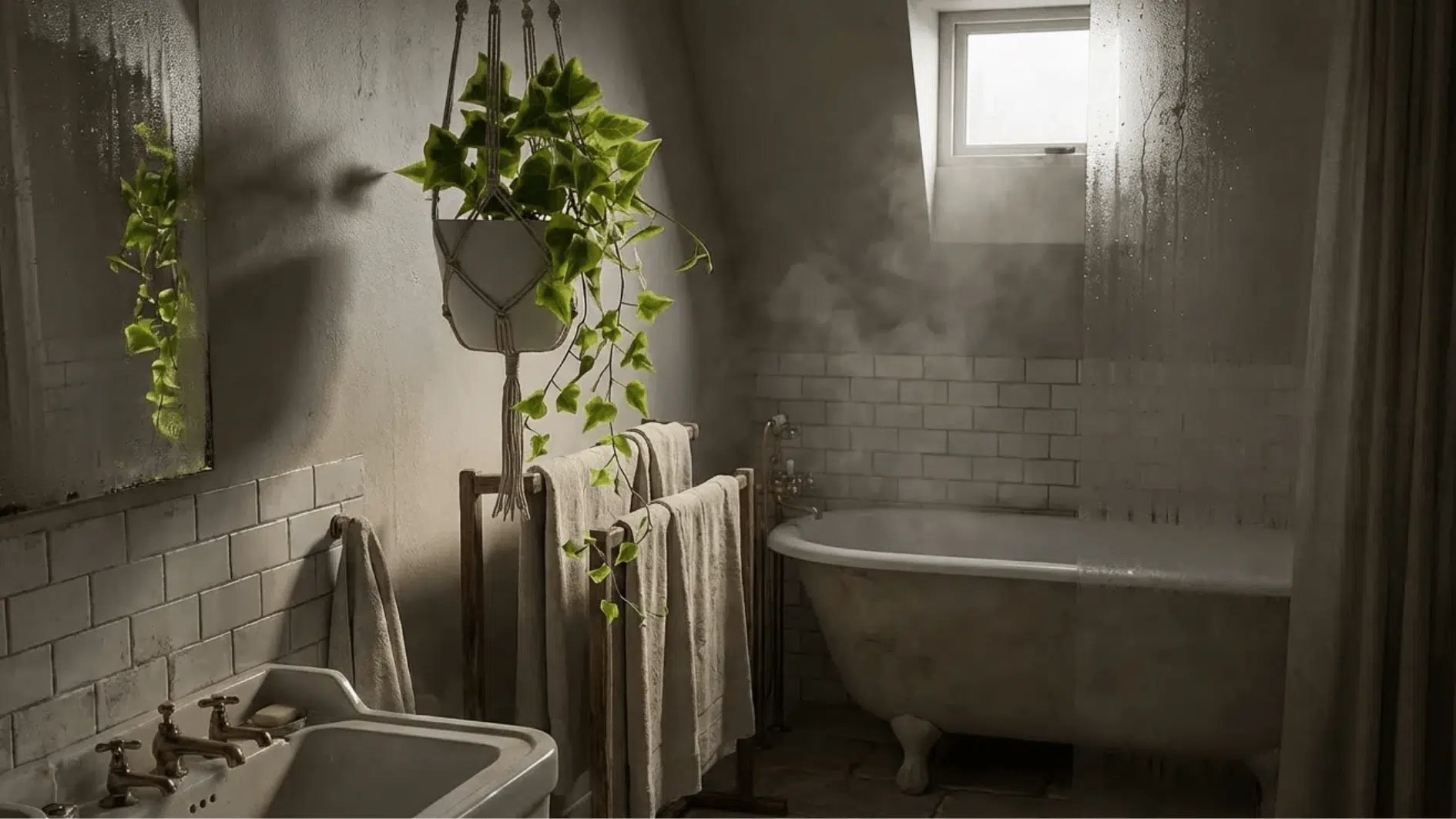
English ivy produces trailing vines with pointed leaves. It grows well in hanging baskets or elevated shelves.
Bathrooms often provide the humidity the plant prefers. Keep the soil lightly moist. Regular trimming helps maintain shape.
18. Creeping Fig (Ficus pumila)
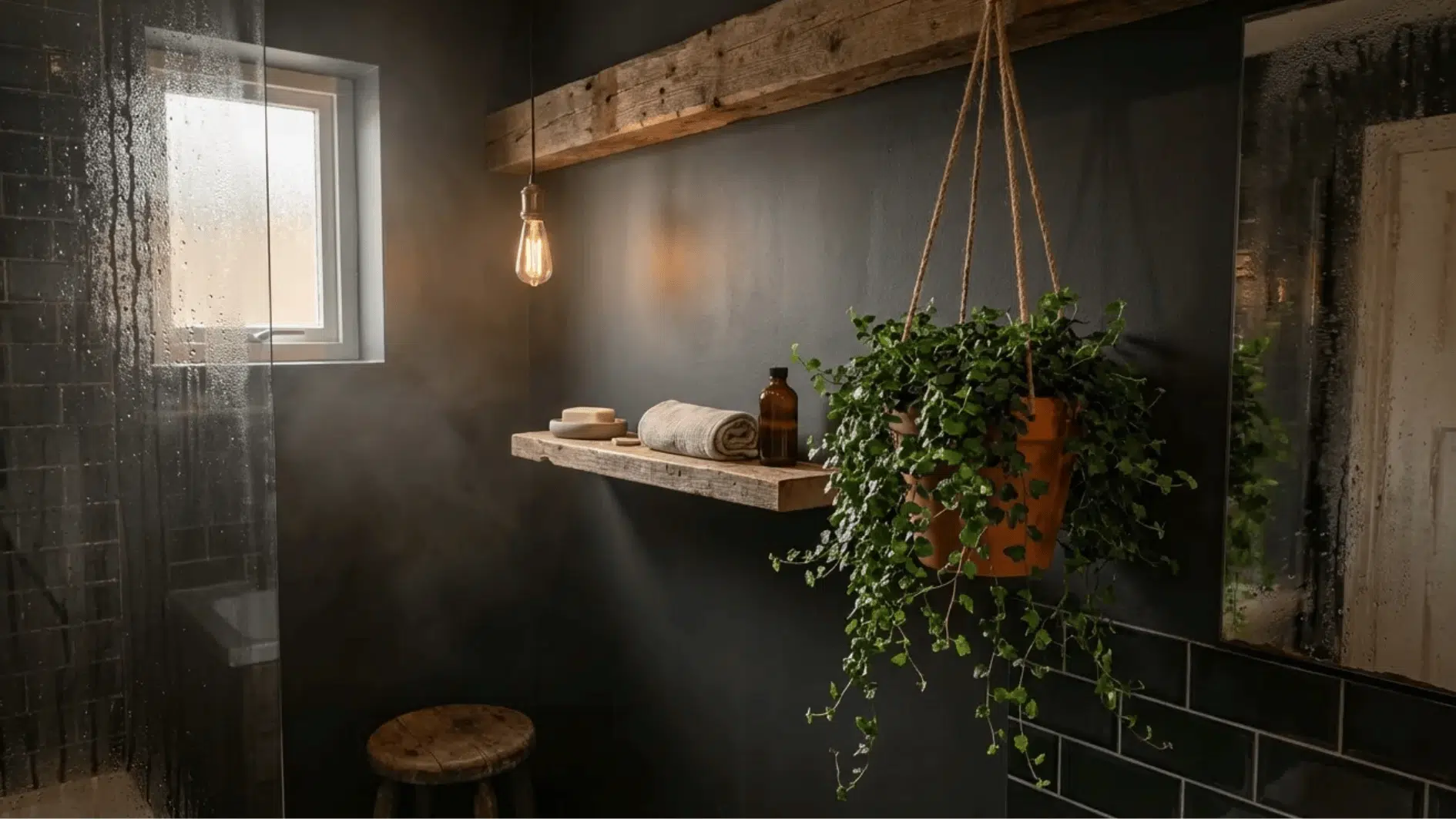
Creeping fig grows small leaves along thin, trailing stems. It can hang nicely from shelves or small planters. The plant tolerates indoor lighting conditions quite well. Bathrooms provide the humidity needed for steady growth.
Occasional pruning prevents excessive spreading.
19. String of Hearts (Ceropegia woodii)
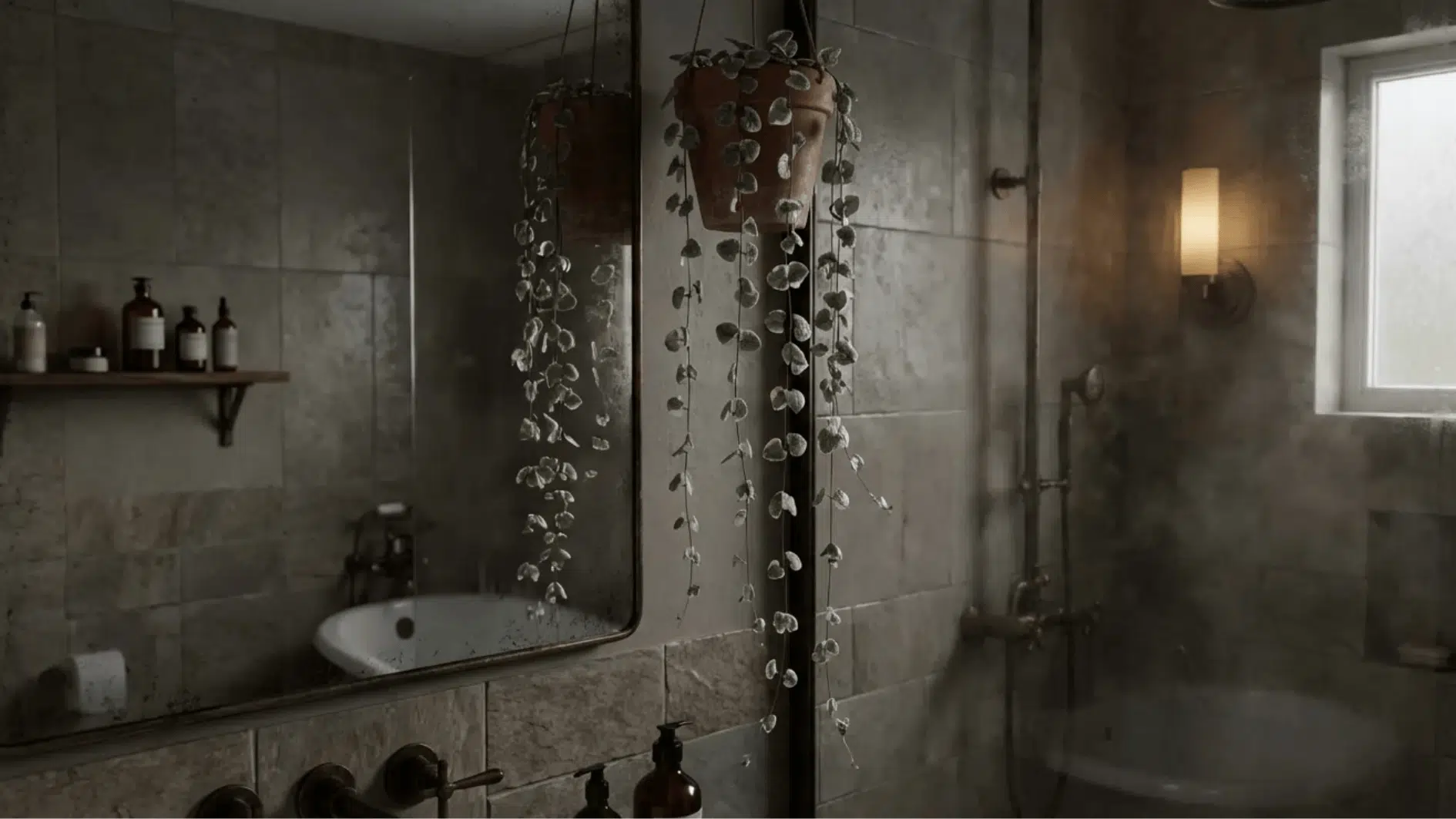
String of hearts plants grow thin vines with small heart-shaped leaves. The vines can trail several feet over time.
Bathrooms provide humidity that benefits the plant.
Place it in a hanging pot near shelves or mirrors. Avoid frequent watering since roots store moisture.
Indirect lighting supports steady growth. Its delicate vines add character to the room.
20. Tradescantia Zebrina
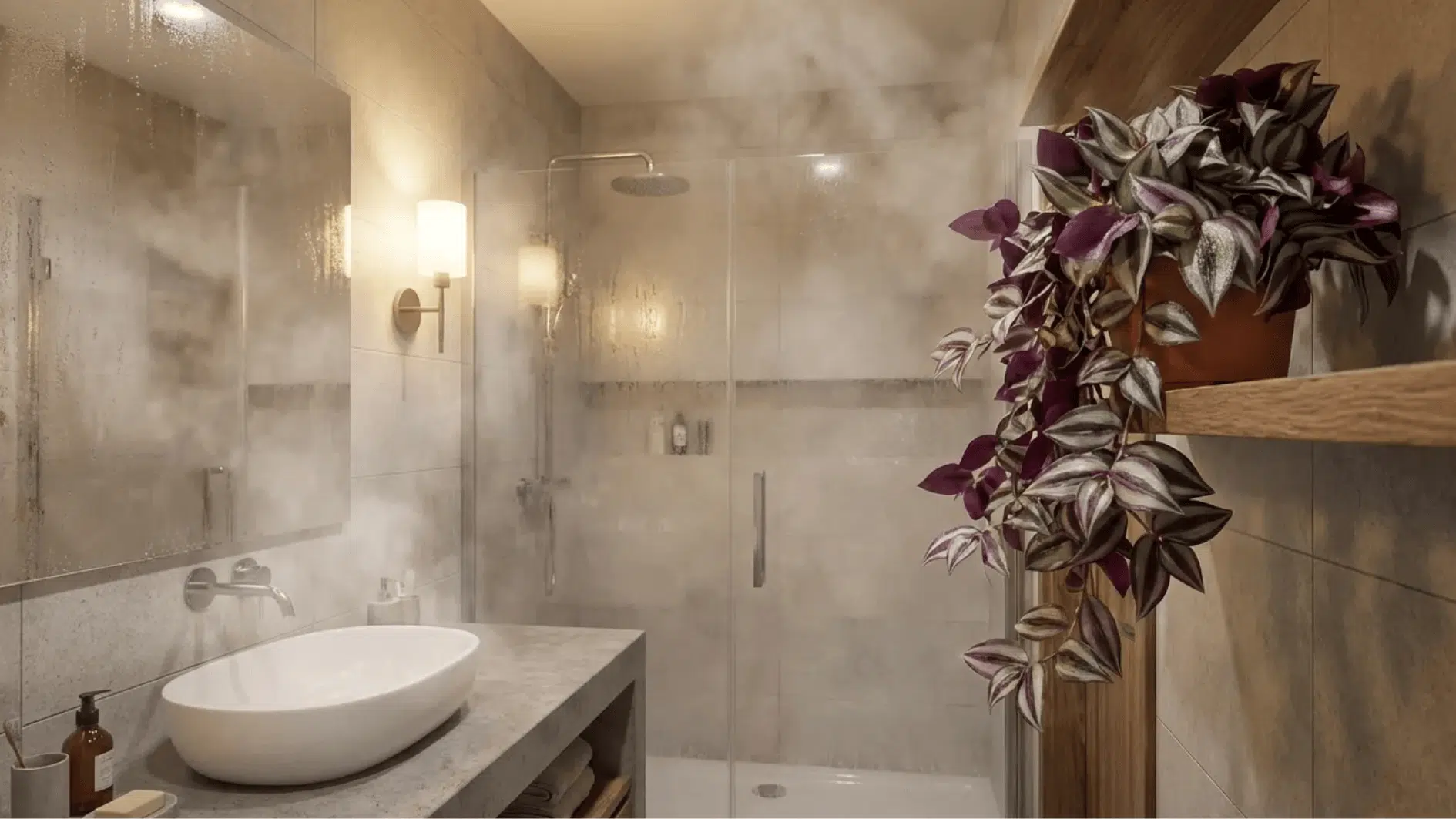
Tradescantia zebrina features purple-and-silver striped leaves. The plant grows quickly and produces trailing stems. Hanging baskets allow the vines to cascade downward.
Bathrooms provide humidity that helps support foliage. Water moderately and allow excess water to drain. Indirect lighting helps maintain leaf color. The plant remains lively and decorative.
Ferns and Humidity-Loving Plants for Dark Bathrooms
Ferns and tropical plants often grow naturally under dense forest cover. Because of this, they tolerate shaded conditions and enjoy the humidity in bathrooms.
21. Boston Fern (Nephrolepis exaltata)
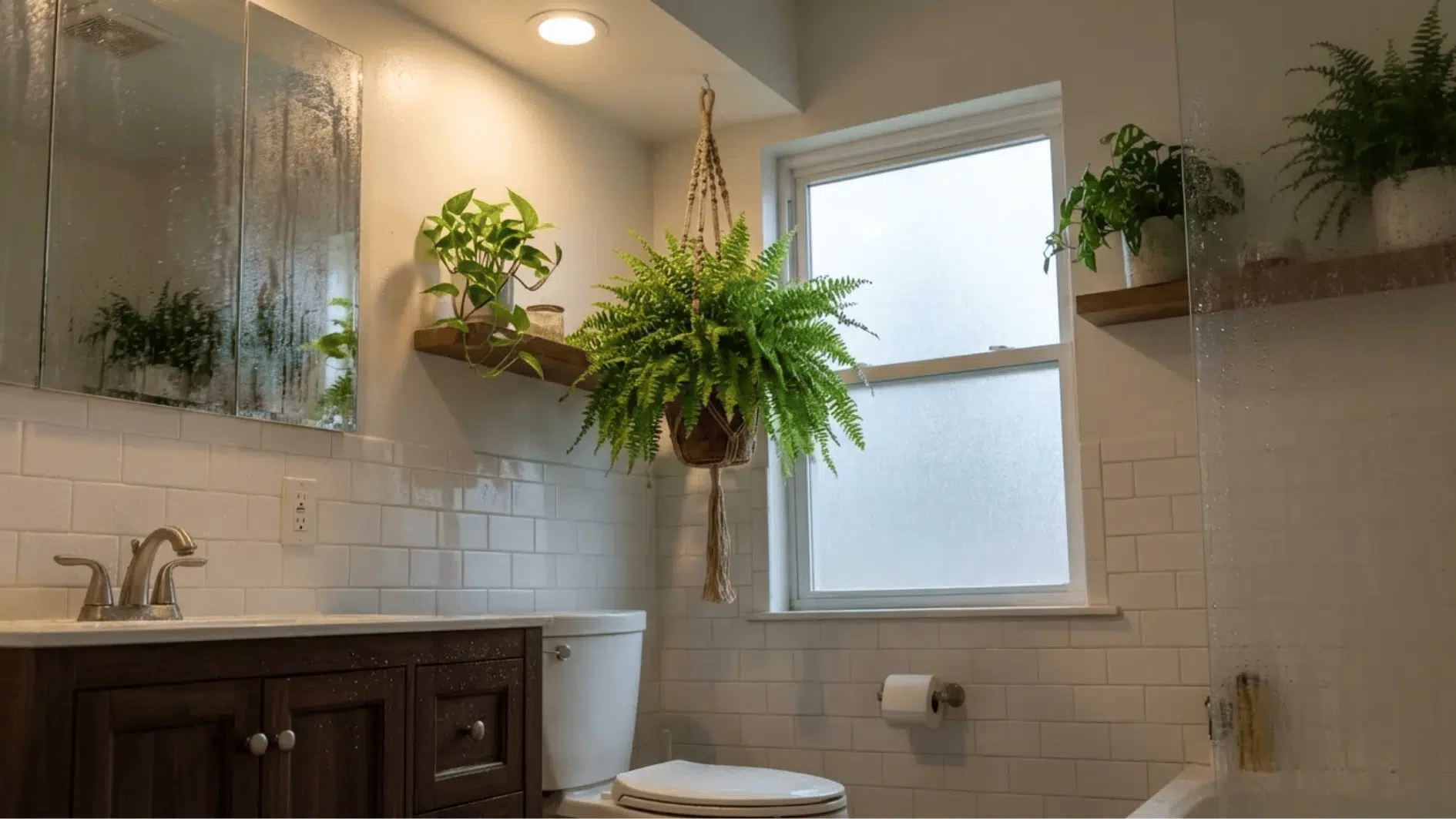
Boston ferns produce soft, feathery fronds that spread outward and create a full, leafy look.
They prefer environments with steady moisture and humidity, which bathrooms often provide after showers. You can place the plant in a hanging basket or on a high shelf where the fronds have room to spread.
Keep the soil slightly moist, but avoid letting it stay soaked.
With indirect light and occasional trimming of older fronds, the plant can remain lush and healthy.
22. Bird’s Nest Fern (Asplenium nidus)
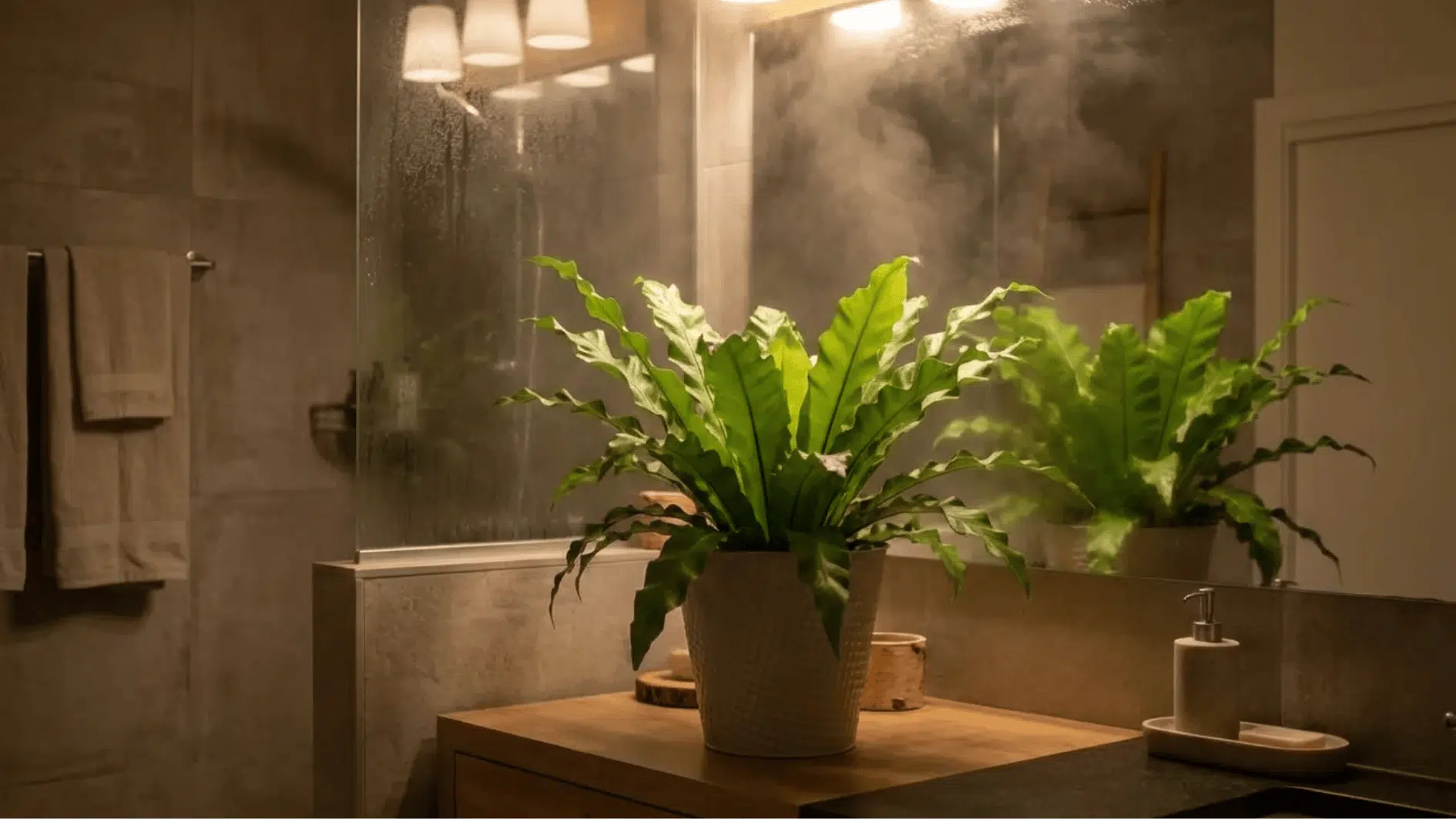
Bird’s nest ferns grow broad, wavy leaves from a central rosette, giving the plant a distinctive shape.
Their bright green foliage can remain vibrant even in dim rooms. Bathroom humidity helps support steady growth and prevents the leaves from drying out.
23. Maidenhair Fern (Adiantum)
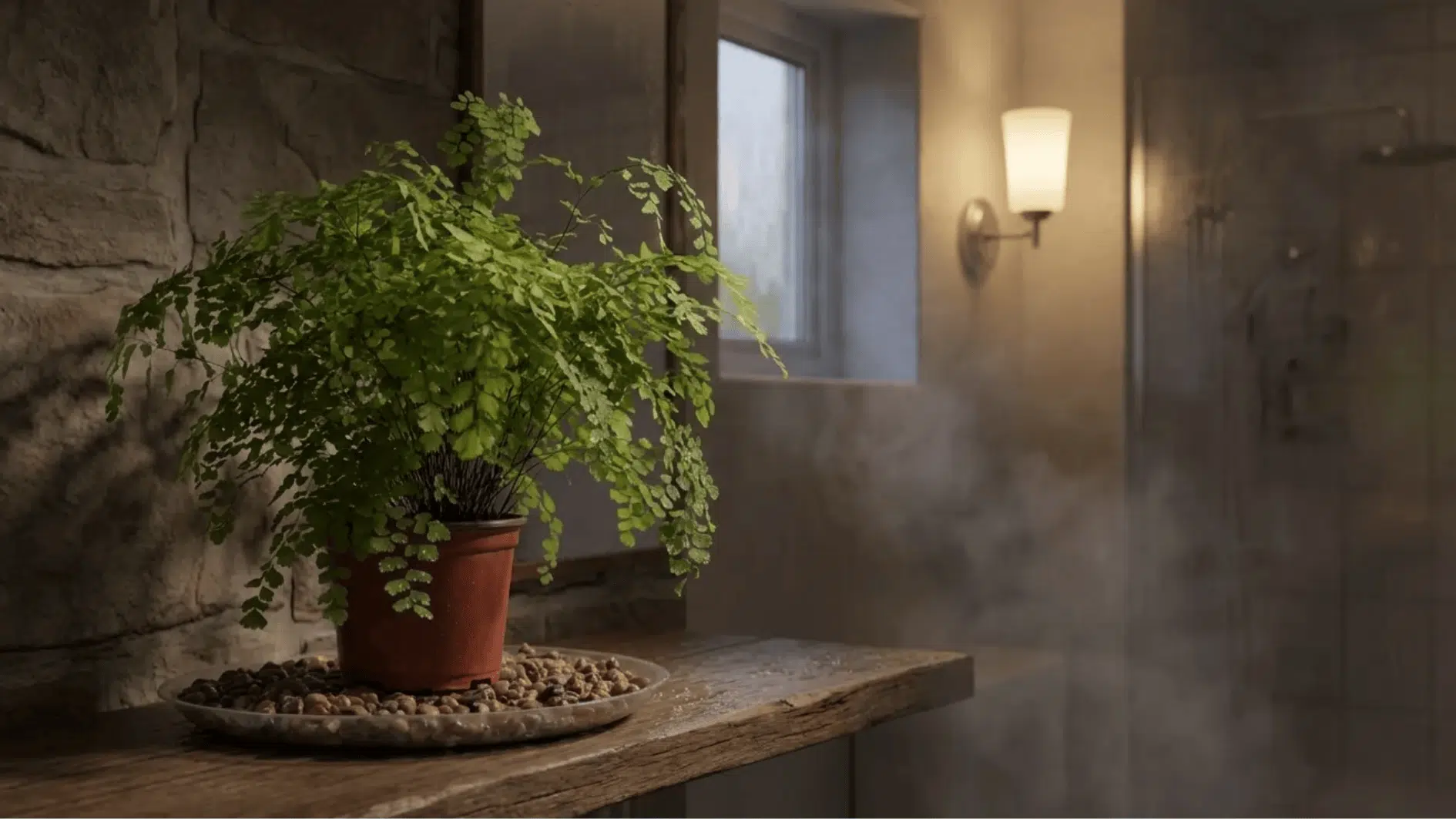
Maidenhair ferns are known for their delicate, fan-shaped leaves attached to thin, dark stems.
They prefer humid environments and consistent moisture to stay healthy.
Bathrooms can support the plant because the air often stays damp after showers.
Place the pot on a shelf where the foliage is protected from direct splashes. Keeping the soil evenly moist helps the plant maintain its soft, graceful fronds.
24. Staghorn Fern (Platycerium)
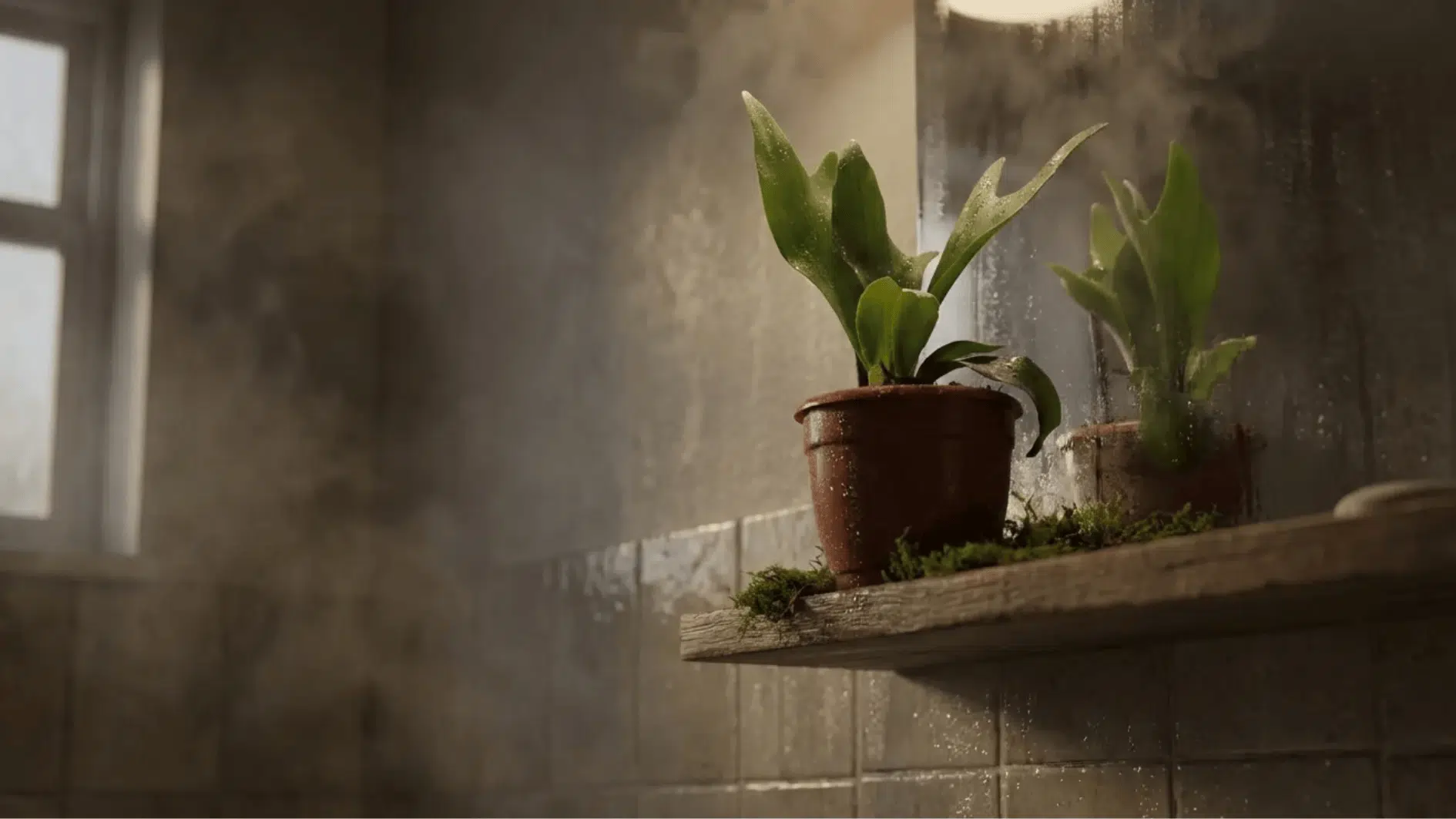
Staghorn ferns produce unusual leaves shaped like branching antlers. Many people mount them on wooden boards or wall planters rather than in traditional pots.
These plants naturally grow in shaded forest environments with steady humidity.
Bathrooms provide moisture that supports healthy growth. Occasional watering and gentle misting help keep the foliage in good condition.
25. Kimberly Queen Fern (Nephrolepis obliterata)
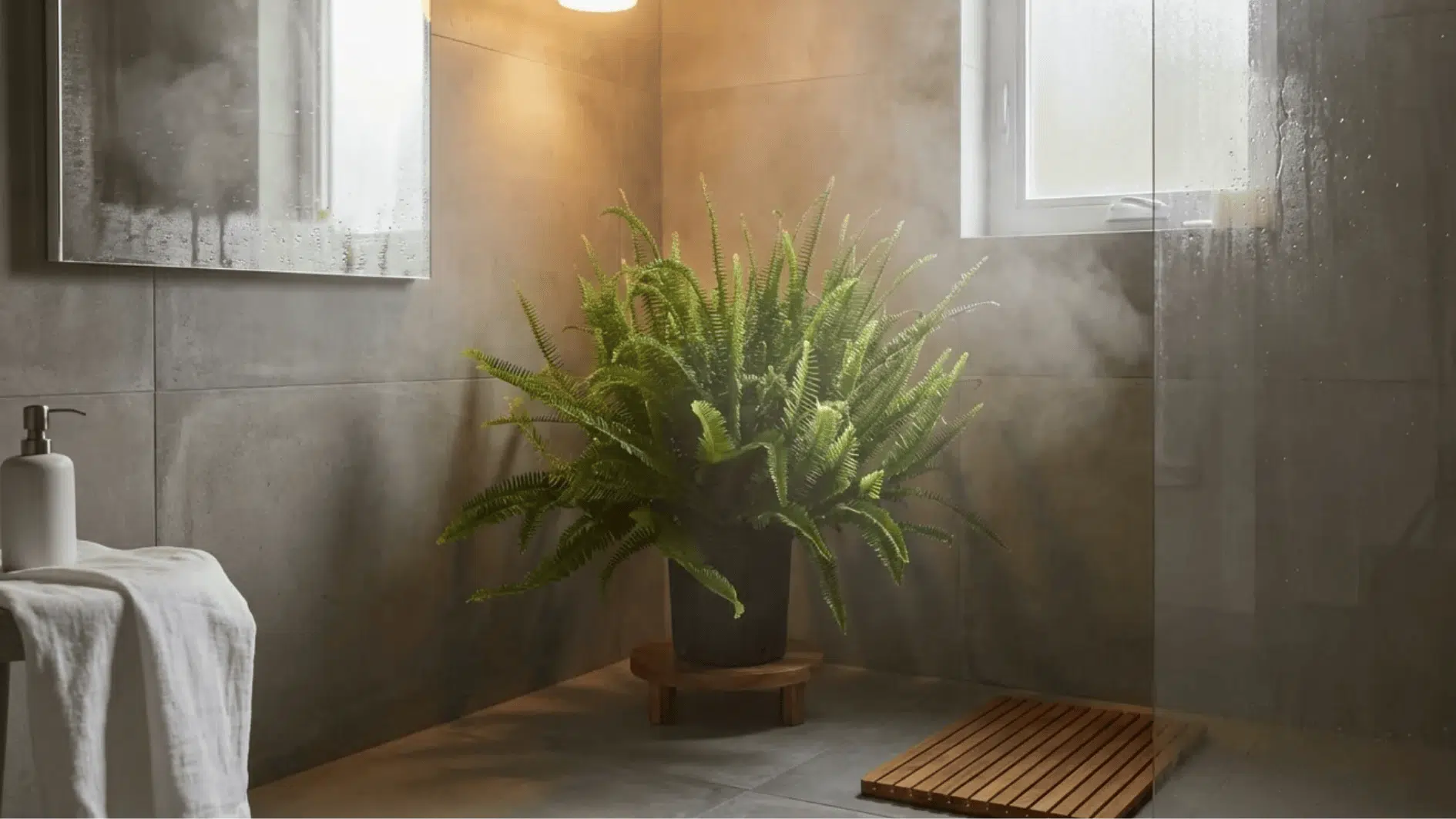
Kimberly Queen ferns grow upright fronds that give the plant a neat, structured look.
They tolerate indoor lighting conditions better than many fern varieties. Bathrooms provide humidity that helps keep the foliage vibrant.
Place the plant on the floor or a plant stand where the fronds have space.
26. Calathea (Calathea orbifolia)
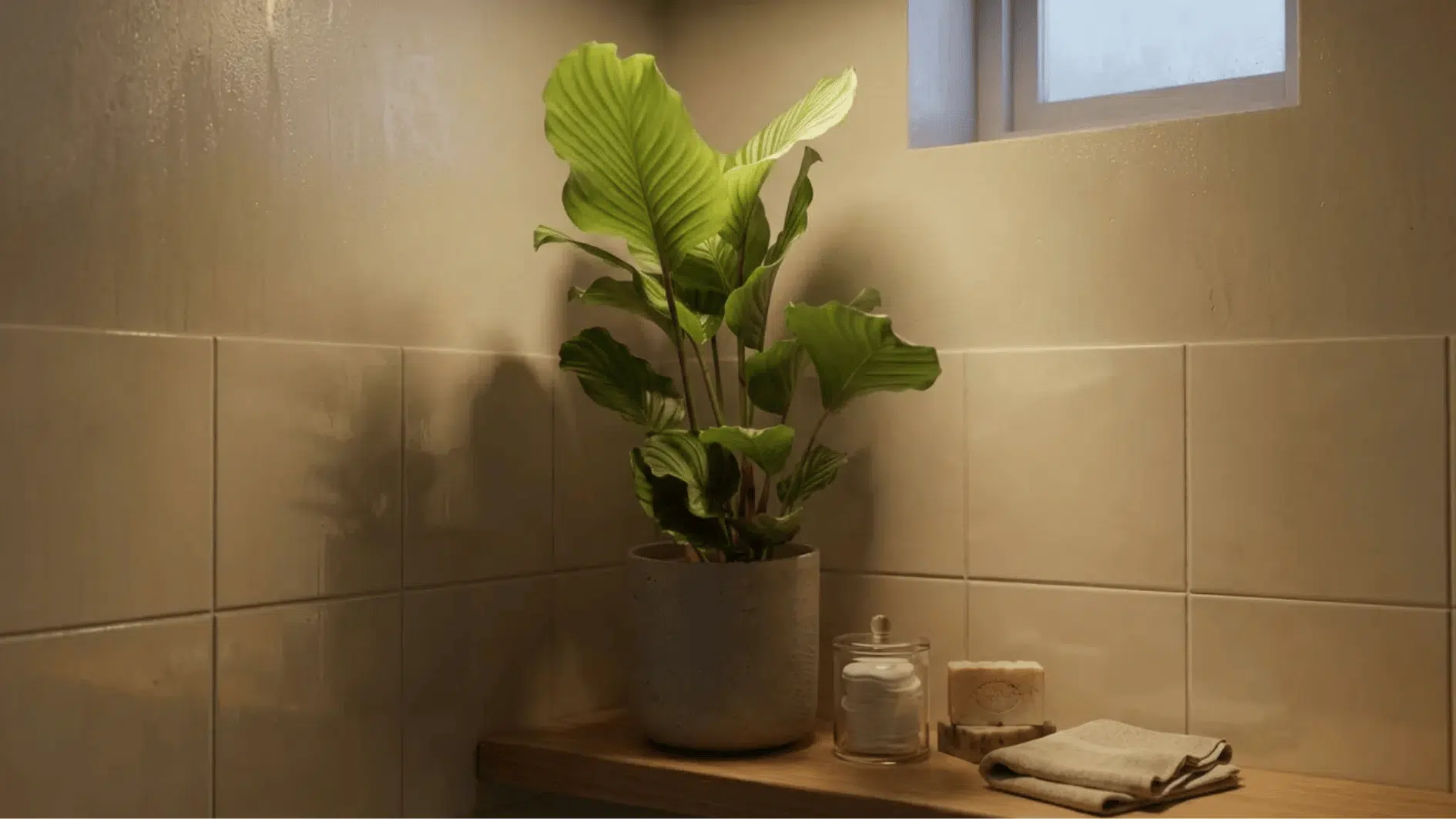
Calathea plants are admired for their patterned leaves with soft green stripes.
They prefer humid environments and consistent moisture. Bathrooms often provide the conditions that help this plant stay healthy. Place it on a shelf away from strong, dry air or direct heat.
27. Rex Begonia (Begonia rex)
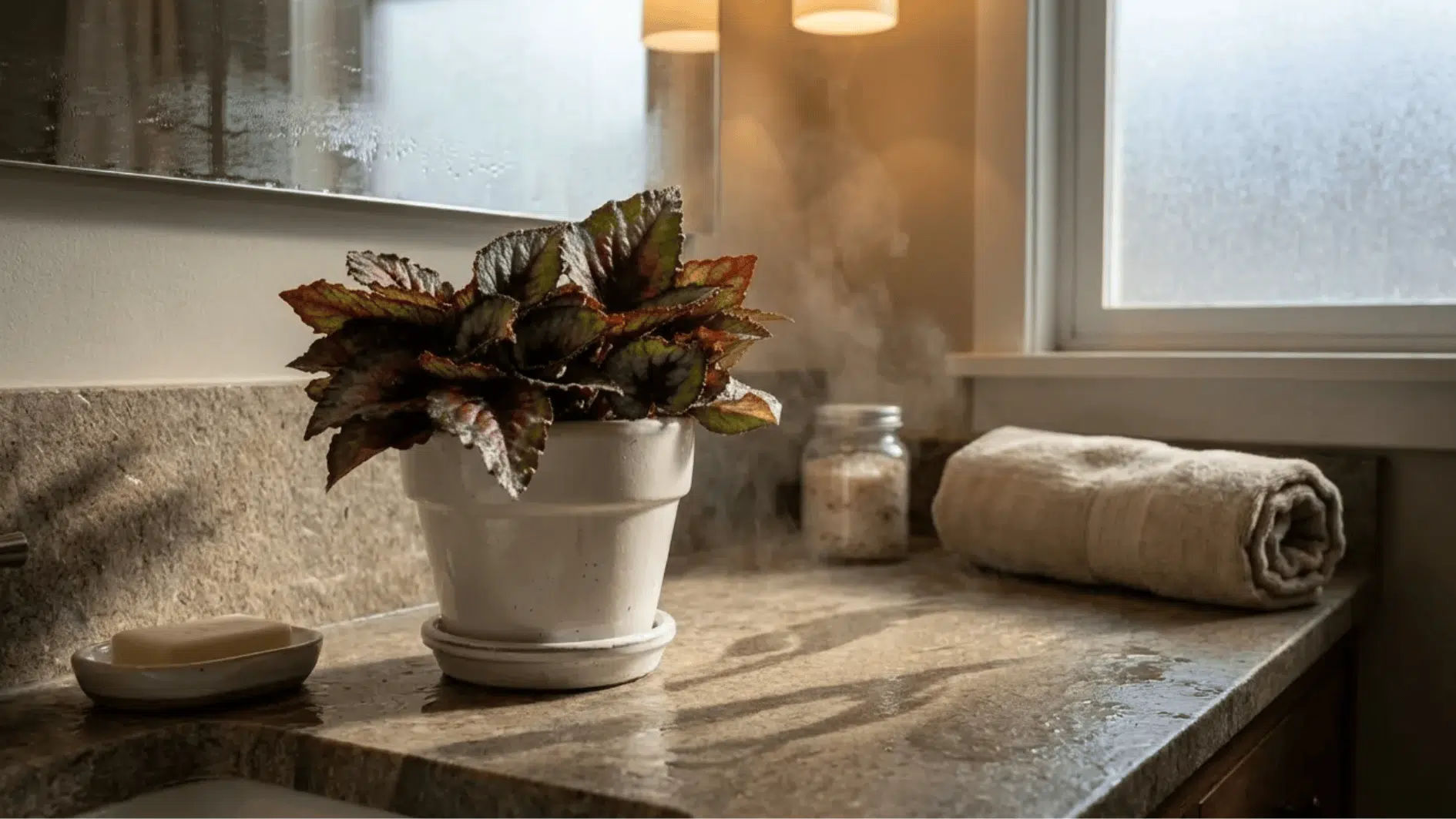
Rex begonias produce textured leaves with striking colors and patterns. They grow best in humid environments with gentle indoor lighting.
Bathrooms can provide enough moisture to support healthy foliage. Place the plant on a countertop or shelf away from strong drafts. Keep the soil slightly moist to maintain its vibrant leaves.
Tough Plants That Handle Dark Indoor Spaces
Some plants adapt easily to indoor conditions and remain dependable even with occasional missed care.
28. Dracaena Marginata
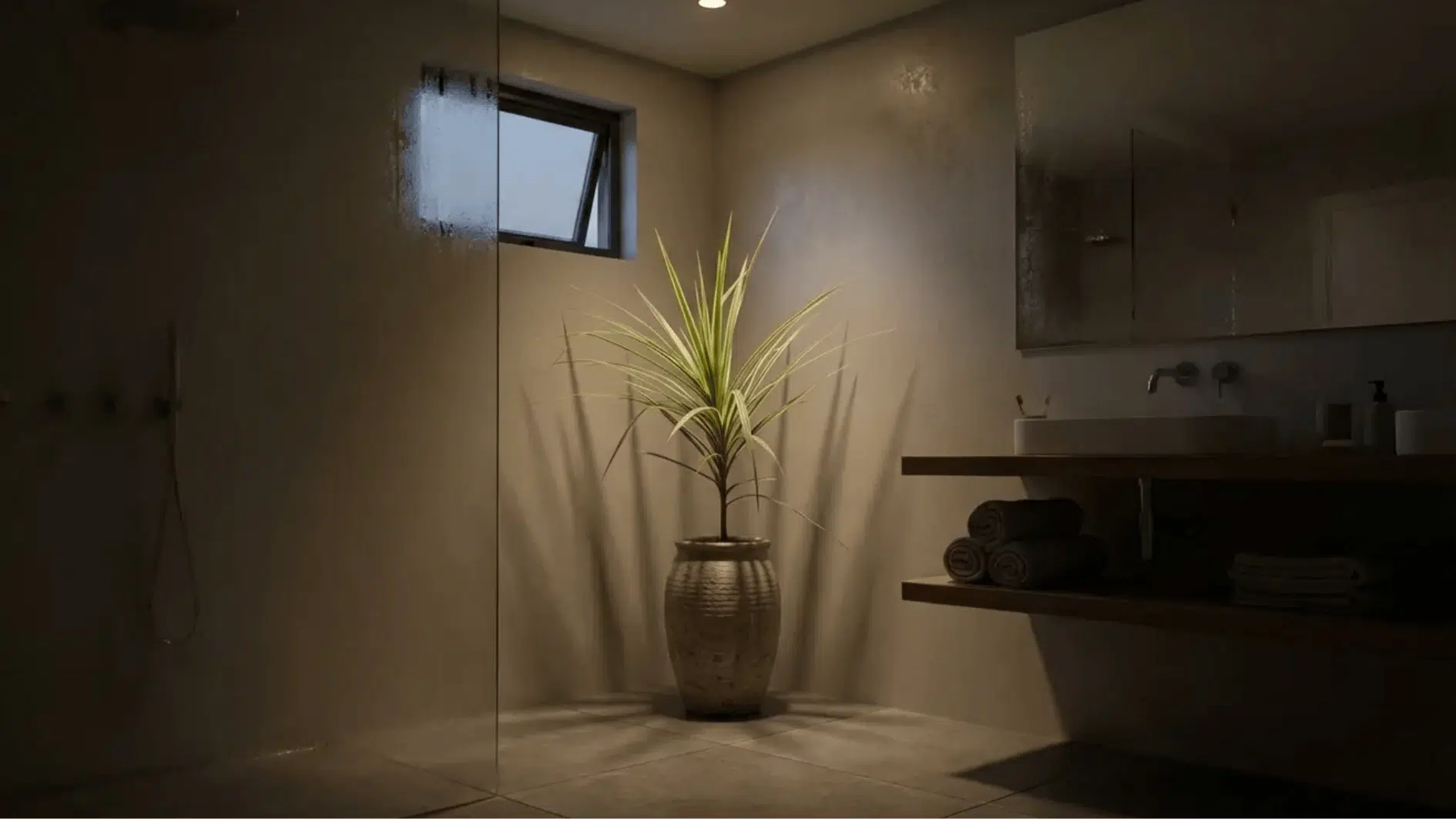
Dracaena marginata produces long, narrow leaves that grow from tall, slender stems. The plant adapts well to indoor lighting conditions and shaded areas.
Bathrooms provide humidity that helps maintain healthy foliage.
Place the plant on the floor or near a wall where it has room to grow. Allow the soil to dry slightly between watering sessions.
29. Corn Plant (Dracaena fragrans)
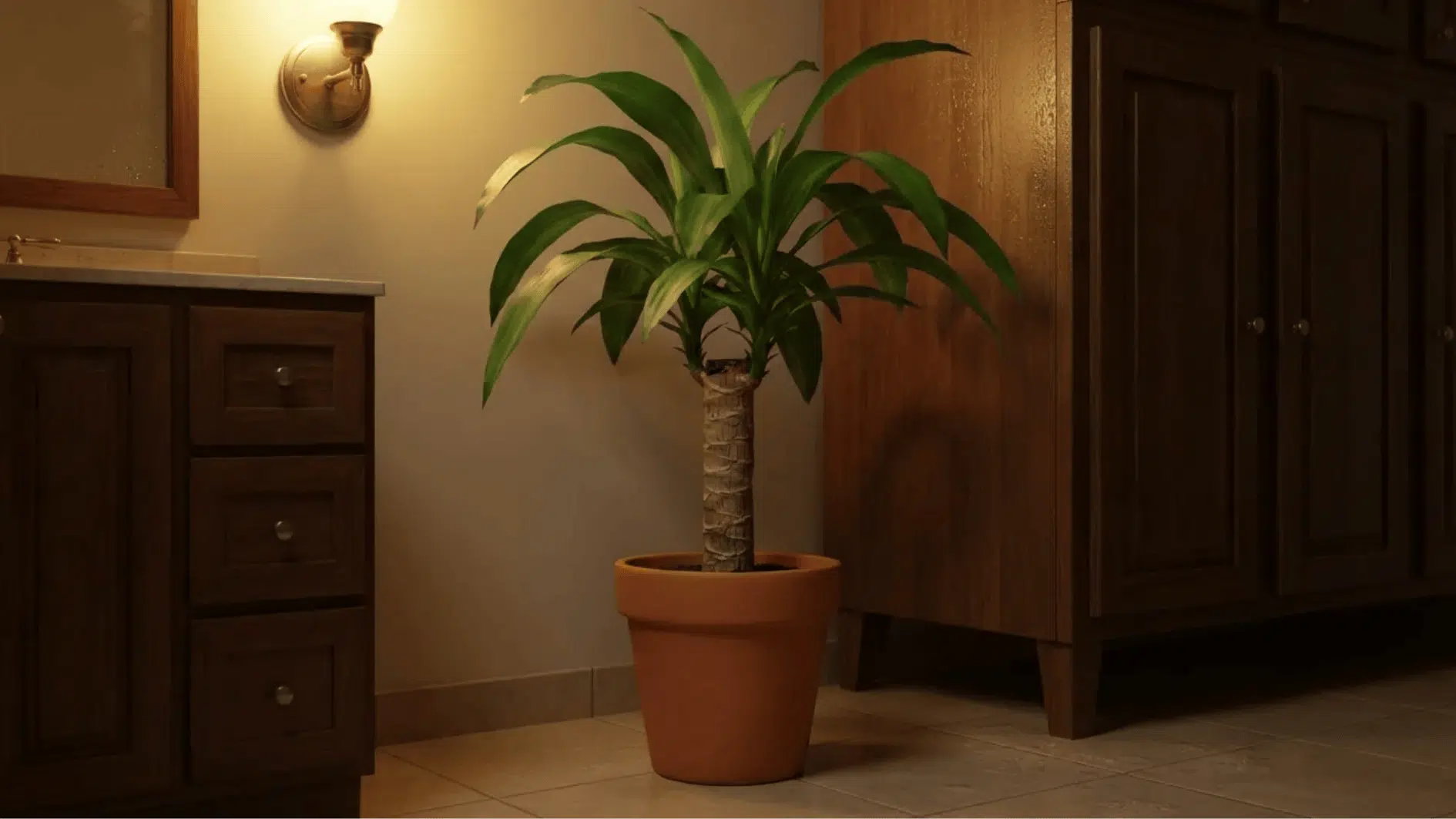
Corn plants grow wide, arching leaves that resemble the shape of corn foliage. They tolerate dim indoor environments fairly well.
Bathrooms provide warmth and humidity that support steady growth. Place the plant near a corner or cabinet where it has enough space.
Water the plant when the top layer of soil becomes dry.
30. Dumb Cane (Dieffenbachia)
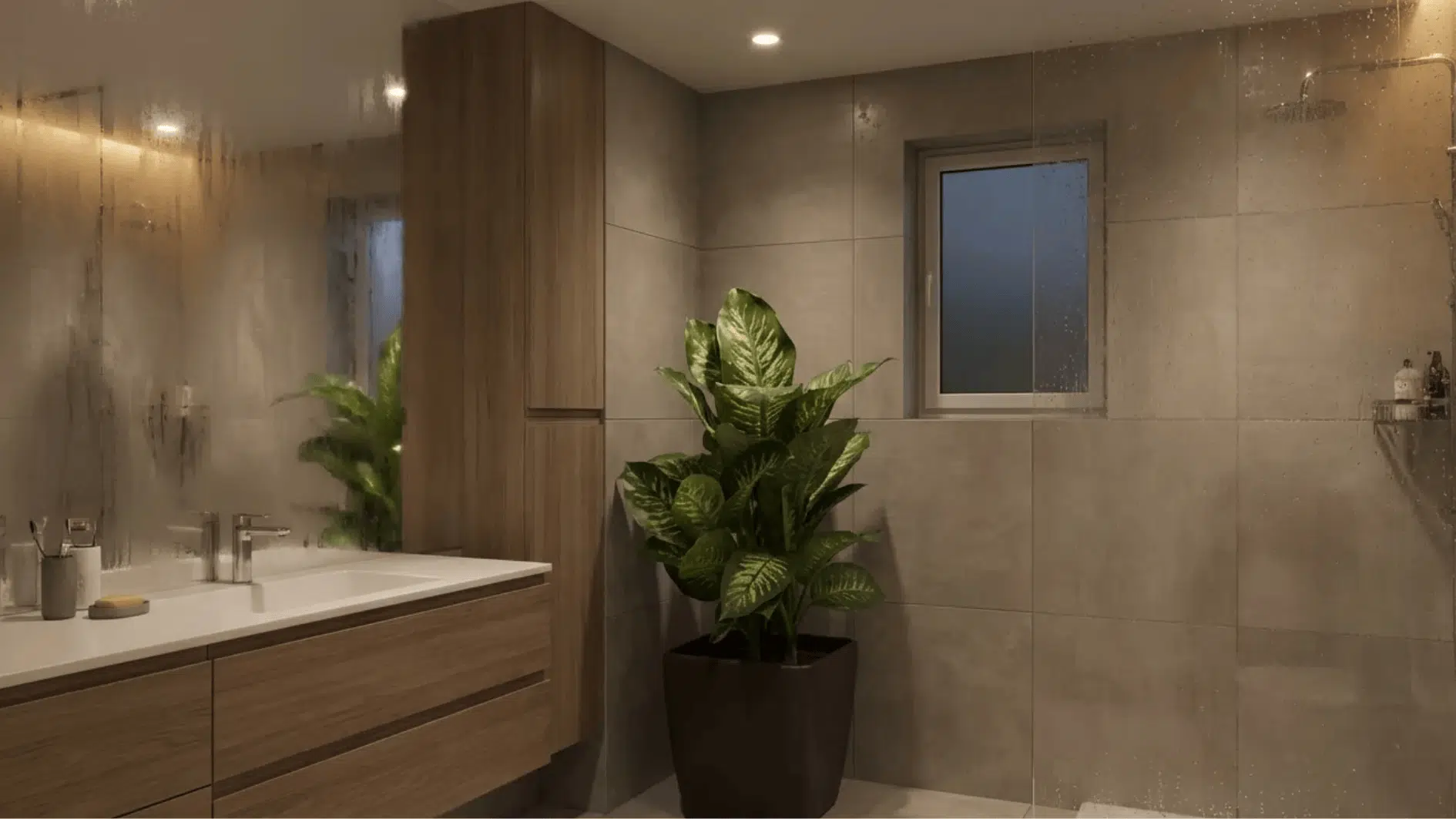
Dieffenbachia plants produce large decorative leaves with green and cream patterns.
They tolerate indoor environments with moderate shade quite well. Bathroom humidity helps maintain the foliage and prevents leaf dryness.
Place the plant on the floor or a large shelf where the leaves can spread. Keep the soil slightly moist for steady growth.
31. Arrowhead Plant (Syngonium podophyllum)
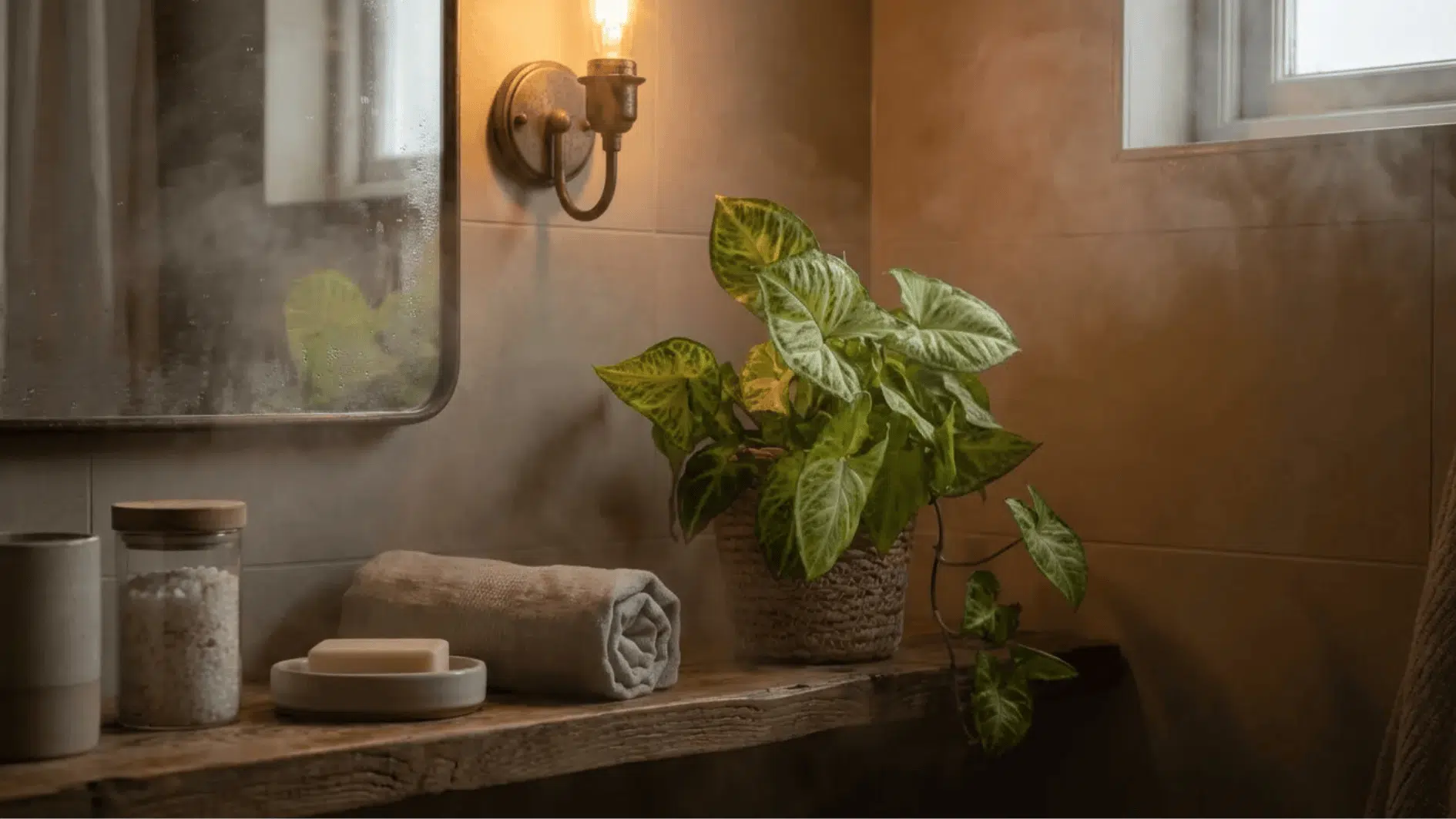
Arrowhead plants grow leaves shaped like small arrowheads that change as the plant matures. Young plants remain compact while older plants may develop trailing vines.
They tolerate indoor lighting conditions and humid environments.
Bathrooms provide moisture that supports healthy foliage. Place the plant on a shelf or allow it to trail slightly from a planter.
32. Mini Monstera (Rhaphidophora tetrasperma)
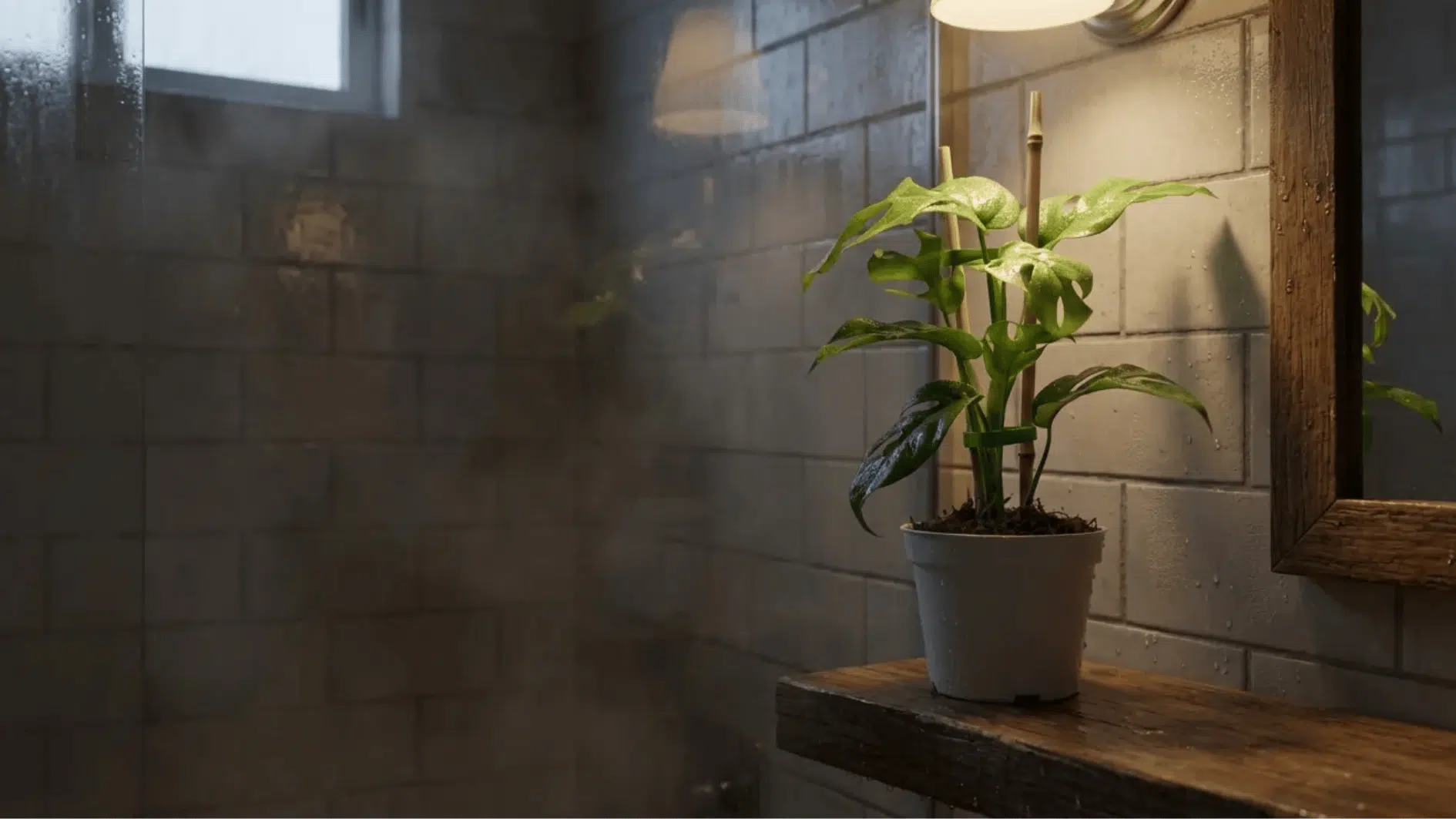
Mini monstera plants produce leaves with natural splits, similar to those of larger monstera plants.
They remain smaller and easier to manage indoors.
Bathrooms provide humidity that helps maintain the foliage. Place the plant on a shelf or near a support where it can climb.
Water moderately and allow the soil to drain well.
33. Aspidistra Milky Way
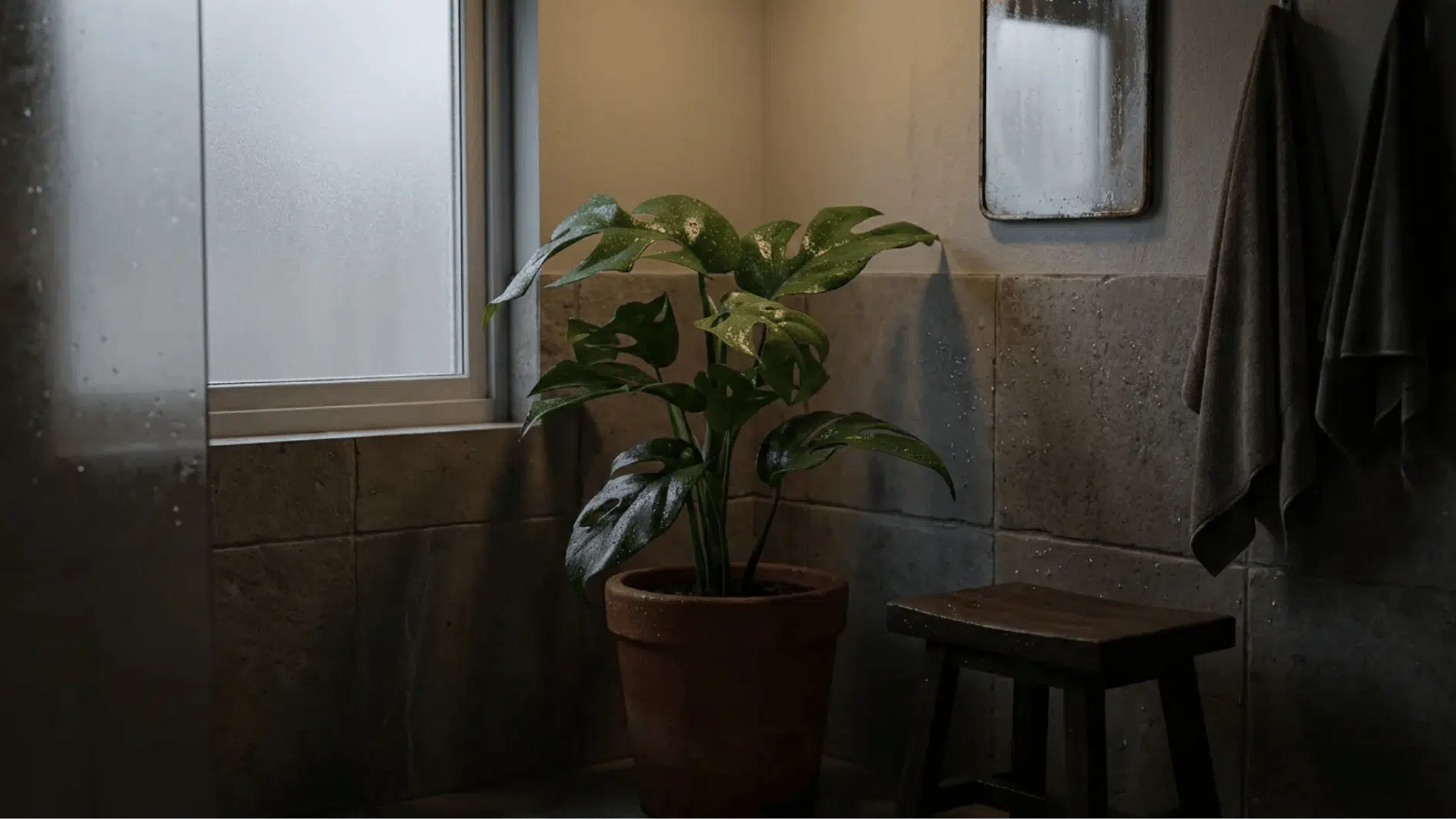
Aspidistra Milky Way is a variation of the cast-iron plant with speckled markings on its leaves.
The plant tolerates shade and indoor conditions very well. Bathrooms provide humidity that helps keep the foliage healthy.
Place the plant on the floor or in a quiet corner. Moderate watering keeps the plant thriving.
34. Ficus Pumila (Creeping Fig Vine)
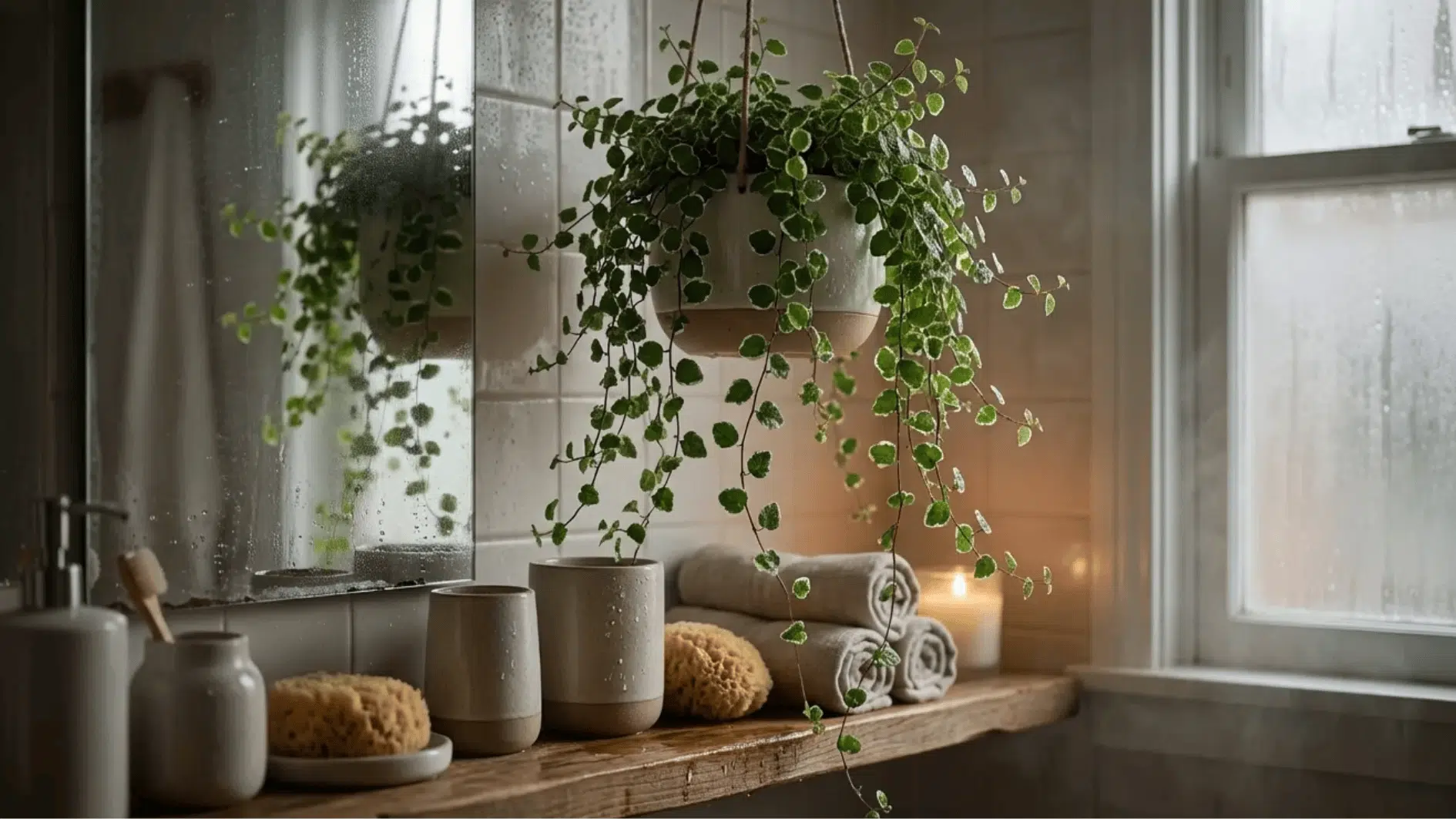
Ficus pumila produces small leaves along thin, trailing vines.
The plant can grow along shelves or hang from planters. It adapts well to indoor environments with limited light. Bathrooms provide humidity that supports steady foliage growth.
Regular trimming helps keep the vines manageable.
35. Lucky Bamboo (Dracaena sanderiana)
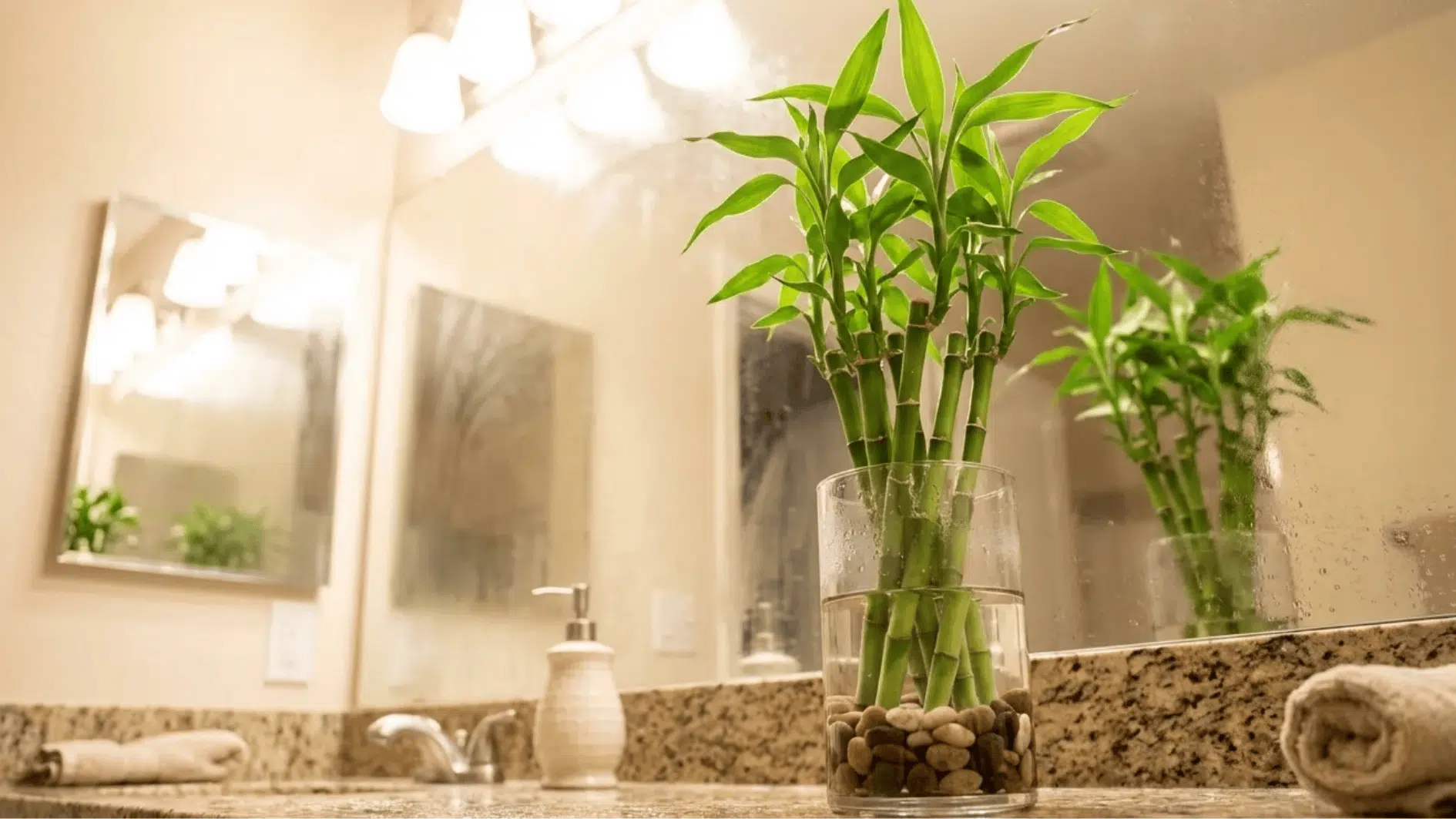
Lucky bamboo grows upright green stems with narrow leaves.
Many people grow it in water-filled containers or decorative pots. The plant tolerates indoor lighting conditions quite well. Bathrooms provide humidity that supports healthy growth.
Replace the water regularly if the plant grows in a glass container.
36. Rubber Plant (Ficus elastica)
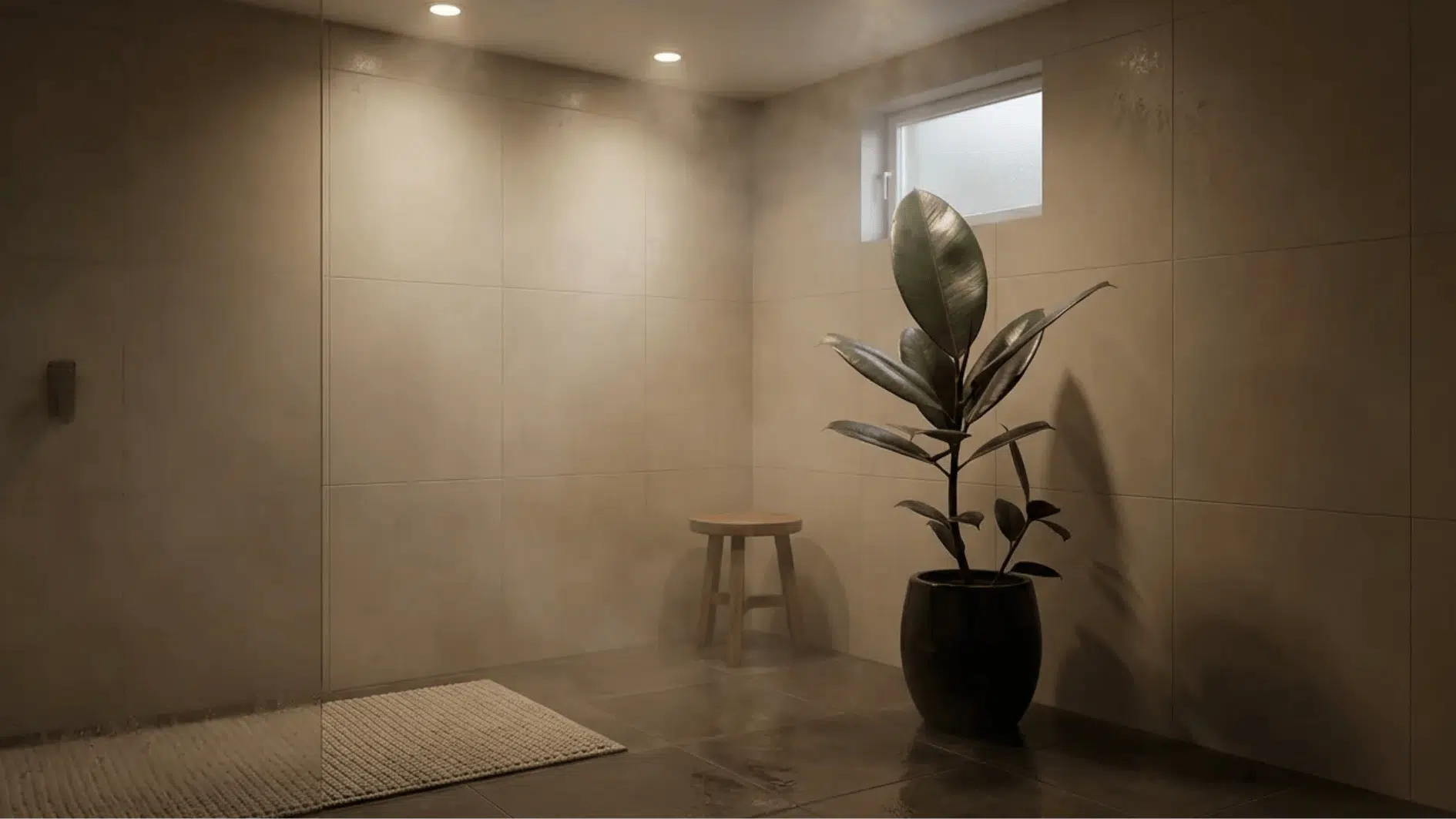
Rubber plants produce thick, glossy leaves that grow along sturdy stems. They tolerate indoor environments with moderate shade. Bathrooms provide humidity that helps keep the leaves healthy.
Place the plant near a wall or corner where it has room to grow. Water when the top layer of soil becomes slightly dry.
37. Philodendron Xanadu
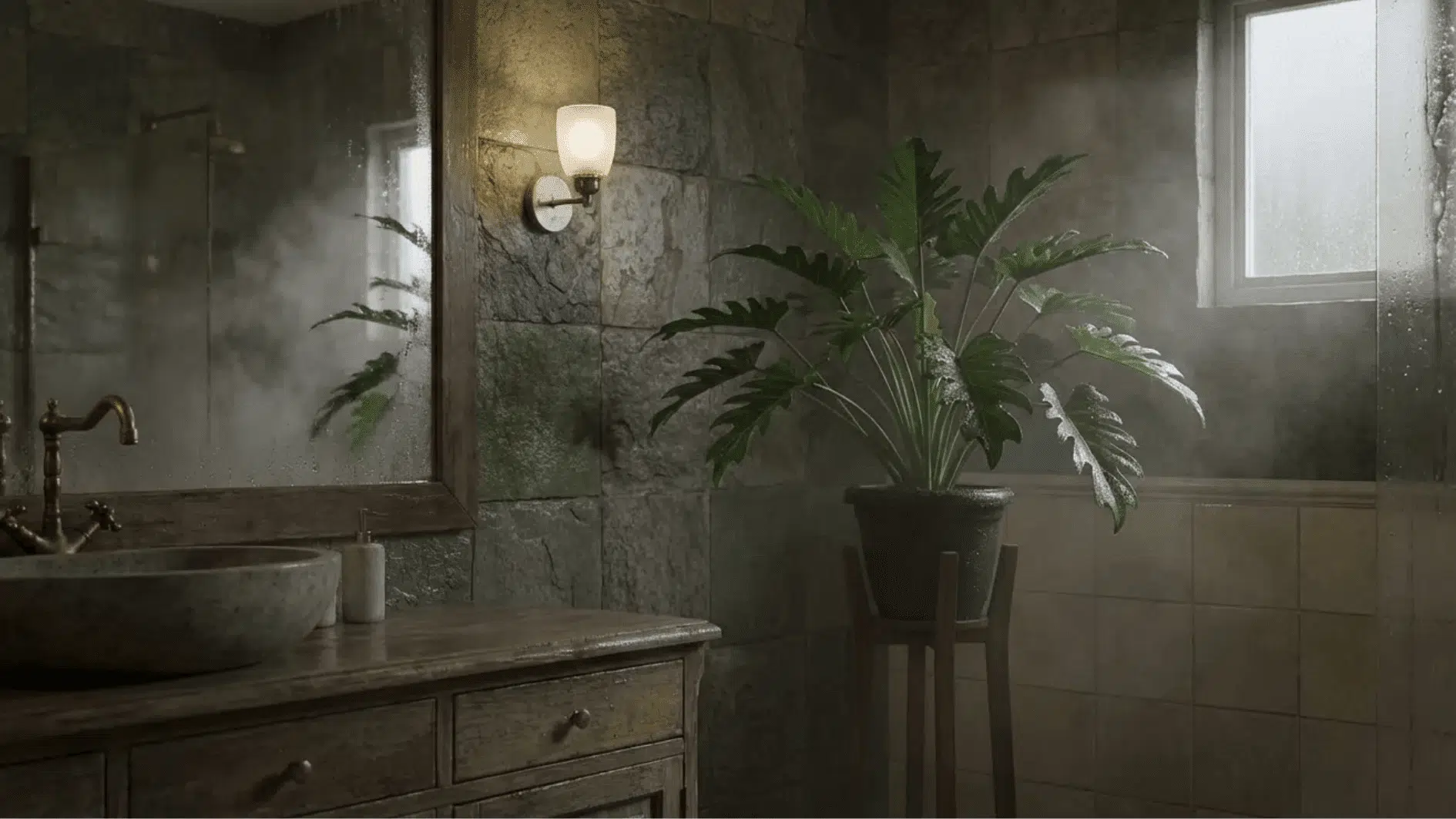
Philodendron Xanadu produces deeply cut green leaves that spread outward from the center.
The plant remains compact compared with many philodendron varieties. Bathrooms provide humidity that supports steady foliage growth.
Place it on the floor or a medium plant stand. Moderate watering and indirect light help maintain healthy leaves.
Tips for Keeping Bathroom Plants Healthy with No Light
Plants that tolerate low light still need the right environment to stay healthy. Small adjustments in watering, lighting, and placement can help them thrive.
- Rotate Plants Occasionally: Move the plant to a brighter room every few weeks. This provides access to indirect sunlight.
- Use Artificial Lighting: LED bulbs or grow lights can help plants receive enough light.
- Avoid Overwatering:Bathrooms already provide humidity. Too much water may cause root problems.
- Use Pots With Drainage: Drainage holes allow excess water to drain away, keeping roots healthy.
Conclusion
Adding plants to a bathroom without natural light is still possible.
Many indoor plants tolerate dim lighting and benefit from the humidity that bathrooms naturally provide. With the right choices, even a windowless space can support healthy greenery.
With thoughtful placement, proper watering, and occasional care, your bathroom can still feel fresh and lively.
Choosing the best plants for a bathroom with no light allows you to enjoy indoor greenery even when sunlight is limited.