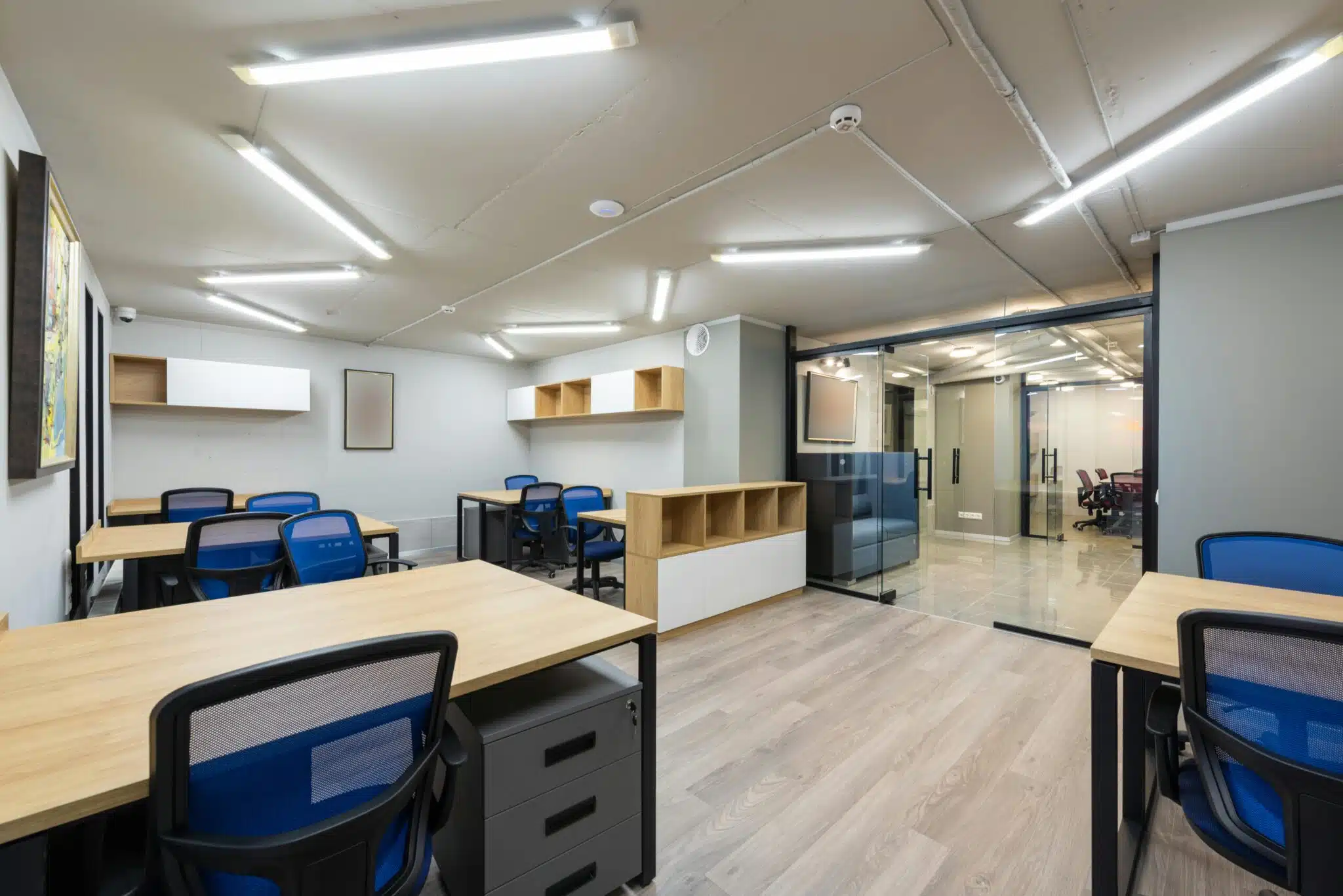
Productivity is often discussed as a function of tools, talent, and time management, but one of its most powerful influences is frequently overlooked. The physical environment where people work shapes how they think, interact, and perform. Office layout is not simply a backdrop for daily activity. It is an active participant in how focus is sustained, how culture is expressed, and how collaboration unfolds.
As organizations rethink how space supports performance, the conversation has moved beyond aesthetics. Today’s most effective workplaces are designed intentionally, balancing privacy with connection, structure with flexibility, and efficiency with comfort. When done well, layout becomes a strategic asset that reinforces both individual productivity and collective success.
The Cognitive Impact of Workspace Design
The human brain is highly sensitive to environmental cues. Light, noise, spatial arrangement, and visual order all influence concentration and mental energy. Research discussed in publications such as Harvard Business Review consistently emphasizes that poorly designed workspaces increase cognitive load. When employees must constantly adapt to distractions or awkward layouts, mental resources are diverted away from meaningful work.
A smart office layout reduces friction. Clear pathways, logical zoning, and well-defined workstations help employees orient themselves quickly and maintain focus. The goal is not to eliminate stimulation, but to manage it. Spaces that allow workers to control their immediate environment, such as adjusting seating position or screen placement, support sustained attention and reduce fatigue.
Furniture selection plays a central role here. Desks that provide adequate surface area and ergonomic alignment help minimize physical strain, which in turn protects cognitive performance throughout the day. Layout decisions that respect how people actually work, rather than forcing them into rigid configurations, lead to measurable improvements in output and satisfaction.
Focus Without Isolation
One of the most persistent challenges in office design is balancing focus with accessibility. Open-plan offices were once promoted as a solution to siloed work, but many organizations discovered that constant exposure can undermine concentration. Smart layouts respond to this by creating gradients of privacy rather than a single dominant model.
Dedicated focus zones, semi-enclosed workstations, and thoughtful desk placement allow employees to concentrate without feeling cut off from the team. This is where layout and furniture intersect. Configurations that subtly define personal space, such as corner-oriented desks or L-shaped surfaces, give workers a sense of control while maintaining visual openness.
Many tasks require both individual focus and quick collaboration. Layouts that support this duality reduce the mental cost of switching between modes. Employees can complete deep work without retreating to isolated rooms, then engage with colleagues without disrupting others. Over time, this balance contributes to more consistent performance and lower burnout.
How Layout Reflects and Shapes Company Culture
Office design is a physical expression of organizational values. Whether intentionally or not, layout communicates what behaviors are encouraged, what work is valued, and how people are expected to interact. A workplace that prioritizes transparency, for example, often features open sightlines and shared spaces. One that values autonomy may emphasize personal workstations and flexible arrangements.
Culture is reinforced through repetition. When employees experience daily interactions that align with stated values, trust and engagement grow. Smart layouts support this alignment by making desired behaviors easy and natural. Collaboration areas placed near team clusters encourage spontaneous discussion. Quiet zones signal respect for focused work. Shared amenities foster informal connections across departments.
Industry bodies such as the International Facility Management Association highlight that high-performing organizations treat space planning as an ongoing process rather than a one-time decision. As teams evolve, layouts are adjusted to reflect new priorities, ensuring that the physical environment continues to support cultural goals.
Collaboration That Feels Natural, Not Forced
True collaboration thrives when people can come together easily without disrupting others. Smart office layouts recognize that collaboration is situational. Some interactions are brief and spontaneous, while others require dedicated space and tools.
By distributing collaboration areas throughout the office, rather than centralizing them in one location, organizations reduce barriers to teamwork. Small meeting nooks, shared tables, and adaptable workstations make it easier for colleagues to exchange ideas quickly. At the same time, a clear separation between collaborative and focus-oriented zones prevents noise and movement from becoming constant distractions.
Desk configuration also influences collaboration. Workstations that allow for easy side-by-side interaction, such as extended or angled surfaces, support pair work and mentoring. For professionals who frequently juggle multiple tasks or coordinate with teammates, solutions like those found at https://www.officefurniture2go.com/catalog/byType/L-Shaped-Desks.aspx can provide both a personal workspace and a natural point of connection without sacrificing organization or comfort.
Ergonomics as a Foundation for Sustainable Performance
Productivity is not only about output in the short term. It is also about sustainability over weeks, months, and years. Ergonomic design is central to this long-term perspective. When layout and furniture fail to support healthy posture and movement, discomfort accumulates and performance declines.
Smart office layouts encourage movement by design. Clear circulation paths, accessible shared resources, and adjustable workstations prompt employees to change positions throughout the day. This reduces strain and supports physical well-being, which is closely linked to mental clarity and resilience.
Ergonomically sound layouts also reduce the likelihood of injury and absenteeism, outcomes that organizations across industries increasingly recognize as both human and operational priorities. By integrating ergonomics into layout planning, companies demonstrate a commitment to employee well-being that extends beyond surface-level benefits.
Flexibility in a Changing Work Landscape
The modern workplace is defined by change. Hybrid schedules, evolving team structures, and shifting technology requirements demand layouts that can adapt. Fixed, inflexible designs quickly become obstacles rather than assets.
Smart office layouts are modular and scalable. Furniture that can be reconfigured, spaces that serve multiple purposes, and layouts that anticipate growth or contraction allow organizations to respond without major disruption. This flexibility supports productivity by reducing the friction associated with change.
Employees benefit as well. When the workspace adapts to their needs, rather than the other way around, they feel supported and empowered. This sense of agency contributes to engagement, loyalty, and a willingness to collaborate across roles and departments.
Designing With Intention, Not Assumptions
Perhaps the most important principle in smart office layout is intentionality. Effective design is informed by how people actually work, not by trends or assumptions. Observation, feedback, and iteration are essential. When employees are involved in discussions about space, layouts become more responsive and effective.
Organizations that succeed in this area treat office design as part of their broader productivity strategy. Layout decisions are aligned with workflows, communication patterns, and cultural goals. Over time, the workspace becomes a quiet but powerful contributor to performance.
Conclusion: Productivity Is Built Into the Space
Productivity does not happen in isolation. It is shaped every day by the environments people inhabit. Smart office layouts recognize this reality and leverage it. By supporting focus without isolation, expressing culture through design, enabling natural collaboration, and prioritizing ergonomic well-being, organizations create spaces that work with their people rather than against them.
As work continues to evolve, the offices that thrive will be those designed with intention and empathy. When layout decisions are guided by how humans think, move, and connect, productivity becomes a natural outcome rather than a constant struggle. In that sense, the most effective offices are not just places to work. They are systems designed to help people do their best work, together.