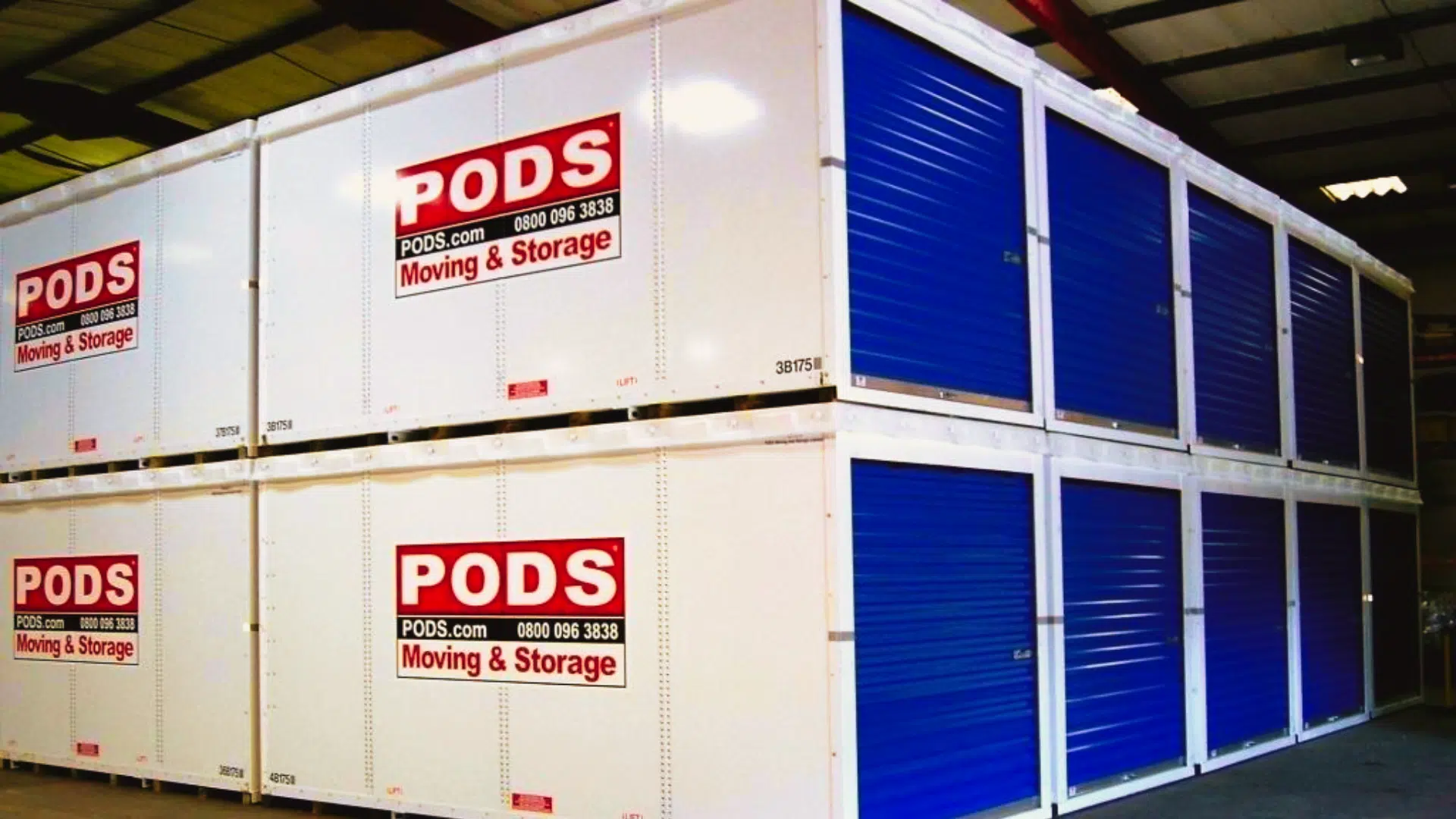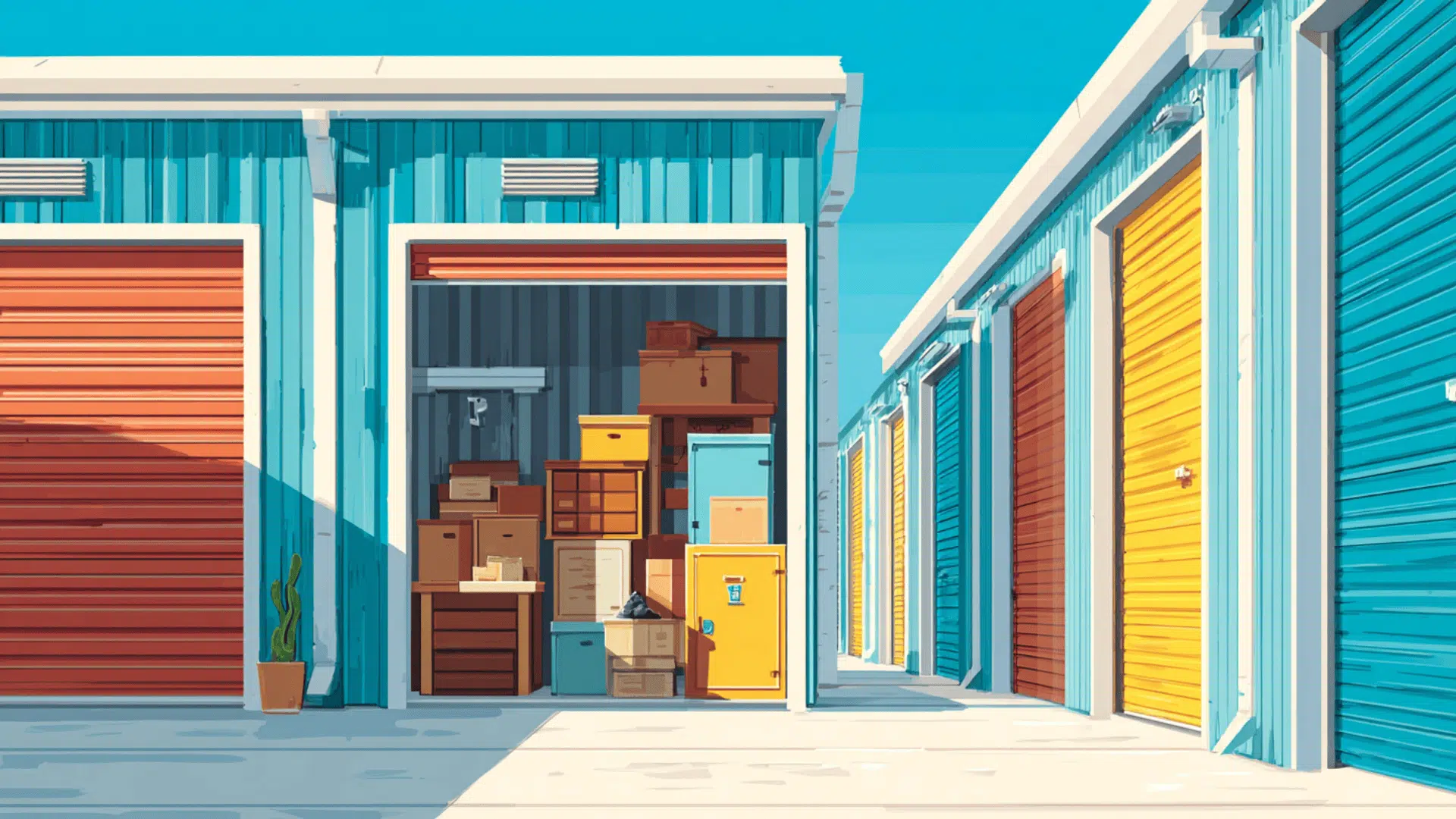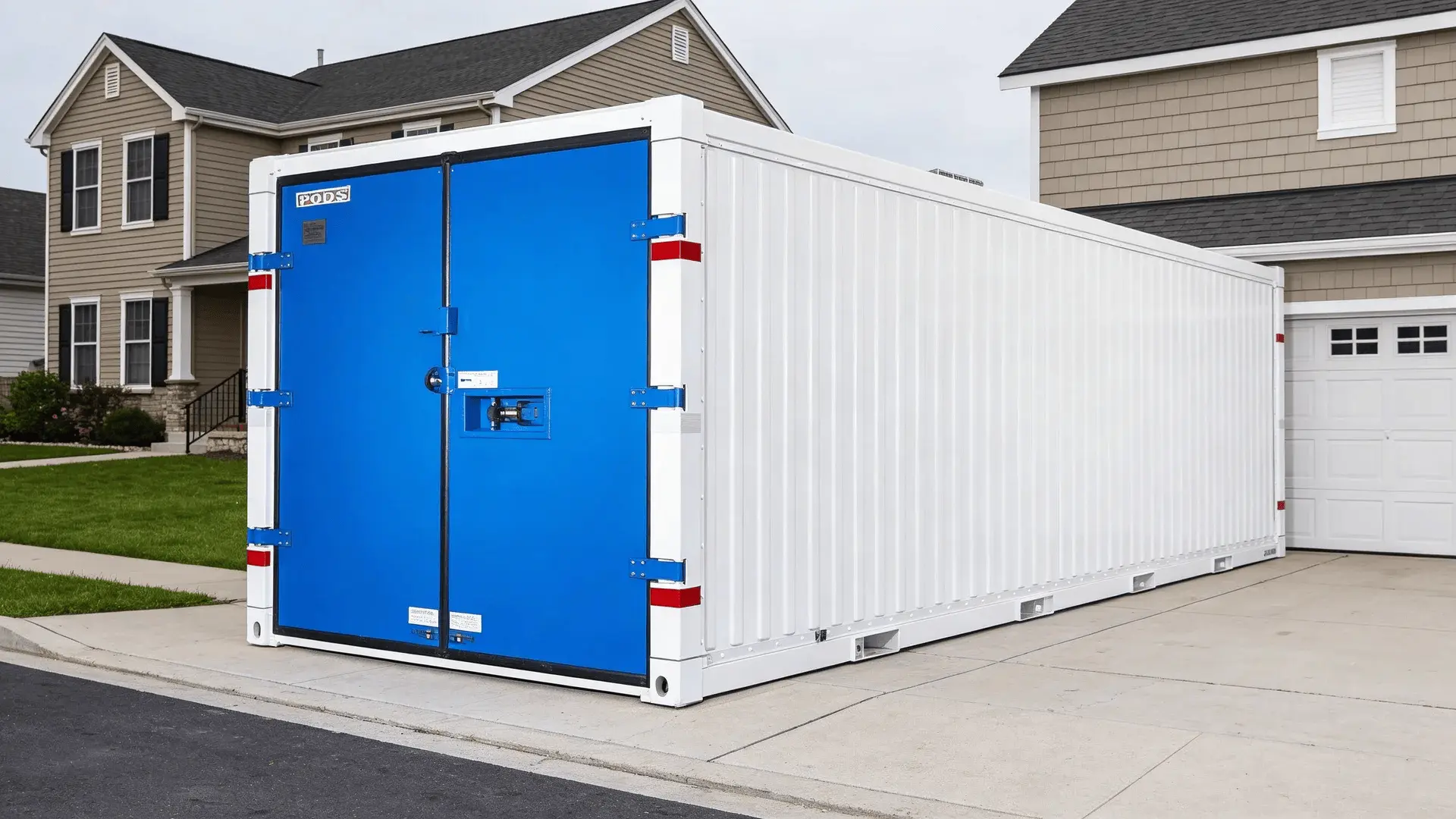
Picking the right moving container sounds simple until you start picturing everything you own stacked inside it.
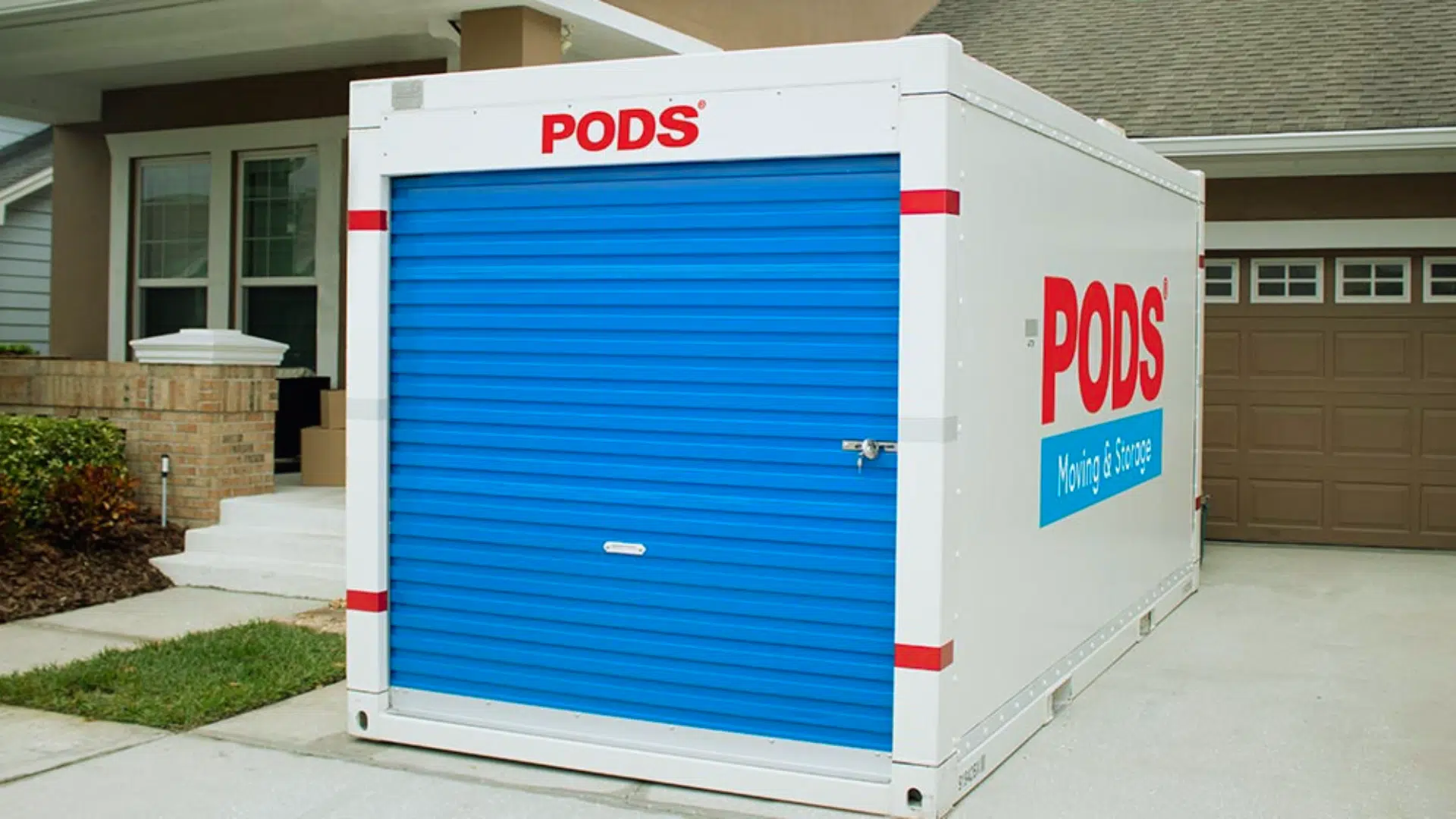
PODS offers three container lengths: 8-foot, 12-foot, and 16-foot. All are roughly 8 feet wide and about 8 feet tall on the exteXrior, with interior dimensions slightly smaller due to wall structure and door framing. Length is the primary factor that changes usable capacity, while weight limits and interior design details also affect how much fits.
But size labels alone don’t tell the full story. Weight distribution, stacking limits, and item shape all influence real-world capacity more than most people expect.
In this guide, I’ll break down how these factors work together so you can choose confidently. Let’s start with the basics.
What PODS Container Sizes are Available?
PODS offers three main container lengths:
- 8-foot
- 12-foot
- 16-foot
The key thing to understand is this: width and height stay mostly consistent. Length changes.
All three containers are roughly 8 feet wide and about 8 feet tall on the outside, so the main difference between sizes is how long the container is. That’s why length becomes the primary variable.
An 8-foot container is shorter but just as wide and tall as a 16-foot container. You are not gaining vertical room when you upgrade; you are gaining more floor length.
Many people assume everything scales equally, but it doesn’t. Height and width are standardized to make transport and placement simpler, and the only major shift is how much linear loading space you have.
That single difference changes how much furniture you can line up from front to back.
What are the Exact Dimensions of Each PODS Container?
Size labels by themselves don’t create real understanding. You need to think in terms of exterior space versus interior space.
Exterior Dimensions (Approximate)
- 8-foot container: about 8′ long × 8′ wide × 8′ tall
- 12-foot container: about 12′ long × 8′ wide × 8′ tall
- 16-foot container: about 16′ long × 8′ wide × 8′ tall
Interior space, however, is slightly smaller.
Interior Dimensions (Approximate)
Interior length is reduced a bit because of the wall thickness and the door structure. Interior height also comes in just under 8 feet, with most of the ceiling sitting slightly shy of full height.
The door opening is narrower and shorter than the full interior box, which matters more than people expect. Large items must pass through the door frame before they ever sit inside.
Which means very tall items may need to be tilted slightly during loading. Once inside, they can often stand upright farther from the entrance.
There’s also a structure around the ceiling and door track that softens perfectly square corners. So while the exterior looks like a clean rectangle, the interior is not a perfect box.
Exterior measurements describe the footprint. Interior measurements describe usable space. And usable space is always a little less than theoretical space.
Approximate Interior Volume in Cubic Feet
| Container Size | Approximate Interior Volume |
|---|---|
| 8-foot | ~402 cubic feet |
| 12-foot | ~689 cubic feet |
| 16-foot | ~835 cubic feet |
Cubic feet measures total three-dimensional space inside the container, not just floor area. While the numbers show theoretical capacity, real-world packing efficiency depends on how well your items stack and fit together.
For perspective, the 12-foot container offers roughly 70% more volume than the 8-foot model. The 16-foot container adds about 20% more space than the 12-foot, so the jump from 12 to 16 feet is noticeable but not dramatic.
The gap is not huge, but when you’re stacking tall furniture, a few inches can make a difference.
How Much Can Each Container Hold in Practical Terms?
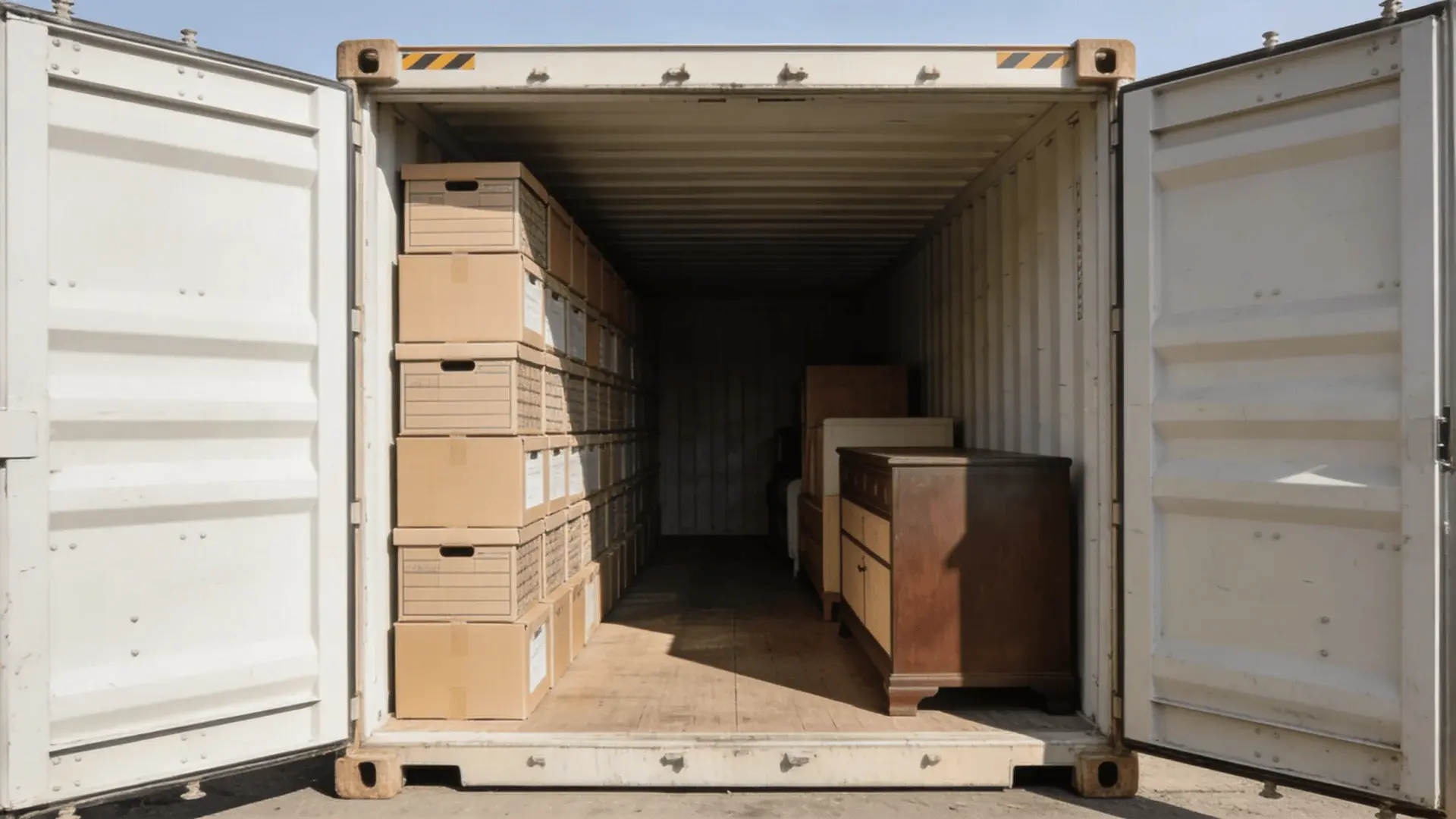
What truly determines the capacity of a storage container is cubic volume, not bedroom count.
A container holds space in three dimensions: length, width, and height. Square footage only measures floor area and says nothing about how densely your belongings fill that space or how much space you actually need.
To make that more concrete, a standard three-seat sofa can take up 40 to 60 cubic feet, depending on its shape. A queen mattress stored upright uses roughly 35 to 40 cubic feet. A tall dresser can easily consume 25 cubic feet or more because it cannot be stacked safely.
If you have minimal furniture and light storage, a smaller container can work for a larger home.
If you have heavy dressers, sectionals, garage tools, and packed closets, even a 16-foot container can feel tight.
Vertical stacking also plays a role. You can stack boxes high, but you can’t safely stack sofas or certain appliances, so the actual usable height varies depending on what you’re loading.
That’s why two homes with the same square footage can require different container sizes.
Why Bedroom Count is Only a Rough Estimate
Bedrooms don’t measure density.
One two-bedroom apartment might contain two beds, a small couch, a dining table, and light storage. The furniture is simple, the closets are not overflowing, and most items stack easily into clean shapes.
Another two-bedroom home might include a large sectional sofa, multiple dressers, garage storage, gym equipment, and packed closets. Even though the bedroom count is the same, the volume and density of belongings are completely different.
Lifestyle plays a role. Storage habits play a role. Even the type and size of furniture change how much space you need.
Minimalist homes tend to compress neatly into a container. High-density homes with heavier, bulkier items do not.
Bedroom count is a helpful starting point. It gets you in the general range, but it can’t replace looking closely at what you truly own.
How Item Shape Affects Usable Space
The way your items are built directly affects how tightly everything fits together.
- Boxes are efficient because they stack cleanly and fill corners.
- Sofas, mattresses, and appliances don’t stack neatly.
- Large, irregular shapes create air gaps, which reduce usable volume.
- A sectional sofa takes up more awkward space than two simple couches.
- A round table wastes corner space compared to a rectangular one.
Even if the cubic footage looks sufficient on paper, real-world packing lowers effective capacity. The container size stays the same, but the geometry of your belongings ultimately determines how much truly fits.
What are the Weight Limits and When Do They Matter?
Each container comes with a maximum weight capacity. Approximate limits are often listed around:
| Container Size | Approximate Maximum Weight |
|---|---|
| 8-foot | ~5,200 pounds |
| 12-foot | ~4,700 pounds |
| 16-foot | ~4,200 pounds |
Note: Exact limits can vary slightly by region and container model, so confirm with PODS directly before loading dense materials.
Here’s what catches many people off guard: the largest container may not have the highest weight limit.
That’s because structural design and transport limits affect how much weight can be safely distributed inside each size. In most cases, households never come close to the limit since typical furniture is bulky but not especially dense.
Weight starts to matter when you’re loading dense items like books, tile or stone, heavy tools, filing cabinets, or packed workshop materials. These items don’t take up much room, but they add up quickly on the scale.
For example, a small moving box filled with books can weigh 40 to 60 pounds on its own. Fifty of those boxes could approach 2,500 pounds before you account for furniture or appliances.
In those situations, you can reach the allowable weight limit long before you fill the container’s physical space. That flips the usual assumption. Most people think space is the main constraint, but with high-density loads, weight often becomes the true limiting factor.
So container capacity really has two limits: one based on volume and one based on weight.
The moment you reach either one, that becomes your true stopping point, regardless of how much space or weight allowance seems to remain on paper.
How Interior Design Features Affect Usable Space
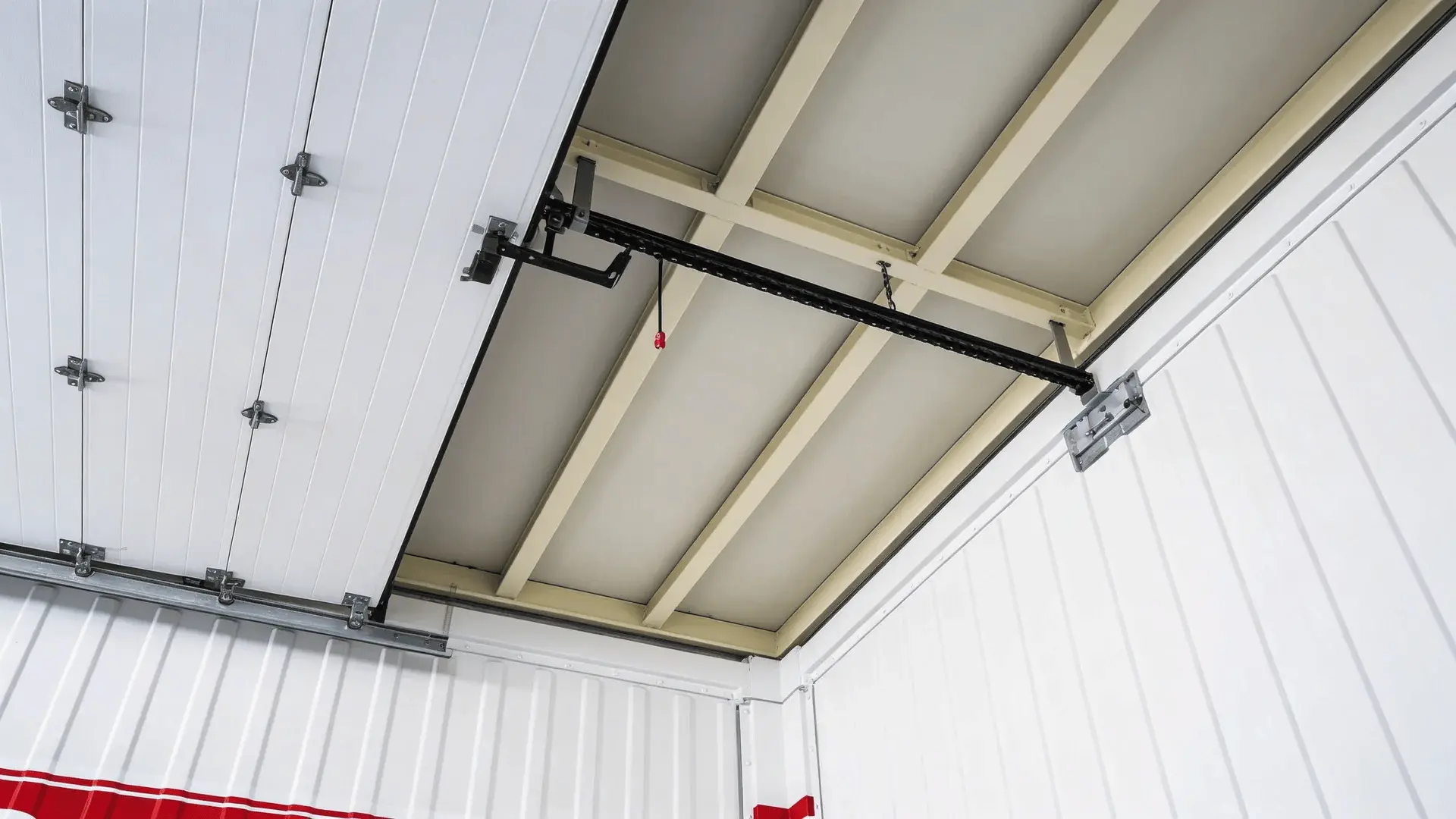
From the outside, a container looks like a simple rectangle. Inside, a few structural details slightly change how the space can be used.
| Feature | How It Affects Usable Space |
|---|---|
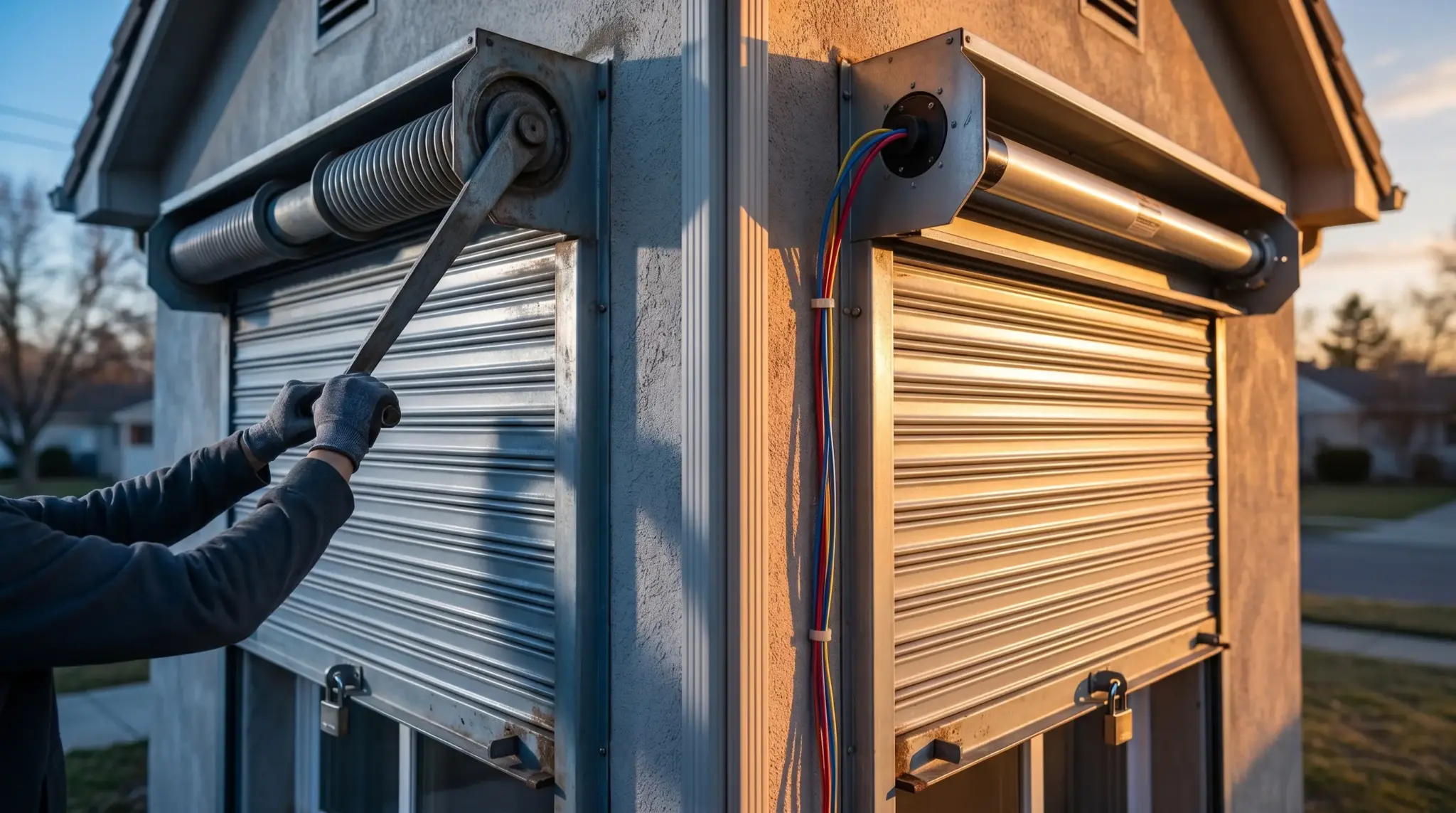
| Roll-Up Door Mechanics | The door rolls upward and uses track space near the ceiling, reducing full-height loading right at the entrance. Tall items may need to be placed farther inside. |
| Ceiling Curvature | Most of the ceiling is near full height, but edges and supports soften square stacking along the walls, slightly affecting tight vertical stacking. |
| Corner Loss | Interior framing reduces perfectly sharp corners. Space loss is small, but tight box stacking can leave minor gaps. |
| Floor Surface & Loading Style | The floor is flat and supports weight evenly. Ground-level loading improves access but does not increase interior capacity. |
The key point is simple: interior geometry is close to rectangular, not perfectly rectangular. Expect small space losses compared to the outer dimensions.
When One Container is Not Enough
Upgrading to a 16-foot container feels like the safest option. In many cases, it is. But there are situations where even the largest size won’t cover everything.
High-density homes with heavy or bulky storage often need more than one container.
Common examples include:
- Homes with full garage contents
- Workshops filled with tools and equipment
- Large sectional sofas combined with full dining sets
- Long-distance moves where every item must be transported at once
There’s also an important difference between short-term storage and full relocation.
If you’re storing selected items temporarily, one container may be enough because you’re not moving everything. If you’re relocating an entire household and clearing the property completely, total volume rises fast.
A frequent mistake is assuming the largest size guarantees sufficiency. It doesn’t.
When belongings are dense, bulky, and numerous, extra length alone may not solve the problem.
If you’re unsure, walk through your home and mentally group items by bulk and density. Pay special attention to garages, storage rooms, and oversized furniture. That quick audit often reveals whether one container is realistic or if planning for a second would be safer
Wrapping Up
Choosing between PODS container sizes is less about labels and more about understanding how space behaves in real conditions.
Length changes capacity. Interior structure trims usable inches. Weight can matter more than volume when loads are dense. Bedroom count is a shortcut, not a rule.
Once you see containers as three-dimensional volumes with structural limits, the sizing decision becomes clearer and more predictable.
Before you commit, look at what you actually own and think about density rather than square footage. That shift in perspective usually makes the right size stand out.
Frequently Asked Questions
What are the different sizes of pod containers?
PODS offers three main sizes: 8-foot, 12-foot, and 16-foot containers. Width and height remain mostly consistent, while length increases total usable volume.
What fits in a 12-foot pod?
A 12-foot container often fits the contents of a 2–3 room home. Actual capacity depends on furniture size, storage density, and stacking efficiency.
How big is a 16-foot PODS container inside?
The interior length is slightly under 16 feet due to wall thickness and door structure. Width and height measure just under 8 feet inside.
What are the interior dimensions of a PODS container?
Interior dimensions are slightly smaller than exterior measurements. Ceiling structure, wall framing, and door tracks reduce usable space by a small margin.
How much weight can a PODS container hold?
Weight limits vary by size, approximately 4,200 to 5,200 pounds, depending on container size. Dense items like books or tools may reach weight limits before filling the space.