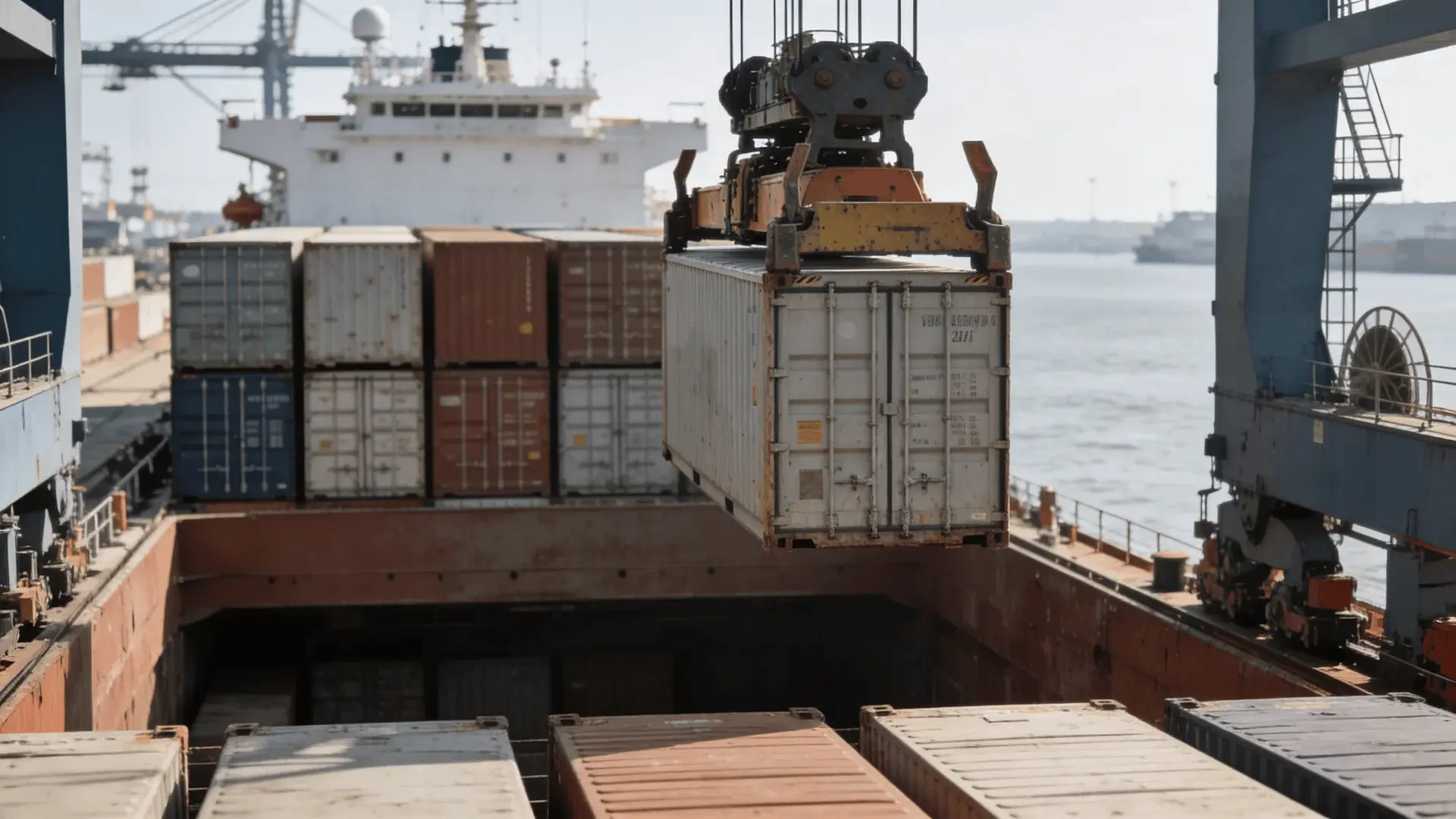
Most people hear the term freight on board and assume it means “free shipping.” Others believe that whoever pays the carrier automatically owns the goods. Neither of those assumptions is right.
FOB is about responsibility. It sets the point where risk shifts if something goes wrong during shipping, and it affects control, timing, and legal exposure between buyer and seller.
In this blog, I’ll give you a look at how risk actually transfers, how payment and liability can be split apart, and why small wording changes can move serious responsibility from one side to the other.
Let’s begin with the basics.
What Does Freight on Board (FOB) Actually Mean?
Freight on Board, often written as FOB or “Free on Board,” is a delivery term used in shipping contracts.
It defines one thing clearly: the point at which responsibility for goods transfers from the seller to the buyer.
That responsibility can include:
- Risk of loss or damage
- Legal control of the goods
- Sometimes ownership, depending on the contract
The key idea is simple. FOB does not describe the price of shipping. It defines the delivery point.
When businesses use FOB in a contract, they are agreeing in advance on the exact moment responsibility shifts. That moment matters if goods are damaged, lost, or delayed in transit.
It helps to separate three ideas that often get blended together:
- Risk transfer – Who is responsible if the goods are damaged?
- Title transfer – Who legally owns the goods?
- Freight cost responsibility – Who pays the carrier?
These do not always move together. In many contracts, risk and title shift at the same time, but they don’t have to. Freight payment can also be handled separately.
FOB appears in domestic U.S. shipping and in international trade. In the U.S., it is usually governed by commercial law. In international trade, it may fall under Incoterms rules. The structure is similar, though the legal framework behind it can differ.
The biggest misunderstanding is this: FOB does not mean shipping is free. The word “free” refers to the seller being free of responsibility once goods are delivered to the agreed point.
When Does Risk Transfer Under FOB?
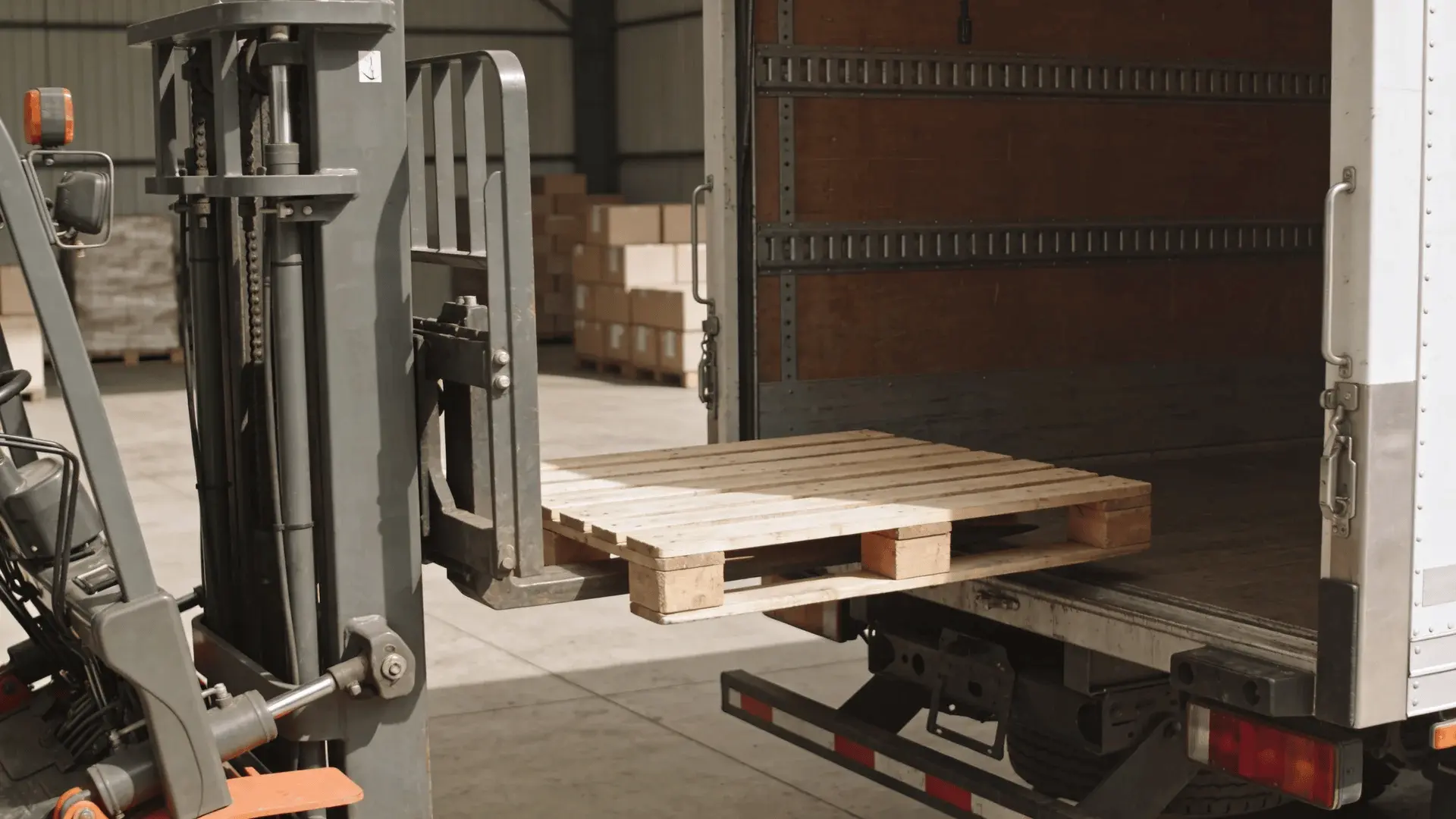
Under FOB terms, risk transfers at the moment defined as “delivery” in the contract. So what counts as delivery? That depends on the specific FOB variation used.
What “Delivery” Means Under FOB
In general, delivery happens in one of two ways:
- When goods are loaded onto a carrier at the seller’s location
- When goods arrive at the buyer’s specified destination
The contract language decides which one applies.
If the agreement says FOB Shipping Point, also called FOB Origin, delivery occurs when the goods are loaded onto the truck, ship, or other carrier at the seller’s location. From that moment forward, the buyer carries the risk.
If the agreement says FOB Destination, delivery does not happen until the goods reach the buyer’s location.
Why Timing Changes Responsibility
This difference matters when something goes wrong.
Imagine goods are damaged halfway through transit. If risk is transferred at origin, the buyer bears that loss. If risk transfers at the destination, the seller remains responsible.
Here’s the part many people miss: paying for shipping does not control risk transfer. The triggering event is delivery as defined in the contract, not who arranged the freight.
There is also variability in how disputes play out. Damage during loading may still fall on the seller if delivery has not officially occurred. Improper packaging can create arguments about fault. Delays caused by carriers do not automatically shift risk back to the other party.
Risk transfer is tied to timing, not to fairness or effort.
A common mistake is assuming whoever arranged the shipment is responsible. Under FOB, responsibility follows the contract’s delivery point.
What is the Difference Between FOB Origin and FOB Destination?
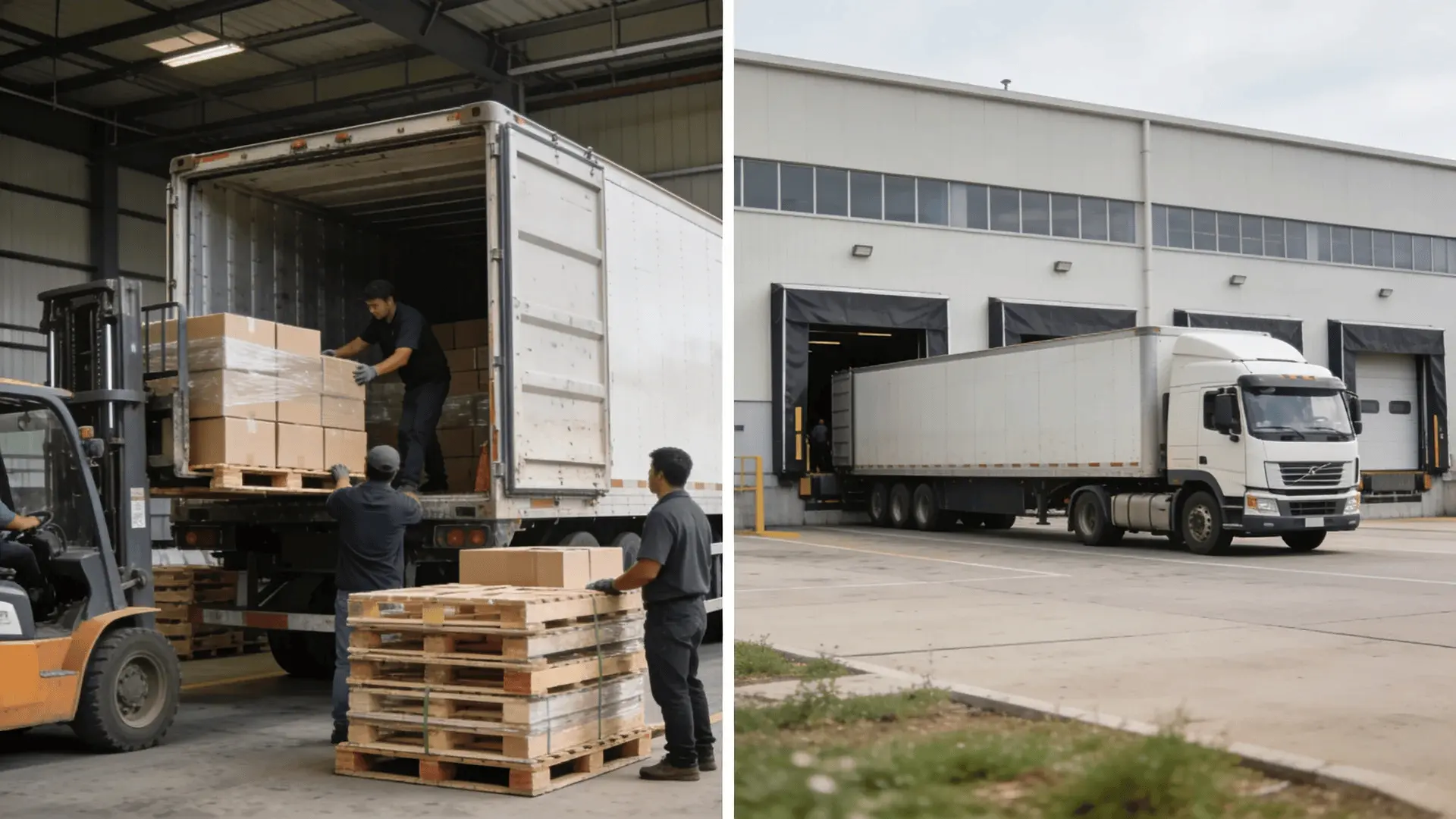
The difference comes down to timing and exposure. FOB Origin shifts risk early in the process. FOB Destination shifts the risk later. That timing changes who carries uncertainty during transit.
Let’s break each one down clearly:
FOB Origin (FOB Shipping Point)
Under FOB Origin, delivery happens when the goods are loaded onto the carrier at the seller’s location.
Once loading is complete, risk transfers to the buyer.
That means if goods are damaged in transit, the buyer absorbs the loss. If a truck overturns halfway to its destination, the buyer carries that risk. If the carrier mishandles the shipment after pickup, it is still the buyer’s problem under the contract.
The mechanism is straightforward: loading triggers delivery, and delivery triggers risk transfer.
This structure creates earlier exposure for the buyer and reduces risk for the seller because their responsibility ends sooner. It also means the buyer must be comfortable with transit uncertainty and prepared for issues that arise after departure.
FOB Destination
Under FOB Destination, delivery is not complete until goods arrive at the buyer’s specified location.
The seller retains risk during transit.
If damage happens along the way, the seller remains responsible. Only when the goods reach the destination and delivery is completed does risk shift to the buyer. This delays exposure for the buyer and extends responsibility for the seller.
The practical difference is timing. In FOB Origin, risk shifts at departure. In FOB Destination, it shifts at arrival. Many people assume this only affects who pays shipping, but it directly changes who absorbs transit losses.
How Do “Freight Collect” and “Freight Prepaid” Work With FOB?
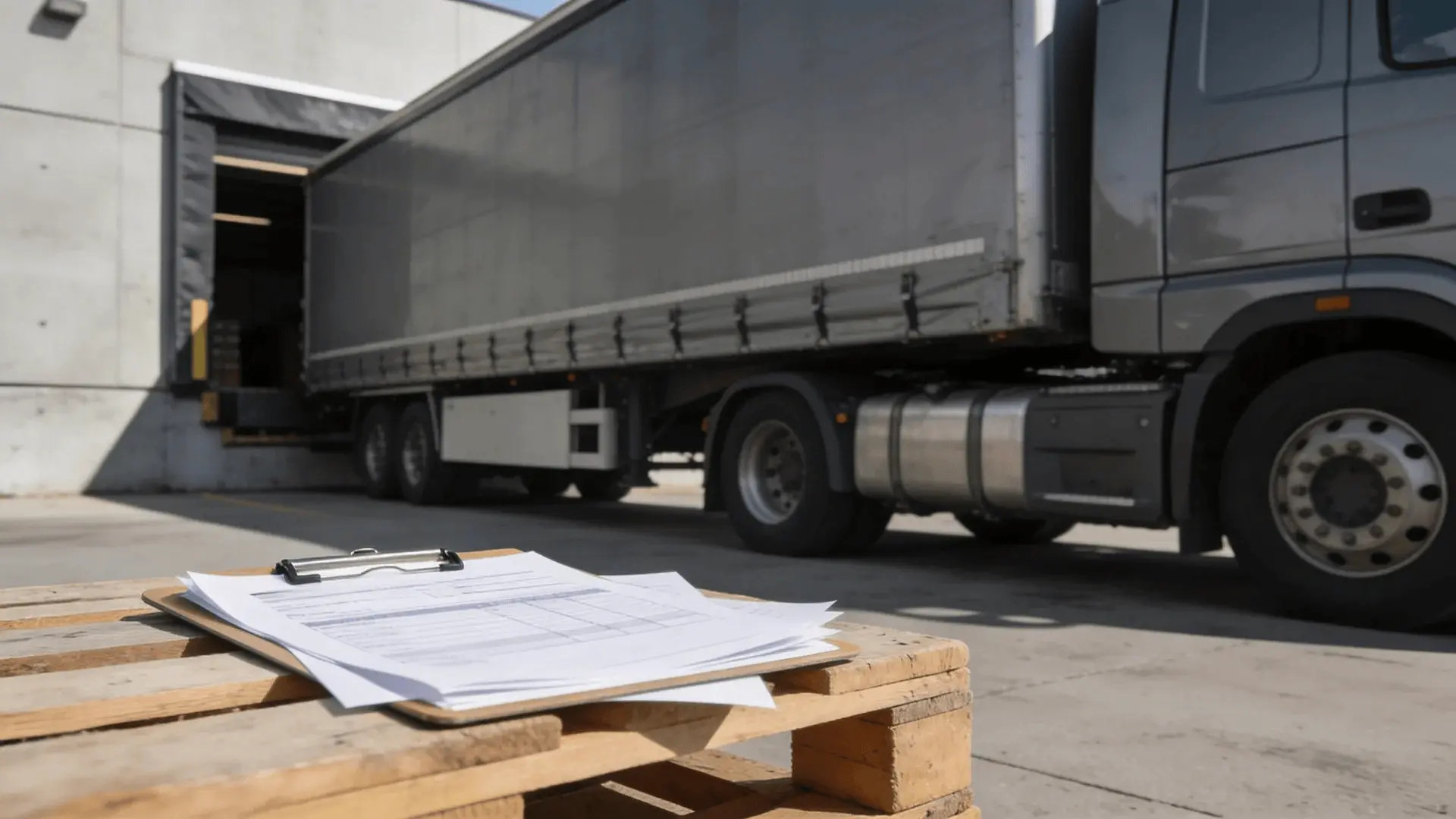
Freight payment and risk transfer are separate issues under FOB. Who pays the carrier does not automatically determine who carries transit risk.
1. FOB Origin + Freight Collect
In this structure, the buyer pays the carrier and carries the transit risk.
Because the contract is FOB Origin, delivery occurs when the goods are loaded at the seller’s location. At that moment, risk transfers to the buyer. Freight Collect means the carrier bills the buyer directly.
Cost and risk align here. The buyer pays for transportation and also absorbs any loss that happens after loading. If damage occurs during transit, the buyer must address it, even if the carrier was at fault.
This is the most straightforward pairing because responsibility and payment move together.
2. FOB Origin + Freight Prepaid
Here, the seller pays the carrier, but the buyer still carries transit risk.
Under FOB Origin, risk shifts when goods are loaded. Freight Prepaid simply means the seller advances the freight charges. It does not delay or change the risk transfer point.
This is where confusion usually starts. Even though the seller arranged and paid for shipping, responsibility passed to the buyer at loading. If the goods are damaged in transit, the buyer bears the loss.
Payment and liability are operating on different tracks.
3. FOB Destination + Freight Prepaid
With this pairing, the seller pays the freight and carries the transit risk until delivery.
Under FOB Destination, delivery is not complete until the goods reach the buyer’s specified location. Until that moment, the seller remains responsible for damage or loss.
Here, cost and risk remain with the seller throughout transit. Responsibility shifts only when delivery is completed at the destination.
4. FOB Destination + Freight Collect
This combination splits payment and risk. The buyer pays the carrier under Freight Collect, but because the contract is FOB Destination, the seller retains transit risk until the goods arrive.
If damage occurs during transit, the seller is still responsible even though the buyer paid the freight charges. The buyer may have paid the carrier, but legal responsibility has not yet transferred.
This setup clearly shows that paying the carrier does not determine ownership or liability. The delivery point defined in the FOB term controls that outcome.
How is FOB Different From CIF and Other Shipping Terms?
FOB is often compared to CIF and DDP, but each term assigns responsibility in a different way. The differences come down to who arranges transport, who provides insurance, and when risk transfers.
| Responsibility Area | FOB | CIF | DDP |
|---|---|---|---|
| Who arranges main transport? | Buyer (after delivery point) | Seller arranges to destination port | Seller arranges to buyer’s final location |
| Who pays freight? | Usually buyer (can vary by agreement) | Seller pays freight to port | Seller pays full transport costs |
| Insurance required? | No automatic requirement | Seller must secure insurance for buyer | No automatic rule, but seller carries risk until delivery |
| When does risk transfer? | At defined delivery point (often at loading) | Usually at shipment, even though seller pays freight | At final delivery to buyer |
| Overall seller responsibility | Limited to delivery at agreed point | Broader: includes freight and insurance | Broadest: includes freight, risk, and import duties |
The key point is that these terms are not interchangeable. Each one defines a different structure of responsibility, and small wording changes can significantly shift risk and obligation between buyer and seller.
What Happens If Goods are Damaged or Lost Under FOB?
When goods are damaged or lost under FOB terms, the answer always comes back to the same issue: when did delivery legally occur? The delivery point written in the contract decides who carries the loss.
Damage Before Delivery: If the damage happens before the contract’s defined delivery point, the seller is responsible.
Example: Goods are damaged while still in the seller’s warehouse, before being loaded onto the carrier. The seller absorbs the loss because delivery has not occurred.
Damage After Delivery Under FOB Origin: Under FOB Origin, delivery occurs when goods are loaded onto the carrier. Once loading is complete, the buyer carries transit risk.
Example: The carrier loads the shipment, leaves the warehouse, and the truck overturns during transit. Because delivery happened at loading, the buyer absorbs the loss.
Damage After Delivery Under FOB Destination: Under FOB Destination, delivery occurs only when goods arrive at the buyer’s specified location. The seller carries risk during transit.
Example: The carrier loads the shipment, damage occurs halfway through transit, and the goods never reach the buyer. The seller absorbs the loss because delivery had not yet occurred.
Carrier Liability is Separate: The carrier may still be legally responsible under transportation law, but that does not change how risk is divided between buyer and seller in the contract.
Example: Even if the carrier caused the damage, the party holding risk under FOB must pursue the carrier for recovery.
Freight Payment Does Not Control Responsibility: Who paid for shipping does not determine who absorbs the loss. The delivery point controls that outcome.
Example: The buyer pays freight under a Freight Collect arrangement, but the contract is FOB Destination. If goods are damaged during transit, the seller still carries the loss.
In the end, FOB disputes are resolved by timing. Once you identify the delivery point in the contract, you can determine exactly who carries the risk.
Wrapping Up
Freight on board is not about free shipping or who pays the carrier. It centers on one critical moment: when responsibility transfers. Once you understand that timing, the structure becomes clear.
Risk, title, and freight payment can move together, or they can separate. The contract decides. Small wording differences can shift significant exposure between buyer and seller.
If you are reviewing a contract, slow down at the delivery term. That single line controls who carries the loss if something goes wrong. With that in mind, you can read FOB language with confidence and clarity.
If you found this helpful, explore other shipping and trade guides on the website to build a clearer understanding of how these terms work together.
Frequently Asked Questions
What is FOB and CIF?
FOB defines when risk transfers from seller to buyer. CIF requires the seller to arrange freight and insurance to the destination port.
Who pays for FOB shipping?
It depends on whether freight is prepaid or collect. Payment responsibility can differ from risk transfer.
What is FOB an acronym for?
FOB stands for Free on Board or Freight on Board.
What is FOB and DDP?
FOB transfers risk at a defined delivery point. DDP requires the seller to deliver goods fully cleared and duty paid.
What does FOB price mean?
FOB price usually refers to the price of goods including delivery to the agreed shipping point, not final destination.