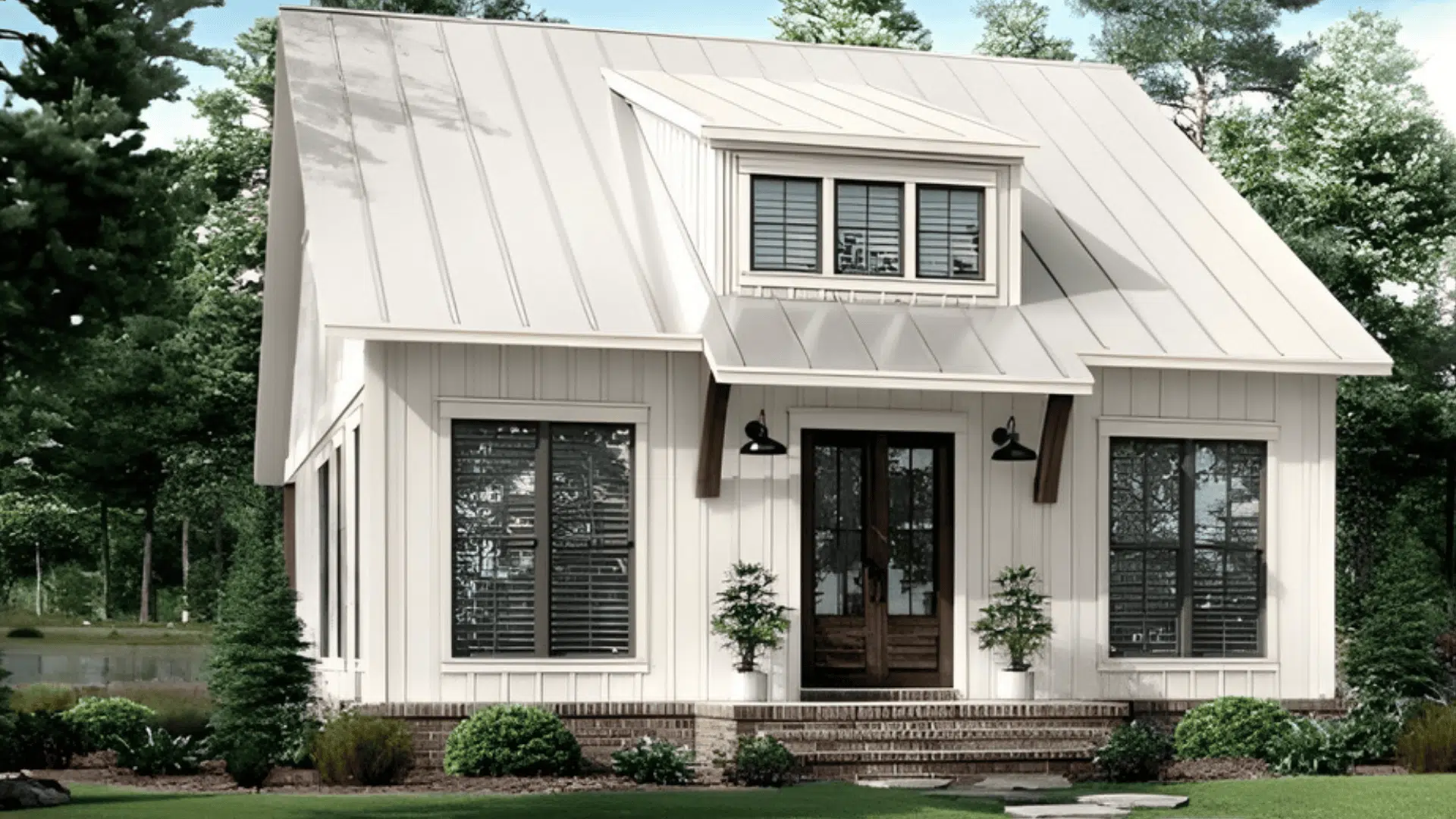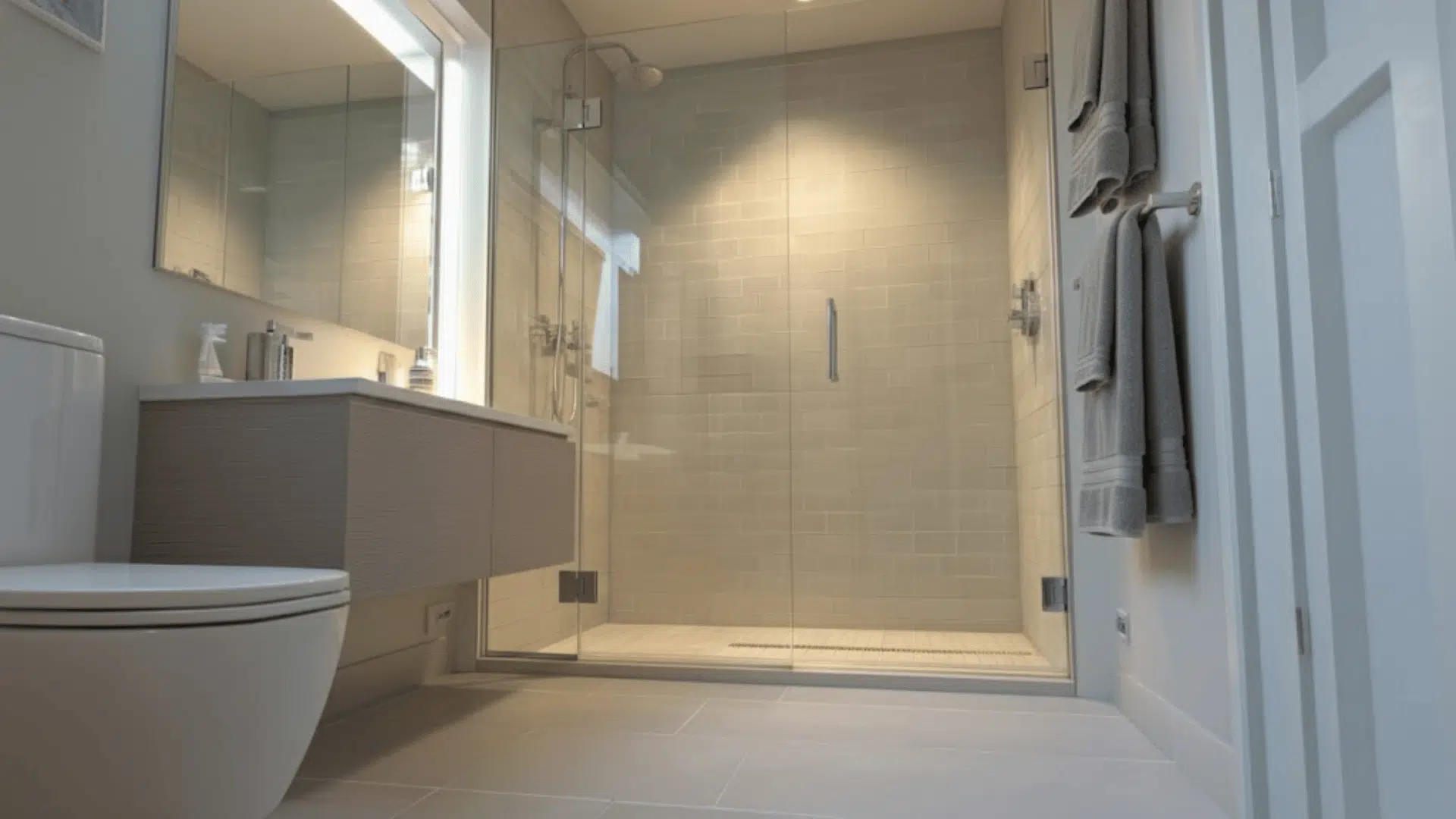
Small bathrooms have a way of exposing every bad decision fast. There’s no room to hide mistakes, no extra space to fix them later.
That’s why limited space small bathroom designs with a shower need a different mindset from the start.
This isn’t about stuffing features into a tight box. It’s about choosing what earns its place and letting the rest go. The right shower layout can change how the entire room feels, moves, and functions day to day.
In this guide, I’ll break down what actually works in tight bathrooms, what quietly causes problems, and how smart choices create breathing room where none seems possible. Let’s get started.
What “Limited Space” Really Means in Bathroom Design
When people say “limited space,” they usually mean the bathroom feels tight the second you walk in. Not just small on paper. Small in real life.
I’ve seen bathrooms that technically fit everything, but using them feels like doing yoga in a phone booth. That’s the difference. Limited space is about how the room works, not just the numbers.
Common Small Bathroom Sizes
Most small bathrooms fall into a few common ranges.
- A very small bathroom is often around 15 to 25 square feet. Think powder-room size with a shower squeezed in.
- A standard small bathroom is usually 30 to 40 square feet. This is where most older homes land.
- A compact full bath, like a 5×7, sits around 35 square feet. Tight, but workable with smart choices.
What fits realistically?
- A shower between 30 to 36 inches wide
- A compact toilet with proper knee space
- A slim or wall-mounted sink
- Little to no extra floor space
You’re not adding luxury features here. You’re choosing what earns its spot.
Why Layout Matters More than Style
This is where most people get it wrong. They start with finishes. Tiles. Fixtures. Colors. That stuff matters, but it comes later. Layout decides everything first.
Flow: You should be able to walk in, turn, and use each fixture without twisting your body. If you’re bumping into things, the layout failed.
Clearance: Every fixture needs breathing room. Toilets need space in front. Showers need entry space. Doors need swing room or need to go away entirely.
Daily usability: Ask one simple question. Can you use this bathroom half asleep without being annoyed? If the answer is no, the design looks good but lives badly.
Small Bathroom Shower Ideas that Actually Work
In small bathrooms, every wrong choice shows up fast. These ideas focus on layouts and details that prevent crowding and help the room work better from day one.
1. Corner Walk-In Shower
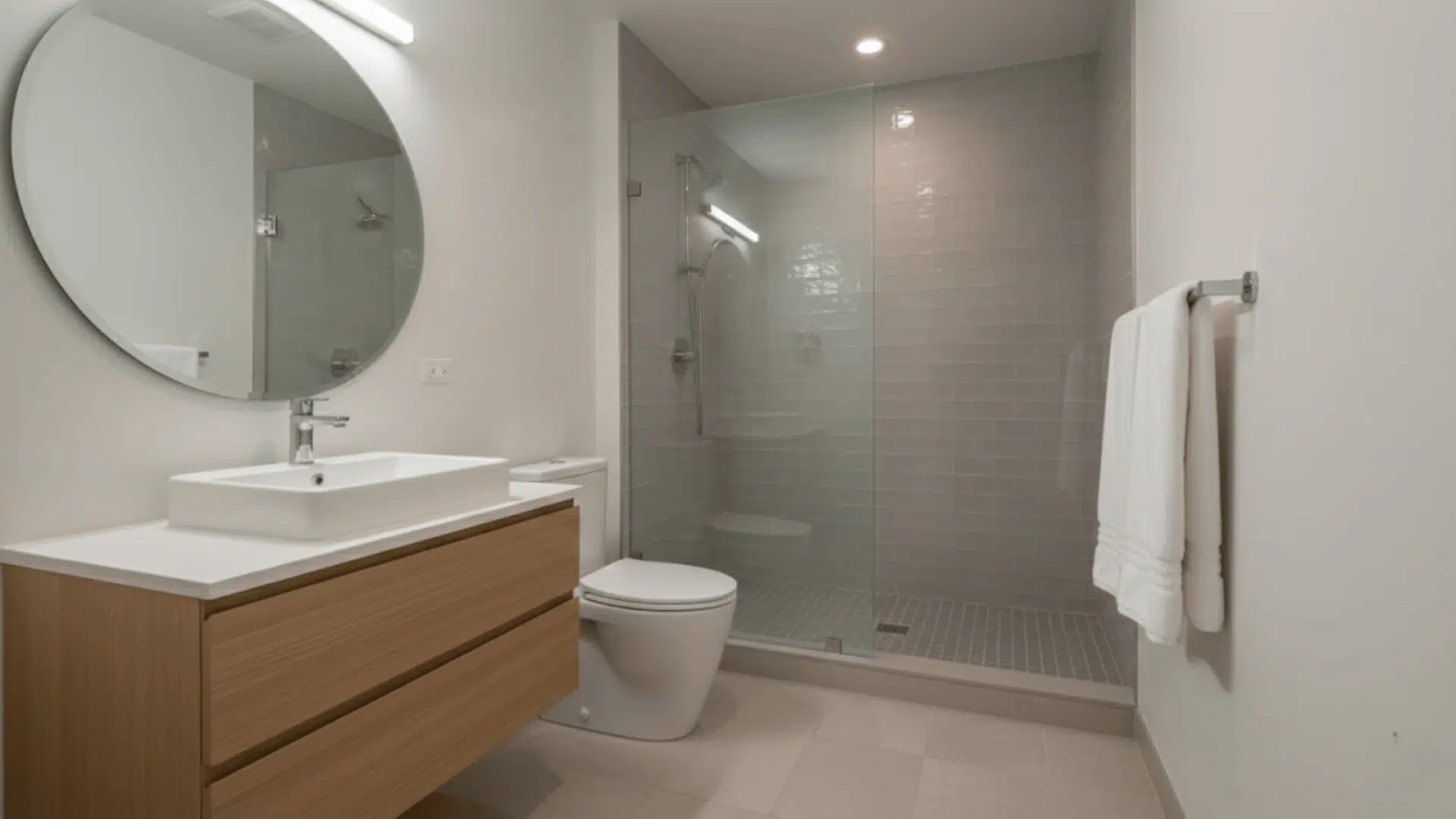
A corner walk-in shower uses dead space that usually goes to waste. It keeps the center of the room open, which matters more than people think.
Pair it with a slim base and glass panel so the bathroom feels open instead of boxed in.
2. Frameless Glass Shower Panel
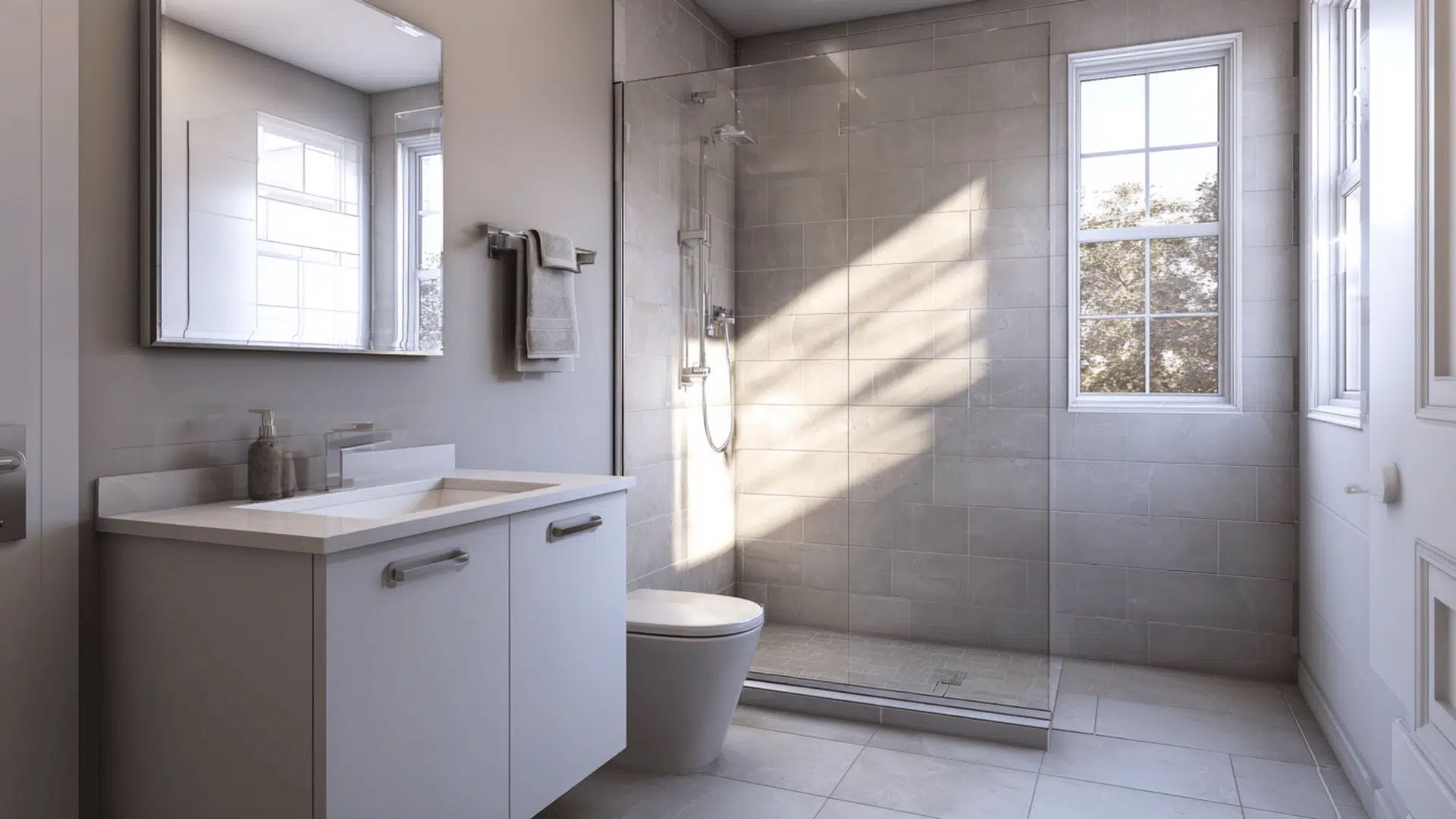
Frameless glass keeps sightlines open from wall to wall. Your brain reads the bathroom as one space instead of chopped sections.
In small bathrooms, visual breaks make things feel smaller fast. This removes that problem almost completely.
3. Doorless Walk-In Shower
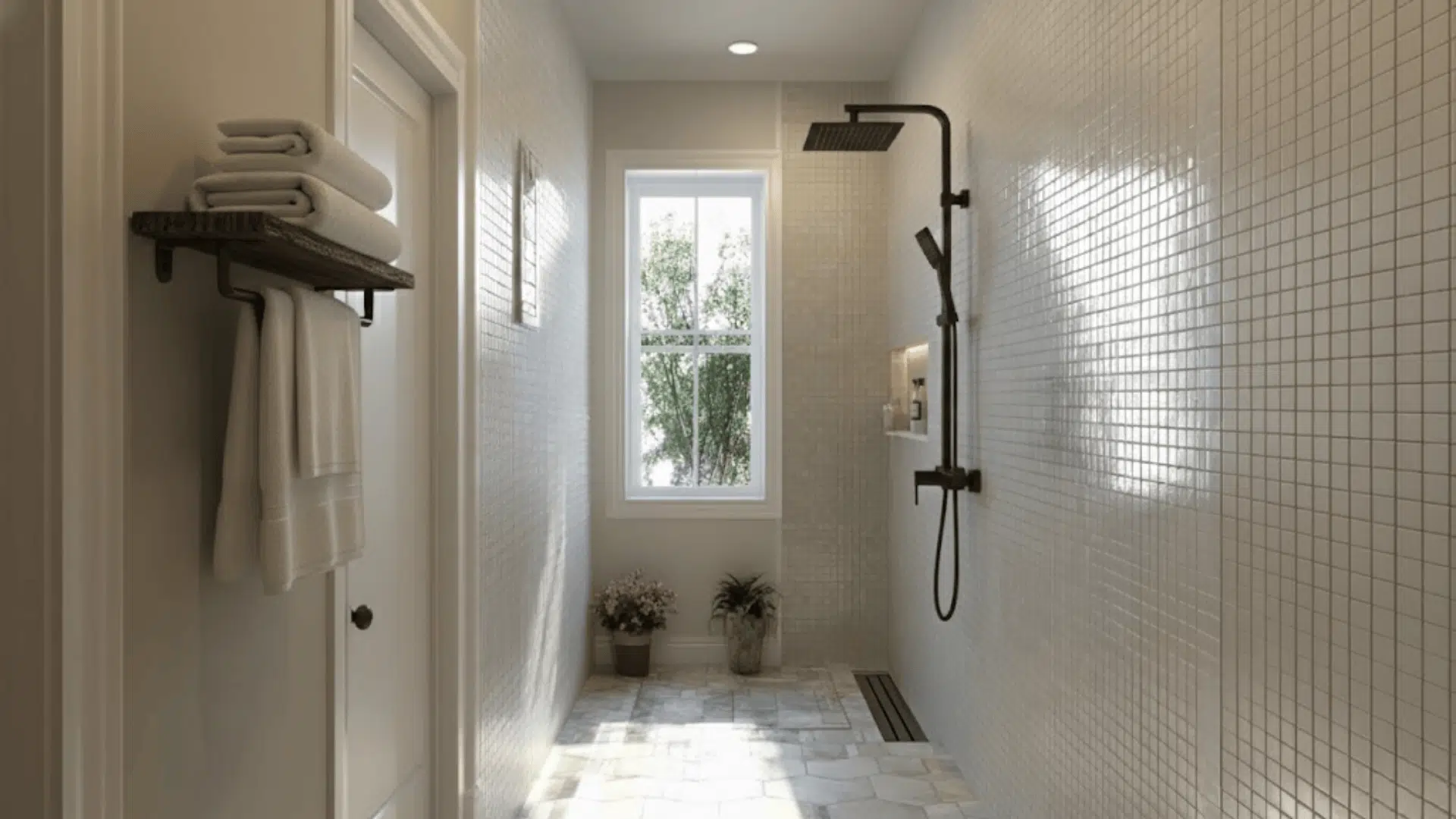
Skipping the door removes clutter and clearance issues. No swing space. No tracks. No hardware. Just clean entry.
It works best with proper drainage and splash planning, but when done right, it makes a tight bathroom feel calm and easy.
4. Low-Profile Shower Base
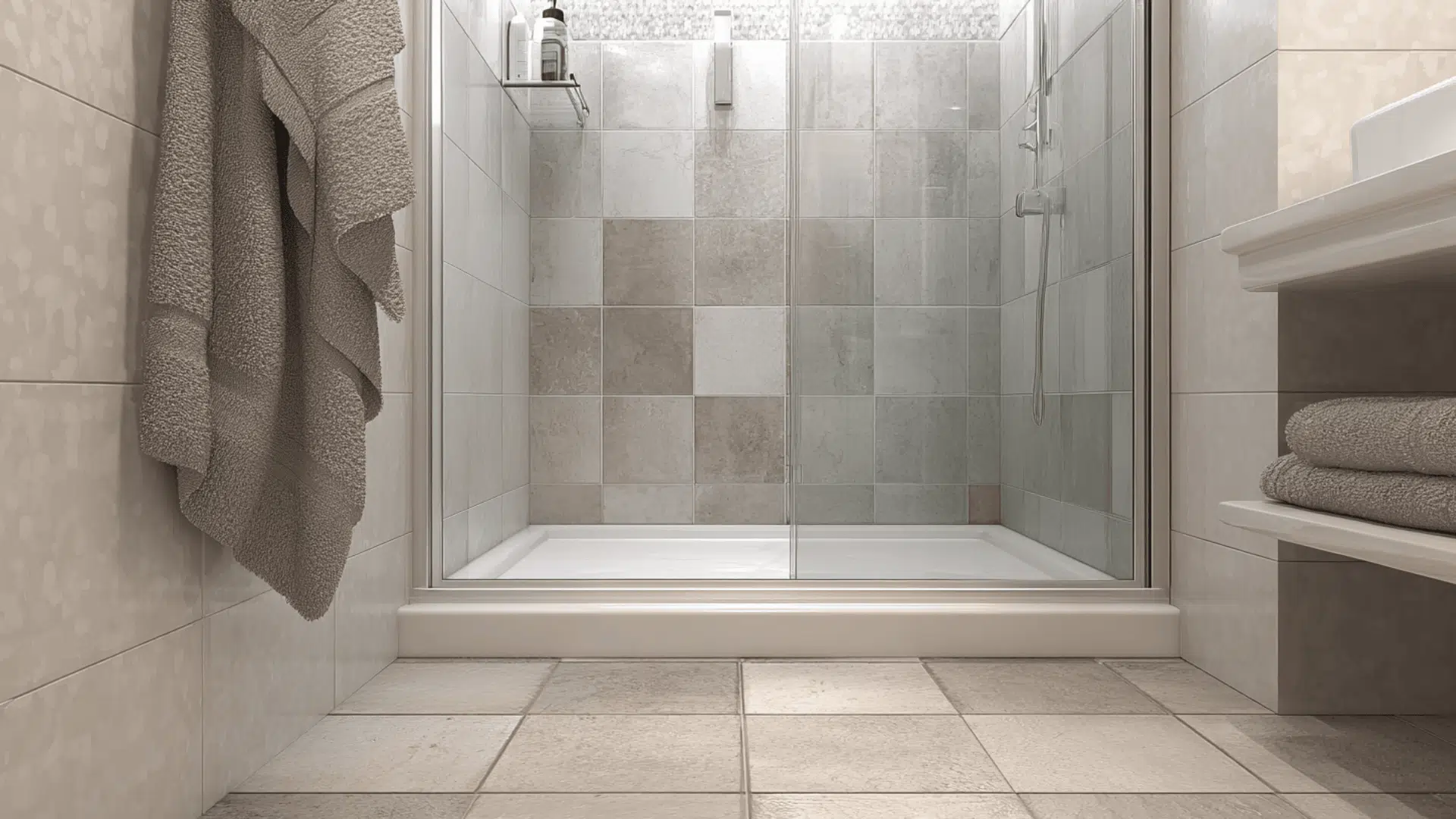
A low-profile base reduces visual bulk and helps the shower blend into the room. It keeps your eye moving across the floor instead of stopping at a tall threshold.
That uninterrupted line makes the bathroom feel wider and less cramped.
5. Linear Drain Along the Wall
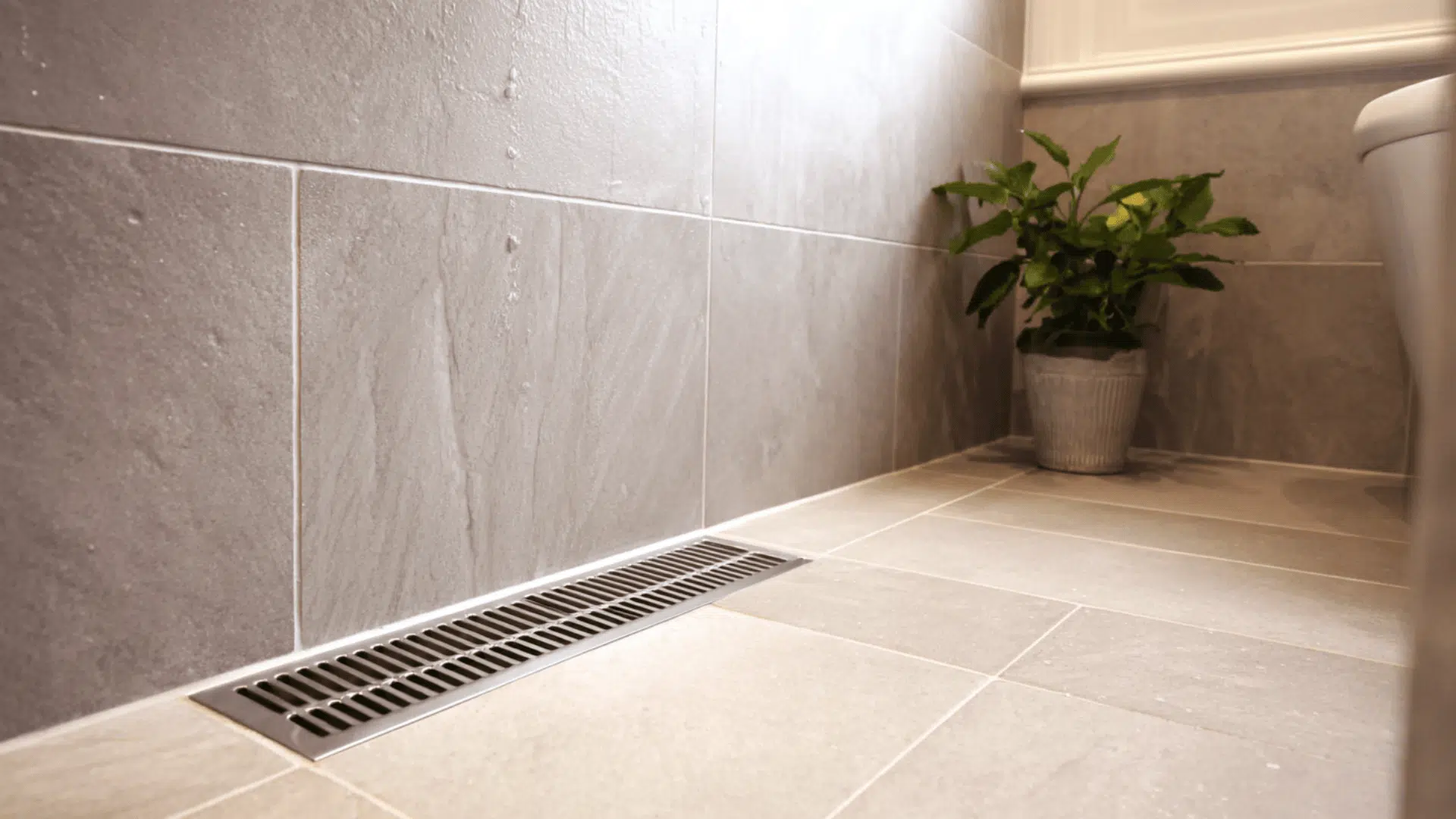
Placing a linear drain against the wall lets you slope the floor in one direction. That simplifies tile layout and keeps things clean visually. It also pairs well with large tiles, which helps the shower feel bigger than it is.
6. Wall-Mounted Shower Controls
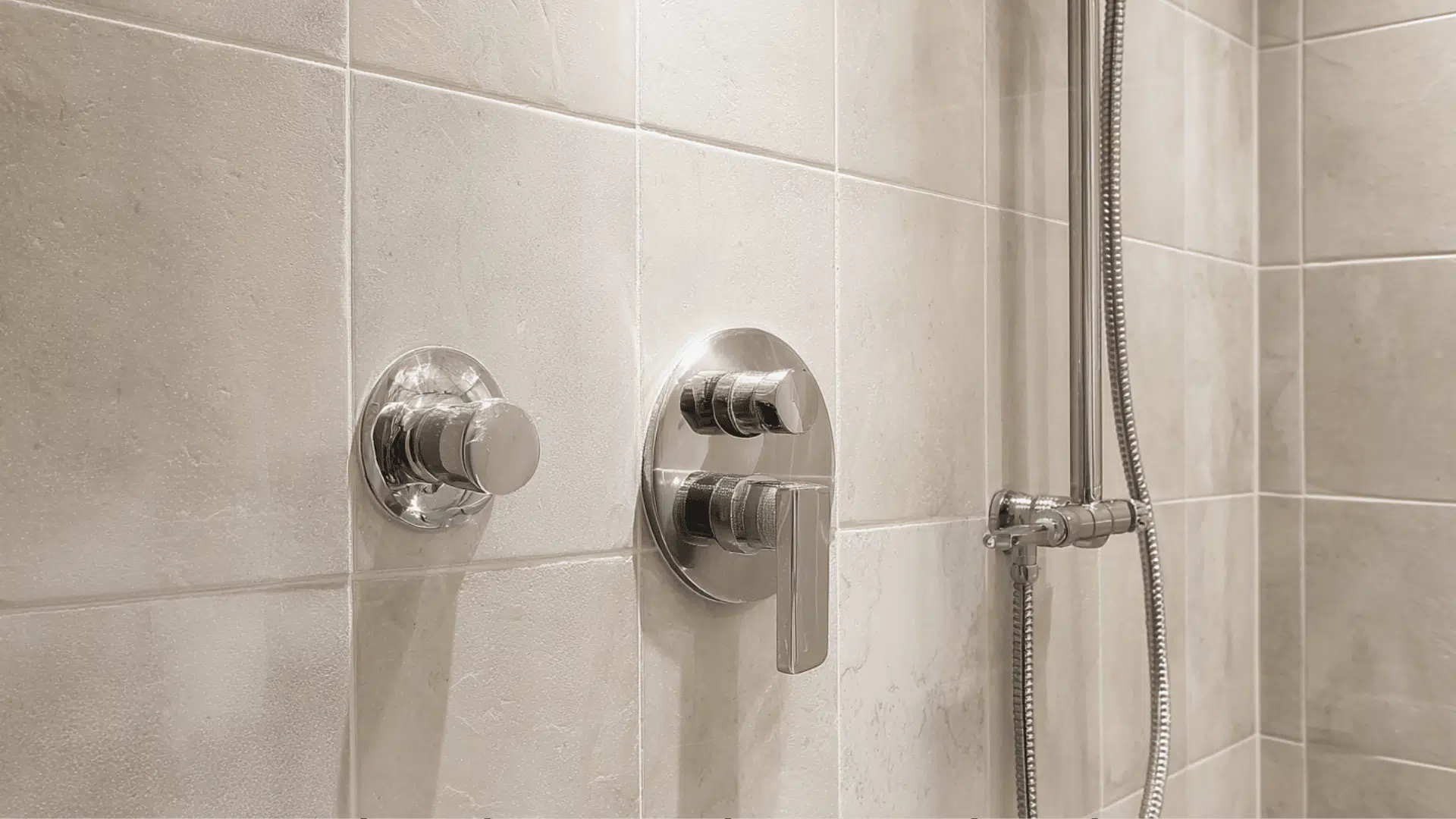
Mounting controls on the wall instead of bulky valve plates reduces visual noise. It also keeps everything tight to the surface, which matters in narrow showers. Cleaner walls make small spaces feel calmer and more intentional.
7. Ceiling-Mounted Rain Shower Head
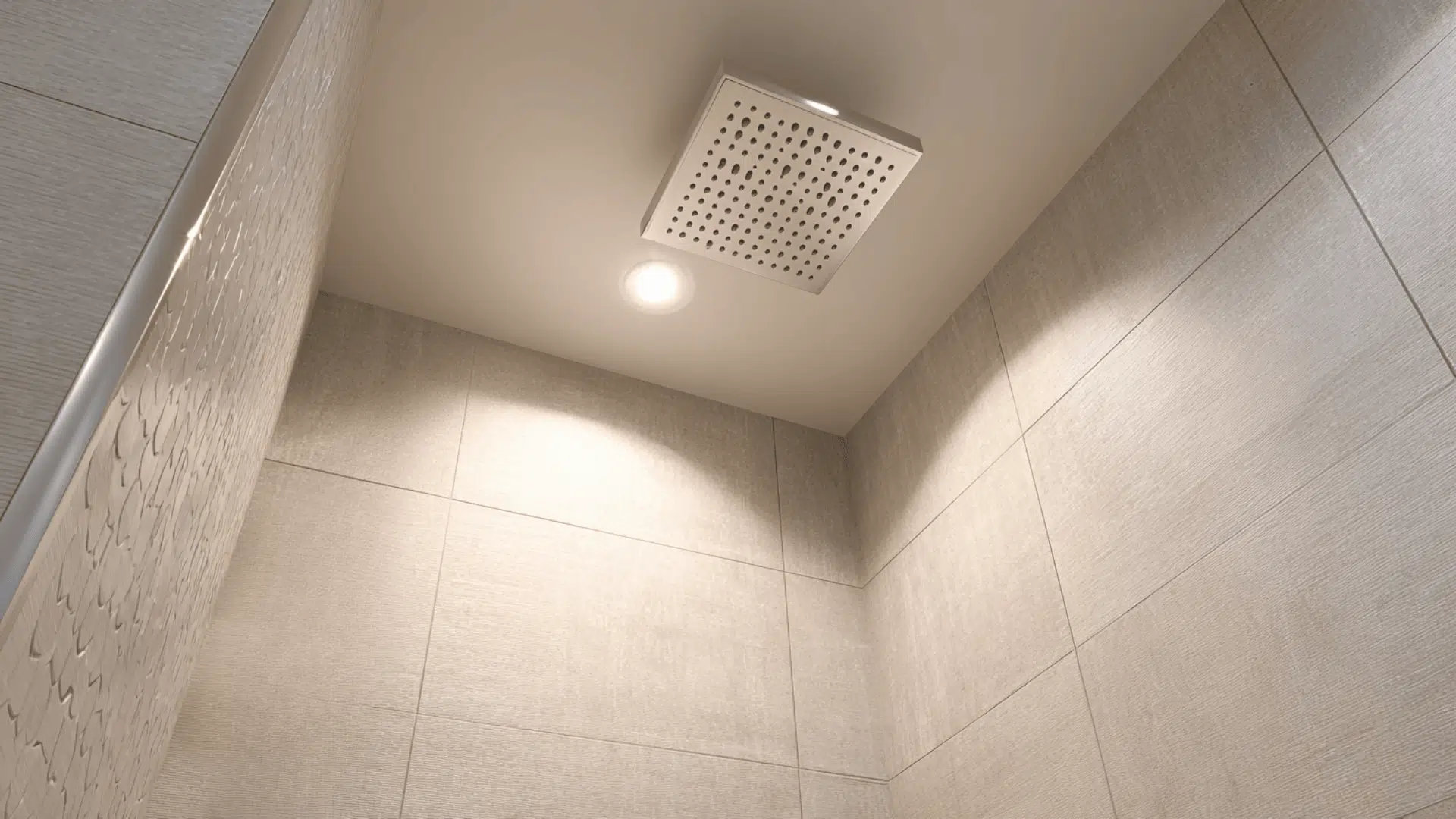
A ceiling-mounted head removes wall hardware and keeps the shower visually simple. It pulls your eye upward, which adds height to the room. Even in a small shower, this makes the space feel taller and less boxed in.
8. Recessed Shower Niche
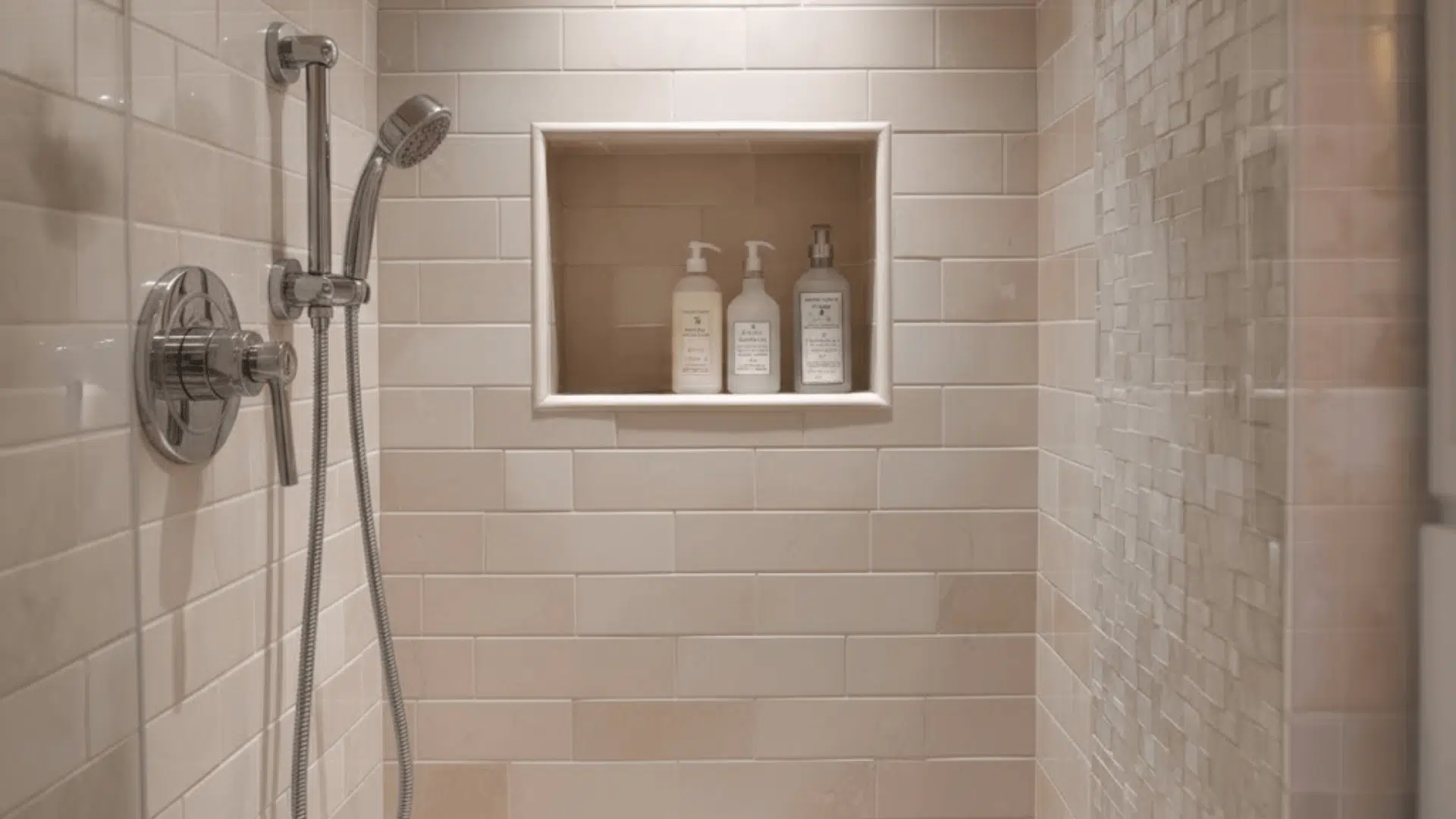
A recessed shower niche keeps bottles and soap inside the wall instead of hanging into the space.
That matters in narrow showers where every inch counts. It improves elbow room, reduces clutter, and keeps the shower walls clean and easy to use daily.
9. Vertical Shower Niche Instead of Horizontal
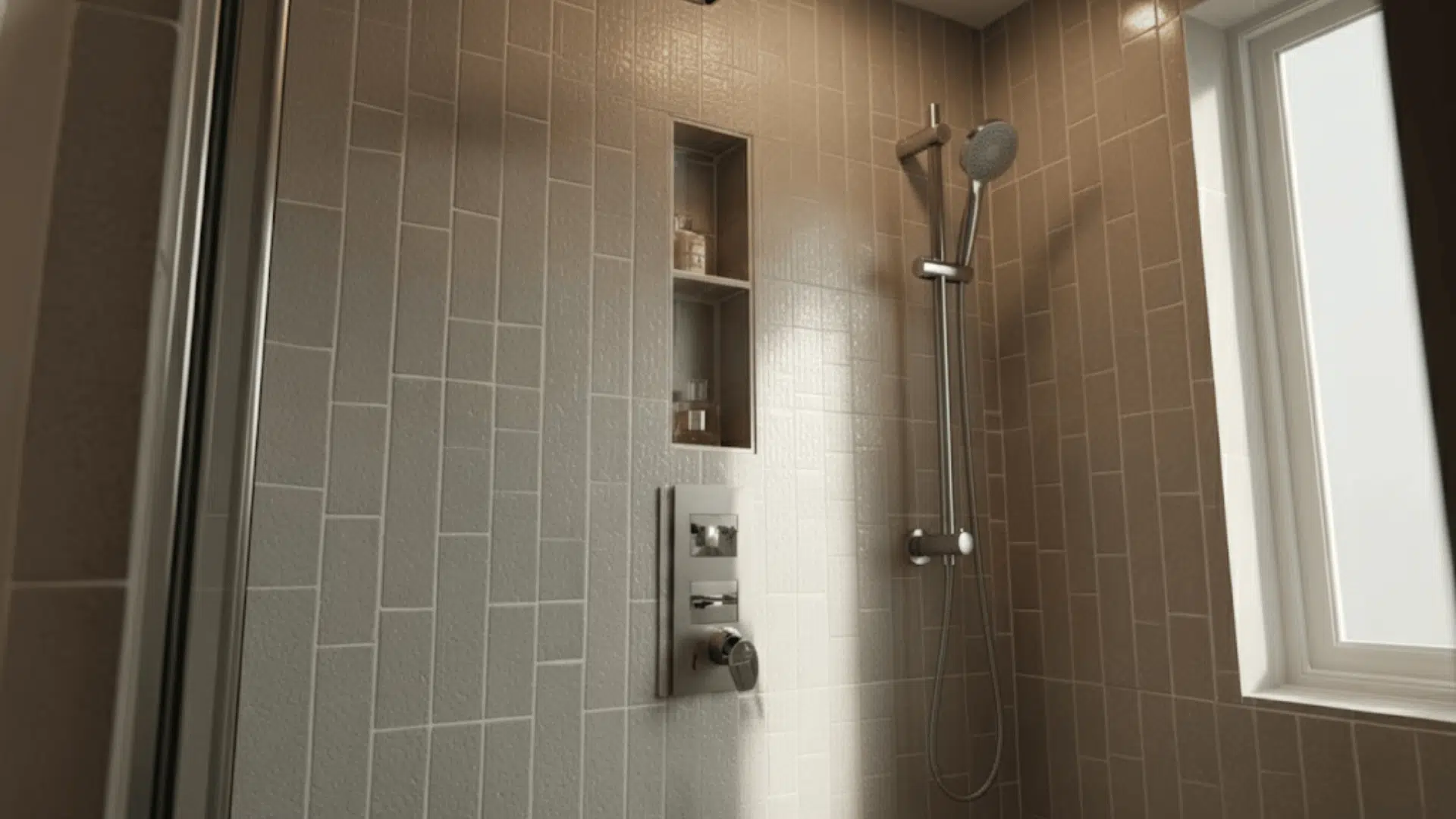
A vertical niche uses wall height instead of width, which works better in tight showers. It fits tall bottles without forcing multiple cutouts across the wall.
This keeps the tile layout cleaner and helps the shower feel taller and less boxed in.
10. Floating Vanity
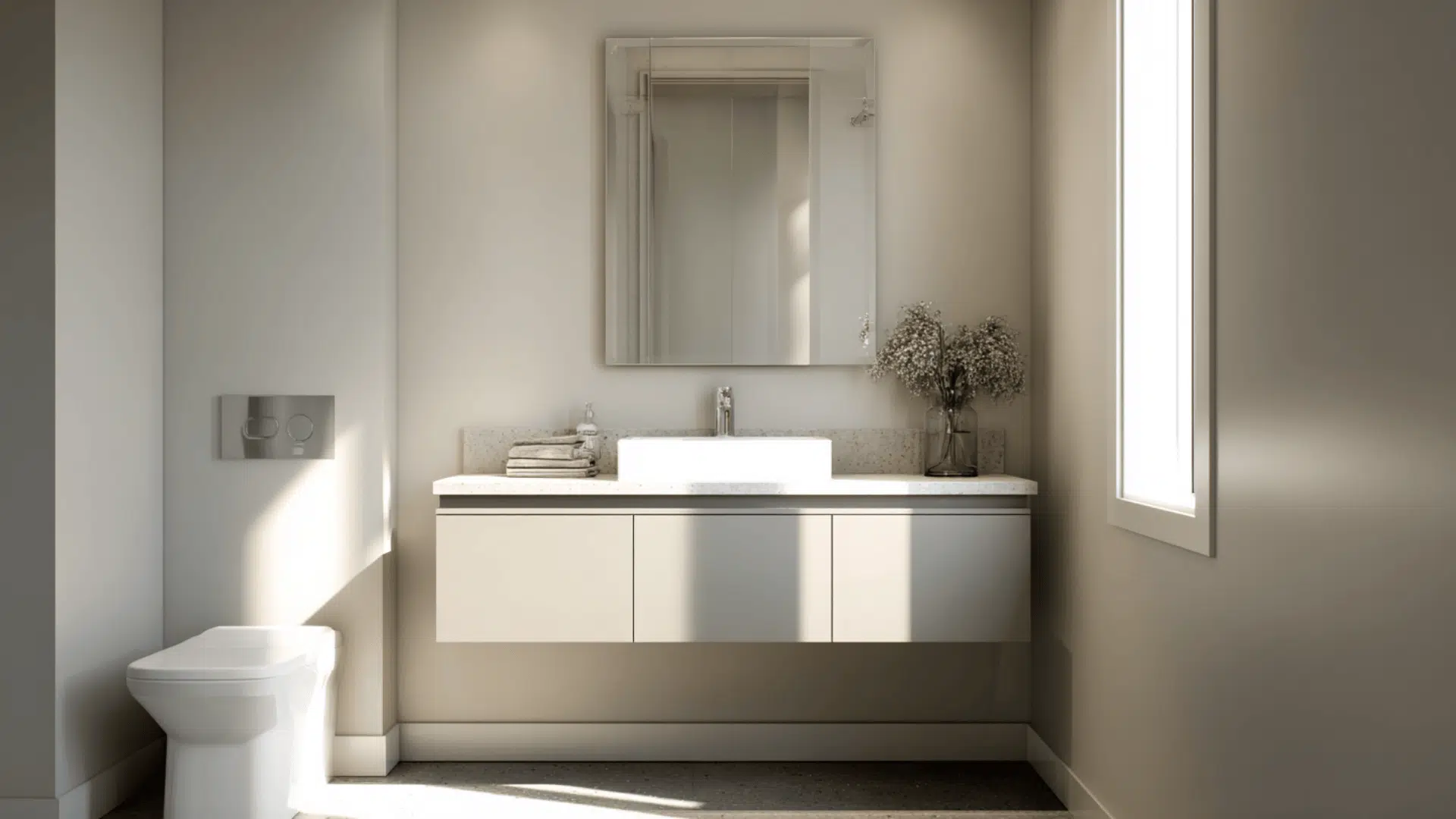
A floating vanity exposes the floor underneath, which instantly makes the bathroom feel more open.
Your eye reads extra floor space instead of a solid block. This also improves cleaning access and reduces the heavy feel common in small bathrooms.
11. Extra-Slim Vanity Depth
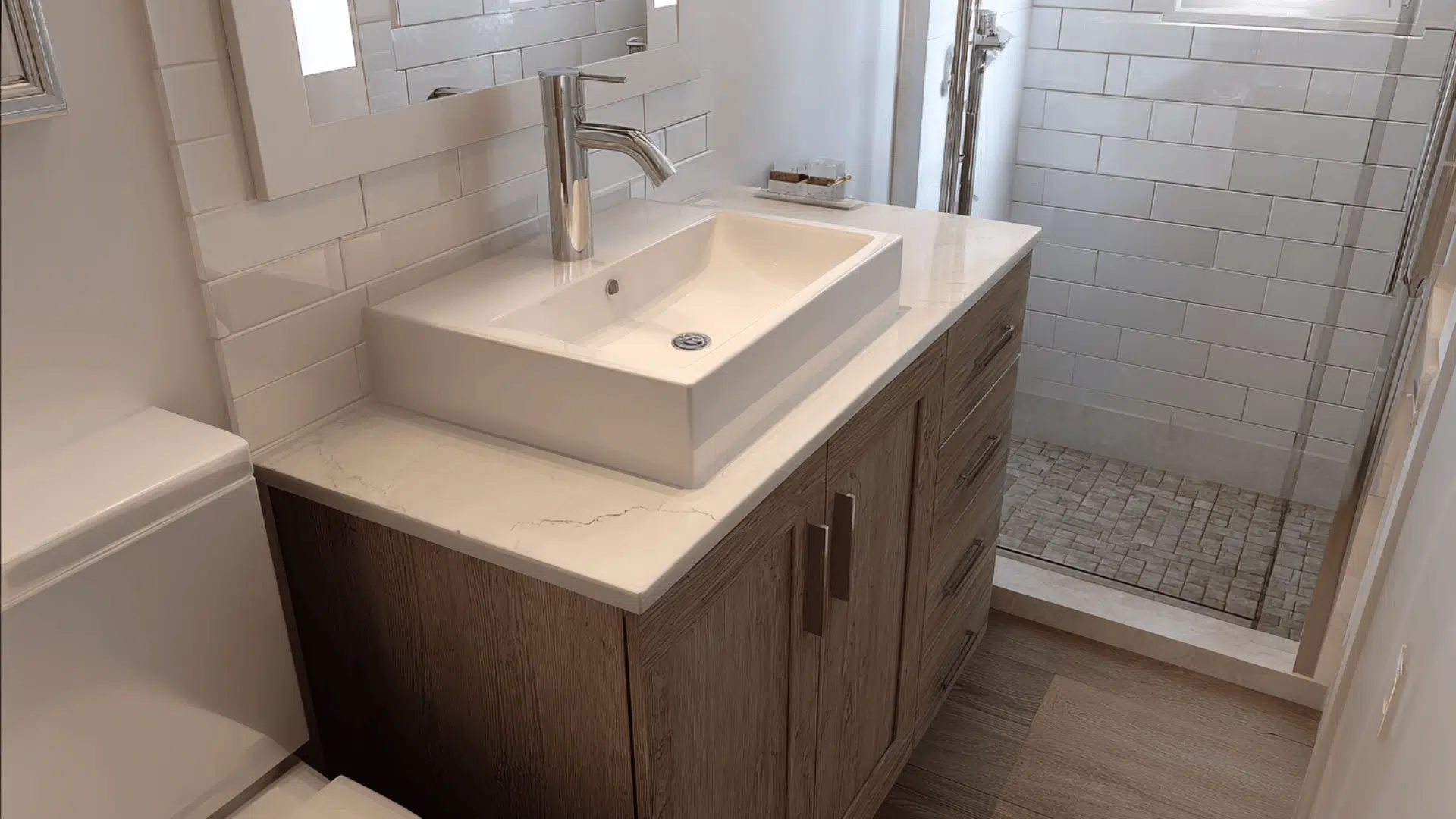
Many vanities are deeper than small bathrooms can handle. Slim-depth vanities give storage without stealing walking space.
Even a few inches back can improve movement around the sink and make the bathroom feel less cramped during daily use.
12. Wall-Mounted Sink
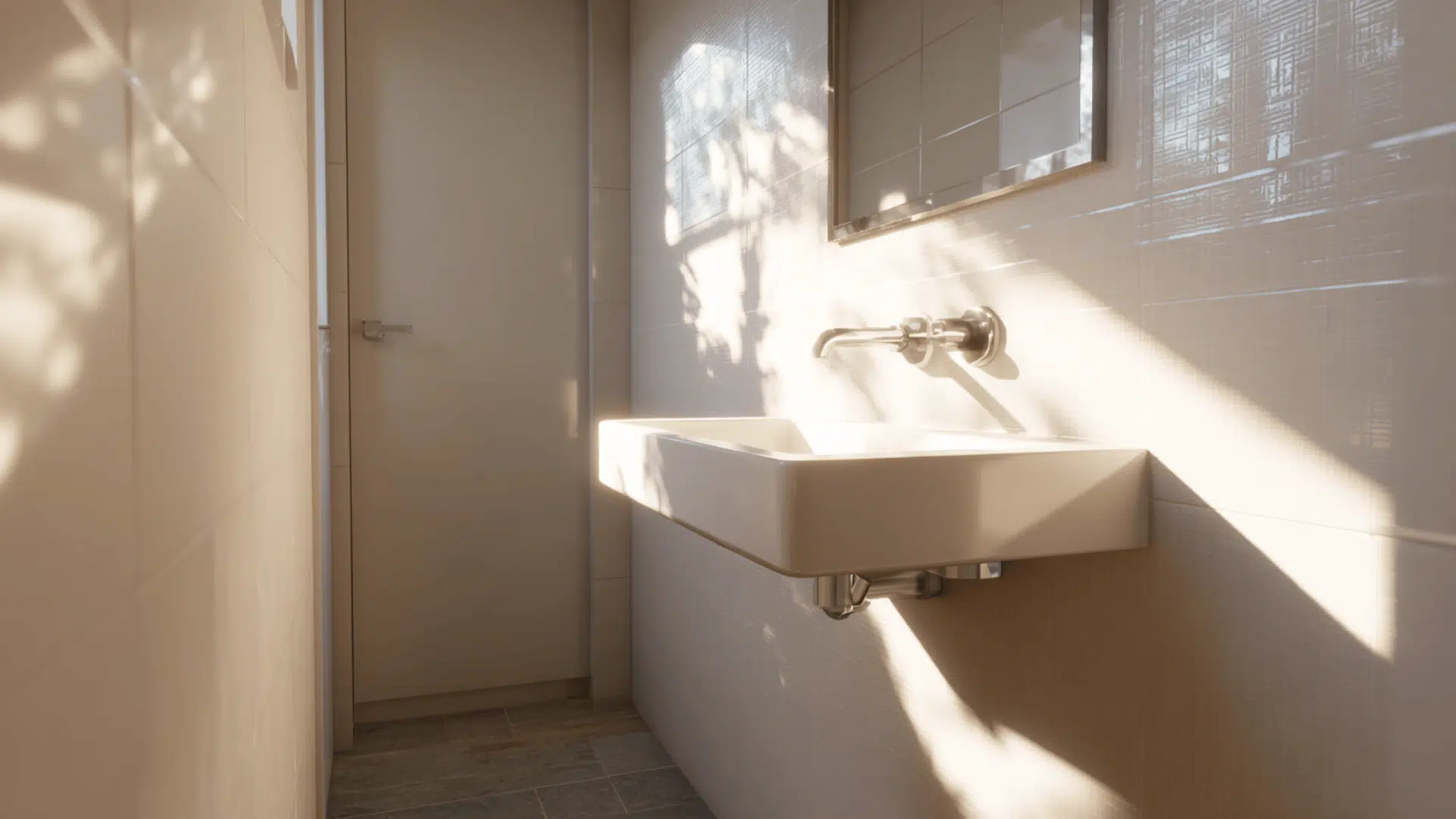
Wall-mounted sinks remove cabinetry bulk completely, opening up the room visually and physically. They work best when storage is handled elsewhere, but the payoff is a lighter layout.
This option keeps tight bathrooms from feeling overcrowded at the entry point.
13. Pedestal Sink with Storage Nearby
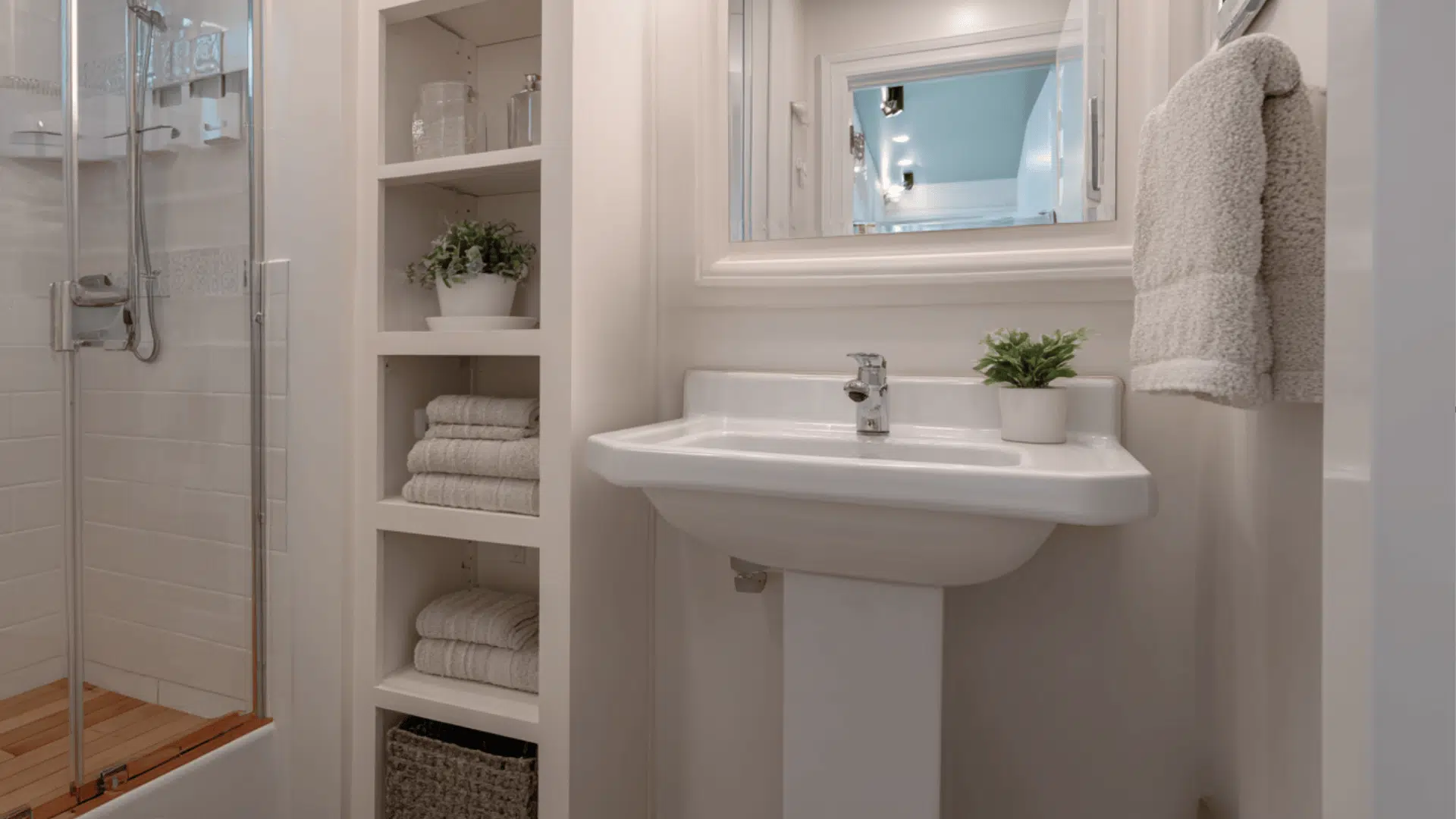
A pedestal sink keeps the footprint small while maintaining a familiar look. Pairing it with shelves or cabinets on another wall prevents the sink area from becoming cluttered.
This setup balances openness with function in narrow bathrooms.
14. Floating Toilet
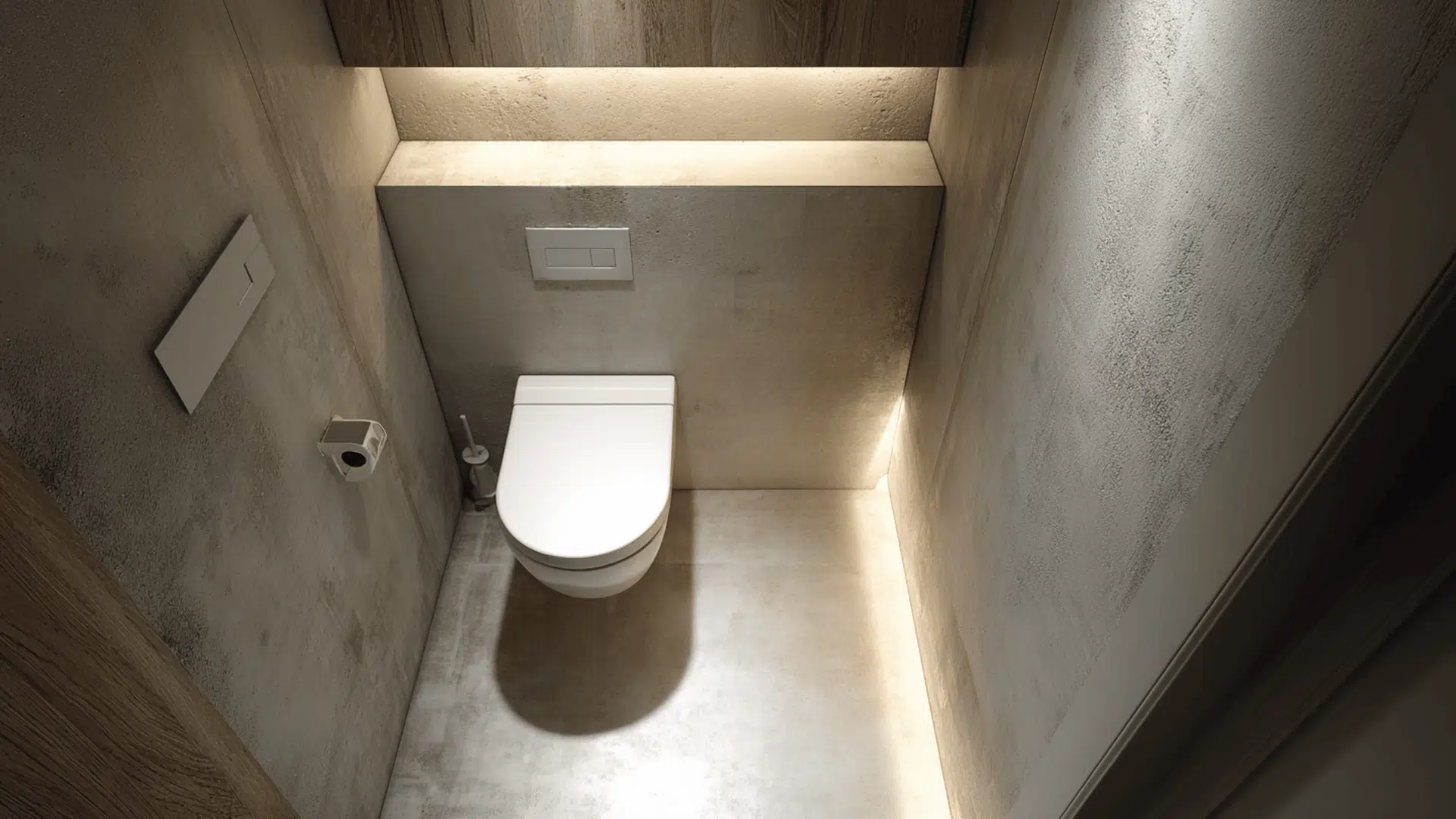
A floating toilet frees up floor space and keeps the room easier to clean. The concealed tank removes bulk from the wall and tightens the layout.
In very small bathrooms, this helps reduce visual crowding around the toilet zone.
15. Sliding Barn-Style Bathroom Door
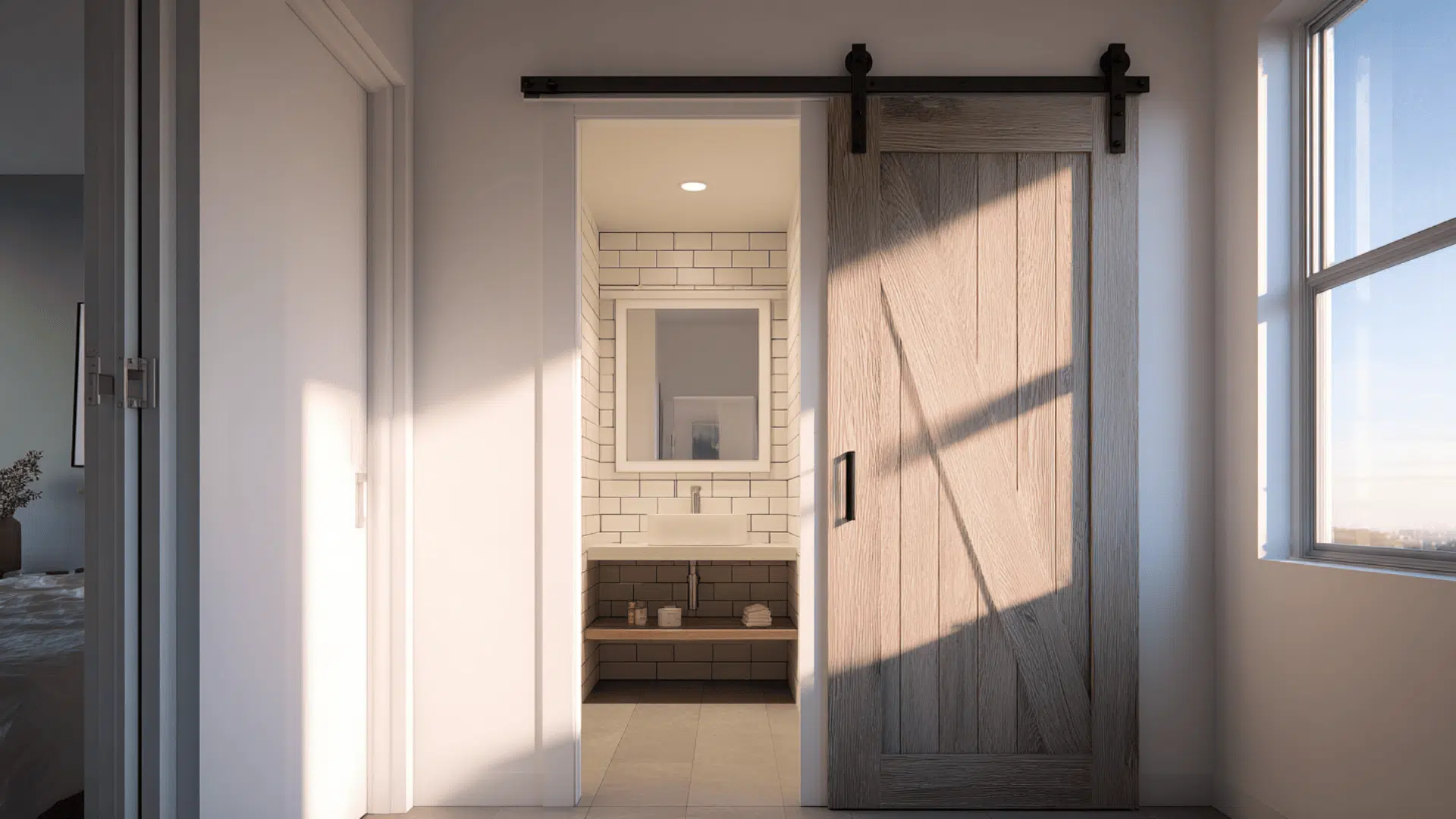
A sliding door keeps the doorway functional without stealing interior space. It works well when wall depth won’t allow a pocket door.
Mounted outside the bathroom, it keeps traffic clear and prevents doors from clashing with showers, vanities, or toilets.
16. Inward-Opening Shower Door
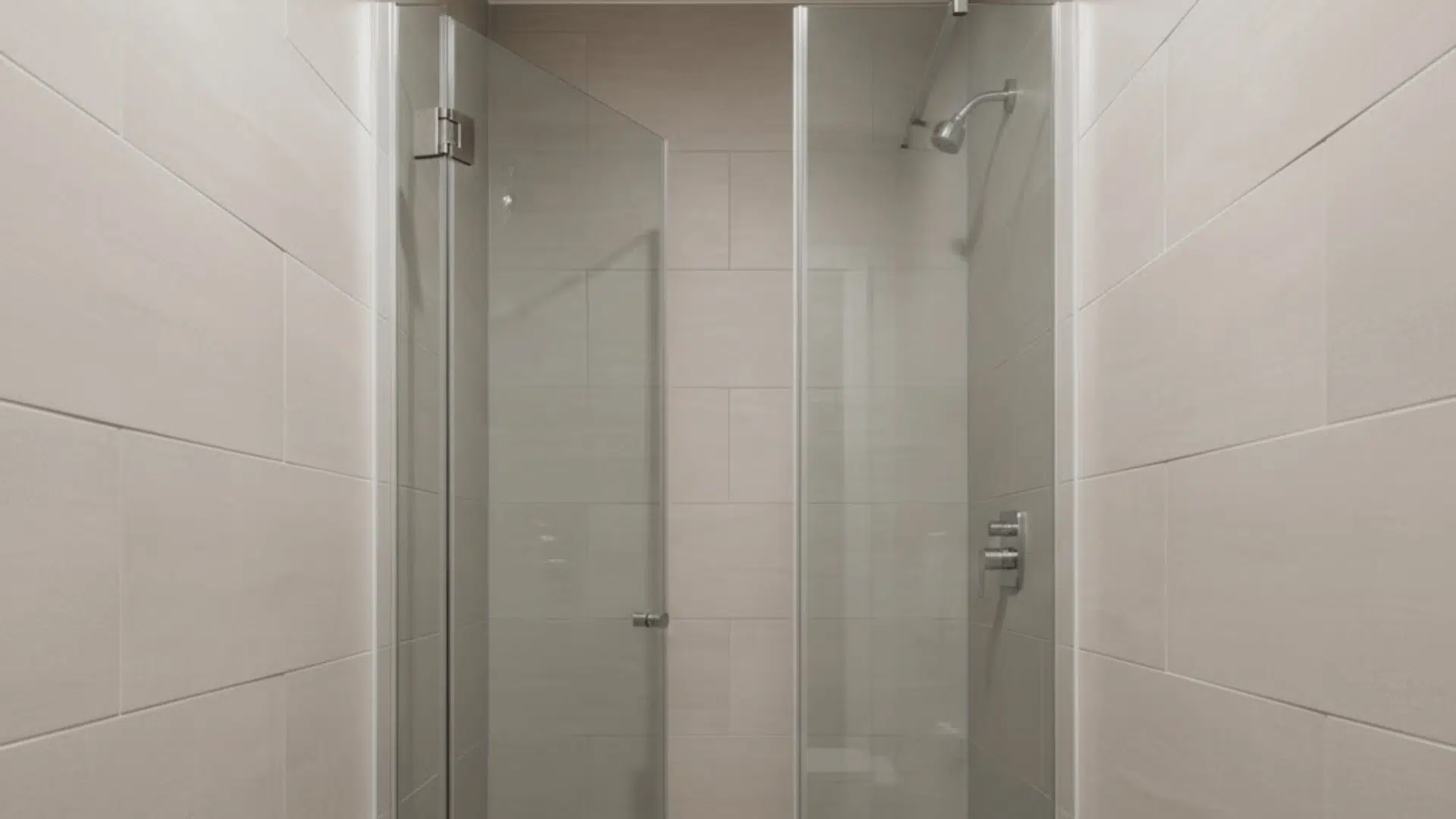
An inward-opening shower door keeps clearance inside the shower instead of the bathroom floor. That matters in narrow layouts where every inch outside the shower is valuable.
It reduces congestion near the sink and toilet while still allowing a fully enclosed shower.
17. One Continuous Floor Tile Into Shower
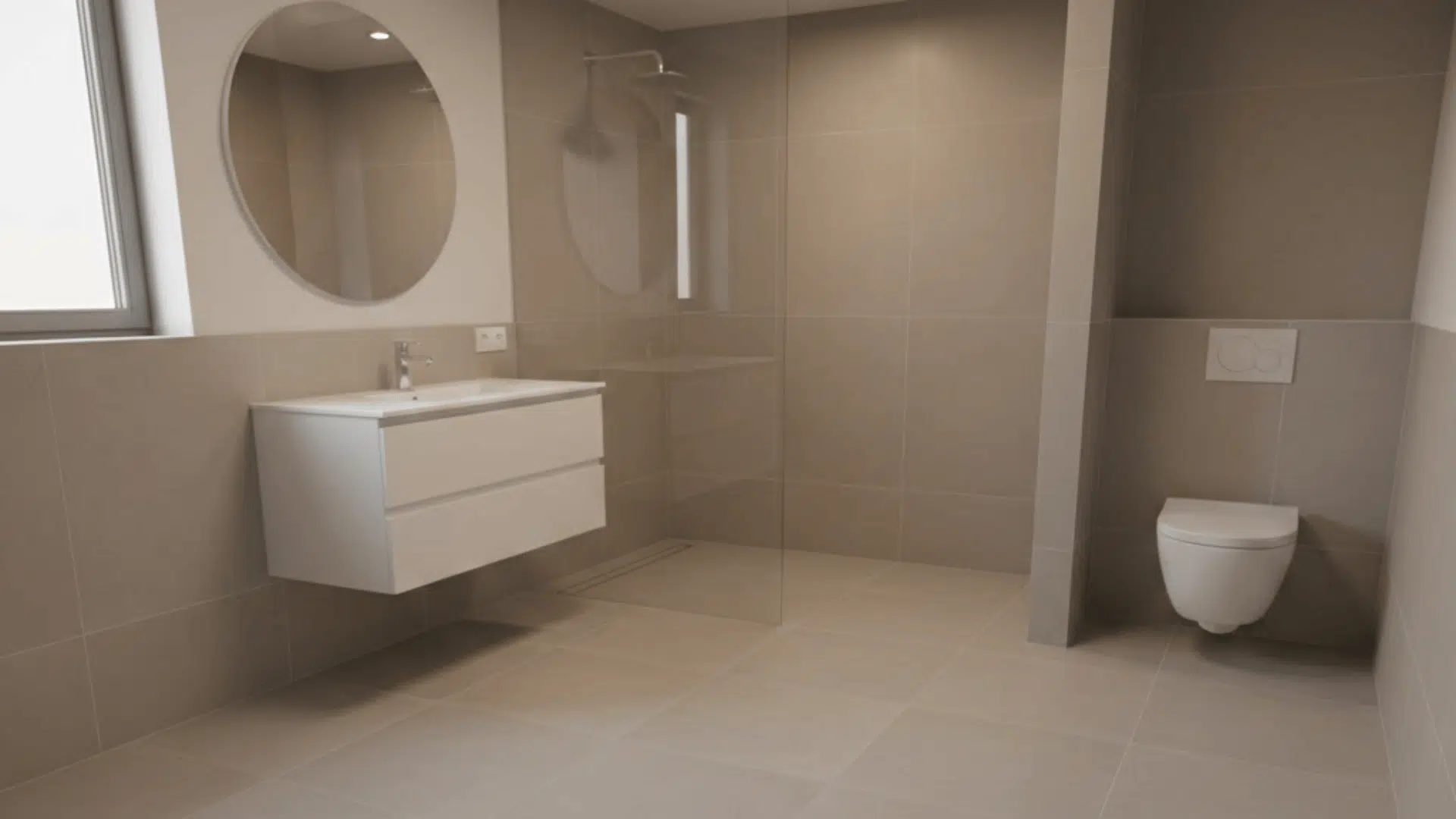
Running the same floor tile into the shower removes visual breaks. The room reads as one surface instead of separate zones.
This trick works especially well in curbless showers, where uninterrupted flooring makes the bathroom feel wider and more open.
18. Matching Grout to Tile Color
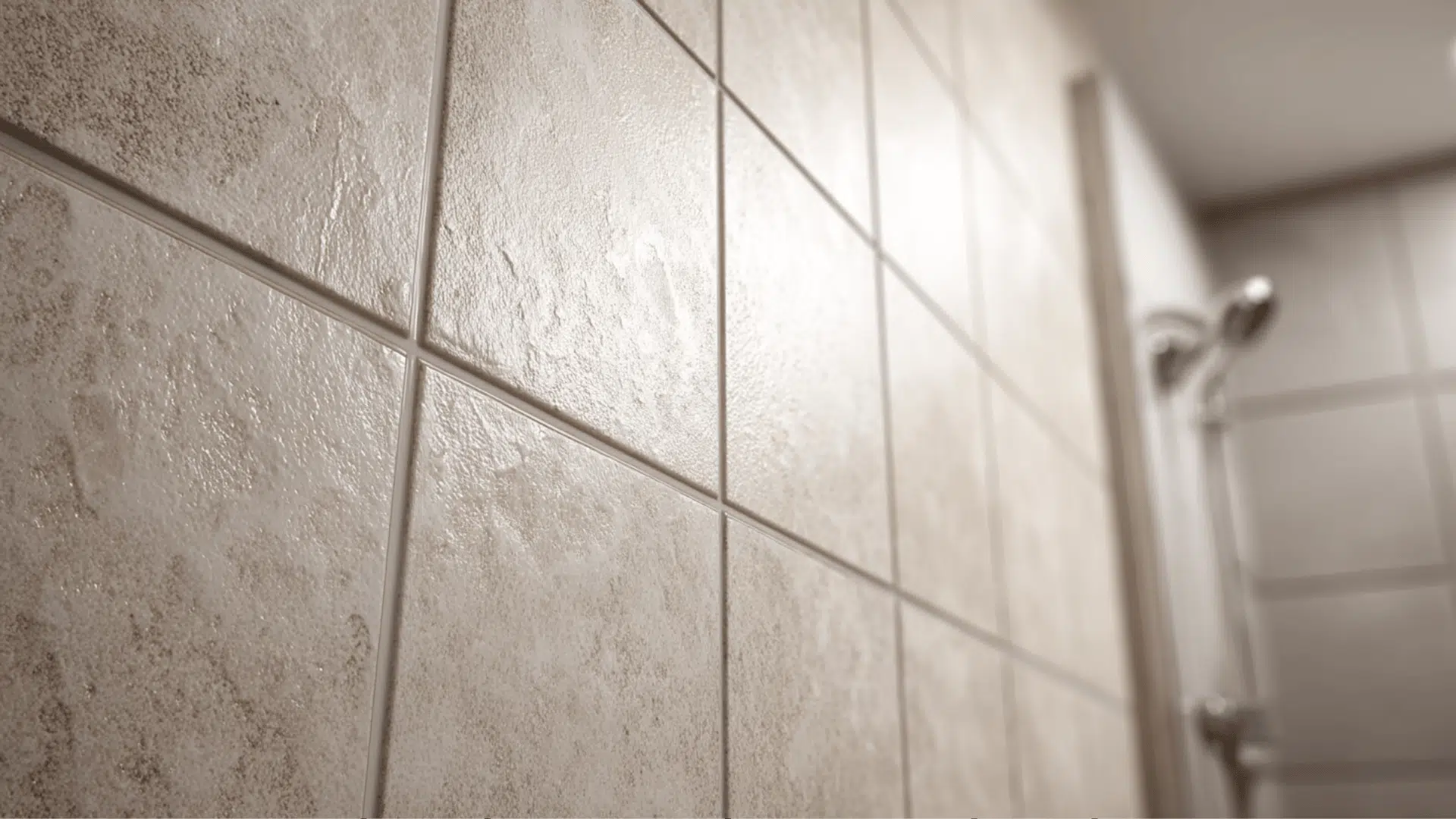
Matching grout to tile color keeps surfaces from looking busy. High-contrast grout draws attention to every line, shrinking the room visually.
When grout blends in, walls read as solid planes, which makes the bathroom feel larger and more relaxed.
19. Vertical Tile Layout
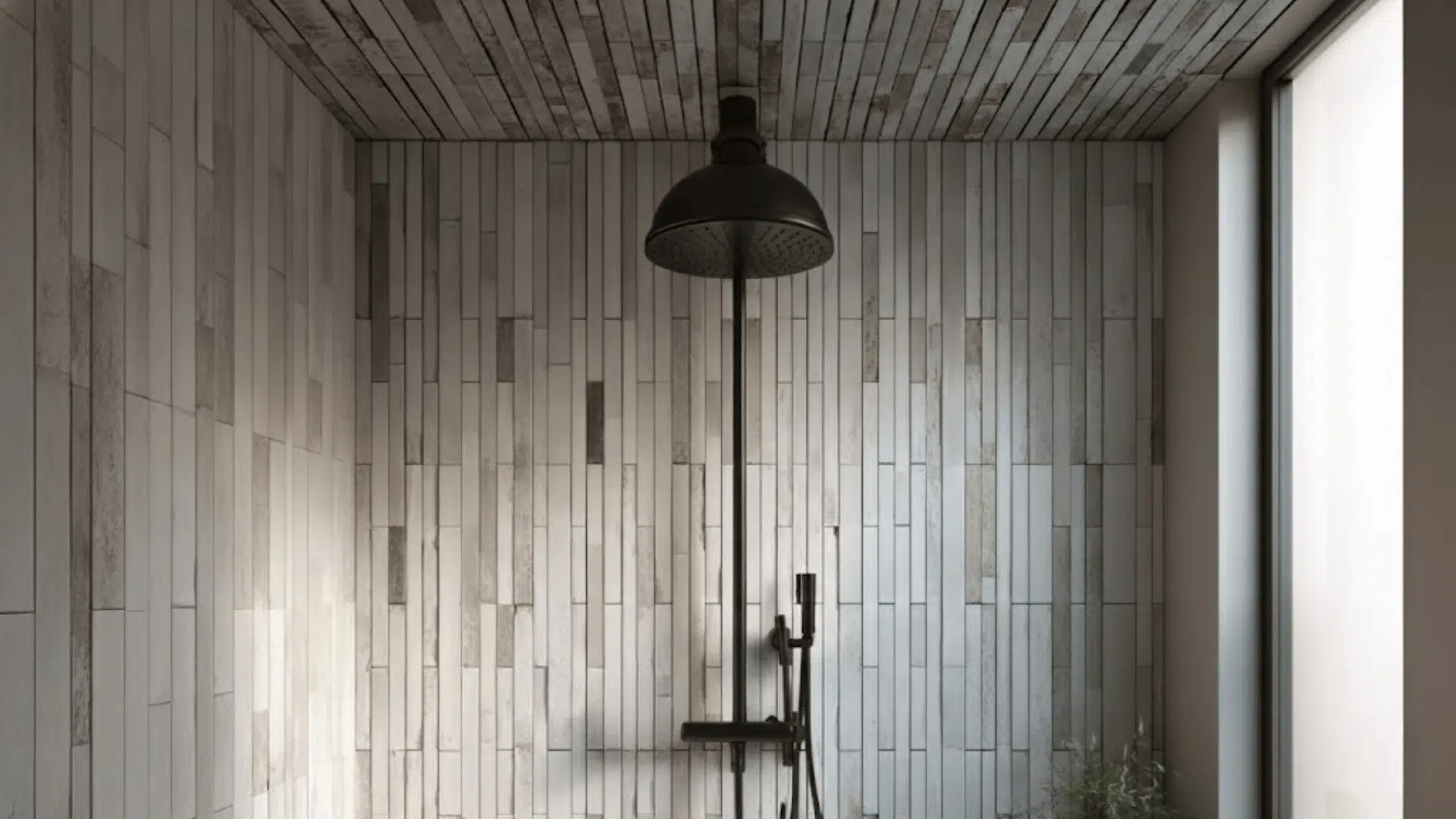
Vertical tile layouts pull the eye upward, making low ceilings feel taller. This works especially well in shower walls where height matters visually.
Even if the room is narrow, vertical lines help counter that boxed-in feeling common in small bathrooms.
20. Horizontal Tile Layout
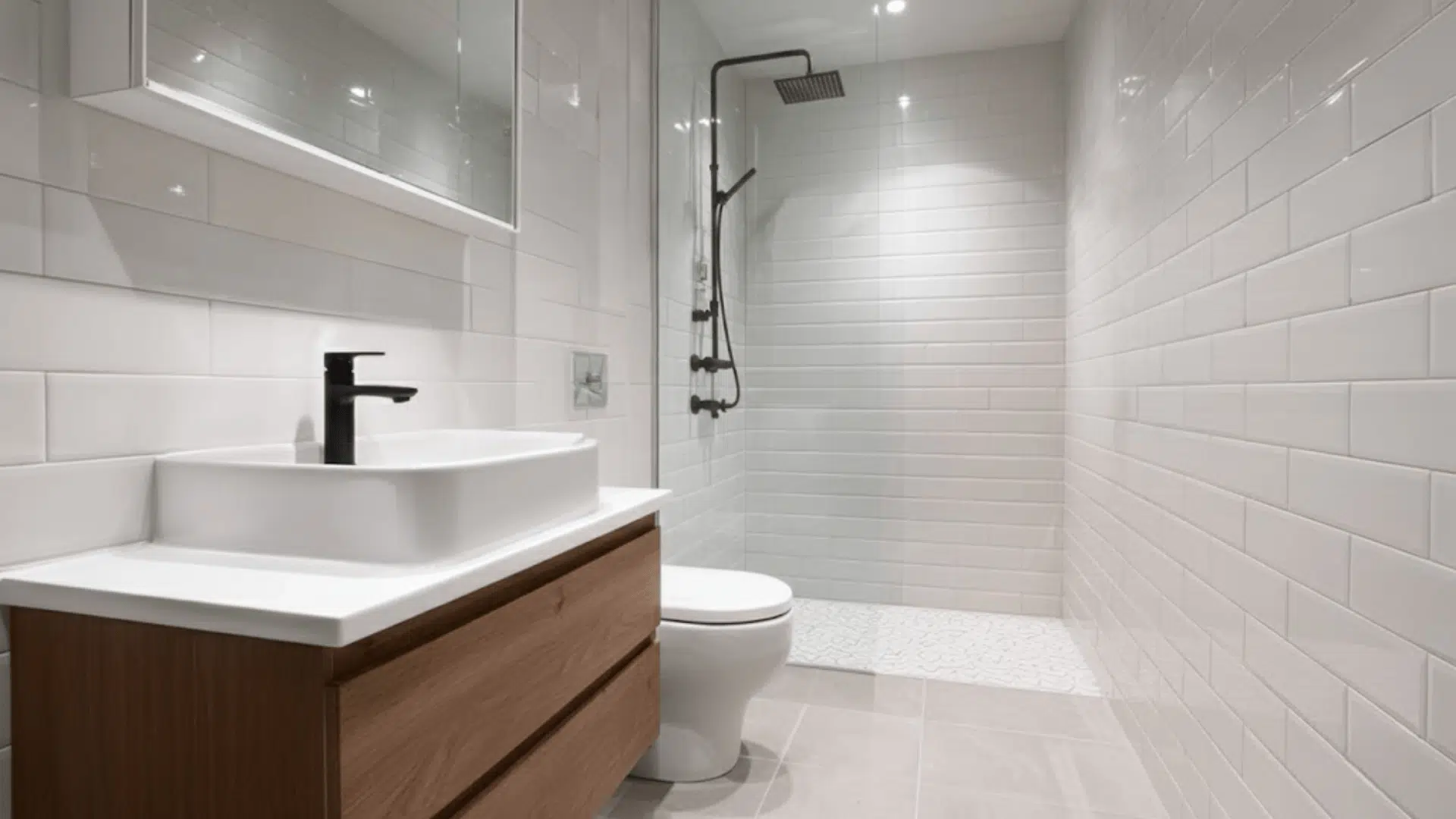
Horizontal tile lines stretch the room visually from side to side. This works well in narrow bathrooms where width feels limited.
When done across the shower wall or main wall, it helps the space feel broader and more balanced instead of tall and cramped.
21. Dark Shower Floor for Contrast
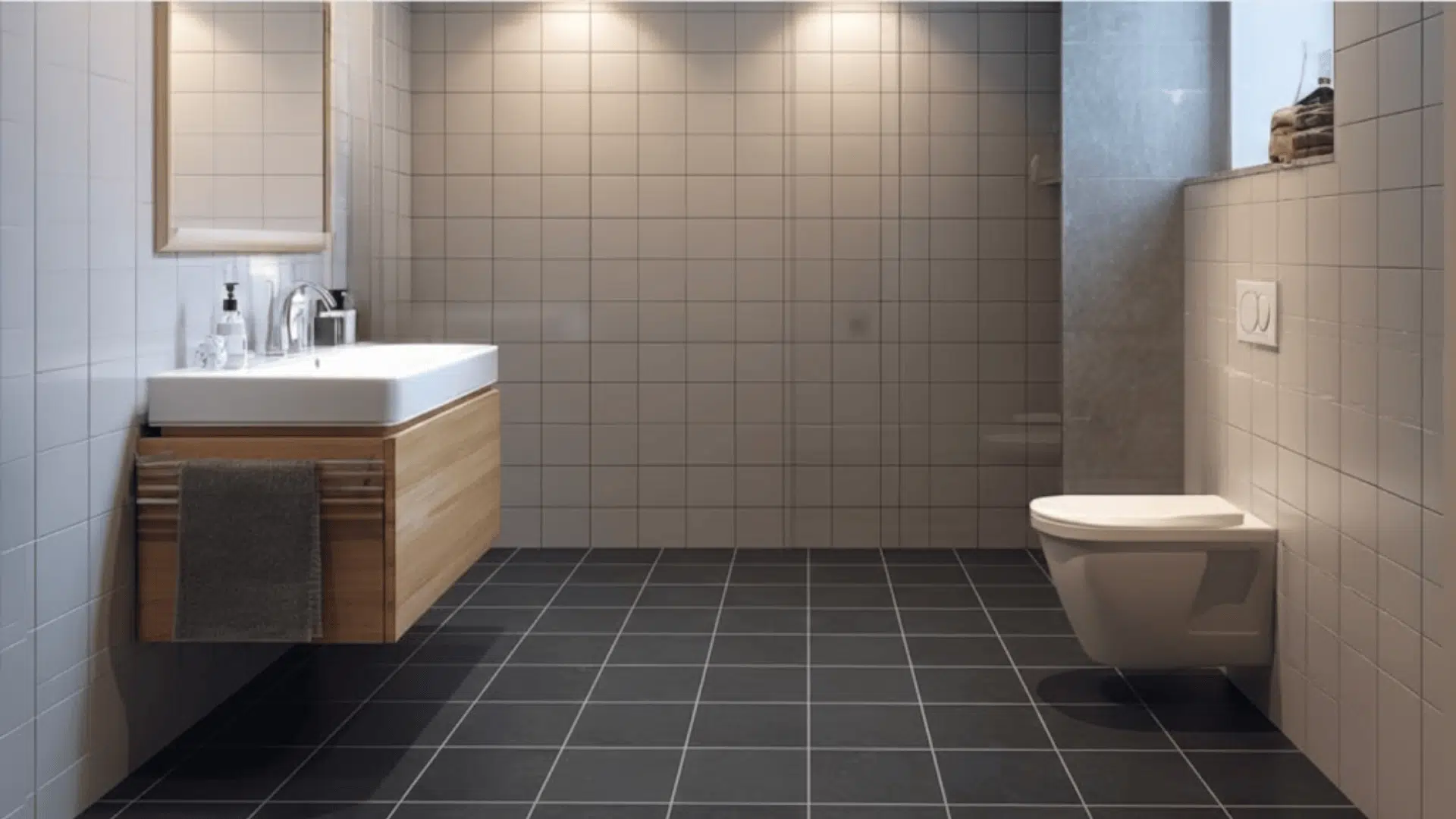
A darker shower floor grounds the space while allowing lighter walls to stay open. This contrast adds depth without clutter.
It also hides wear better over time. Used carefully, it gives definition without shrinking the room visually.
22. Single Accent Wall Inside the Shower
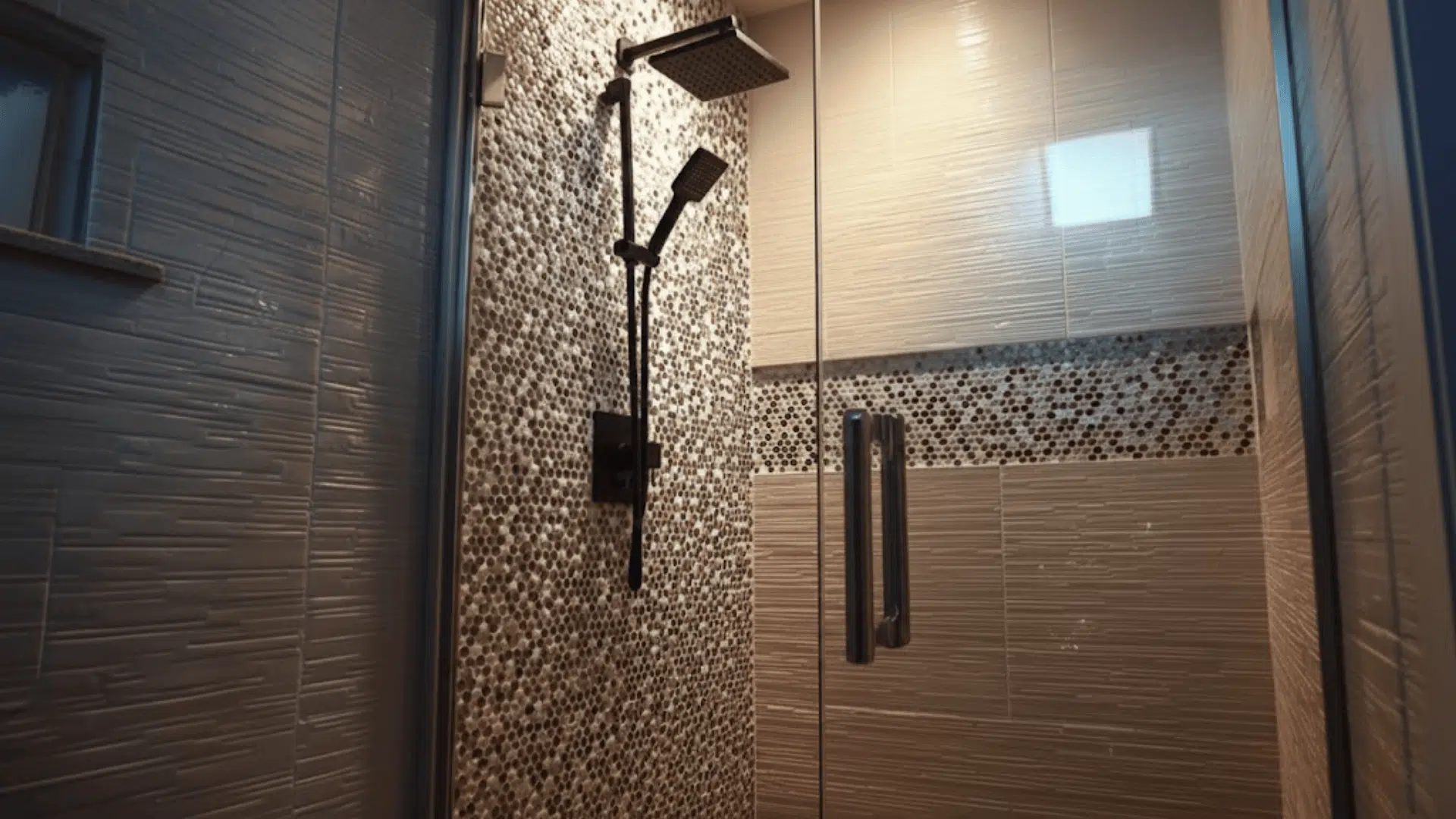
Limiting an accent wall to the shower keeps interest contained instead of spreading visual noise across the room.
It gives personality without overwhelming the space. This works best when the rest of the bathroom stays simple and calm.
23. Full-Height Mirror
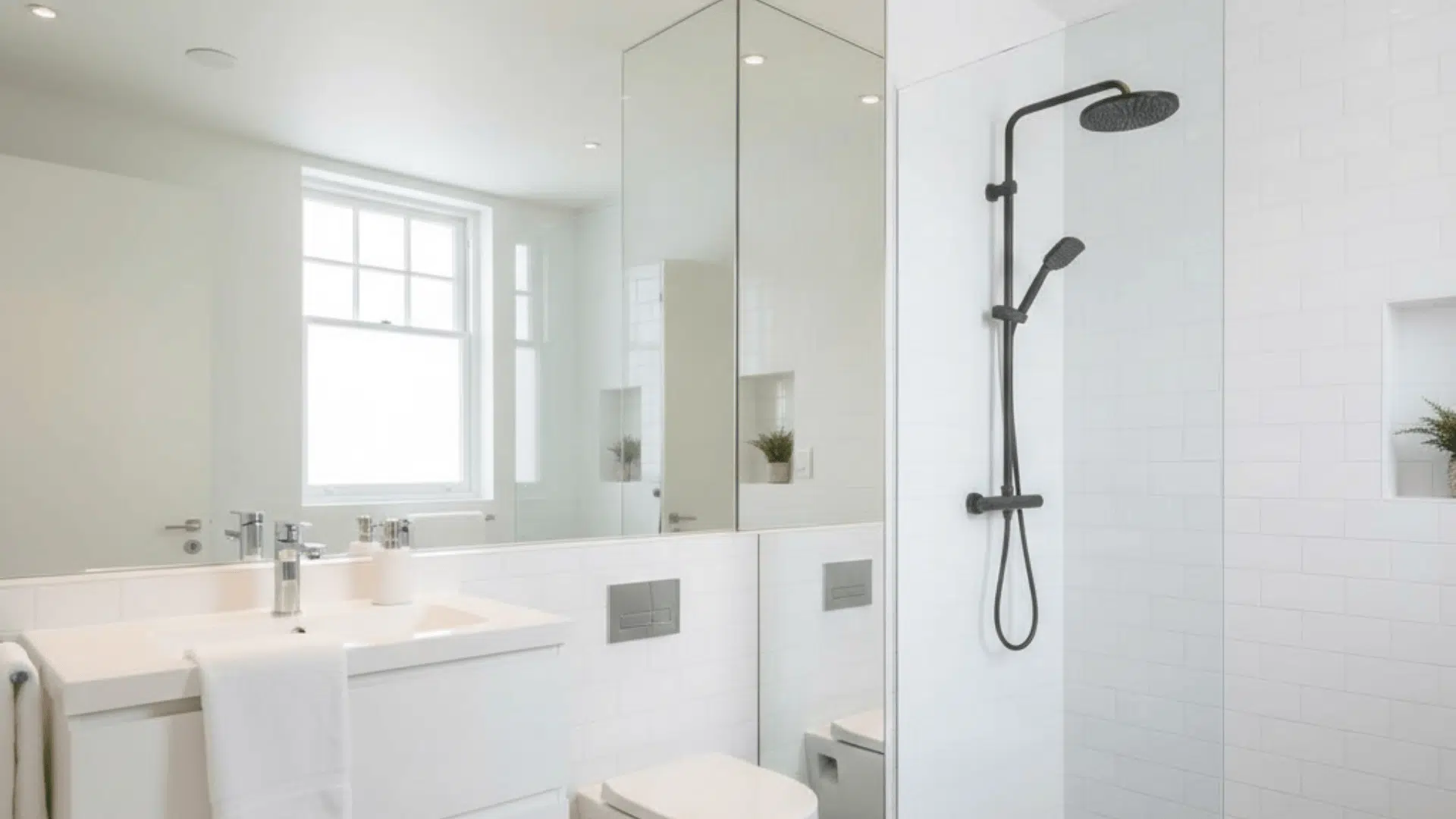
A full-height mirror reflects light and doubles the visual depth of the room. It pulls the eye upward and outward at the same time. In tight bathrooms, this can make the difference between feeling boxed in and feeling breathable.
24. Floating Shelves Above the Toilet
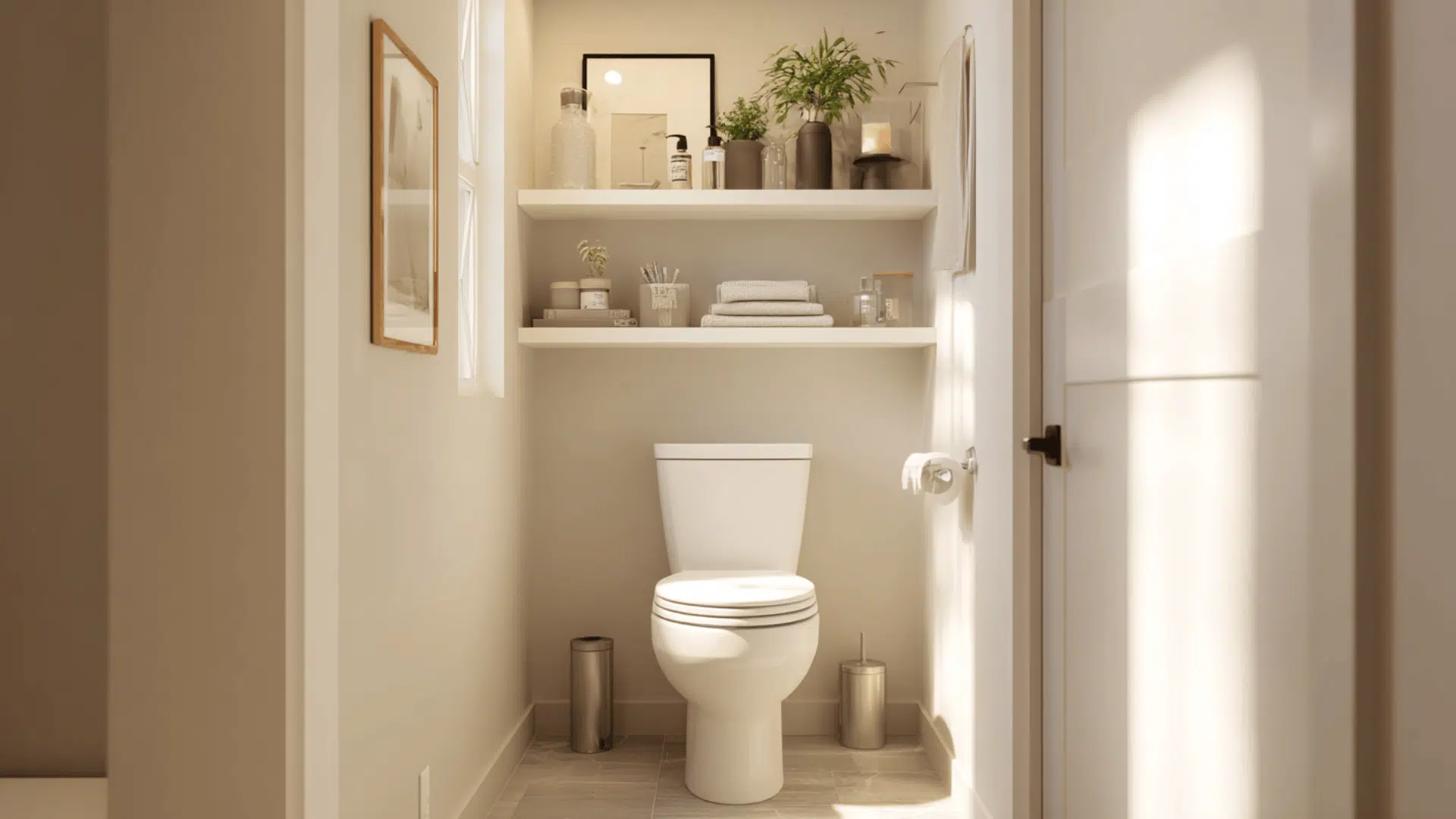
The wall above the toilet is often wasted space. Floating shelves use that vertical area without eating into floor space.
Kept narrow and minimal, they provide storage for essentials while keeping the room open and easy to move through.
25. Built-In Laundry Niche If Space Allows
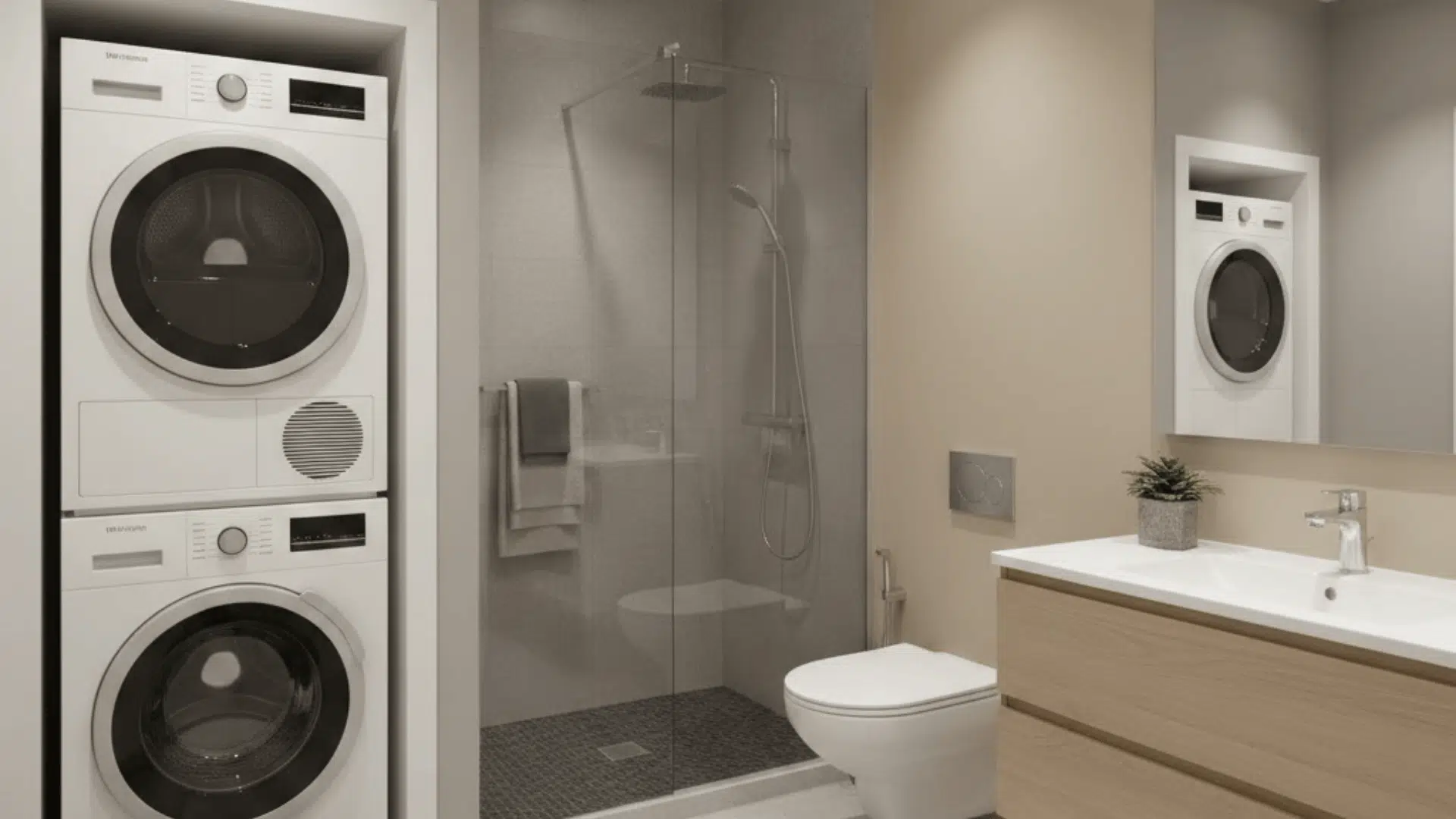
In homes where the bathroom pulls double duty, a built-in laundry niche can work without crowding the room.
When recessed properly, it adds function while keeping the layout clean and avoiding standalone machines in tight areas.
Other Small Bathroom Designs with Shower Ideas
- Curbless Shower Entry: Removing the curb creates one continuous floor surface, improving accessibility and making a small bathroom feel wider, calmer, and easier to move through daily.
- Large-Format Wall Tiles: Bigger tiles reduce grout lines, which lowers visual clutter and keeps walls feeling calmer, smoother, and more open in tight bathroom layouts.
- Compact Elongated Toilet: This toilet offers better comfort than round bowls while projecting less into the room, improving clearance and movement in narrow bathroom layouts.
- Light Wall Colors: Light tones reflect more light, keeping walls from closing in visually and helping small bathrooms feel brighter, more open, and less heavy.
- Built-In Corner Shower Shelf: Corner shelves use unused wall junctions for storage, replacing bulky caddies and keeping shower movement smooth, uncluttered, and easier during daily use.
- Concealed Toilet Tank: Hiding the tank inside the wall removes bulk from the room, creates cleaner wall lines, and helps the bathroom feel more controlled and spacious.
- Pocket Door: A pocket door eliminates swing clearance, freeing usable space for fixtures and movement, which can make a tight bathroom layout finally work.
- Curved Corner Shower Enclosure: A curved enclosure softens the shower footprint, improves traffic flow, and prevents sharp corners from interrupting movement in small bathrooms.
- Mirrored Medicine Cabinet: This combines reflection and storage in one element, keeping walls useful without sacrificing visual openness in compact bathroom layouts.
- Recessed Medicine Cabinet: Recessing the cabinet keeps storage flush with the wall, avoiding protrusions that make narrow bathrooms feel tighter and more crowded.
- Backlit Mirror: Built-in lighting around the mirror provides even illumination while reducing extra fixtures, keeping walls cleaner and the space feeling calmer.
- Wall-Mounted Lighting: Mounting lights on walls instead of above mirrors reduces clutter, spreads light evenly, and helps small bathrooms feel lighter and more balanced.
- Bi-Fold Shower Door: Bi-fold doors fold inward neatly, allowing full shower access without blocking walkways, making them ideal for very tight bathroom layouts.
- Clear Shower Glass: Clear glass keeps sightlines uninterrupted, allowing light to travel freely and preventing the bathroom from feeling chopped into smaller sections.
- Recessed Ceiling Lights: Recessed lighting keeps the ceiling clean, avoids visual interruptions, and maintains a sense of height in small bathrooms.
- Shower Lighting in Wet Area: Lighting inside the shower improves visibility and safety while allowing the rest of the bathroom to stay simple and uncluttered.
- Floating Shelves Above Toilet: Using the wall above the toilet adds storage without using floor space, keeping movement clear and the room feeling open.
- Narrow Open Shelving: Slim shelves on unused walls add practical storage while staying light and unobtrusive in tight bathroom layouts.
- Towel Hooks: Hooks take less space than bars, offer flexible placement, and work better in small bathrooms with limited wall real estate.
- Heated Towel Rail: A heated rail dries towels while providing vertical storage, serving two purposes without adding unnecessary bulk to the room.
- Built-In Shower Bench: A wall-supported bench adds comfort without crowding the shower floor, keeping movement clear in walk-in shower designs.
- Fold-Down Shower Seat: This seat provides support when needed and folds away afterward, preserving space in very small showers.
- Glass Shower Shelf: Glass shelves feel lighter than metal racks, blending into the background while holding essentials without adding visual weight.
- Minimal Hardware Finishes: Limiting finishes reduces visual noise, helping the bathroom feel organized, calmer, and easier to look at.
- Matching Fixtures: Using the same finish for all fixtures creates visual order, which helps small bathrooms feel intentional instead of cluttered.
- Hidden Plumbing: Concealing pipes inside walls or cabinetry removes visual clutter and helps the bathroom feel cleaner and more finished.
- Ceiling-High Shower Curtain: Mounting the curtain close to the ceiling pulls the eye upward, making the shower and room feel taller.
- Extra-Long Curtain Rod: A longer rod lets the curtain sit outside the shower when open, exposing more space and improving airflow.
- Continuous Tile Behind Vanity: Running the same tile behind the vanity and shower reduces visual breaks and keeps the room feeling unified.
- Flush Floor Transitions: Removing raised thresholds and metal strips keeps the floor reading as one surface, helping the bathroom feel wider.
- Floor-To-Ceiling Shower Tile: Full-height tile inside the shower adds vertical emphasis without overwhelming the rest of the bathroom.
- Matte Surface Finishes: Matte finishes soften reflections, reduce visual noise, and help small bathrooms feel more controlled and easier on the eyes.
- Built-In Laundry Niche: When recessed properly, a laundry niche adds function without crowding the bathroom or disrupting movement.
Common Mistakes to Avoid in Small Bathroom Showers
Small bathrooms don’t hide mistakes well. A few wrong choices can make the space feel tight, awkward, and harder to use than it should be. Here are the most common issues that cause problems:
- Oversized Fixtures: Large shower heads, thick hardware, and bulky controls crowd the shower and limit movement. In tight spaces, streamlined fixtures always work better than statement pieces.
- Poor Drain Placement: Drains placed without planning can cause pooling, awkward floor slopes, and broken tile lines. This hurts both function and how open the space feels.
- Blocking Visual Flow: Heavy frames, frosted glass, and too many material changes stop the eye and shrink the room visually. Clear sightlines keep small bathrooms feeling open.
- Ignoring Ventilation: Without proper airflow, moisture builds fast. This leads to foggy mirrors, damp surfaces, and long-term damage to finishes.
- Too Much Contrast: High-contrast colors and patterns create visual noise. In small bathrooms, this makes the space feel busy and boxed in.
- Overloading Storage Inside The Shower: Too many shelves or accessories reduce elbow room. Storage should stay minimal and intentional.
Avoiding these mistakes keeps the bathroom working with you instead of against you. In small spaces, clean decisions matter more than bold ones.
Wrapping Up
Small bathrooms don’t fail because they’re small. They fail because the choices don’t match the space. When every inch has a job, design stops being about looks and starts being about decisions.
The best results come from thinking through movement, sightlines, and how the room feels during real daily use. That’s where limited space small bathroom designs with shower either work beautifully or fall apart.
Smart layouts, restrained choices, and fewer visual interruptions do more than any single upgrade ever could.
If you’re planning a remodel or reworking an existing space, slow down and plan before buying anything. Measure twice. Choose once. And then build a bathroom that actually works for you.