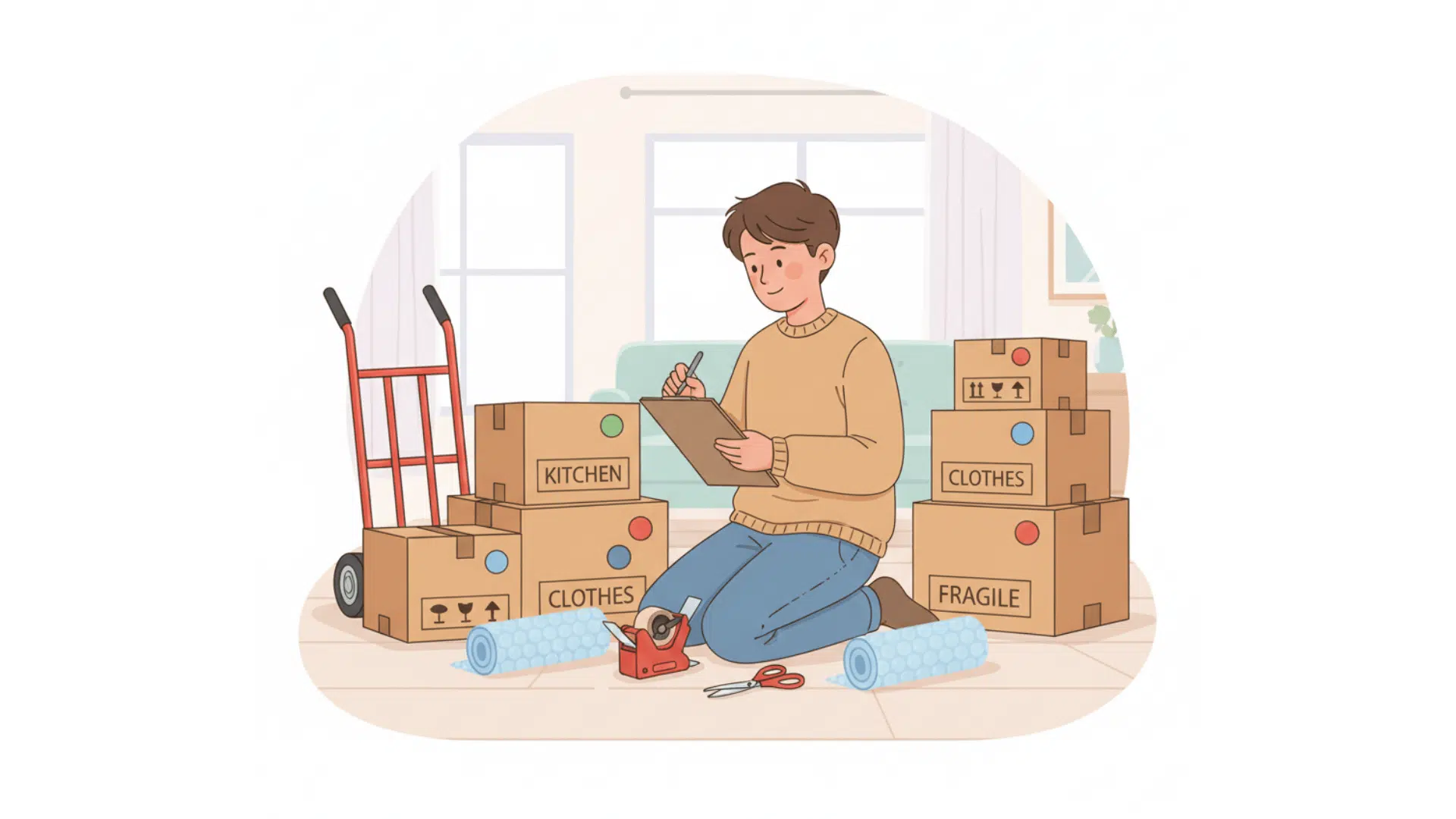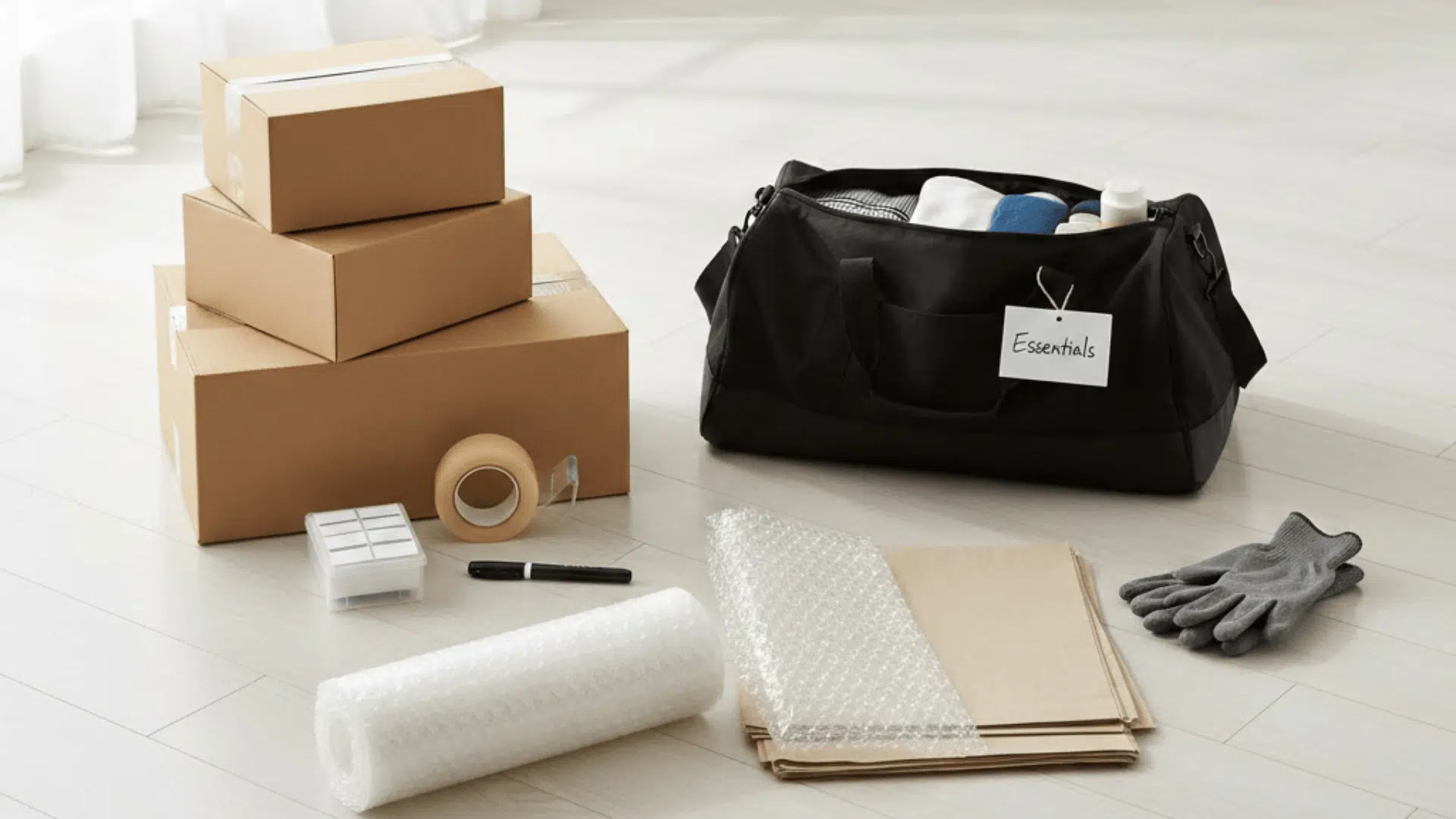
Moving is one of those moments that can feel exciting and completely overwhelming at the same time.
There’s a lot happening at once, and it’s easy to lose track of the small things that end up mattering most. That’s why having your moving essentials lined up early makes the whole process smoother.
In this guide, I’ll walk you through the supplies that actually make a difference, the things you’ll want within reach on day one, and the simple decisions that keep you from stressing when the pace picks up.
It’s a straightforward way to stay organized and avoid common mistakes people regret later. Let’s start with what you need before you even begin packing.
What You Really Need Before You Start Packing
Before you even touch a box, you need a few basics in place. I’ve seen people jump straight into packing and then lose half a day because they can’t find tape or they forgot to set aside the things they actually need that night.
You don’t want that. You want a clean start, and that comes from having the right things around you before the chaos kicks in.
You need space to move, a plan that makes sense, and a small set of items that keep the whole process from falling apart. Think of this as your warm-up. Get these pieces lined up, and the rest gets way easier.
Here’s what matters right now:
- A small bag for the things you can’t afford to lose
- A place to pile items you’re keeping, tossing, or donating
- Basic cleaning stuff so you’re not packing dust and junk
- A marker and tape that actually work
- A clear spot to stack finished boxes so they don’t get mixed up
Once this part is handled, you can start packing without stopping every ten minutes to hunt for something you forgot. It’s simple, but it makes the whole move smoother.
Core Moving Supplies You’ll Need
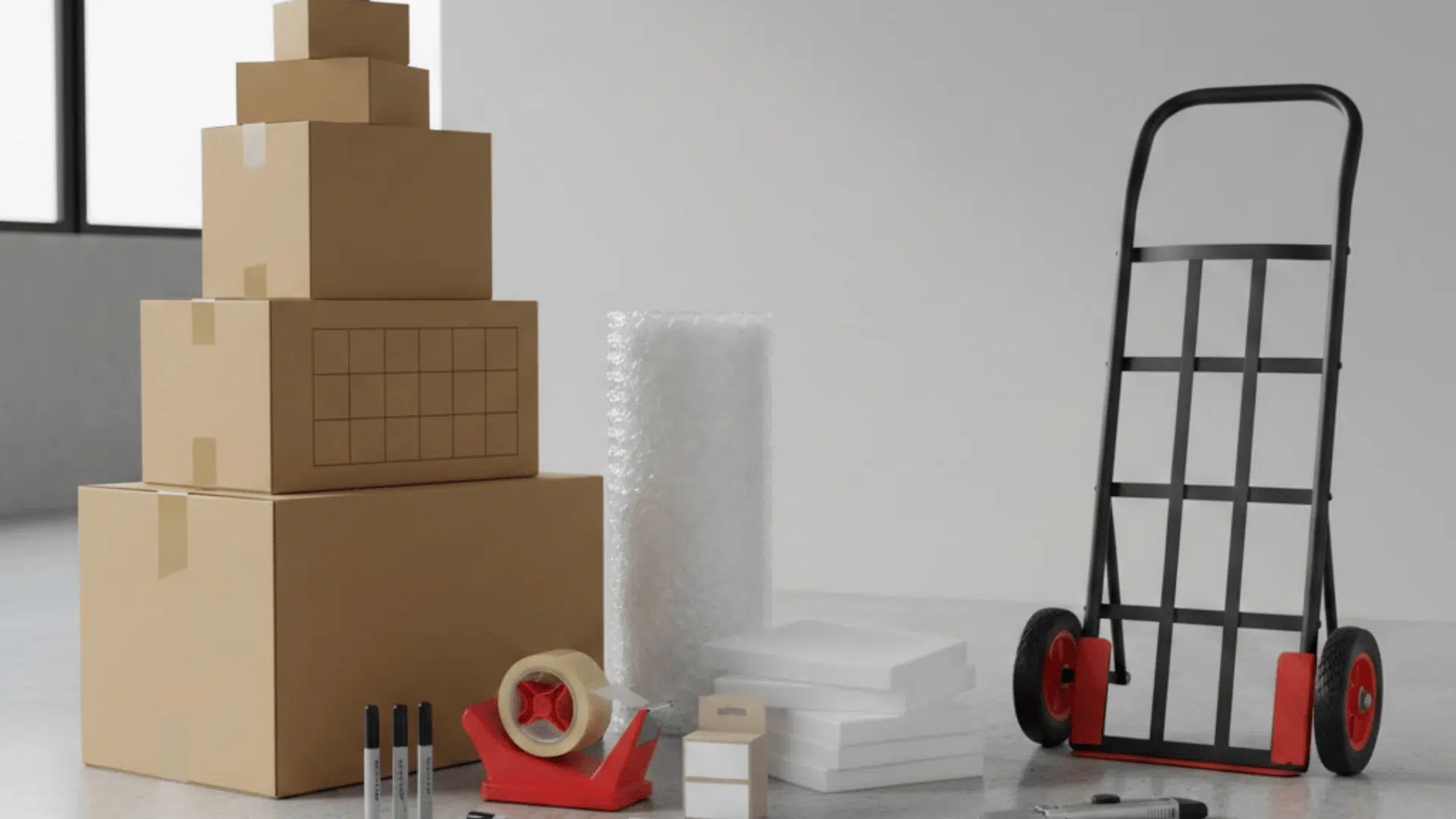
These are the tools that keep your move steady and smooth. When you have the right things lined up, you pack faster, break less, and avoid the classic moving-day mess.
Boxes and Moving Bags
- Small boxes for heavy items
- Medium boxes for everyday stuff
- Large boxes for light items like bedding
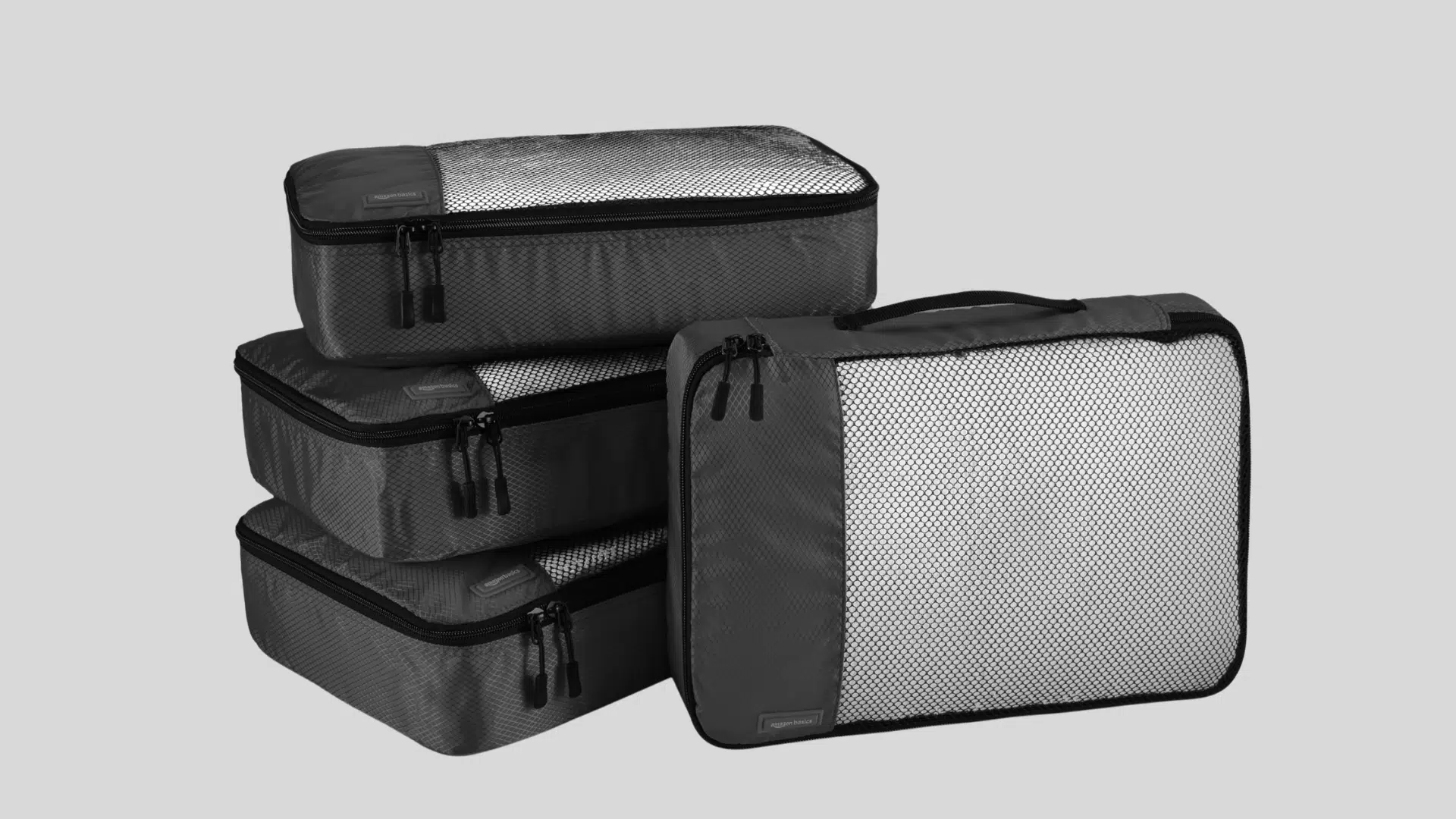
- Moving bags for clothes, blankets, and soft items
- Use bags when you want quick access
- Use boxes for fragile or stackable items
Rough quantity guide:
| Home Size | Recommended Box Count |
|---|---|
| Studio or small apartment | 15 to 20 boxes |
| Two-bedroom home | 25 to 35 boxes |
| Larger homes | 50+ boxes |
Tapes, Labels, and Markers
- Strong packing tape
- Backup roll so you don’t run out mid-pack
- Thick marker that won’t smear
- Label each box with room + quick item note
- Add one label on top and one on the side
- Simple color system for fast sorting by room
Protective Packing Materials
- Bubble wrap for fragile items
- Foam sheets for stacking plates or electronics
- Packing paper to fill gaps in boxes
- Blankets to cover furniture or large items
Moving Tools & Equipment
- Dolly or hand truck
- Lifting straps for heavy furniture
- Furniture sliders to protect floors
- Utility knife for breaking down boxes
- Mattress covers to keep beds clean
Cleaning Supplies
- Trash bags for tossing things as you pack
- All-purpose cleaner
- Paper towels
- Gloves
- Microfiber cloths for quick wipe-downs
Your First-Night Essentials Box (24–48 Hours Kit)
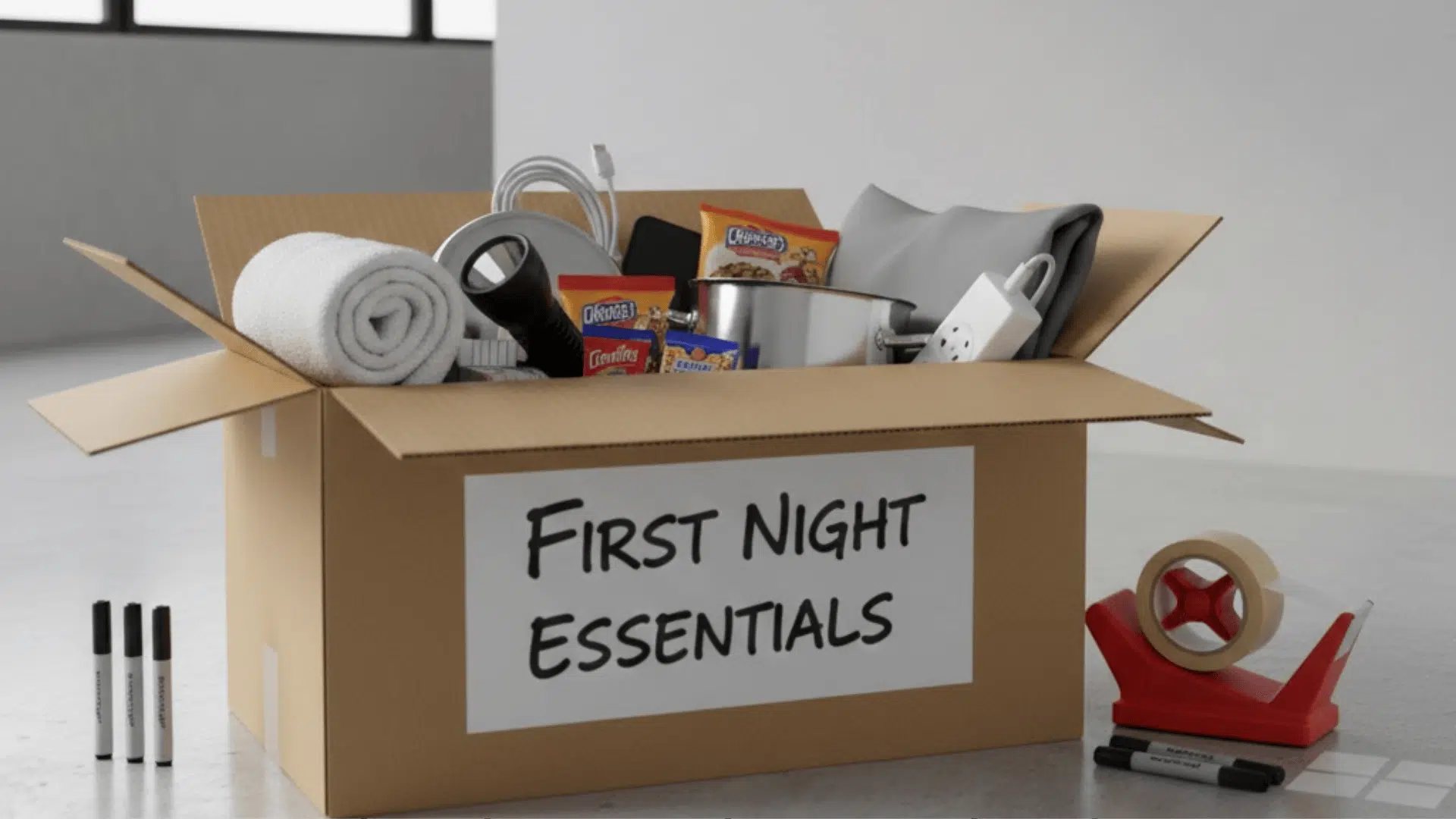
This is the box that stays with you. Not in the truck. Not buried under five layers of furniture. These are the things you’ll reach for the moment you walk into the new place, when you’re tired, hungry, and not ready to tear open every box just to find a toothbrush.
Personal Items
- Toiletries
- Medications
- Clothing for the first day or two
- Towels
Kitchen Essentials
- Snacks and water
- Basic utensils
- A small pan or pot
- Cleaning sponge
Bedding
- Sheets
- Pillows
- Blankets
Electronics & Tools
- Phone chargers
- Power strip
- Flashlight
- Basic toolkit
Important Documents
- IDs and passports
- Medical papers
- Home purchase or lease documents
Pre-Move Prep Checklist
This part sets the pace for the whole movie. When you take care of a few things early, you avoid the last-minute panic that hits most people. It keeps your space clear, your packing faster, and your head in the right place.
Decluttering Strategy
Before you start boxing anything, do a quick pass through your home and separate the things you’re keeping from the things you’re tossing or donating.
It’s way easier to move when you’re not dragging along stuff you don’t even use. Also, check the list of items movers won’t carry, because you don’t want surprises on moving day.
Things like chemicals, certain cleaners, and flammable items usually need to travel with you.
What to Buy Before Moving
A few basics make the first day in the new place smoother. A fire extinguisher, a plunger, and a set of light bulbs all come in handy faster than people expect.
Batteries are another one. You’ll eventually need them, and it’s better to have them on hand than hunt for a store when you’re exhausted from unpacking.
What to Pack First (and Last)
Start with the things you barely touch. Seasonal items, extra blankets, and anything you don’t use week to week can go in the first set of boxes. After that, pack the things you use sometimes but not every day.
Save your daily-use items for last so you’re not digging through boxes to find something you need right away. This simple order keeps everything more organized and makes the final days before the move less stressful.
Room-by-Room Moving Essentials
Every room comes with its own packing challenges. Some things are fragile, some are bulky, and some need a little extra attention before they go in a box.
1. Kitchen
The kitchen always takes longer than people expect because so much of it can break.
Glassware needs padding, so wrap each piece and keep plates upright instead of stacking them flat. It reduces the chance of cracks.
For appliances, make sure everything is clean and dry before it goes into a box. Unplug them a day early if they build up moisture, and tape any loose parts so nothing shifts in transit.
2. Bedroom
Clothing is easier when you pick the right method. Fold and stack for regular clothes, and use bags or wardrobe boxes if you want to keep things on hangers. It saves time at the new place.
For the bed, take apart the frame and keep the screws in a small labeled bag so you’re not hunting for them later. A mattress cover protects the mattress from dirt during the move.
3. Bathroom
Most bathroom items go in one small box, but you want to keep it clean and simple. Pack toiletries you don’t use daily, and leave your main items out until the last day.
Any liquid should be sealed tightly or put inside a zip bag so you don’t open a box to find shampoo everywhere. Grab a few basic cleaning items so you can wipe things down before you leave.
4. Living Room
This room usually has fragile pieces people forget about. Wrap decor, picture frames, and small items so they don’t knock around inside the box.
Electronics need a little prep too. Remove batteries, coil cables neatly, and pack devices with enough padding so they don’t shift. If you still have the original boxes, those work best.
5. Utility/Garage
Tools are simple to pack but easy to lose if they’re spread out. Keep them together so you’re not searching through five boxes for a screwdriver on the first night.
Hazardous materials are another thing to watch. Many movers won’t take chemicals, paint, fuel, or anything flammable, so check the rules ahead of time. Those items usually need to go with you instead of the truck.
Moving Day Must-Haves
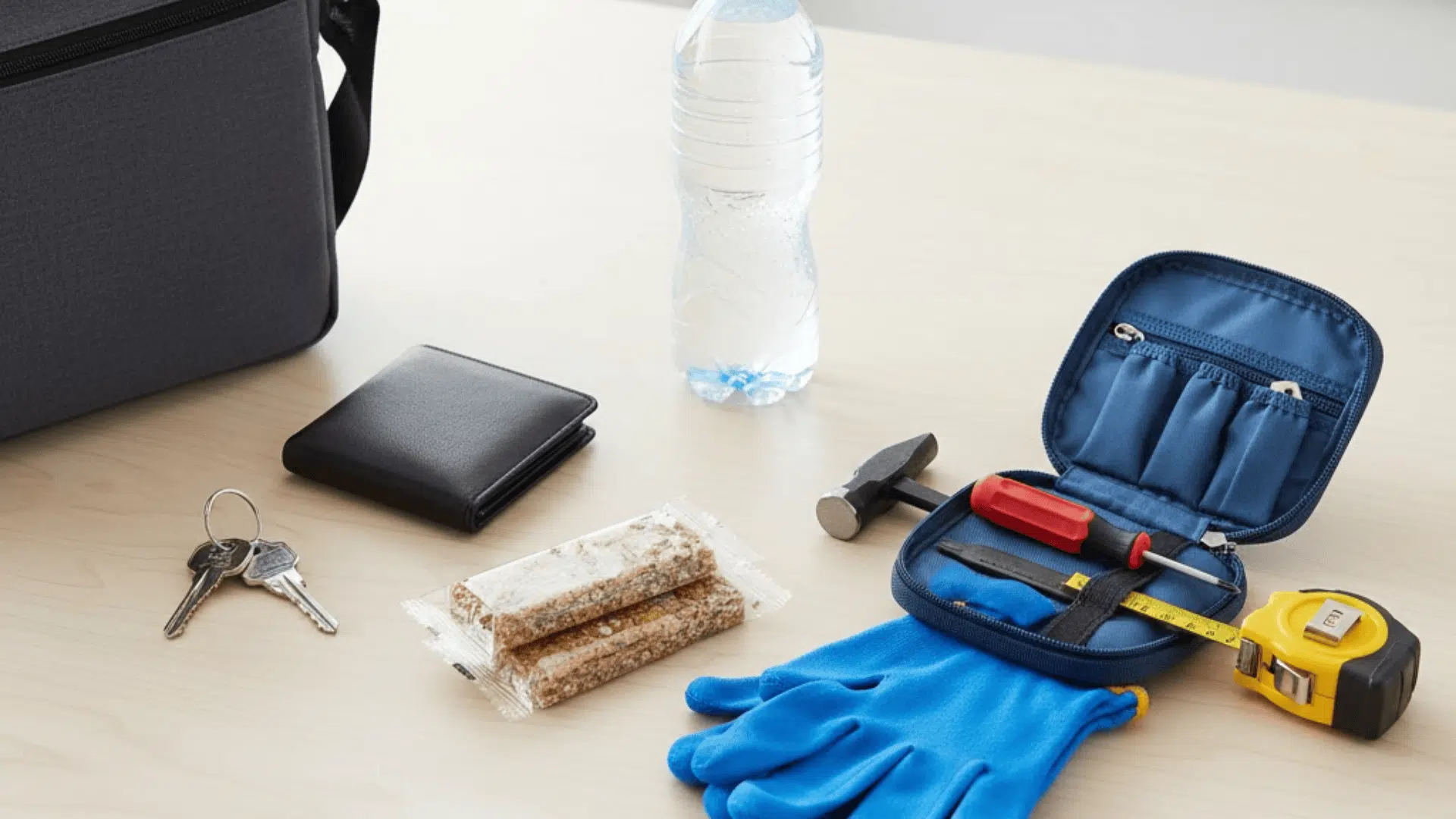
These are the things you keep close, not buried in a box and definitely not in the back of the truck. You want quick access to anything that keeps the day moving without slowing you down.
Car Bag Checklist
- Wallet and keys
- Snacks for the road
- Kids’ items if you’re moving with little ones
- Pet supplies if you’re traveling with animals
Tools for Last-Minute Fixes
- Screwdriver
- Hammer
- Tape measure
Special Moving Situations
Not every move looks the same. Some people are doing this for the first time. Some have kids or pets. Some are driving across the country. Each situation comes with its own set of problems, and a little extra prep makes everything easier.
1. First-Time Movers
If this is your first move, the biggest mistakes usually come from packing too late or buying things you don’t need.
It helps to keep a simple budget list so you’re not surprised by the cost of supplies, movers, or cleaning fees. Staying organized from the start makes the whole thing feel less overwhelming.
2. Moving With Kids
Kids need a few comfort items close by so the day doesn’t feel too chaotic. A favorite toy, blanket, or small snack pack makes a big difference. Entertainment helps too, especially during long drives or waiting around while movers load and unload.
3. Moving With Pets
Pets need their own little setup. Pack enough food for the day, any medications they take, and a bit of travel gear like a leash or carrier. Keeping everything in one small bag makes the trip easier and keeps your pet calm.
4. Long-Distance Moves
Longer moves require a little more planning. A basic car emergency kit helps if something unexpected happens on the road. Carry extra cash just in case you run into tolls or places that don’t take cards.
And instead of one essentials box, pack two or three so you always have what you need even if the truck gets delayed.
Budget-Friendly Moving Essentials
Moving gets expensive fast, but there are plenty of ways to keep costs down without cutting corners. A few smart choices and a couple of workarounds can save you real money.
Affordable Places to Buy Supplies
You don’t need top-shelf gear to get the job done. These U.S. stores and sites usually have the best prices:
- Walmart for cheap boxes, tape, and basic tools
- Home Depot for sturdy moving boxes and packing materials
- Lowe’s for protective wraps and sliders
- Target for plastic bins and cleaning supplies
- U-Haul for wardrobe boxes, mattress covers, and bulk deals
- Amazon for bundle packs and fast delivery
Local hardware stores sometimes run discounts too, so it’s worth checking nearby places if you want to avoid big-store pricing.
Free Alternatives
You can skip buying half the supplies if you get creative. People throw out usable packing materials all the time, and a little digging saves a lot of money.
- Newspaper instead of packing paper works well for padding dishes and small items
- Old blankets instead of bubble wrap protect furniture and keep things from getting scratched
- Free boxes from grocery stores, liquor stores, big-box stores, or Craigslist “free” listings
- Towels and sheets for wrapping fragile items
- Reusable bags for clothes, shoes, and linens
These swaps cut your costs without slowing you down. You still get solid protection for your stuff, just without the extra spending.
Wrapping Up
Wrapping up a move takes more than boxes and tape. It takes a plan that keeps you steady from the first thing you pack to the last thing you unload.
When you understand your space, stay organized, and keep the right supplies close, the whole job feels lighter.
Even the small choices, like how you prep each room or what you keep in your car, make a real difference. That’s the heart of handling your moving essentials the smart way.
Take a minute now, look over your list, and set yourself up with what you need. Start the process today and make your move easier from the very first step.