Table of Contents
- Regular Maintenance
- Optimal Thermostat Settings
- Air Filter Care
- Coil Cleaning
- Outdoor Unit Clearance
- Effective Ventilation Practices
- Home Insulation and Sealing
- Energy-Efficient Upgrades
Living in Gilbert, Arizona, means preparing for summers where temperatures soar well into the triple digits. With such extreme heat, it is critical to maintain an efficient air conditioning system to keep your home cool and energy bills manageable.
By following expert-backed strategies, you can extend your HVAC system’s lifespan, improve comfort, and reduce operating costs. If you need routine maintenance or seasonal support, a Gilbert, AZ AC tune-up is a smart way to keep your system running at its peak.
A proactive approach to AC care not only ensures your home stays comfortable but also helps you avoid costly repairs during the hottest months. From properly setting your thermostat to regularly changing your air filter, each small step can make a significant impact on system efficiency and overall comfort.
Regular Maintenance
Ideally, homeowners should schedule professional HVAC inspections and tune-ups twice annually, preferably before the cooling and heating seasons begin. Qualified technicians can clean components, check for wear and tear, tighten electrical connections, test refrigerant levels, and calibrate controls.
These tune-ups help prevent breakdowns when you most need cooling and offer valuable peace of mind that hidden problems are addressed early. According to the Department of Energy, regular HVAC maintenance can improve efficiency by up to 15 percent.
Optimal Thermostat Settings
Managing your thermostat wisely is one of the simplest ways to reduce unnecessary energy use. Programmable thermostats let you set daily schedules that match your family’s lifestyle, raising the temperature when the house is empty or when everyone is sleeping.
Energy experts recommend setting your thermostat as high as comfortably possible during hot months, often around 78°F when you are home and even higher when you are away. Using smart or Wi-Fi-enabled thermostats can lead to even more savings, as they adapt to your habits and some learn your schedule automatically.
Air Filter Care
Your air filter is your HVAC system’s first line of defense against dust, pollen, pet dander, and airborne allergens. Allowing filters to become clogged can hinder airflow, reduce your HVAC’s efficiency, and potentially damage internal components.
To keep your indoor air clean and your AC operating at its best, check your filter monthly during high-use periods and replace or clean it at least every 1 to 3 months.
Pets, allergies, and dust storms common in the area may require you to change filters even more frequently. According to the Environmental Protection Agency, regularly replacing filters also helps maintain optimal indoor air quality.
Coil Cleaning
The evaporator and condenser coils are integral to the cooling cycle. When coated with pollen, desert dust, or pet hair, these coils cannot transfer heat efficiently. This forces your AC to run longer and more frequently, which increases utility expenses and wear. Cleaning coils yourself requires turning off the power, carefully removing debris, and using a soft brush or a non-caustic coil cleaner. At least once a year, have coils professionally cleaned during routine maintenance, especially just before Gilbert’s hot season begins.
Outdoor Unit Clearance
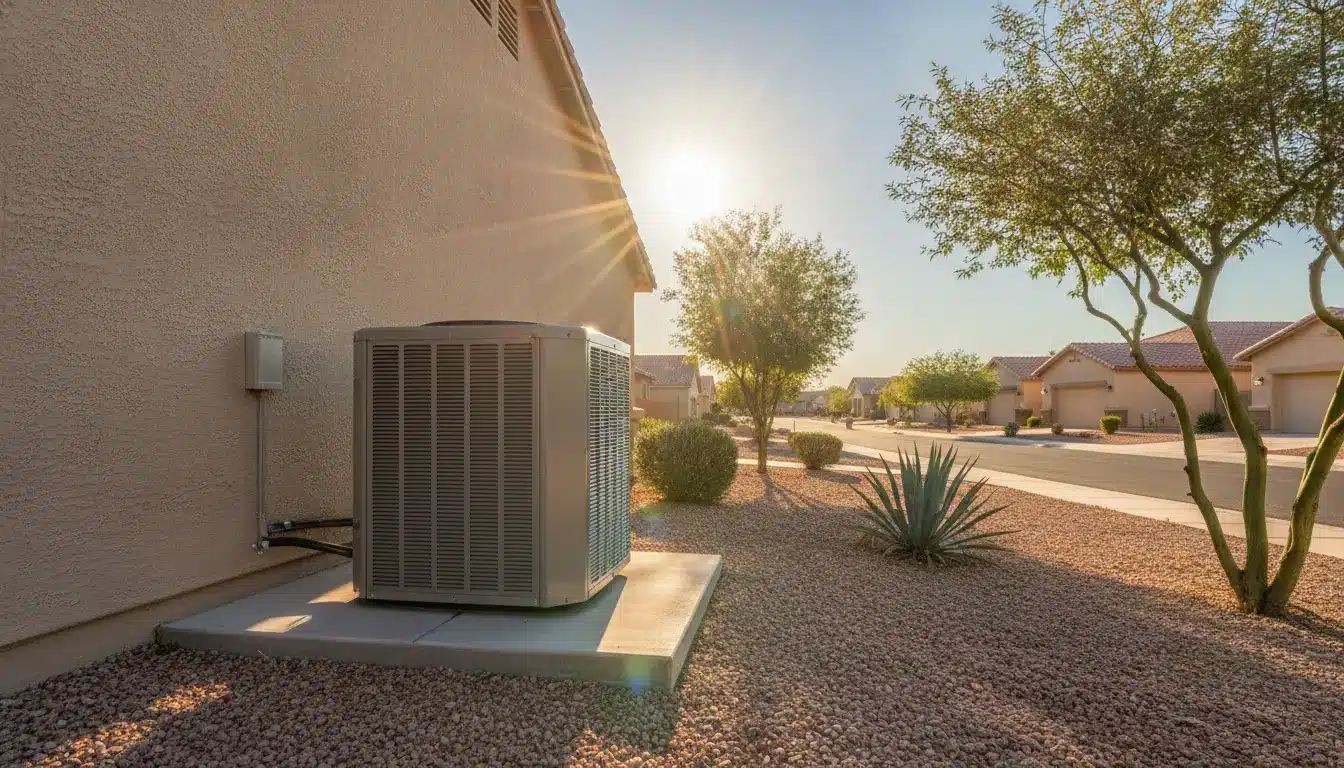
The outdoor condenser unit relies on strong airflow to disperse heat. If weeds, shrubs, fencing, or yard debris are crowding your AC unit, its airflow will be impeded.
A good rule of thumb is to ensure at least two feet of clear space around the condenser and above it, trim away any vegetation, store tools and equipment elsewhere, and periodically sweep away leaves or grass clippings. This simple task can prevent overheating and keep your system at peak efficiency.
Effective Ventilation Practices
Letting air circulate freely through your home helps prevent hot and cold spots, reduces strain on your HVAC system, and maintains healthy air quality. Use exhaust fans when cooking or showering to vent out excess heat and humidity.
Keep interior doors open to balance air pressure and airflow, and, when temperatures dip in the early morning or late evening, briefly open screened windows for natural ventilation before sealing up the home again for peak heat.
Home Insulation and Sealing
Heat entering through windows, doors, attics, and walls forces your air conditioner to run longer and consume more energy to maintain a comfortable indoor temperature. Improving insulation, sealing cracks and gaps, and adding weatherstripping around doors and windows can significantly reduce unwanted air leaks and keep cooled air inside your home.
Attic insulation is especially important because rising heat often enters through the roof. If your home is older or feels drafty, a professional insulation inspection can identify areas that need improvement and help lower cooling costs.
Energy-Efficient Upgrades
If your system is over a decade old, consider evaluating new energy-efficient HVAC models. Modern air conditioners use less power for the same output and integrate seamlessly with smart thermostat technology.
Upgrading to Energy Star-certified equipment or adding variable-speed features can drastically cut your cooling expenses in the long run. Also, installing a smart thermostat or zoning system helps keep different parts of your home at ideal temperatures without overworking your system.
Routine attention to your air conditioning system can make a meaningful difference during Gilbert’s long, hot summers.
Regular maintenance helps improve energy efficiency, extend equipment lifespan, and reduce the risk of unexpected breakdowns during peak temperatures. Simple preventive steps, combined with professional tune-ups when needed, help keep your system operating reliably, lower monthly utility costs, and provide consistent indoor comfort for you and your family throughout the cooling season.