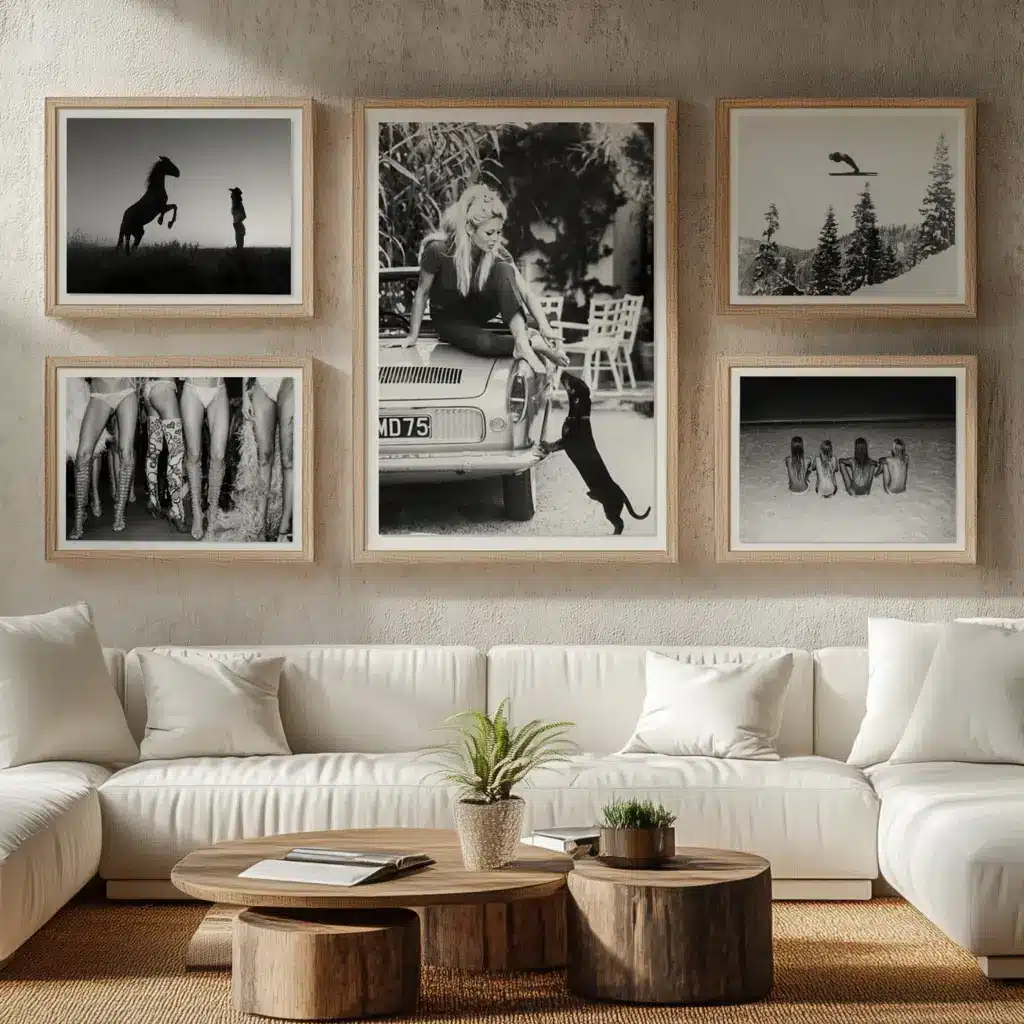
Slim Aarons built his career on a simple philosophy: photograph attractive people doing attractive things in attractive places. The result was a body of work that captured postwar glamour with an intimacy rarely seen before or since. His images of poolside lounging, alpine skiing, and Mediterranean yachting weren’t just documentation—they were invitations into a world most could only imagine.
Today, his photographs remain remarkably relevant. As homes increasingly blend vintage character with contemporary design, Slim Aarons framed prints offer a way to anchor a room in both history and style. This article explores why his work endures, how to select pieces that complement your space, and what makes investing in quality prints worthwhile.
The Cultural Weight of Aarons’ Photography
Slim Aarons didn’t chase celebrities through airport terminals or crash private parties. He was invited. That access gave his work an authenticity that tabloid photography could never achieve. His subjects—socialites, aristocrats, and Hollywood figures—appeared relaxed because they were. The result was a visual record of mid-century privilege that feels both aspirational and strangely honest.
What distinguishes Aarons’ photography is the balance between subject and setting. A woman in a Pucci caftan matters less than how she inhabits the terrace overlooking Lake Como. The composition tells you as much about postwar optimism and leisure culture as it does about fashion or wealth. This layered storytelling is why his images continue to resonate decades later.
His most iconic work emerged during the 1950s and 1960s, when magazines like Holiday and Town & Country sent him to document the international elite. Unlike his contemporaries, who focused on conflict or social upheaval, Aarons pursued what he called “attractive people in attractive places”—a mission that produced an unparalleled archive of aspirational imagery.
Why Framed Prints Work in Contemporary Homes
Slim Aarons prints succeed in modern interiors because they provide visual weight without demanding attention. The compositions are strong enough to anchor a room but subtle enough to coexist with minimalist furniture or neutral palettes. Here’s what makes them particularly effective:
- Narrative Depth: Each image contains a story—implied relationships, unspoken luxury, moments frozen in time. This gives viewers something to return to, rather than a purely decorative element.
- Color Sophistication: Aarons shot in Kodachrome, which produced saturated but never garish colors. The palette works equally well in bright, airy spaces and more subdued environments.
- Scale Flexibility: His compositions translate across sizes. A large print can dominate a living room wall, while smaller versions work in hallways or studies without losing impact.
- Historical Resonance: The mid-century period continues to influence contemporary design. Aarons’ work connects directly to that aesthetic lineage.
The emotional response these prints generate shouldn’t be underestimated. They evoke nostalgia for an era most viewers never experienced, while simultaneously feeling current. That duality makes them unusually versatile in home design.
Selecting Prints That Complement Your Space
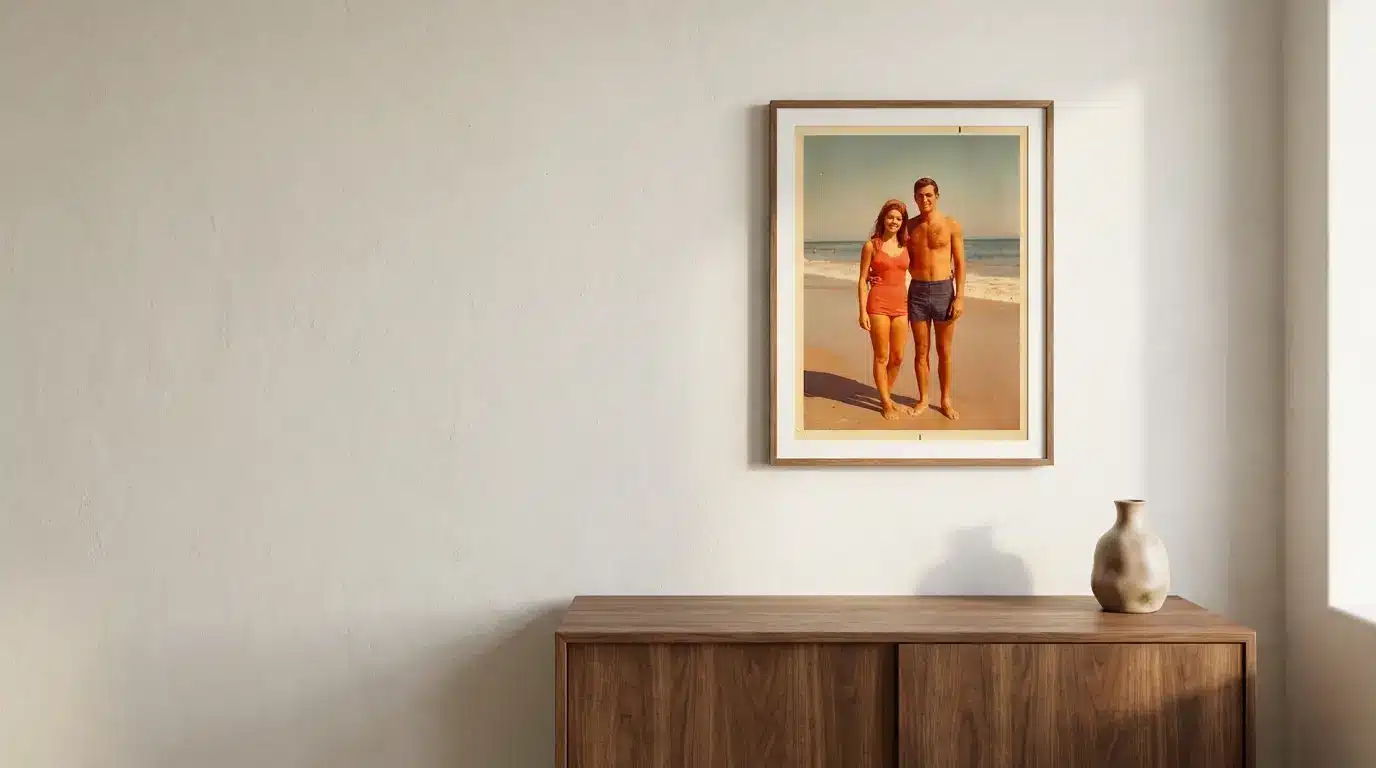
Choosing the right Slim Aarons print requires more than aesthetic preference. The image needs to work with your room’s architecture, light, and existing furnishings. Consider these factors:
- Tonal Harmony: Aarons’ work spans from sun-drenched poolscapes to shadowy alpine lodges. Match the print’s lighting to your room’s natural light conditions.
- Compositional Balance: Horizontal prints emphasize width and work above sofas or beds. Vertical compositions suit narrower walls or spaces between windows.
- Subject Matter: Pool scenes feel appropriate in casual living areas, while more formal compositions—dinner parties, estate interiors—suit dining rooms or studies.
- Frame Selection: Simple frames in natural wood or matte black let the image dominate. Ornate framing can compete with Aarons’ already rich compositions.
For those uncertain about art selection, understanding your personal aesthetic provides a foundation. Aarons’ work is forgiving—his images contain enough visual information that they rarely feel out of place—but intentional selection always produces better results than impulse purchases.
Room scale matters more than many realize. A 40×60 inch print commands attention and requires breathing room. In smaller spaces, consider 16×20 or 20×30 inch prints that provide impact without overwhelming the wall. The goal is proportion, not maximum size.
The Case for Premium Prints
Not all Slim Aarons prints are created equal. The difference between a budget reproduction and a premium print is immediately visible in person, even if online images look similar. Here’s what justifies the investment:
- Archival Materials: Museum-quality prints use acid-free paper and pigment-based inks that resist fading for decades. Cheap prints yellow and lose color saturation within years.
- Color Accuracy: Premium printers calibrate to match Aarons’ original Kodachrome slides. Budget reproductions often oversaturate or shift color balance.
- Detail Preservation: High-resolution scanning and printing reveal texture and nuance invisible in lower-quality versions. This matters especially in larger formats — and it’s where vendors like Leisure Piece, Sonic Editions, and King & McGaw most visibly separate themselves from mass-market suppliers.
- Framing Quality: Professional framing with UV-protective glass and proper matting protects the print and enhances presentation. Poor framing undermines even excellent prints.
From a financial perspective, premium prints hold value better than mass-market reproductions. While Aarons’ original prints command five and six figures at auction, limited-edition reproductions from authorized sources appreciate modestly over time. They’re not investment vehicles, but they maintain worth in ways that poster-quality prints never will.
Why Mid-Century Photography Endures
The sustained interest in mid-century photography reflects broader cultural patterns. As digital technology dominates contemporary image-making, analog photography from the 1950s and 1960s feels increasingly precious. The grain structure, color rendering, and compositional discipline of that era can’t be replicated with modern tools.
- Technical Mastery: Shooting film required getting exposure, focus, and composition right in-camera. There was no “fix it in post.” This discipline produced more considered images.
- Cultural Documentation: Mid-century photography captured a specific moment in Western culture—postwar prosperity, emerging jet-set lifestyle, changing social norms. These images are historical documents as much as art.
- Aesthetic Influence: Contemporary design continues mining mid-century modernism for inspiration. Photography from that period provides authentic visual references.
Aarons’ work sits at an interesting intersection—documentary in approach but artistic in execution.
Vintage photography also benefits from scarcity. Unlike digital images that exist in infinite copies, film photography from this era exists in limited quantities. Even reproductions carry the weight of that original scarcity, making them feel more substantial than contemporary digital prints.
Integrating Classic Photography into Modern Interiors
The challenge with vintage photography isn’t whether it works in contemporary spaces—it does—but how to integrate it without creating a museum effect. The goal is lived-in sophistication, not curated exhibition. Here’s how to achieve that balance:
- Mix Eras Deliberately: Pair Aarons prints with contemporary furniture rather than period pieces. The contrast creates visual interest and prevents the space from feeling like a time capsule.
- Vary Scale: Combine one large statement print with smaller complementary images. This creates hierarchy and prevents monotony.
- Consider Negative Space: Don’t fill every wall. Aarons’ compositions have breathing room built in; your walls should too.
- Balance Color Temperature: If your room skews cool (grays, blues), choose Aarons prints with warmer tones to add balance. The inverse works equally well.
- Respect Sightlines: Place prints where they’ll be seen from primary seating areas. A beautiful print in a dead zone serves no purpose.
In homes with significant technology—smart lighting, integrated audio, automated climate control—vintage photography provides essential human warmth. The juxtaposition between analog imagery and digital infrastructure creates a layered environment that feels both current and rooted.
Making the Investment
Slim Aarons framed prints represent more than decoration. They’re a connection to a specific moment in cultural history, executed by a photographer who understood that luxury isn’t about objects—it’s about how people inhabit space. That insight remains relevant regardless of design trends.
When selecting prints, prioritize quality over quantity. A single exceptional piece outperforms three mediocre ones. Consider these final points:
- Longevity: Premium prints last generations with minimal care. They’re not disposable decor.
- Versatility: Aarons’ work transitions across design styles. What works in a mid-century modern home also succeeds in contemporary or even traditional spaces.
- Conversation Value: These images prompt discussion. They’re recognizable enough to spark recognition but nuanced enough to reward closer examination.
The decision to invest in quality photography ultimately reflects how you value your living environment. Spaces filled with intentional choices feel fundamentally different from those assembled through convenience. Slim Aarons prints offer a way to anchor a room in both aesthetic sophistication and cultural history—a combination that remains remarkably difficult to achieve through other means.