It is the oldest debate in interior design: How do you arrange the seating in your living room?
You have painted the walls, chosen the rug, and measured the square footage. Now, you are staring at an empty rectangle, faced with a binary choice that will dictate how you live in that room for the next decade. Do you opt for the sprawling, connected comfort of a sectional? Or do you choose the structured, flexible versatility of a separate sofa and loveseat?
It might seem like a purely aesthetic decision, but the choice between these two layouts impacts everything from traffic flow to social dynamics. A sectional can turn a room into a cozy cinema, while a sofa-loveseat combo can transform it into a formal reception area.
There is no “wrong” answer, but there is definitely a “right” answer for your specific lifestyle. To help you break the deadlock, we are diving deep into the pros, cons, and spatial geometry of both setups.
The Case for the Classic Duo: The Sofa and Loveseat
For decades, the standard living room template was a three-seater sofa paired with a two-seater loveseat (often arranged in an L-shape or facing each other). This setup has stood the test of time for a reason: it offers unparalleled flexibility.
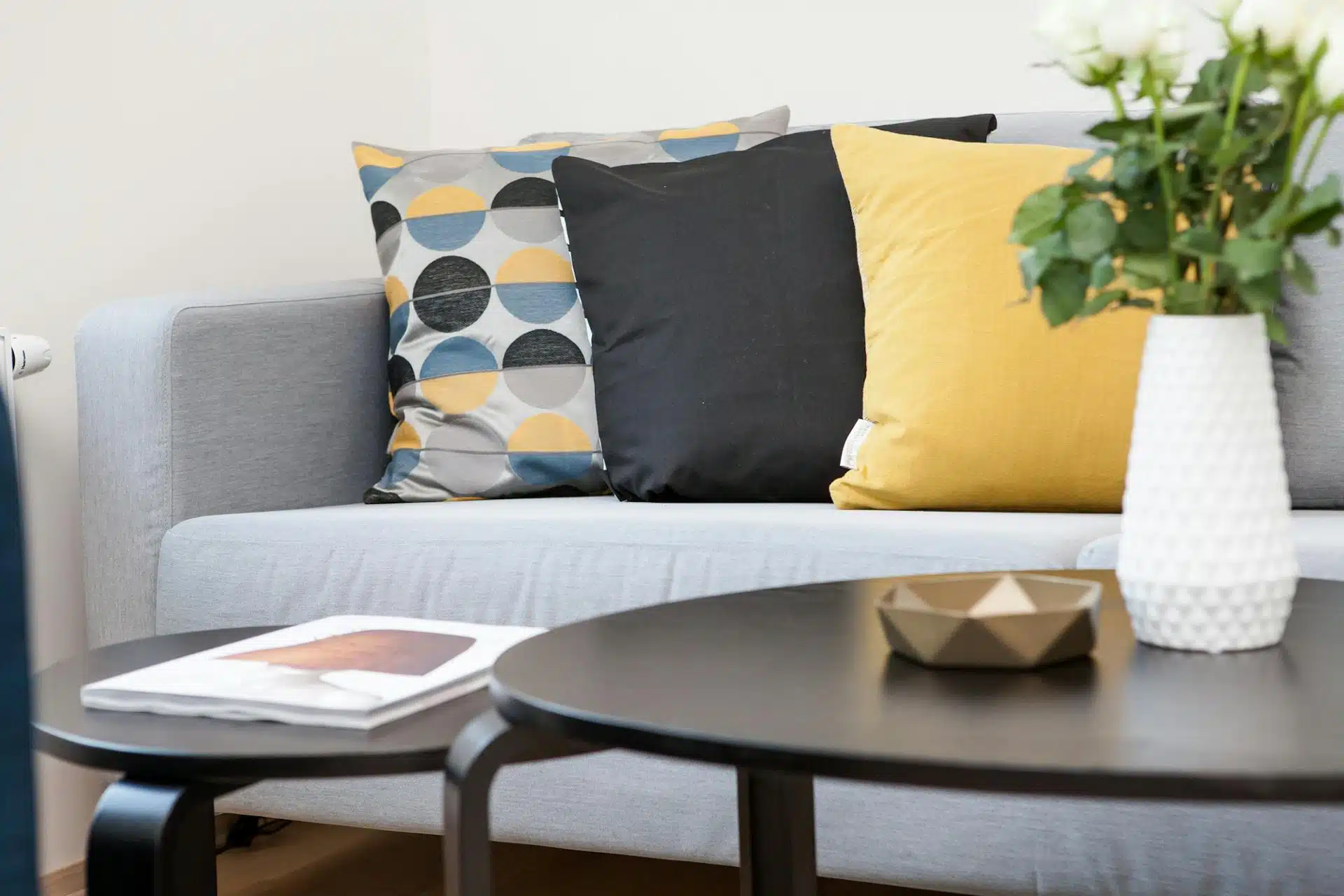
When you start browsing for high-quality Sofas & Loveseats, the first thing you notice is the “visual airiness” they provide. Because there is a physical gap between the two pieces, the room tends to feel more open. That empty space at the corner—where the two pieces meet—is prime real estate for a side table, a floor lamp, or a large indoor plant. This allows for more layers of décor and better lighting solutions.
Who is this for?
- The Social Butterfly: If you frequently host guests for drinks and conversation, this layout is superior. It allows people to sit at a comfortable angle to one another. Sitting on a sectional often requires you to turn your neck sideways to talk to the person next to you; separate pieces facilitate natural eye contact.
- The “Shuffler”: If you are someone who likes to rearrange the furniture every spring to “freshen up” the room, separate pieces are your best friend. You can move the loveseat to a different wall, angle the sofa, or even split them up into different rooms entirely if you move to a new house.
The Case for the Modern Anchor: The Sectional
The sectional is the heavyweight champion of relaxation. It dominates the room, anchoring the space with a unified, continuous look. In modern open-concept homes, the sectional is particularly effective because it acts as a room divider, clearly demarcating where the “living zone” ends and the “dining zone” begins without the need for walls.
The primary advantage here is continuity. There are no gaps. This means you can fit more people onto the furniture during a party (because nobody falls into the crack between chairs), and more importantly, you can sprawl out.
Who is this for?
- The Lounger: If your primary activity in the living room is watching movies, napping, or gaming, the sectional wins hands down. The corner seat (the “wedge”) is the most coveted spot in the house, allowing you to curl up with your legs supported.
- The Space Maximizer: Surprisingly, sectionals can sometimes save space in smaller rooms. By hugging the perimeter and utilizing the “dead corner,” a sectional provides maximum seating density with a single footprint. It eliminates the need for side tables, streamlining the look.
Factor 1: Traffic Flow and Room Shape
Before you fall in love with a design, look at your floor plan. The shape of your room is the strict governor of your layout.
Narrow Rooms: If your living room is long and narrow, a sectional can be dangerous. It can inadvertently block walkways, forcing you to walk around a massive obstacle to get to the kitchen. In these spaces, a sofa and loveseat (or even a sofa and two accent chairs) are safer, as they allow for “pass-through” traffic between the pieces.
Open Concept: In a large, boxy room, a sofa and loveseat can sometimes look like they are “floating” aimlessly, making the room feel cluttered. A large L-shaped or U-shaped sectional grounds the space. It provides a visual weight that feels proportional to high ceilings and wide-open floors.
Doors and Windows: Check your entry points. A sectional is a solid wall of fabric. If you place it in front of a French door or a low window, you are blocking light and access. Separate pieces allow you to maintain sightlines and pathways to these architectural features.
Factor 2: The “Napability” Index
Let’s be honest: comfort is key. If you have a household of four people, a standard sofa and loveseat combo usually provides only one prime napping spot (the sofa). The loveseat is typically too short for an adult to lie down horizontally. This can lead to minor household conflicts over who gets the “big couch” on a lazy Sunday.
A sectional, particularly one with a chaise lounge on one end (or both), essentially offers two or three lay-flat spots. It turns the living room into a “lounge pit.” If your family culture involves piling onto the furniture together for movie marathons, the sectional fosters a sense of togetherness that separate pieces cannot replicate.
Factor 3: Future-Proofing Your Investment
Furniture is an investment, and you need to consider the lifespan of your purchase relative to your living situation.
If you are a renter or plan to move in the near future, a sectional is a risky bet. Sectionals are notoriously “handed” (meaning the longer side is either on the Left or the Right). A Left-Facing sectional that fits perfectly in your current apartment might completely block the hallway in your next house. While modular sectionals (like those offered by Povison) solve this by allowing you to reconfigure the pieces, traditional rigid sectionals can be a logistical headache during a move.
A sofa and loveseat are universally adaptable. They will fit into almost any room configuration, up nearly any stairwell, and through any door frame. If you value mobility and versatility, the combo is the safer long-term hold.
Conclusion: Form Follows Function
Ultimately, the battle between the sectional and the sofa-loveseat combo isn’t about which is “better”—it is about how you want to live.
Do you want a formal space where guests sit upright, sip wine, and admire the coffee table styling? Go with the Sofa & Loveseat. It is timeless, structured, and flexible.
Do you want a casual sanctuary where the family piles up, blankets are tossed around, and comfort reigns supreme? Go with the Sectional. It is inviting, cozy, and maximizes every inch of corner space.
Whichever path you choose, remember the golden rule of online furniture shopping: measure twice, buy once. Tape out the dimensions on your floor using painter’s tape to visualize the footprint. Ensure you have at least 30 inches of walking space around your furniture. Once the spatial math adds up, trust your gut on the style. After all, the best layout is the one that makes you want to rush home and sit down.