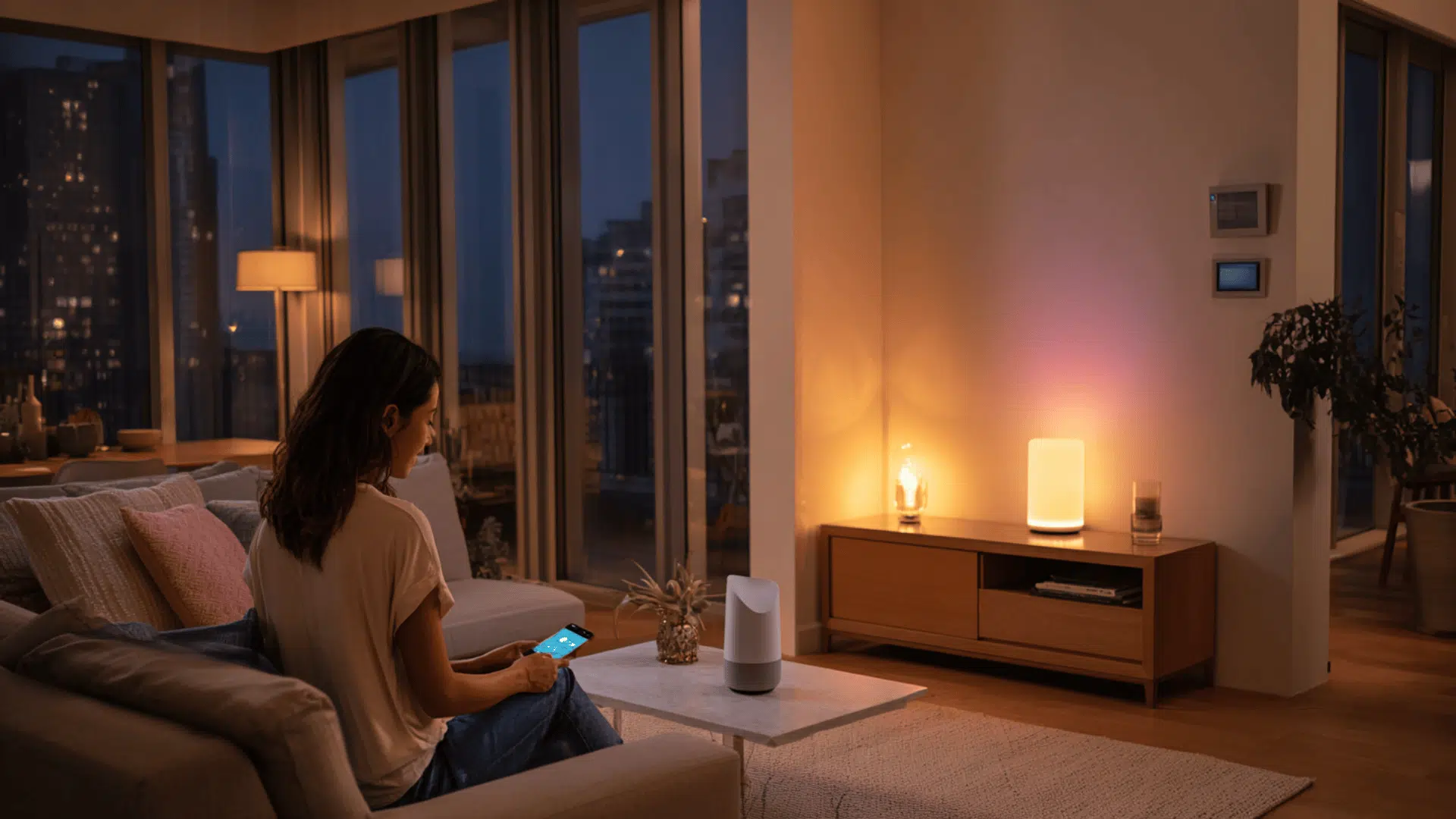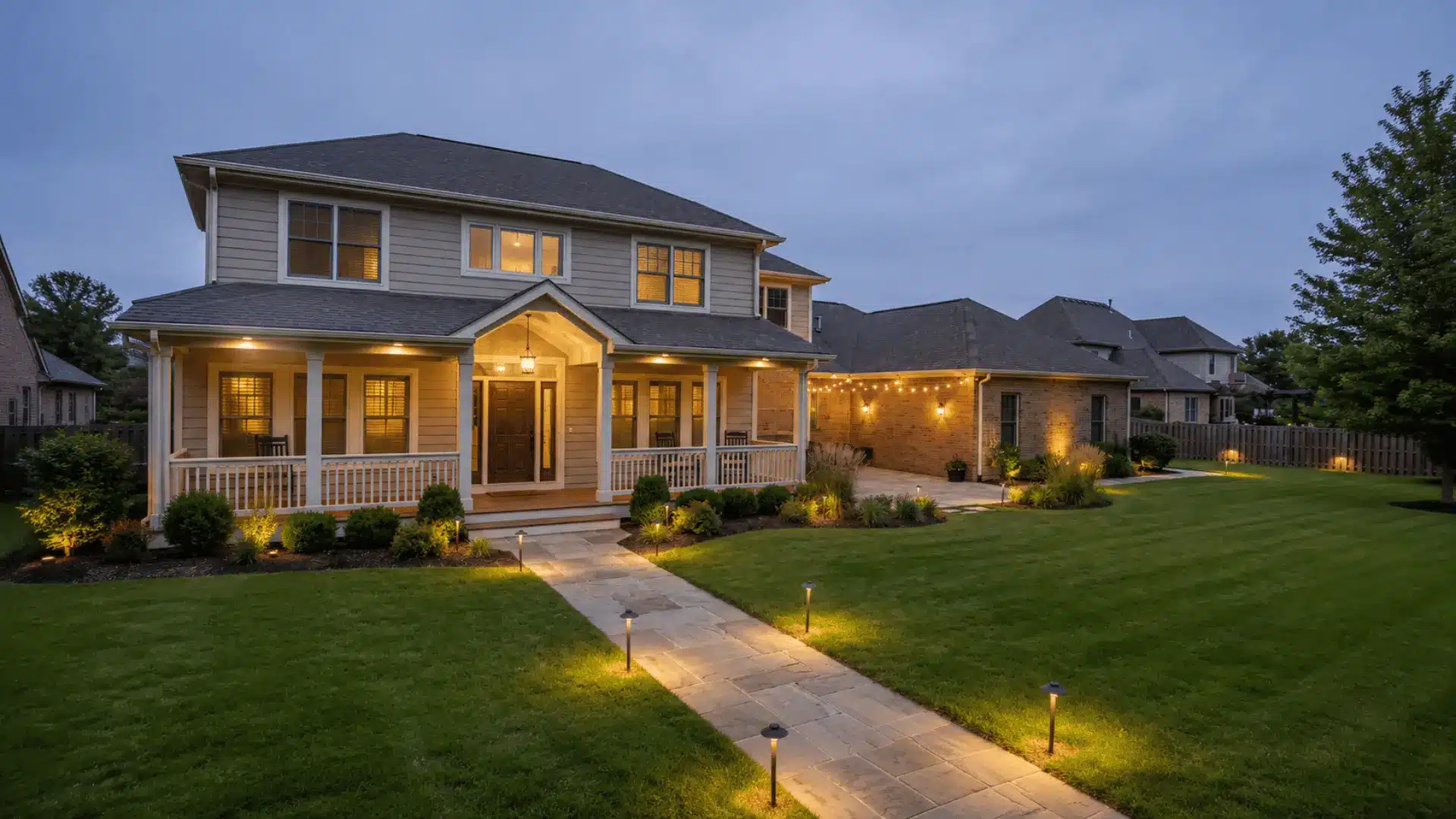
Outdoor lighting ideas can change how your yard feels after dark. Before choosing fixtures, placement, or power sources, take time to think about how you want the space to work.
I’ve seen small lighting choices make a noticeable difference in everyday use. A well-planned setup can help you enjoy the space more and make each area feel easier to use.
You may be working with a porch, patio, path, garden, or backyard. I’ll help you focus on the details that matter before you start making final choices for your space.
Here, I’ll point out useful ideas and common mistakes worth avoiding. You’ll see which details need more thought, so your final choices feel practical, comfortable, and right for your space.
How to Choose the Right Outdoor Lighting Idea for Your Space
The right outdoor lighting idea depends on your power source, space size, and how you use the area after dark. These basics quickly narrow down what will work best overall.
Small spaces and rental homes often suit solar or plug-in lights because they need no permanent wiring. They are easier to install, move, and take with you later when moving.
Larger yards you expect to use for years are better suited to hardwired lighting. The higher upfront cost usually brings steadier output, stronger fixtures, and more reliable performance over time.
A lighting layout can seem right on paper and still fall short in practice. Check the fixture count and total wattage against what your chosen power source can support safely.
Once you’ve settled on a power setup and space size, weigh each idea below against those limits before you buy anything.
Entryway and Front Porch Lighting Ideas
Front porch lighting should make the entrance easier to see while fitting the scale and layout of the space.
If your entry is tight on space, our space-saving lighting ideas for small homes cover fixtures built for narrower porches and stoops.
1. Wall Sconces Beside the Door
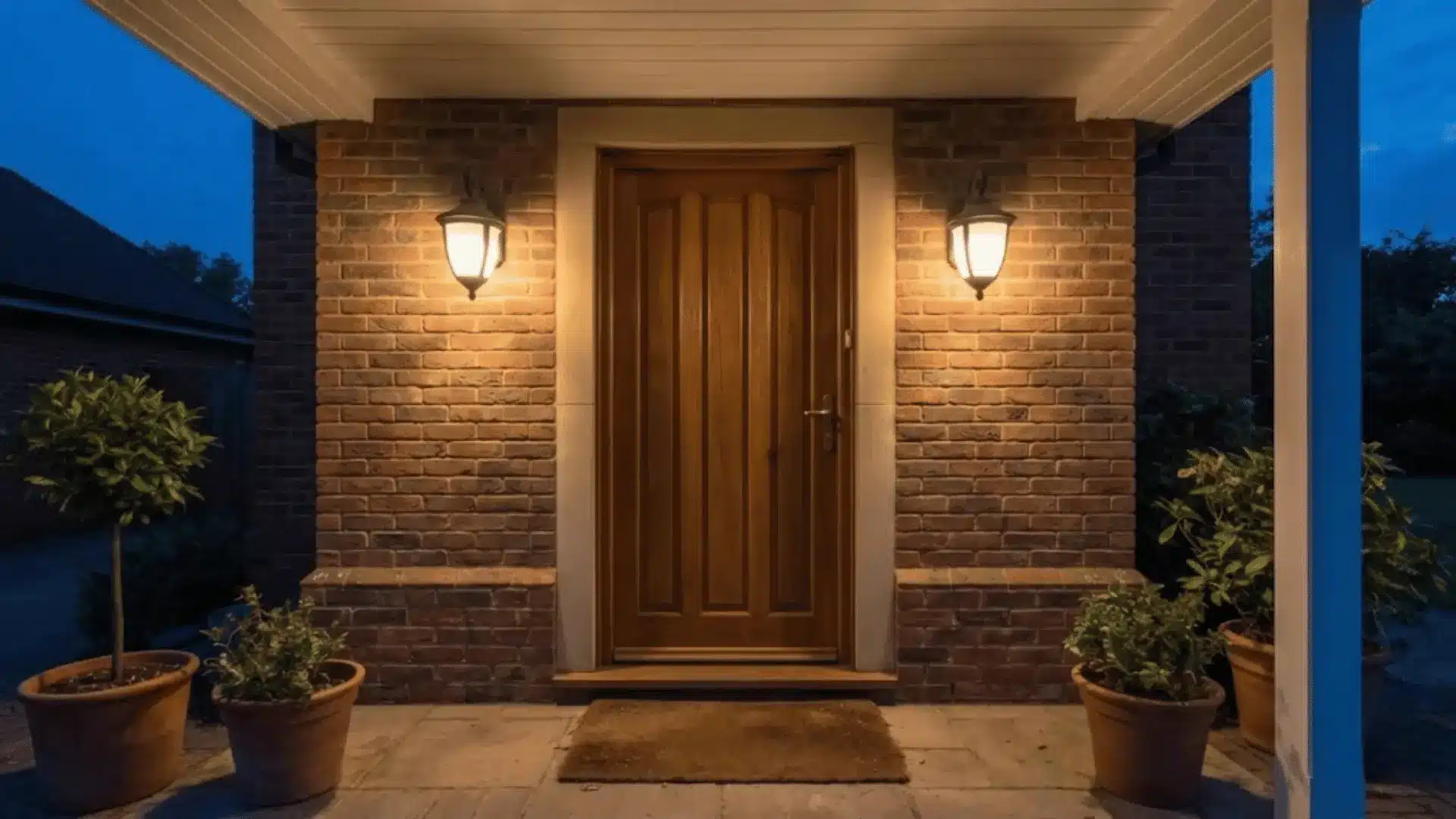
Wall sconces on either side of the front door light the entrance and approach. Use one per side for standard doors, with evenly spaced pairs for wider entries.
Choose a fixture rated for wet exposure if the porch has no roof cover. Mismatched sconce heights on either side of the door read as an installation error, not a style choice.
2. Wall-Mounted Porch Lanterns
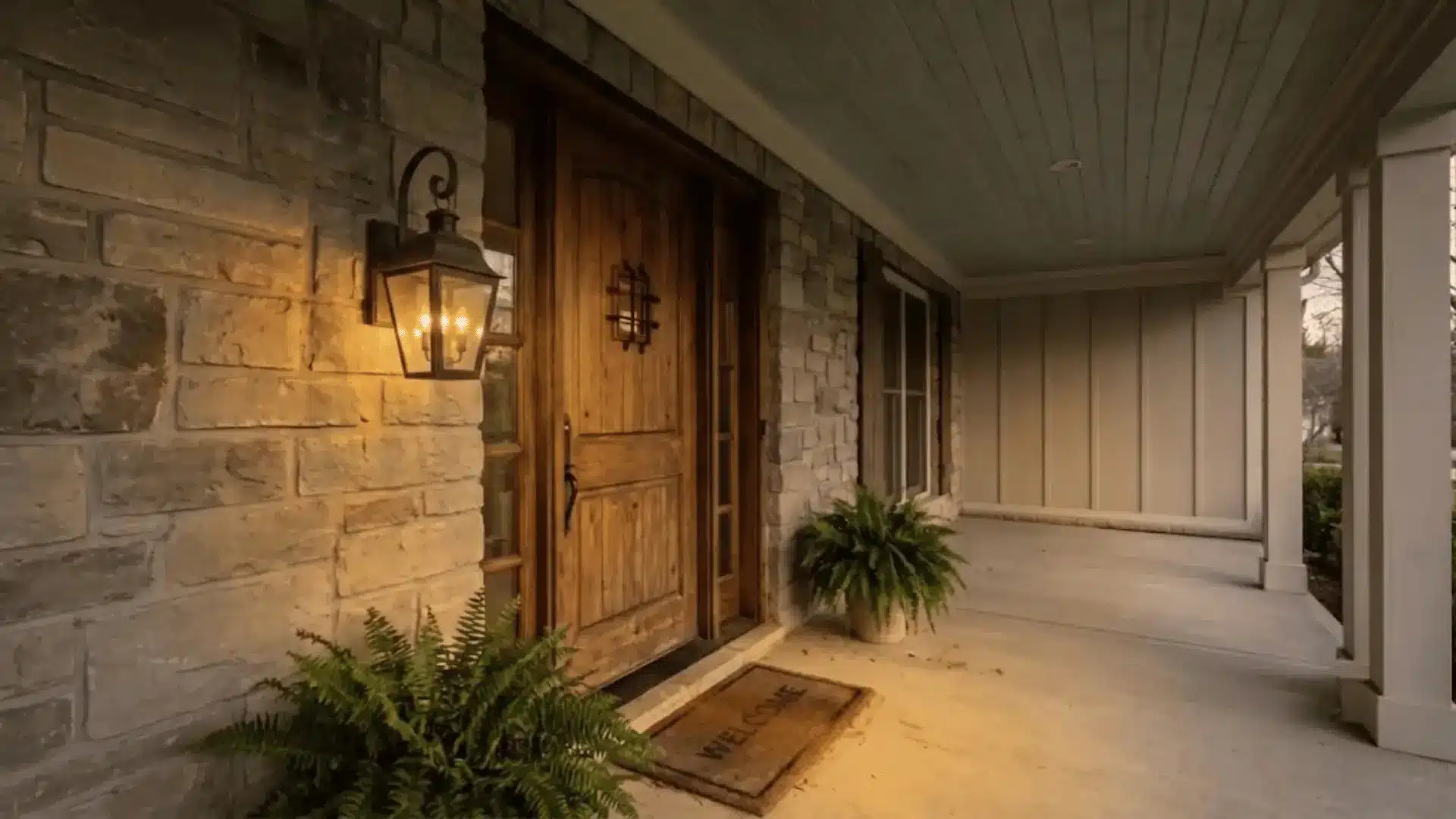
A single oversized lantern hung above the door or set beside it on a stand gives a porch more visual weight than several small fixtures.
This works best on porches with at least eight feet of ceiling height.
Battery or plug-in versions avoid rewiring for renters. Pair the lantern with a warm bulb around 2700K, since a cooler white tone clashes with most siding and trim colors.
3. Mini Chandelier for the Porch Ceiling
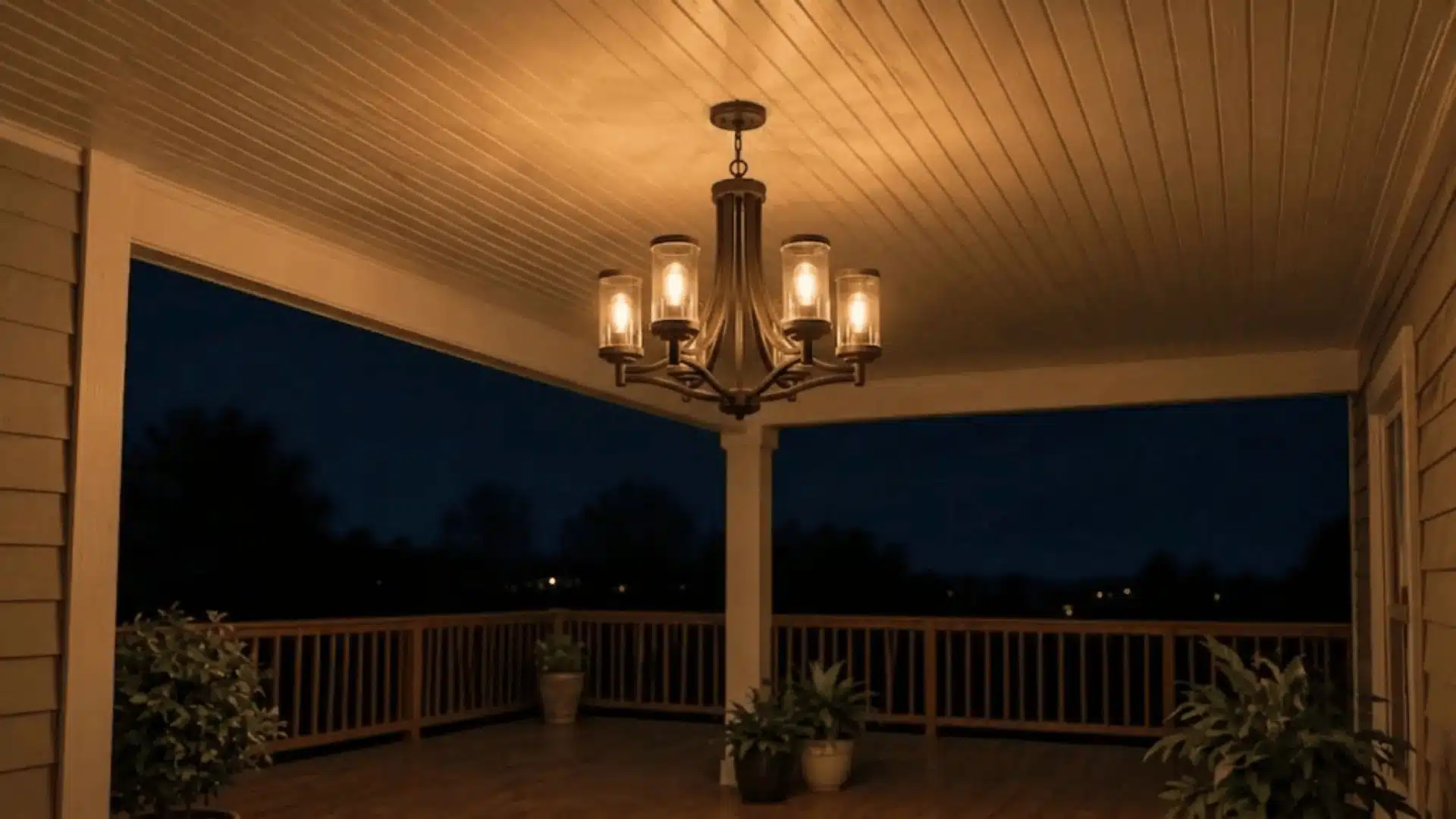
A small chandelier centered on the porch ceiling replaces a flush-mount fixture with something closer to indoor lighting. It needs at least seven feet of clearance underneath to avoid head contact.
Confirm the fixture carries a damp rating before installing it outdoors.
A chandelier sized for the porch’s square footage looks intentional; an oversized one overwhelms a small entry.
4. Post Lights Along the Walkway to the Door
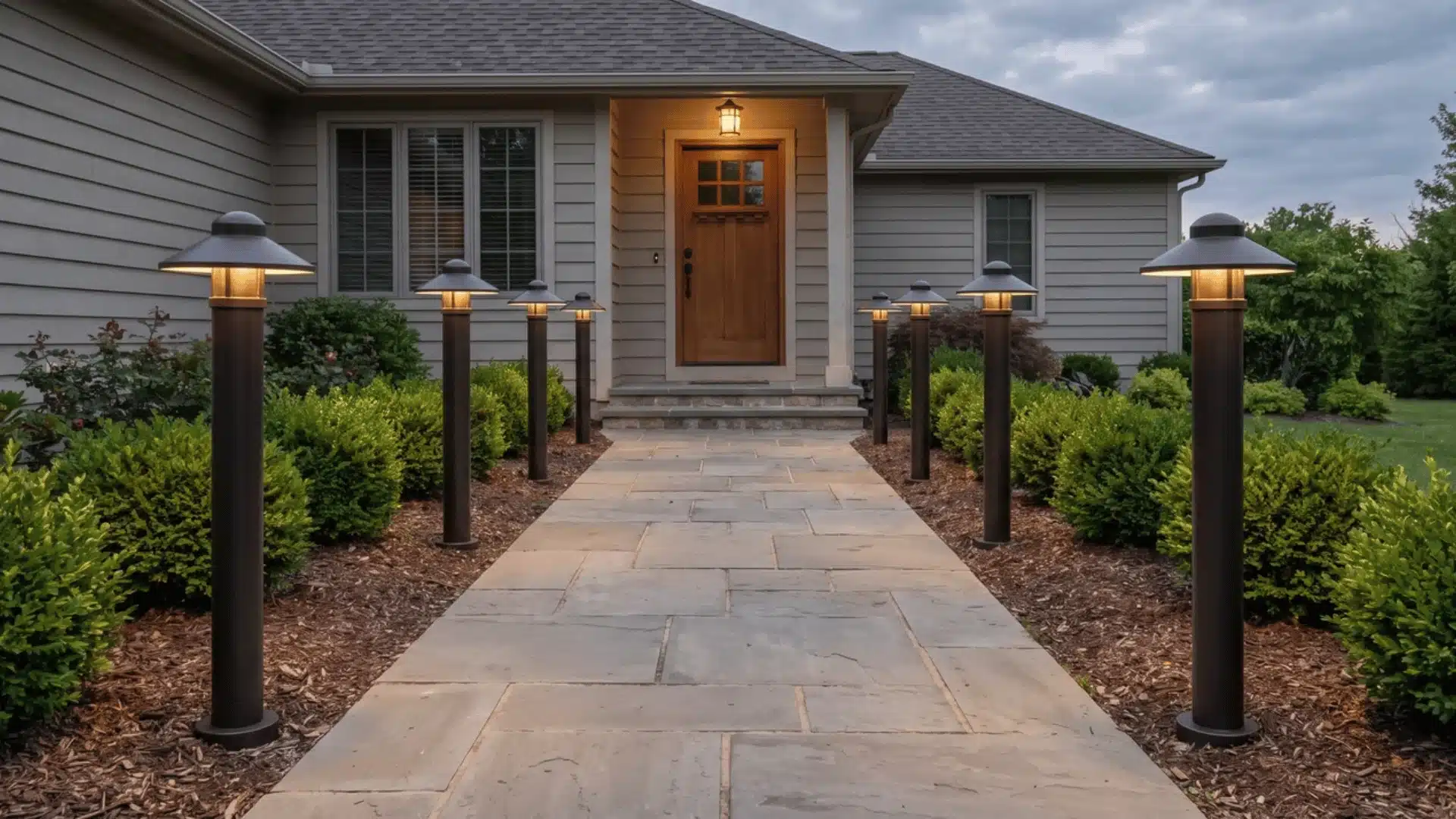
Post lights placed every six to eight feet along a short entry walkway lead the eye toward the door and light the path underfoot.
Two to four posts usually cover a standard front walkway.
Match the post finish to the porch light fixtures for a connected look. Spacing posts too far apart leaves dark gaps that undercut the safety benefit of the lights.
5. Recessed Ceiling Lights on the Porch Roof
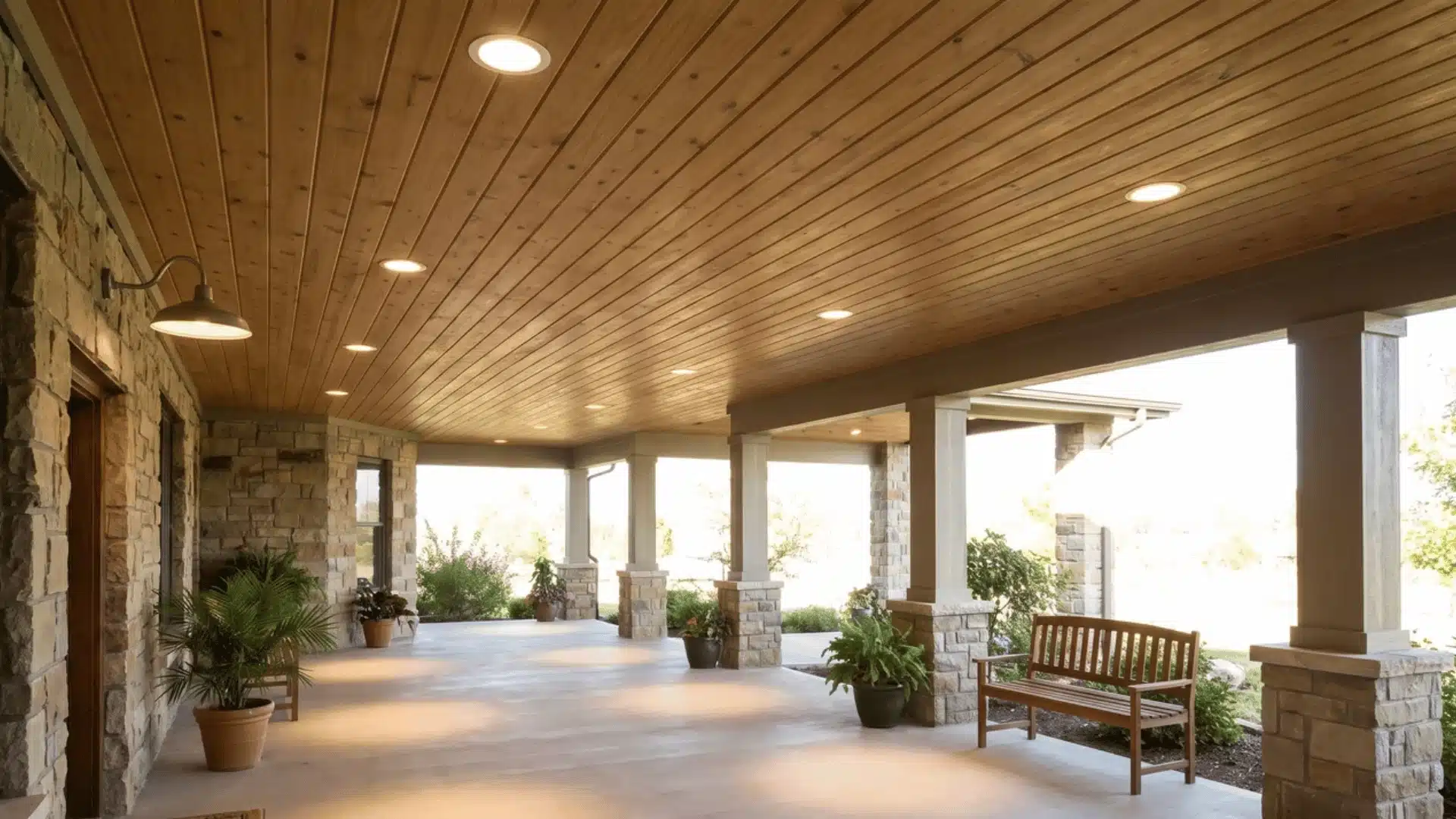
Recessed lights set into a covered porch ceiling provide even light across the floor without adding visible fixtures. This suits porches with a finished ceiling and existing wiring access.
Space fixtures roughly four feet apart for even coverage on a standard-depth porch.
Recessed lighting works best paired with one accent fixture, since recessed lights alone can look flat and clinical.
Patio and Deck Lighting Ideas
Patio and deck lighting works best when it covers seating, dining, steps, and rails without making the area feel overly bright.
If you’re still finalizing the deck itself, our modern deck design ideas walk through layout choices that make lighting placement easier later.
6. String Lights Over the Patio
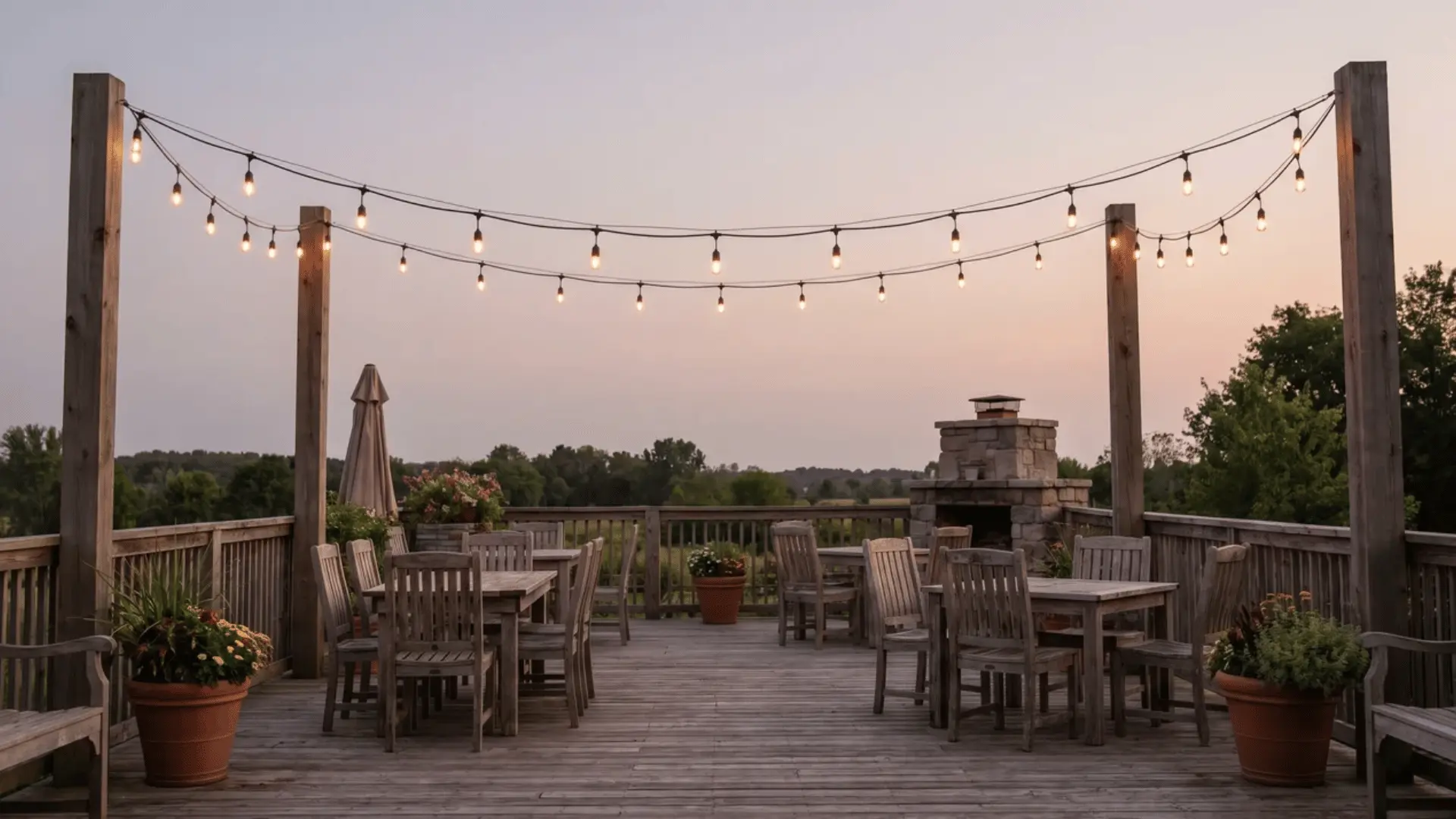
String lights run between two anchor points above a patio create an overhead layer of light for dining and seating areas. Anchor points can be the house, a post, or a tree.
Hang the lights with at least six inches of sag between anchors to avoid a stretched, tight look.
A dimmer switch on plug-in string lights extends their use from daytime to late evening.
7. Pergola-Mounted Lighting
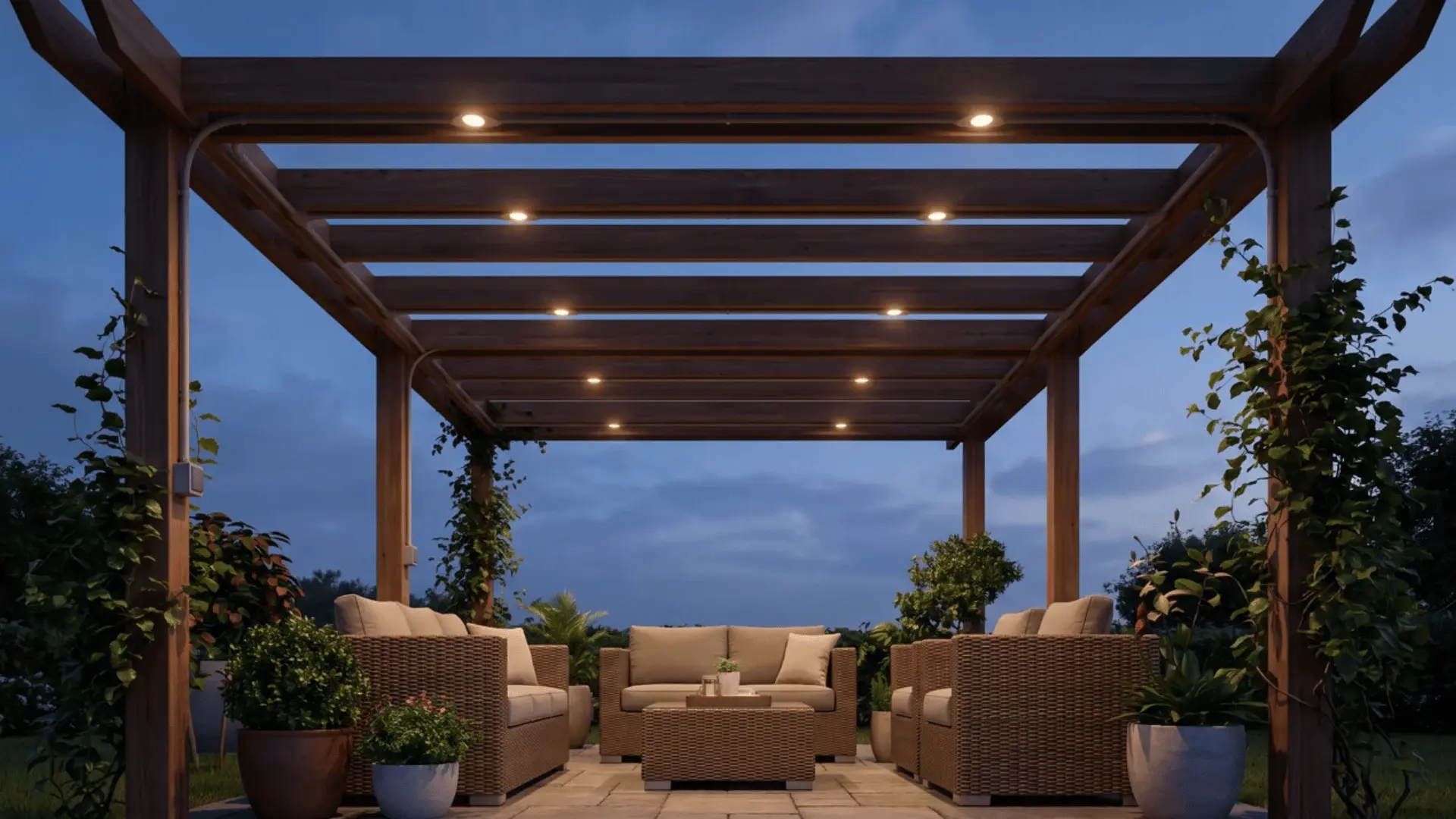
Lights run along the crossbeams of a pergola light the seating area underneath without hanging fixtures at head height.
String lights, small pendant fixtures, or recessed beam lights all work here.
Run the wiring along the beam edges rather than across open sections to avoid a cluttered overhead look. Use weatherproof connectors for any wiring left exposed to rain.
8. Deck Rail Post Caps with Built-In Lights
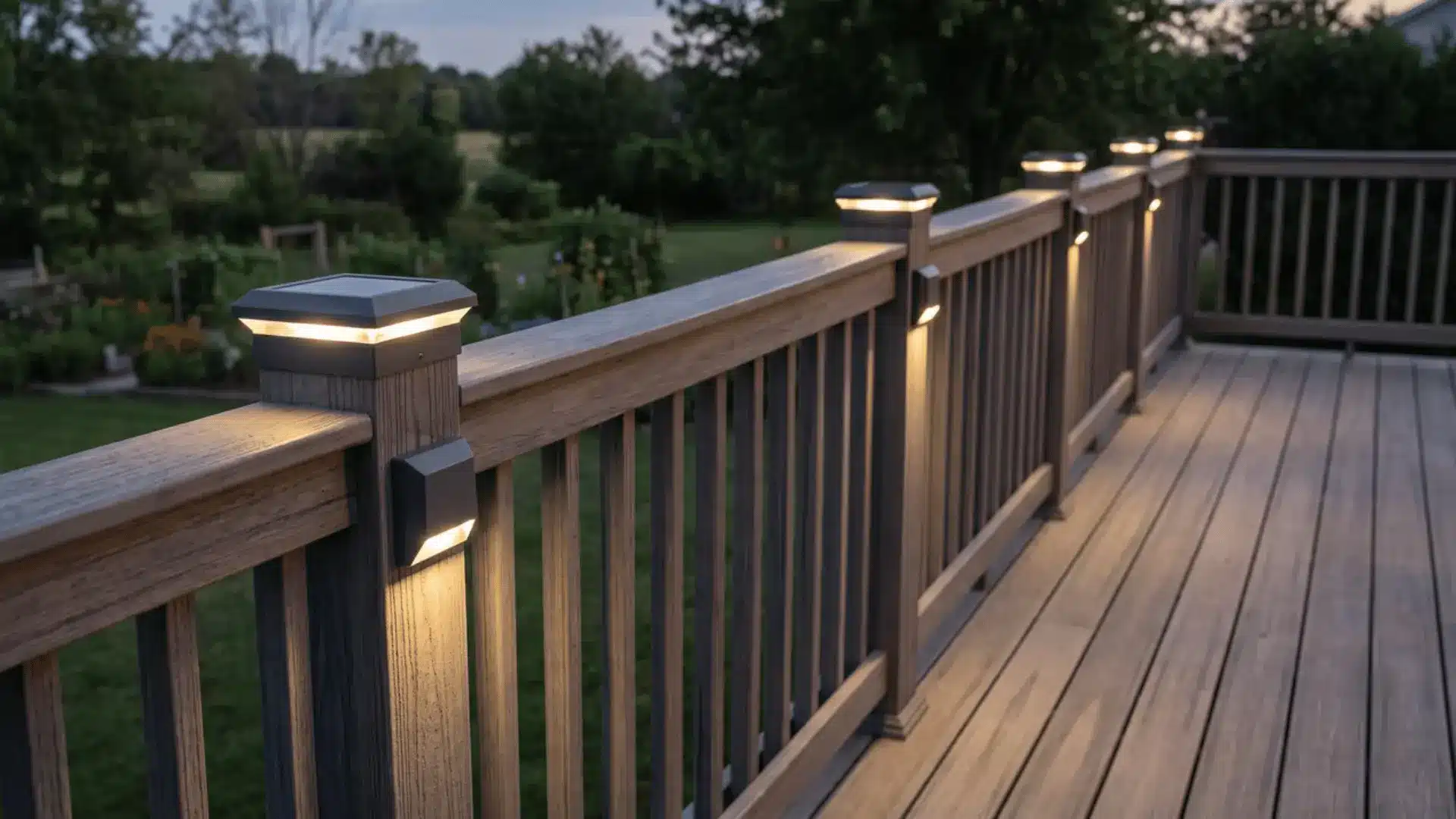
Post cap lights replace standard deck rail caps with a version that has a built-in LED, lighting the rail line without a separate fixture. These work on wood or composite rail posts.
Space them at every post, or every other post on longer rail runs, for even coverage.
Solar versions skip wiring entirely but need direct sun exposure on the deck to charge properly.
9. Recessed Step Lights
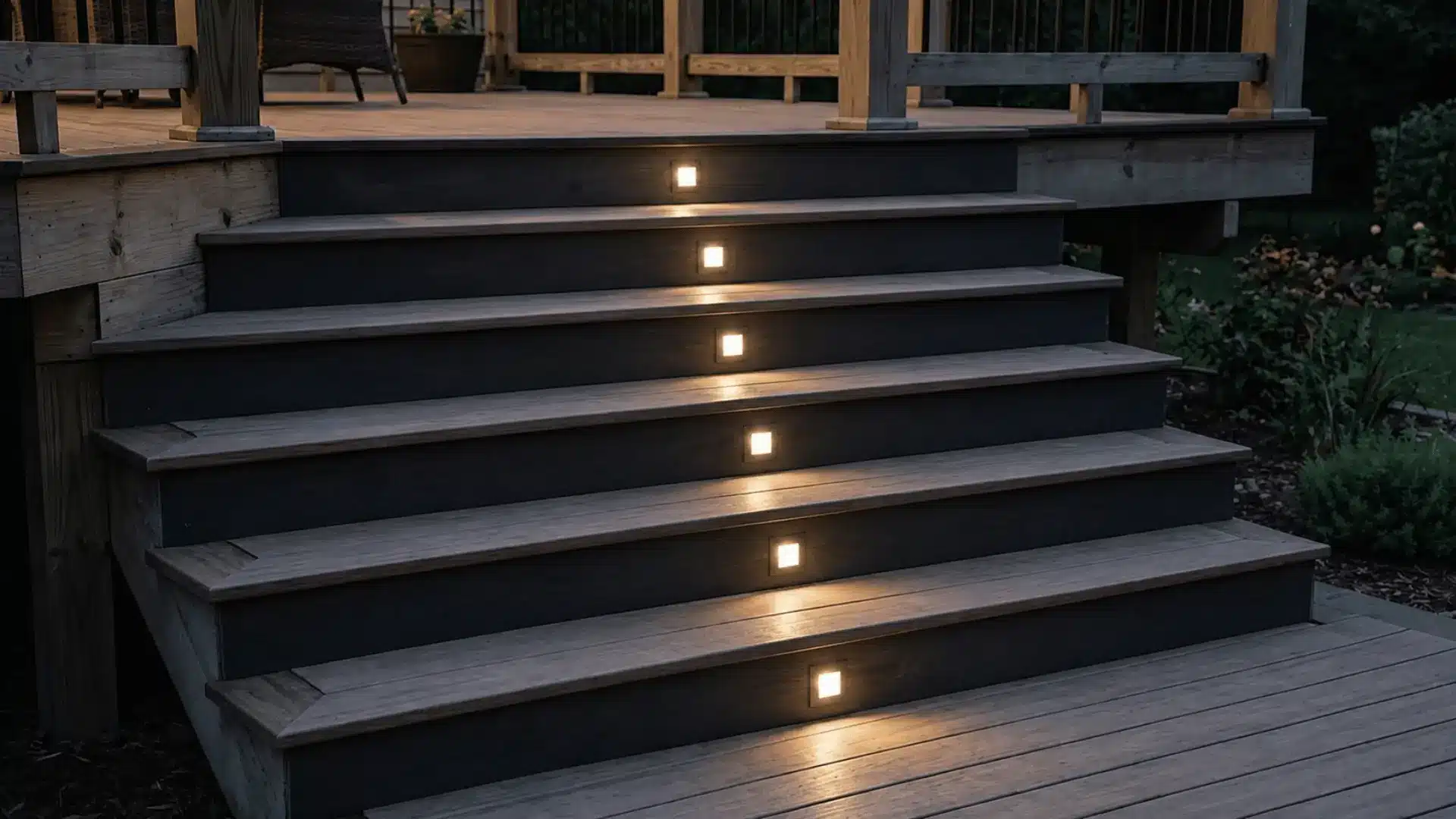
Step lights recessed into the riser of each deck step light the tread below without glare in the eyes of anyone walking down.
This matters most on decks with more than two steps.
Install one light per step riser, centered, for even coverage. Skipping steps to save on fixture cost creates dark treads that undercut the safety purpose of the lighting.
10. Tabletop Lanterns for Dining
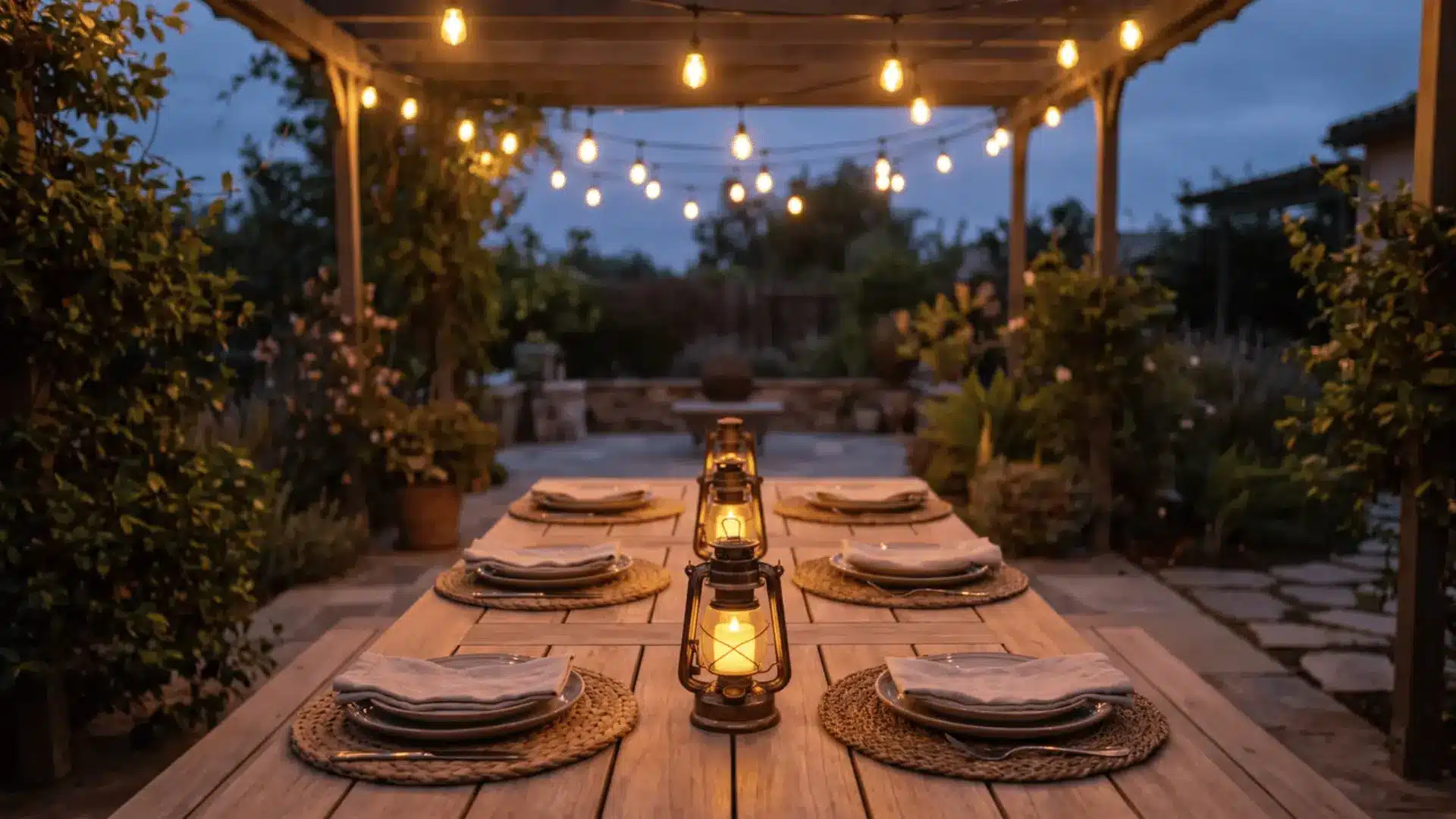
Small lanterns or candle-style lights placed directly on a dining table add light at eye level, which overhead string lights alone cannot provide.
Battery-operated versions avoid running a cord across the table.
Two to three lanterns per table, spaced evenly, give even light without competing with the table setting. Match the lantern’s light color to the overhead string lights for a consistent look.
Pathway and Garden Lighting Ideas
Pathway and garden lights help define walkways, planting beds, trees, and water features while keeping movement around the yard safer after dark.
11. Outdoor Floor Lamps for Lounge Seating
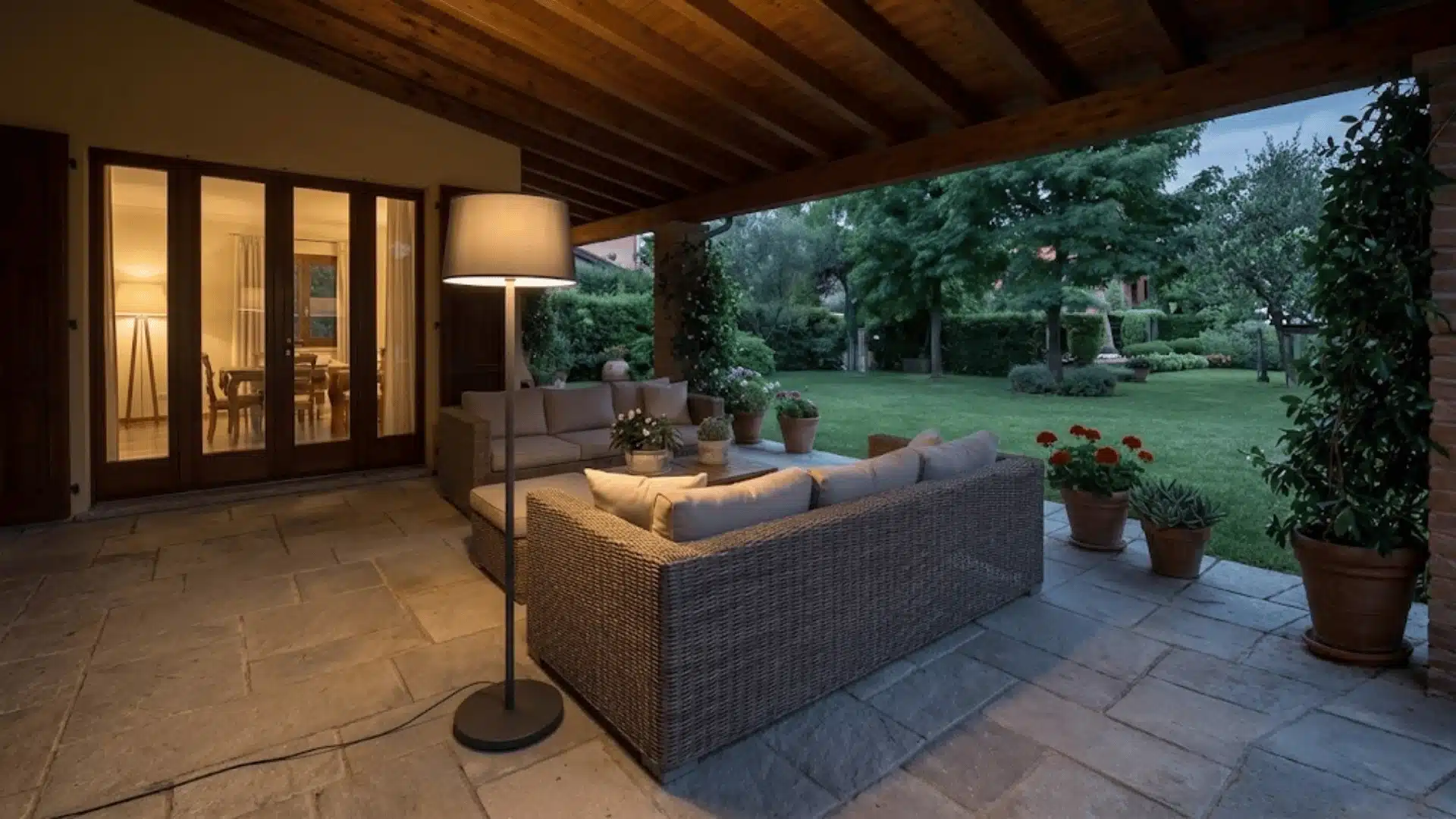
A weather-rated floor lamp beside an outdoor sofa or lounge chair adds light at seating height without needing an overhead fixture.
It works best on covered patios and porches where the lamp has some protection from rain.
Choose a model with a heavy, stable base, especially in open areas exposed to wind. Place it beside the main seating spot so the light reaches the area without getting in the way.
12. Paper Lanterns for Backyard Parties
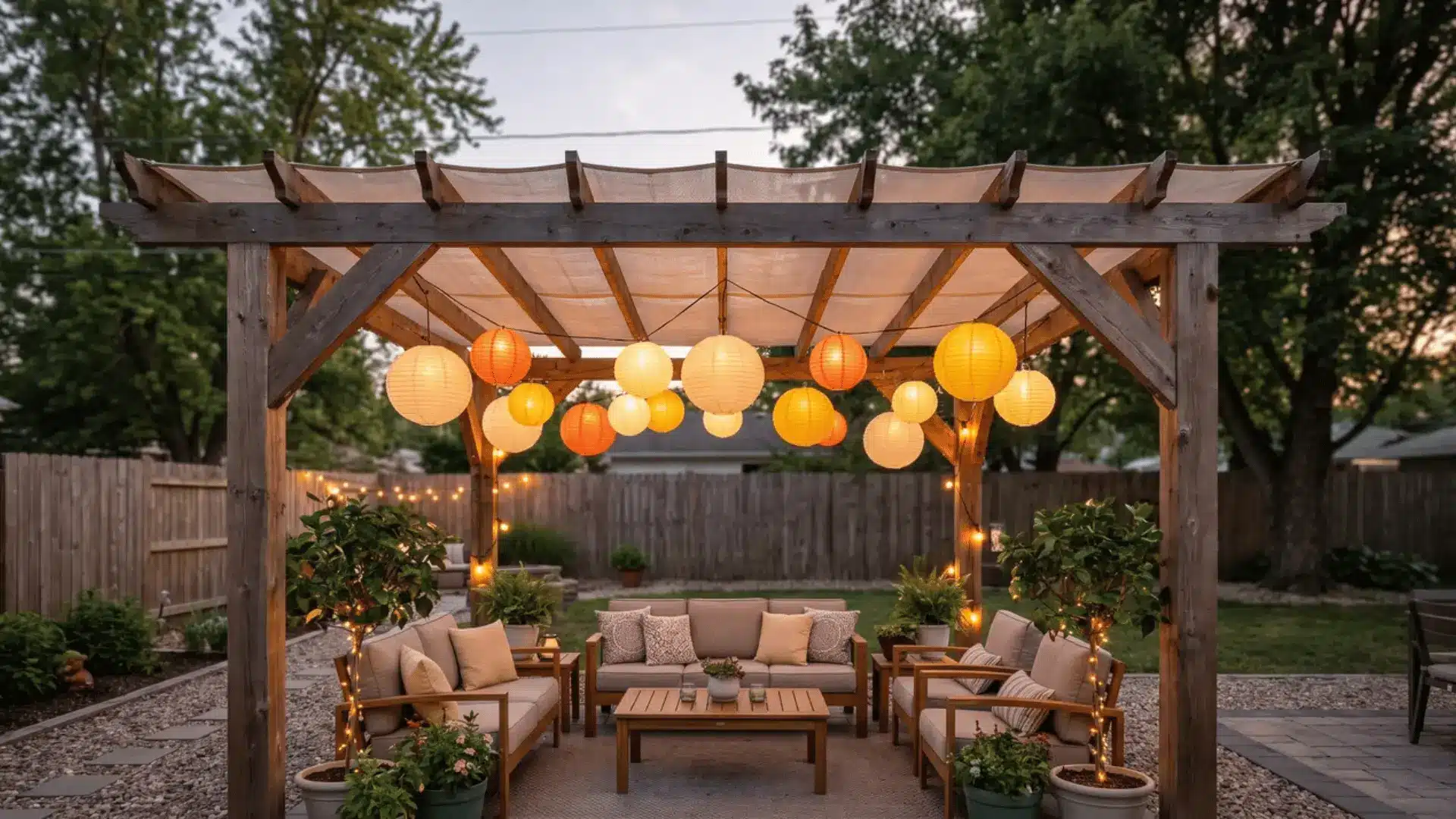
Paper lanterns hung above a backyard seating or party area provide temporary overhead light without requiring permanent fixtures.
They work best for one-night gatherings and other short-term setups.
Hang them from secure overhead supports and keep them protected from rain. Paper lanterns are not weather-rated, so bring them indoors after the event to prevent moisture damage.
13. Fence-Mounted Downlighting
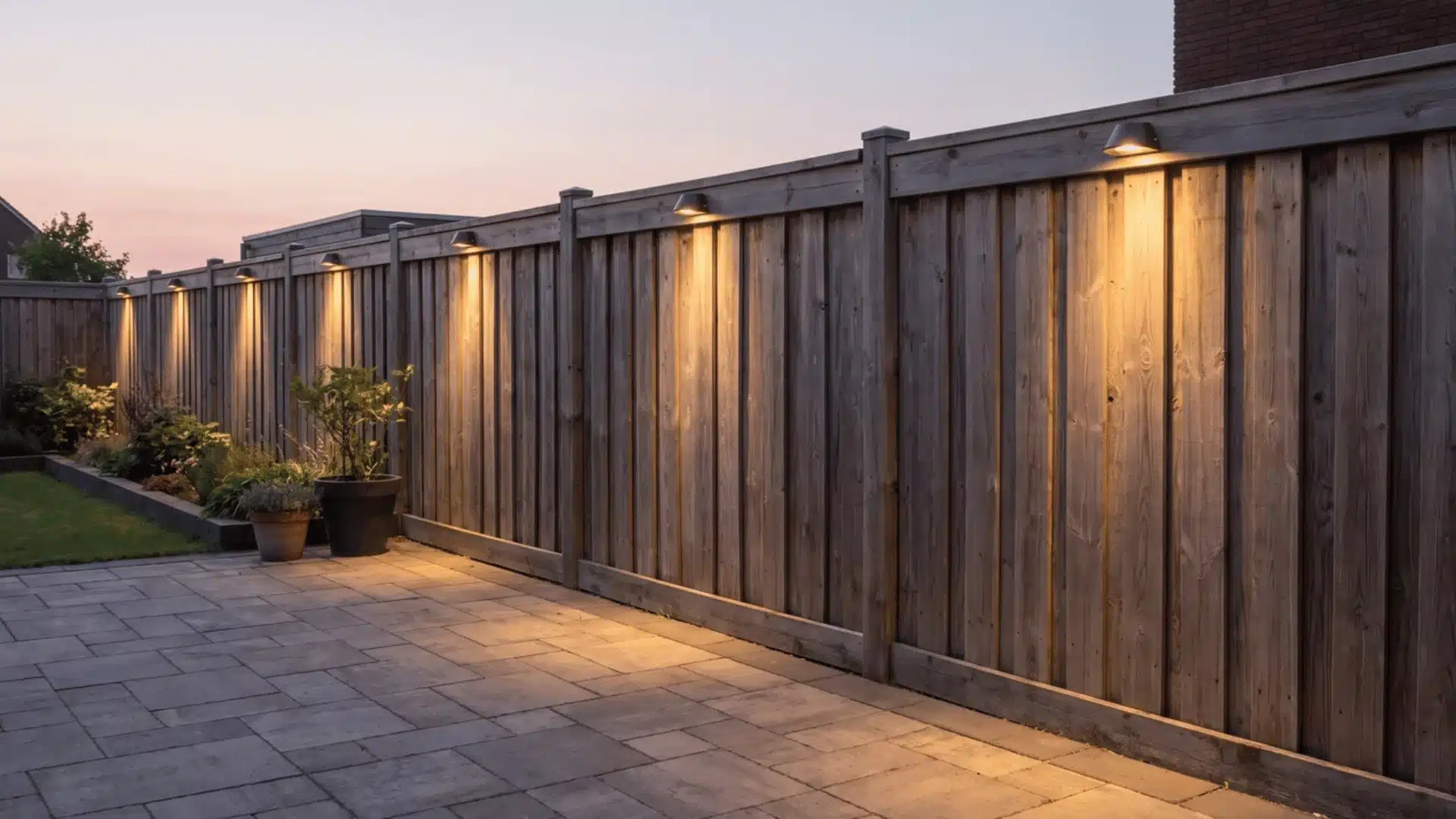
Small fixtures mounted along the top of a fence direct light down the fence surface and onto the ground below.
This works well along patios, side yards, and other areas bordered by solid fencing.
Space fixtures about six to eight feet apart for even coverage. Keep them aimed downward, since poor placement can create glare instead of a clean, controlled spread of light.
14. Garden Bed Border Lights
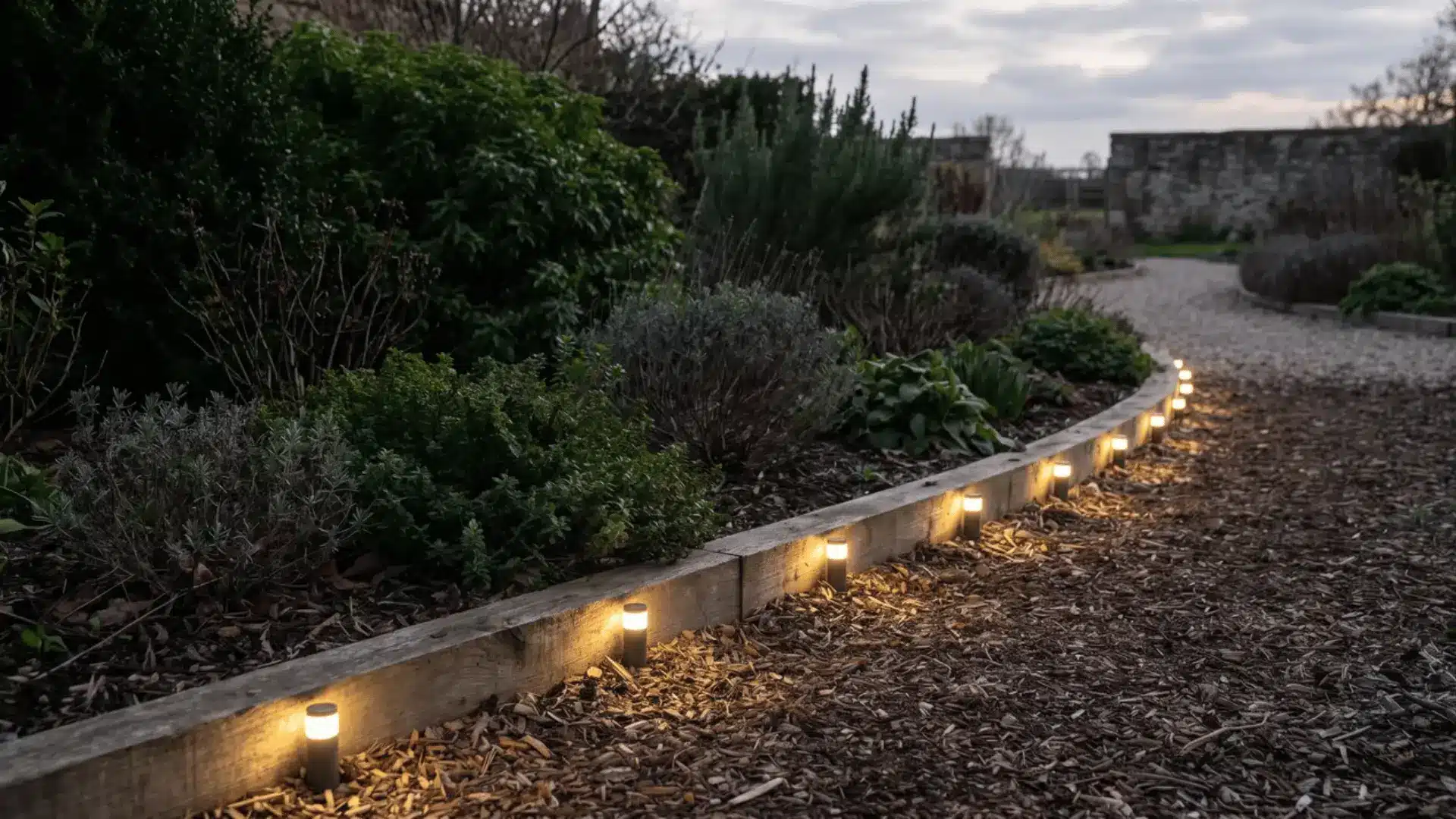
Small lights placed at the front edge of a garden bed outline its shape without illuminating the plants directly. Space fixtures close enough that the line of light reads as continuous, not dotted.
This works best on beds with defined edging, since the lights naturally follow that line.
Overlighting a small garden bed flattens the depth that daytime shadows normally provide.
15. Water Feature Lighting
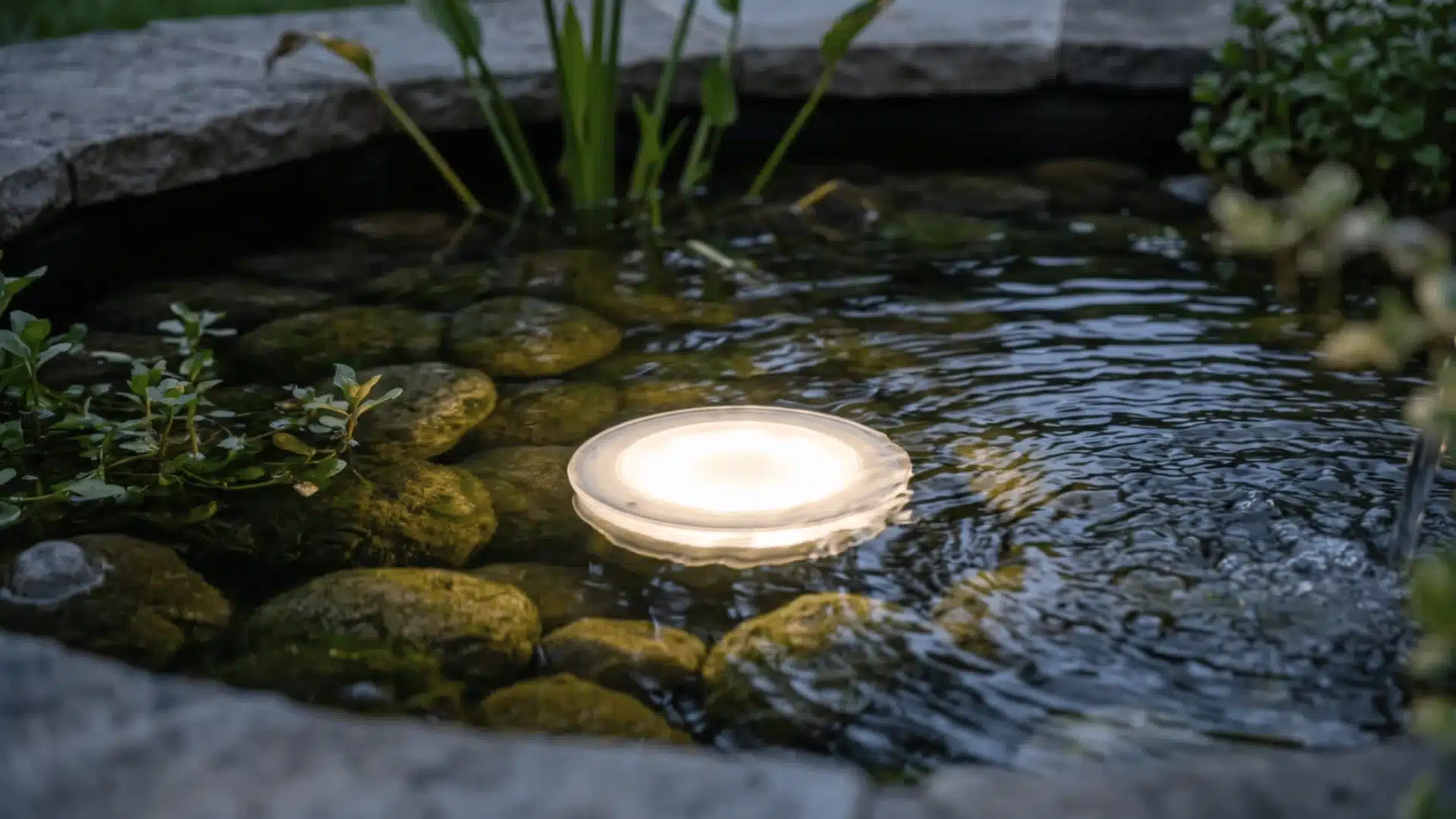
Submersible or waterproof-rated lights placed inside a pond, fountain, or water feature highlight moving water after dark.
Only fixtures explicitly rated for submersion should go inside the water itself.
Position the light beneath the water’s surface rather than above it for the clearest effect. A single fixture per small feature is usually enough; more than that creates glare on the water surface.
String Lights and Gathering Lighting Ideas
String lights work well over dining areas, open yards, fences, and fire pits where you want useful light for evening gatherings.
16. Bistro Lights Over a Dining Table
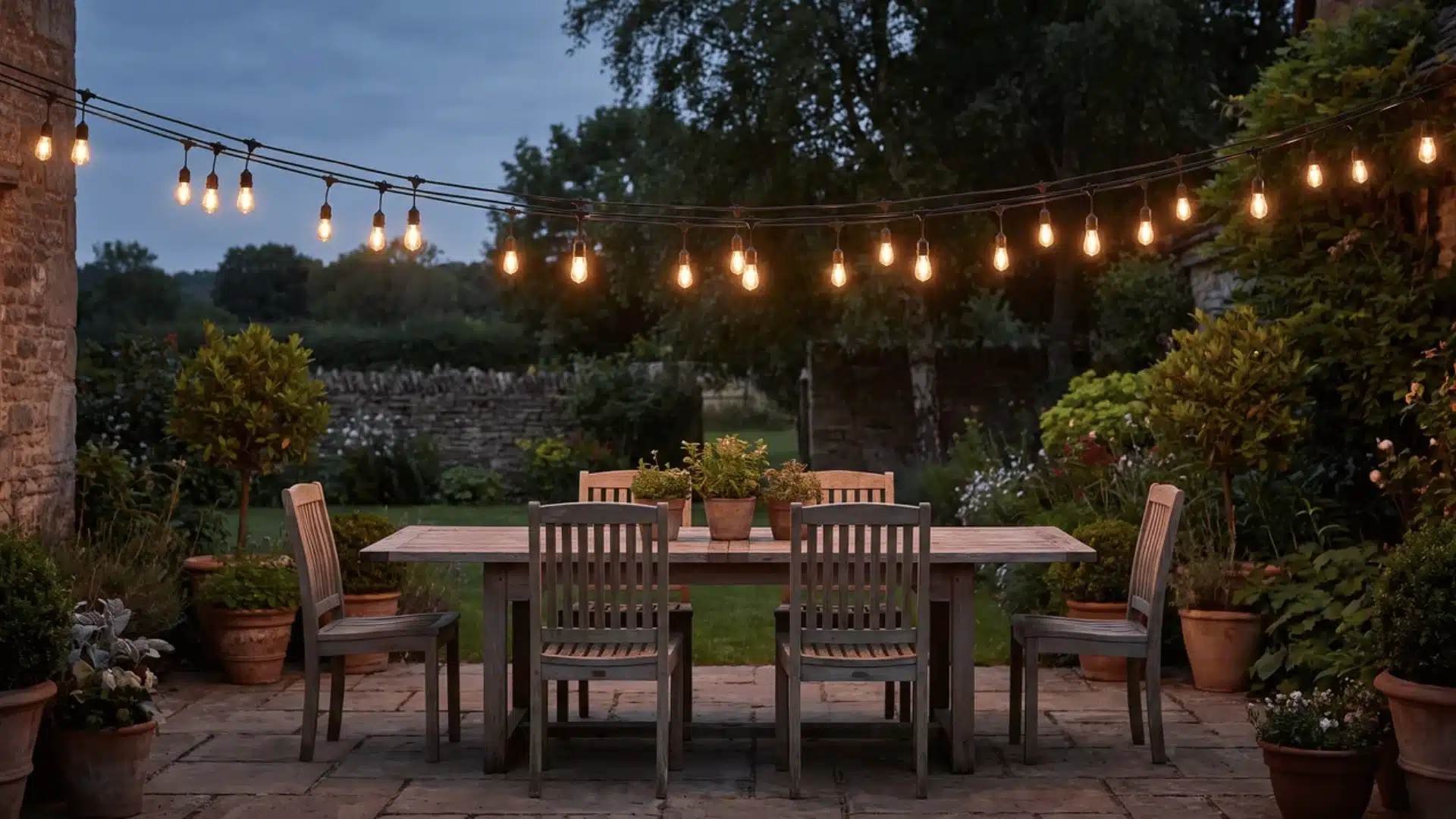
Bistro-style string lights, spaced closer together than standard string lights and hung directly over an outdoor dining table, provide focused light for eating after dark without a separate overhead fixture.
Run them tight enough that the bulbs sit twelve to eighteen inches apart for even light across the table.
A dimmer extends the lights from dinner brightness to lower evening use.
17. Globe String Lights Across the Yard
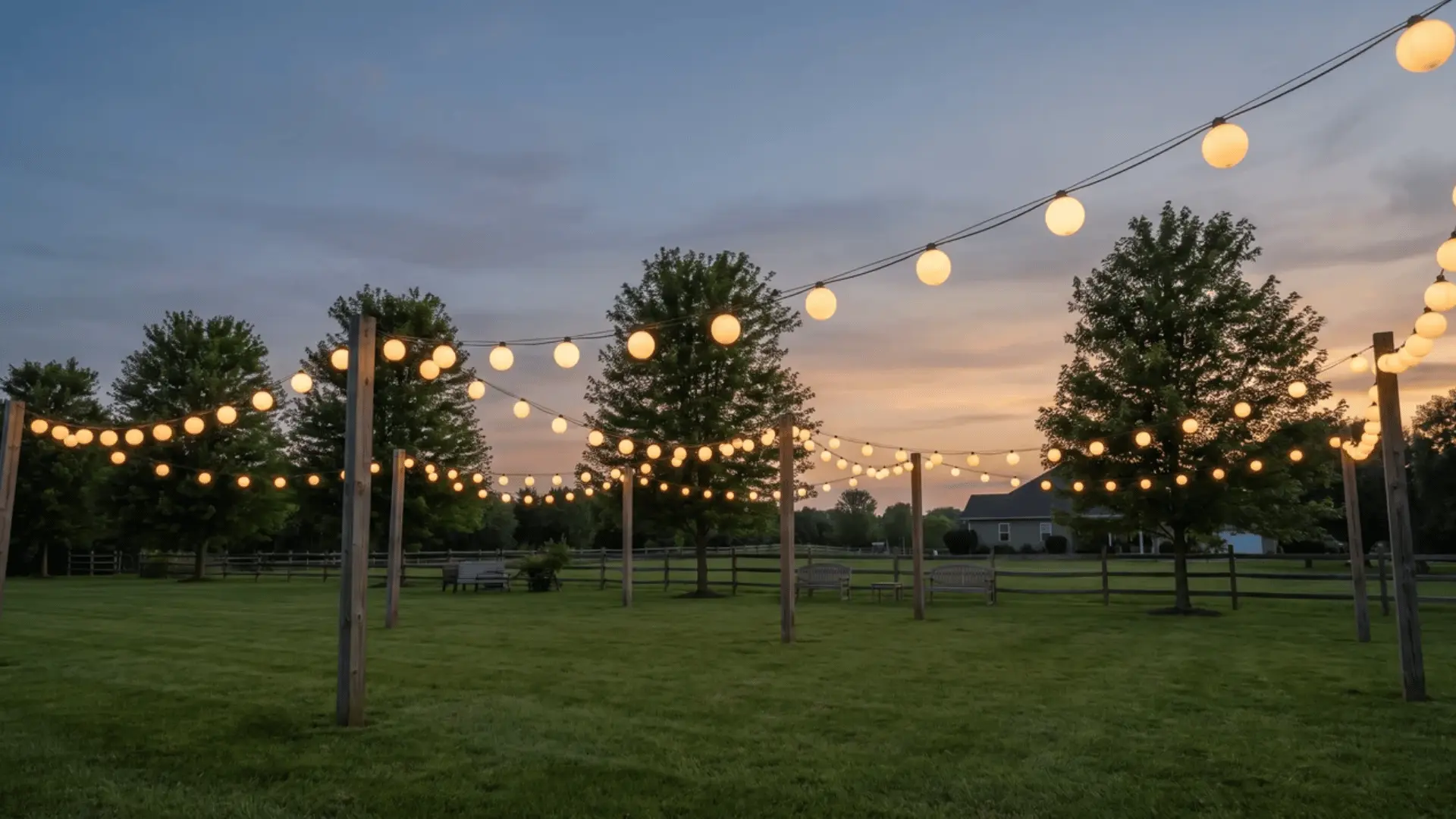
Larger globe-style bulbs strung across an open yard or between two trees cover more ground than standard string lights and suit larger gatherings.
Anchor points need to support the added weight of larger globes.
Space anchor posts no more than 15 feet apart to avoid excessive sag. Globe lights read better in open lawn areas than tight patio spaces where their scale can overwhelm the setting.
18. Fire Pit Ring Lighting
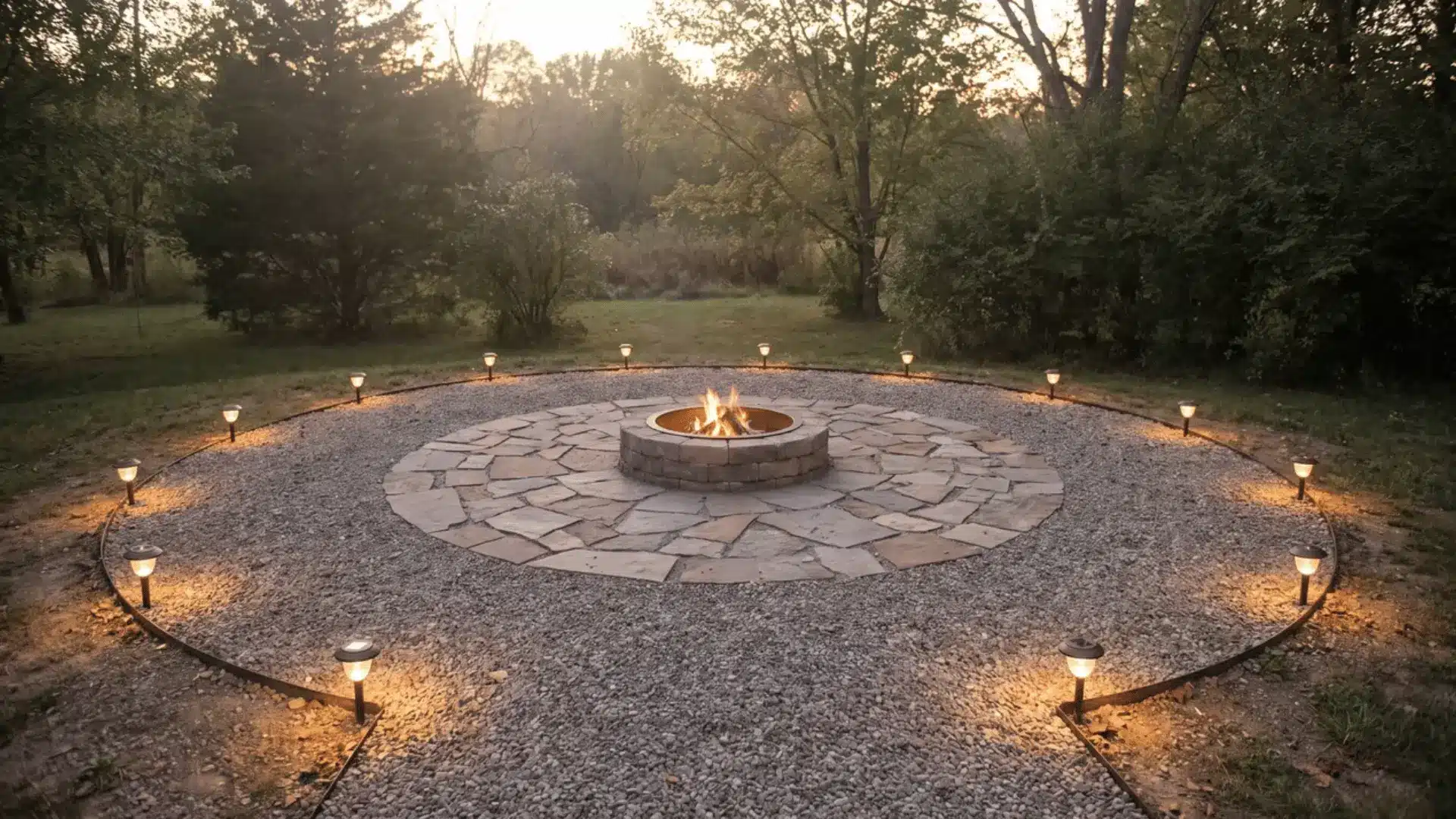
Low lights placed in a ring around a fire pit seating area extend light beyond the fire itself, useful once the flames die down later in the evening.
Solar stake lights work well here since no wiring reaches most fire pit areas.
Space them evenly around the seating perimeter rather than clustering them near the fire. Placing lights too close to the fire pit risks heat damage to the fixtures.
19. Under-Eaves Lighting for the Roofline
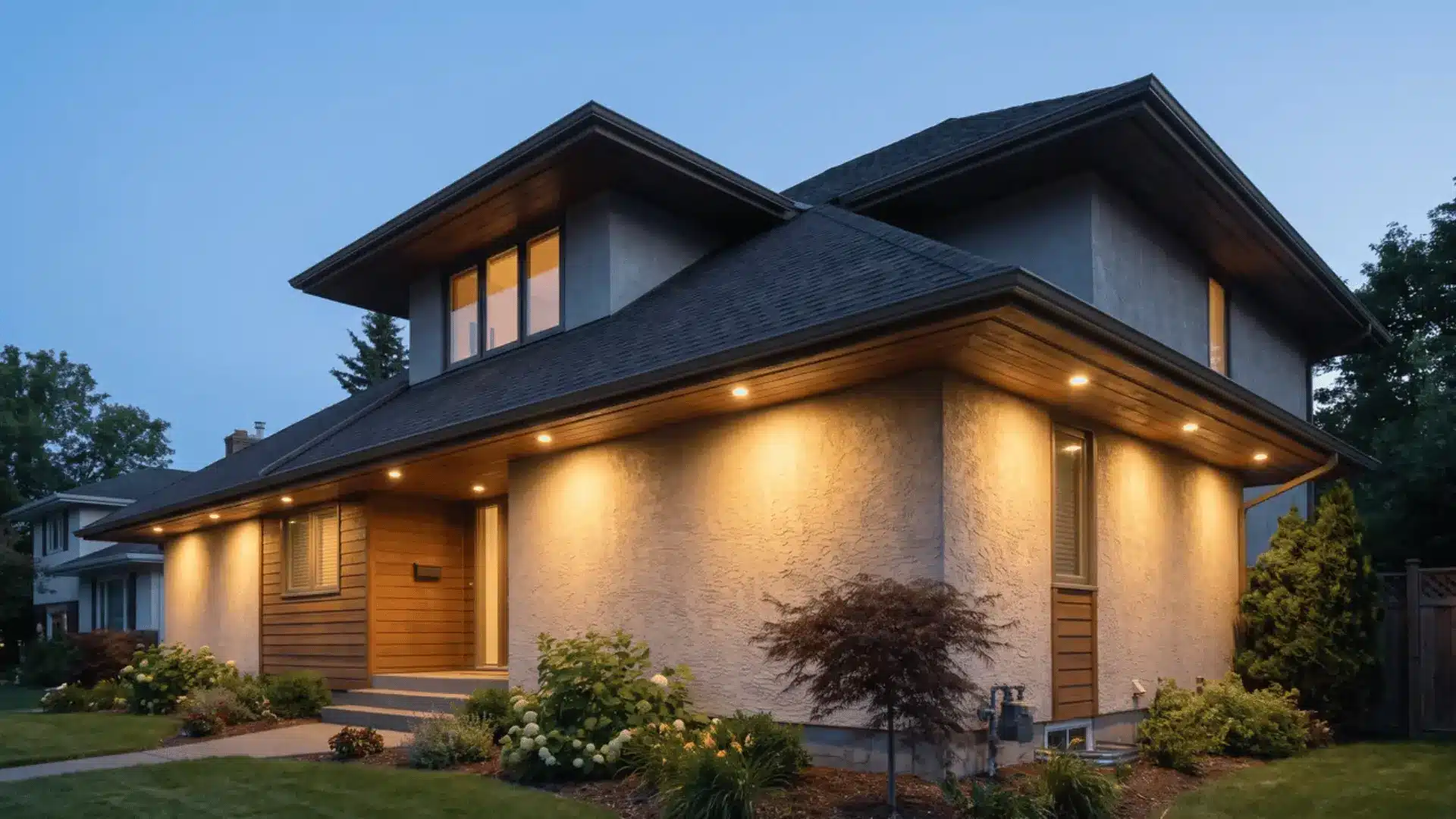
Small fixtures installed beneath the roof eaves light the upper exterior without leaving visible fixtures at eye level.
This works best on homes with deep overhangs that can partly conceal the lights.
Space fixtures evenly along the eaves for consistent coverage across the roofline. Uneven spacing can leave noticeable dark gaps and make the lighting look disconnected after dark.
Solar-Powered Lighting Ideas
Solar lights suit spaces where running wiring is difficult, but their performance depends heavily on how much direct sunlight the panels receive.
20. Solar Stake Lights Along the Driveway
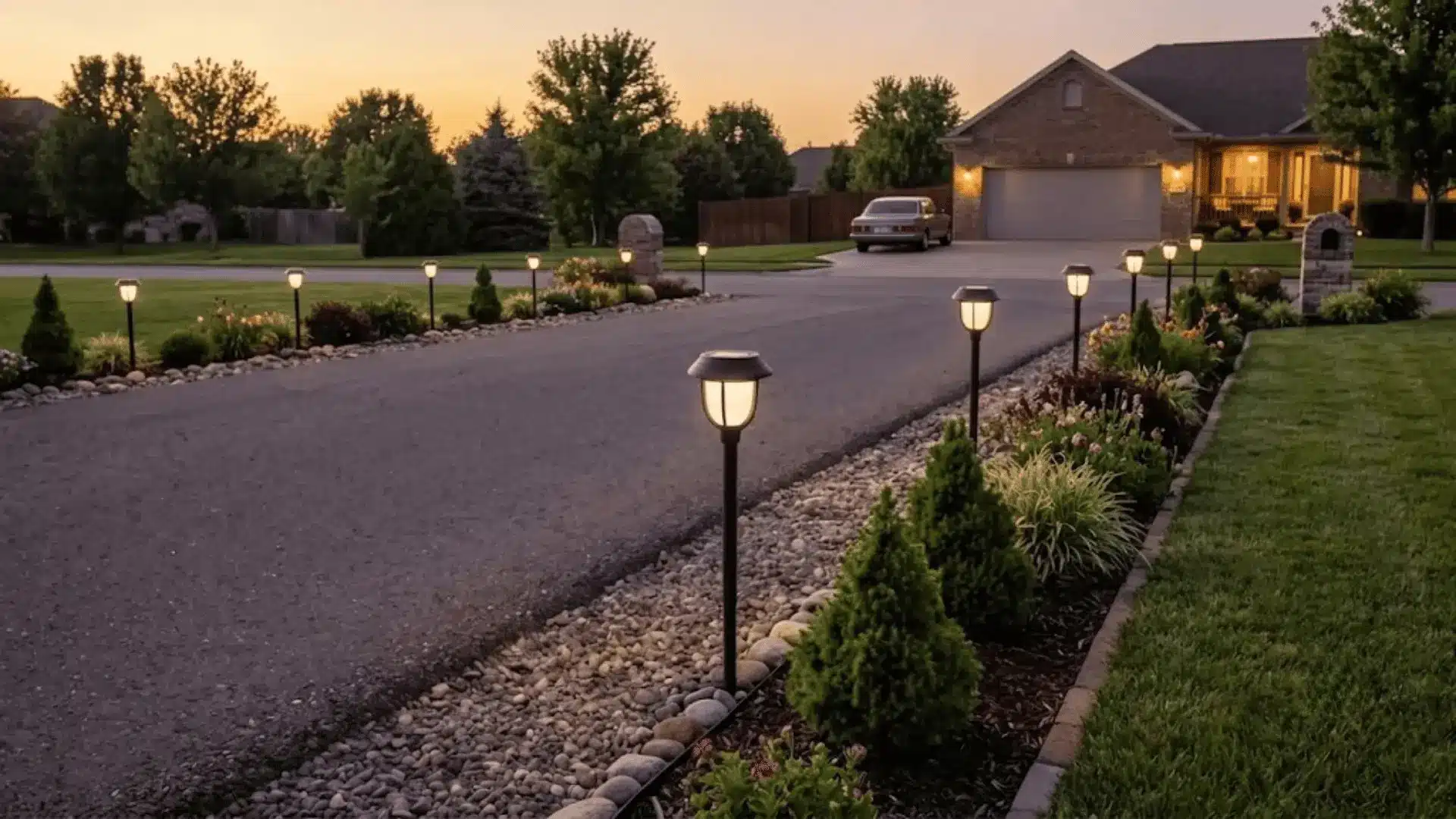
Solar stake lights pushed into the ground along a driveway edge mark its boundary after dark without any wiring. These need six or more hours of direct sun daily to charge fully.
Space stakes six to eight feet apart along the driveway edge for continuous marking. Shaded driveways under trees are a poor fit, since the panels will not charge reliably.
21. Solar Wall-Mounted Sconces
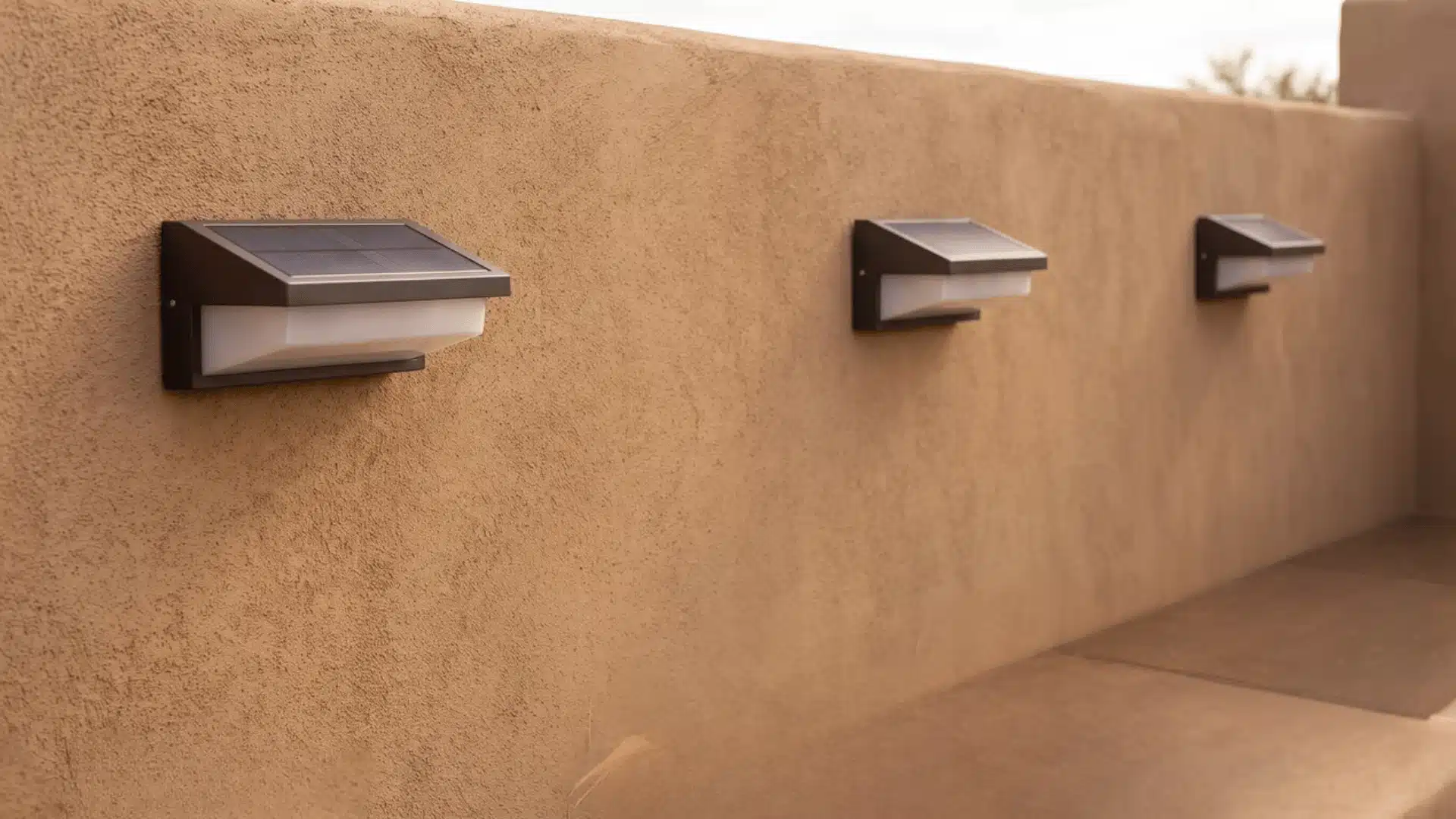
Solar sconces mounted on a wall in direct sun charge during the day and turn on automatically at dusk, giving the look of a hardwired sconce without any wiring.
Battery capacity limits full brightness to a few hours after sunset.
Mount them where they receive sun for most of the day, not just morning or afternoon light. A shaded mounting spot is the most common reason solar sconces underperform.
22. Solar String Lights for Small Balconies
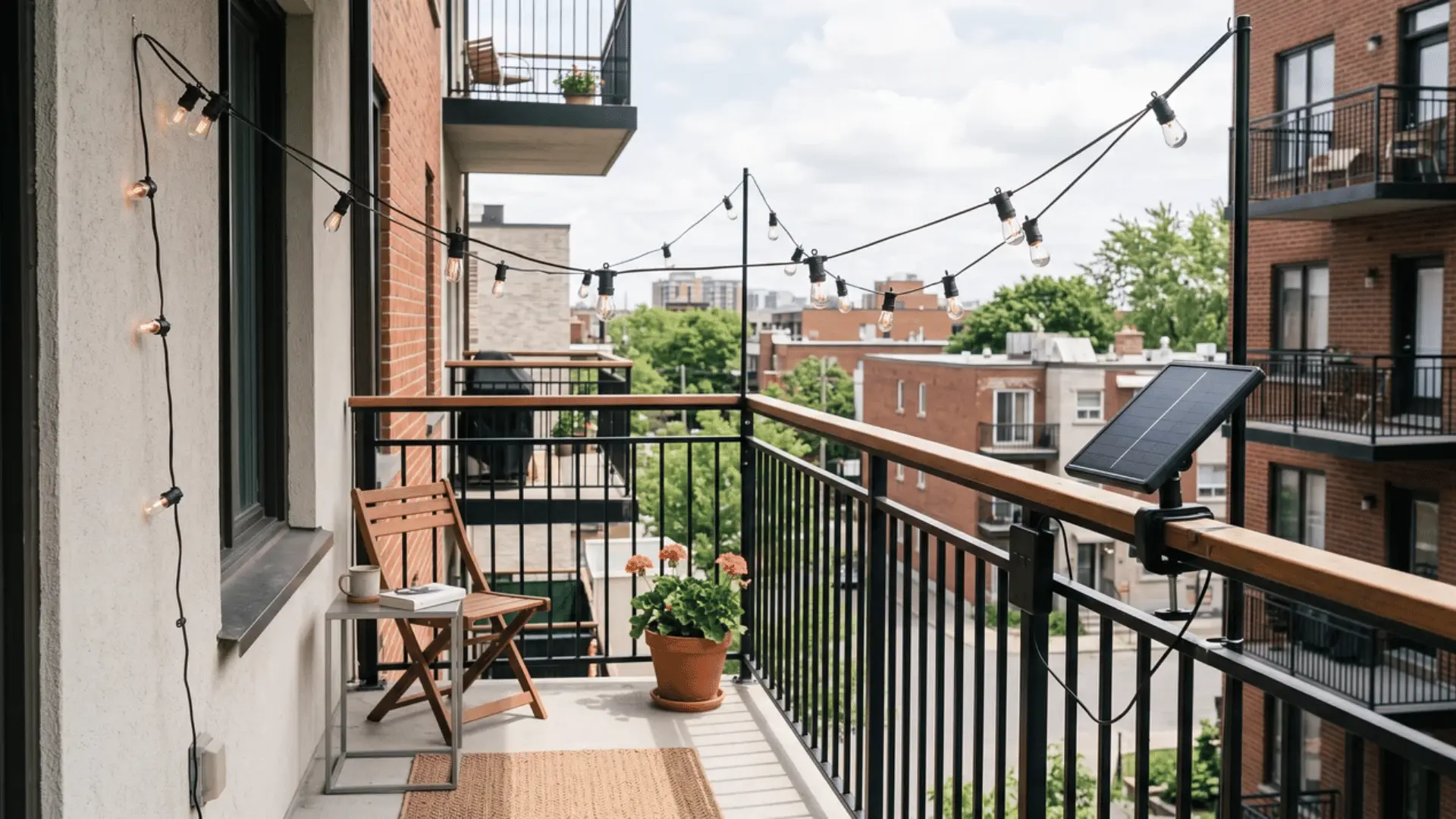
Solar string lights suit balconies and rentals where wiring is not possible, using a small attached panel to charge during the day. Most versions run four to six hours on a full charge.
Position the solar panel itself in direct sun, separate from where the lights hang if needed. Balconies with limited direct sun should expect shorter runtime than the packaging states.
23. Solar Spotlights for Flag Poles or Statues
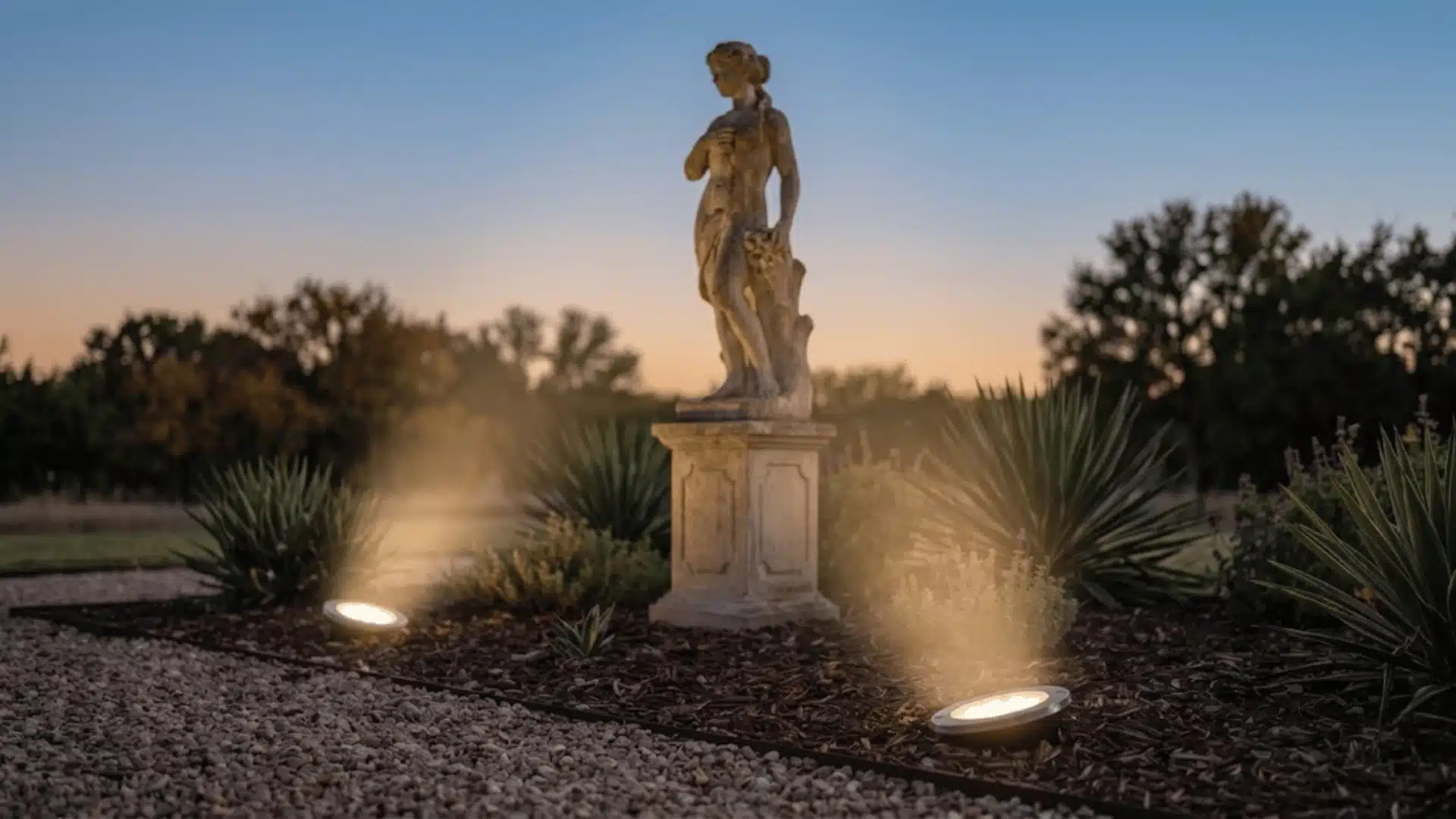
Solar spotlights aimed upward at a flagpole, statue, or house number sign offer a lower-brightness alternative to wired uplighting. These suit accent purposes rather than full-yard illumination.
Angle the spotlight so the beam covers the full height of the object being lit.
Two spotlights aimed from different angles reduce the flat, single-shadow look one spotlight alone creates.
Security and Motion-Sensor Lighting Ideas
Security lighting should cover entrances, garages, driveways, and other high-use areas without keeping bright fixtures switched on throughout the entire night.
For the broader setup beyond lighting, our home security systems guide covers how motion lighting fits into a full system.
24. Motion-Sensor Floodlights at the Garage
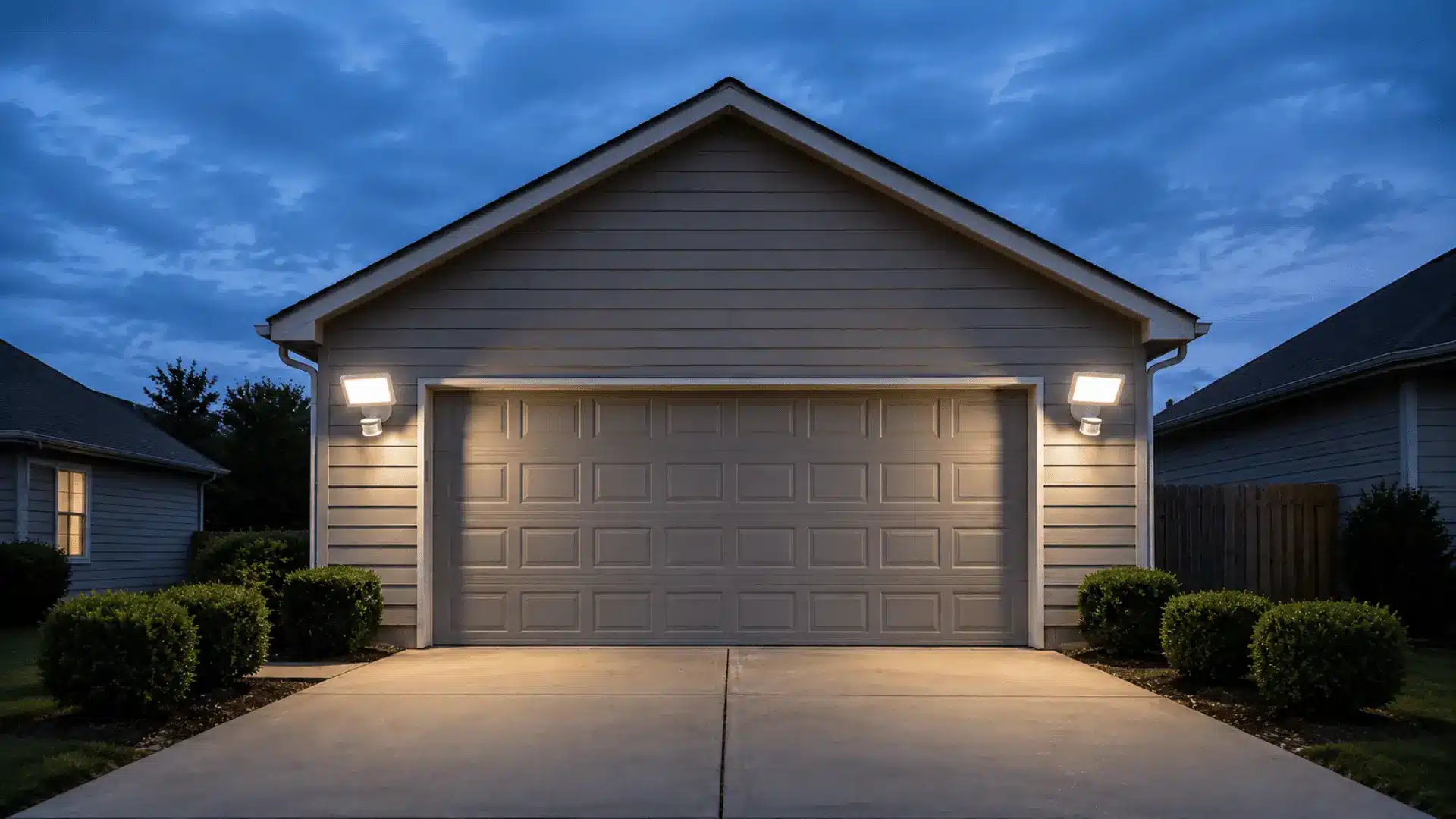
Floodlights mounted near a garage door, triggered by motion, light the driveway and entry point only when needed rather than staying on all night. Mount height affects detection range more than most installers expect.
Mount fixtures eight to ten feet high for the widest detection coverage. Mounting too high reduces the sensor’s range even though the light itself still reaches the ground.
25. Dusk-to-Dawn Sensor Lights
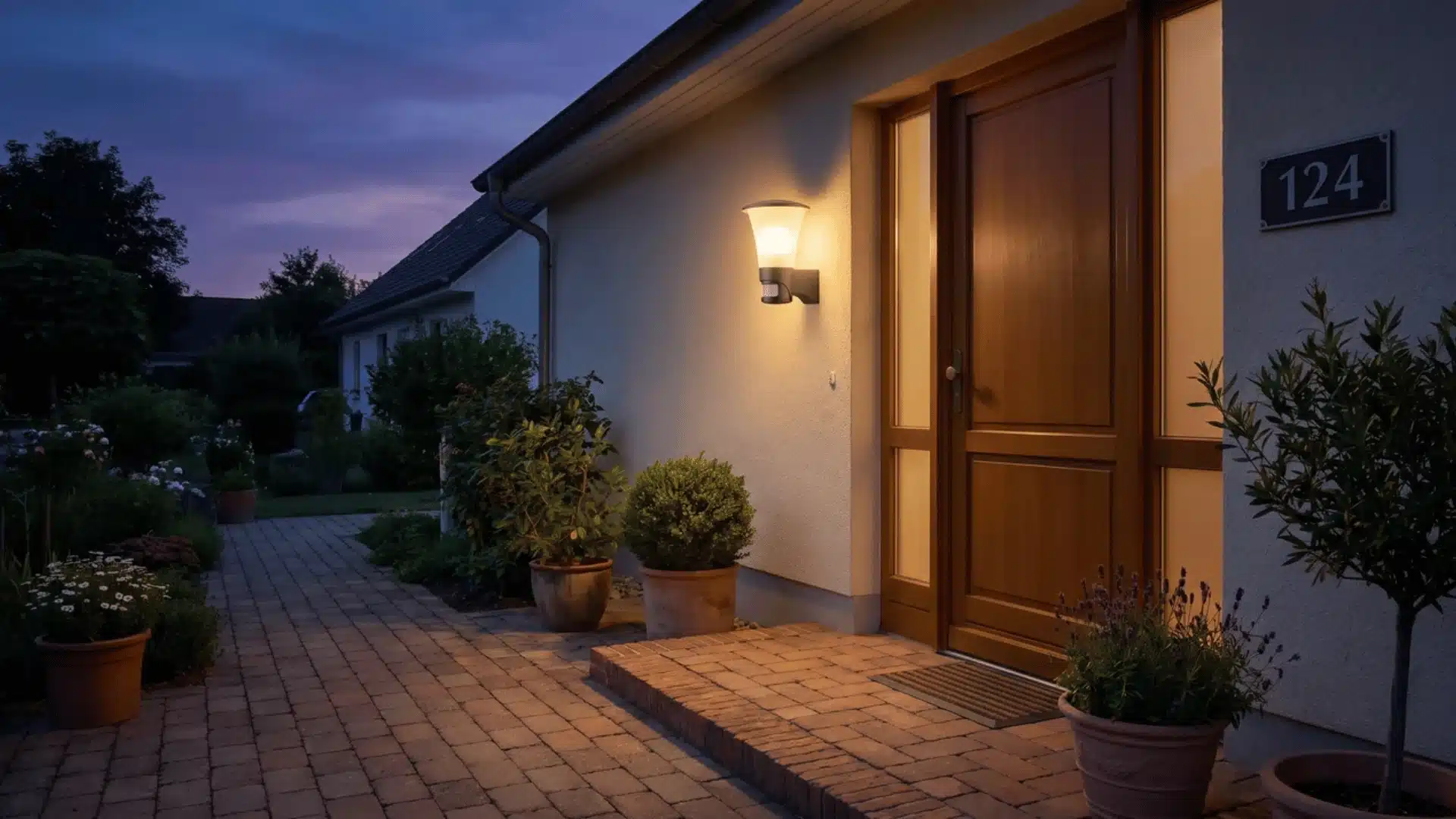
Dusk-to-dawn fixtures turn on automatically at sunset and off at sunrise using a built-in light sensor, without needing motion to trigger them.
These suit areas that need constant, low-level light rather than triggered bursts. Place them at entry points, walkways, or areas checked visually after dark.
Pairing a dusk-to-dawn fixture with a motion-sensor floodlight nearby covers both constant and triggered lighting needs.
26. Smart App-Controlled Security Lights
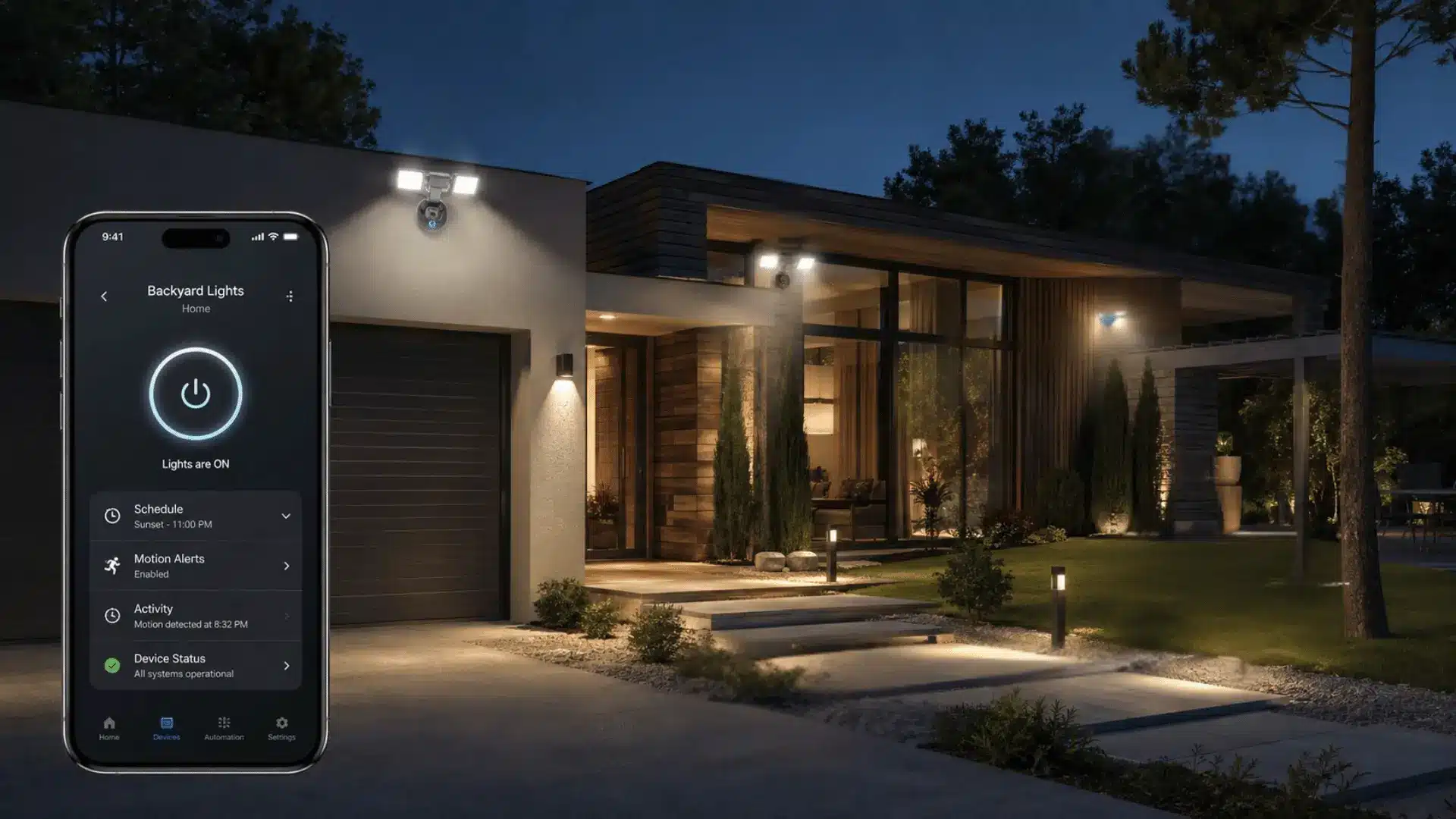
App-controlled security lights allow scheduling, remote on-off control, and alerts when motion is detected, adding control beyond a basic sensor.
These connect through home Wi-Fi rather than a simple photocell.
Set a schedule rather than relying only on motion triggers, since scheduled lighting also deters activity during hours motion sensors might miss.
A weak Wi-Fi signal at the mounting location is the most common setup problem.
27. Motion-Sensor Lights Near the Back Door
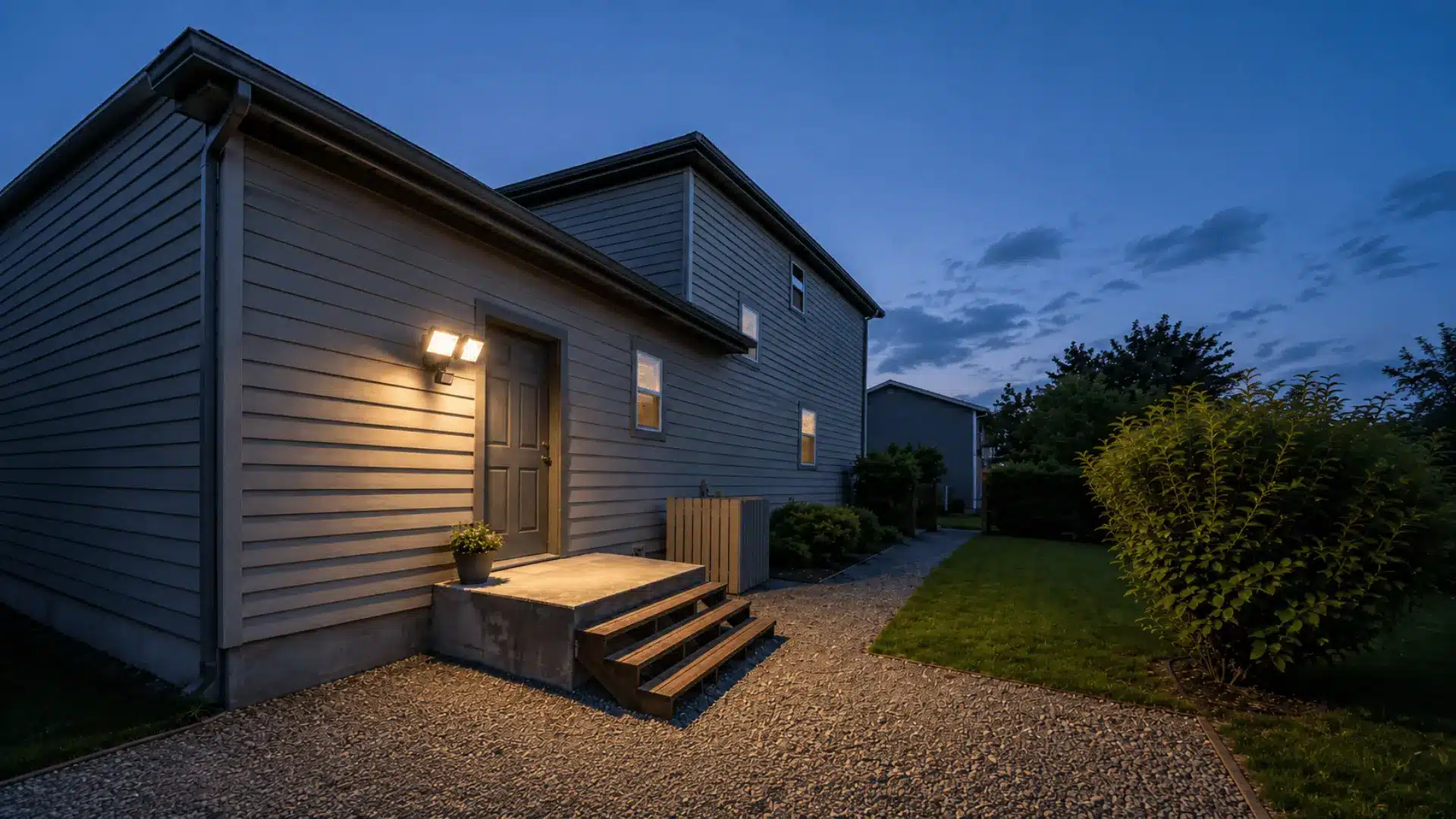
A motion-sensor fixture mounted near a back door lights the immediate exit path without staying on continuously through the night.
This spot is often skipped in favor of front-facing security lighting alone.
Mount it high enough to cover the full width of the back stairs or landing. A narrow detection angle at this spot misses activity approaching from the side yard.
Unique and Creative Lighting Ideas
These lighting ideas add practical illumination in less common ways, using options such as hanging lanterns, color-changing LEDs, lighted numbers, and mason jars.
28. Lanterns Hung from a Tree Branch
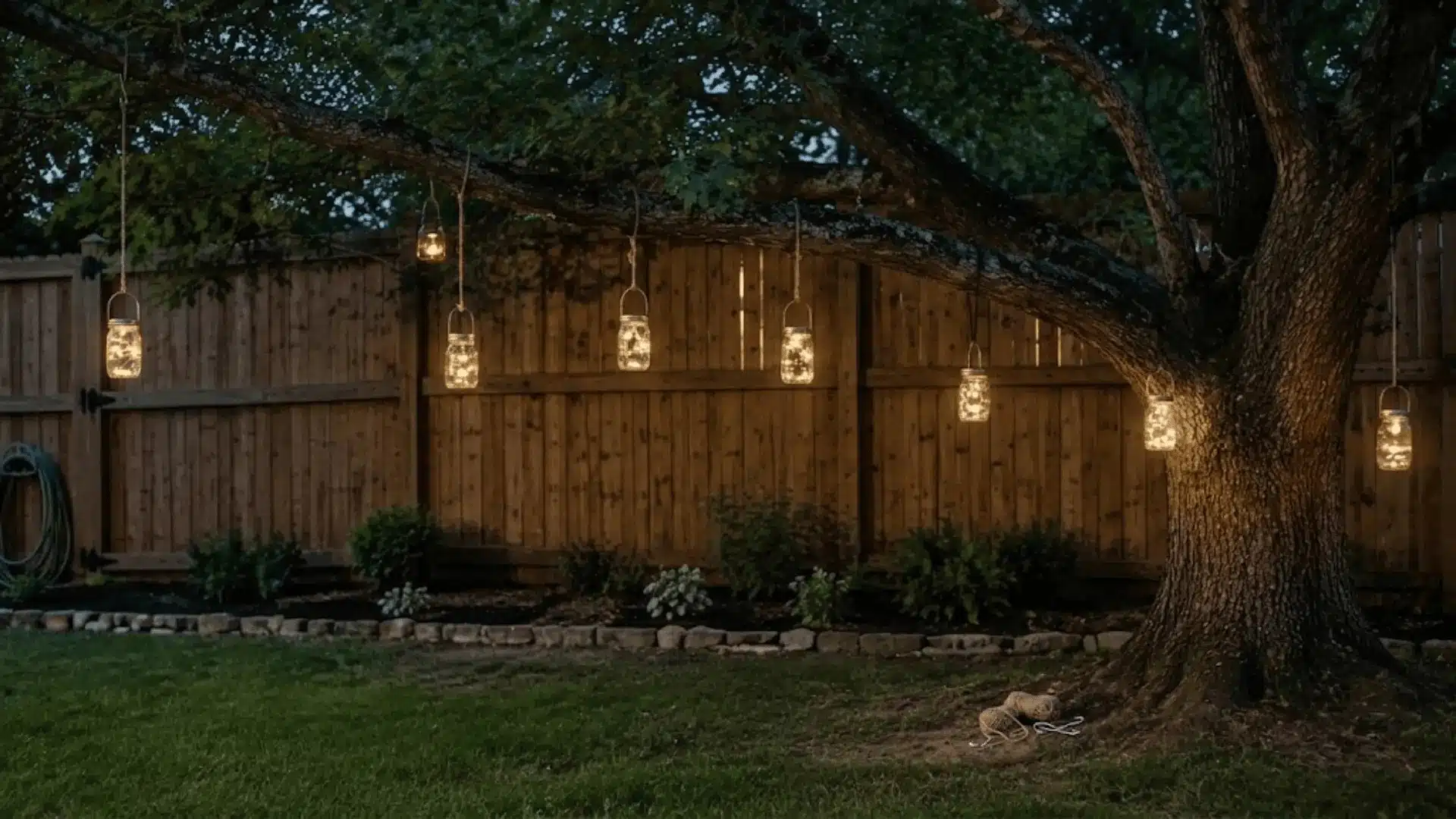
Battery-operated lanterns hung at varying heights from a tree’s lower branches create an overhead layer without any wiring reaching the tree.
This suits yards with a single mature tree as a focal point.
Vary the hanging height slightly between lanterns rather than lining them up evenly. Hanging too many lanterns on one branch risks damaging the smaller limbs.
29. Pool Deck Lanterns
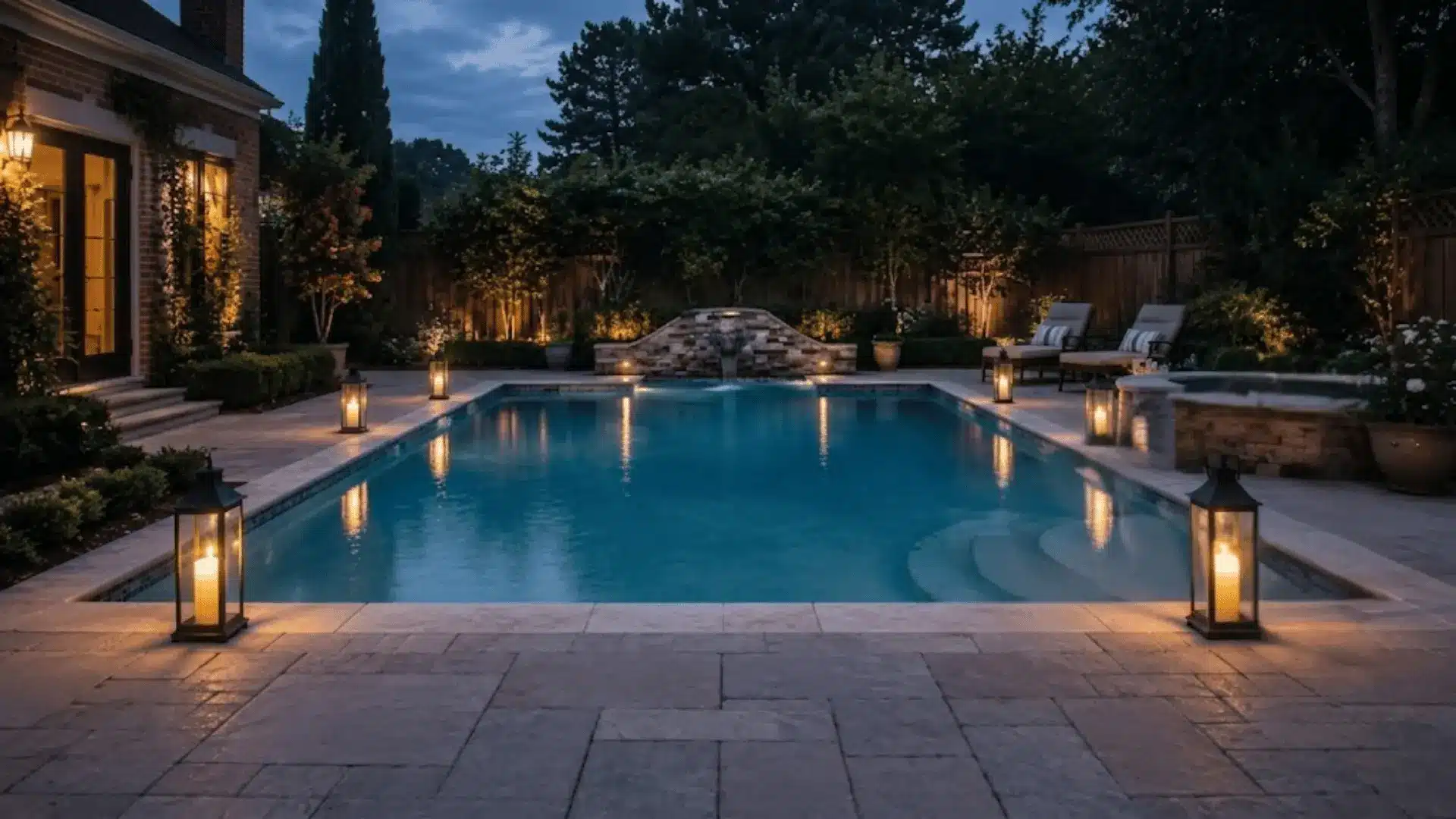
Weather-rated lanterns placed around a pool deck add low-level light without relying on overhead floodlights. Battery or solar models also avoid running cords close to the water.
Choose fixtures rated for splash exposure and space them evenly around the deck perimeter. Clustering lanterns in one area can leave darker sections where clear footing matters.
30. Lighted House Numbers
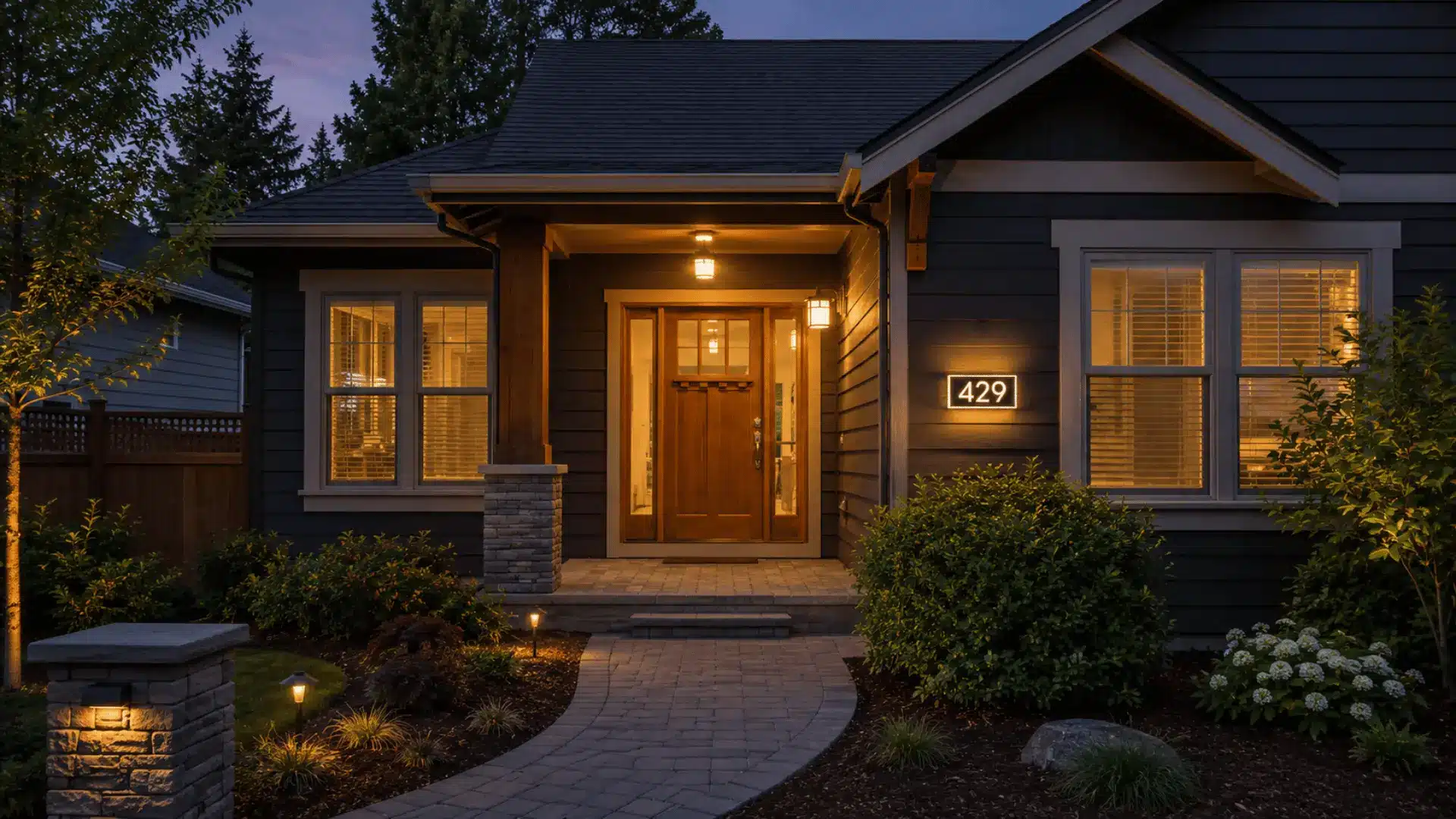
A small backlit or edge-lit house number sign mounted near the front door or mailbox improves visibility for visitors and emergency services after dark.
These typically run on a small solar panel or low-voltage wire.
Mount the sign at a height visible from the street, not just the porch. Placing it behind a plant or trim board defeats its purpose, no matter how well it is lit.
31. Mason Jar Lights for a Rustic Look
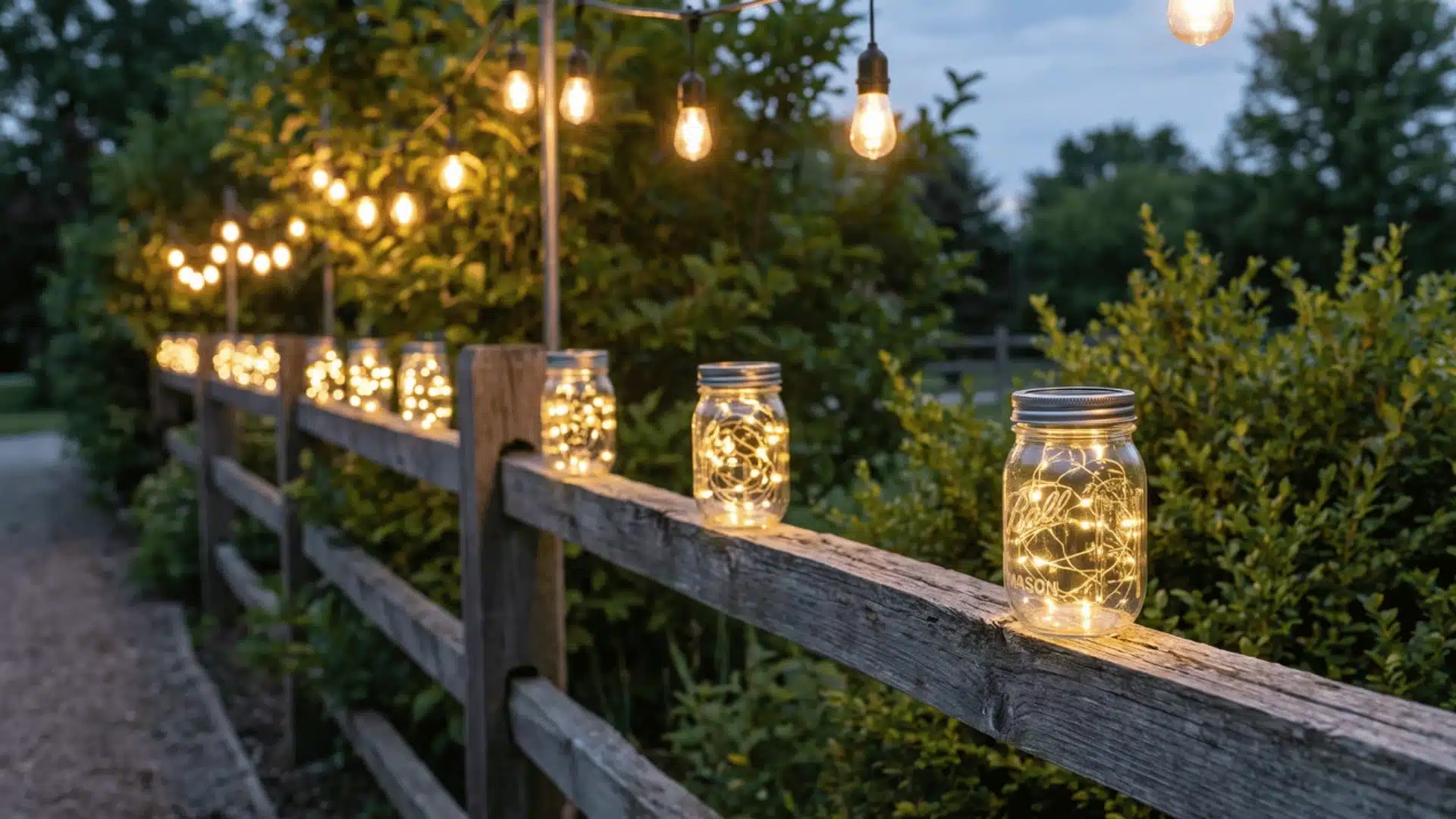
Small battery-powered or solar fairy lights placed inside mason jars and hung or set along a fence or table create a rustic-style accent light without a dedicated fixture.
This works well as a lower-cost addition to an existing string light setup.
Space jars evenly along a fence rail or table runner rather than clustering them at one end. Solar versions need direct sun exposure to charge reliably for evening use.
Solar vs. Hardwired Outdoor Lighting: Which One to Choose
The solar versus hardwired choice comes down to convenience against consistent brightness. Hardwired systems rarely fail from the wiring itself. They fail from undersized power planning.
| Factor | Solar Lighting | Hardwired Lighting |
|---|---|---|
| Wiring needed | None | Yes, low-voltage cable |
| Best for | Rentals, small budgets, quick setup | Larger yards, long-term homes |
| Climate performance | Inconsistent in shade or low-sun areas | Steady regardless of weather |
| Upfront cost | Lower | Higher |
| Common failure point | Weak charge, dim output | Undersized transformer |
Hardwired systems run on a transformer, and undersizing it is the single most common wiring mistake I see homeowners make when they add fixtures gradually over a few seasons.
Add up your total fixture wattage, then add 20% headroom before picking a transformer size.
Long wire runs cause a separate issue called voltage drop. Fixtures over 100 feet from the transformer often dim, even with the right transformer size.
Thicker-gauge wire or a higher-voltage tap fixes this. It’s a wiring adjustment, not a sign your transformer is too small.
Outdoor Lighting Mistakes That Ruin the Effect
Most outdoor lighting mistakes come from adding too much light, not too little. A few fixes go a long way toward a cleaner look.
- Overlighting a small space: Lighting every corner evenly flattens the whole yard. Intentional dark spots between fixtures actually look more natural.
- Mixing color temperatures: Cool white and warm white bulbs in the same visible area look unplanned. Pick one tone and stick with it across a space.
- Skipping the wattage check: This is the top reason systems dim or fail months in. Confirm your fixture load against your power source before you install anything.
- Pointing fixtures straight at eye level: Uplights and spotlights aimed too high create glare instead of a soft glow. Angle them down toward the surface they’re meant to highlight.
- Ignoring fixture spacing: Lights placed too close together create hot spots, while gaps that are too wide leave dark breaks in the path. Even spacing reads far more deliberate.
- Using one light source for the whole yard: Relying only on overhead or only on ground-level light feels flat. Layering height and angle gives the space more depth.
- Forgetting seasonal changes: Fixtures that looked perfect in bare winter branches can get buried under summer growth. Check placement again once foliage fills back in.
Small adjustments here matter more than adding new fixtures. Fix these first, and most yards already look sharper after dark.
Conclusion
Outdoor lighting ideas work best when they make your yard easier to use, not just brighter.
A good setup should guide people safely, highlight the right areas, and still leave enough soft shadow so the space feels calm.
Porch lights, path lights, string lights, solar fixtures, and security lights can all work together when the spacing, color temperature, and power source are planned well.
Solar lights are great for simple setups, while hardwired systems make more sense for long-term brightness and control. Start with the areas you use most after dark, then build from there.
Which outdoor lighting idea are you planning to try first? Tell us in the comments below.
Frequently Asked Questions
What Are the Newest Outdoor Lighting Trends?
Warm-toned, app-controlled smart lights are the biggest shift this year. One fixture now handles daily lighting and event lighting. Layered lighting is also replacing single-style setups. Yards now mix string lights, path lights, and accent uplighting instead of just one type.
Is It Cheaper to Use Solar or Wired Outdoor Lighting?
Solar lighting costs less upfront since there’s no wiring or transformer involved. It’s the cheaper pick for small yards or rentals. Hardwired systems cost more to install but perform more consistently in shaded areas. Over time, that reliability can offset the higher starting price.
How Many Outdoor Lights Do I Need for A Small Backyard?
Most small backyards need three to five fixtures total. Aim for one or two ambient lights, two to three path or accent lights, and one task light near seating. Adding more than that in a tight space usually flattens the look instead of improving it.
Do I Need an Electrician to Install Outdoor Lighting?
Solar and low-voltage kits are safe to install yourself since they run on 12V power. No electrician is required for these. Anything wired directly into your home’s 120V system, like a hardwired porch light, should be installed or checked by a licensed electrician.