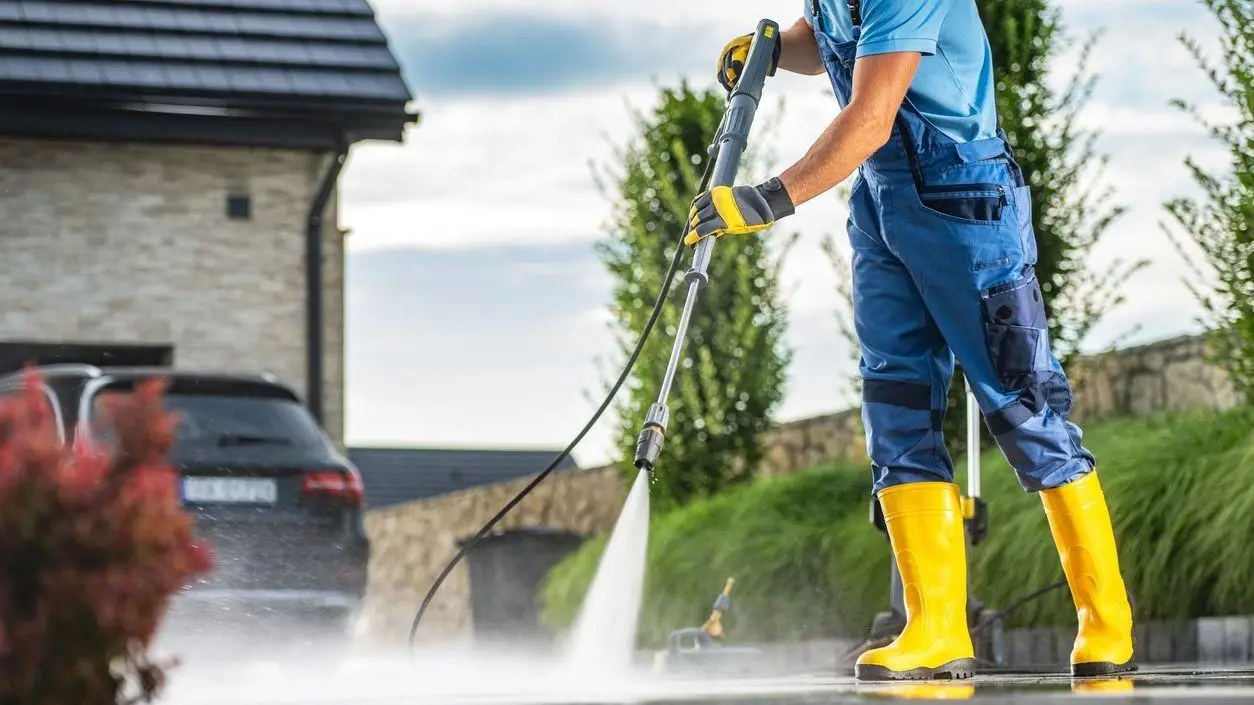
Nashville, TN is a city of striking contrasts, humid summers, unpredictable storms, and a building stock that ranges from century-old brick bungalows in East Nashville to sleek modern builds in The Gulch. What ties them all together is an unavoidable reality: every exterior surface in Music City takes a beating. Algae, mold, road grime, and hard water deposits accumulate fast in Tennessee’s climate. That’s why understanding the science and strategy behind exterior surface care matters far more than most property owners realize.
How Nashville’s Humidity Fuels Algae and Mold Growth on Exterior Surfaces
Nashville sits in a subtropical humid climate zone, which means warm temperatures and high moisture levels persist well beyond summer. This combination creates near-perfect conditions for biological growth, particularly green algae, black mold (often called “black streaks”), and lichen, on roofs, driveways, siding, and retaining walls.
Black streaks on asphalt shingle roofs, for example, are almost always caused by Gloeocapsa magma, a cyanobacteria that feeds on the limestone filler in shingles. Left untreated, it degrades the shingle granules, shortening roof life significantly. Similarly, the shaded north-facing walls of homes in Nashville’s tree-heavy neighborhoods like Sylvan Park or Bellevue accumulate mold colonies that are invisible from the street but actively deteriorating the substrate beneath them.
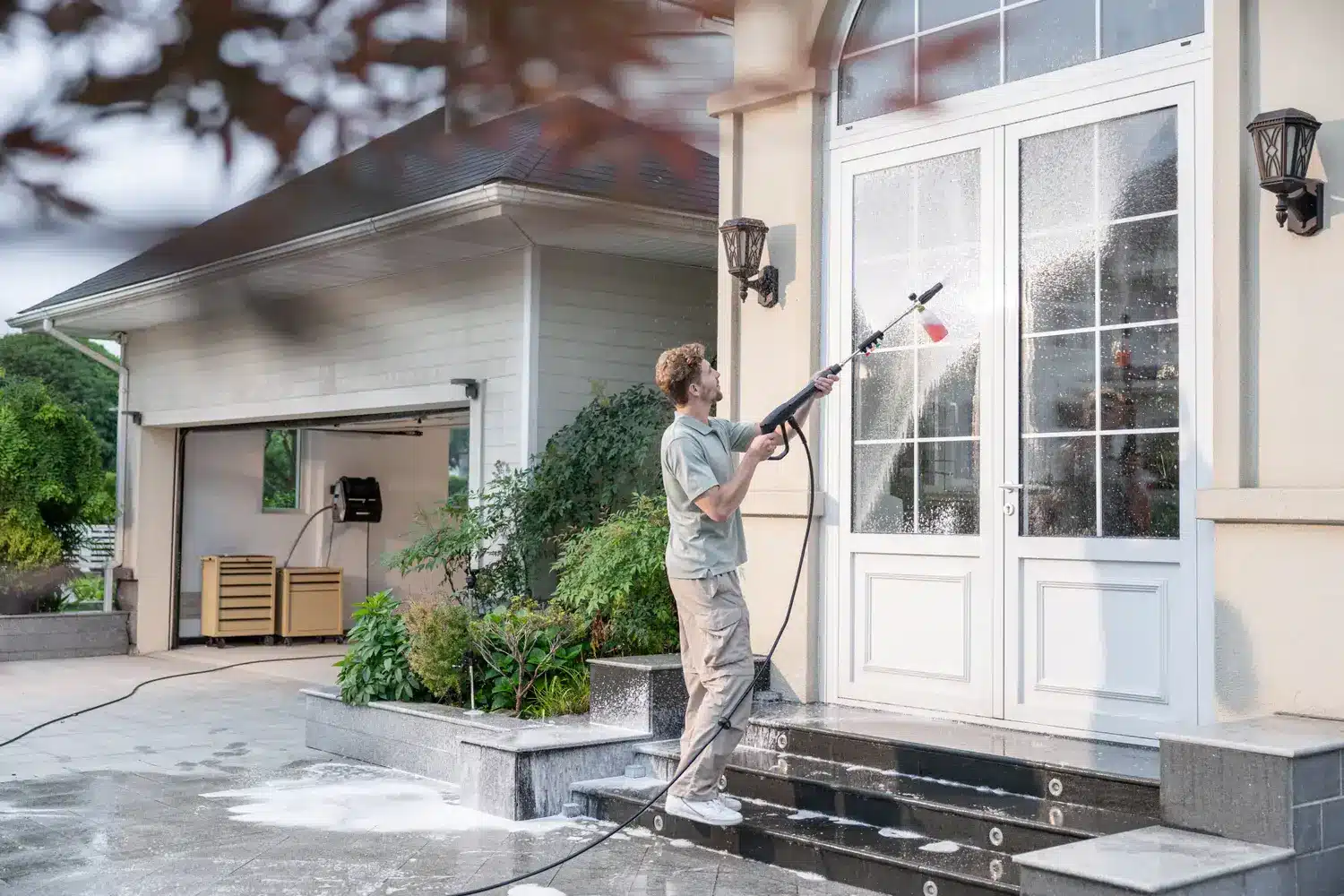
This is where pressure washing becomes not just a cosmetic fix but a genuine maintenance intervention. The mechanical force of high-pressure water, often combined with targeted detergents, physically removes biological colonies and their root systems from porous surfaces, interrupting the growth cycle rather than simply bleaching it out of sight.
The key variable most homeowners miss is dwell time. Detergent solutions applied before the pressure rinse need sufficient contact time to break down biofilm bonds. Skipping this step, or rushing it, means biological matter gets pushed deeper into surface pores rather than lifted out, a mistake that leads to faster re-growth within weeks.
Soft Washing vs. High-Pressure: Choosing the Right PSI for Nashville Surfaces
One of the most consequential decisions in any exterior cleaning project is matching water pressure to surface type. Nashville’s diverse architecture makes this especially important.
Soft washing (typically 500–1,500 PSI with high chemical concentration) is appropriate for:
- Asphalt shingle roofs
- Painted wood siding on older homes
- Stucco and EIFS systems
- Vinyl siding on newer construction
High-pressure washing (2,500–4,000+ PSI) is suited for:
- Concrete driveways and sidewalks
- Brick pavers and hardscape
- Exposed aggregate and stamped concrete
- Commercial parking decks
Using high pressure on surfaces designed for soft washing is one of the leading causes of premature siding failure, granule loss on roofs, and mortar joint erosion in brick. Many homeowners who rent pressure washers and tackle their own driveways accidentally etch the concrete surface by holding the nozzle too close or using a zero-degree tip, creating permanent streaking that requires grinding or resurfacing to fix.
Nashville’s older neighborhoods present a particular challenge. Many mid-century brick homes have mortar that has never been repointed and is in a fragile state. High-pressure water directed at aged mortar joints can displace material rapidly, introducing water intrusion pathways that lead to expensive structural repairs. The correct approach for these surfaces involves a fan nozzle at low pressure, combined with a pH-neutral cleaning solution.
Surface-Specific Cleaning Schedules for Nashville Properties
Exterior cleaning isn’t a single annual event, it’s a maintenance schedule that varies by surface material, sun exposure, and proximity to trees or water.
Concrete driveways and walkways accumulate tire marks, oil staining, and biological growth. In Nashville’s climate, a thorough clean every 12–18 months is typically sufficient for residential driveways, though oil-contaminated surfaces near parking areas may warrant more frequent treatment with degreaser pre-treatment.
Composite and wood decks should be cleaned before any staining or sealing project, and at minimum every spring after Nashville’s pollen season peaks. Fine pollen particles settle into wood grain and accelerate UV degradation if left in place during summer.
Gutters and fascia boards often get overlooked in cleaning schedules, yet they are among the first surfaces where biological staining becomes visible from the street. The black “tiger stripes” running down gutters are caused by electrostatic bonding of shingle granules and organic debris, and they require specific surfactant chemistry to break the bond before pressure rinsing.
Driveways near hardwood tree canopy, common in neighborhoods like Forest Hills and Green Hills, will re-accumulate tannin staining from leaf matter and bark far faster than open driveways. In these cases, a protective sealant applied after cleaning can significantly extend the clean appearance and reduce the frequency of full treatments.
What Nashville Contractors Should Be Using: Equipment and Chemistry Standards
The professional exterior cleaning industry has evolved considerably from the days of simple high-pressure rinsing. Nashville contractors servicing quality residential and commercial properties now work with:
- Hot water pressure washers for grease and oil-contaminated surfaces (far more effective than cold water units for commercial kitchen exteriors and gas station canopies)
- Downstream chemical injection systems that introduce surfactants and biocides into the water stream at low pressure, preserving pump life and reducing chemical waste
- Reclaim and recovery systems for projects near storm drains, where environmental runoff regulations apply, particularly relevant for commercial properties in Nashville’s downtown and midtown corridors
- Variable pressure guns with multiple nozzle configurations that allow a single operator to move between roof washing and concrete cleaning without changing equipment
On the chemistry side, sodium hypochlorite (pool-grade bleach) remains the industry standard biocide for roof and siding applications, but it must be buffered with surfactants to control run-off and protect plant material. Responsible operators neutralize run-off at the point of application and pre-wet surrounding landscaping before and after chemical application.
Conclusion
Exterior surface care in Nashville, TN is a discipline shaped by local climate, surface diversity, and biological conditions that are more aggressive than most homeowners anticipate. Whether you’re managing a historic brick home in Germantown, a vinyl-clad subdivision house in Antioch, or a commercial property on Broadway, the approach needs to be methodical, the right pressure, the right chemistry, the right sequence, and the right timing.
Done well, pressure washing extends the life of surfaces, protects structural integrity, and restores curb appeal that Nashville’s competitive real estate market demands. Done poorly, it accelerates the very damage it was meant to prevent. Understanding the difference is the first step toward making smarter decisions about one of your property’s most important maintenance routines.