Moving always exposes the one thing nobody expects to struggle with: the clothes.
They look simple until you start pulling pieces out and realize every fabric reacts differently, every hanger behaves its own way, and every drawer hides more than you remember.
Learning how to pack clothes for moving isn’t about fancy systems. It’s about figuring out what actually works in real rooms with real closets.
Today, I’ll walk you through the methods that make the process faster, the choices that keep your clothes in good shape, and the small tweaks that save time when everything feels rushed. Let’s get into it.
Why Packing Clothes Feels Way Harder than It Should
Clothes always slow people down. You look at a closet and think it’ll be quick, then the whole room turns into piles. Most of it comes down to volume. You don’t realize how much you own until it’s all out at once.
Fabrics make it trickier. Some wrinkles fast. Some can’t be compressed. Some need hangers, or they lose their shape. Drawers and hanging pieces behave differently, too. Both look simple until you actually try to move them.
And the type of move matters. Short trips, long trips, storage; each one changes what works and what doesn’t.
It’s just a bunch of small decisions stacked together. That’s why this part feels harder than it should.
What You Want to Think About Before Packing Anything
Before you start pulling things off hangers and dragging out boxes, slow down for a second. Just look at what you’re working with.
- Distance: This shapes everything. A short move lets you get away with quick tricks. A long-distance move needs more care because clothes shift, boxes sit longer, and temperature changes can mess things up.
- How many closets you’re dealing with: One small closet is simple. Three full closets plus packed drawers is a whole different situation. Bigger wardrobes need more planning or the whole thing turns chaotic.
- What you need right away: Not every piece of clothing has to be accessible on day one. When you know what you’ll actually wear in the first week, it’s easier to split urgent stuff from the “deal with it later” pile.
- What clothes can stay in drawers: Some drawers can move as-is. Others can’t. It depends on the weight, the dresser, and the type of move. Deciding this early saves time and keeps you from unpacking things you never needed to touch.
Once you see the full picture, the whole thing feels more manageable. You’re not guessing anymore. You’re just making a clear plan before the chaos starts.
The Packing Methods that Actually Work

There are a bunch of ways to pack clothes, and most of them work fine. The trick is knowing when each one actually makes sense. It’s kind of like laying everything out on a table and picking the right tool for the job.
| Method | What It’s Best For | Why It Works |
|---|---|---|
| Rolling | T-shirts, gym clothes, sleepwear, soft fabrics | Keeps things tight, saves space, cuts down on wrinkles |
| Folding | Jeans, sweaters, button-downs, structured pieces | Stacks cleanly, keeps shapes intact, avoids bulky rolls |
| KonMari Folding | Smaller boxes, bins, totes | Everything stands upright, easy to see at a glance |
| Suitcases | Everyday clothes, heavier stacks, things you want protected | Strong, wheeled, built for travel; keeps clothes safer than soft bags |
| Bags for Hanging Clothes | Anything already on hangers | Fast, zero re-hanging later, keeps bundles together |
| Garment Bags | Suits, dresses, delicate or expensive fabrics | Extra protection, keeps shape, avoids damage |
| Vacuum-Seal Bags | Coats, hoodies, bulky winter gear | Compresses big items down to a manageable size |
Each method has its place, and once you match them to your clothes, the whole job gets a lot easier.
Guide for Packing Clothes Fast for A Move

Alright, here’s the part everyone wants. The simplest way to get this done without turning your house into a war zone.
Step 1: Pull Out What You’re Not Taking
Anything you don’t wear, don’t like, or don’t need, get it out now. It clears space and keeps you from wasting boxes on clothes that shouldn’t make the trip in the first place. Even a small edit makes the rest go smoother.
Step 2: Sort What’s Left by Weight or Type
You don’t need a perfect system here. Just group things in a way that makes sense. Heavy pieces together. Light pieces together. Shirts with shirts. Jackets with jackets.
When you sort like this, every container fills cleaner, and you don’t end up with weird, uneven boxes.
Step 3: Handle Folded Stuff
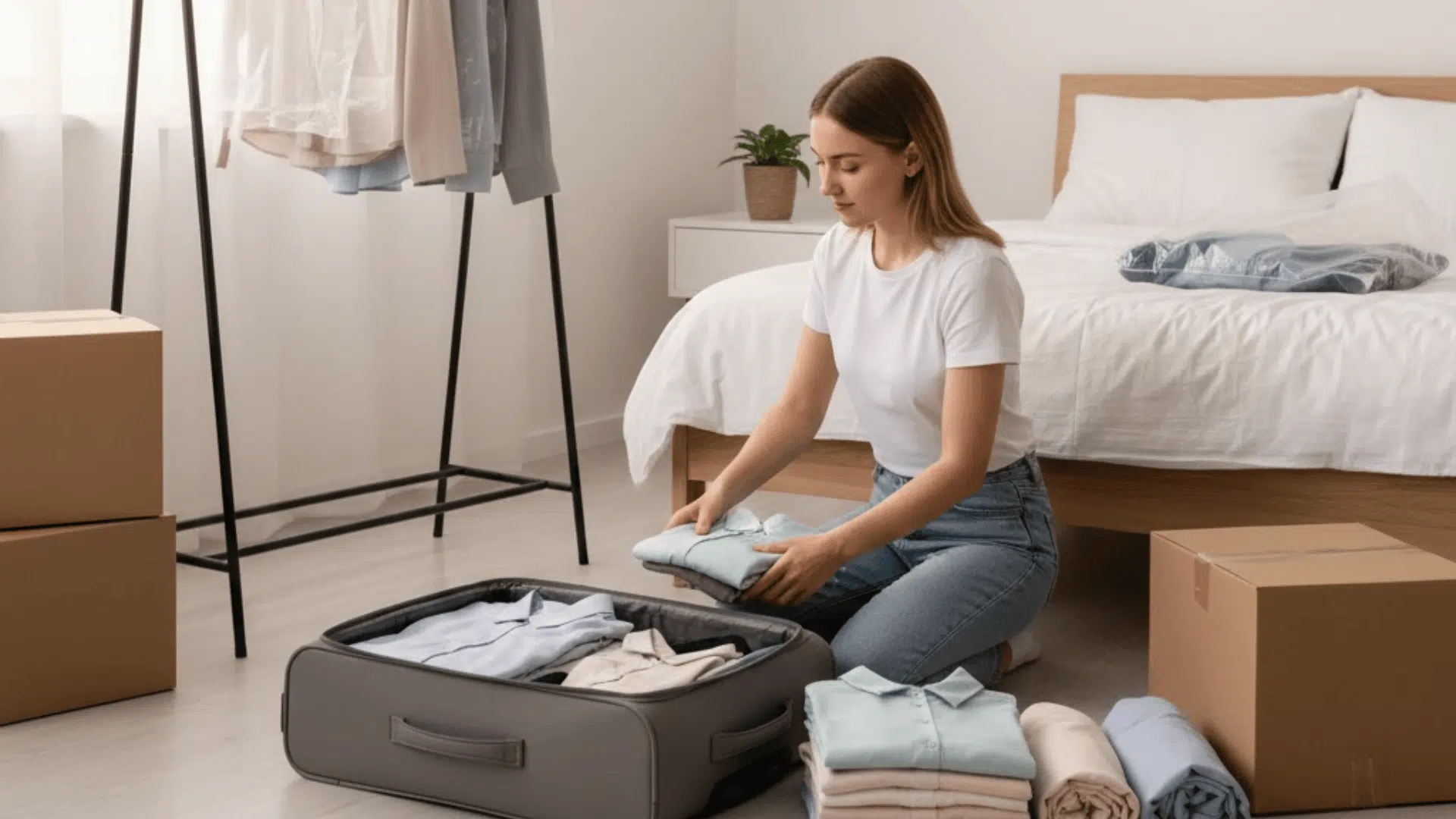
These are all the pieces that don’t need hangers. Shirts, jeans, sweaters, the everyday stuff. Roll the softer things. Fold the structured things. Use whatever method lines up with the clothes in front of you. The goal is simply to keep everything compact and predictable.
Step 4: Handle Hanging Stuff
Grab clothes in small bundles so they don’t turn into a tangled mess. Slip a bag over the top or move them into a wardrobe box if they’re nicer pieces. Keeping them on the hangers saves time later because you’re not rebuilding your whole closet from scratch.
Step 5: Load Suitcases, Totes, and Bins
Anything that needs more protection goes here. Suitcases take weight well. Totes keep things from getting crushed. You just look at what you have and match the clothes to the container that makes the most sense. It’s more about common sense than anything technical.
Step 6: Close Everything Up and Label It
Nothing fancy. Just clear labels so you know what’s what when you land in the new place. It saves you from digging through five boxes because you forgot where the basics went.
How to Move Hanging Clothes Without Ruining Anything
Hanging clothes feel simple until you actually try to move them. They shift around. They tangle. They slide off hangers. So you want a method that keeps everything in place without beating up the fabric. There are a few ways to do it, and each one has its moment.
Garbage-Bag Hack
This is the fast option. You grab a small bundle of hangers, pull a bag over the clothes from the bottom, and tie it off at the top.
That’s it. Takes seconds. Works best for casual pieces; shirts, hoodies, everyday stuff. Not the prettiest method, but if you want speed, nothing’s faster.
Wardrobe Boxes
These are the closest thing to moving your closet as-is. They come with a bar inside, so you just lift the hangers off your rod and drop them onto the bar.
They’re sturdy and spacious. Perfect for long-distance moves or heavier fabrics that shouldn’t get crushed. They cost more, but they keep things in shape better than anything else.
Garment Bags
This is the “keep it nice” option. Suits, dresses, delicate fabrics, they work for anything you’d be annoyed to find wrinkled or bent. They don’t hold a ton, but they protect individual pieces really well. Great when you want things to show up exactly how they left.
- If you want speed, it’s the garbage-bag hack.
- If you want protection, it’s garment bags.
- If you want the middle ground, fast, clean, and organized, wardrobe boxes hit that sweet spot.
How to Handle Bulky Stuff the Smart Way

Bulky pieces like coats, hoodies, and big sweaters get annoying fast. They take up space, they shift around, and some of them don’t handle pressure well.
Heavy sweaters can stretch if they’re packed too tightly. Wool creases easily. Hoodies are fine, just bulky. Coats eat half a box on their own.
Vacuum bags help with the big items. Puffers, thick coats, chunky hoodies; those shrink down nicely. You get way more room, and nothing moves around.
But they’re not great for everything. Delicate knits, wool sweaters, or anything that loses its shape shouldn’t get compressed. Those do better with a simple fold and a little breathing room.
So the rule’s pretty simple: vacuum bags for the huge stuff, regular folds for anything fragile or stretchy.
The Mistakes People Make that Kill Their Clothes
A lot of the damage comes from small choices that don’t seem like a big deal at the time but end up wrecking pieces you actually care about.
- Overpacking big boxes: Clothes look light, but big boxes get heavy fast. When they collapse or get dropped, everything inside takes the hit.
- Sealing up damp clothes: Even slightly damp fabric traps moisture and smells. It can stain or mildew in a sealed space.
- Hanging heavy sweaters: Sweaters stretch under their own weight. A move makes it worse. Folding is always safer.
- Packing delicate pieces wrong: Silk, lace, structured pieces; they don’t survive pressure or rough packing. They wrinkle or snag easily.
- Relying too much on cheap bags: Thin bags rip, handles tear, clothes spill out. They work for quick moves, not long ones or heavy loads.
These little mistakes add up fast, and avoiding them saves you from unpacking a box full of clothes that don’t look the same anymore.
Quick Scenarios and What Works Best
Different moves call for different approaches. Here’s the fast version, without overthinking it.
You’ve got three closets and zero time.
Mix methods. Roll the soft stuff, fold the heavy pieces, and bag the hanging clothes. Don’t get fancy – just get everything contained.
You’re moving across the country.
Use sturdier containers. Suitcases, real boxes, and garment bags for nicer pieces. Vacuum bags are only for the bulky things that can handle it.
You’re storing clothes for a few months.
Skip vacuum bags for anything delicate. Go with clean folds, breathable containers, and make sure everything is completely dry before it goes away.
You only have garbage bags and suitcases.
Bag the hanging clothes, suitcase the folded ones. It’s simple, fast, and works better than people expect.
Each situation has a clean answer. You just match the tools to the moment and keep things moving
Wrapping Up
Packing clothes doesn’t have to feel like a whole project. Once you understand how different fabrics behave and which containers actually make sense, everything settles into a rhythm.
You start seeing what should be folded, what should be rolled, and what needs real protection. The bigger moves just come down to choosing the setups that keep your stuff comfortable along the way.
That’s really the whole point of learning how to pack clothes for moving: keeping things in the same shape they were in when you pulled them out.
If you want more straightforward guides like this, check out the other blogs on the website and keep things easy on your next move.