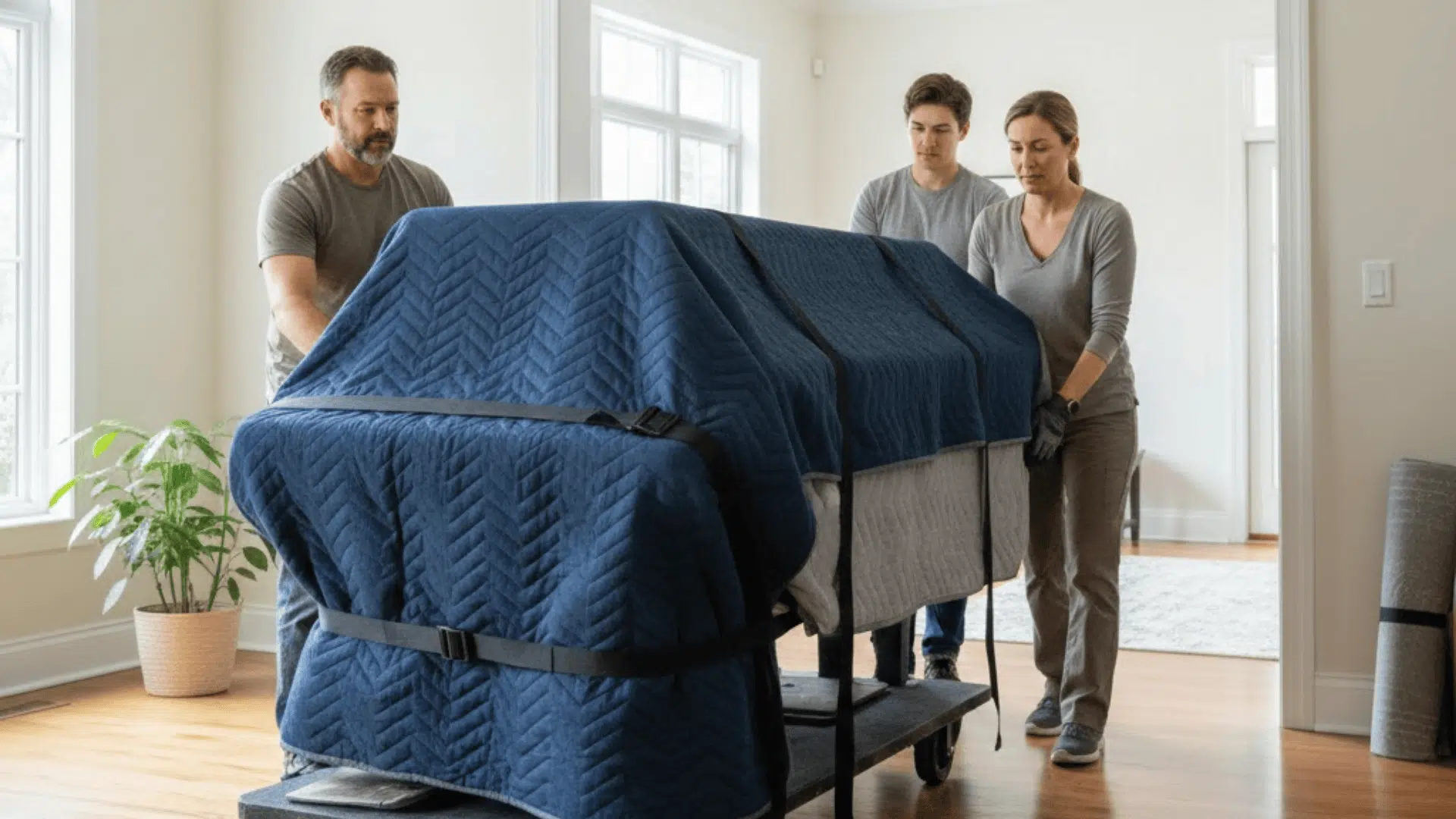
Moving a piano sounds like a strength problem, but it rarely is. Most damage happens because people misunderstand how pianos behave when they shift, tilt, or roll.
They look solid and calm, right up until they are not. The tricky part is that bad moves often start with good intentions and incomplete advice.
Today, instead of rushing into steps, I will give you a good look at judgment, setup, and real-world situations that change the risk.
If you are trying to figure out how to move a piano without injury or regret, the first thing to settle is whether you should move it yourself at all.
First, Decide If You Should Move It Yourself
This is the most important part of the entire process. Everything else depends on this decision. Many guides jump straight into steps and tools. That is how people get hurt or break things.
DIY piano moving is usually safe when the move is simple and controlled. Flat ground. Short distance. Plenty of help. The piano stays upright the entire time. If any of those change, the risk goes up fast.
DIY is usually reasonable when:
- The piano is an upright, not a grand.
- The floor is flat with no stairs.
- The path is wide with gentle turns.
- You have at least three strong, calm helpers.
- You can use a proper piano dolly.
DIY becomes risky when:
- There are stairs, even just a few.
- The floor slopes or changes height.
- The turns are tight or blind.
- The piano must tilt more than a little.
- You are short on people or tools.
There are clear points where you should stop and call professionals. These are not judgment calls. They are safety limits.
Weight matters, but only to a point. Most upright pianos weigh 300–500 pounds, which feels manageable until the balance shifts. Once it tips, strength alone cannot stop it.
Stairs change everything. Even one or two steps alter the physics. Gravity takes control, and this is where professionals have training that most homeowners do not.
Floor type matters more than expected. Hardwood gouges, tile cracks, and carpet resistance can cause sudden, dangerous jolts.
If you feel pressure to “just try it,” that is a signal to stop. Piano moves fail when people rush past their own doubts.
How Heavy is a Piano?

Most upright pianos fall in the 300 to 500-pound range. Smaller uprights are closer to the low end. Taller studio uprights sit closer to the high end.
Baby grand pianos often weigh 500 to 600 pounds. Full grands can reach 900 pounds or more. These are not DIY objects. They require disassembly and special boards.
The real issue is not total weight. It is how that weight behaves. Pianos are top heavy. The center of mass sits higher than people expect. When a piano tips, it accelerates quickly. That is why people get hurt even when the numbers seemed manageable.
Another issue is grip. There are no good handholds. The finish is slick. The legs look solid but are fragile. Weight combined with poor grip is what causes sudden drops.
Tools You Actually Need and What Not to Use
Control matters more than strength. The right tools give you control. The wrong ones create false confidence.
- A four wheel piano dolly is essential. This is not the same as a standard furniture dolly. Piano dollies are wider, lower, and built to keep weight centered. The wheels roll smoothly and evenly.
- Moving blankets protect both the piano and your walls. Pianos chip easily. The finish cracks under pressure. Blankets also improve grip.
- Straps keep the piano attached to the dolly. Without straps, the piano can slide when you hit a threshold or seam in the floor.
- A ramp is needed for trucks, steps, or any change in height. Lifting a piano straight up is dangerous. Controlled rolling is safer.
Using a regular furniture dolly is one of the most common mistakes. The wheels are too small. The base is too narrow. Many damaged pianos and broken ankles start with the wrong dolly.
How to Move an Upright Piano Step by Step

These steps apply only to flat surfaces with no stairs. If that is not your situation, stop here and read the next sections before continuing.
1. Start by preparing the route. Clear everything. Doors open fully. Rugs removed. Measure doorways. You want no surprises once the piano is moving.
2. Protect the piano next. Close and lock the keyboard lid if possible. Wrap the body in moving blankets. Secure them without taping directly to the finish.
3. Lifting is about posture, not force. Lift from the sides, never the legs. Bend your knees. Keep the piano upright. Small tilts are fine. Big tilts are not.
4. Place the piano onto the dolly slowly. One person steadies. One guides. One lifts. Once centered, strap it down. This step matters more than people think.
5. Move slowly. Talk constantly. Call out obstacles. If the piano starts to lean, stop. Reset. Rushing turns small problems into injuries.
How to Move a Piano in Common Real-Life Situations
Every house is different. Advice fails when it ignores context. These scenarios cover the situations most people face.
1. Moving a Piano Across a Room
This is the safest scenario. The risk is still real, but controlled.
Use furniture sliders or a dolly. Keep the piano upright. Move in small increments. Watch the floor for resistance. Stop if the piano twists. Twisting causes leg damage and internal stress.
2. Moving a Piano Through a Doorway
Doorways are tighter than they look. Remove doors from hinges if needed. Angle the piano slightly, but keep it mostly upright. One person should watch the top corners. That is where damage happens first.
Never force a piano through a doorway. If it does not fit cleanly, reassess.
3. Moving a Piano Around Tight Corners
Corners combine two risks. Limited space and rotation.
Plan the turn before you move. Mark where people will stand. Move inches at a time. If someone loses footing, stop immediately. Resetting is safer than pushing through.
4. Moving a Piano Over Small Steps or Thresholds
Even small height changes matter. Use a ramp whenever possible. Lift only one side at a time. Keep hands clear of pinch points. If the piano tilts too far, back away and reassess.
Moving a Piano Up or Down Stairs

Stairs change everything. Gravity stops being neutral. Control becomes difficult to maintain.
Professionals use skid boards, straps, and coordinated commands. They plan weight transfer before the first step. They also accept that damage to walls or floors is better than injury.
You should not attempt stair moves if:
- The stairs are steep or narrow.
- The piano must be tilted far.
- You lack proper equipment.
- Anyone feels unsure.
This is where many DIY moves go wrong. Stairs do not forgive hesitation.
Common Mistakes that Cause Damage or Injury
Most problems come from the same errors.
Lifting by the legs. Piano legs are decorative, not structural. They crack or snap under load, instantly shifting balance and forcing the full weight into places your body cannot safely control.
Tilting too far. A small tilt is manageable, but once the piano passes its balance point, gravity takes over and no amount of strength can pull it back upright.
Rushing turns. Turns feel slow until momentum builds. Moving too quickly around corners causes sudden swings that pin hands, slam walls, and make the piano impossible to stabilize.
Skipping straps. Without straps, the piano is free to slide on the dolly. That movement often happens during thresholds or seams, when everyone least expects it.
Underestimating weight shifts. A stationary piano feels predictable. Once it moves, weight transfers unevenly, surprising people who prepared for the load but not the motion
Each mistake starts the same way. Confidence replaces caution, small risks are ignored, and problems appear suddenly when there is no time left to correct them.
After You Move the Piano
The move does not end when the piano reaches its spot. What happens in the days after matters just as much as the move itself.
Give the piano time to settle. Changes in temperature and humidity affect the wood, strings, and internal tension. Tuning too soon can lead to unstable results, so it is usually best to wait two to four weeks unless something sounds clearly off.
Be thoughtful about placement. Keep the piano away from vents, radiators, windows, and direct sunlight. These cause uneven drying and expansion, which leads to long-term structural and tuning problems.
Finally, inspect the piano closely. Check the legs, pedals, and cabinet joints. Play each key and listen for rattles, sticking, or dead notes. Small issues caught early are easier and cheaper to fix.
DIY vs. Hiring Piano Movers
This decision is about risk management, not pride or toughness. The safest choice is the one that matches your situation, not your confidence.
DIY moves can save money at first, especially for short, flat moves. The tradeoff is that all risk stays with you. One mistake can damage the piano, the home, or your body.
Professional movers cost more, but that cost covers experience, equipment, and liability. Pricing usually depends on distance, stairs, and access. Repairing a cracked leg, damaged soundboard, or injured back can easily exceed the moving fee.
There is also peace of mind. When professionals handle the move, you can focus on where the piano belongs instead of managing danger in the moment.
Final Checklist Before You Start
Before touching the piano, confirm:
- You have enough people who can follow instructions.
- You have a proper piano dolly, blankets, straps, and ramps.
- The route is clear, measured, and rehearsed.
- Everyone knows when to stop if something feels wrong.
- You have a clear point where you will quit and call for help.
Conclusion
Moving a piano is less about muscle and more about judgment. The safest moves are slow, planned, and honest about limits. Many problems come from skipping the thinking step and jumping straight into action.
When you understand weight behavior, balance, and risk, decisions become clearer. Sometimes that clarity leads to a careful DIY move. Other times it leads to hiring help. Both are valid outcomes.
If this guide helped you think more clearly about how to move a piano, take a moment to reassess your situation before starting. A calm pause now can prevent a painful mistake later.