If you have ever dealt with a pump that clogged after two weeks, lost pressure during peak usage, or failed mid-operation — you already know the problem. Standard pumps are designed for clean water. Greywater is not clean, and the wrong pump pays for itself in failures.
Whether you’re building a system for your home, off-grid cabin, small farm, or light commercial operation, the goal is clear: choose a diaphragm pump that handles messy greywater reliably, requires minimal maintenance, and won’t fail when your operation depends on it.
What Makes Greywater So Hard on Pumps
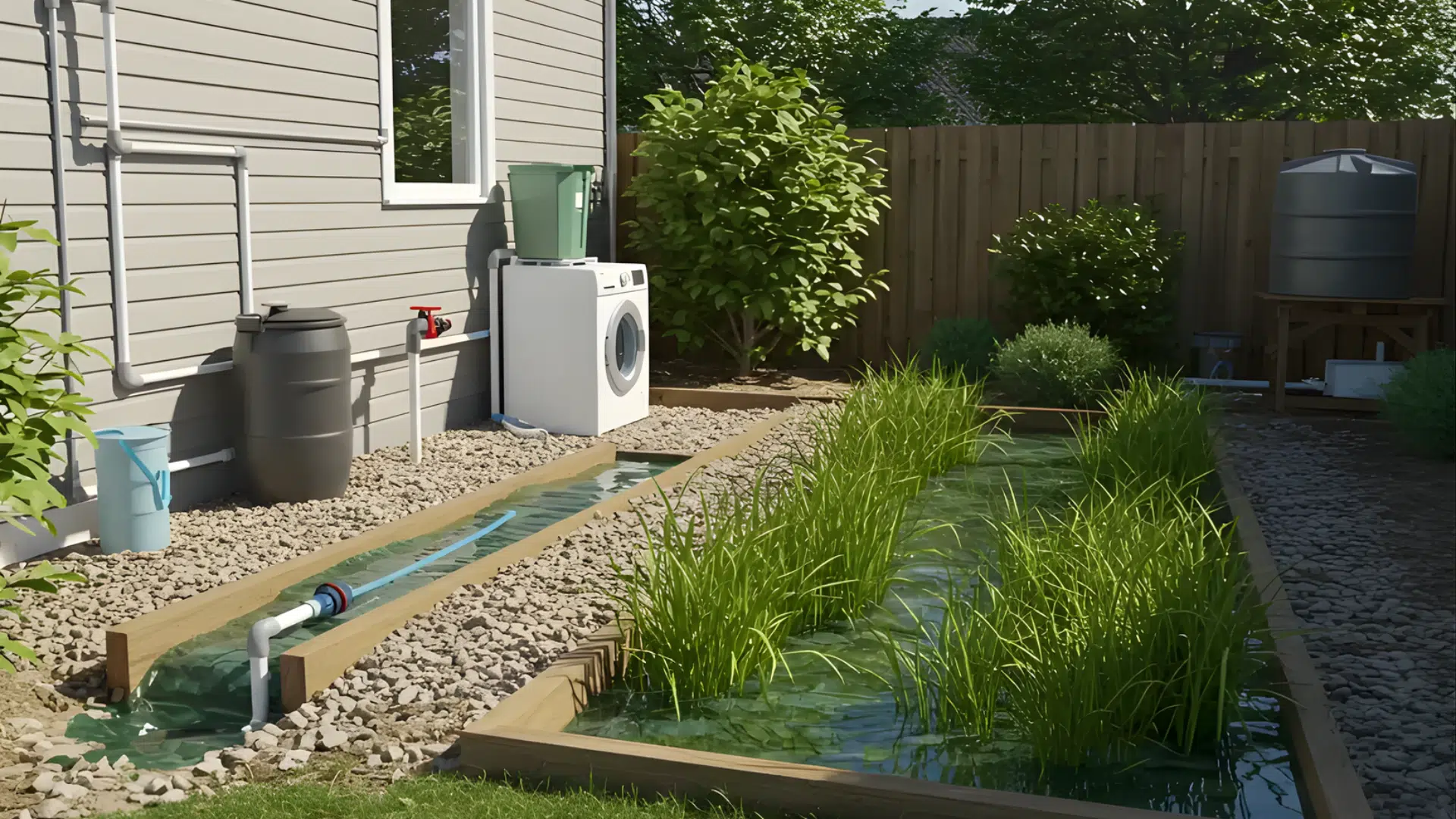
Greywater from sinks, showers, laundry, and kitchen drains carries a mix of contaminants that standard pumps were never designed to handle:
- Soap, detergents, FOG (fats, oils, grease), and fine sediment that coat and degrade internal components
- Hair, lint, and fibrous solids that jam impellers and clog narrow passages
Centrifugal pumps rely on tight impeller clearances optimized for clean water. In greywater, those clearances become failure points. Debris jams the impeller, soap prevents proper sealing, and the pump overheats. The pattern is predictable — and avoidable with the right equipment.
Why Diaphragm Pumps Handle Dirty Water Better
A diaphragm pump replaces the spinning impeller with a flexible rubber membrane — one stroke draws water in, the return stroke pushes it out. Sensitive components sit outside the water stream entirely. There are no tight clearances for debris to jam. Hair passes through. Soap residue does not accumulate on critical surfaces. Diaphragm pumps are also self-priming and tolerate short dry-running periods, making them the practical choice for greywater systems across residential, agricultural, and industrial settings.
Why AODD Pumps Are the Stronger Choice
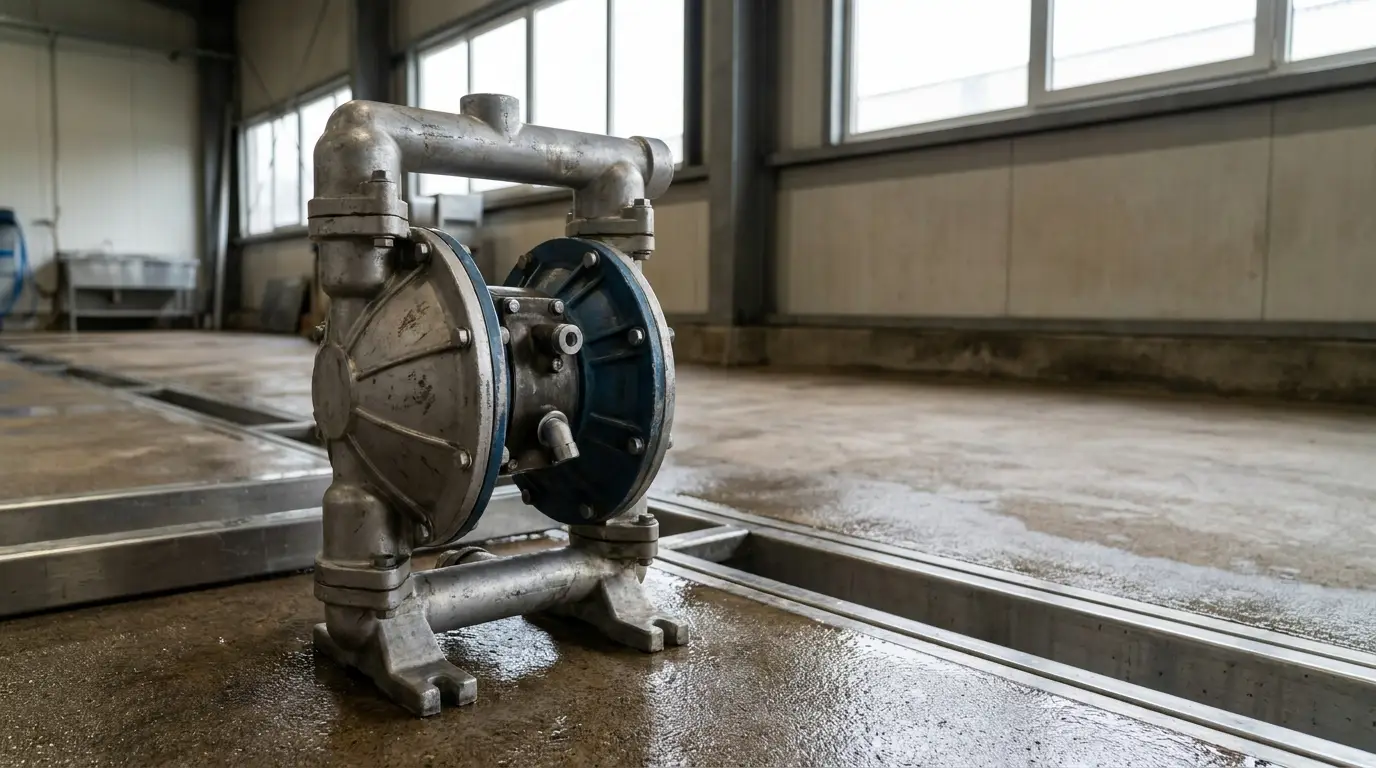
Air Operated Double Diaphragm pumps take the diaphragm advantage further. Two diaphragms running simultaneously handle higher debris loads and deliver more consistent flow. The real differentiator is passive self-protection: if the outlet blocks, the tank runs dry, or the float switch fails, an air operated double diaphragm pump simply stops. No overheating. No motor burnout. It waits until conditions return to normal. No electric pump offers this.
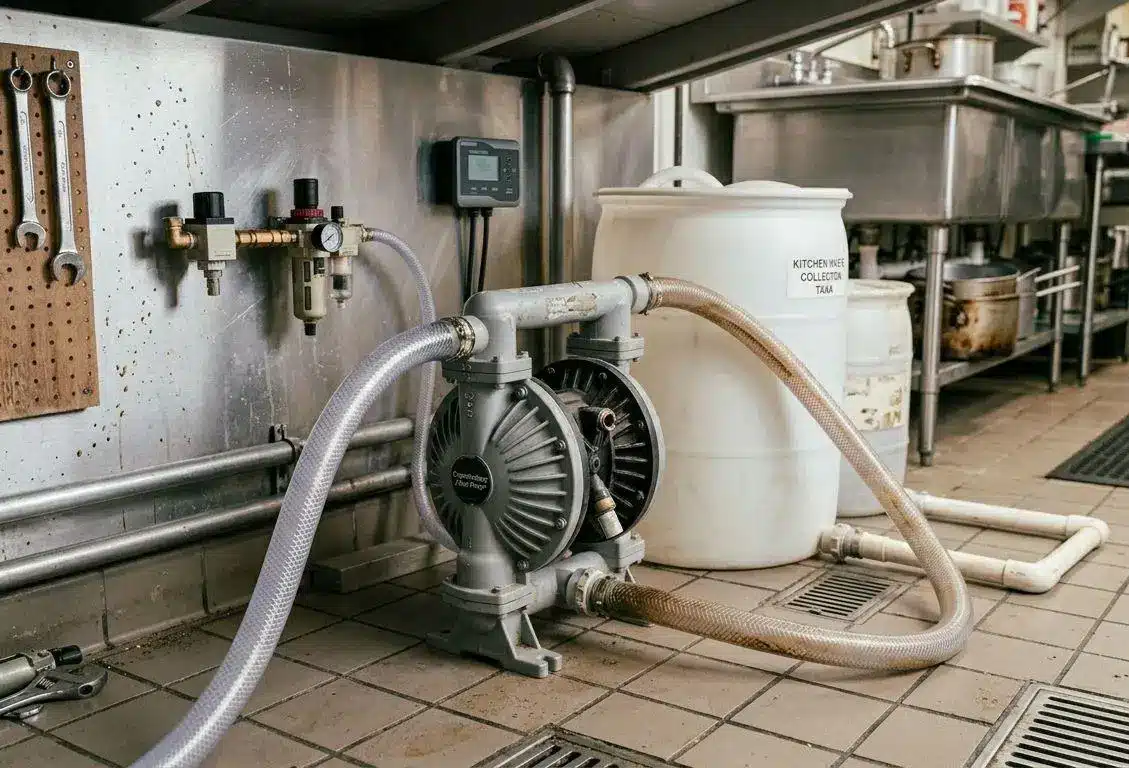
In light industrial environments — commercial kitchens, food processing washdown areas, agricultural equipment cleaning stations — greywater carries far higher concentrations of FOG, cleaning agents, and suspended solids than household runoff. Electric motors strain under this load; air operated double diaphragm pumps take it in stride. Where a compressed air supply is already on site, AODD consistently outperforms electric alternatives across the full service life.
The Sizing Mistake Most People Make
The instinct is to go bigger — more GPM means more capacity, right? In greywater systems, this backfires. An oversized pump empties the collection tank in seconds, shuts off, waits for it to refill, then starts again. This short-cycling wears diaphragms faster than continuous running and causes water hammer — pressure surges that rattle pipe connections loose. In commercial and light industrial installations, short-cycling also accelerates wear on AODD air valves and pilot systems, which are the more costly components to replace.
Size to your real drain rate — not peak theoretical volume, and not a safety margin stacked on top of another. A pump running steadily at its design point outlasts one cycling on and off all day, at any scale.
Quick Comparison: Pump Types for Greywater
| Feature | Centrifugal | Electric Diaphragm | AODD Pump |
| Debris & hair handling | Poor — jams | Good | Excellent |
| Self-priming | Usually no | Yes | Yes |
| Blockage / dry-run | Burns out fast | Short periods only | Stops safely — no damage |
| Kitchen grease (FOG) | Fails quickly | Moderate | Handles well |
| Continuous duty rating | Limited | Moderate | High — built for sustained load |
| Maintenance | Difficult | Moderate | Simple diaphragm swap |
| Best fit | Clean water only | Small to medium | Medium to large / commercial |
Core Specifications to Evaluate
Flow Rate
Size to peak simultaneous drain load — not daily average. Residential systems typically need 10–25 GPM. Light industrial operations are different: a commercial kitchen washdown, farm equipment cleaning station, or small laundry facility can demand 30–80 GPM with little notice between surge loads. Calculate maximum simultaneous output across all active drain sources and size to that number.
Solid Particle Tolerance
Confirm the manufacturer’s maximum solid particle size in millimeters before purchasing. Residential greywater is generally handled by pumps rated at 3mm or larger. Light industrial and commercial systems — food processing runoff, agricultural washdown, commercial laundry effluent — routinely carry debris above that threshold. For these applications, specify 5mm or higher and verify directly with the manufacturer, not the product description.
Material Compatibility
Residential greywater — soaps and light detergents — is handled well by santoprene or EPDM diaphragms with polypropylene bodies. Light industrial and commercial environments are a different problem. Commercial kitchen degreasers, agricultural disinfectants, dairy washdown solutions, and food processing effluents are chemically aggressive. Request the full material compatibility chart and cross-check against your actual water chemistry. A material mismatch at commercial scale — diaphragm swelling, valve seat degradation — does not inconvenience you. It shuts you down.
Continuous Duty and Air Consumption (AODD)
For commercial and light industrial buyers, confirm two things before specifying. First, the continuous duty rating — how long the pump runs without a rest cycle. Residential use is intermittent; a commercial kitchen or processing facility may run the pump for hours straight. Second, compressed air demand in CFM at your operating pressure. Factor in all other equipment sharing the air supply. An undersized compressor causes pressure drops that reduce throughput and increase component wear — a common and avoidable oversight.
Power Source
Electric diaphragm pumps come in 12V, 24V, and 110/240V. For off-grid solar and battery systems, 12V or 24V with low amp draw is the right fit. air operated double diaphragm pumps run on compressed air — confirm CFM requirements at operating pressure before specifying the compressor.
Which Pump for Which System: Find Your Fit
Greywater systems vary more by workload type than by size. Find your operating context below.
- Light Residential — home, Tiny Home, RV, or small off-grid cabin. Intermittent load from bathing, laundry, and sinks. A quality electric diaphragm pump in the 10–25 GPM range is usually the most practical choice. It offers simple installation, low power consumption, and quiet operation — especially important for solar-powered or noise-sensitive environments.
- Medium Residential or Off-grid Property (3–6 people). Multiple drains may run simultaneously. Most users in this range choose a good electric diaphragm pump. However, if you already have a reliable compressed air supply, a 1-inch air operated double diaphragm pump (around 20–35 GPM) can be a strong option due to its excellent debris handling.
- Small Farm, Eco-property, or Centralized Collection. Higher volume and more variable debris load. This is where AODD pumps often become the better choice — provided you have access to compressed air. The passive self-protection (pump stops safely instead of burning out) makes it ideal for operations where unexpected downtime is costly.
- Light Industrial — commercial kitchen, farm washdown station, or small processing facility. Greywater here contains higher concentrations of FOG, chemicals, and solids. A 1.5-inch or 2-inch AODD pump (40–100 GPM range) is commonly preferred. Make sure your air supply system can sustain peak demand without pressure drop.
- Multi-building Facility or Larger Commercial Operation. High sustained throughput. AODD pumps with 2-inch or larger ports are the standard solution. Strongly consider running two units (one active + one standby) and verify full material compatibility with your actual greywater chemistry.
Conclusion
Most pump problems trace back to one decision made at the start. Match type to workload, size to peak drain rate, and materials to your actual water chemistry. Do that, and the pump becomes the least complicated part of the system.