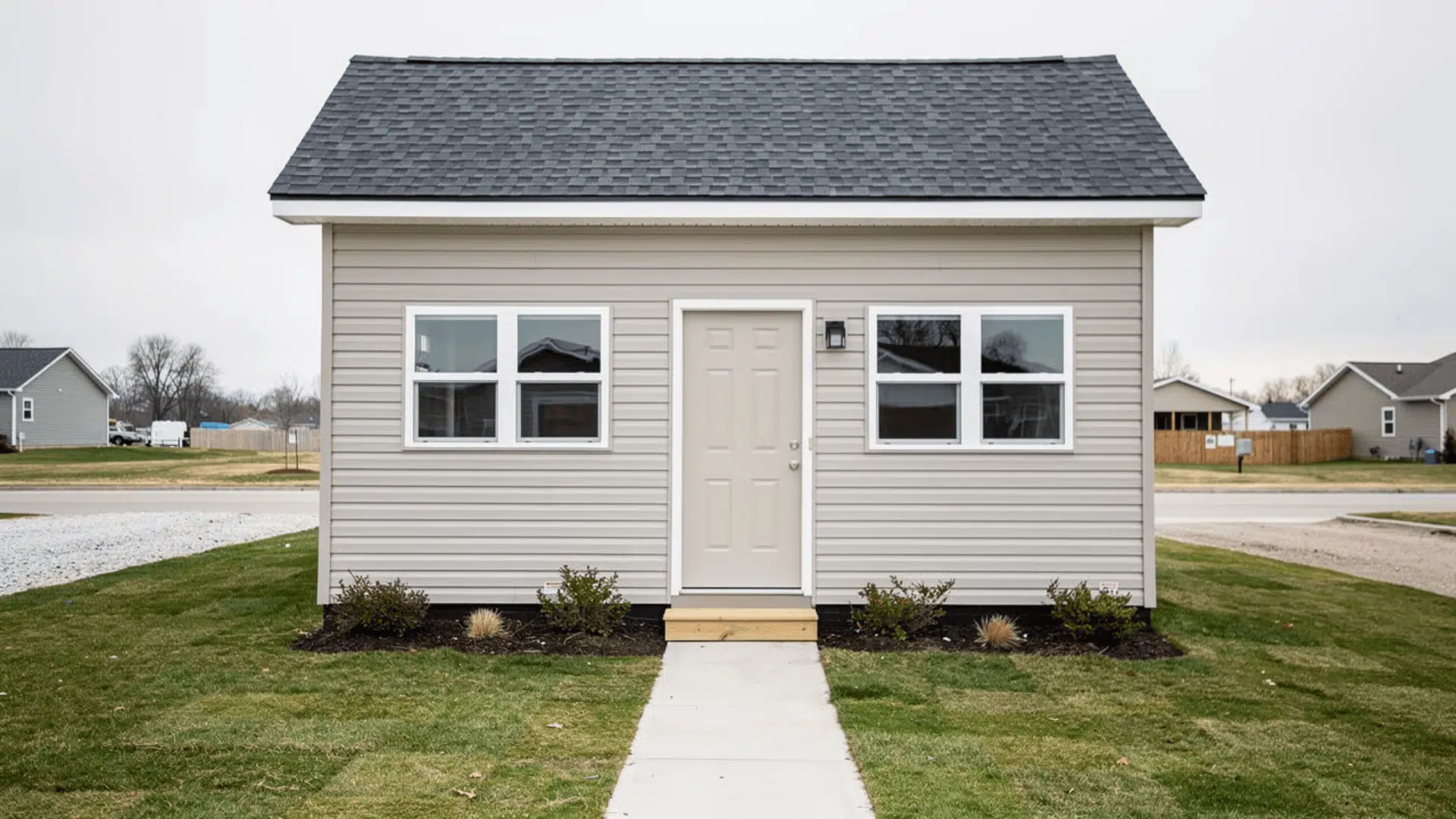
Tiny houses attract a lot of attention, but the pricing behind them is rarely explained clearly. People see wildly different numbers online and assume someone is lying or cutting corners.
The reality is more structural than that. The cost to build a tiny house is shaped by size, systems, labor choices, and how permanent the setup is, not by a single average number. Fixed components behave differently at small scales, and that changes how budgets work.
In this guide, I’ll break down where the numbers actually come from, what drives them up or down, and which assumptions tend to mislead buyers.
How Much Does It Actually Cost to Build a Tiny House?
Across the U.S., most tiny houses built today fall between about $30,000 and $90,000 when you combine materials and labor. Mid-range projects, especially ones around 200–300 square feet with decent finishes, tend to cluster around $45,000 to $70,000.
Lower costs are possible; some prefab kits sell for under $15,000, and very simple DIY structures can start around $20,000. But those usually involve minimal interior finishes, limited systems, or heavy DIY labor.
On the high end, large custom builds or luxury tiny homes with high-end materials, multiple rooms, or advanced systems can push well above $100,000, with some projects exceeding $150,000 or more.
The key idea here is that the term “tiny house” covers a wide variety of builds, sizes, and quality levels, so there isn’t one standard price, only ranges based on choices.
Why Tiny House Costs Vary so Widely
Part of the wide range stems from how fixed systems interact with tiny spaces. Every home, tiny or not, needs structural framing, insulation, electrical wiring, plumbing, a roof, and windows. In a tiny house, these fixed costs don’t shrink proportionally with space.
For example, a 200-square-foot build still needs a functioning kitchen, bathroom, and HVAC system just like a larger home. Those systems don’t become cheap just because the house is small.
In fact, cost per square foot often goes up as size shrinks. Tiny houses typically range from about $150 to $450 per square foot, compared with roughly $100–$200 per square foot for larger, traditional houses. (HomeGuide)
Material choices also play a major role. Basic framing lumber and standard windows cost far less than premium woods, high-performance windows, or custom finishes. Labor intensity, how skilled work has to be, and how long it takes, multiply these material choices into final dollars.
The misunderstanding here is that price differences are cosmetic. They’re not. They are the structural consequences of how tiny houses are built.
DIY vs. Professional Builds: What the Price Difference Really Means

When you see DIY tiny homes reported for $20,000–$40,000, that often reflects materials only, with the owner supplying labor themselves. According to recent U.S. cost data, DIY material lists generally fall roughly in that range for simple builds, with labor omitted. (Little Houses for Sale)
In contrast, hiring professionals typically puts builds in the $50,000 to $150,000 range because you’re paying for skill, time, project management, and often code compliance.
What DIY doesn’t include and what most people underestimate is:
- Time investment (hundreds to thousands of hours)
- Learning curve and potential rework
- Safety and code compliance work you may later have to fix
Professional builds cost more upfront, but they bring predictability and accountability. The idea that DIY is purely cheaper in dollar terms misses the fact that labor and quality risk translate into real costs later.
Tiny House on Wheels vs. Foundation: How Each Affects Cost

Tiny homes can be built on wheels or on a permanent foundation, and each option carries different cost tradeoffs.
A tiny home on wheels requires a purpose-built trailer. A quality trailer typically costs $4,500 to $11,000, with heavy-duty models costing more to safely support a finished home.
A foundation-built tiny home avoids trailer costs but adds site preparation and foundation work. Even a simple slab foundation can add several thousand dollars once excavation and concrete are included.
Utility connections also differ. Trailer builds often use compact or specialized systems, while foundation homes usually connect to local water, sewer, and electrical lines, increasing cost but improving permanence.
The assumption that wheels always mean lower cost isn’t universally true. Final pricing depends on system complexity, site conditions, and the standards the build must meet.
Understanding Cost per Square Foot for Tiny Houses
Cost per square foot is often cited as a quick metric for comparing builds, but it can mislead when you’re comparing tiny homes to traditional houses.
Because so many systems (kitchen, bathroom, HVAC) don’t scale down in complexity as space shrinks, tiny houses often cost more per square foot than large homes, sometimes $250–$400+ per square foot, depending on finishes and build type.
This doesn’t mean tiny houses are expensive overall; their total cost is much lower than a 2,000+ square foot house, but the per-foot metric highlights that efficiencies of scale aren’t linear at very small sizes.
So comparing tiny homes directly to larger houses on a per-square-foot basis can give a false impression that tiny homes are inefficient, when in fact they just concentrate fixed costs into a smaller footprint.
What’s Usually Included in The Build Price and What Isn’t
When tiny house cost estimates reference a range like $30,000–$90,000 in the U.S., they usually include core structure, framing, insulation, and basic systems.
What these estimates may not include are:
- Appliances and interior furnishings
- Utility hookups (especially for foundations)
- Permits and inspection fees
- Site preparation or grading
- Contingency budgets for unexpected issues
Omitting these can make a quoted price look deceptively complete. Many people assume the number they see is move-in ready, but the real total often involves these additional line items.
Why Ultra-Cheap Tiny House Builds are Possible but Not Typical

Ultra-low cost builds (e.g., under $20,000) are possible under very particular conditions:
- Salvaged or free materials
- Very basic layout with minimal systems
- Owner labor at very high time investment
- Off-grid or simplified utilities
These conditions are real, people do build them, but they don’t represent typical outcomes because most people want functional plumbing, heating, and living systems that meet codes. Thus, very cheap examples don’t scale to the majority of builders.
The mistake many make is thinking viral low-cost examples are “normal.” They’re not. They are edge cases that require specific circumstances.
Wrapping Up
Tiny house pricing only looks confusing when it’s treated like a single category instead of a range of build decisions. Once you separate structure, labor, systems, and site factors, the numbers start to make sense.
The cost to build a tiny house isn’t about finding the cheapest one online; it’s about understanding which tradeoffs you’re accepting and which risks you’re taking on.
Tiny homes compress fixed costs into small spaces, and that reality doesn’t disappear just because the footprint is smaller.
If you’re considering a build, the smartest move is to map your priorities first, then price the design honestly. Take time to run the numbers for your situation and plan before committing.