Warehouses today are busy – orders keep growing, customer expectations are rising, and teams are under pressure to move faster without losing accuracy.
Because of this, many operations are looking for better ways to stay organized, reduce stress, and keep work flowing smoothly.
That’s where the idea of “lean” comes in.
In this guide, I’ll walk you through how lean thinking fits into everyday warehouse tasks and how it can help teams feel more in control of their space and workload.
What is Lean Warehousing?
Lean warehousing is a way of running a warehouse that focuses on removing anything that slows people down or adds extra work.
The goal is to make every step – receiving, storing, picking, packing, and shipping – cleaner, faster, and easier. It’s about organizing the space, cutting out wasted movement, and creating clear systems that help teams work smoothly.
When a warehouse follows lean ideas, it becomes a place where work flows better, mistakes drop, and everyone knows exactly what to do.
Lean Warehousing vs. Traditional Warehousing
Lean warehousing and traditional warehousing take very different approaches to how work moves through the building.
| Lean Warehousing | Traditional Warehousing |
|---|---|
| Focuses on removing waste and unnecessary steps | Accepts extra steps as part of daily work |
| Keeps inventory at the right level | Stores extra stock “just in case” |
| Uses simple, clear workflows that reduce walking | Often has long travel paths and backtracking |
| Encourages standard work and daily improvements | Changes happen slowly or only when issues grow |
| Builds a clean, organized space using 5S | Work areas become cluttered over time |
| Makes decisions based on real demand | Pushes products based on forecasts alone |
Both approaches can run a warehouse, but lean makes the work smoother, faster, and easier for everyone involved. Lean warehousing matters today because warehouse teams face more pressure than ever.
- Customers expect faster shipping and accurate orders.
- Labor is harder to find and more expensive to train.
- Space costs keep rising, so every inch needs to be used wisely.
- Small delays add up and slow the entire operation.
- Cluttered areas and unclear processes make work stressful and unsafe.
In short, lean helps warehouses stay competitive by keeping work smooth, simple, and reliable.
Core Principles of Lean Warehousing
Lean warehousing is built on a few core ideas that help teams work smarter and avoid unnecessary steps.
- Focus on Customer Value: Make decisions that support fast, accurate, and damage-free orders.
- Map the Value Stream: Look at each step from receiving to shipping and spot where time or effort is being wasted.
- Create Smooth Flow: Set up paths, layouts, and processes that help work move forward without stops or backtracking.
- Use Pull, Not Push: Restock and move products based on real customer demand instead of guessing or overloading the system.
- Improve Constantly: Make small, steady improvements so the warehouse keeps getting better over time.
Elements of a Lean Warehouse

A lean warehouse is built on a few key parts that make everyday work easier and more predictable. These elements help teams stay organized, reduce stress, and keep products moving without extra steps.
1. Smart Layout and Flow Design
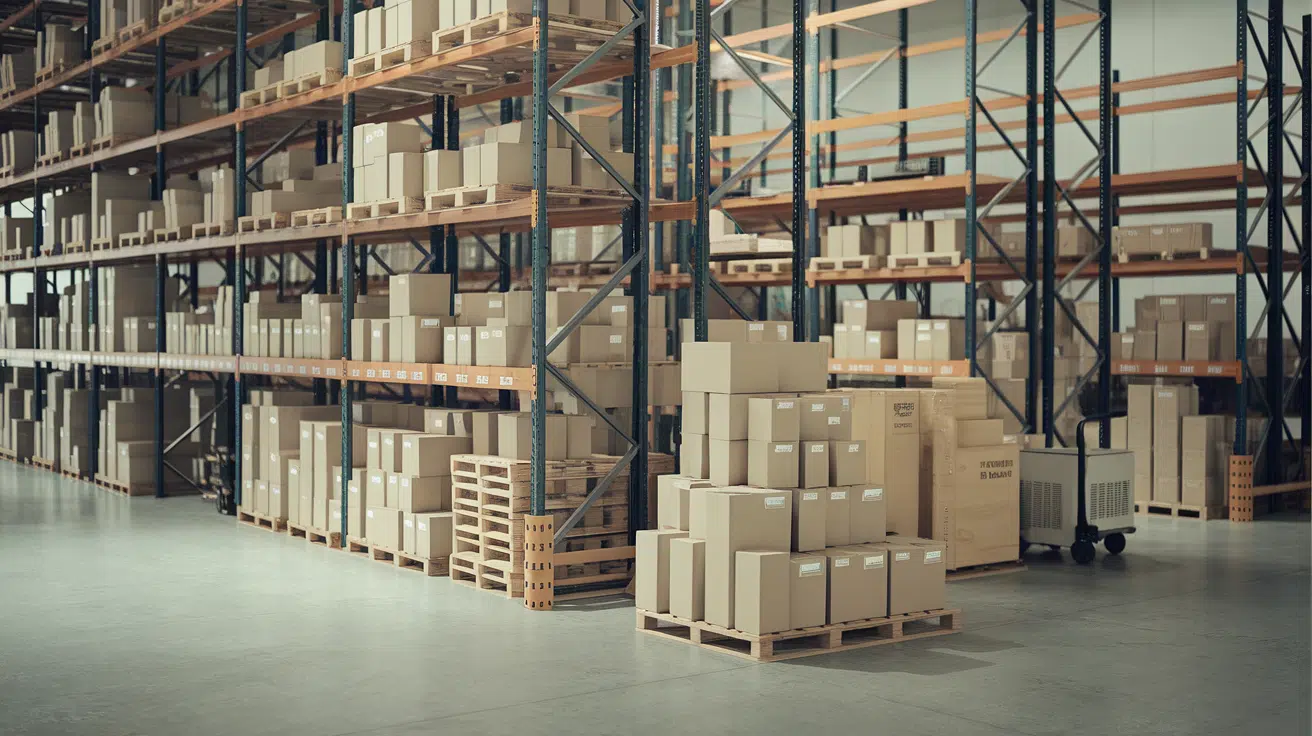
A lean warehouse starts with a layout that makes sense. Fast-moving items sit closer to packing and shipping, so workers don’t walk back and forth.
Aisles stay open and easy to follow, and products are placed in spots that match how often they are used. When the layout supports the work, people move quickly and safely without wasting time or energy.
2. Right-Sized Inventory and Just-in-Time
Lean warehousing keeps inventory at the right level – not too much and not too little. Instead of filling the warehouse with stock “just in case,” teams focus on bringing in products when they’re actually needed.
This cuts down on cluttered shelves, reduces aging inventory, and frees up valuable space. It also helps workers find items faster and avoid digging through unnecessary stock.
3. Standard Work and Clear Procedures
Standard work means there is one simple, best way to do tasks like receiving, put-away, picking, and packing. Clear steps remove confusion and make training easier for new employees.
When everyone follows the same method, mistakes drop, and processes run more smoothly. It also becomes easier to see when something is slowing the team down or needs improvement.
4. Trained, Engaged People
Lean only works when people feel confident in their roles and supported by leadership. Regular training, cross-training, and open communication help workers stay sharp and engaged.
When employees understand the why behind changes, they take more ownership of the process. Their ideas often lead to improvements that make the warehouse even stronger.
5. Data, Metrics, and Visual Management
Lean warehouses use simple data and visuals to stay on track. Dashboards, charts, and signs help everyone see how work is going in real time.
Clear labels guide workers to the right items quickly. Visual cues also highlight problems early so teams can fix them before they slow down the flow. This keeps the warehouse running smoothly and consistently.
6. Technology
Technology can strengthen lean systems when used thoughtfully. Tools like barcode scanners, WMS software, pick-to-light, or voice picking help reduce errors and speed up work.
Automation can handle repetitive tasks while people focus on more important ones. The goal is to support the lean process – not replace it – so the warehouse stays efficient without becoming complicated.
The 5-S System In Lean Warehousing
The 5-S system is one of the easiest and most effective ways to bring order and clarity into a warehouse.
1. Sort: Remove What You Don’t Need
Clear out old tools, broken pallets, and unused supplies. Remove anything that takes up space without helping the work. A clean start makes the warehouse easier to move through.
2. Set In Order: A Place for Everything
Give every item a proper home based on how often it’s used. Use labels, shelves, and signs to keep things easy to find. Less searching means faster, smoother work.
3. Shine: Clean and Inspect as You Work
Sweep, wipe surfaces, and check equipment daily. Keep the space tidy and safe during normal work. Spot small issues early before they become big problems.
4. Standardize: Make Best Practice the Normal Way
Turn good habits into simple routines and checklists. Use visual guides and shared rules for consistency. This helps maintain a clean, organized warehouse every day.
5. Sustain: Keep It Going Long Term
Stick with the system through audits and daily habits. Encourage team ownership to keep standards strong. It makes 5S part of the culture, not a one-time project.
Step-By-Step Lean Warehousing Implementation

You start small, learn what works, and then roll it out to the rest of the warehouse.
Step 1: Assess the Current State
Begin by walking the floor and watching how work really happens. Track basics like travel time, errors, and order delays.
Talk to the team about what slows them down or causes mistakes. This honest view gives you a starting point and helps you pick the right fixes.
Step 2: Set Clear Lean Warehouse Goals
Next, decide what you want to improve in simple, measurable terms. For example, you might want to cut picker travel by 20% or reduce errors by half.
Share these goals with the team so everyone knows what you’re working toward. Clear goals keep your efforts focused and easier to track.
Step 3: Start with a 5-S Pilot Area
Choose one small area, like packing or a single aisle, and apply 5-S fully there. Clear clutter, give everything a home, and set simple cleaning routines. Use labels and signs so anyone can understand the setup.
This pilot becomes your “showcase” for how lean can look and feel.
Step 4: Redesign Layout and Material Flow
Look at how products and people move from receiving to shipping. Move fast-moving items closer to packing and remove unnecessary backtracking. Keep aisles clear and paths simple to follow.
A better layout quickly reduces walking, confusion, and delays.
Step 5: Improve Inventory Control
Review stock levels and identify items that are often overstocked or out of stock. Use basic tools like ABC analysis and clear reorder points. Aim to keep “just enough” inventory instead of filling every shelf. This frees up space and makes it easier to find what you need.
Step 6: Standardize Work and Train the Team
Create simple standard work for key tasks like receiving, put-away, picking, and packing. Use short steps, checklists, and pictures where possible.
Train everyone on the same method and explain why it matters. Standard work makes results more stable and easier to improve.
Step 7: Add Supporting Technology
Once processes are stable, add tools that make them faster and more accurate. This could be barcode scanners, basic WMS, or simple picking aids.
Start with what solves real problems instead of chasing fancy features. Technology should support lean, not make things more complex.
Step 8: Review, Improve, and Scale
Regularly review your results and ask the team what’s working and what isn’t. Fix small problems quickly and celebrate wins to build buy-in.
Then repeat the same steps in other areas of the warehouse. Over time, lean becomes part of how the whole operation runs every day.
Simple Lean Warehousing Examples and Use Cases
Lean warehousing becomes easier to understand when you see it in real situations. These examples show how small changes can make a big difference in everyday warehouse work.
| Use Case | What Was Happening Before | How Lean Improved It |
|---|---|---|
| Better Slotting | Pickers walked long distances and backtracked often | High-use items were moved closer to packing, cutting travel time and boosting speed |
| 5-S In the Packing Area | Tools and supplies were scattered and hard to find | Everything got a fixed home, helping staff pack faster with fewer delays |
| Kanban Replenishment | Pick faces ran out often, slowing down picking | Simple Kanban cards signaled restocks, keeping items available and reducing downtime |
These small wins show how lean ideas help teams work smoothly, faster, and with less stress throughout the warehouse.
Is Lean Warehousing Right for Your Operation?
Lean warehousing is a great fit if your operation is feeling the pressure of growing demand and daily challenges.
- You’re dealing with constant overtime or slow order turnaround times.
- Aisles feel cluttered, and it’s hard to keep the space organized.
- Errors, mis-picks, or rework are becoming more common.
- Your team spends a lot of time walking or searching for items.
- Space is tight, and you need room without expanding the building.
- Training new workers takes too long because processes aren’t clear.
If these signs sound familiar, lean warehousing can help bring order, speed, and simplicity back into your operation.
Conclusion
Lean warehousing isn’t about making big changes overnight. It’s about building a warehouse that runs smoother, stays organized, and supports your team day after day.
When you remove extra steps, clean up clutter, and create simple routines, the whole operation becomes easier to manage.
Mistakes go down, people move with more confidence, and work feels less stressful for everyone. Whether you run a small warehouse or a large facility, lean gives you tools to grow without adding chaos.
If you’re ready to make your warehouse faster, simpler, and easier to run, begin with one lean change this week – and build from there.