Marcus just spent £900 on a beautiful sofa bed for his 180-square-foot studio. When it arrived, he discovered it blocked the bathroom door when extended and left barely enough space to walk through the room. The furniture company wouldn’t accept returns on opened items. Those £900 turned into an expensive lesson about planning small spaces.
Small space living demands precise planning. In compact rooms, every piece of furniture affects multiple functions. A bed positioned incorrectly restricts closet access. An oversized chair eliminates space for a desk. These mistakes aren’t just inconvenient; they’re expensive and sometimes impossible to fix without starting over.
Three-dimensional room planning solves this problem. Before buying furniture or committing to layouts, you can test arrangements virtually, verify measurements, and ensure everything works together. The small investment in planning time prevents costly mistakes that plague small-space dwellers.
Common Tiny Room Layout Mistakes
The American Institute of Architects research shows that scale misjudgment represents the most frequent error in small space design. People consistently underestimate how much space furniture actually occupies and overestimate available circulation area.
In tiny rooms measuring 100 to 300 square feet, several patterns of mistakes appear repeatedly. Understanding these helps you avoid them when planning your own space.
Furniture Scale Errors
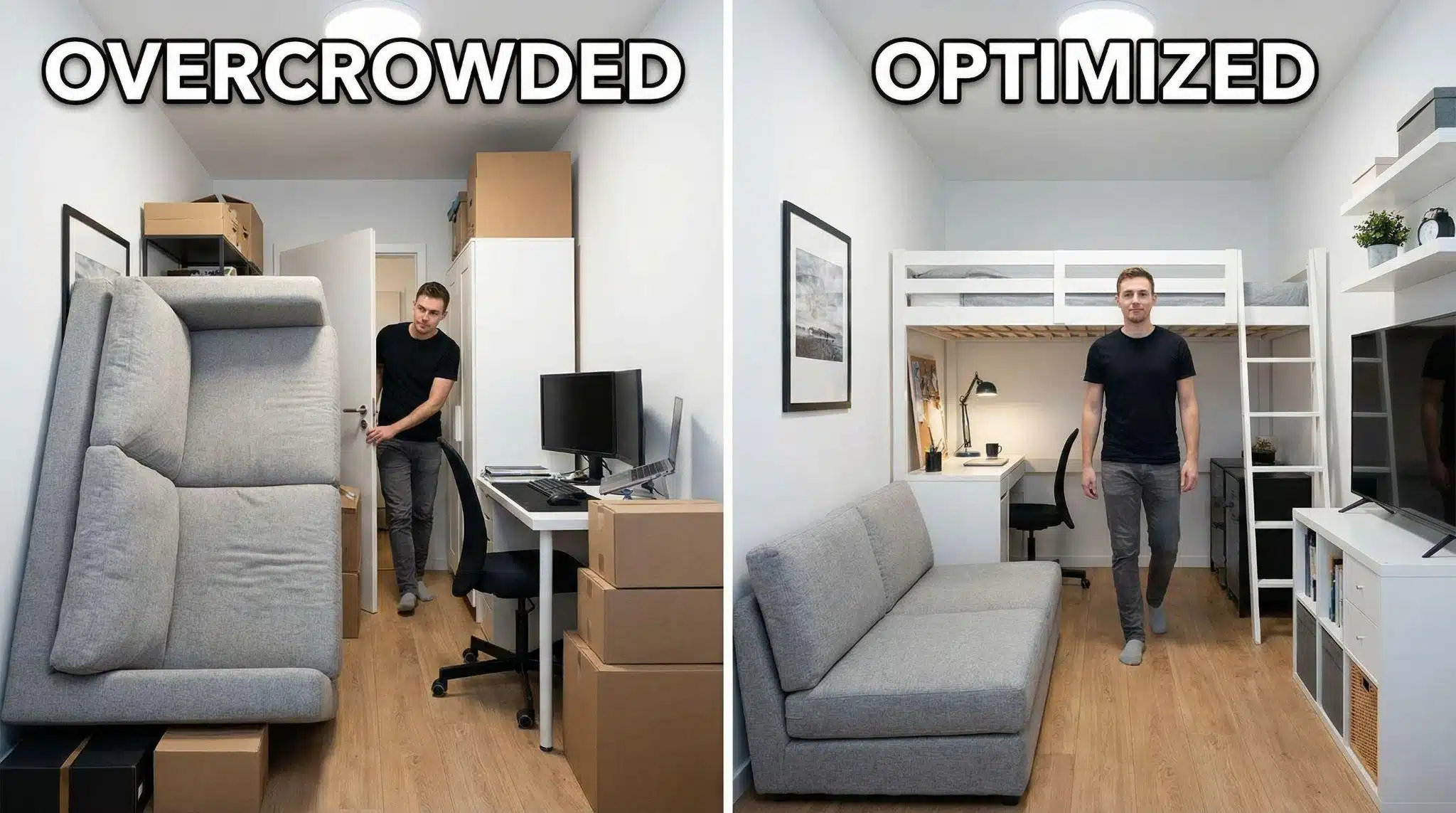
Standard furniture dimensions work beautifully in average-sized rooms but overwhelm tiny homes and compact spaces. A typical sofa measures 84 to 96 inches long, consuming an entire wall in a small room. Queen beds at 60 inches wide leave minimal walkway space in narrow bedrooms.
The problem compounds because furniture appears smaller in showrooms with high ceilings and open layouts. That perfectly reasonable-looking armchair suddenly dominates your 10×12 bedroom. You’re then stuck with expensive furniture that makes your space feel cramped and claustrophobic.
Circulation Space Neglect
People focus intensely on fitting desired furniture into rooms while forgetting they need space to move around it. Designers recommend maintaining 30 to 36 inches of clearance for walkways, yet small space planning frequently ignores this principle.
Imagine arranging furniture perfectly on paper, only to discover you can’t actually walk from your bed to your closet without turning sideways. Or finding that opening your dresser drawers requires moving other furniture first. These daily frustrations stem from inadequate circulation planning.
Door and Window Interference
Doors require clearance to swing open. Windows need access for opening and maintenance. In tight spaces, furniture placement must account for these functional requirements, yet many people overlook them until furniture arrives.
Marcus’s sofa bed blocked his bathroom door when extended. Others discover their bed placement prevents windows from opening fully or that their desk blocks closet access. These conflicts force expensive furniture returns or living with permanent inconveniences.
How 3D Room Planning Prevents These Mistakes
Virtual room planning eliminates guesswork from small space design. Tools like Arcadium 3d room planner let you create accurate digital versions of your space, then test furniture arrangements before making purchases or commitments. You see exactly how everything fits and functions together.
Accurate Scale Visualization
Arcadium renders rooms in precise proportions, showing furniture at true scale within your actual space. That 84-inch sofa appears exactly as large as it will in your 12×14 living area. You immediately see whether pieces overwhelm the room or fit comfortably.
The platform includes extensive furniture libraries with accurate dimensions. You can test standard pieces or input custom measurements for specific items you’re considering. This precision prevents the scale misjudgments that lead to furniture that looks perfect online but dominates your actual room.
Circulation Testing
Virtual planning reveals circulation problems immediately. You position furniture in Arcadium, then view the space from different angles to verify that adequate walkways exist. If your bed placement creates a bottleneck, you see it clearly and adjust before buying anything.
The 3D perspective shows exactly how much clearance exists around furniture. You can verify that the 36-inch pathway beside the bed or confirm adequate space for opening dresser drawers fully. These practical details determine whether a layout actually functions for daily living.
Door Swing and Window Access Validation
Arcadium includes doors and windows in room models, showing their actual swing radius and opening requirements. You place furniture, then verify that nothing interferes with doors opening fully or windows opening properly.
This validation catches conflicts before they become expensive problems. You discover potential interferences during planning rather than after furniture delivery. Simple adjustments in the virtual space prevent real-world frustrations.
Strategic Tiny Room Layout Principles
Successful small space design follows specific principles that maximize functionality while maintaining comfort. Arcadium makes implementing these principles straightforward through visual testing.
Multi-Functional Furniture Priority
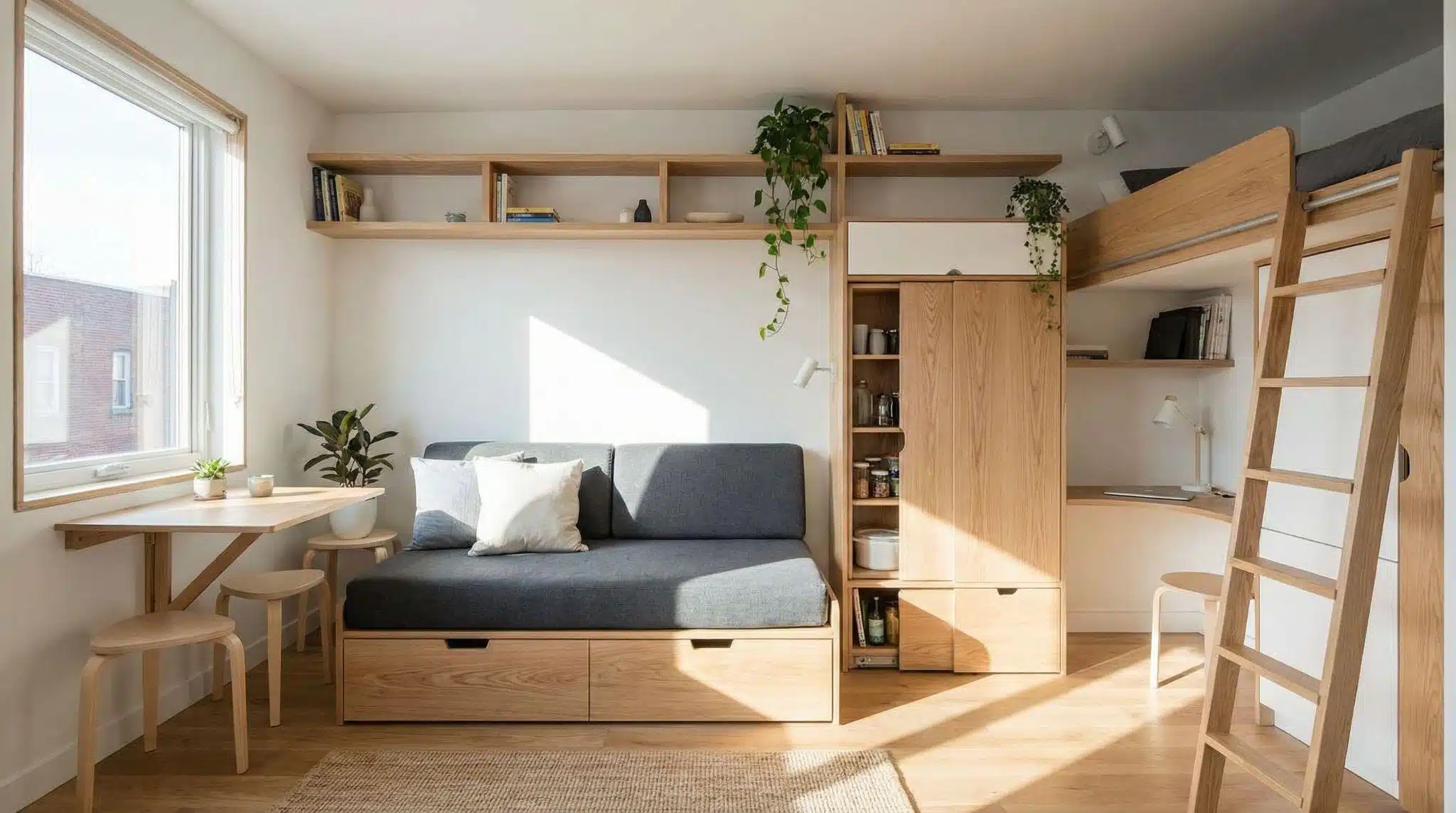
Tiny rooms demand furniture that serves multiple purposes. Sofa beds provide seating and sleeping. Storage ottomans offer both seating and organization. Fold-down desks create workspace when needed without permanently consuming floor area.
Using Arcadium, you can test how multi-functional pieces work in different configurations. Position a sofa bed in sleeping mode to verify it doesn’t block access. Place a fold-down desk to confirm adequate chair clearance when deployed. This testing ensures dual-purpose furniture actually functions for both uses in your specific space.
Vertical Space Utilization
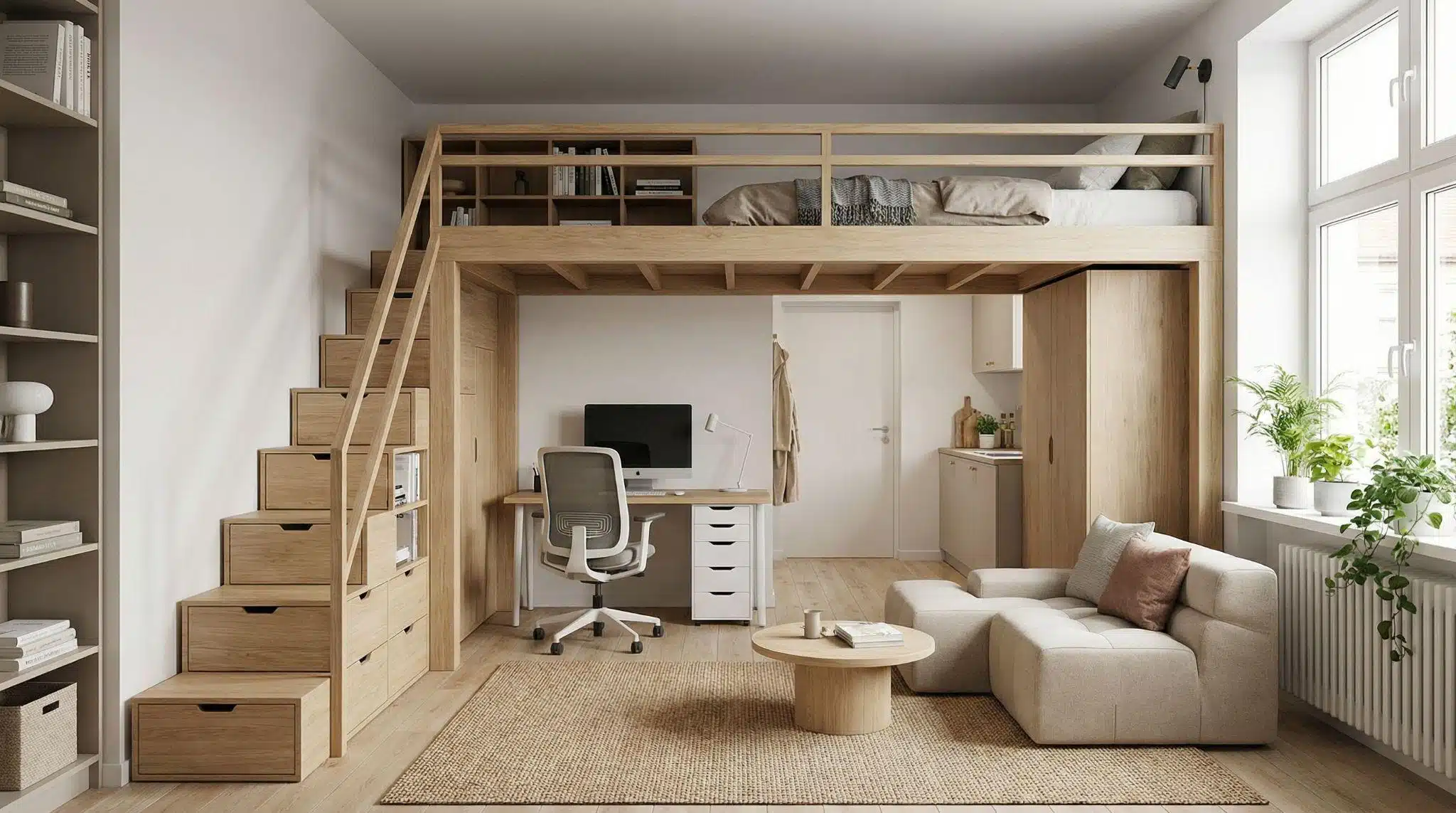
Small floor plans require maximizing vertical space. Wall-mounted shelving, lofted beds, and tall storage units increase capacity without consuming precious floor area. However, vertical solutions create their own planning challenges.
Arcadium’s 3D rendering shows vertical arrangements clearly. You see whether the loft bed placement provides adequate headroom underneath for a desk. You verify that wall-mounted shelving doesn’t interfere with window access. You test whether tall storage units make the space feel cramped despite creating more storage.
Visual Lightness Through Furniture Selection
Furniture style dramatically affects how spacious rooms feel. Low-profile pieces create visual openness. Transparent materials like glass or acrylic maintain function without visual weight. Raised furniture on legs allows sight lines underneath, making spaces feel larger.
Testing these concepts virtually prevents expensive experimentation. Arcadium lets you compare a bulky traditional sofa against a streamlined modern design in your actual space. You see immediately which creates better visual flow and apparent spaciousness.
Real-World Planning Process
Effective tiny room planning follows a systematic approach that moves from basic layout through detailed refinement.
Start With Essential Functions
Identify non-negotiable requirements first. A bedroom needs sleeping space. A studio requires zones for sleeping, living, and food preparation. List these essentials before adding any optional elements.
In Arcadium, place essential furniture first. Position the bed, include necessary storage, and add required seating. Ensure these fundamentals work before considering additional pieces. This priority system prevents trying to force too much into a limited space.
Test Multiple Layout Options
Small spaces often have multiple viable layout approaches. Testing alternatives reveals which arrangement optimizes your specific priorities. Maybe centering the bed creates symmetry, but it reduces functional space. Perhaps angling furniture opens up circulation.
Arcadium makes testing variations effortless. Save different layout versions, compare them side by side, and evaluate which best meets your needs. This exploration identifies solutions you might never discover through mental visualization alone.
Validate With Realistic Use Scenarios
Good layouts work for actual daily activities, not just aesthetic appeal. Walk through typical scenarios virtually. Can you make the bed comfortably? Does morning routine flow smoothly from bed to bathroom to kitchen? Can you host a friend without everyone sitting on the bed?
View your Arcadium design from different perspectives and times of day. Check sightlines from the doorway. Verify natural light reaches living areas. Ensure privacy where needed. These practical considerations determine whether a space truly functions well or just photographs nicely.
The Cost of Not Planning
Marcus’s £900 mistake represents the lower end of the costs people incur through inadequate space planning. Many tiny space dwellers end up replacing multiple pieces of furniture, spending thousands correcting layout mistakes they could have prevented through virtual planning.
Beyond direct costs, poor layouts create ongoing quality-of-life issues. You live with daily frustrations, compromised functionality, and spaces that never feel quite right. These problems persist until you invest time and money in fixing them properly.
Three-dimensional planning costs nothing but time yet prevents expensive mistakes and ensures your tiny room works beautifully from day one. Whether designing a compact studio, optimizing a small bedroom, or planning a tiny home interior, virtual visualization transforms uncertain guesswork into confident decisions.
Small spaces can live large when planned thoughtfully. The difference between cramped frustration and comfortable efficiency lies in taking time to visualize arrangements before committing. Tools like Arcadium make this essential planning accessible to everyone, not just professional designers.
Before buying furniture or committing to a layout for your tiny room, invest a few hours in proper 3D planning. Those hours prevent expensive mistakes, ensure everything actually fits and functions, and create a space you’ll genuinely enjoy living in rather than constantly trying to fix.