Crown molding is one of those finishing touches that can make a room feel polished and intentional. You see it in living rooms, dining rooms, and bedrooms all the time. But bathrooms? That is where most homeowners pause and start asking questions.
The short answer is yes, you absolutely can install crown molding in a bathroom. The longer answer involves choosing the right materials, understanding how moisture affects your options, and deciding whether the look fits the space.
Why Crown Molding Works in Bathrooms
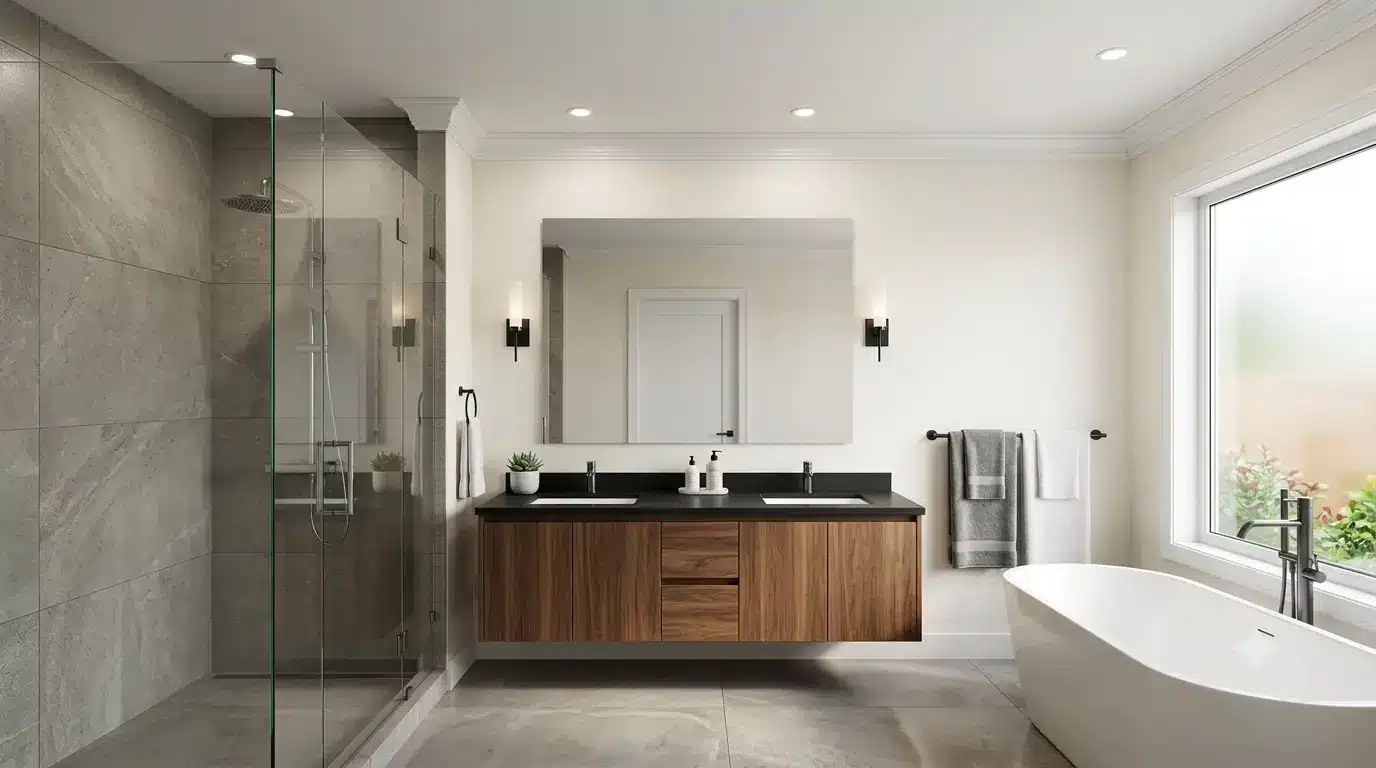
Crown molding draws the eye upward and creates a more finished, elevated feel. This is especially true in bathrooms with standard eight foot ceilings, where the transition between wall and ceiling can look flat and unfinished without trim.
If you have invested in quality tile, updated fixtures, or a new vanity, crown molding ties those elements together. It acts like a frame around the room, giving the eye a place to rest. For homeowners considering bathroom renovations in Crownsville or anywhere with older housing stock, crown molding can bridge the gap between dated architecture and modern updates.
The Moisture Question: Choosing the Right Material
Bathrooms are humid. Showers produce steam, and poor ventilation can trap moisture against walls and ceilings for hours. That matters when choosing a molding material.
Solid wood, the traditional choice for living areas, can swell, warp, and develop mildew under constant moisture. It is not off limits, but you need to be strategic. Here are the most common options and how they hold up:
- PVC or vinyl molding: Fully waterproof and built for humid environments. The most practical option for bathrooms with showers or tubs. Paintable to match any color scheme.
- Polyurethane foam molding: Lightweight, moisture resistant, and available in a wide range of profiles. Easy to install and holds up well in damp rooms.
- MDF (medium density fiberboard): Budget friendly and paintable, but vulnerable to moisture if not sealed properly. Best for powder rooms or half baths with low humidity.
- Solid wood: Classic and beautiful, but requires thorough priming and painting on all sides including the back. Reserve for well ventilated bathrooms.
Where Crown Molding Makes the Biggest Impact
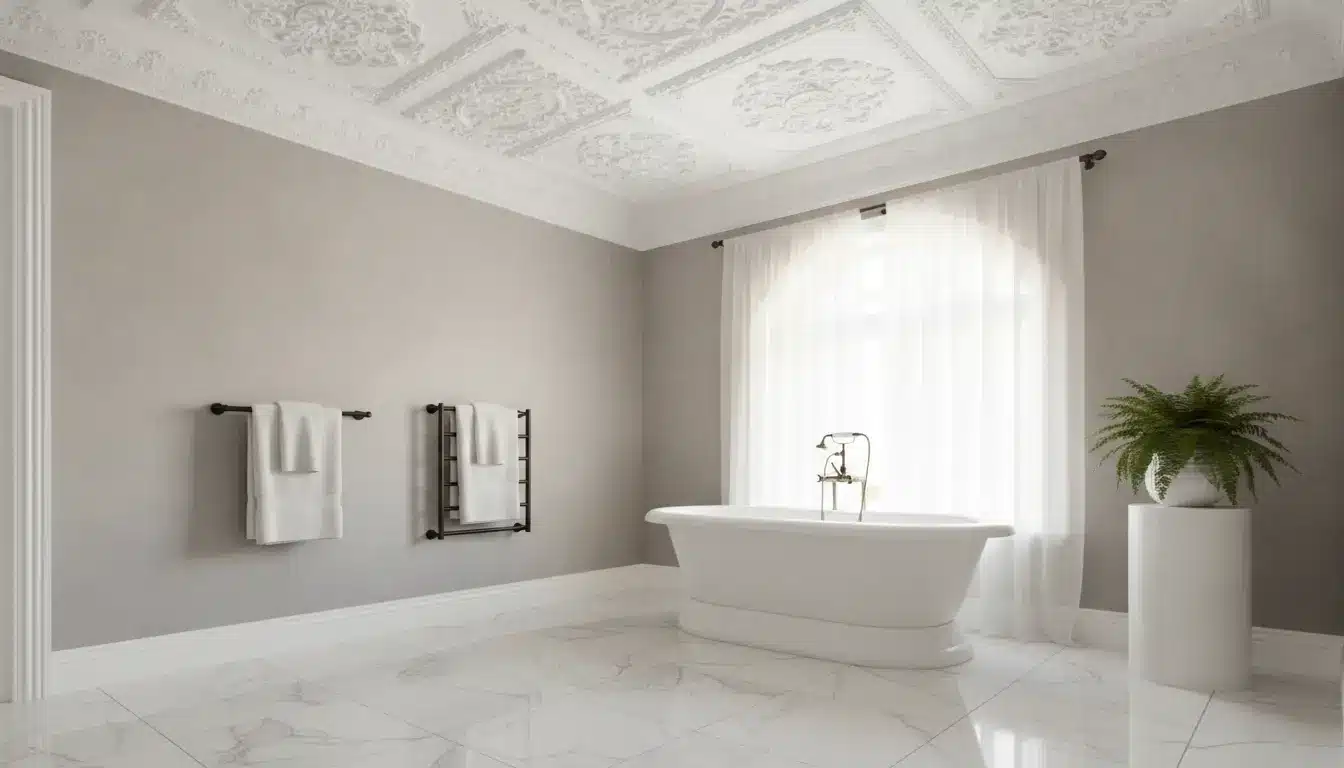
Not every bathroom is the right candidate. Crown molding works best in larger bathrooms, master suites, and powder rooms where there is enough wall and ceiling space for the trim to breathe visually. In a tight bathroom with a low ceiling, heavy molding can make the room feel cramped.
Scale matters. A wide, ornate profile belongs in a spacious bathroom with tall ceilings. A simple, narrow profile works better in a compact space. Following established design guidelines like the NKBA planning standards can help you make proportional choices that complement the room rather than overwhelm it.
Crown molding also pairs well with wainscoting, chair rails, or beadboard. If you already have some of those elements, adding crown at the ceiling line creates visual consistency from floor to ceiling.
Installation Tips to Keep in Mind
Installing crown molding in a bathroom follows the same basic process as any other room, but a few extra precautions go a long way.
- Prime and paint every surface of the molding before installation, including the back. This seals out moisture and prevents warping over time.
- Use a moisture resistant adhesive or caulk rated for wet environments. Standard wood glue will break down in a humid bathroom.
- Make sure your bathroom exhaust fan is working properly. Good ventilation reduces the moisture load on all surfaces, including your trim.
- Avoid installing molding directly inside a shower enclosure or anywhere water makes direct contact. Molding belongs on the perimeter walls and ceiling, not in the wet zone.
Does Crown Molding Add Value?
Crown molding alone is unlikely to dramatically increase resale value, but it contributes to the overall impression of quality. Buyers notice when a bathroom feels complete. When molding is paired with modern lighting, clean tilework, and functional storage, it reinforces the sense that the renovation was done with care.
For homeowners exploring bathroom upgrades on a budget, crown molding is a relatively low cost way to elevate the space. If you are looking for more ideas along those lines, these budget friendly small bathroom ideas are a great starting point.
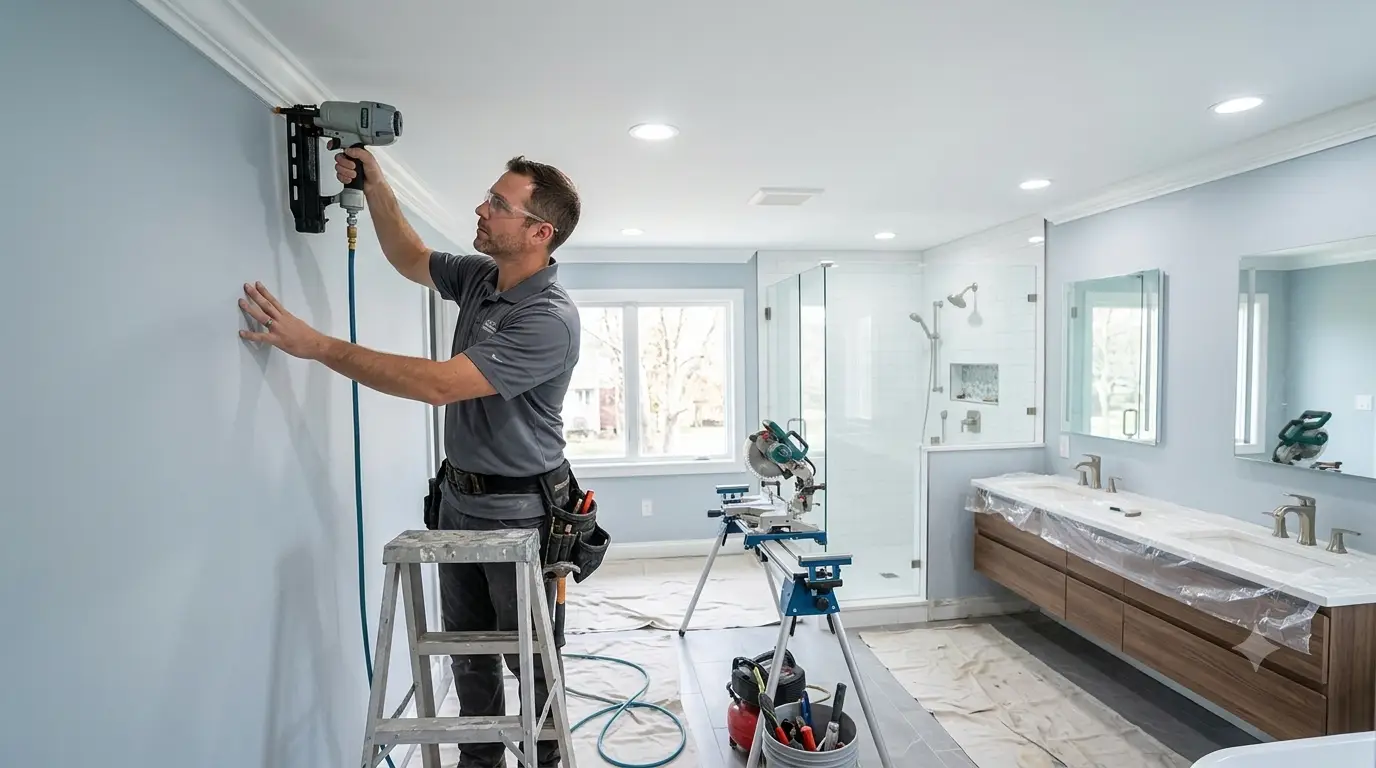
When to Bring in a Professional
Crown molding is a manageable project for experienced DIYers, especially with PVC or polyurethane products that are lighter and forgiving to cut. But for tight mitered corners and a seamless finish, working with experienced bathroom designers is worth considering. For example, Bowen Remodeling & Design provides in house design and installation support for homeowners who want every detail right.
A professional can also assess your bathroom’s ventilation, ceiling condition, and moisture levels before recommending the best material and profile for the space. That kind of evaluation upfront prevents costly problems down the road.
Whether you are planning a full renovation or simply looking to add a finishing touch, crown molding is a small upgrade worth exploring. Start with the right material, plan for moisture, and scale the profile to your room. The rest is just good craftsmanship.