If you’ve ever compared the price of a manufactured home to a traditional house, the difference can feel hard to ignore.
Lower upfront costs, strong rental demand, and faster entry into ownership all make people wonder: are manufactured homes a good investment or just a cheaper alternative?
The answer isn’t as simple as yes or no. It depends on how the property is titled, whether you control the land, how it’s financed, and how easy it will be to exit later.
Manufactured homes can be a good investment in specific situations, particularly when you own the land, secure favorable financing, and plan to hold long term. They often generate strong rental cash flow, but many depreciate if titled as personal property or placed on leased land.
Before you decide, I’m going to walk you through how these homes actually behave in the real market: what drives value, what limits it, and where the risks quietly build.
Let’s begin with the big-picture view.
Are Manufactured Homes a Good Investment Overall?
Short answer: Generally poor for appreciation. Potentially strong for cash flow under specific conditions.
To judge any investment, you need three things:
- Cash flow
- Appreciation
- Liquidity (how easy it is to sell)
A low purchase price does not automatically make something a good investment. That’s affordability, not performance.
A $60,000 home that drops in value and is hard to resell can perform worse than a $200,000 property that appreciates steadily and attracts buyers easily.
So the real question isn’t “Is it cheap?” It’s “How does it behave over time?”
Manufactured homes can work well for income-focused investors. What they rarely deliver is steady long-term equity growth like traditional real estate.
If you expect them to act like single-family homes sitting on owned land, you’ll likely be disappointed.
Pros and Cons of Investing in Manufactured Homes
Here’s the trade-off clearly:
| Pros | Cons |
|---|---|
| Low purchase price | Often depreciate |
| High rent-to-price ratios | Harder to finance |
| Strong demand for affordable housing | Smaller resale market |
| Lower property taxes (sometimes) | Lot rent risk if land not owned |
| Faster entry into investing | Higher insurance in some areas |
The low entry cost means you can often buy one for the price of a down payment on a traditional house. That improves cash-on-cash returns.
But depreciation, financing limits, and resale friction can erase that advantage if you aren’t careful.
- The pros mostly relate to income potential.
- The cons mostly relate to value stability and exit risk.
That contrast matters more than most people realize.
Why Do Many Manufactured Homes Depreciate Instead of Appreciate?
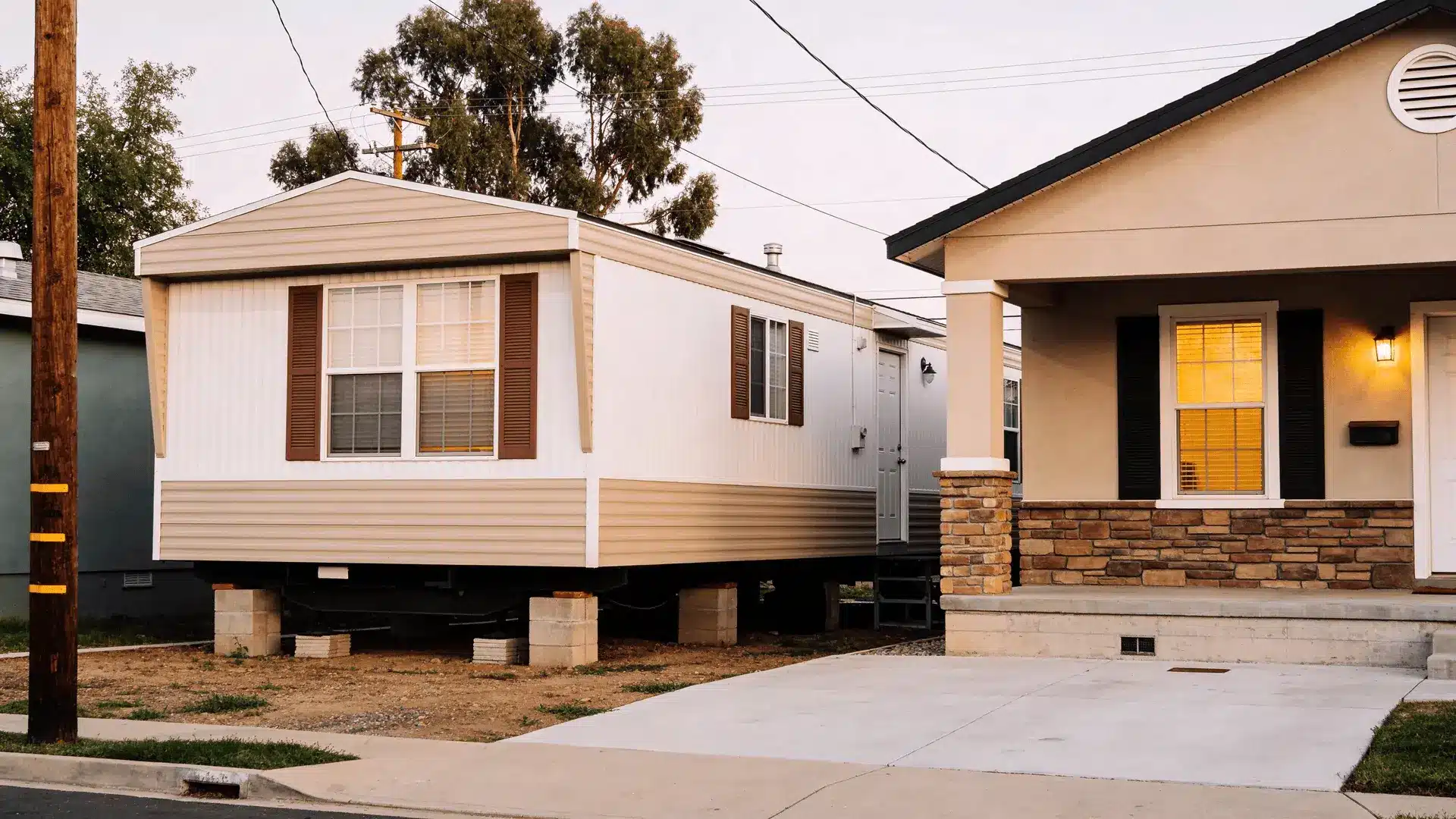
The short answer isn’t “quality.” It’s structure.
Many manufactured homes are titled aspersonal property, not real property. That legal classification changes how they’re financed, valued, and resold.
Personal Property vs. Real Property
When a manufactured home is treated as personal property:
- It typically uses a chattel loan instead of a mortgage
- Loan terms are shorter
- Interest rates are higher
- Fewer lenders participate
Higher rates and shorter terms raise monthly payments. That limits what buyers can afford, which pushes resale values down. The market starts treating the home more like a vehicle than land-based real estate.
How Financing and Land Ownership Affect Value
Traditional homes sit on owned land, qualify for long-term mortgages, and benefit from neighborhood comparables. Manufactured homes without land ownership don’t get that support.
Perceived mobility also plays a role. Even if the home never moves, buyers know it can. That weakens the sense of permanence that typically supports appreciation.
Appreciation becomes more likely when:
- The home is permanently affixed
- The title is converted to real property
- The land is included
Without those conditions, depreciation doesn’t stay arbitrary and becomes common. It follows from classification, financing access, and how the market evaluates risk.
How Owning the Land Changes Appreciation Potential
Owning the land is not just an added cost. It changes how the asset behaves in the market.
When you own both the land and the home, the property can be treated as real estate. That shift allows it to qualify for standard mortgages, which immediately expands the buyer pool. Appraisers can use traditional comparable sales. And most importantly, the land itself often appreciates over time.
Land is limited and tends to rise in value. Structures deteriorate and lose value without reinvestment.
That gap is what drives long-term equity growth.
When the home sits on leased land, the dynamic reverses. Here’s what happens:
- You pay ongoing lot rent.
- The park owner controls rules and future rent increases.
- Rising lot rent reduces resale appeal.
- Buyers must qualify with park management.
That weakens pricing power before a sale even begins.
A buyer isn’t just purchasing your home. They’re stepping into a lease agreement they don’t control. That added uncertainty lowers what they’re willing to pay.
So when people say, “Owning the land changes everything,” the reason is structural.
It shifts the asset from vehicle-like behavior to real-property behavior. And that difference compounds over time.
Can Manufactured Homes Produce Strong Rental Cash Flow?
Yes, but only when the structure supports it. A low purchase price paired with steady affordable housing demand can create strong rent-to-price ratios. In many workforce markets, renters stay longer because traditional homeownership is out of reach.
That setup can work well. But it is not automatic.
Why the Cash Flow Can Look Attractive
Manufactured homes often cost far less than site-built homes. When rents are only slightly lower than nearby apartments or small houses, the yield can look strong on paper.
In markets where affordable housing is limited, demand tends to stay consistent. That stability supports occupancy and predictable income.
The lower acquisition cost also means you need less capital to get started. That can improve cash-on-cash returns compared to higher-priced properties.
But the strength is tied to pricing discipline and demand depth. Overpaying quickly erases the advantage.
Where Rental Performance Can Break Down
Cash flow weakens when underlying risks are ignored.
You must account for:
- Vacancy risk in lower-income markets
- Maintenance on older units
- Shorter loan terms increasing monthly payments
- Park restrictions (if applicable)
- Exit risk when you eventually sell
Older units can require more system repairs than buyers expect. Roofs, plumbing, and HVAC issues can compress margins quickly.
Financing also plays a major role. A high-interest chattel loan raises monthly obligations and reduces flexibility. A cash purchase or favorable financing improves yield dramatically.
Time horizon matters as well. These properties tend to perform better when held longer. If you rely on quick resale plus rental income, the math can unravel faster than expected.
Rental cash flow can be strong, but only when purchase price, financing, maintenance planning, and market demand all align.
What Makes Manufactured Homes Harder to Resell?
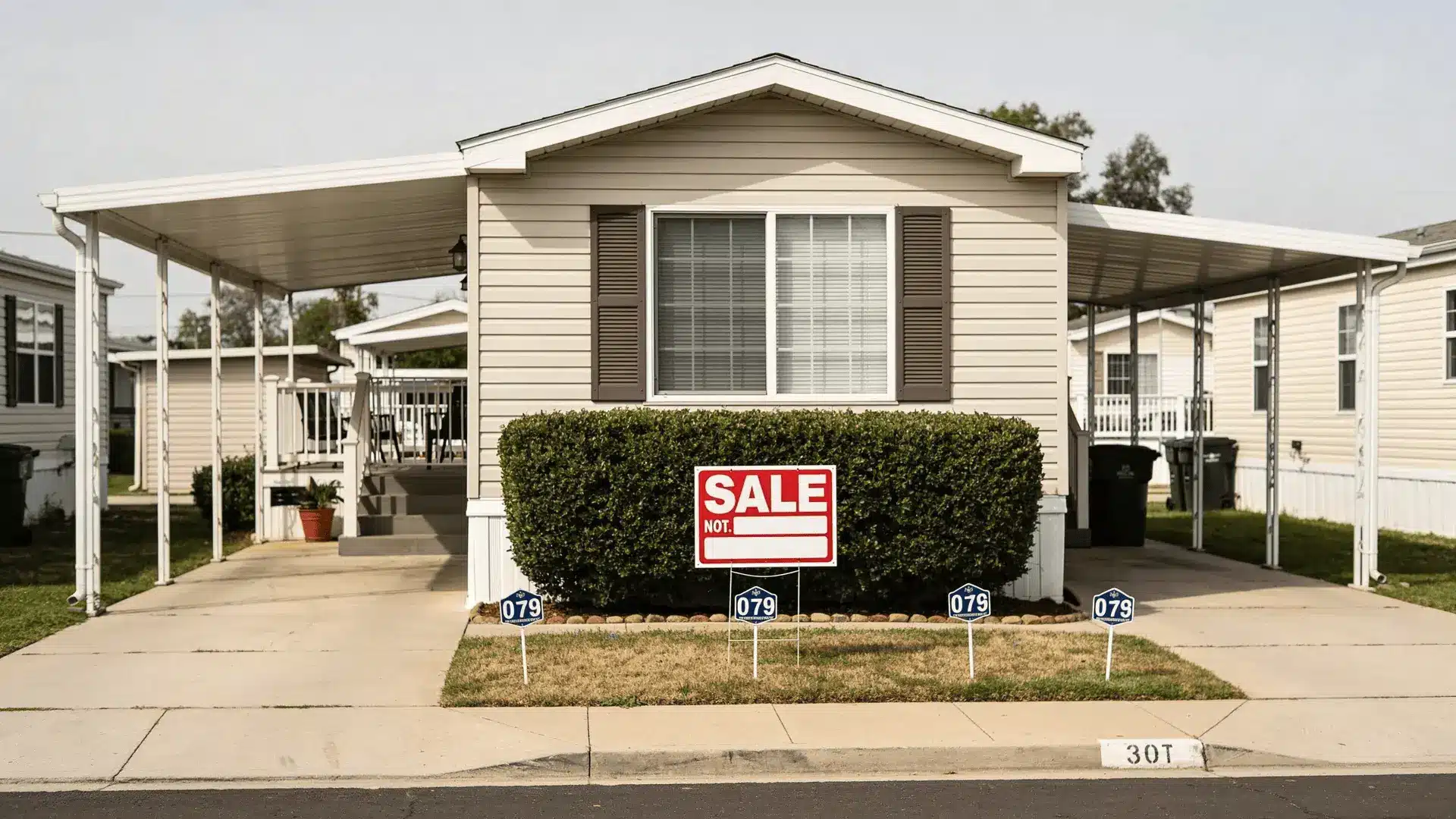
Liquidity is often the hidden risk with manufactured homes. On paper, the price may look attractive. In practice, several structural limits shrink your buyer pool and slow resale.
Here’s what typically reduces demand:
- Chattel loan financing limits – Many lenders will not offer traditional mortgages on homes titled as personal property. Buyers may need higher-interest personal loans, which immediately narrows affordability.
- Park approval requirements – In leased-land communities, buyers often must qualify with park management. That adds another layer of screening and potential rejection.
- Rising lot rent – If monthly lot rent has increased steadily, buyers calculate the total housing cost, not just the purchase price. Higher ongoing expenses push resale values down.
- Insurance costs – Manufactured homes can carry higher premiums in some areas, especially in wind- or storm-prone regions. Buyers factor that into their decision.
- High cost to physically move the home – Relocating a manufactured home is expensive and sometimes not feasible at all. That makes the home effectively tied to its current lot.
Moving a manufactured home is rarely simple. Even when technically possible, the cost can wipe out any perceived savings.
If lot rent rises aggressively, resale prices often have to adjust downward to keep total monthly costs competitive. Buyers focus on payment, not sticker price.
Even in strong housing markets, financing barriers alone can slow transactions. Cheap does not automatically mean easy to sell.
When is a Manufactured Home a Good or Poor Investment?
The difference usually comes down to structure and flexibility. Small changes in ownership, financing, and timeline can completely shift the risk.
| Stronger Investment Setup | Higher-Risk Setup |
|---|---|
| You own the land | The home sits on leased land with rising lot rent |
| The home is permanently affixed | The home is not permanently attached or remains personal property |
| Financing terms are favorable or you pay cash | You rely on high-interest chattel financing |
| Rental demand is strong and stable | The resale market is thin or buyer demand is weak |
| You plan to hold long term | You need to sell quickly |
| The park (if applicable) has stable ownership and predictable rent history | Park ownership is unstable or rent increases are aggressive |
| The unit is newer or well-maintained | The unit is aging with major system risk |
When more of the stabilizing factors are in place, land ownership, long hold time, controlled financing, steady demand, the investment has room to perform.
When the setup limits flexibility, rising lot rent, thin resale market, short timeline, expensive financing, risk builds quietly in the background.
The structure around the home determines the outcome far more than the home itself.
Wrapping Up
By now, it should be clear that manufactured homes being a good investment isn’t really about the home itself. It’s about structure, control, and long-term flexibility.
Land ownership, financing terms, and resale access matter more than sticker price.
In the right setup, these properties can generate steady income and stable performance. In the wrong setup, limited flexibility can quietly erode returns. The difference often comes down to how well the deal aligns with your strategy and timeline.
Before you move forward, review your goals carefully, run the numbers conservatively, and evaluate the structure behind the property, not just the price tag.
Frequently Asked Questions
Do manufactured homes always depreciate?
No. Homes on owned land with permanent foundations can appreciate. Homes titled as personal property often depreciate due to financing and market limits.
How well do manufactured homes hold value?
Value depends heavily on land ownership, age, condition, and financing type. Land-owned homes generally hold value better than leased-lot homes.
Are they good rental investments?
They can produce strong cash flow if purchased at the right price in markets with steady affordable housing demand.
Why are they harder to sell?
Limited financing options, park approval rules, lot rent increases, and moving costs shrink the buyer pool.