Car batteries do not last forever, and most drivers learn that the hard way. One morning, the car starts fine, and the next day it does not start at all.
That is why many people ask the same question: how long do car batteries last? The answer depends on more than just time.
In this guide, you will learn the average lifespan of a car battery, what causes it to wear out faster, and how to spot warning signs before it dies.
Knowing this can help you avoid sudden breakdowns and costly surprises.
How Long Do Car Batteries Last on Average
On average, most car batteries last between three and five years. This is true for many gas and diesel cars on the road today.
Some batteries may die sooner, while others can last a bit longer with good care.
If your car battery is over three years old, it is a good idea to have it tested once a year. Regular checks can help you replace it before it leaves you stranded.
Car Battery Lifespan by Battery Type
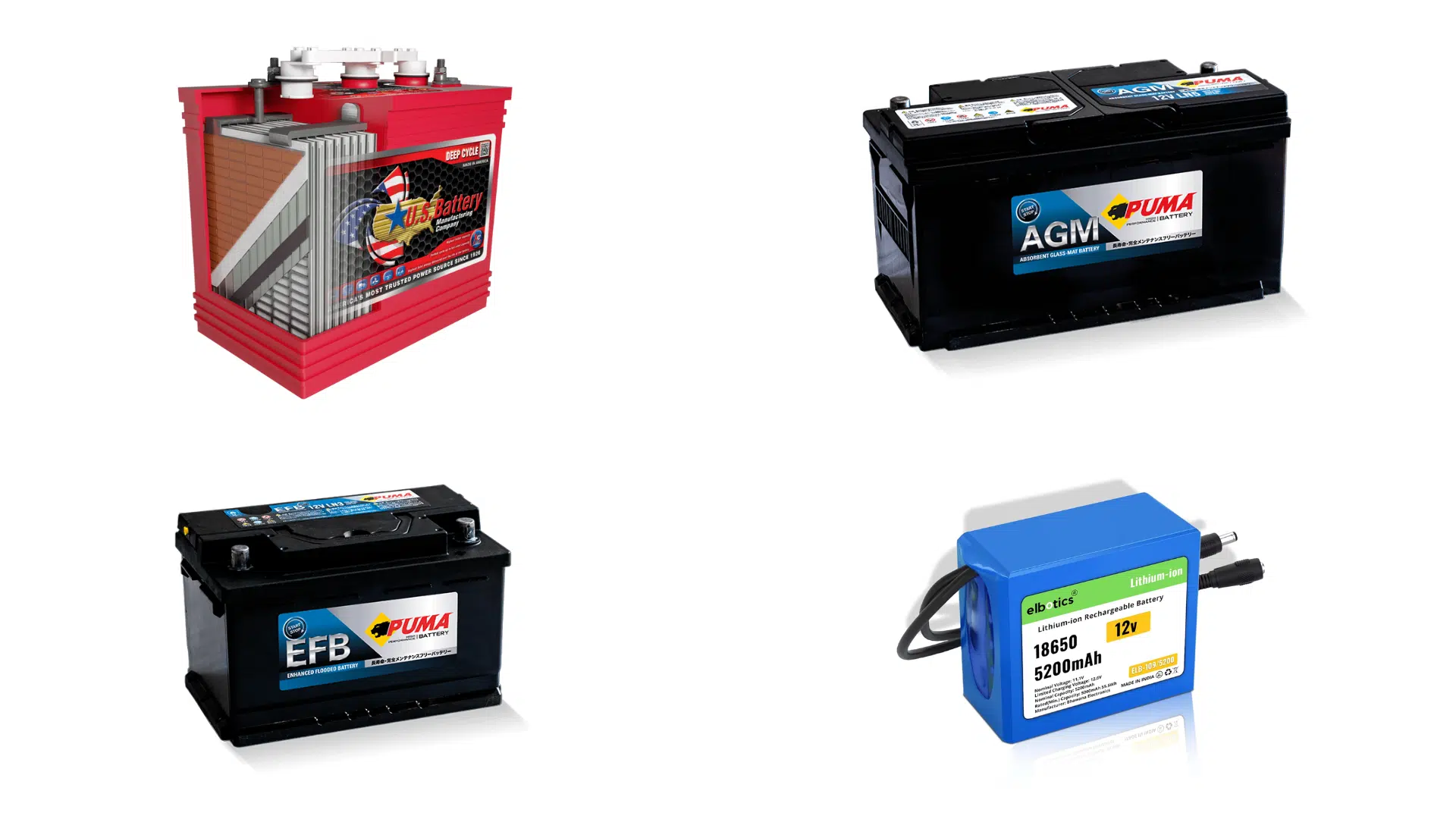
Different car battery types are built for different driving needs. Because of this, their lifespan can vary based on how they are used and maintained.
| Battery Type | Typical Lifespan | Common Use |
|---|---|---|
| Flooded Lead-Acid | 3–5 years | Older cars and budget vehicles |
| AGM (Absorbent Glass Mat) | 4–7 years | Start-stop cars and vehicles with more electronics |
| EFB (Enhanced Flooded Battery) | 3–6 years | Some start-stop systems |
| Lithium-Ion (Rare for 12V) | 8–10 years | Limited use in newer vehicle systems |
Choosing the right battery for your car matters. Using the wrong type can lead to shorter battery life and more frequent replacements.
Car Battery Lifespan by Vehicle Type
Different vehicles put different demands on their batteries. Because of this, battery life can change based on the type of car you drive and how its systems work.
1. Gas and Diesel Cars
Most gas and diesel cars use a standard 12-volt battery to start the engine and power basic electronics. On average, these batteries last three to five years with normal driving
Regular use helps keep the battery charged, while short trips can slowly drain it. Extreme heat or cold can shorten its life faster than expected. If the battery is over three years old, yearly testing is a smart move.
2. Start-Stop Vehicles
Start-stop vehicles turn the engine off and on often to save fuel, which puts extra strain on the battery. These cars usually use AGM or EFB batteries, designed to handle frequent restarts.
Using the wrong battery type can cause early failure. Battery life depends heavily on traffic conditions and driving habits. City driving with constant stops can reduce lifespan over time.
3. Hybrid Vehicles
Hybrids have two batteries: a high-voltage battery and a 12-volt battery. The 12-volt battery works like a regular car battery and often lasts three to five years.
It powers lights, locks, and electronics. Many drivers forget about it because the car still drives on hybrid power. When it fails, the car may not start at all.
4. Electric Vehicles
Electric vehicles also have a 12-volt battery, separate from the main battery pack. This smaller battery runs screens, locks, and safety systems.
It can wear out just like a normal car battery, often within three to four years. The main EV battery lasts much longer, but the 12-volt battery is the one most likely to cause sudden issues.
What Makes a Car Battery Die Faster
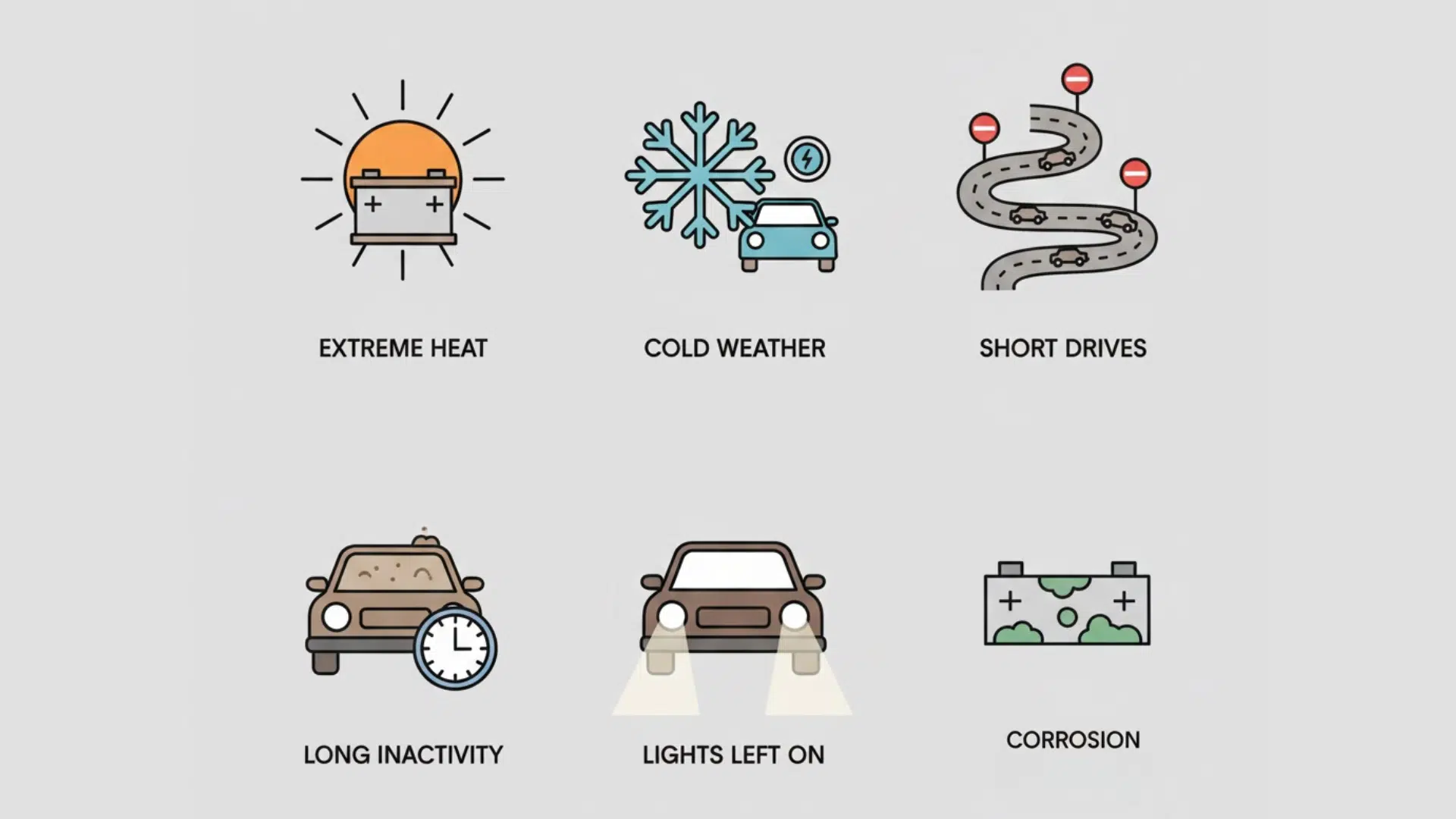
Many car batteries fail early because of daily habits and weather conditions. Small issues over time can slowly drain power and shorten battery life.
- Hot Weather and Extreme Heat: Heat speeds up chemical reactions inside the battery. This causes internal parts to wear out faster and can lead to fluid loss, even if the battery looks fine on the outside.
- Cold Weather Stress: Cold weather makes it harder for a battery to deliver power. Older batteries often fail during winter because they cannot handle the extra strain during cold starts.
- Short Trips and Frequent Stops: Short drives do not give the battery enough time to fully recharge. Over time, this leads to a slow loss of power and early failure.
- Long Periods without Driving: When a car sits unused, the battery continues to lose charge. Modern cars drain power even when parked, which can leave the battery dead.
- Leaving Lights or Electronics On: Headlights, interior lights, or phone chargers left on can drain the battery overnight. Repeated drains weaken the battery over time.
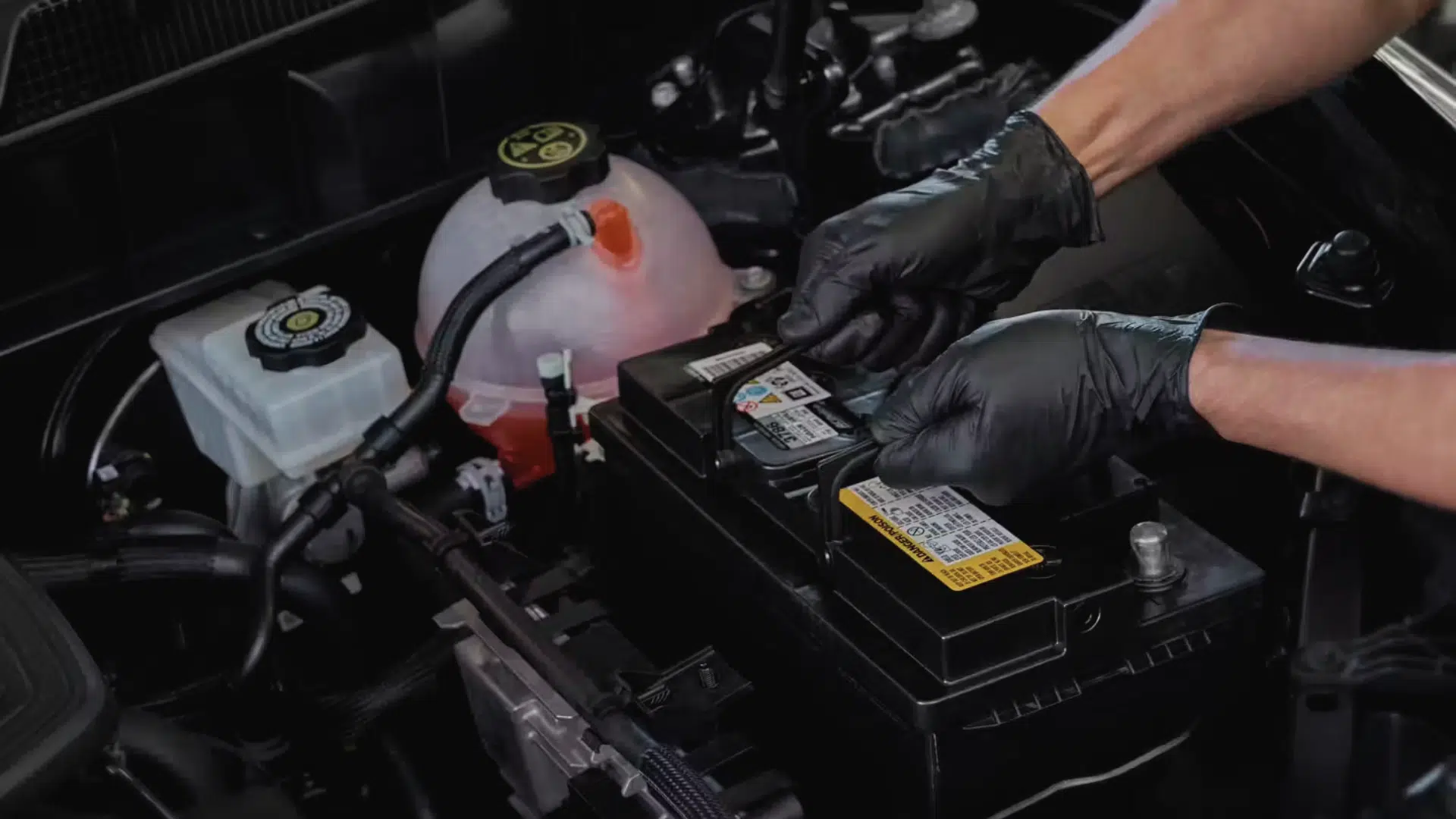
- Dirty or Loose Battery Connections: Corrosion or loose terminals block power flow. This forces the battery to work harder and reduces its lifespan.
Avoiding these habits can help your car battery last longer and reduce the risk of sudden breakdowns.
Warning Signs Your Car Battery is Failing
Car batteries often give warning signs before they fail completely. Catching these signs early can help you replace the battery before your car refuses to start.
| Warning Sign | What It Means |
|---|---|
| Slow Engine Crank | The battery is losing power and struggles to start the engine |
| Clicking Sound When Starting | Not enough charge to turn the engine over |
| Dim Headlights or Interior Lights | The battery cannot supply steady power |
| Battery Warning Light | The battery or charging system may have an issue |
| Frequent Jump Starts | The battery no longer holds a proper charge |
| Corrosion on Battery Terminals | Poor connection blocking power flow |
| Swollen Battery Case | Heat damage or overcharging inside the battery |
If you notice one or more of these signs, have your battery tested as soon as possible. Acting early can save you from getting stuck at the worst time.
How to Make a Car Battery Last Longer
A few simple habits can make a big difference in how long your car battery lasts. Small steps taken regularly can help you avoid early battery failure.
- Drive Long Enough to Recharge the Battery: Short trips do not fully recharge the battery. Try to take longer drives now, and then so the battery can regain full power.
- Keep Battery Terminals Clean: Dirt and corrosion block power flow. Cleaning the terminals helps the battery charge properly and work more efficiently.
- Turn Off Lights and Electronics: Always check that headlights, interior lights, and chargers are off before leaving the car. This prevents unnecessary battery drain.
- Test the Battery Regularly: Once your battery is over three years old, have it tested yearly. Early testing helps you replace it before it fails.
- Limit Power Use When Parked: Avoid running electronics when the engine is off. For long storage, using a battery maintainer can help.
- Check the Charging System: A weak alternator can drain a good battery. If batteries fail often, have the charging system checked.
Following these tips can help your battery last longer and reduce the risk of sudden starting problems.
When to Replace Your Car Battery
Knowing when to replace your car battery can help you avoid unexpected breakdowns and stressful delays. Replacing it at the right time also protects your car’s electrical system and keeps everything running smoothly.
1. Replace Based on Battery Age
Most car batteries last three to five years under normal driving conditions. Once a battery crosses the three-year mark, the risk of failure starts to increase.
Even if your car starts fine, internal wear may already be happening. Regular testing after this point helps you plan a replacement instead of being surprised.
2. Replace Based on Warning Signs
Signs like slow engine cranking, dim headlights, or needing jump starts often mean the battery is losing strength. These issues usually get worse over time, not better.
Ignoring them can lead to a complete failure at the worst moment.
3. Replace After a Failed Battery Test
A battery test checks how well the battery can hold and deliver power.
If the result shows weak or failing health, replacing the battery early is the safest option. Waiting too long can leave you stranded without warning.
4. Replace Before Extreme Weather
Extreme heat and cold put extra stress on older batteries. If your battery is already weak, harsh weather can push it to fail suddenly. Replacing it before summer or winter can prevent no-start problems.
Conclusion
Car batteries may seem small, but they play a big role in keeping your car reliable.
Knowing how long a car battery lasts, what causes it to fail early, and when to replace it can save you time and stress.
Simple habits like regular driving, yearly testing, and watching for warning signs can go a long way. Weather and driving patterns matter more than most people realize.
Staying ahead of battery issues is always easier than dealing with a dead car at the wrong time.
If your battery is getting older or showing signs of trouble, get it tested soon. Taking action early can help you avoid unexpected breakdowns and keep your car running smoothly.