

Planning a four-car garage is more than just fitting four vehicles inside. The right size can make daily parking easier, protect your cars, and give you room for storage or projects.
Many homeowners search for standard 4-car garage dimensions because they want a space that feels comfortable, not tight or crowded.
In this guide, we break down common four-car garage sizes, layout options, and planning tips.
Whether you are building new or updating an existing space, these basics will help you plan a garage that works well for your everyday needs and future plans.
What “4-Car Garage” Usually Means
When most people say “4-car garage,” they mean a garage designed to hold four vehicles with enough space to park and exit comfortably.
This does not always mean four cars lined up in the same way. Some garages are wide and allow all vehicles to park side by side, while others use a deeper design where cars are parked one behind another
The layout depends on the lot size, home design, and how often each vehicle is used. Because of these options, a four-car garage can vary in size and shape.
Understanding this early helps you choose a design that fits your space and daily routine
Standard 4 Car Garage Width
Most four-car garages are designed wide enough to park vehicles side by side without feeling cramped.
| Garage Width | What It Works Best For |
|---|---|
| 40 feet | Basic parking for four small to mid-size cars |
| 44–45 feet | More door clearance and easier daily parking |
| 48 feet or more | Large SUVs, trucks, or added wall storage |
Choosing the right width helps prevent tight spaces and door dings. If you have larger vehicles or plan to add shelves, going wider is usually the better choice.
Standard Four Car Garage Depth
Standard 4-car garage depth affects how comfortable your garage feels once the cars are parked. It also decides how much space you have left for storage or walking around.
| Garage Depth | What It Works Best For |
|---|---|
| 20 feet | Basic parking for most cars |
| 22 feet | Extra room for walking and small storage |
| 24 feet | SUVs, trucks, or rear storage space |
| 26 feet or more | Workbench, bikes, or deep storage |
Best Layouts for Four Car Garages
Planning the right layout for a four-car garage is just as important as choosing the size. The layout affects how easy it is to park, move around, and use the space every day.
1. Side-by-Side Layout
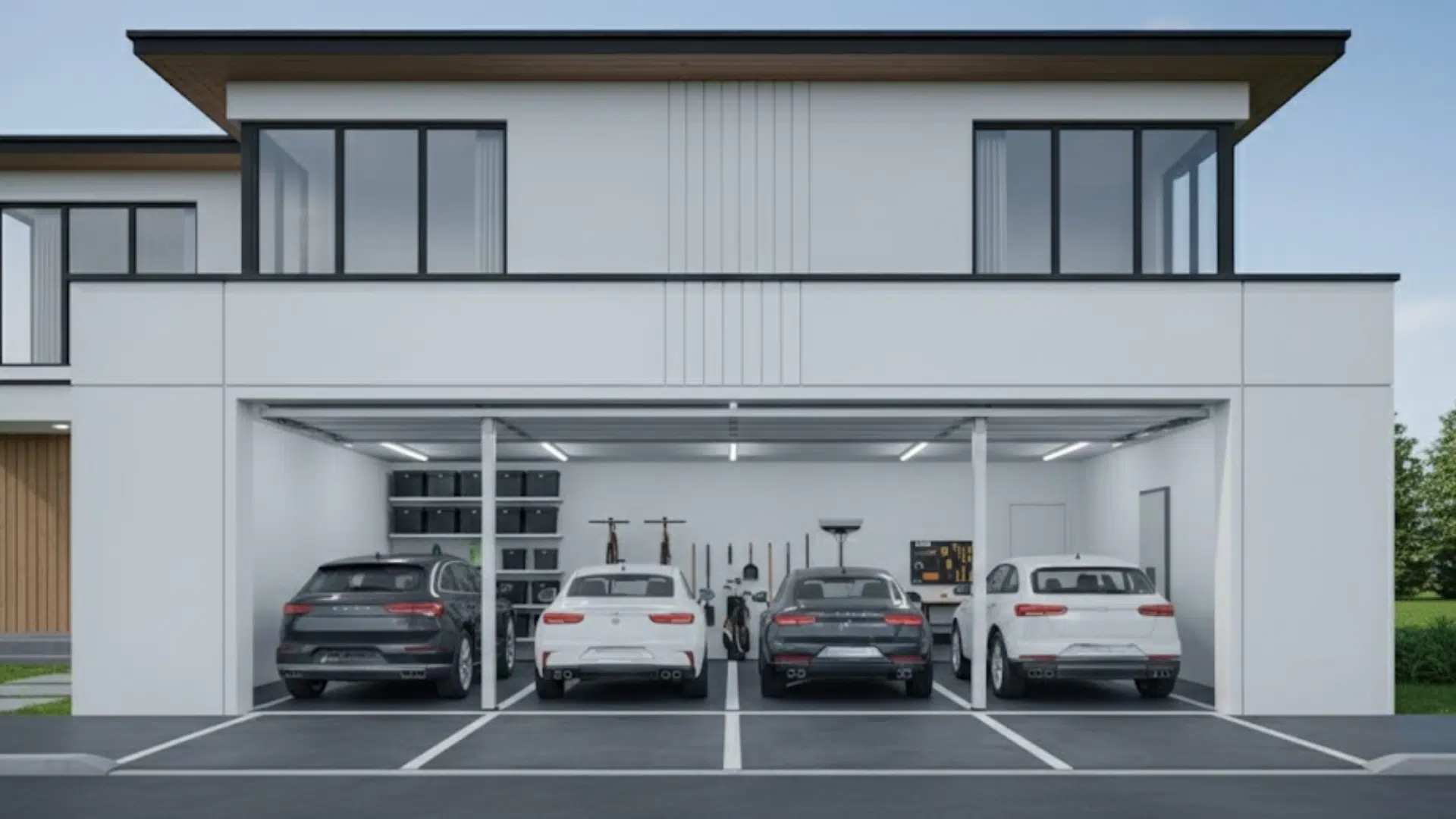
A side-by-side layout places all four cars next to each other in one wide garage. This is the most popular option because it makes parking simple and stress-free. Each car has its own clear space, so no one gets blocked in.
It also allows easier access to doors, storage walls, and the entry into the house. The downside is that it needs more width, which may not work on smaller lots.
2. Tandem Layout
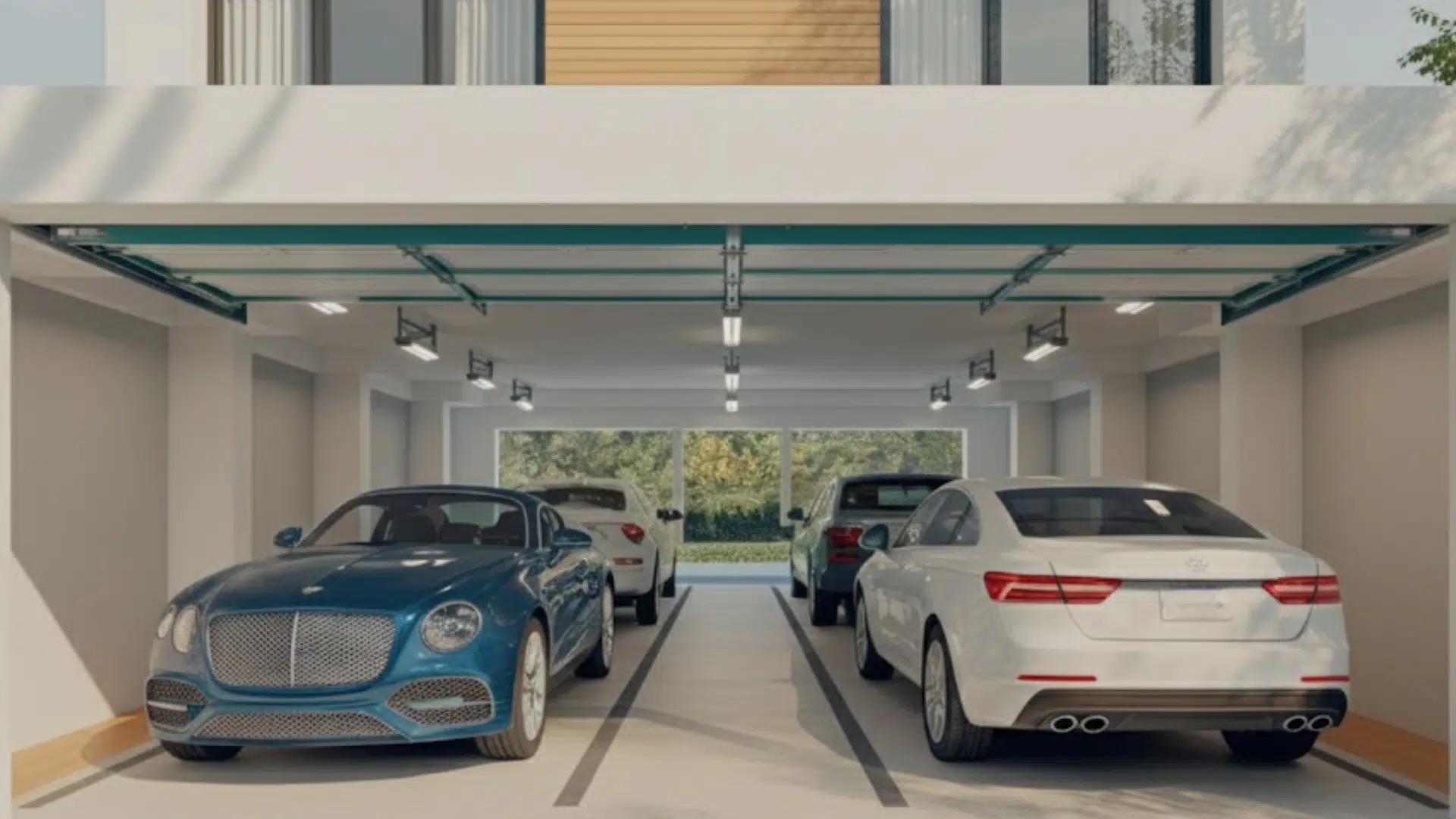
A tandem layout parks two cars behind two other cars. This design is helpful when lot width is limited but extra depth is available. It can save space and reduce building costs in some cases.
However, daily use can be less convenient since one car may need to be moved to access another. This layout works best when some vehicles are not used every day.
3. Split Bay Layout
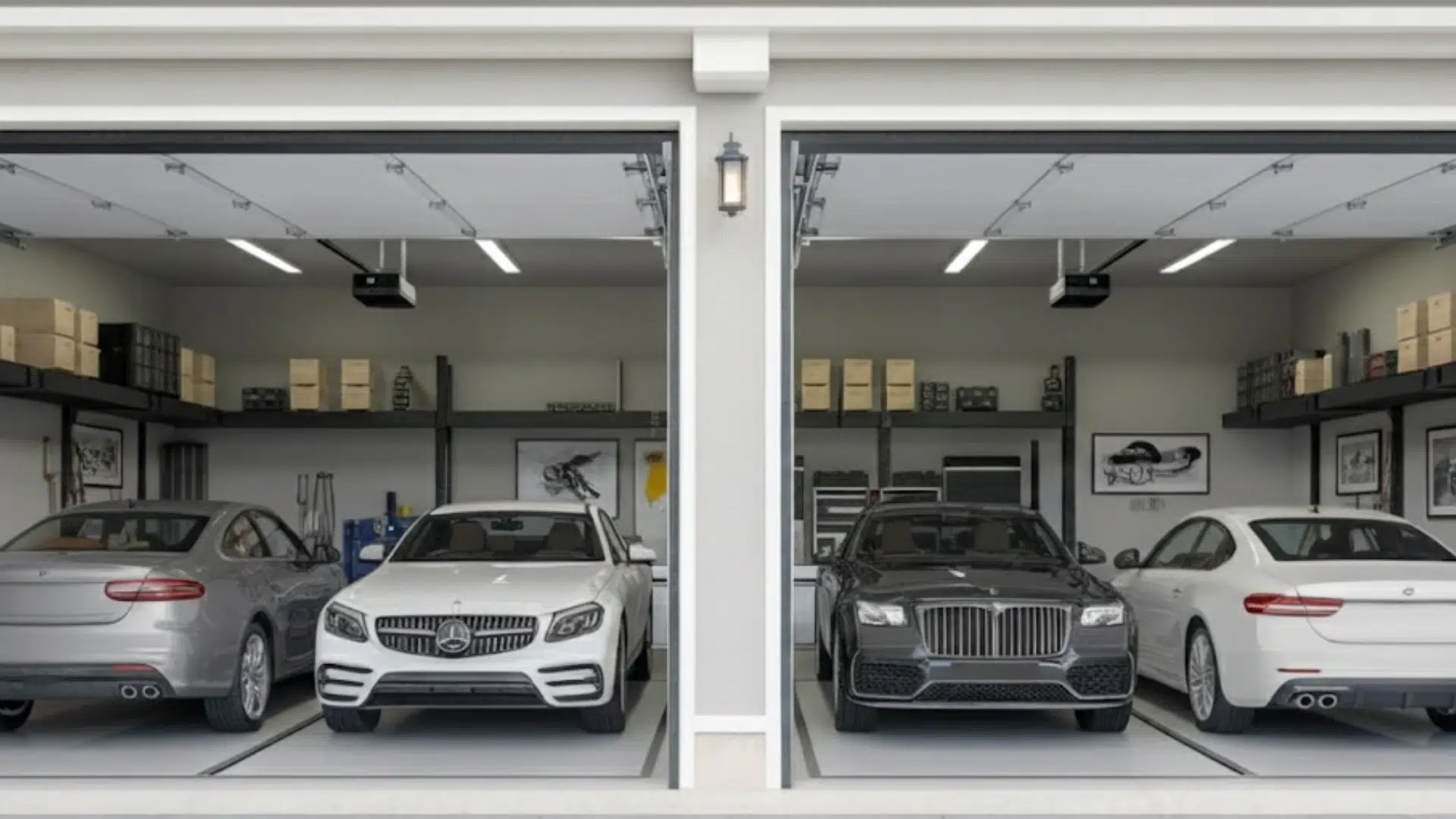
A split bay layout divides the garage into two sections, usually two cars on each side. This setup creates a more organized feel and allows different uses for each side.
Many homeowners use one side for daily vehicles and the other for storage or projects. It also helps control clutter and noise if one side is used as a workshop.
4 Car Garage Door Sizes
The door size affects how easily you can park and how much wall space you keep inside the garage. Most four-car garages use a mix of single or double doors, depending on the layout and style of the home.
| Door Type | Common Width | Best Use |
|---|---|---|
| Single door | 8–9 feet | One car per bay |
| Wide single door | 10 feet | Larger vehicles or easier parking |
| Double door | 16 feet | Two cars side by side |
| Extra-wide double door | 18 feet | SUVs, trucks, or wider spacing |
Picking the right door size helps prevent tight parking and daily frustration.
Ceiling Height and Clearance Needs
Ceiling height affects storage options, lighting, and whether larger vehicles fit comfortably.
- 8-Foot Ceilings: This is the most common garage ceiling height. It works well for basic parking and light wall storage. However, overhead racks may feel tight.
- 9–10 Foot Ceilings: Extra height gives better airflow and more room for overhead storage. It also makes the garage feel more open and less crowded.
- Taller Ceilings for Special Uses: Higher ceilings are helpful if you plan to add storage lifts, tall shelves, or a car lift. They also work better for vans, trucks, or roof racks.
Choosing the right ceiling height adds comfort and flexibility. If you plan ahead, extra clearance can make your garage more useful in the long run.
Space for Storage and Workshop Use
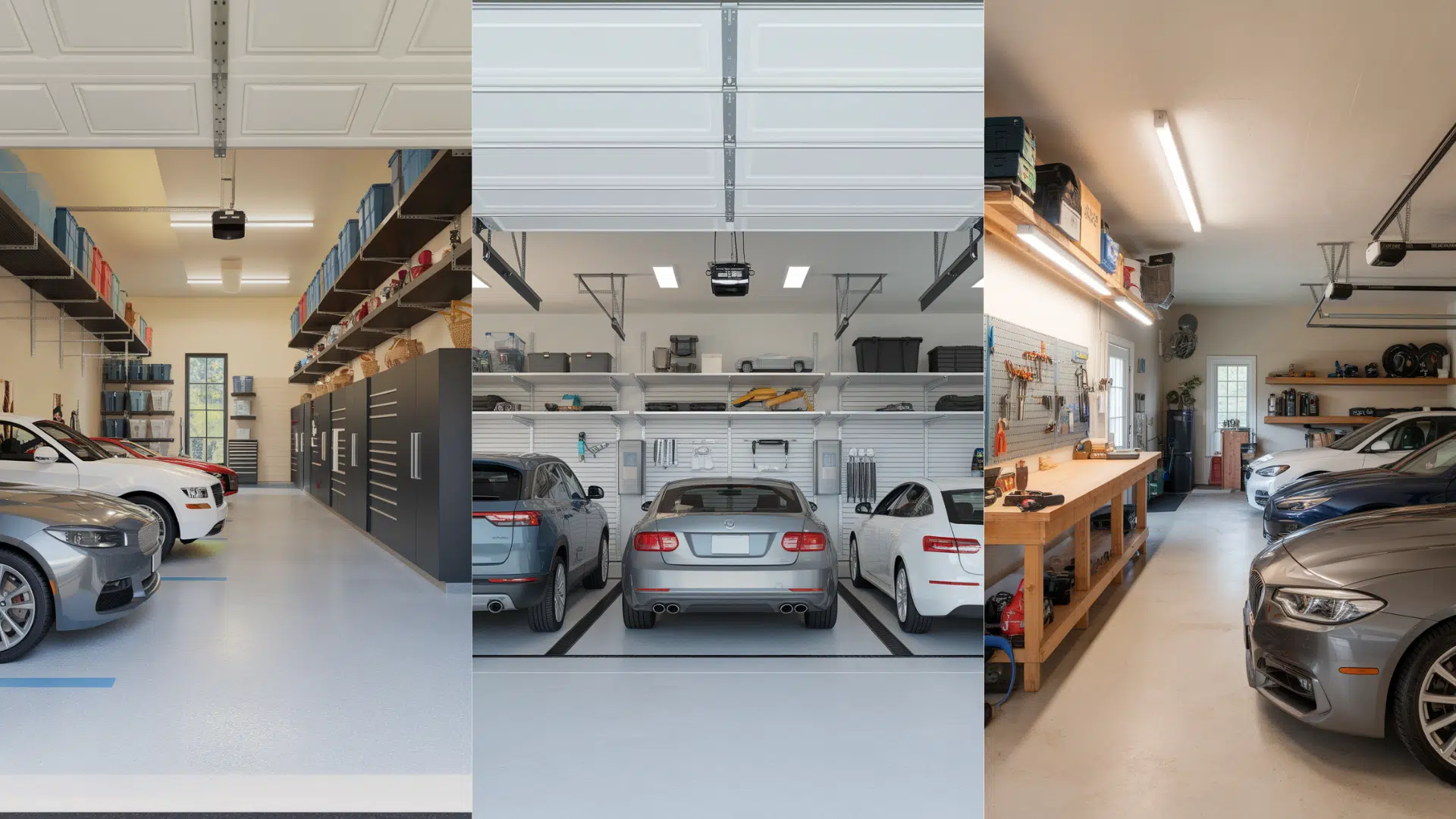
A four-car garage is often used for more than just parking. Planning space for storage or a small workshop can make the garage much more useful.
1. Storage Space Rule of Thumb
If you plan to store more than just cars, extra space is important. Wall shelves, cabinets, and bins need room without blocking doors.
Many homeowners choose a deeper garage to keep storage off the parking area. This helps the garage stay organized and easier to use every day.
2. Common Storage Zones to Plan
Most garages work best when storage is split into clear zones. Wall storage keeps items off the floor and easy to reach.
Back-wall storage works well for tools and seasonal items. Ceiling racks are great for things you do not need often, like holiday boxes.
3. Adding a Small Workshop Area
A small workshop can fit in a four-car garage with good planning. A workbench along the back or side wall is usually enough for basic projects.
Make sure there is lighting and clear space to move around. Keeping the workshop separate from parking areas helps avoid clutter and damage.
Vehicle Size and Daily Use Considerations
A garage that fits your lifestyle will feel easier and less stressful to use.
- Small Cars: Compact cars need less space, making parking easier in standard garages. They allow more room for storage and walking paths.
- SUVs and Trucks: Larger vehicles need more width and depth. Door swing space and front clearance matter more with these vehicles.
- Car Doors and Daily Access: If you often open doors wide for kids or gear, extra space helps. Tight garages can make daily use frustrating.
- Future Vehicle Plans: Think about what you might drive later. Planning for bigger vehicles now can save time and money later.
Codes, Setbacks, and Planning for a 4 Car Garage
Before building a four-car garage, it is important to check local codes and setback rules. These rules control how big your garage can be and where it can sit on your property.
Setbacks decide how far the garage must be from property lines, roads, or other buildings. Some areas also limit garage height or total square footage.
If you live in a neighborhood with an HOA, extra design rules may apply. Checking these details early can save time and prevent costly changes later.
A quick talk with your local building office or contractor can help you plan a garage that meets all rules and still fits your needs.
Conclusion
Choosing the right four-car garage dimensions takes a little planning, but it makes a big difference in daily comfort.
The right width, depth, and layout help you park easily, protect your vehicles, and keep storage organized. There is no one-size-fits-all answer, but understanding standard dimensions gives you a strong starting point.
Before finalizing your plans, measure your vehicles and list what you want to store in the garage. If you are unsure, talking to a builder or designer can help.
Taking a little extra time now can help you create a four-car garage that works well for your home and lifestyle.











One Response
Good afternoon, the renditions and the specifications and advice given in this article was extremely beneficial. Thank you for being generous with your