You may have entered a room and sensed something odd without being able to explain it. The furniture looked all right. The lighting was acceptable. Everything was fine, in a way. Something was missing, though, not necessarily on the walls. It could have been on the floor, hanging off something, or devoid of every surface. Texture. It’s the decorating subject that most people skip over. The decorating subject that most directly dictates whether a room feels lived-in or only put together.
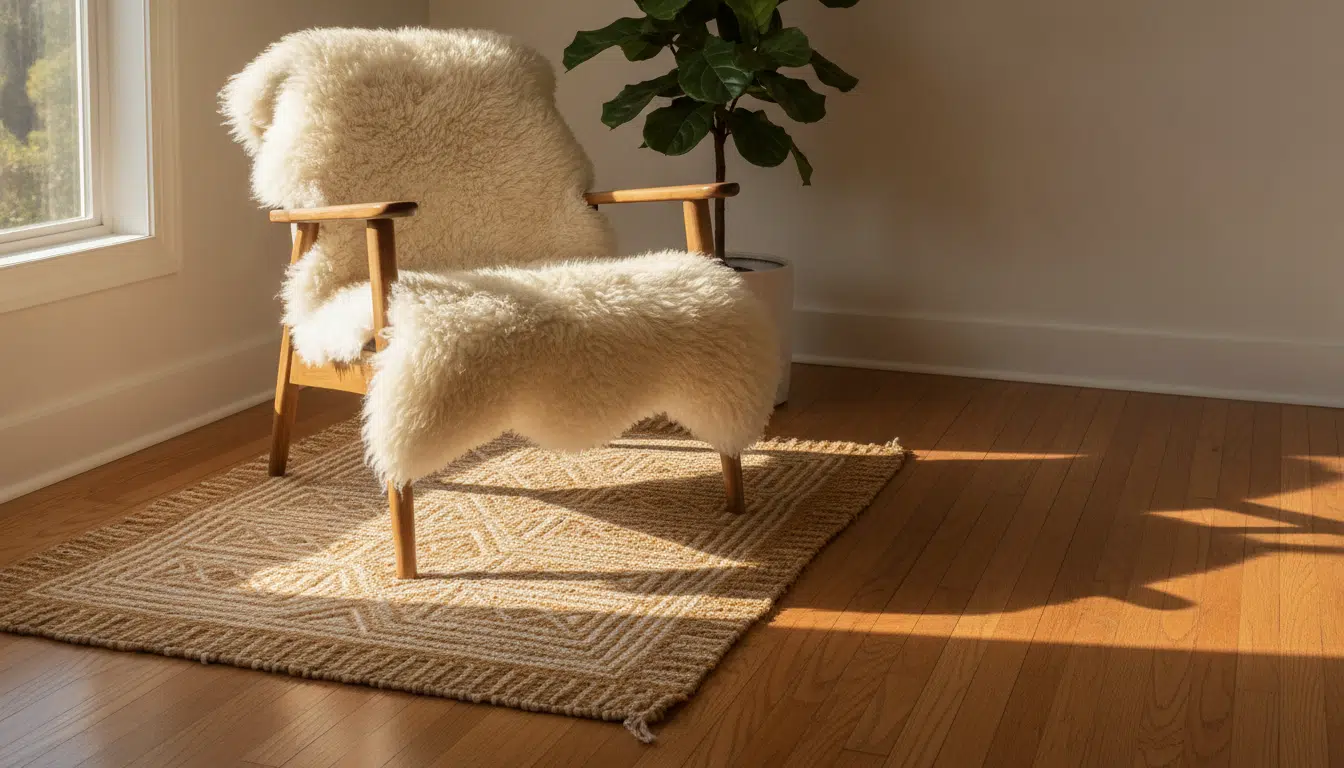
Natural materials earn their place by doing something manufactured ones can’t replicate. Genuine sheepskin rugs, for instance, aren’t uniform. The wool shifts across the hide, catching light differently at different angles.
Run your hand one way, and it darkens. Back the other and it brightens. No synthetic pile behaves like that, because no synthetic pile grew. That distinction is subtle. Real. And most people register it before they can name it.
Why Texture Registers Before Anything Else
Some rooms feel warmer than their thermostat suggests. Others feel cold despite good light and decent furniture. That’s texture at work. Or its absence.
Hard, smooth surfaces reflect both sound and light. They design rooms that appear amazing in photographs yet somehow lead to weariness when they are lived in. Softening a space a bit with something organic provides double-duty: it muffles noise, which our bodies translate as comfort, and the eye has somewhere to linger, instead of skipping around the stark surface.
Think of it less as decorating and more as editing. You’re not adding more things. You’re swapping something flat for something with dimension, weight, actual presence. A sheepskin draped over a reading chair changes the character of that corner, not because it’s pretty but because it shifts the sensory register. Walk past it and you slow down slightly. That quiet pull is what good texture does, and no amount of color or lighting quite replicates it.
The Floor First, Then Everything Else
When it comes to surfaces in a room, the floor is the largest.
Typically, rugs won’t be on the mind anytime soon after decorating a room, with the one exception of the floor being the first point of consideration, especially for rooms where guests spend extended periods sitting down. This is because a rug with a nice pile adds not just warmth, but also changes a room’s acoustic quality by reducing the sharpness of sounds amplified by hard floors.
Natural rugs like sheepskin provide something that synthetic woven materials cannot give you, since the former is very honest. The edges are irregular.
The texture shifts across the surface. You’re looking at something that grew rather than something extruded through a machine, and that difference registers in a room even when guests can’t say exactly why they feel comfortable there. A living room with one well-chosen natural rug on the floor has more presence than the same room covered wall to wall in synthetic carpet.
Choosing Natural Over Synthetic
There are the functional, rather than just cosmetic, advantages. Wool regulates temperature, so a sheepskin rug will still be cozy underfoot when it’s snowing but won’t stick unpleasantly in summer when temperatures rise and responsible producers use natural tanning methods, therefore avoiding the ‘off-gassing’ in the atmosphere which is associated with some manmade alternatives, a thing which becomes particularly important for children and indeed for most conscientious consumers.
Ethically sourced sheepskin, from free-range animals and naturally tanned hides, doesn’t degrade the way synthetic pile does. The wool rug holds its loft. The hide develops character over years rather than flattening after one season.
Buy it once, care for it properly, and it improves rather than diminishes. That’s a genuinely different proposition from what most alternatives offer.
Conclusion
Transforming a room doesn’t always require renovation. Sometimes one thing on the floor is enough, something natural that makes you stop and look differently at everything around it. Texture works this way: quietly, without announcement, without asking to be noticed. Put something genuine into a space and the space responds.
Not with drama. Just with the kind of warmth that makes people stay a little longer and wonder, without quite being able to place it, why this room feels different from everywhere else they’ve been today.