Black modern house designs can look bold, clean, and timeless when the details are handled well.
The color alone is not what makes the exterior work. Strong rooflines, large windows, balanced materials, and the right finish all shape the final result.
Wood, stone, metal, concrete, and landscaping can soften the dark exterior so the home feels warm instead of flat or heavy.
Before choosing black siding or paint, think about your climate, upkeep, lighting, and the style of the house itself.
These ideas will help you compare different black exterior looks and choose a design that feels striking, practical, and built to last.
Planning a Black Exterior: Design and Materials
A black modern house works best when the color connects with the home’s structure, materials, and surroundings.
The right choices keep the exterior bold without making it feel flat or overly dark. These design details have the biggest impact on how the exterior looks, ages, and fits its setting:
- Modern forms: Clean rooflines, simple shapes, black-framed windows, and large glass openings give the exterior clear definition.
- Material contrast: Wood, stone, concrete, metal, greenery, and lighter accents break up large black surfaces and add texture.
- Durable materials: Fiber cement and metal need less upkeep, while wood, brick, stone, and vinyl age differently, so it helps to compare durable exterior materials before you settle on a siding type.
- Site conditions: Climate, neighborhood style, HOA rules, and upkeep expectations should guide your material and finish choices.
Black works best when these choices support each other rather than compete. That balance keeps the exterior durable, comfortable, and visually connected to the home.
Modern Black House Ideas
These black modern house ideas show how different materials, layouts, and design choices can change the overall look.
From warm wood details to bold all-black exteriors, each style creates a different feel.
1. Black Modern A-Frame House
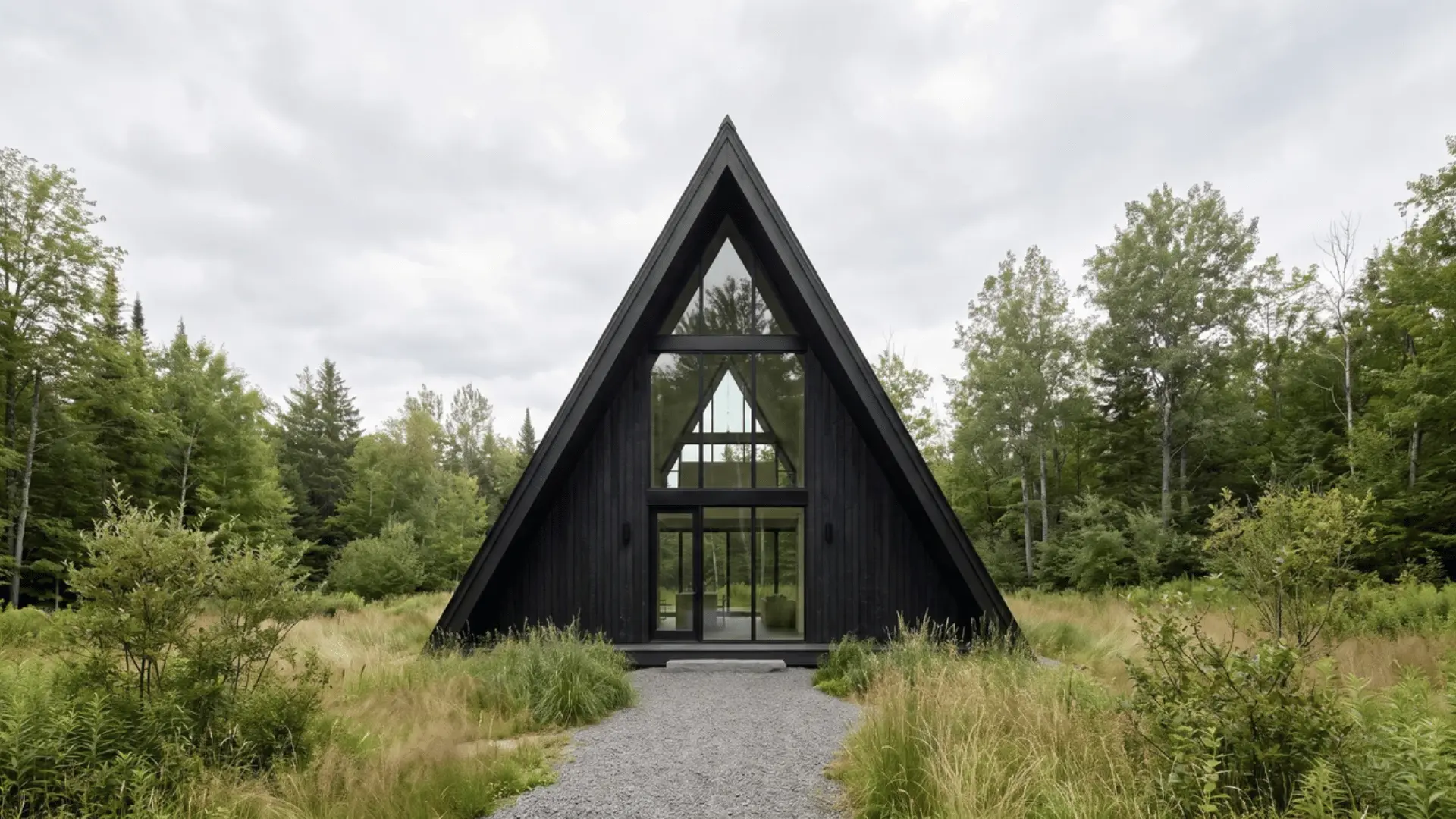
A black modern A-frame house is defined by its steep triangular roofline, with the roof extending close to the ground.
Large front glazing and dark cladding sharpen the silhouette while keeping the exterior simple.
The pitched geometry reduces usable wall space and can complicate furniture placement, storage, and upper-level headroom.
Interior planning needs to account for sloped sides so the dramatic form does not create awkward areas.
2. Minimalist Black Box House
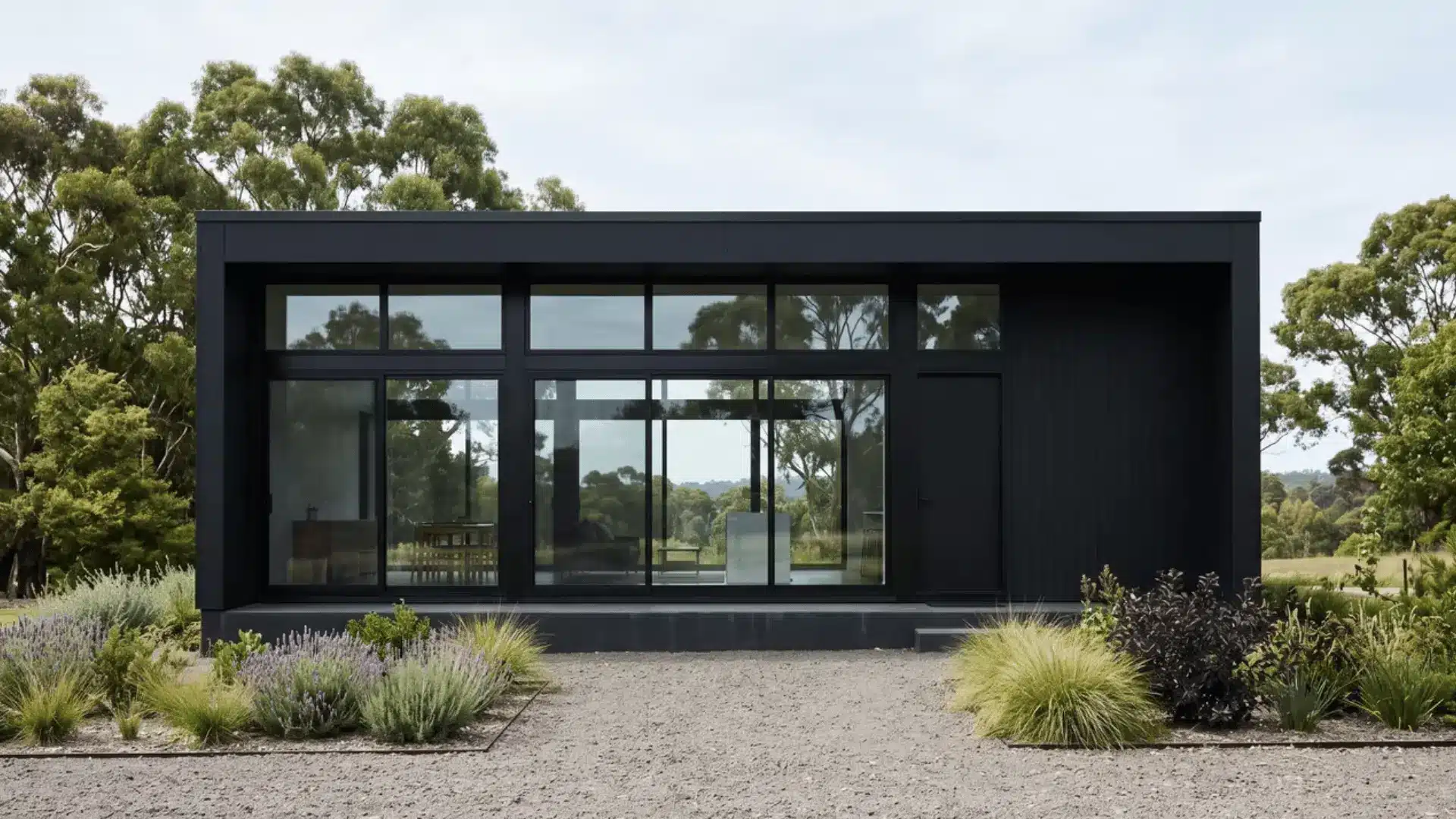
A minimalist black box house is defined by a rectangular mass, flat roof, flush exterior surfaces, and sharply framed openings.
Large windows interrupt the dark facade while minimal trim keeps the geometry crisp and controlled.
Because the design relies on proportion rather than decoration, poor window placement or uneven material joints are difficult to hide.
Construction details must stay precise, since small inconsistencies can weaken the minimalist effect.
3. Black Modern Farmhouse
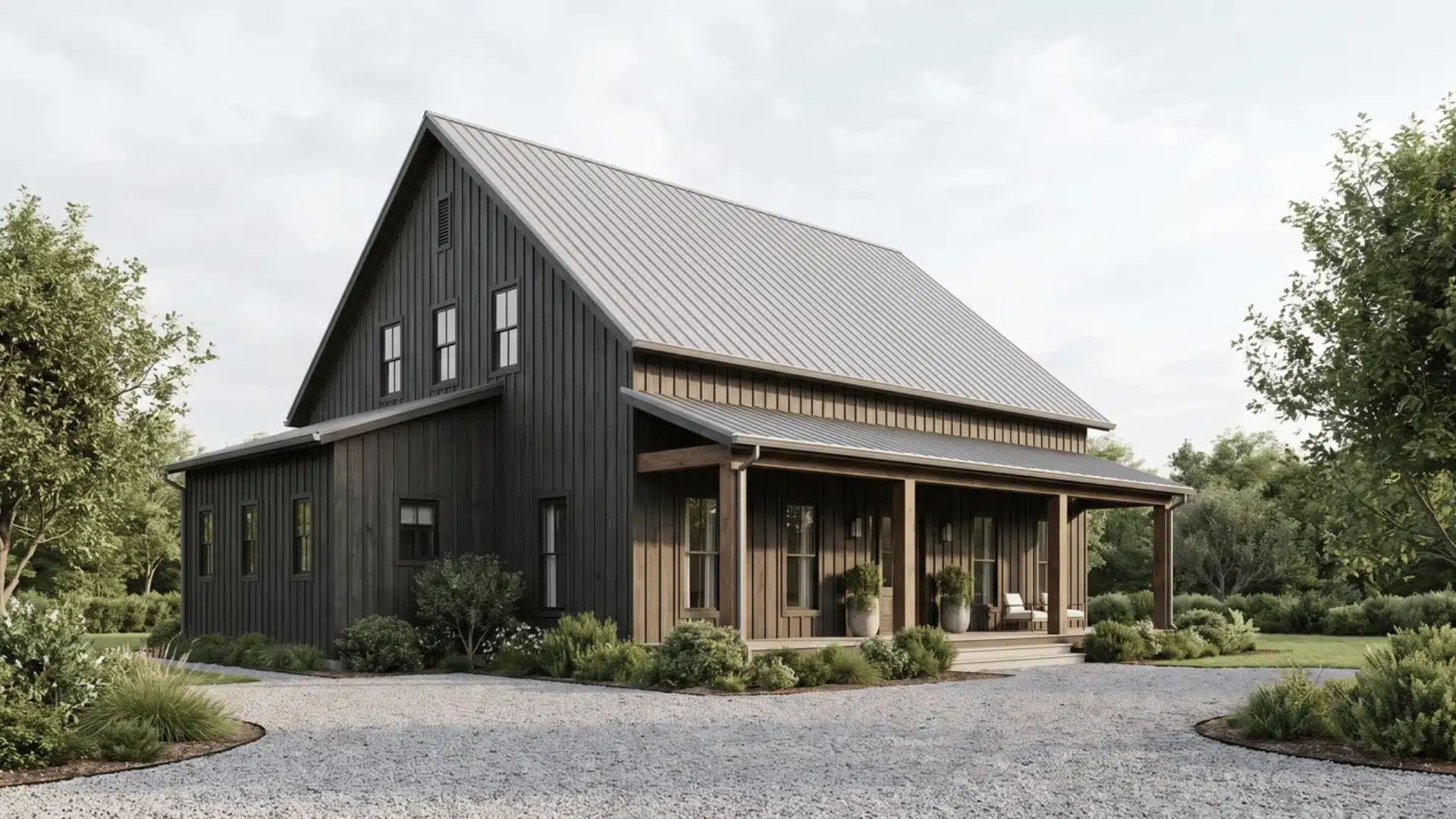
A black modern farmhouse combines a familiar gabled form with vertical board-and-batten siding, covered porches, and simple black-framed windows.
The dark finish sharpens traditional farmhouse proportions while preserving the style’s recognizable rural character.
The challenge is keeping the exterior from becoming overly decorative or generic.
Too many rustic details, mixed rooflines, or ornamental features can compete with the cleaner modern language, so restraint matters throughout the design.
4. Black Mountain Modern Home
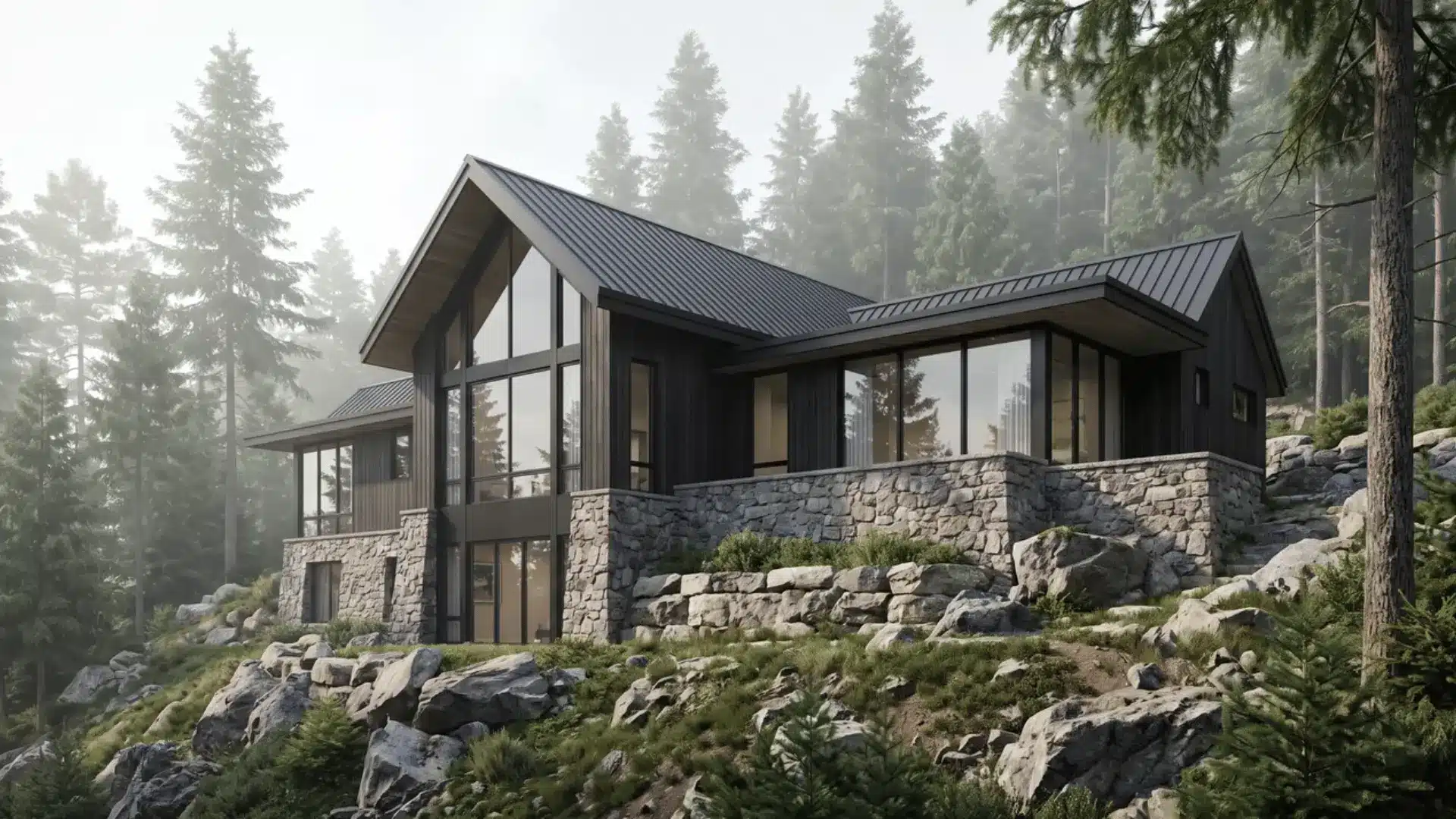
A black mountain modern home is defined by strong roof forms, broad glazing, stone bases, and natural materials shaped around steep or wooded surroundings.
Dark cladding helps the structure settle against trees and rocky terrain. Mountain sites often bring snow loads, drainage concerns, difficult access, and greater structural demands.
Roof pitch, foundation design, and material durability need to respond to local conditions rather than being chosen only for appearance.
5. Black Cabin-Inspired Modern House
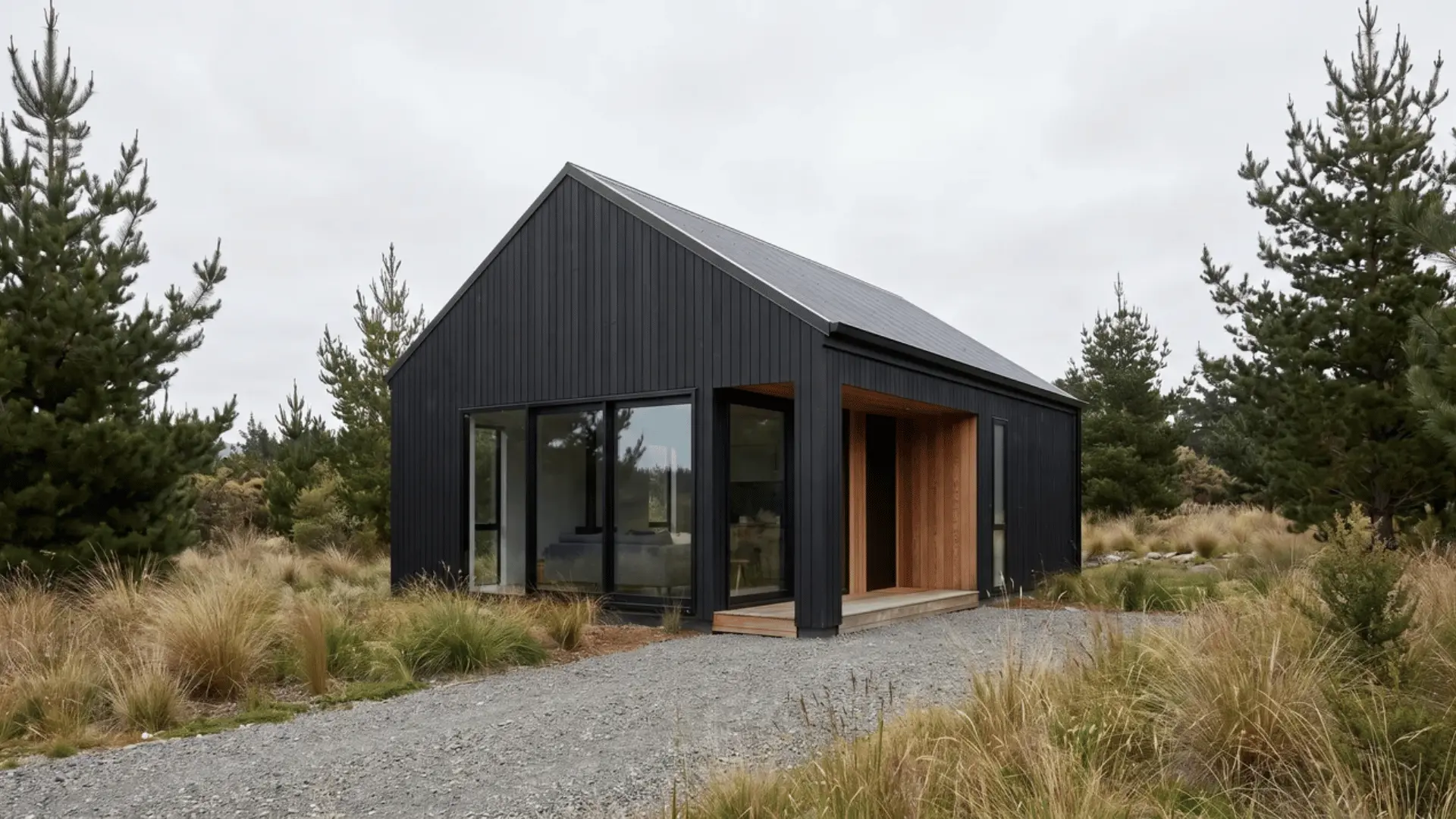
A black cabin-inspired modern house keeps the compact form and pitched roof of a traditional cabin but simplifies the detailing.
Dark siding, large windows, and restrained wood accents create a contemporary version of the type. The smaller footprint makes every opening and material change more noticeable.
Extreme dark cladding can make the cabin feel visually heavy, so glazing and warm natural finishes need to be placed with intention.
6. Black Modern Courtyard House
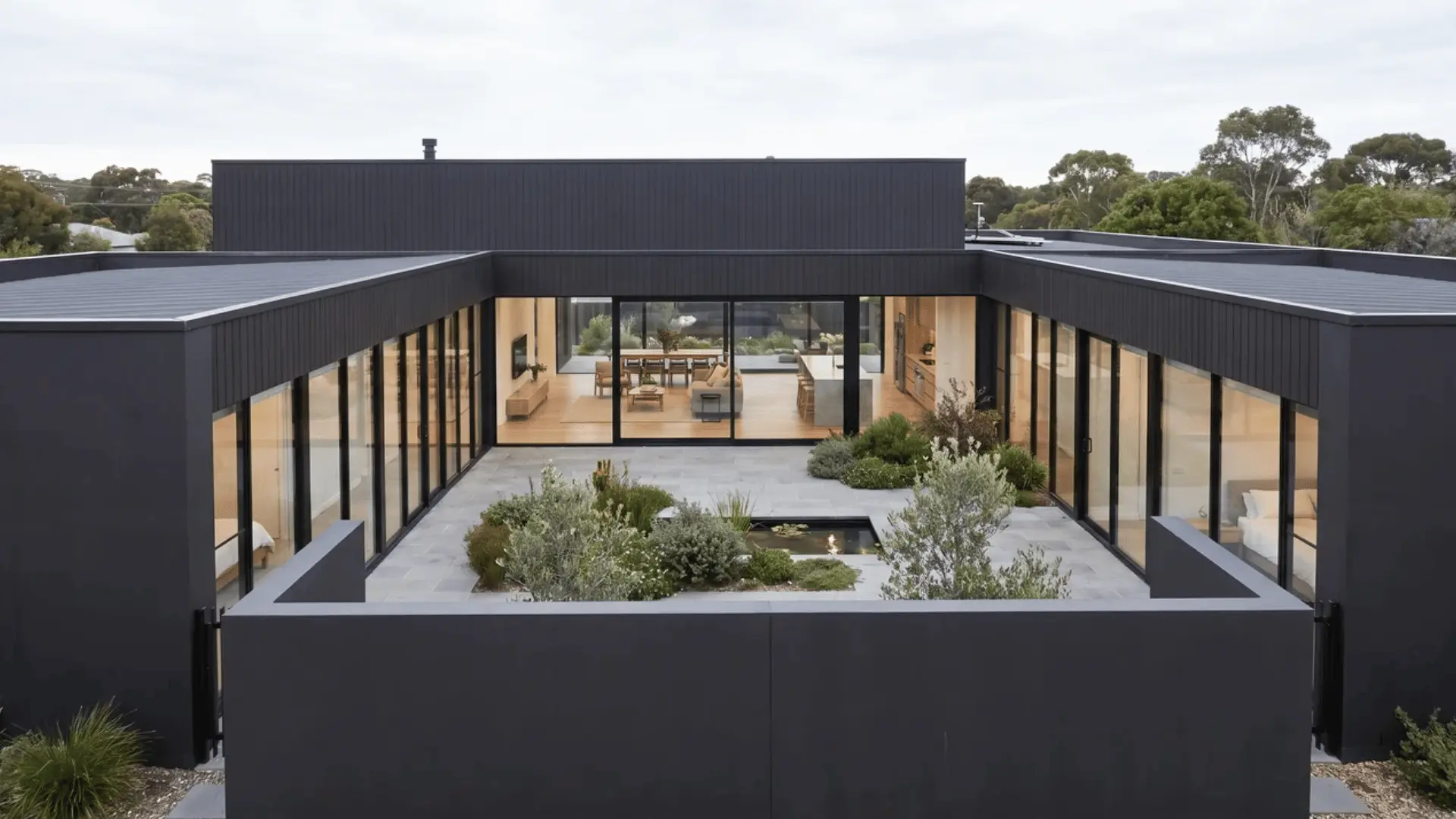
A black modern courtyard house is organized as an inward-facing outdoor space, with rooms opening to a protected center.
Solid street-facing walls and large interior glass panels create privacy while keeping the courtyard bright. This kind of layout usually needs more width and overall footprint than a conventional plan.
On a tight lot, the courtyard can become too narrow to function comfortably, so site dimensions need to support the concept.
7. Black Modern Japanese-Inspired House
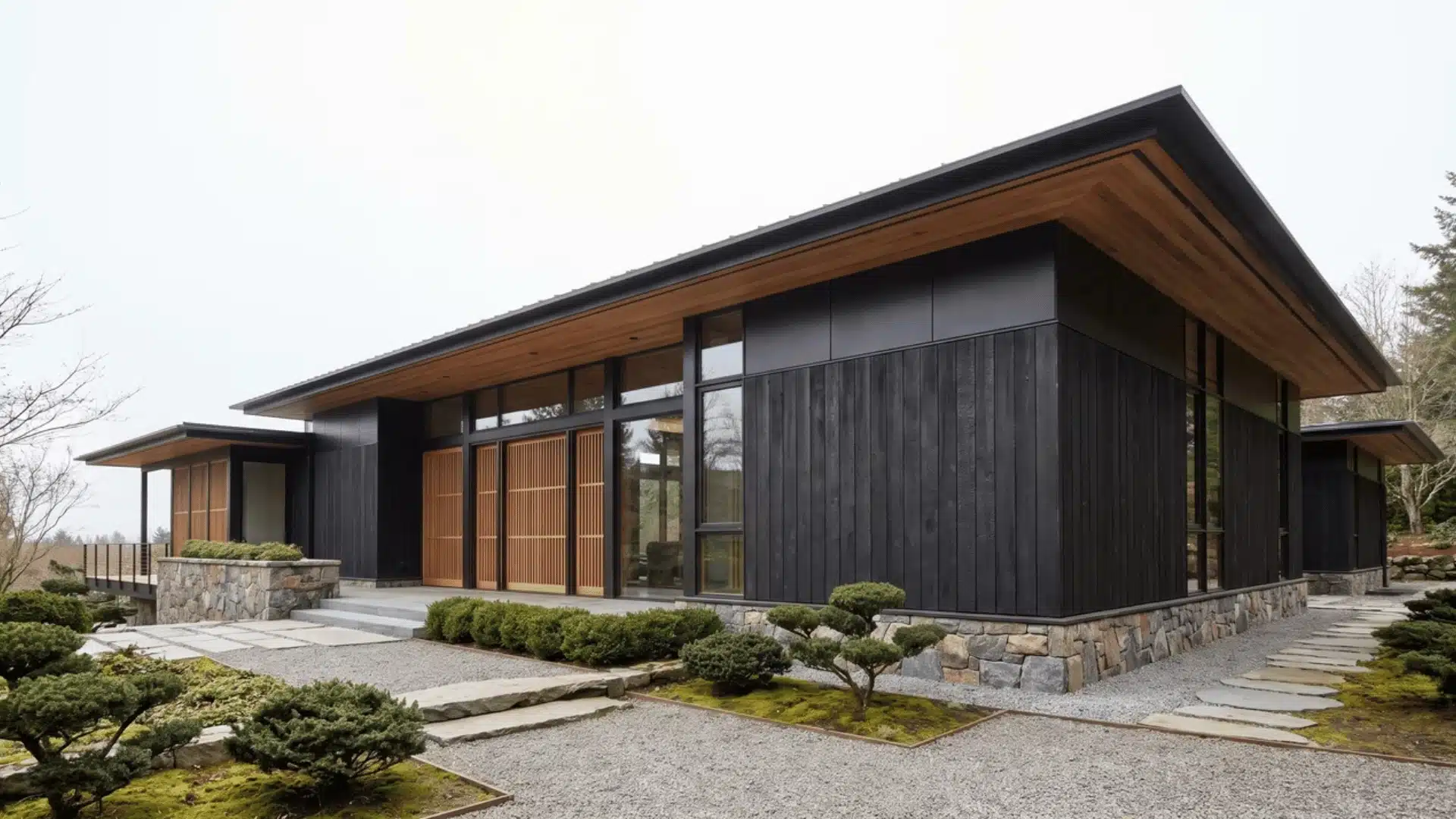
A black modern Japanese-inspired house is defined by low horizontal lines, deep overhangs, restrained materials, and carefully framed openings.
Dark siding pairs with wood, stone, and simple landscaping to create a calm, ordered exterior. This style depends on visual discipline, so cluttered detailing quickly weakens the effect.
Oversized fixtures, too many materials, or busy landscaping can disrupt the balance and make the architecture feel confused rather than intentional.
8. Black Modern Desert House
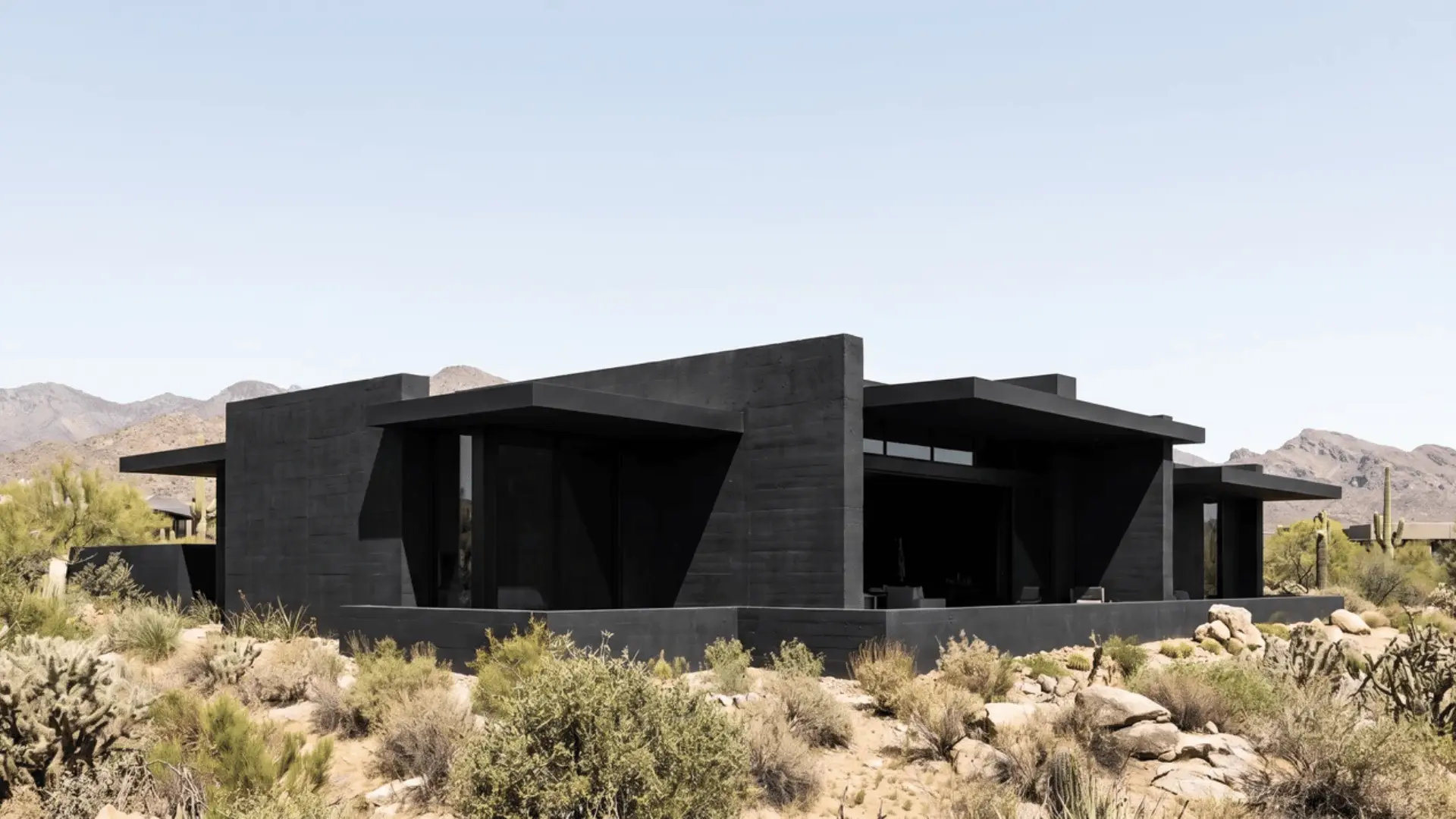
A black modern desert house is defined by a low profile, broad rooflines, recessed openings, and shaded glazing shaped for intense heat and glare.
Thick-looking walls and simple masses help the structure feel grounded. Dark finishes absorb more solar heat, so coating quality and wall performance matter in high-sun climates.
Poor material choices can fade faster or increase heat gain, making climate-responsive detailing essential from the beginning.
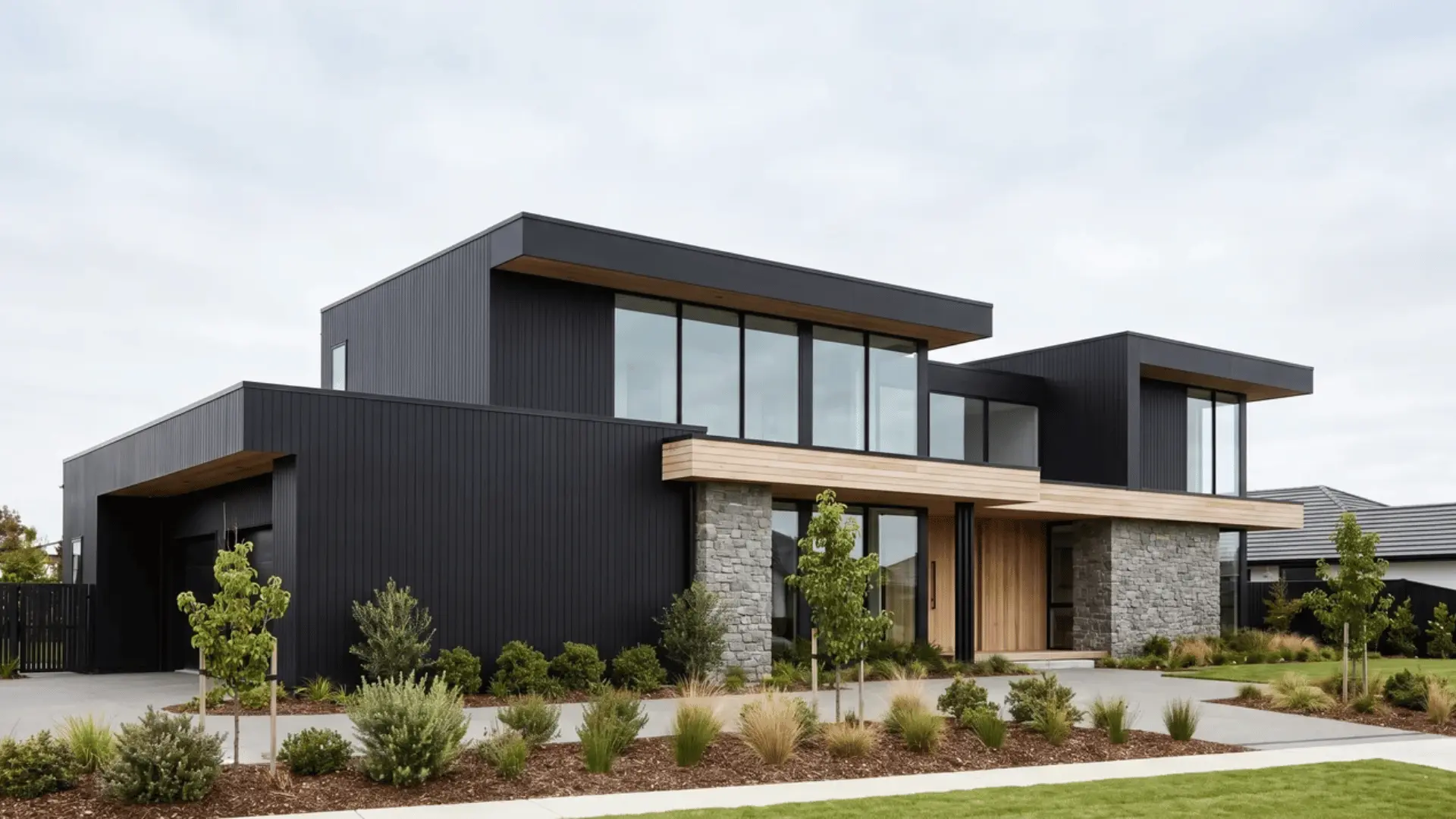
9. Two-Story Black Modern Home
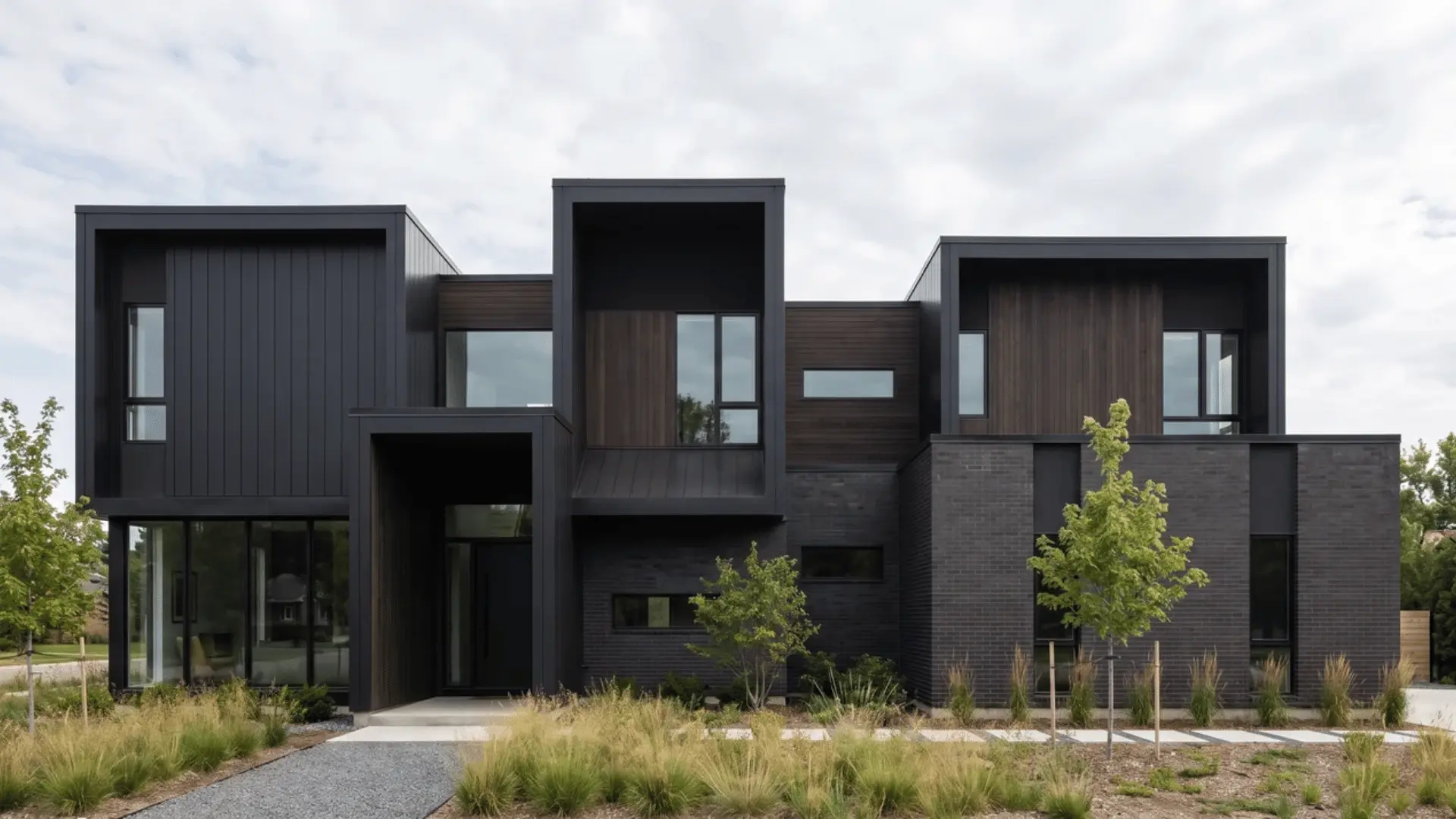
A two-story black modern home is defined by stacked volumes, strong vertical proportions, and windows arranged to break up the facade.
Recessed sections or material changes keep the dark exterior from reading as one block. The greater wall height makes scale and proportion harder to control.
If upper-level windows, rooflines, or cladding patterns are poorly balanced, the house can feel top-heavy, so the facade needs careful composition.
10. Black Modern Ranch House
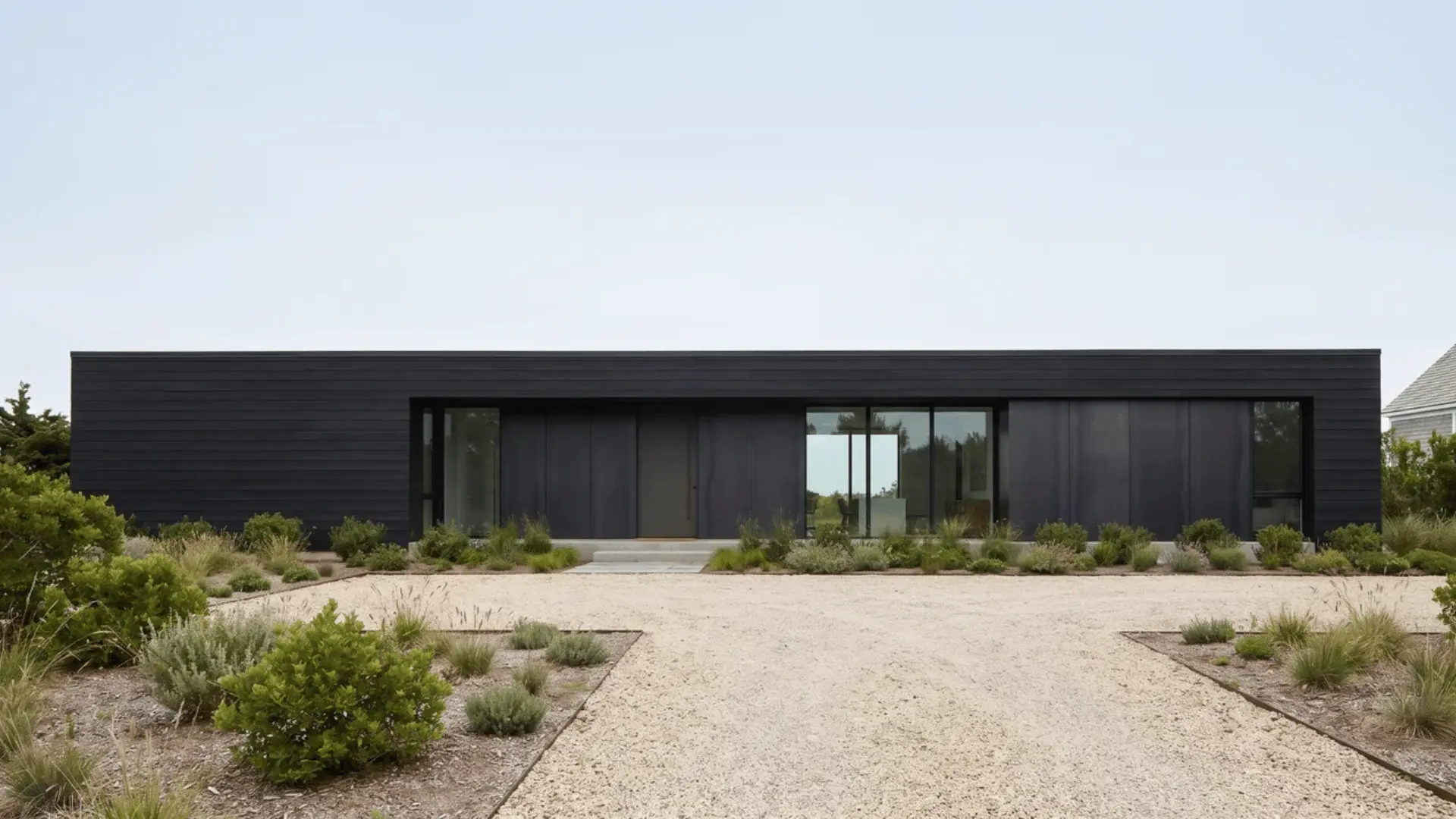
A black modern ranch house is defined by a long, low roofline, broad horizontal facade, and single-story layout.
Large windows, restrained entries, and simple material breaks reinforce the low-slung profile that distinguishes the ranch form.
Because the house spreads outward rather than upward, it needs enough lot width to keep the proportions convincing.
On narrow sites, the horizontal character can feel compressed and lose the relaxed ranch appearance.
11. Black Coastal Modern House
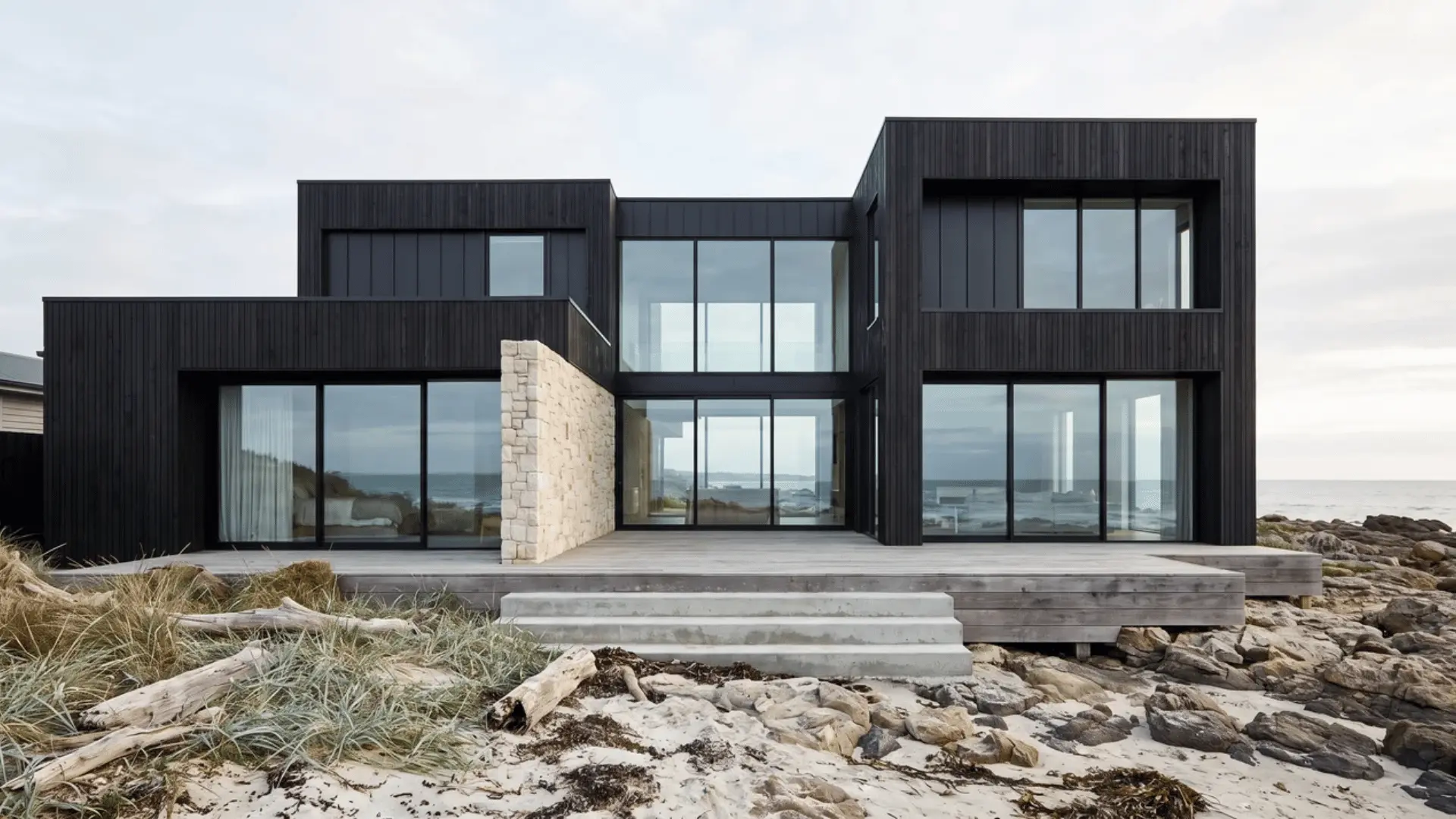
A black coastal modern house combines simple forms, generous glazing, and weather-resistant materials suited to exposed shorelines.
Dark cladding contrasts with pale stone, wood, or concrete while broad openings frame water and sky. Salt, wind, moisture, and strong sun can accelerate corrosion and finish wear.
Fasteners, metalwork, coatings, and siding need coastal-rated specifications, or the exterior may age quickly despite looking polished when newly built.
12. Urban Black Modern Home
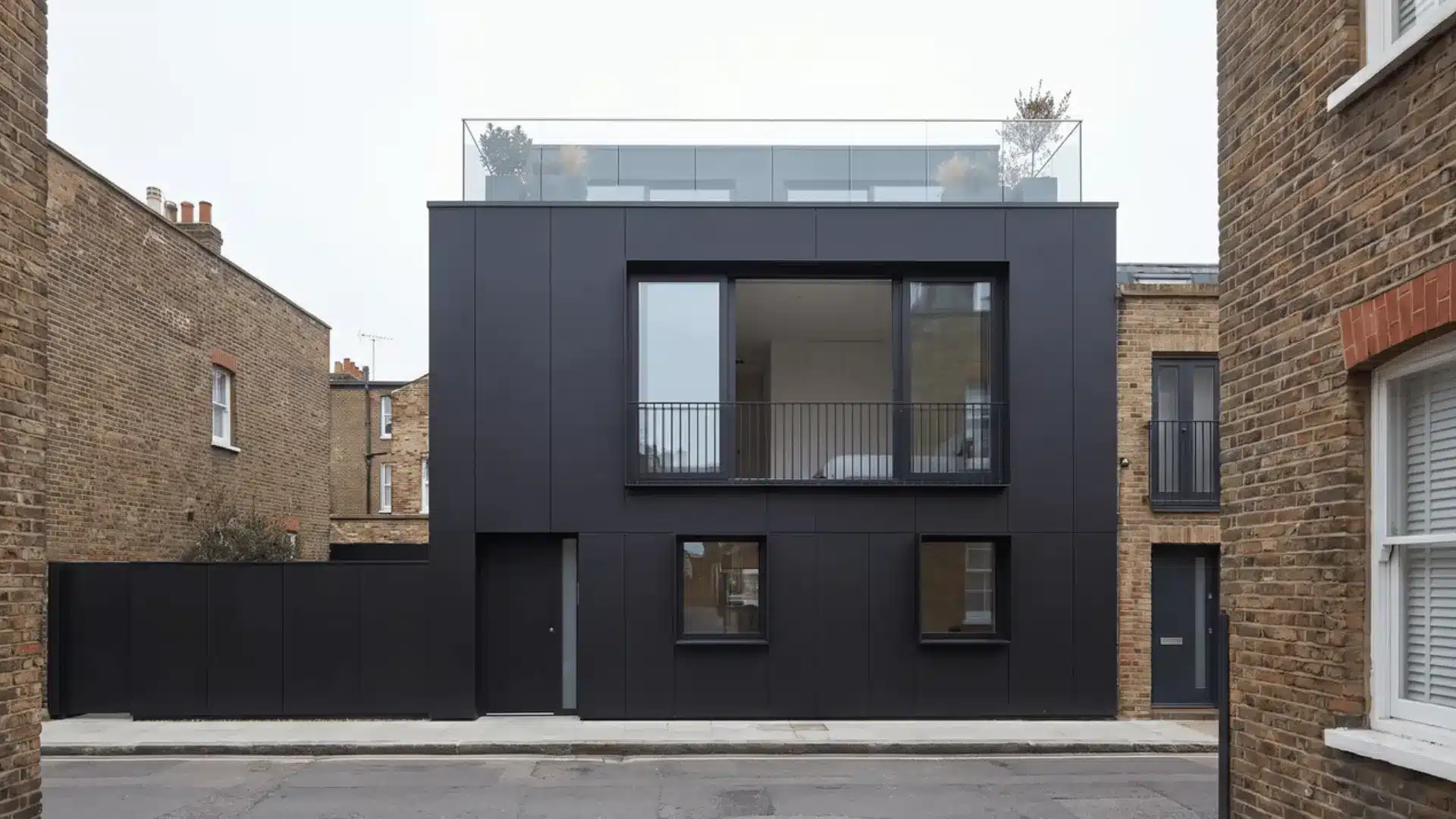
A black modern urban home is defined by compact massing, controlled street-facing windows, roof terraces, and private rear openings.
Dark cladding gives the narrow facade a strong architectural identity. The main constraint is balancing daylight with privacy and setback rules.
Large openings need careful placement on close urban lots to prevent overlooking while keeping interior rooms bright and comfortable.
13. Black Modern Scandinavian House
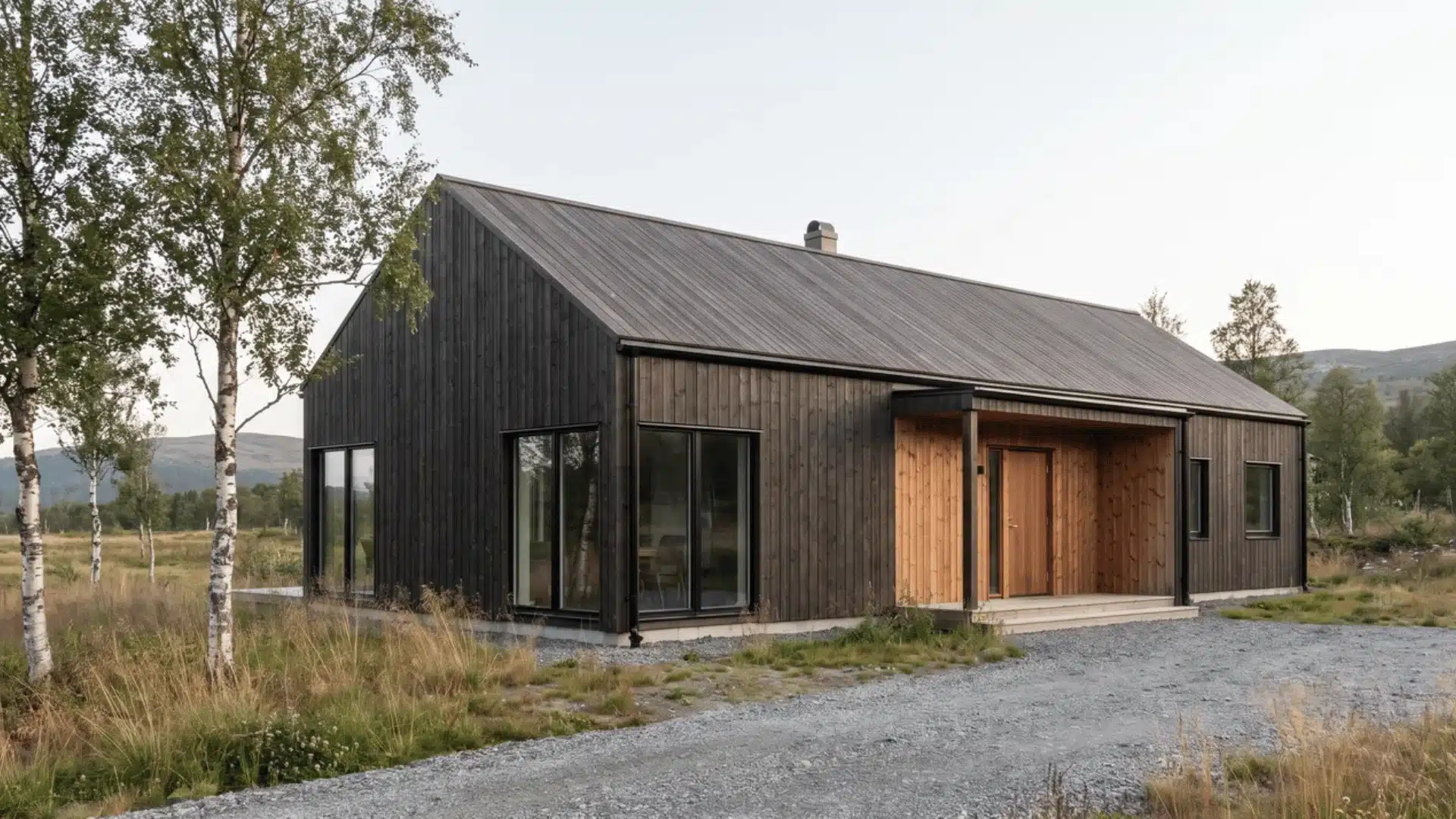
A black modern Scandinavian house is defined by a simple pitched roof, clean proportions, minimal detailing, and generous glazing.
Dark timber cladding often contrasts with pale interiors and warm wood. The style can feel cold when simplicity becomes emptiness.
Texture, timber, and lighting should add warmth without introducing decoration that weakens the restrained Scandinavian character.
14. Black Modern Container Home
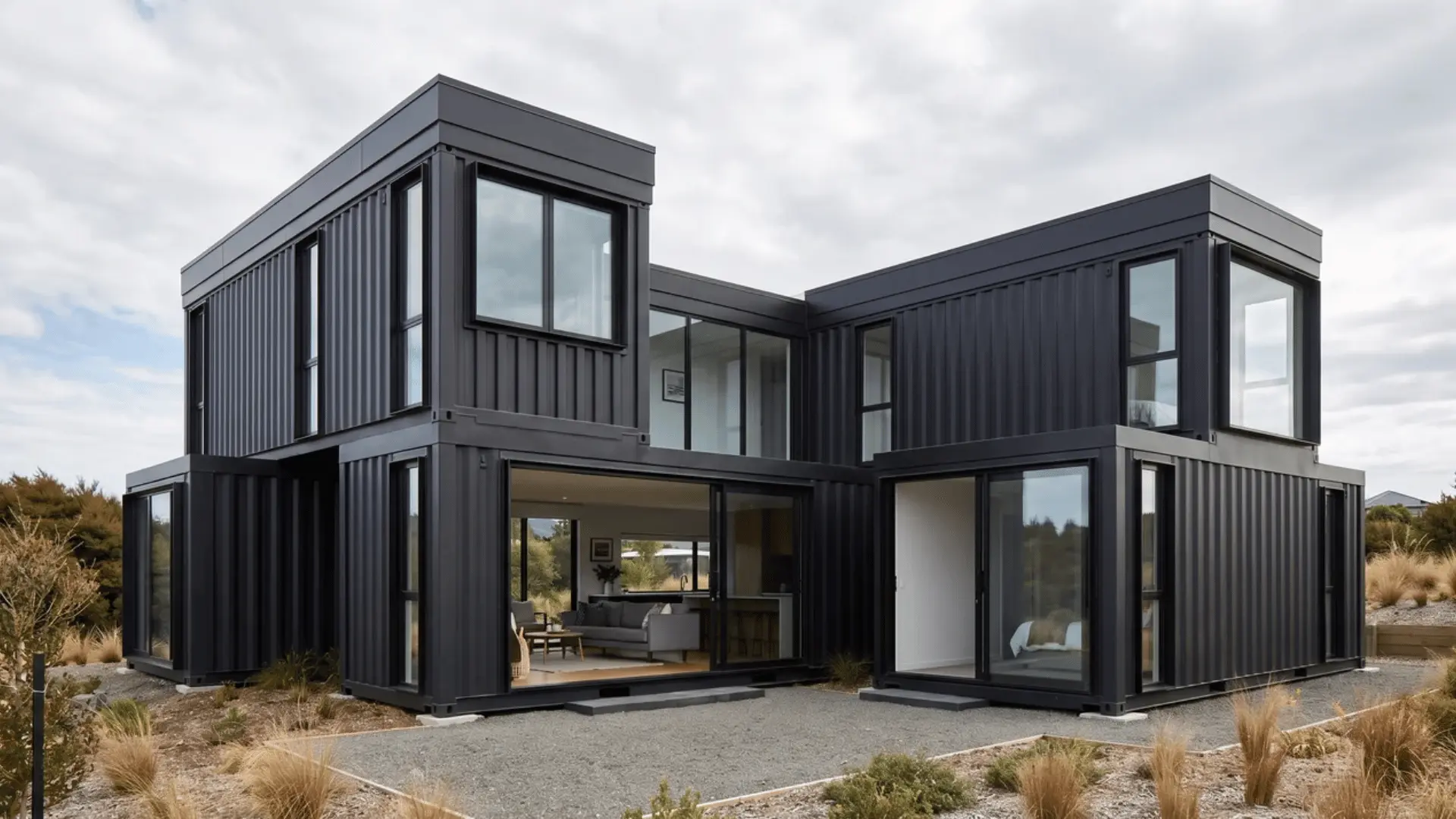
A black modern container home begins with a long steel box as its structural module. Repeated rectangular volumes, crisp openings, and dark metal finishes emphasize the industrial logic.
If this style appeals to you, browsing more container home designs is a good next step before you price out a build.
The shell requires more work than buyers expect. Insulation, condensation control, structural reinforcement, and interior finishing can add substantial costs, making the container only one part of the budget.
15. Black Modern Cliff-Side House
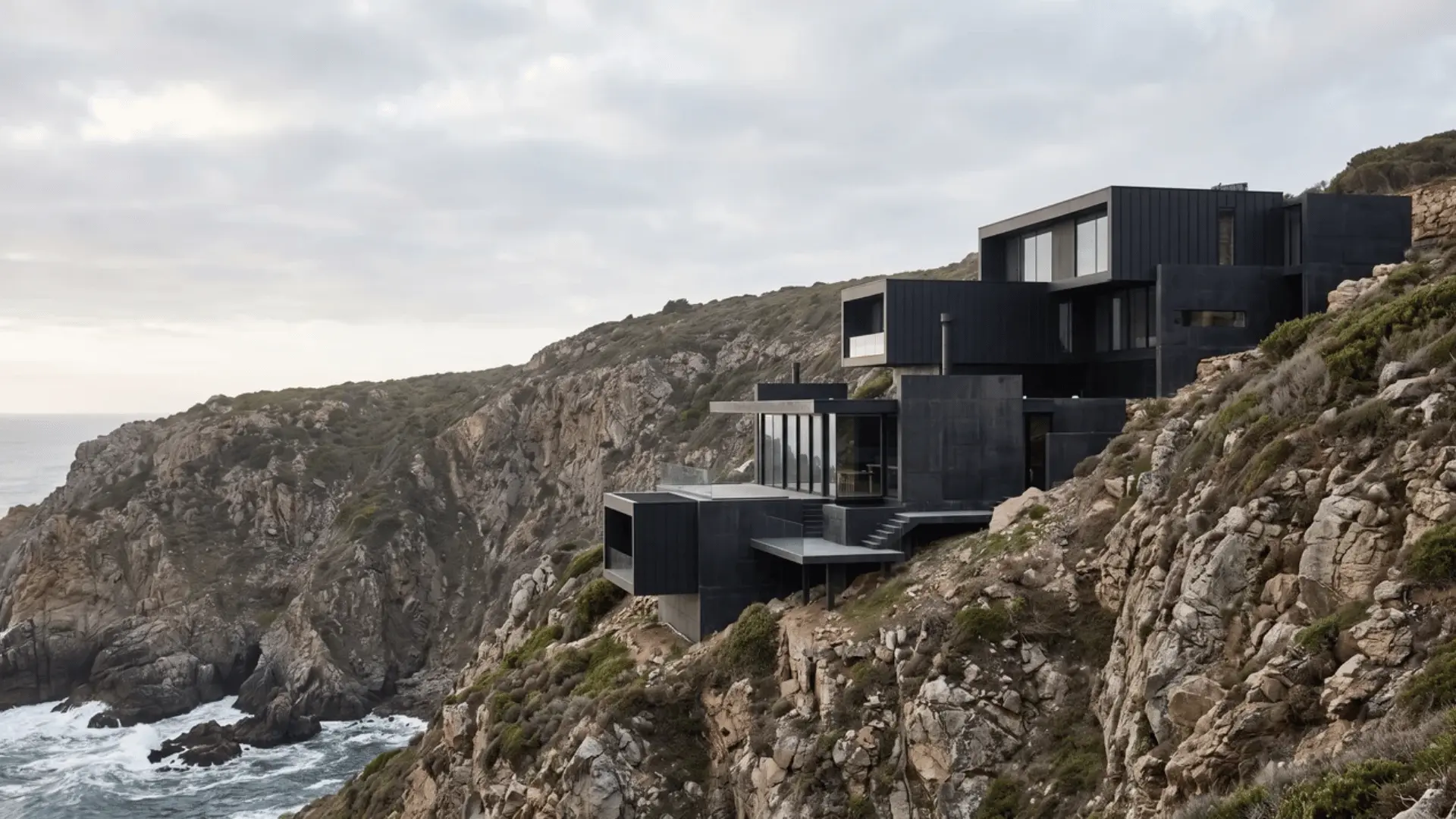
A black modern cliff-side house follows steep terrain through terraced levels, cantilevered rooms, and view-facing glazing.
Dark exterior masses often step with the slope instead of sitting on one platform. The site makes engineering and construction more complex.
Excavation, retaining structures, foundations, access, and material delivery can raise costs quickly, requiring a larger structural and logistical budget.
16. Black Modern Net-Zero House
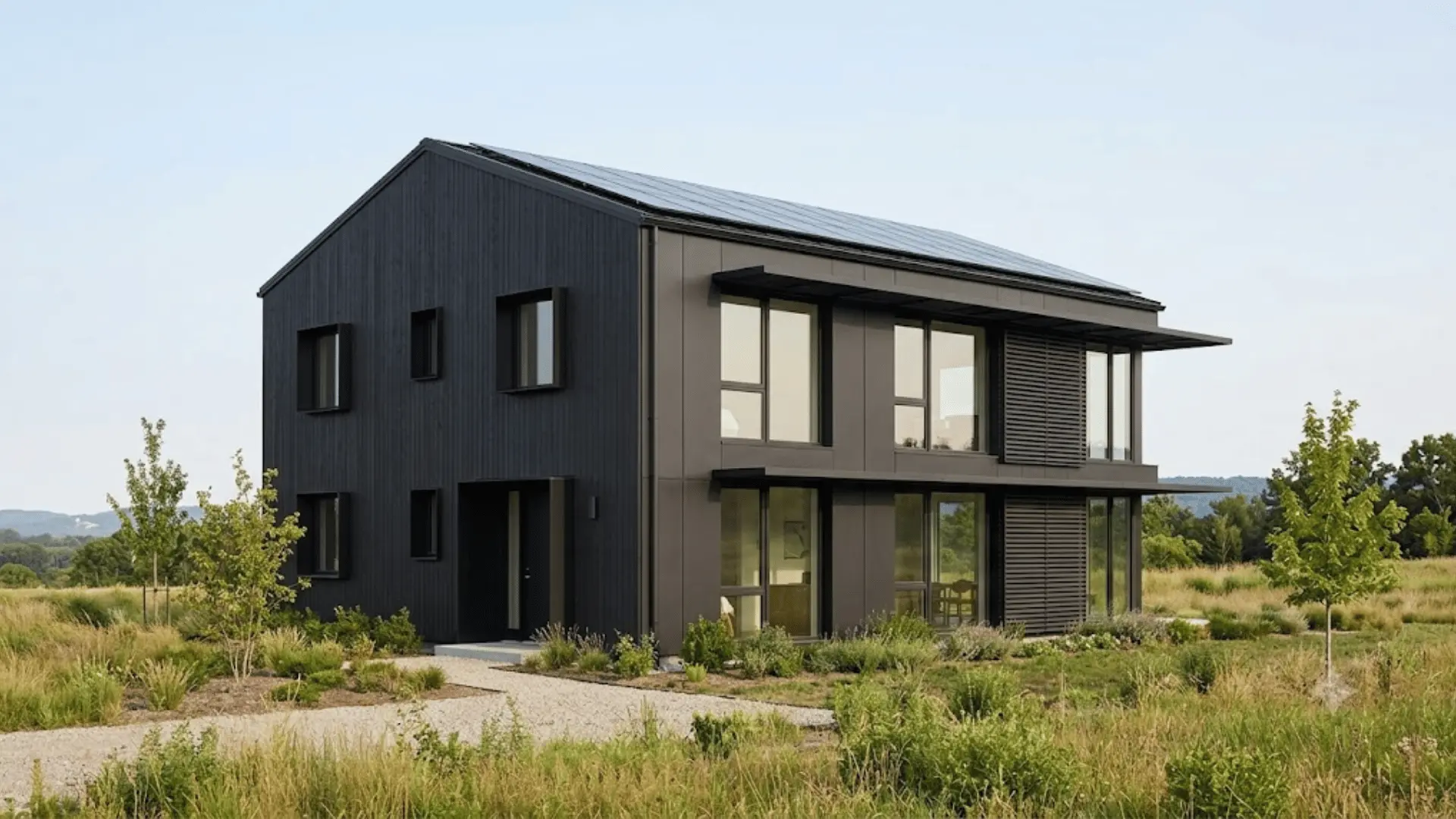
A black modern net-zero house lets energy performance shape the exterior through orientation, controlled glazing, insulation, and shading.
Simple forms reduce thermal weak points while dark cladding provides identity. The trade-off is reduced aesthetic freedom.
Window size, roof shape, overhang depth, and orientation may follow energy targets, so appearance must stay within strict performance requirements.
17. Black Modern Tropical House
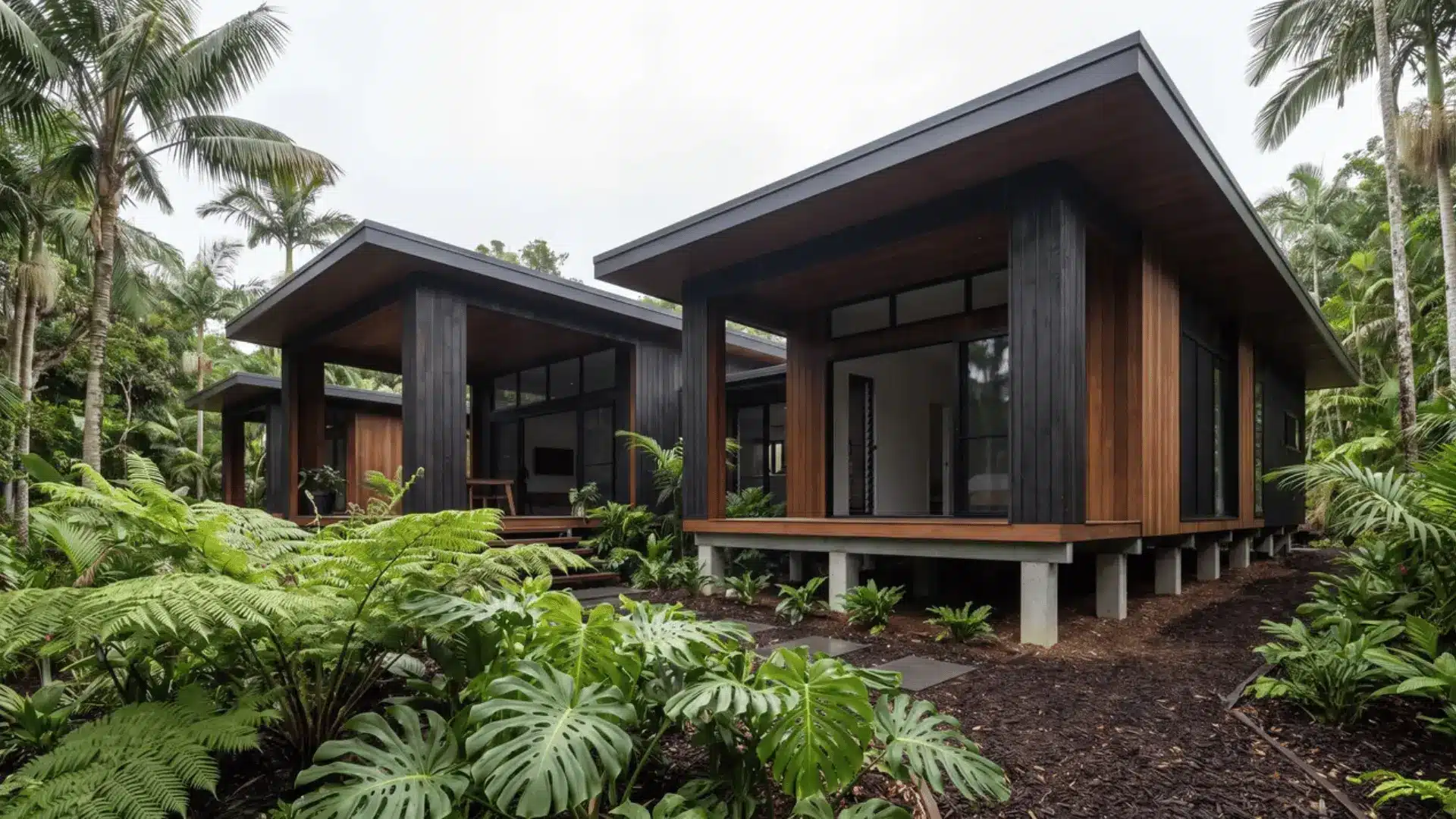
A black modern tropical house is defined by elevated floors, deep roof overhangs, broad shaded openings, and cross-ventilation.
Dark cladding is balanced by lush planting and lighter natural materials. Humidity, heavy rain, heat, and salt exposure can damage exterior materials quickly.
Durable finishes, corrosion-resistant hardware, drainage, and ventilation details are essential for long-term performance.
18. Black Modern Mid-Century Influenced House
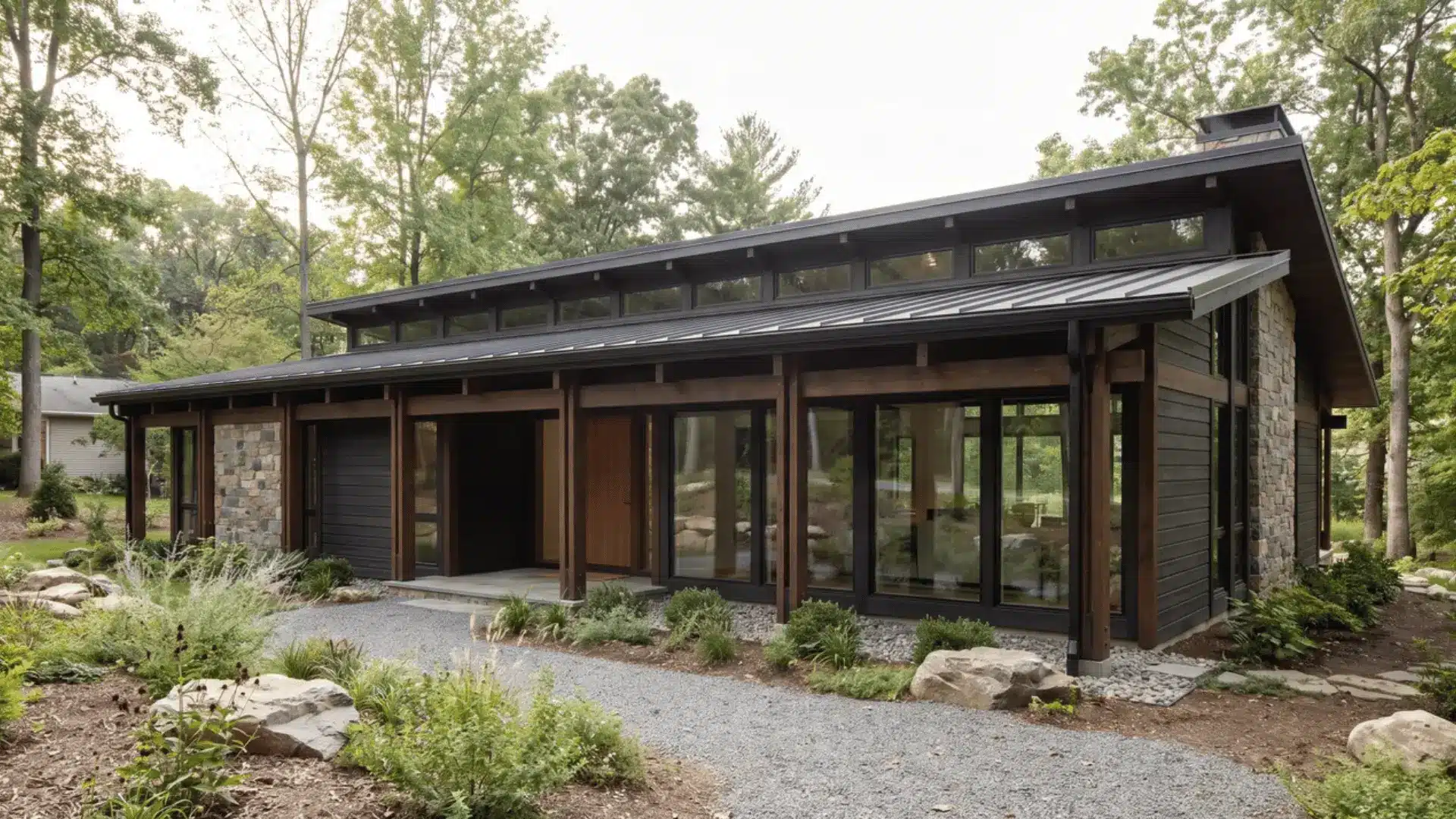
A black modern mid-century house uses a post-and-beam structure, low rooflines, clerestory windows, and broad glazing.
Dark cladding updates the form while wood and stone preserve its warmth. The challenge is balancing black surfaces with the relaxed mid-century character.
Too much dark cladding can overpower the design, so natural materials need enough presence to soften it.
19. Black Modern Barn Conversion
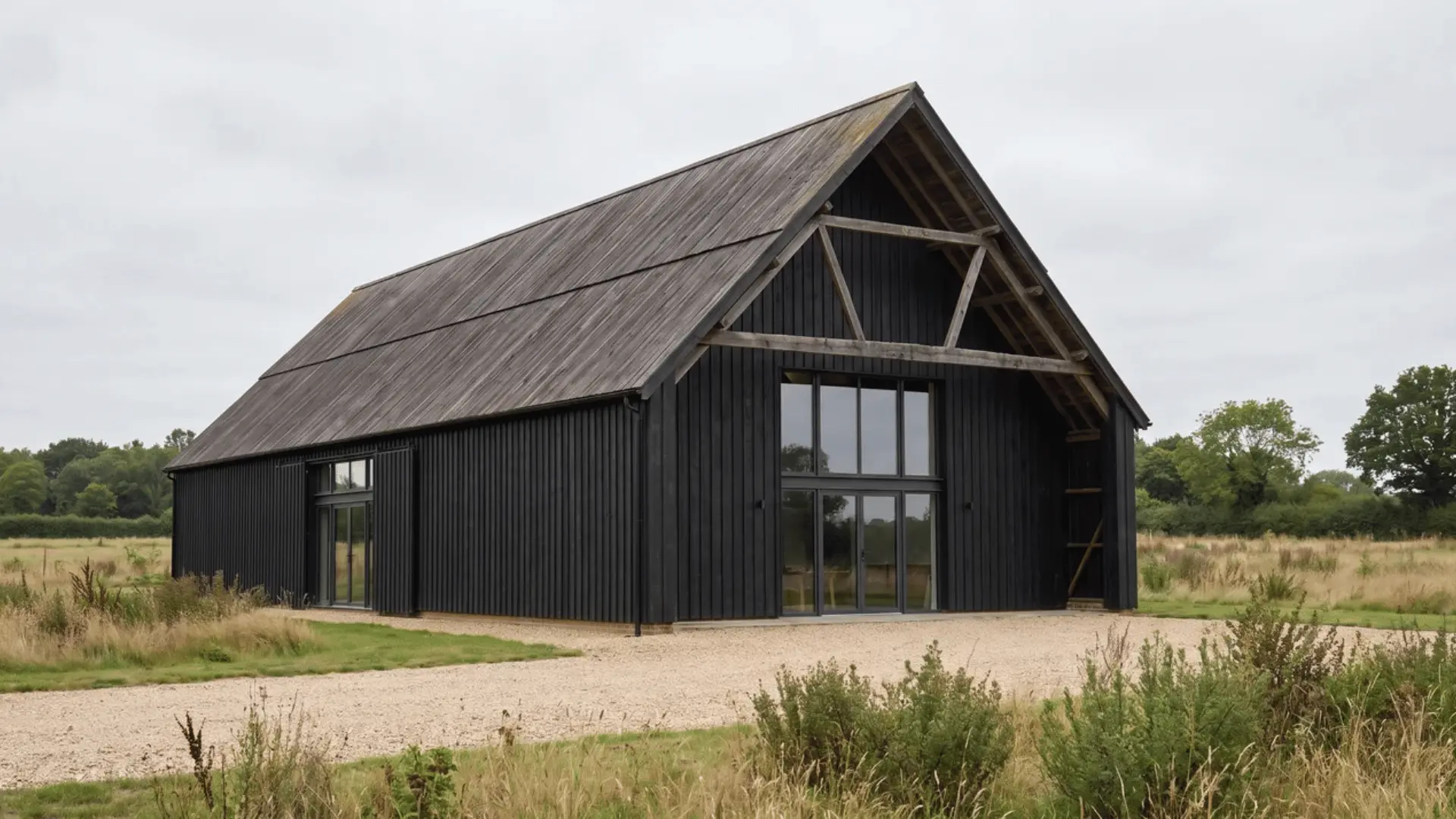
A black modern barn conversion keeps the original gable roof, large interior volume, and exposed structural rhythm.
Dark cladding and oversized openings modernize the shell without hiding its agricultural form. The existing structure limits layout flexibility.
Structural bays, old openings, ceiling heights, and foundation conditions may control room placement, requiring compromise between preservation and modern living needs.
20. Black Modern Prefab / Modular House
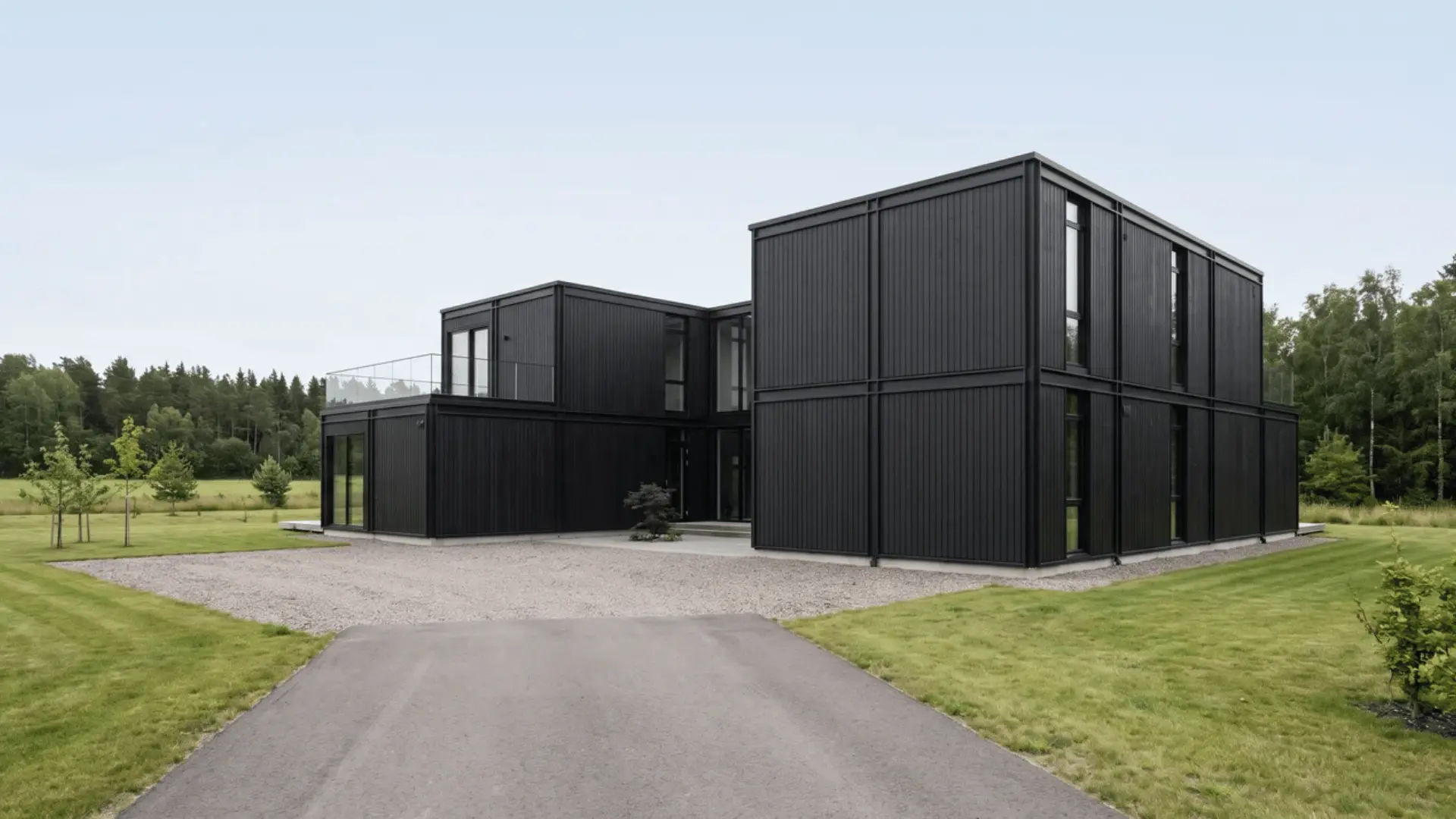
A black modern prefab or modular house is defined by factory-built sections, precise panel joints, and repeated structural modules. Dark cladding emphasizes crisp edges and the clean assembly.
Customization is usually more limited than with a fully site-built home. Module dimensions, transport limits, and factory systems can restrict room sizes, unusual forms, and site-specific changes.
If you are still weighing the trade-offs, a closer look at what a prefab or modular home actually involves can help before you commit to the approach.
21. Flat Roof Black Modern Home
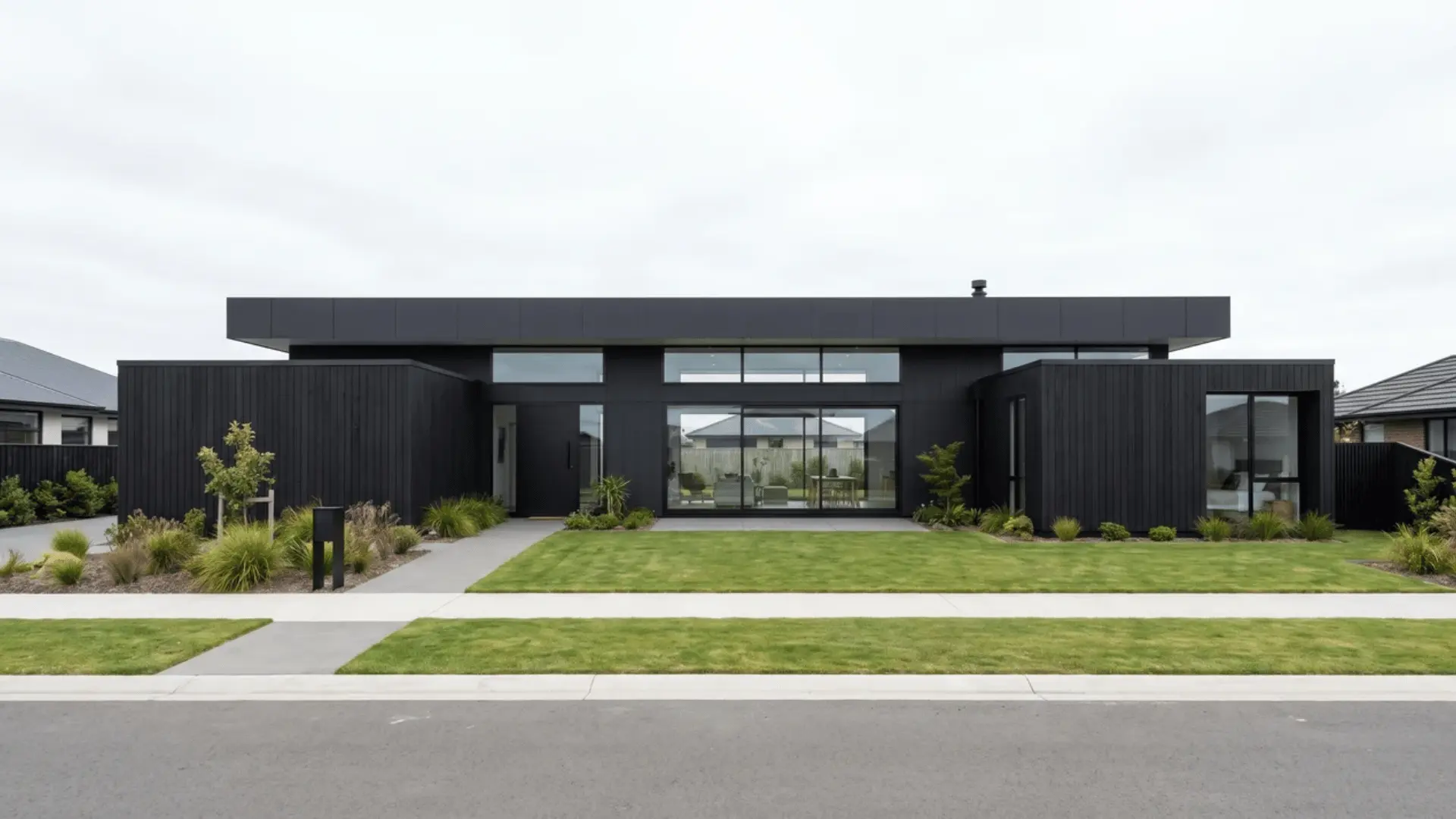
A flat-roof black modern home is defined by a low horizontal roof plane, box-like massing, and parapet walls.
Large glazing and simple cladding reinforce the clean geometry. Flat roofs require careful drainage and waterproofing because water sheds more slowly than on pitched forms.
Roof slopes, scuppers, membranes, and maintenance access need proper planning.
22. Sloped Roof Black Modern Home
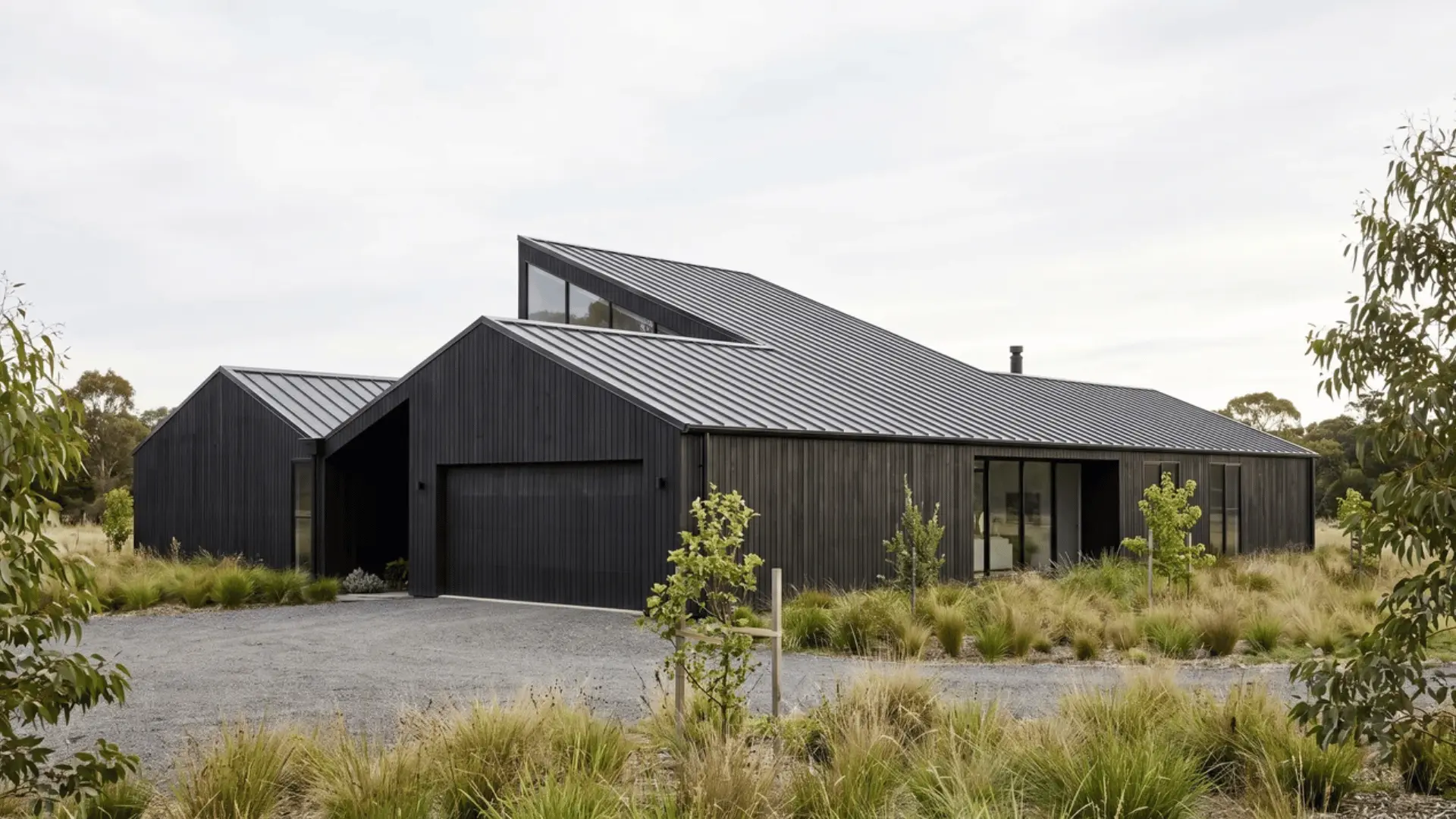
A sloped roof black modern home is defined by angled roof planes that shape the exterior silhouette. Dark cladding keeps the form simple while the pitch adds height and direction.
The roof angle affects drainage, snow shedding, ceiling height, and solar exposure.
Its slope should respond to climate and interior layout rather than serving as decoration alone.
23. Black Modern Earth-Sheltered House
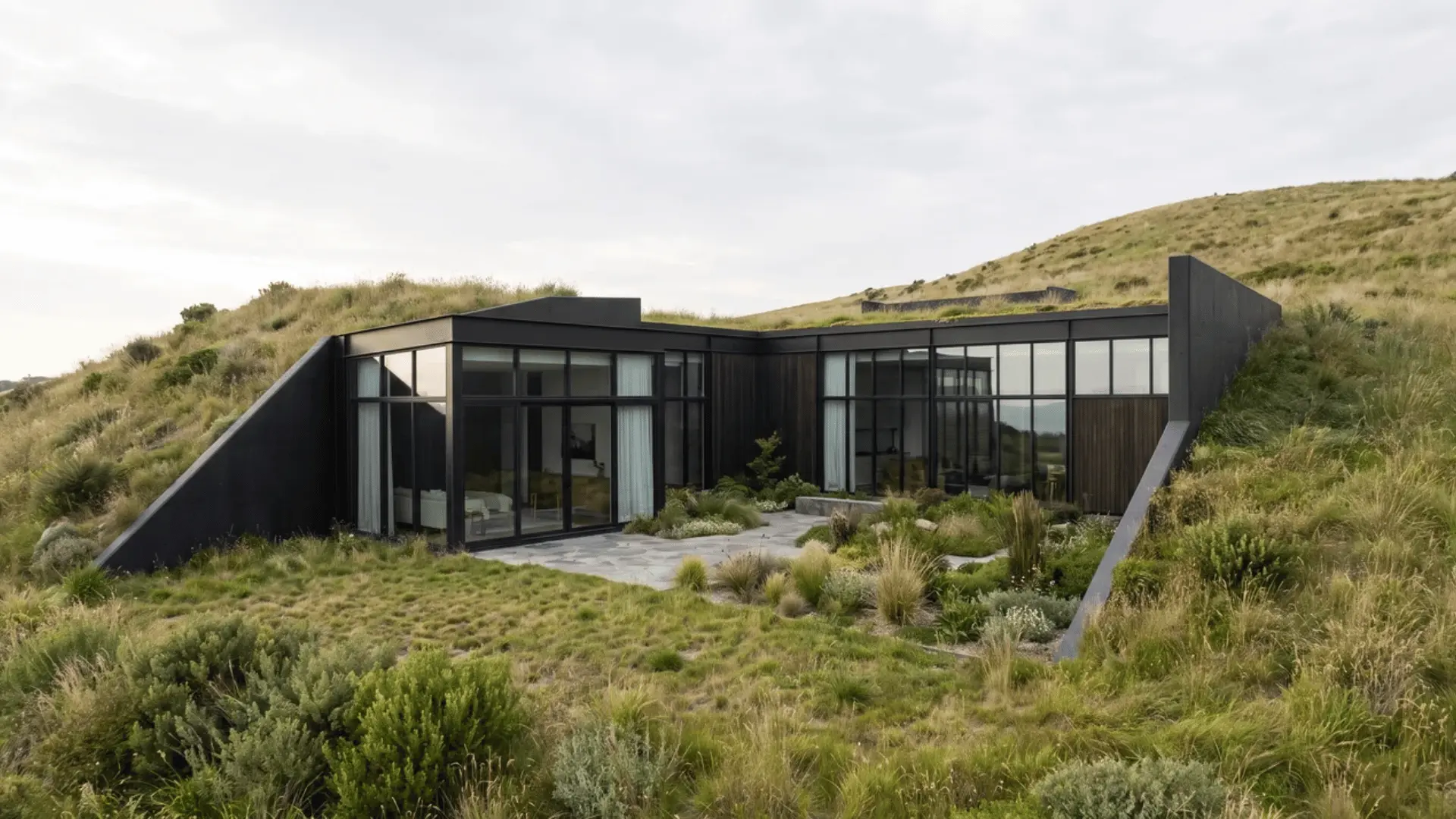
A black modern earth-sheltered house is defined by a partially buried form with selected walls, courtyards, or roof edges visible above grade.
Glazing helps connect the structure with the landscape. Waterproofing, drainage, ventilation, and daylight become major design constraints.
These systems need careful planning because failures are difficult to access and expensive to correct later.
24. Black Modern Elevated / Stilted House
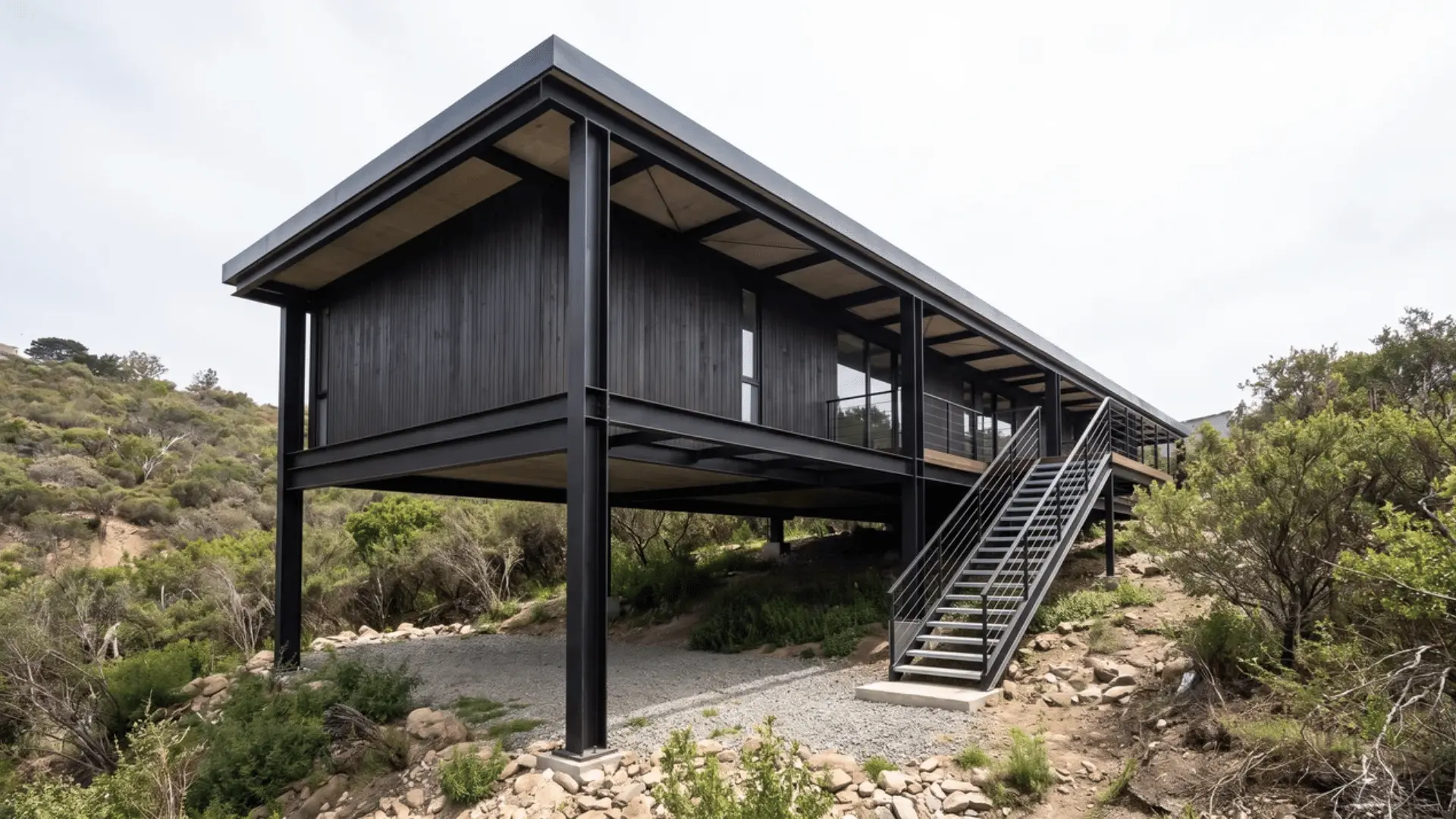
A black modern elevated house raises the main living volume above the ground on visible supports.
The structure responds to flooding, steep terrain, or sensitive sites while creating a floating appearance. The exposed underside becomes part of the design.
Columns, stairs, utilities, and lower-level screening need careful treatment, or the house can appear unfinished beneath the main volume.
25. Black Modern Industrial Loft-Style House
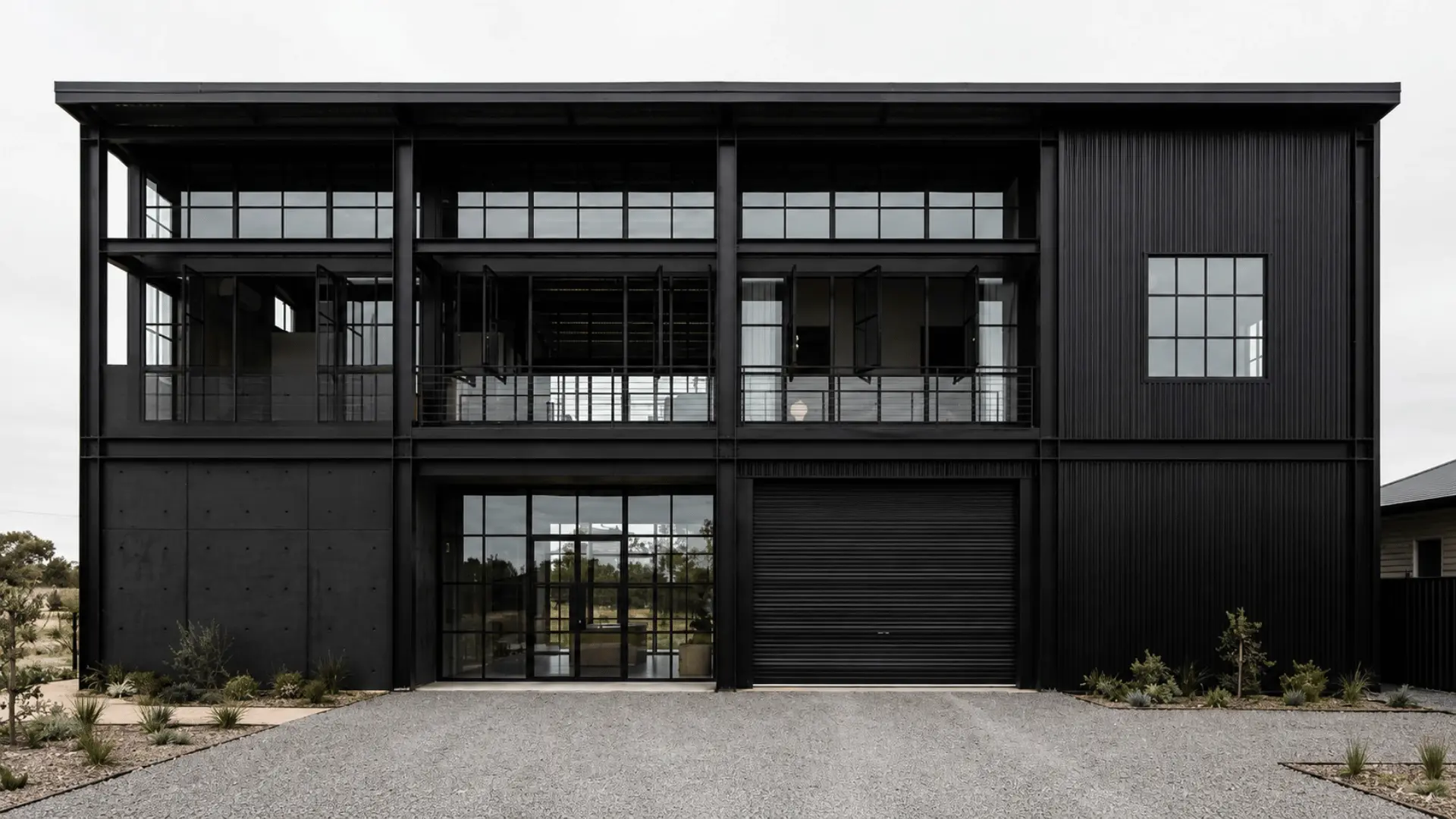
A black modern industrial loft-style house is defined by large open volumes, exposed structure, steel-framed glazing, and raw materials.
The exterior usually emphasizes broad openings and strong structural rhythm.
Scale is essential because high ceilings and open spans create much of the style’s identity. On a smaller footprint, industrial materials can feel decorative rather than architectural.
26. Black Modern Split-Level House
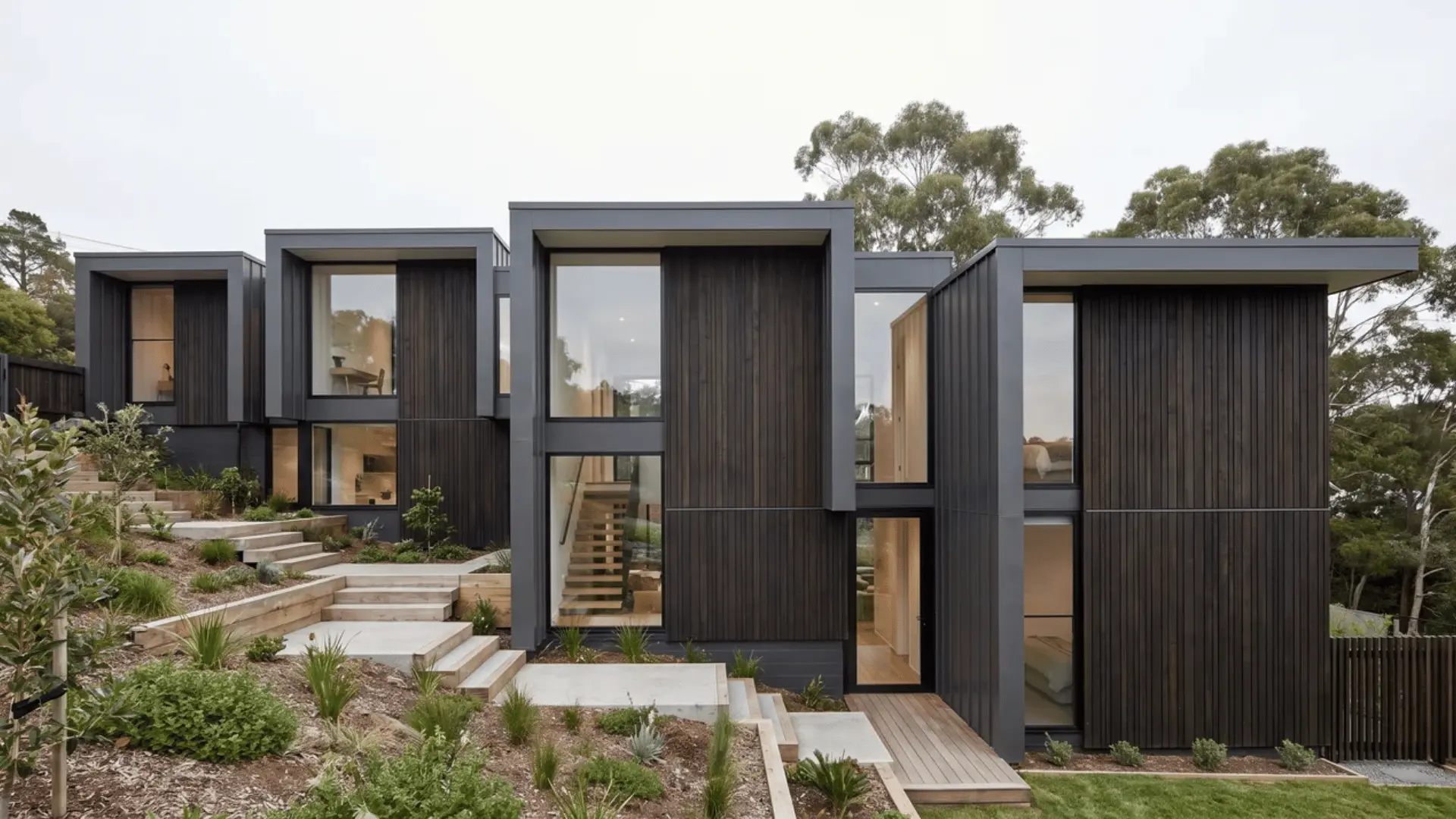
A black modern split-level house uses staggered floor plates instead of fully stacked stories, often following a slope.
Offset rooflines and changing window heights reveal the interior level shifts outside. Those level changes can complicate circulation and accessibility.
Frequent short stair runs may become inconvenient, so the layout should be considered carefully for long-term living needs.
27. Black Modern Tiny House
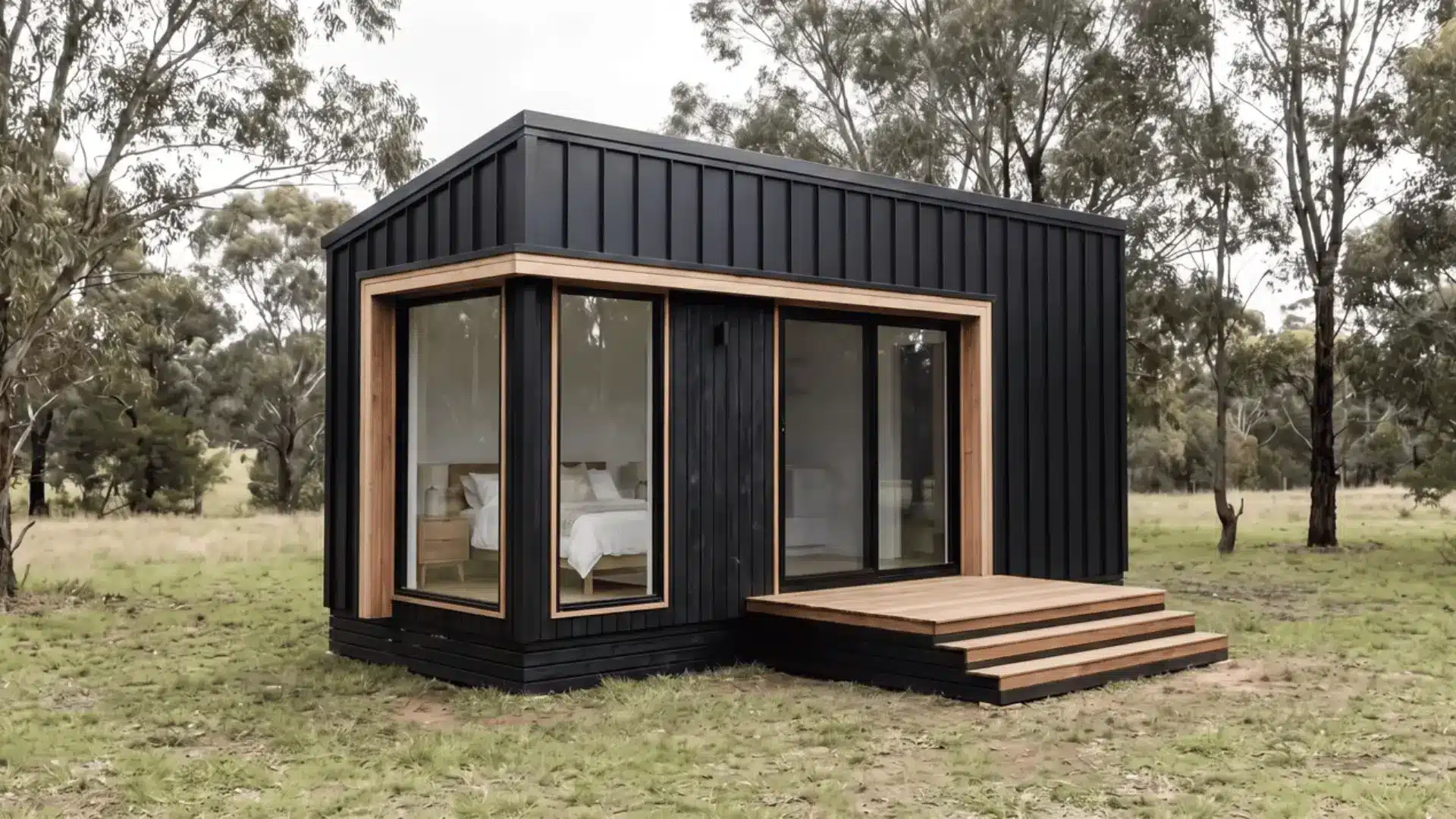
A black modern tiny house is defined by a compact volume where every opening, built-in, and storage feature matters.
Large glazing and lighter accents keep the dark exterior visually balanced. Small scale leaves little room for design mistakes.
Excessive black can feel heavy, while poor window placement can darken the interior, so light and proportion need careful planning.
For more direction on layout and finishes at this scale, these tiny house designs cover ideas worth borrowing.
How to Choose the Right Black Finish?
The shade and finish you choose affect the home’s appearance, maintenance needs, and how well the exterior holds up over time.
| Finish Consideration | What to Know |
|---|---|
| Matte black | Soft, modern, low-glare finish that helps hide minor surface flaws. Best for clean, minimal exteriors. |
| Satin black | Slight sheen with easier cleaning than matte. Reflects light and brings out exterior details. |
| Charcoal and soft black shades | Softer than pure black and better at hiding dust, dirt, and weather marks. |
| Sun exposure | Strong sun needs durable coatings to limit fading and wear. Shaded homes offer more flexibility with dark finishes. |
| Surrounding style and architecture | Deep black suits wooded settings and bold designs. Softer charcoal often fits open areas or traditional homes better. |
Choose a black finish that fits your home’s design, climate, and maintenance needs to create a look that stays attractive over time.
Common Mistakes to Avoid
Most of these mistakes come from treating black as a finish choice instead of a design decision, and each one is easy to avoid once you know what to check for before signing off on materials.
- Choosing black without considering climate: Dark exteriors absorb more heat, especially in sunny areas. Ignoring climate conditions can increase cooling demands and affect material performance over time.
- Using the wrong material: Some materials handle dark finishes better than others. Poor choices can lead to faster fading, warping, or more frequent repairs after weather exposure.
- Creating a flat black exterior: Large black surfaces need texture and contrast to add depth. Wood, stone, glass, or landscaping can prevent the home from feeling like a plain dark box.
- Ignoring landscaping: Plants, trees, and natural elements soften the strong appearance of black exteriors. They help the home feel balanced and connected to the surrounding environment.
- Using poor exterior lighting: Without proper lighting, important design details can disappear after dark. Well-placed fixtures help highlight textures, pathways, and architectural features.
Small choices made during planning can prevent bigger design and maintenance problems once the exterior is finished.
Final Thoughts
Black modern house designs work best when the color is supported by the right materials, textures, lighting, and proportions.
A black exterior can feel bold and sharp, but wood, stone, glass, greenery, and softer charcoal tones can keep it from looking too flat or harsh.
Climate and maintenance matter too, especially in sunny, coastal, or high-moisture areas where finishes can fade or wear faster.
Before choosing a design, think about how the home will look in its setting and how the materials will age over time.
Which black modern house idea would you choose for your own exterior? Share your favorite in the comments.
Frequently Asked Questions
Is a Black Modern House Still in Style?
Yes, black exteriors have held steady in popularity for years rather than fading like a passing design trend. Modern buyers still choose bold black facades for mountain retreats, forest lots, and dense urban infill builds because the color pairs well with clean architectural lines and strong, simple rooflines. Expect this look to stay common.
Do Black Houses Get Hotter?
Black exteriors do absorb more heat than lighter colors, which matters most in sunny, high-glare climates. Good wall insulation, quality coatings, and shaded glazing can offset most of that extra heat gain over a full season. Homes in cooler or shaded settings have far more flexibility with darker finishes without raising cooling costs.
Are Black Houses Harder to Maintain?
They can be, depending on the material and finish chosen for the exterior. Dark colors show dust, fading, and weather marks more visibly than lighter shades, so quality coatings and regular cleaning matter more here. Charcoal or soft black tones tend to hide wear better than a true, deep black.
What is the Best Material for a Black Exterior?
Fiber cement and metal siding tend to hold up best against fading, warping, and moisture damage over time. Both accept dark finishes evenly and require less frequent recoating than wood, brick, or standard vinyl siding. Ask your builder about coastal or high-UV rated coatings if your site sees heavy sun.