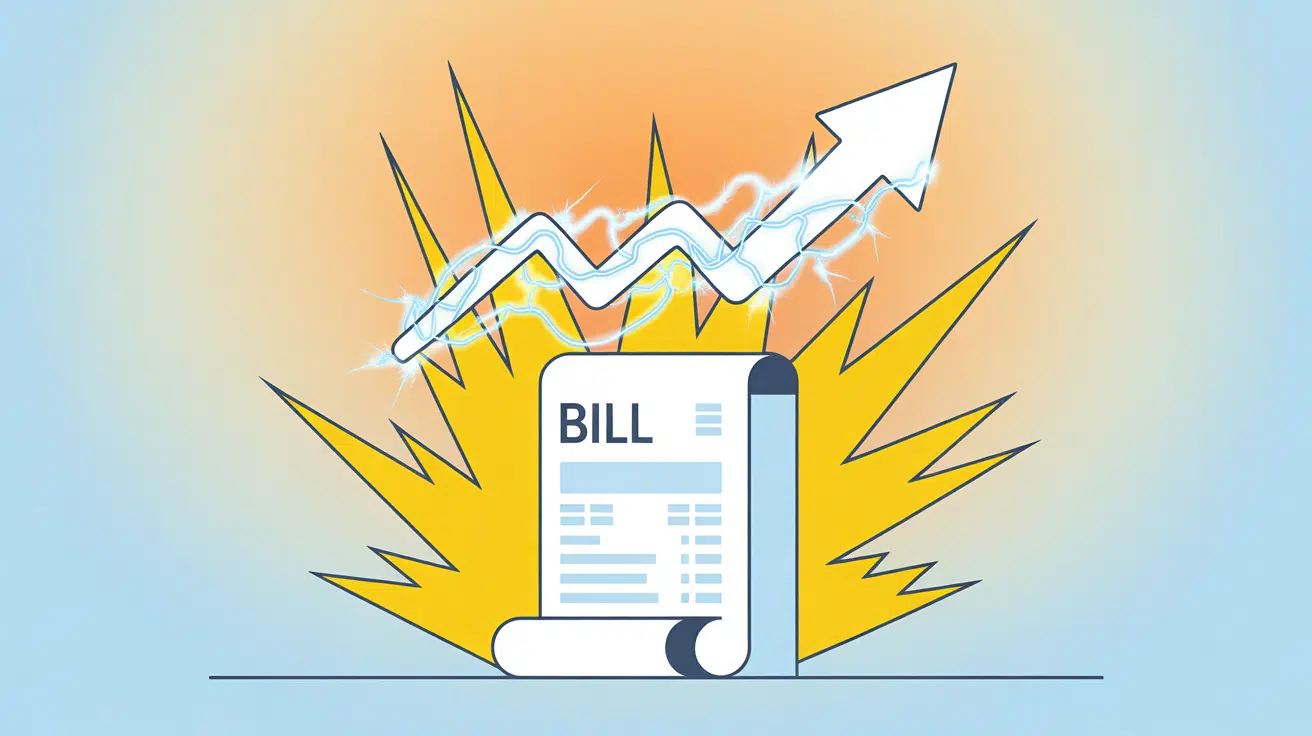
Two policy shifts have reshaped rooftop solar economics in California, and most of the advice online still describes the world before them. One landed in April 2023, and the other took effect on the first day of 2026.
Neither one makes solar a bad investment in a state with some of the highest electricity rates in the country. They do mean the system that made sense three years ago is not the system that makes sense now.
Key Takeaways
- The federal residential solar tax credit ended for systems installed after December 31, 2025.
- California’s Net Billing Tariff cut export credits by roughly 75% when it took effect in April 2023.
- Self-consumed solar still offsets electricity at the full retail rate, which is why storage now drives the math.
- The rules depend on your utility, and municipal providers run separate programs.
- Battery attachment rates in California rose from around 11% before 2023 to more than half of new installs.
- Verify licensing, certification, and warranty terms in writing before signing anything.
The Federal Credit Picture Changed on January 1
For over a decade, homeowners who bought a solar system could claim 30% of the cost against their federal income tax under Section 25D.
The One Big Beautiful Bill Act, signed on July 4, 2025, terminated that credit roughly seven years ahead of its scheduled expiry.
The cutoff was abrupt, with no phase-down and no transition period. Section 25D treats an expenditure as made when installation is completed, so a system finished in 2026 receives nothing even if the contract was signed and the deposit paid in 2025.
This matters when you are reading quotes. Any 2026 proposal showing a net cost “after the 30% federal tax credit” is working from expired law, and the number underneath it will be wrong.
State and utility programs are a separate question and continue to operate on their own timelines. Ask specifically which incentives your quote assumes and confirm each one independently.
NEM 3.0 Rewrote the Export Math
California’s Net Billing Tariff, universally called NEM 3.0, was approved by the CPUC in Decision D.22-12-056 and took effect on April 15, 2023. It changed what utilities pay for solar power you send back to the grid.
The drop was steep. Export credits fell from close to the retail rate, around $0.30 per kilowatt-hour, to avoided-cost rates that average roughly $0.05 to $0.08 depending on the hour and season.
The critical detail is what did not change. Solar you use inside your own home still offsets electricity at the full retail rate, so the value now sits in consuming your own production rather than selling it.
That creates a gap worth understanding. You might export a midday kilowatt-hour for six cents and buy one back at seven in the evening for thirty cents or more.
Your Utility Determines Which Rules Apply
NEM 3.0 applies to customers of the three investor-owned utilities, meaning PG&E, Southern California Edison, and San Diego Gas & Electric. It does not automatically apply elsewhere.
Municipal utilities run their own programs. LADWP in the City of Los Angeles and SMUD in the Sacramento area operate separate net metering rules, and municipal programs have generally been more favorable to solar exports than the Net Billing Tariff.
This is why generic California solar advice can mislead. A homeowner in Fresno and a homeowner in Burbank may be on entirely different compensation structures, which changes system sizing and whether a battery pays for itself.
If you had a system interconnected before April 15, 2023, you are likely grandfathered onto the older terms for twenty years from your permission-to-operate date.
Significantly modifying that system can put the grandfathering at risk, so check before expanding.
Batteries Moved From Optional to Structural
Under the old rules, the grid effectively acted as a free battery, crediting your midday surplus at nearly the rate you paid for it.
Under net billing, that arrangement no longer holds, and the surplus is worth a fraction of what it costs to buy power back.
Storage closes that gap by holding midday production for evening use. Battery attachment rates on new California installs rose from roughly 11% before 2023 to more than half within about a year, which reflects installers redesigning around self-consumption rather than export.
Dura- Foam Solar Centre’s Premier solar experts design around your actual consumption pattern rather than around maximum roof coverage, which matters far more under these rules than it did before.
A system sized purely for peak production can now underperform a smaller one built around when you actually use electricity.
Backup capability is a separate benefit worth weighing. Standard grid-tied systems shut down during outages for lineworker safety, and only a battery configured for backup keeps circuits running.
What to Verify Before Signing
Start with licensing. California requires a CSLB-licensed contractor for this work, and the license number can be checked directly on the CSLB website in under a minute.
Ask about installer certification separately. NABCEP certification is the recognized credential in the North American solar industry and is held by the individual installer rather than the company.
Read the warranty carefully, because equipment coverage and workmanship coverage are different things.
A company such as Solar Center by Dura-Foam, which has operated in California since 1981 and carries roofing experience alongside solar, offers 25-year coverage on both, and that pairing is worth asking any installer to state in writing.
Finally, confirm who handles the paperwork. Permits, HOA approval, and utility interconnection all sit on the critical path, and installers who manage them in-house typically shorten the timeline considerably.
Conclusion
The 2026 version of this decision is different from the 2023 version, and anyone quoting you numbers built on a 30% federal credit is not working from current law.
That single check will tell you a lot about how carefully a proposal was prepared. Work out which utility serves your address, get a design built around your consumption rather than your roof area, and ask every installer to put licensing, certification, and warranty terms in writing.
The economics still work in California, but they now reward precision more than they used to.
Frequently Asked Questions
Is there still a federal tax credit for solar in 2026? Not for a homeowner who buys a system outright. Section 25D ended for expenditures made after December 31, 2025, so confirm with a tax professional rather than relying on a sales proposal.
Does NEM 3.0 mean solar no longer pays off in California? No, but the design changed. High retail electricity rates still make self-consumed solar valuable, which is why most new California systems now pair panels with storage.
Do I need a battery? It depends on your utility, your rate plan, and your evening usage. Customers of the investor-owned utilities generally see stronger economics with storage, while municipal utility customers may not need it for the same reason.
Will panels work during a blackout? Not on their own. Grid-tied systems disconnect during outages by design, and continued operation requires a battery configured for backup.
How long does installation take? The physical work is often one to two days. Permitting, inspection, and utility approval usually take longer and vary by jurisdiction.